NASM chapter 6: Cardiorespiratory, Endocrine, and Digestive System
 Call Kai
 Learn
Learn Practice Test
 Spaced Repetition
 Match
Match Flashcards
 Knowt Play
1/95

There's no tags or description
Looks like no tags are added yet.
Name | Mastery | Learn | Test | Matching | Spaced | Call with Kai |
|---|
No analytics yet
Send a link to your students to track their progress
96 Terms
The cardiorespiratory system
Composed of the heart, blood, blood vessels, lungs and airways
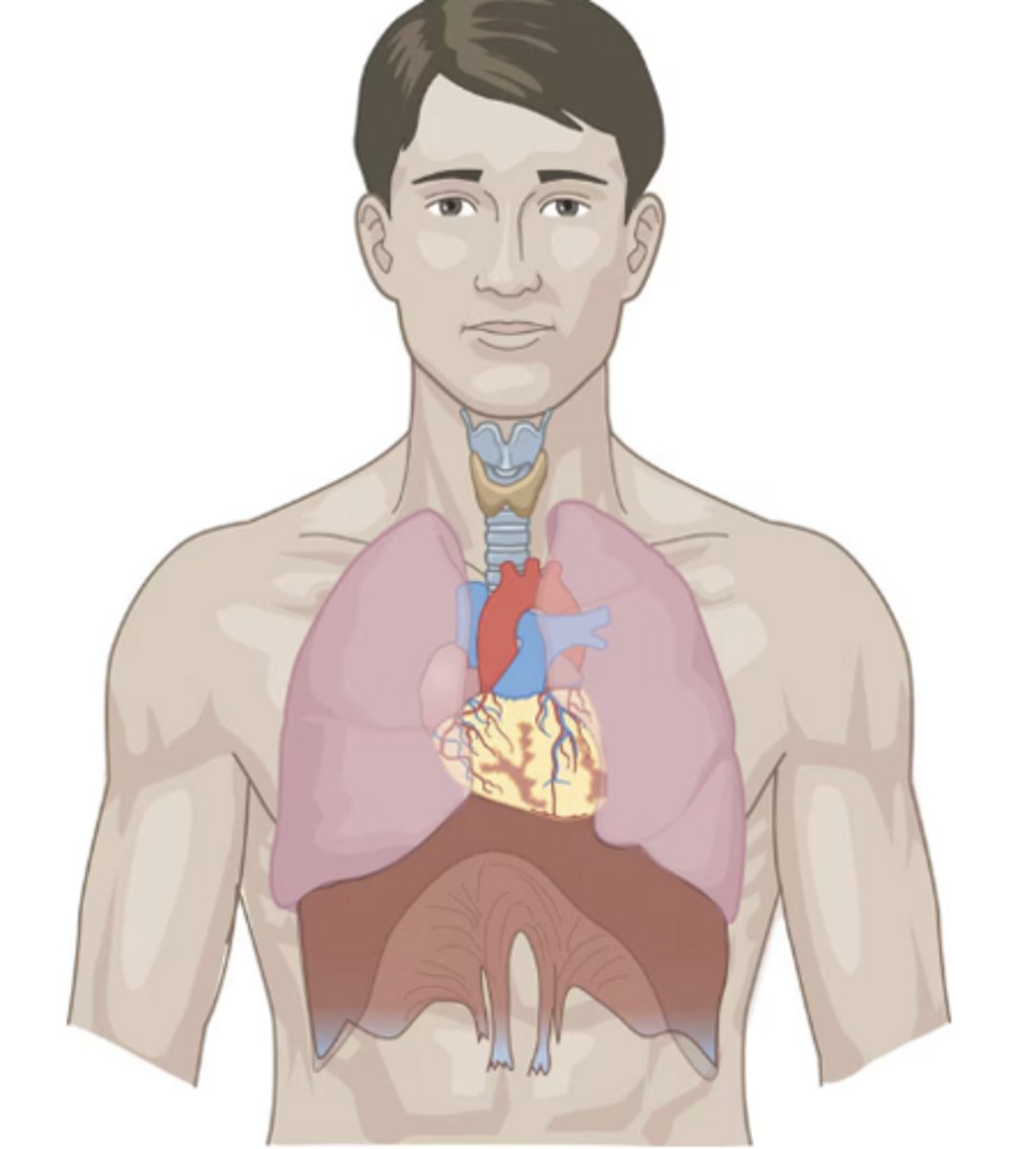
The cardiovascular system
A system of the body, also known as the circulatory system, that transports blood to tissues of the body
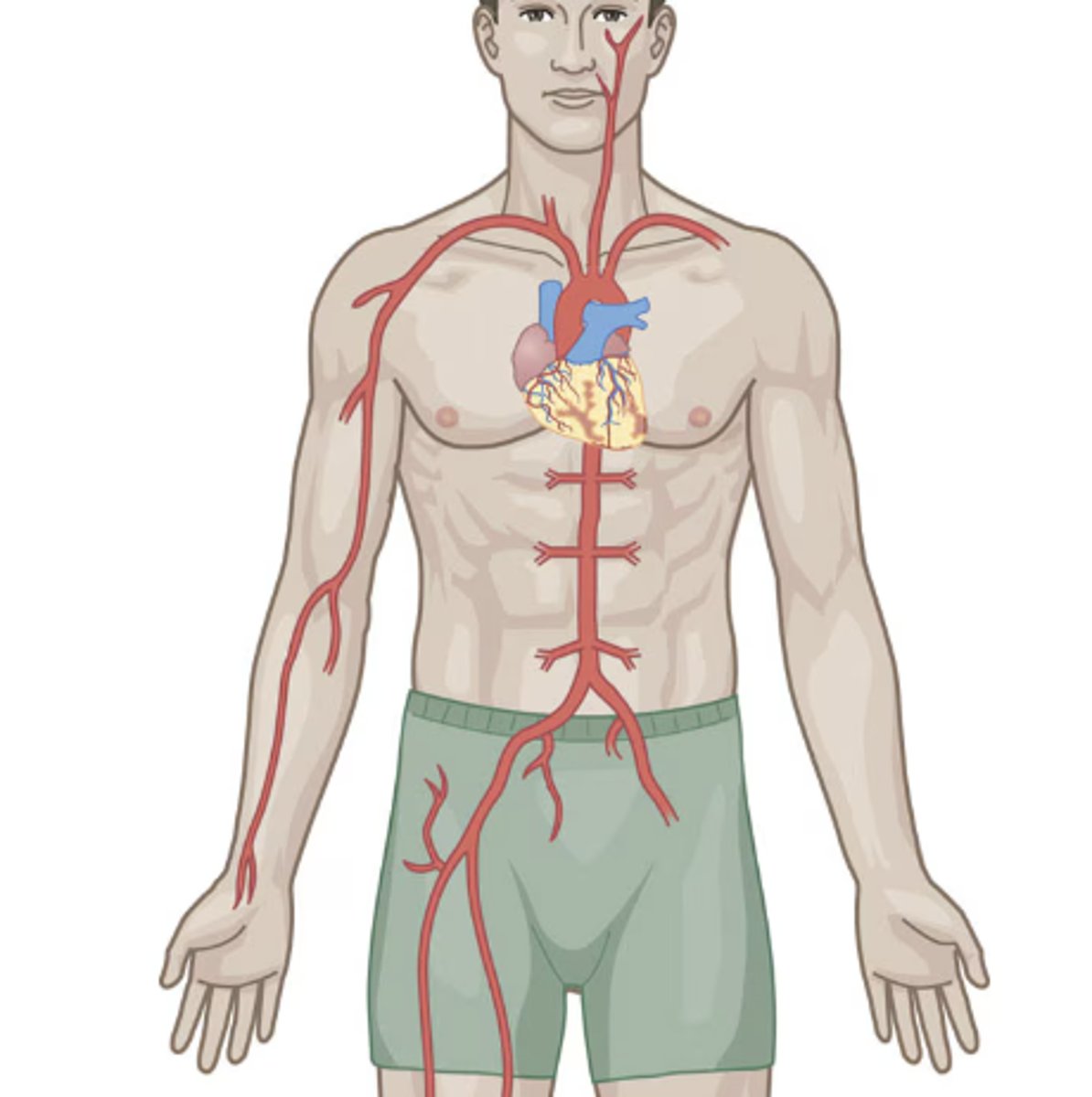
Mediastinum
The space in the chest between the lungs that contains the internal organs of the chest
Cardiac muscle
Muscle of the heart
Skeletal muscle
Connects to bones and generated the forces that create movement
Smooth muscle
An involuntary non restricted muscle type that is found in organs
Myofibrils
The contractile component of a muscle cell
Sarcomere
The structural unit of a myofibril, composed of actin and myosin filaments between two-Z lines
Atrium (atria)
Superior chamber(s) of the heart that gathers blood returning to the heart
Ventricle
Inferior chamber of the heart that pumps blood to the lungs and body
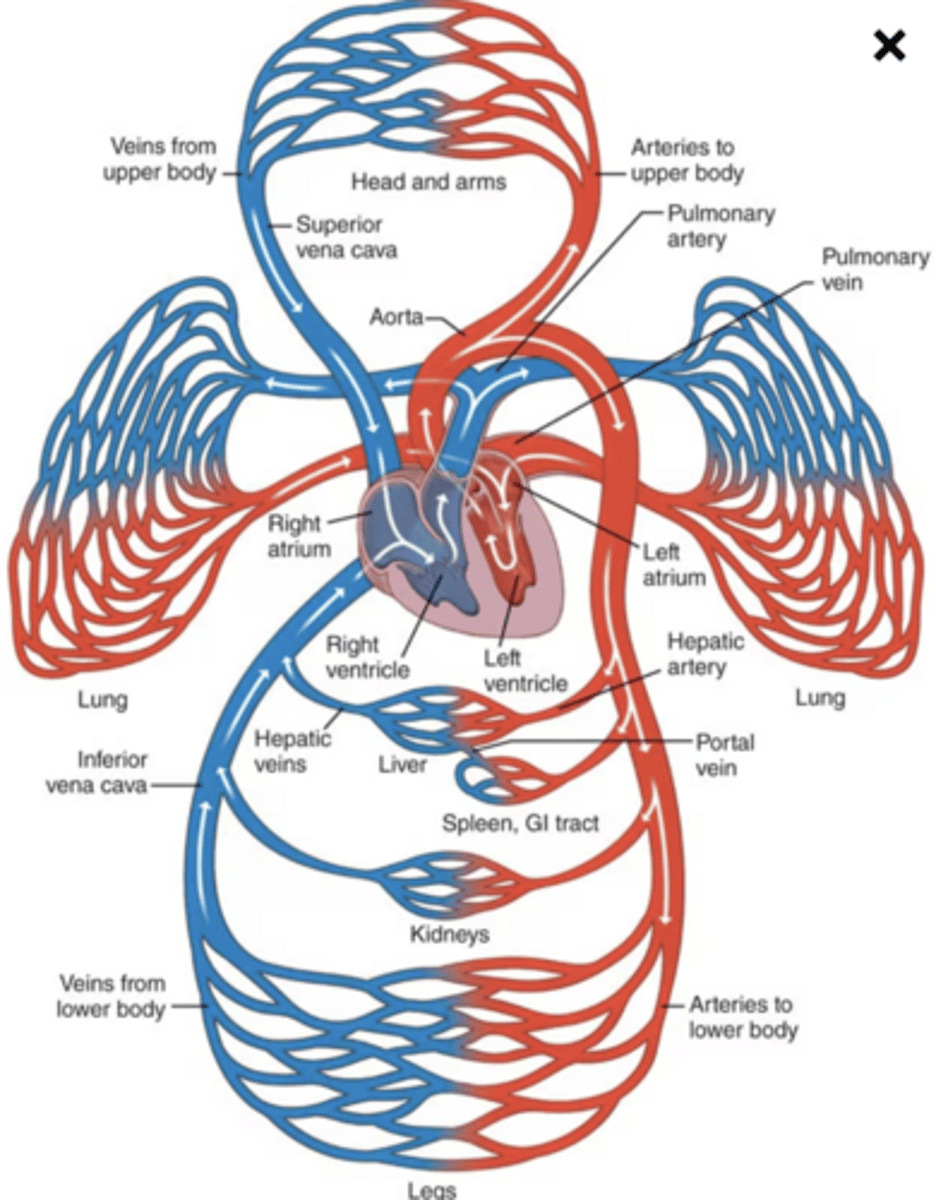
Left side of the heart-Systemic
Receives oxygenated blood from the lungs that is high in oxygen and low in carbon dioxide
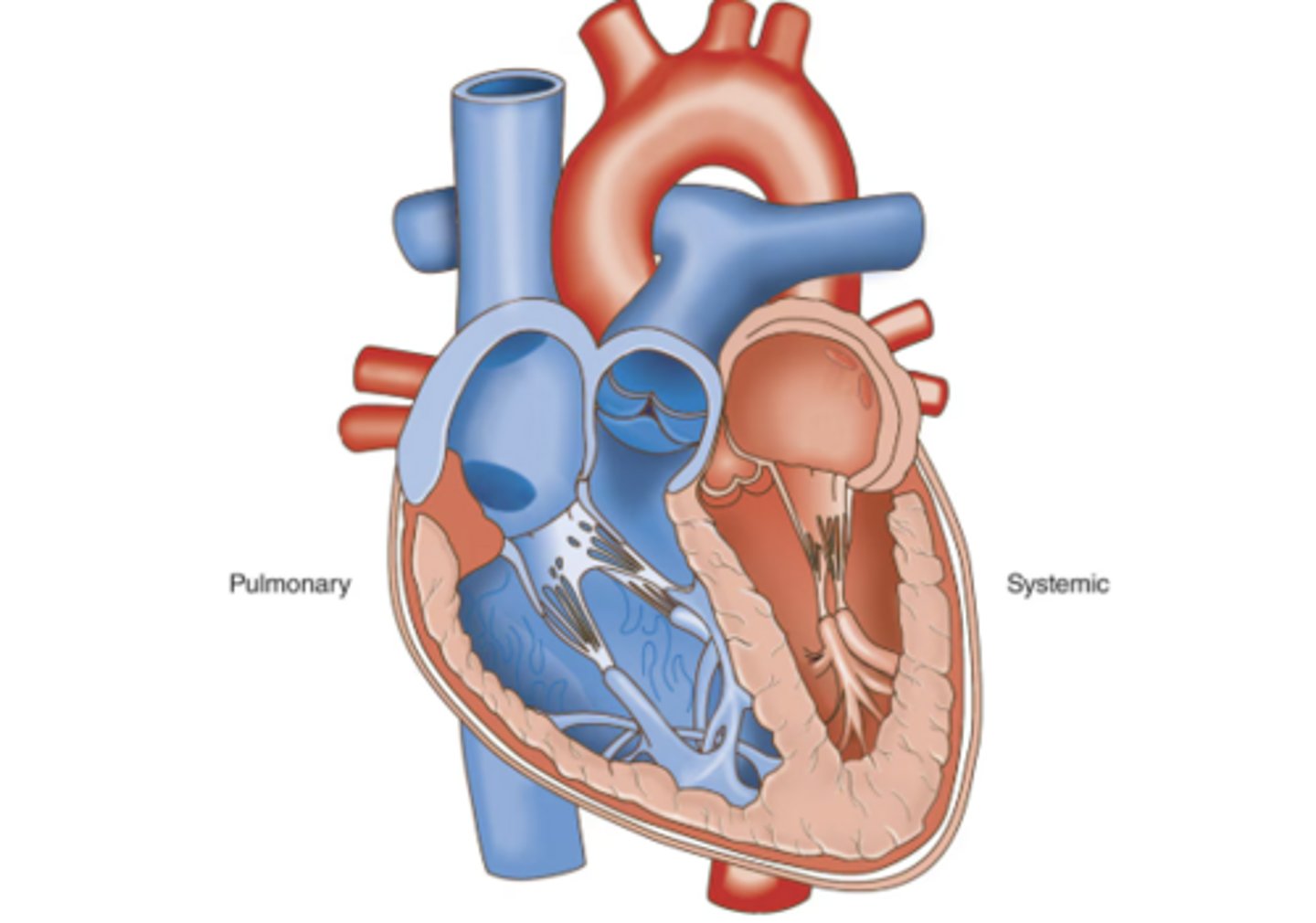
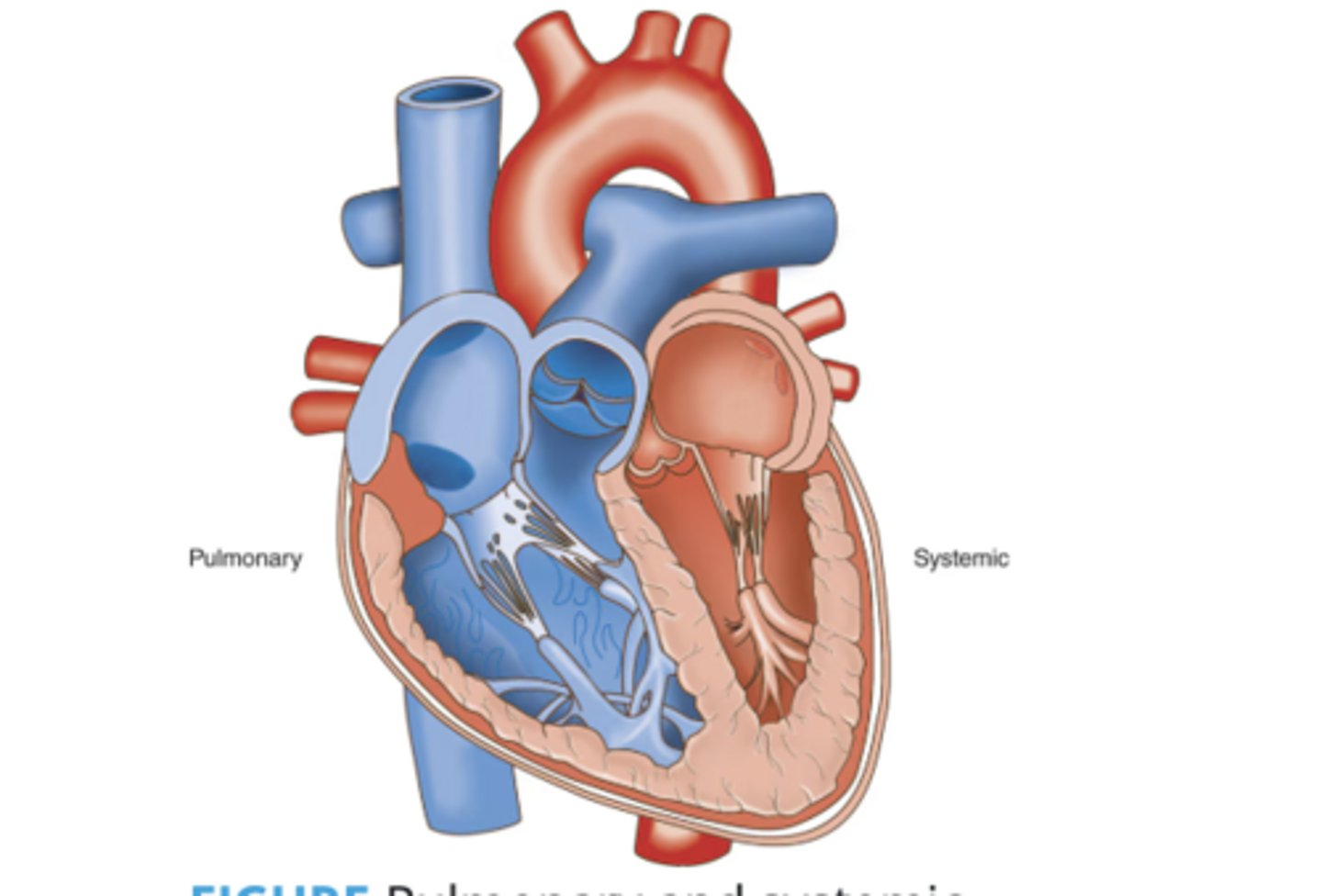
Right side of the heart-Pulmonary
Receives blood from the body that is low in oxygen and high in carbon dioxide
Intercalated discs
Found in the heart, help hold together muscle cells
Resting heart beat (RHR)
The number of heart beats per minute while at complete rest
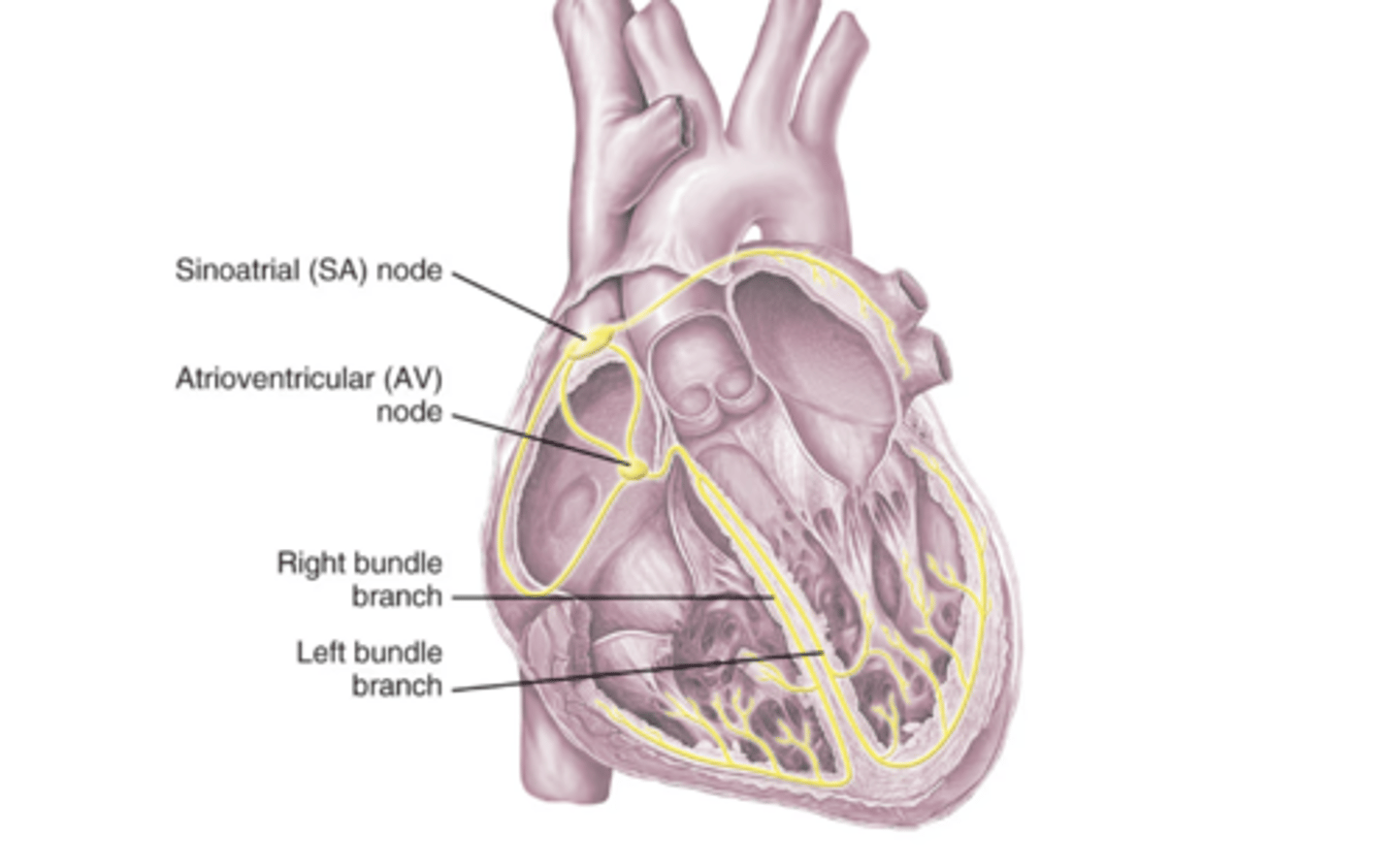
Sinoatrial (SA) node
Located in the right atrium, initiates an electrical signal that causes the heart to beat
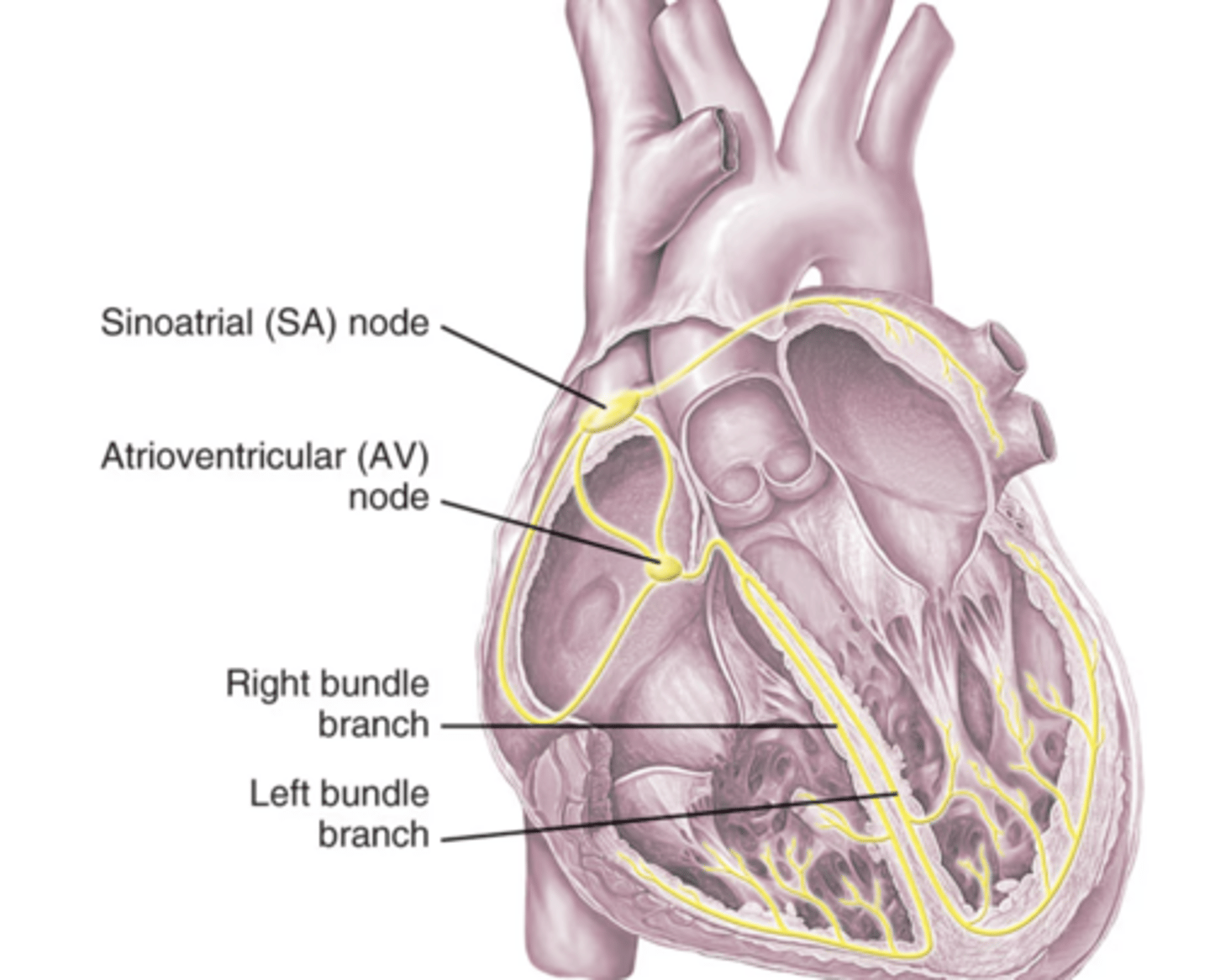
Atrioventricular (AV) node
Located between the atria and ventricles, delays the impulse from the sinoatrial node before allowing it to pass to the ventricles
Normal resting heart rate
60-100 beats per minute
Stroke volume
The amount of blood pumped out of the heart with each contraction
End-diastolic volume
The filled volume of the ventricle before contraction.
End-systolic volume
The volume of blood remaining in the ventricle after ejection
Heart rate
The measurement of the number of times a heart beats within a specific time period (usually 1 minute)
Bradycardia
When the heart rate is less than 60 beats per minute
Tachycardia
When the heart rate is more than 100 beats per minute
Cardiac output (Q)
The overall performance of the heart (heart rate x stroke volume)
Blood
Fluid that circulates the heart, arteries, capillaries, and veins, it carries nutrients and oxygen to all parts of the body and also transports waste products from the body to other compartments
Growth factors
Substances within the blood that attach to cells, aid in growth and development, and help with healing after an injury
Stem cells
Cells that divide and develop into specialized cells, such as brain cells, blood cells, heart cells, and bone cells
Blood vessels
Network of hollow tubes that circulates blood throughout the body
Arteries
Carry blood away from the heart and to the lungs
Arterioles
Small arteries that eventually divide into capillaries
Capillaries
The smallest blood vessels and the site of exchange of elements between the blood and tissues
Venules
Small veins that allows blood to drain from capillaries into the larger veins
Vasculogensis
The formation of new capillaries
Angiogenesis
The formation of new capillaries from existing blood vessels
Veins
Vessels that carry deoxygenated blood back to the heart and then to the lungs
Venous pooling
The accumulation of blood into the extremities due to slow blood flow through the veins (venous return) or backflow
Blood pressure (BP)
The outward pressure exerted by the blood on vessel walls, reported as systolic/diastolic
Peripheral resistance
The amount of resistance in the arteries that must be overcome for blood to flow
Hypertension
High blood pressure
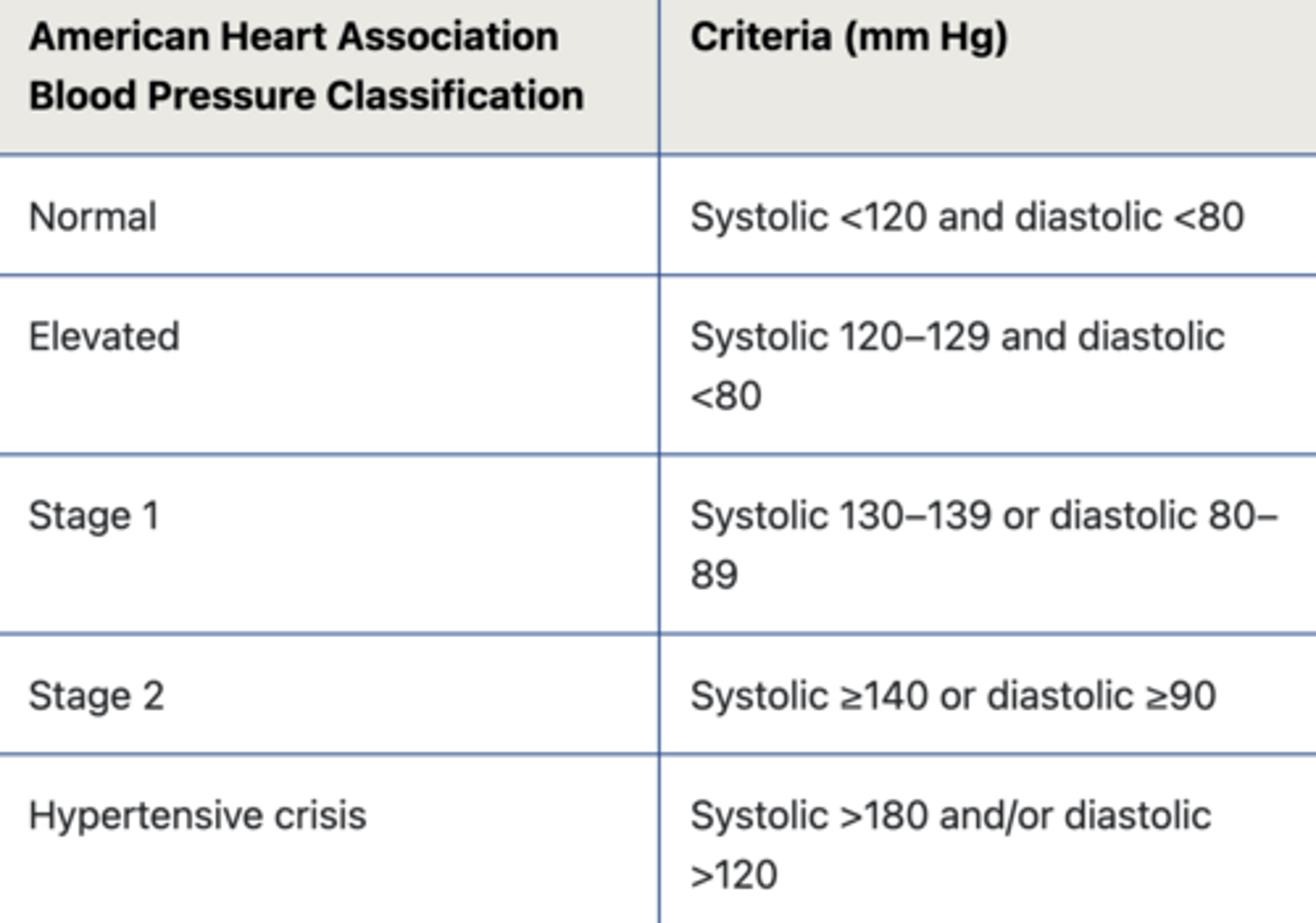
Normal blood pressure
Systolic <120 and diastolic <80
Elevated
Systolic 120-129 and diastolic <80
Stage 1
Systolic 130-139 or diastolic 80-89
Stage 2
Systolic ≥140 or diastolic ≥90
Hypertensive crisis
Systolic >180 and/or diastolic >120
Respiratory system
A bodily system, also known as the pulmonary system, that brings oxygen into the lungs from breathed air while removing carbon dioxide from the lungs into the outside air; includes airways, lungs, and the respiratory muscles.
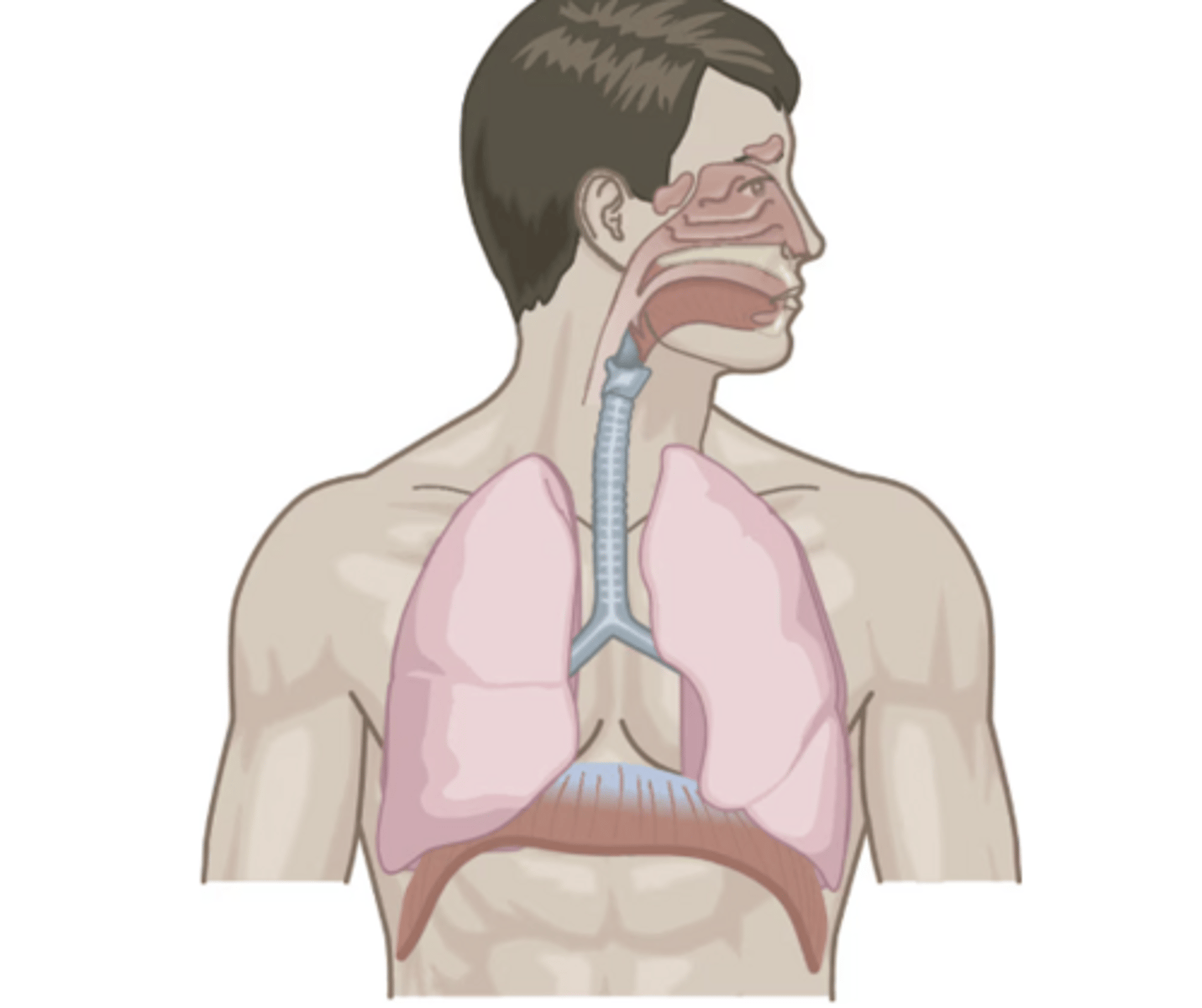
Respiratory pump
Composed of skeletal structures (bones) and soft tissues (muscles) that work together to allow for proper respiratory mechanics as well as pumping blood back to the heart during inspiration
Bones in structure of respiratory pump
Sternum (breastbone), ribs, Vertebra (spine)
Inspiration muscles in structure of respiratory pump
Diaphragm, external intercostals (muscles between individual ribs), scalenes (side of neck muscles), sternocleidomastoid (front of neck muscle), pectoralis minor (smaller chest muscle)
Expiration muscles in structure of respiratory pump
Internal intercostals (muscles between individual ribs), abdominals
Valsalva maneuver
A process that involves expiring against a closed windpipe, creating additional intrabdominal pressure and spine stability
Diffusion
The process of getting oxygen from the environment to the tissues of the body
Tachypnea
Respiratory rate that is too fast, greater than 24 breaths per minute
Bradypnea
Respiratory rate that is too slow, fewer than 8 breaths per minute
Dyspnea
Shortness of breath or labored breathing
Diaphramic breathing
Breathing deeply by allowing the expansion of the abdominal area
Main role of the respiratory system
Ensure proper cellular function
Lipolysis
The breakdown and utilization of fat for energy
Enzyme
A substance in the body that causes a specific reaction or change
Glands
Organs that release substances into the bloodstream (such as hormones) or other surfaces of the body
Hormone
Chemical messenger released from a gland that travels to activate a specific function
Target (receptor) cells
Cell that receives a message from a hormone or enzyme, target cells exert an action after being stimulated or activated
Hypothalamus
A gland located in the brain that communicates with the pituitary gland
Pineal gland
Secretes melatonin, located in the brain
Pancreas
Produces insulin, glucagon, and digestive juices
Thyroid gland
Located in the anterior neck, responsible for the secretion of many hormones, including thyroxin and calcitonin
Pituitary gland
Controls the secretion of many hormones, including growth hormone
Adrenal gland
Located just above the kidneys, responsible for the secretion of catecholamines and cortisol
Reproductive glands
Glands, such as the ovaries or testes, that serve sex-specific functions
Insulin
Hormone secreted by the pancreas which is responsible for glucose metabolism
Glucogen
Secreted by the pancreas, regulates blood glucose and functions opposite to insulin
Substrates
Intermediate forms of nutrients used in metabolic reactions to create adenosine triphosphate
Glycogen
Glucose that is deposited and stored in bodily tissues, such as the liver and muscle cells; the storage form of carbohydrate
Growth hormone
Anabolic hormone produced by the pituitary gland that is responsible for growth and development
Catecholamines
Hormones produced by the adrenal glands that are part of the stress response known as the fight-or-flight response
Catabolic
Metabolic process that breaks down molecules into smaller units used for energy
Gluconeogenesis
Formation of glucose from noncarbohydrate sources (proteins and fats)
Anabolic
Metabolic process that synthesizes smaller molecules into larger units used for building and repairing tissues
Insulin-like growth factors (IGF)
Anabolic hormone produced y the liver, which is responsible for growth and development
Basal metabolic rate (BMR)
The amount of energy required to maintain the body at rest
Calcitonin
Thyroid hormone that helps the body use calcium properly to aid with maintaining bone mineral density
Glucose intolerance
A condition that results in elevated blood glucose levels
Gall bladder
Located below liver on right side of body, receives bile from the liver and secretes it into the duodenum
Liver
Produces bile which is stored and concentrated in the gall blader prior to release into the duodenum
Large intestine function
Absorption of food and passage of waste into the rectum
Motility
Movements of anatomical structure that allows contents to pass through
Mastication
Chewing
Peristalsis
Processing of food into a structure that can be absorbed
Chyme
Mass of food that is passed from the stomach to the small intestine
Duodenum
Part of small intestine
Jejunum
Second part of the small intestine
lleum
Lower end of the small intestine, leads to large intestine
Frank Starling Law of the Heart
Increased ventricular filling improves contractile force of the heart as a result of greater stretch of cardiac fibers
Location of the heart
Central to the left, anterior to the spine
Overtraining can cause
Higher levels of cortisol and a catabolic environment
Acute increases in hormones are stimulated by
High intensity, overload training, with minimal rest
Time under tension of any muscle contraction does what?
Increases anabolic hormone secretion