TTM AP bio ecology
 Call Kai
 Learn
Learn Practice Test
 Spaced Repetition
 Match
Match Flashcards
 Knowt Play
1/56

There's no tags or description
Looks like no tags are added yet.
Name | Mastery | Learn | Test | Matching | Spaced | Call with Kai |
|---|
No analytics yet
Send a link to your students to track their progress
57 Terms
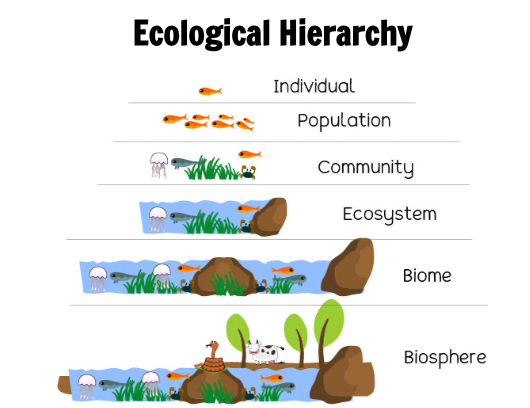
levels of organization
individual (single organism)
population (group of organisms of same species in given area)
community (all the population of species, all biotic)
ecosystem (biotic community + abiotic factors that affect it)
biome (group of ecosystems with same climate, similar communities)
biosphere (layer of Earth that supports life; high in atm to deep in ocean)
niche
the role or position that an organism has in an ecosystem
can be how it meets its need for food
what does it eats, when and how it obtains its food, what is its role in energy flow of the ecosystem, shelter, reproduction, care for offspring
biodiversity
the variety of life in an area
Determined by the number of different species in that area
biodiversity encompasses the genetic variety within each species and
the variety of ecosystems that species create.
High biodiversity = healthy ecosystem
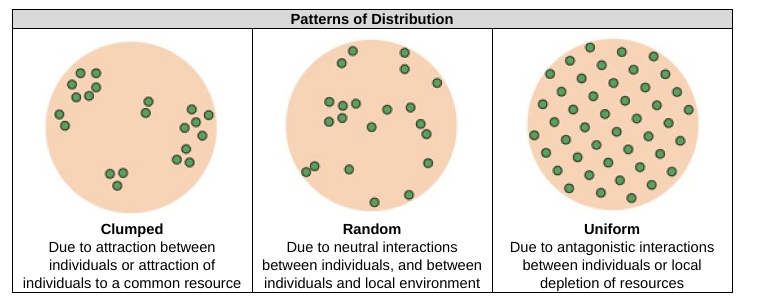
population distribution patterns
clumped - Due to attraction between individuals or attraction of individuals to a common resource
random - due to neutral interactions between individuals, and between individuals and local environment
uniform - due to antagonistic interactions between individuals or local depletion of resources
factors that can affect species distribution and abundance
species-specific catastrophes
environmental catastrophes
geological events
sudden influx/depletion of abiotic resources
increased human activities
factors limiting growth
exponential growth limited bc of
limiting factor - biotic/abiotic factors that restrict the number, distribution, or reproduction of pop within a community
tolerance - an organism’s ability to survive biotic and abiotic factors
density-dependent factors + graph
predation: more likely for predator to find you
disease: disease spreads more quickly
competition: more demand for resources
parasitism: higher infection rates
will usually have logistic type growth, limited by carrying capacity
density-independent factors
storms or natural disasters, extreme heat or cold, rainfall (drought), seasonal cycles
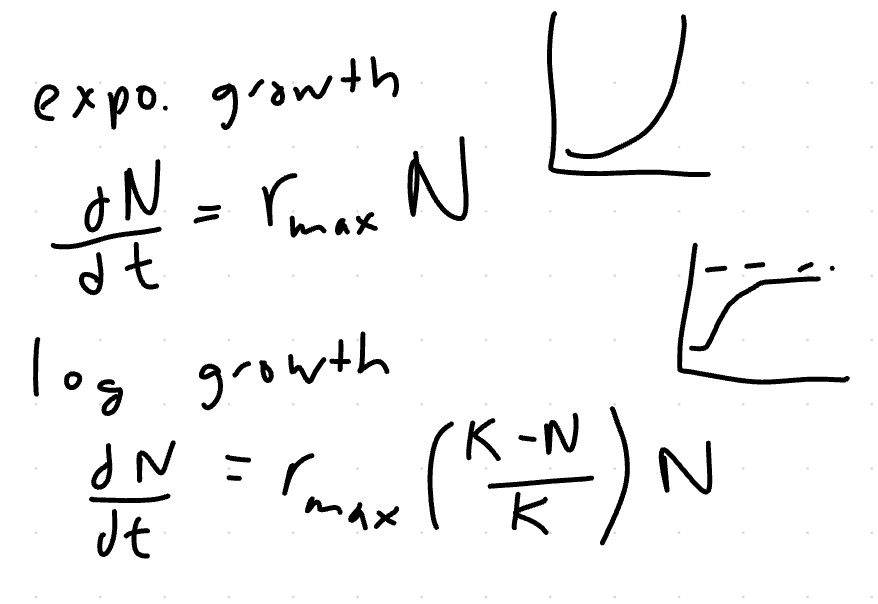
exponential vs logistic growth + formulas
exponential: no constraints on pop, theoretical if unlimited resources
logistic - realistic, presence of limiting factors
biotic potential
The highest rate of natural increase for a population, when resources are unlimited
pops rarely reach their biotic potential bc resources are usually limited
carrying capacity
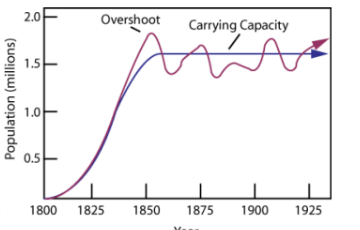
sustainable abundance of a species that can be supported by the ecosystem’s total available resources (represented by K)
cohort
all members of a population born at the same time
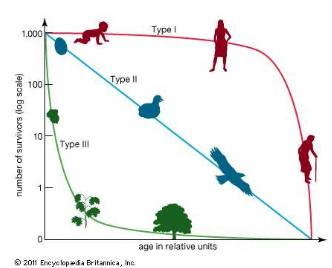
survivorship curves
type 1: most individuals live out their lifespan and die of old age (k-spec)
type 2: individuals die at a constant rate across their lifespan
type 3: most individuals die early in life (r-spec)
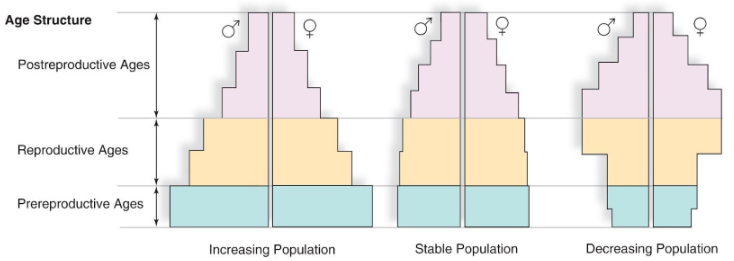
age distribution patterns
pyramid shape - indicate the population has high birthrates, is undergoing exponential growth
bell shape - characteristic of stable populations
urn shape - birthrate falling below the death rate of characteristic of declining populations
r-selected vs k-selected
R: high rate of population increase
ex. bacteria, algae, insects, annuals
K: reproduce late in life and have a small number of offspring with long life spans
ex. large mammals, long lived plants
rmax formula
r - (Births - deaths) / Pop size
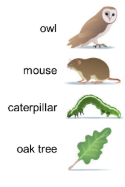
species richness
a listing of the species within a community; it does not reveal the relative abundance of organisms
ex. a coniferous forest has a different composition from a tropical rain forest in species of plants and animals
species diversity
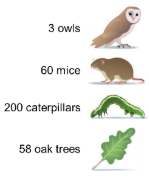
not only the listing of the species in the community but abundance of each species
the greater the diversity, the greater the number and the more even the distribution of the species
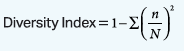
Simpson diversity index
closer to 1, the more diverse the community is
- takes into account both species richness and species evenness
keystone species
help determine the types and numbers of other species in a community.
have a much larger effect on the types and abundances of many other species in a community than their number would suggest
competition
(-/-): the interaction is detrimental to both species
between 2 different species
interspecific competition
if it is between 1 species.
intraspecific competition
effects:
competitive exclusion: principle states that two species competing
leads to resource partitioning: when species shift niches, they no longer directly compete
Predation
(+/-): the interaction is beneficial to one species and detrimental to the other
Mutualism (symbiosis)
(+/+): obligate symbionts: both organisms entirely depend on each other for survival
Commensialism (symbiosis)
(+/0): benefits one organism, the other organism is not affected
parasitism
(+/-): benefits one organism, harms the other organism
organism that benefits is called the parasite
organism that is harmed is called the host
fundamental vs realized niche
fundemental - full potential role of an organism with NO competition
realized - actual role when you include competition and predation —> resource partitioning
chemical animal defenses
taste bad, poison & stings
animal defenses against predators
defensive coloration: aposematic coloration (warning coloration)
individuals advertise poisonous nature
cryptic coloration: camouflage (blending coloration)
animal defenses: mimicry
mullerian mimicry: deceptive relationship where a harmless species (mimic) copies a dangerous one (model) to avoid predators
basterian mimicry: mutualistic relationship where two or more unpalatable/dangerous species share similar warning signals, strengthening protection for all.
predator/prey population changes
describe the interaction where one species (predator) consumes another (prey), influencing population dynamics and evolutionary adaptations; predator often lagging behind prey in peaks
The biotic potential of the predator may be great enough to overconsume the prey; the prey population declines and the predator population then follows
Or the biotic potential of the prey is unable to keep pace and the prey population overshoots the carrying capacity and suffers a crash
climax community
Communities that are more diverse in species types and ages are better able to withstand changes
have more complex food webs
resource partitioning/stable realized niches
reduced competition
high tolerance to ecological disturbance
vegetation is perennial
pioneer communities
Communities that are low in diversity in species types and ages are characteristic
have very simple food chains
high competition
vegetation is annual
top down vs bottom up control
top down: organisms higher up in the food web will determine the population size at each level (herbivore controls plant pop)
bottom up: organism lower in the food web will determine the population size at each level (scarce soil nutrients limit plant growth)
Factors affecting species diversity in communities
Latitude
Habitat diversity
Time
Habitat disturbance
Biogeography
Pollution
primary vs secondary succesion
primary - no intact soil, restart
secondary - intact soil
biomass + energy pyramids
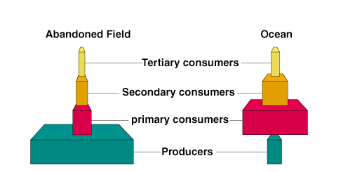
pyramid of energy: An average of 10% of energy is transferred from one trophic level to the next
pyramid of biomass can either mirror the energy pyramid (as for the abandoned field) or be inverted (as for the ocean).
limit of food chains: energetic hypothesis & Dynamic Stability Hypothesis
energetic hypothesis: only enough energy to support a certain number of links
Dynamic Stability Hypothesis: The longer a food chain, the less stable it is. Population fluctuations at lower trophic levels are magnified at higher levels, making top predators vulnerable to extinction.
chemosynthesis
process by which specific microorganisms prepare food (glucose) using inorganic substances without sunlight. They rely on the oxidation of sulfur, hydrogen, hydrogen sulfide, and methane for their energy source.
biomagnification
higher trophic levels even more effected in toxins accumulated from lower trophic levels
niche partitioning types
spatial, Dietary, by resource height, temporal
energy flow in ecosystems
Energy flows, not cycles; but matter cycles
energy must be constantly input to an ecosystem
autotrophs/producers capture energy and use it, energy passed on to heterotrophs (need source of preformed organic material)
heterotrophs include decomposers
limiting nutrient
element that must be added for production to increase. The nutrient most limiting marine production is nitrogen and phosphorus.
biogeochemical cycles: nutrients cycles involve both biotic and abiotic compounds
carbon cycle
all organisms put out carbon dioxide into the atmosphere (respiration, some fermentation)
living and dead organisms act as reservoirs for carbon: they contain organic carbon
human activities increase the level of CO2 (burning fossil fuels), contributing to climate change
carbon fixation
the initial phase of the Calvin cycle where inorganic carbon dioxide (CO2) is attaches to an organic molecules, rubisco. The process converts inorganic carbon into organic compounds (3PGA) in the stroma of chloroplasts, crucial for producing sugars.
nitrogen cycle
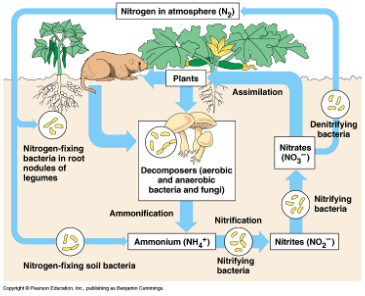
nitrogen gets passed through the food web, plants have nitrogen —> animals and decomposers use
any nitrogen that is released into atmosphere cannot be used by organisms, so bacteria fixes nitrogen into usable form
in root nodules of legumes
other bacteria change nitrogen from ammonium into nitrites then nitrates for assimilation
this is why we need crop and legume rotation
humans increase rates in nitrogen cycle through fertilization, runoff —> algae blooms
nitrogen cycle processes
nitrogen fixation: N2 to ammonium via nitrogen fixing soil bacteria
nitrification: bacteria convert ammonium into nitrites then nitrates
assimilation: plants absorb nitrates from their roots and use it for proteins + nucleic acids, animals obtain nitrogen by eating them
ammonification: when plants/animals die or produce waste, decomposers decompose organic nitrogen back into ammonium
denitrification: denitrifying bacteria convert nitrates back into nitrogen gas, returning it to the atmosphere
phosphorus cycle
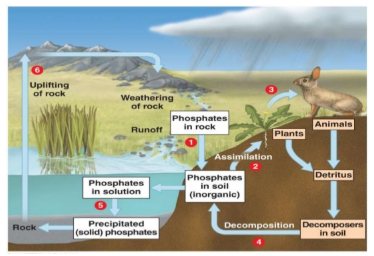
Geological upheavals move phosphorus from the ocean to land
Slow weathering of rocks returns phosphorus to the soil
Most phosphorus is recycled within a community
Phosphorus is a limiting nutrient
eutrophication
excess N and P from agricultural runoff —> enters waterways —> algal bloom —> algae die —> aerobic bacteria decompose them —> reduces oxygen in water —> biodiversity dies
invasive species
cause disease
act as predators or parasites
acting as competitors
altering habitat
hybridizing with local species
prevent by: inspect imported goods likely to contain invader species, international laws banning transfer of invader species
indicator species
serve as early warning of damage or danger to a community
direct human alterations of ecosystems
habitat loss due to logging, agriculture, livestock farming, urbanization
introducing new/exotic/invasive species
overharvesting wild plants and animals
pollution: pharmaceuticals & microplastics
logging, urbanization, monocropping to eutrophication
indrect human alterations of ecosystems
global climate change, which alters ecological systems and reduces Earth’s capacity to sustain life
Monocropping
gricultural practice of growing a single crop year after year on the same land, without rotation through other crops
→ Depletes soil of nutrients
→ Creates an ideal niche for parasites and pests (food bonanza)
→ Requires more fertilization and pesticide use
3 types of ecological extinction
Local extinction: when a species is no longer found in an area it once inhabited, but is still found elsewhere in the world.
ecological extinciton: occurs when so few members of a species are left that it can no longer play its ecological roles in the biological community.
Biological extinction: when a species is no longer found anywhere on earth…this is FOREVER!
HIPPO causes of extinction
habitat fragmentation
invasive species
human population growth
pollution
other: poaching, overhunting, overharvesting, climate chnage
effects of global climate change (direct)
rising maximum temperatures (NASA Climate Change, 0:36min)
rising minimum temperatures
more intense floods, droughts, intense rainfalls, more frequent and severe heat waves
snow and rainfall patterns shifting
rising sea levels
higher ocean temperatures
shrinking glaciers
thawing permafrost
effects of global climate change (indirect)
increasing spread of pests and pathogens
loss of biodiversity due to limited adaptability
ocean acidification due to increased HCO3 concentrations in the water as a consequence of increased CO₂ concentrations
an increase in hunger and water crises, especially in developing countries