Study Guide
 Call Kai
 Learn
Learn Practice Test
 Spaced Repetition
 Match
Match Flashcards
 Knowt Play
1/134

There's no tags or description
Looks like no tags are added yet.
Name | Mastery | Learn | Test | Matching | Spaced | Call with Kai |
|---|
No analytics yet
Send a link to your students to track their progress
135 Terms
What may happen if the static system becomes clogged, especially at high altitude?
The pressure can get trapped in the system, so the instruments can read wrong. The airspeed indicator may run backward, and the altimeter may stay stuck on a high reading if it clogged at high altitude.
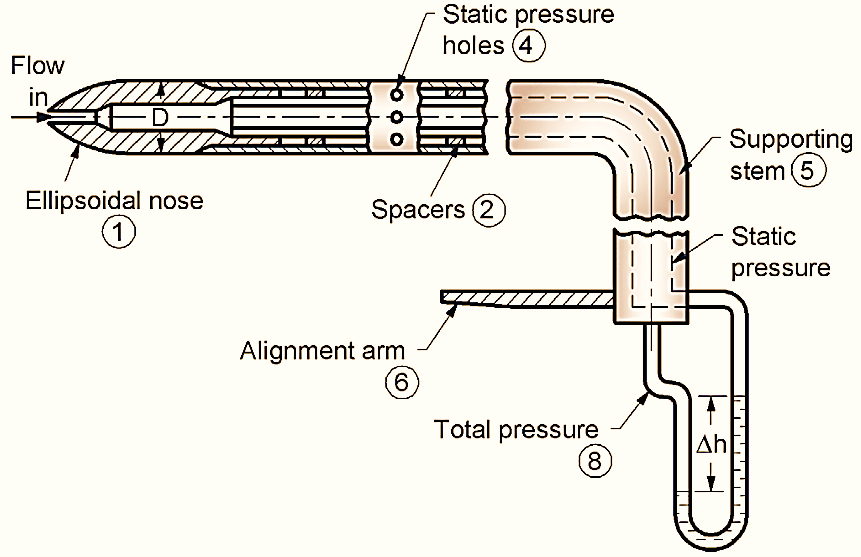
What is a pitot-static head?
It is a combination unit that has both pitot and static openings, and it may also include heaters.
What is a standard day?
A standard day is 59°F and 29.92 in. Hg.
What does Hg stand for?
Mercury
What happens to an altimeter in lower atmosphere?
There is more pressure in the lower atmosphere.
Why is there more pressure in the lower atmosphere?
Because there is more air above it pushing down.
What do the hands on the altimeter mean, and what does the knob do?
long skinny hand = 100 feet
short fat hand = 1,000 feet
small arrow hand = 10,000 feet
the knob sets the barometric pressure in the barometric window so the altimeter reads correctly
What is the altitude reading for picture 1?
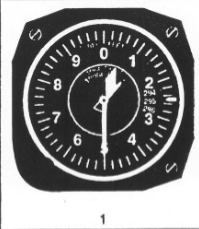
10,500 feet
What is the altitude reading for picture 2?
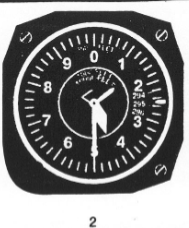
14,500 feet
What is the altitude reading for picture 3?
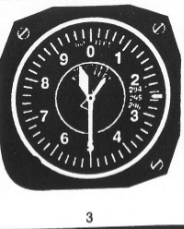
9,500 feet
What does the airspeed indicator need in order to work, and what is it based on?
It needs both pitot pressure and static pressure, and it is based on differential pressure.
What two pressures does the airspeed indicator compare?
Pitot pressure and static pressure
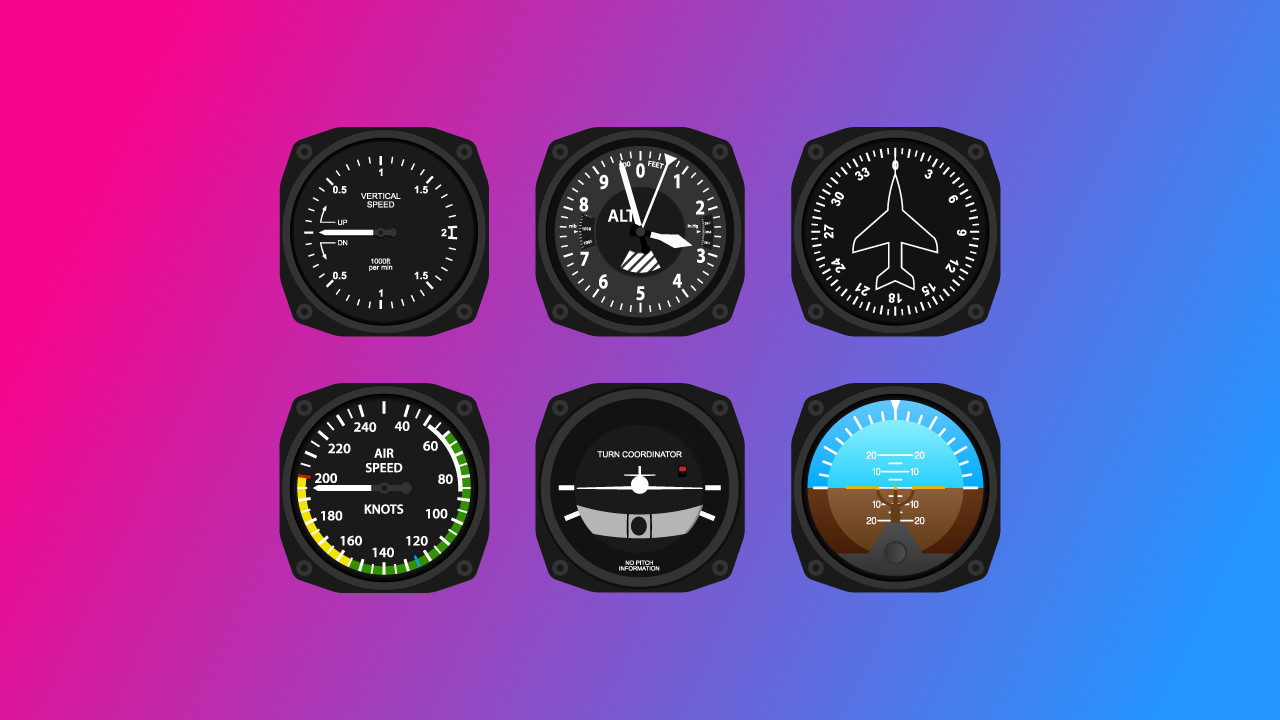
How is the six-pack arranged?
Top left: Airspeed indicator
Top middle: Artificial horizon
Top right: Altimeter
Bottom left: Turn and bank
Bottom middle: Directional gyro
Bottom right: VSI
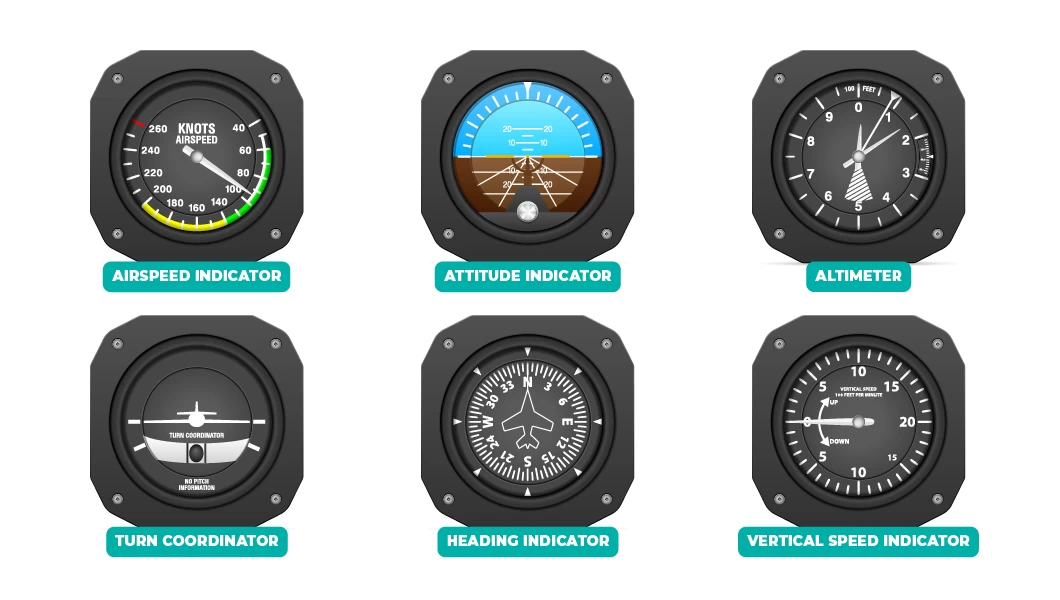
What is critical Mach number?
The aircraft speed where airflow over part of the wing first reaches Mach 1
What is transonic?
The range near the speed of sound where airflow over parts of the airplane reaches Mach 1 first, and shock waves start to form.
What is Mach tuck?
The center of lift moves aft, causing a nose-down tendency
What does VSI stand for, and what does it show?
Vertical Speed Indicator. It shows the rate of climb or descent.
How does a vertical speed indicator work?
It is based on differential pressure between direct static pressure and pressure delayed by a calibrated leak.
What two parts are critical to VSI operation?
Calibrated leak and direct static pressure
What happens in a climb in the VSI?
The pressure in the diaphragm changes first, while the case pressure changes more slowly through the calibrated leak, so the instrument shows a climb.
What is the difference between an instantaneous VSI and a traditional VSI?
An instantaneous VSI responds faster because it uses accelerometer-actuated pumps or dashpots. A traditional VSI has a slight delay because it depends only on the calibrated leak and direct static pressure.
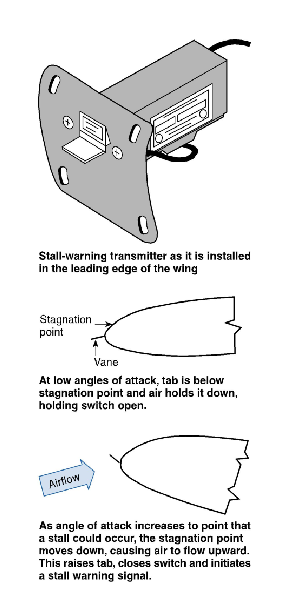
How does a stall warning work?
As the angle of attack increases toward a stall, the airflow changes and pushes the vane (tab) upward. When the vane (tab) moves up, it triggers the stall warning
What is a Bourdon tube used for?
A Bourdon tube is used to measure high pressure.
Example:
engine pressure
hydraulic pressure
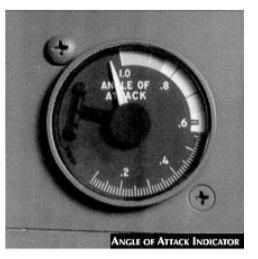
What does an angle of attack sensor do?
It senses the aircraft’s angle of attack so the system can tell how close the wing is getting to a stall.
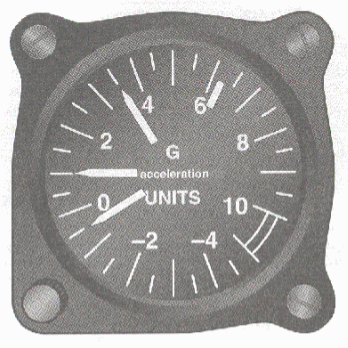
What does a G-meter show?
A G-meter shows the G-forces acting on the aircraft, including the highest positive G reached and the lowest negative G reached.
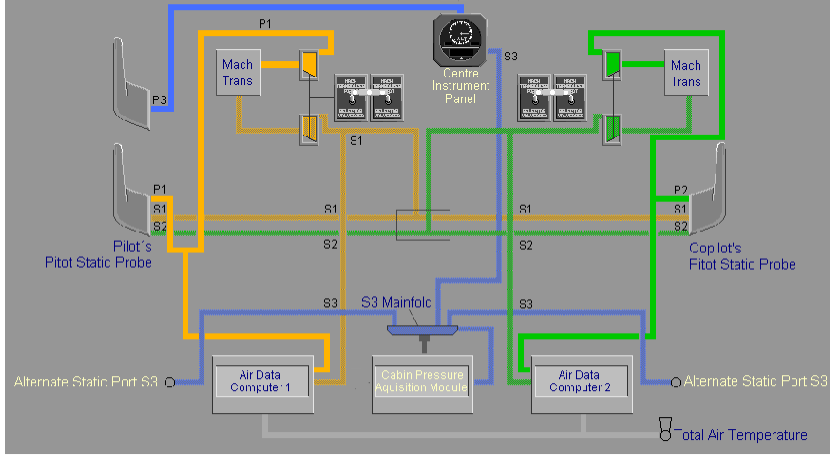
What is the pitot-static and air data system for?
It supplies variable air pressure inputs to:
air data computers
stall protection system
cabin pressure acquisition module (CPAM)
standby air data system
How many pitot-static systems are commonly on a commercial aircraft, and why?
Usually three. They are used for redundancy and more reliable pressure information on a large aircraft.
Important detail:
pilot side = active
copilot side = active
standby = backup
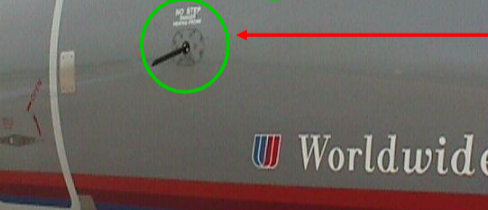
What do pitot-static sensors look like on the aircraft?
Attach picture here so I can recognize what they look like on the aircraft
What is this?
AOA stands for Angle of Attack.
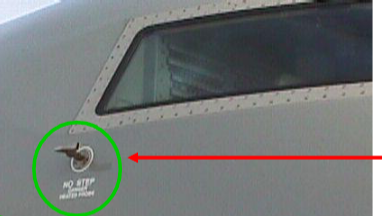
What is this?
TAT stands for Total Air Temperature. It measures the temperature of the air entering the system, and that temperature is sent into the air data computer so it can help calculate things like true airspeed and Mach.
What does the air data computer do, what does it receive, and what is it used for?
The air data computer receives pitot-static pressures and temperature information, then computes air data for other aircraft systems.
It receives:
pitot pressure
static pressure
temperature from the TAT probe
AOA information
input from the IAPS
information from the Air Data Reference Panel
It calculates / provides:
pressure and barometric corrected altitude
static air temperature
total air temperature
vertical speed
indicated airspeed
Mach number
true airspeed
IAS reference
vertical speed reference
airspeed trend vector
barometric setting alerts
static source
static source error correction
maximum speed
over-speed warning
It is used by / provides data to:
input / output concentrators (IOC)
AHRS computers
flight data recorder
stall protection and flap ECU
ATC transponders and TCAS
flight control computer / flight director
EFIS and EICAS
What does IAPS stand for?
Integrated Avionics Processing System
What does the ARP do?
The Air Data Reference Panel (ARP) controls what air data information is shown on the PFD. The left ARP controls the left PFD, and the right ARP controls the right PFD.
It is used for:
barometric pressure setting
altimeter presentation
MDA/DH
VFTO and V-speeds
radio altimeter test
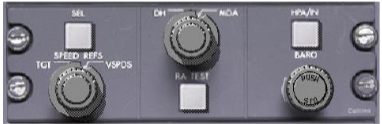
What does this button do?
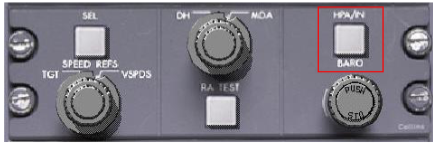
The HPA/IN pushbutton changes the pressure display between hPa and Hg on the PFD.
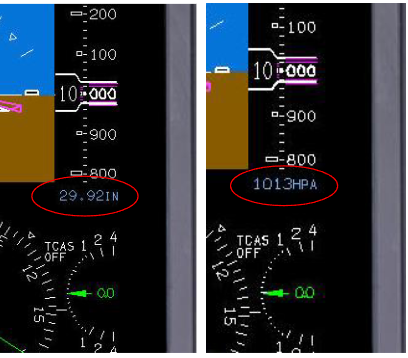
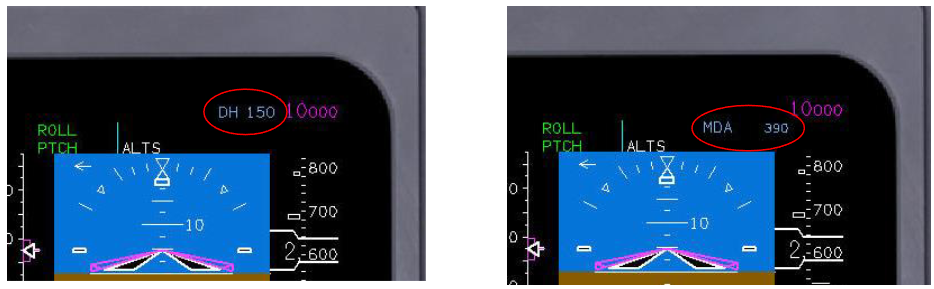
What does this button do?
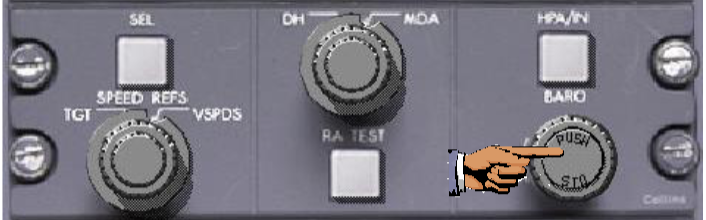
The DH/MDA knob has three controls:
outer knob = displays DH or MDA
inner knob = changes the value
center push = shows or removes the setting
What does this button do?
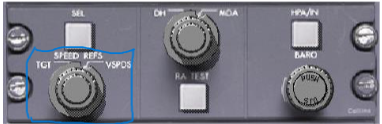
The TGT / VSPDS control is used to set reference speeds.
Basic controls:
outer knob = selects the speed
inner knob = changes the value
inner push = clears the value
SEL pushbutton = cycles through the selectable values
What does VSPDS stand for?
V-speeds
What does this button do?
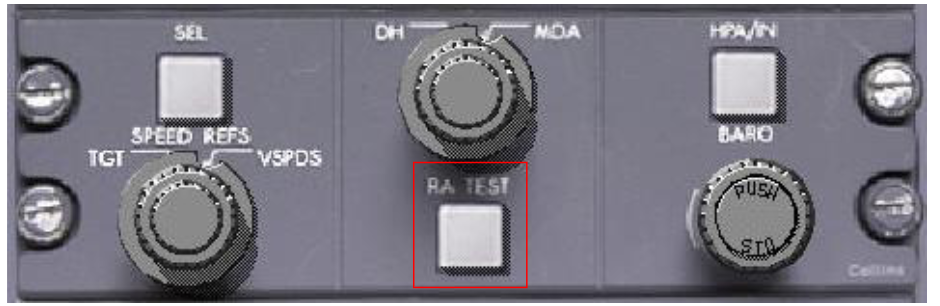
RA TEST starts the radio altimeter self-test.
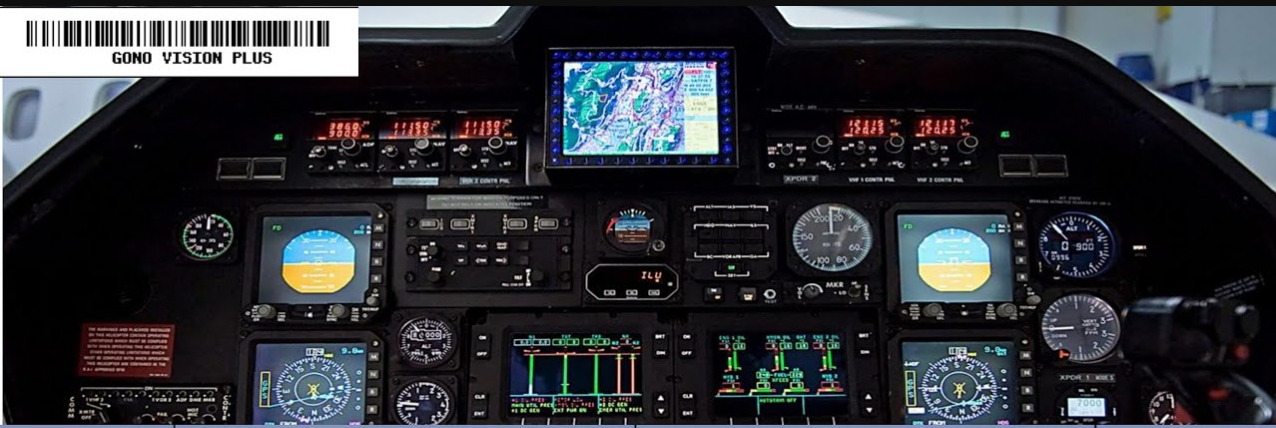
What does this area show?
It shows air data system indications, mainly:
airspeed
altitude
vertical speed
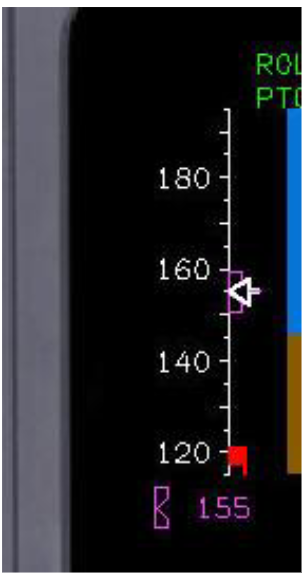
What is this area on the PFD?
This is the airspeed display on the left side of the PFD.
What are reference speeds?
They are preset speed markers, such as VT, V1, VR, and V2, shown on the speed display.
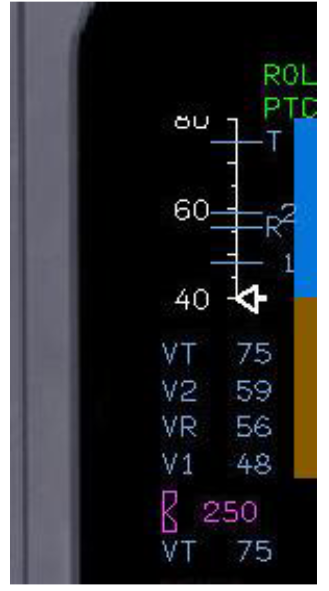
What is the speed bug?
The speed bug is a movable speed marker used as a reference speed on the display.
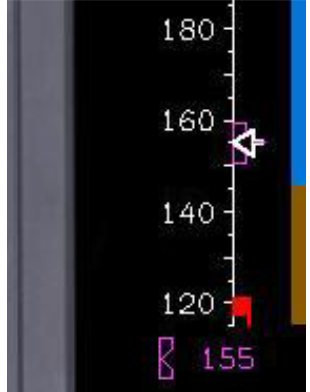
What is the flap overspeed cue?
It is the red and black checkerboard cue that warns the pilot not to exceed the safe speed for the current flap setting.
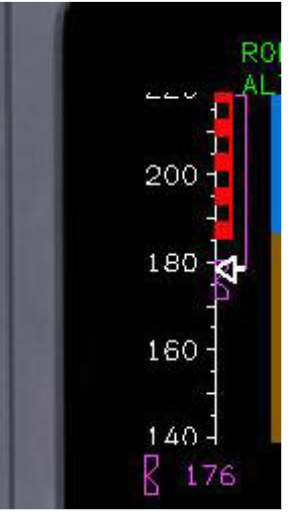
What is the low-speed cue?
It is the red and black checkerboard cue that warns the pilot the aircraft is getting too slow and is getting close to a stall.
Important detail:
it appears a few seconds after takeoff, so that warning does not come on right away during takeoff
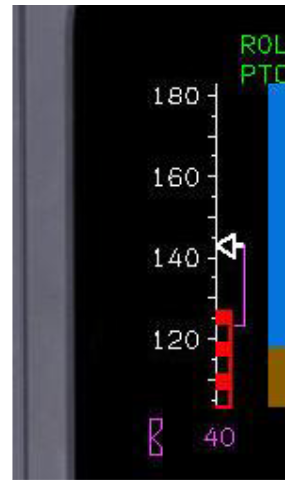
What is the low-speed awareness cue?
It is the green line that gives an early warning before reaching the low-speed danger area.
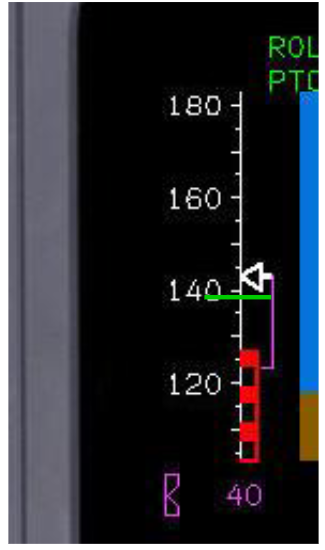
What is the trend vector?
The trend vector shows where the aircraft’s speed will likely be in about 10 seconds if conditions stay the same.
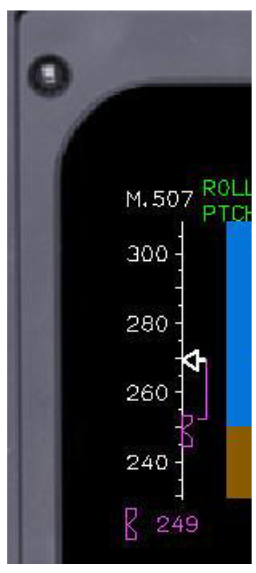
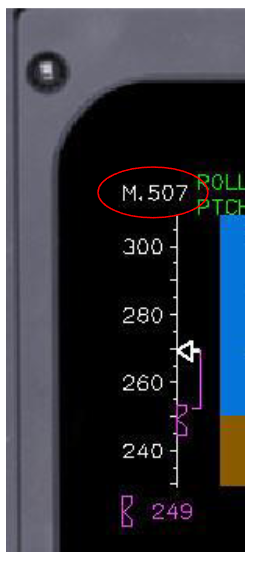
What is the Mach number display?
It shows the aircraft’s Mach number on the PFD. It appears when the aircraft goes above 0.45 Mach and disappears below 0.40 Mach.
What do the red flags mean?
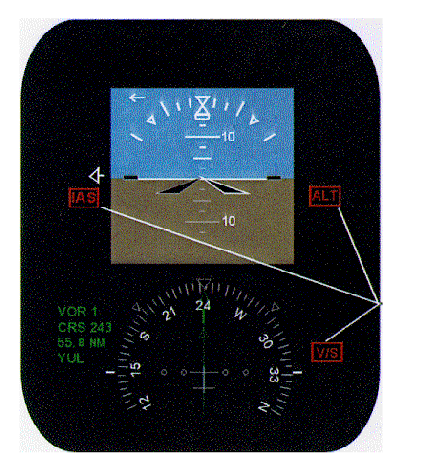
The red flags mean the air data is invalid.
What is this area on the PFD?
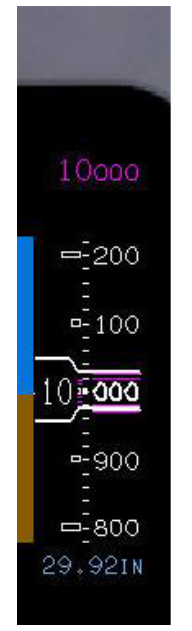
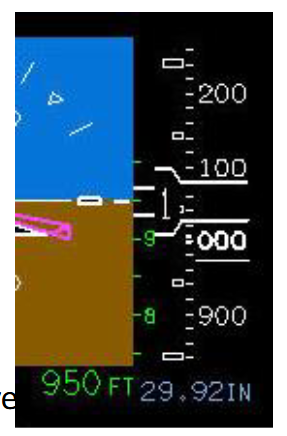
This is the altitude area on the PFD.
What is this area on the PFD?
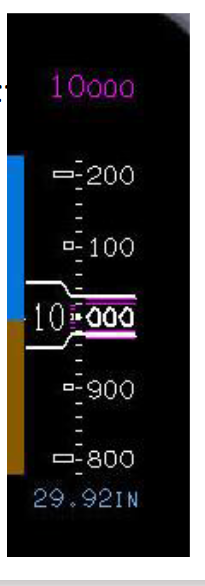
This is the altitude display on the right side of the PFD.
What is preselect altitude?
It is the selected altitude target, shown by the altitude bug.
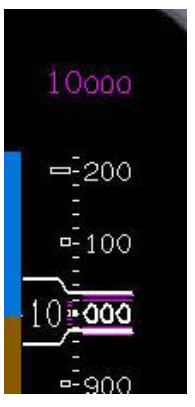
What do the altitude alert modes do?
They alert the pilot when the aircraft is getting close to, or moving away from, the preselected altitude.
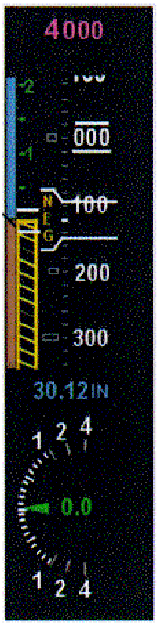
What is the negative altitude warning?
It is the yellow NEG label that appears when the aircraft is below 0 feet MSL.
What does this knob do?
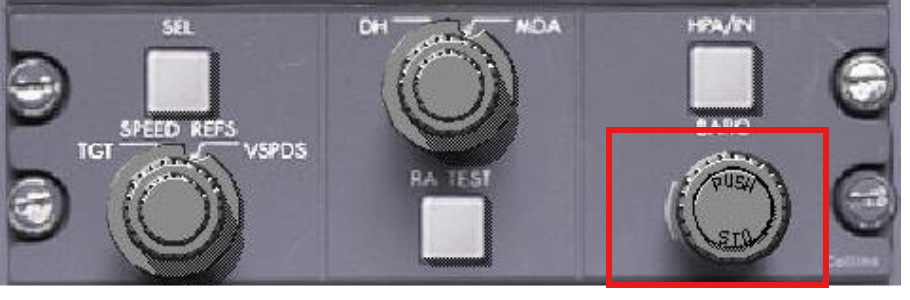
It is used to change the barometric pressure setting.
What is MDA / DH used for?
It is used to show Minimum Descent Altitude or Decision Height on the PFD.
What is the radio altitude display?
It is the display that shows the aircraft’s height above the ground.
What is this area on the PFD?
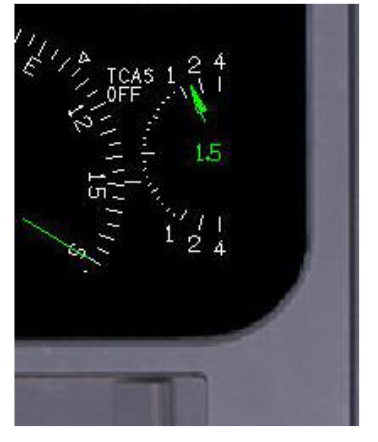
This is the vertical speed display on the lower right side of the PFD.
What is Transonic?
Transonic: around Mach 0.8 to 1.2. In this range, airflow over the top of the wing can speed up enough to reach Mach 1 first, even when the whole airplane is still below Mach 1. When that happens, a shock wave forms on the wing, usually over the upper surface, and the pressure drops behind that shock wave. That disturbed airflow can start to separate and the smooth lift pattern over the wing starts getting messed up.
Main effects:
drag increases sharply
airflow can separate behind the shock wave
buffeting/control problems can start
the center of pressure moves aft
That aft movement can make the nose pitch down. That nose-down tendency is called Mach tuck.
Why do most commercial aircraft cruise around Mach 0.80 to 0.85?
Most airliners cruise around Mach 0.80 to 0.85 because that is just below or near the start of transonic. It lets them fly fast and efficiently without going too far into the range where shock waves, drag rise, and Mach tuck-related problems get worse.
Main point:
cruises near transonic
usually stays out of the worst of it
balances speed and efficiency
Why can Mach change with altitude even if airspeed stays the same?
Mach is your speed compared to the local speed of sound. If the airplane is flying at the same indicated airspeed, the pitot-static system can still show about the same airspeed indication, but at higher altitude the air is usually colder, so the speed of sound is slower. That means the airplane can be going the same speed and still be at a higher Mach number.
Main point:
higher altitude = colder air
colder air = slower speed of sound
same speed can equal a higher Mach number
so it is easier to get closer to Mach 1 at higher altitude
What do the colors on the airspeed indicator mean?
The colors show the airplane’s safe operating speed ranges.
White arc: flap operating range
Green arc: normal operating range
Yellow arc: caution range, smooth air only
Red line: never exceed speed
Blue line: best single-engine rate-of-climb speed on some multiengine aircraft
Red radial line: minimum controllable airspeed on some multiengine aircraft
For the basic ones, the big four to know are:
white = flaps
green = normal
yellow = caution
red = do not exceed
What is atmospheric pressure?
Atmospheric pressure is the pressure of the air around us. At standard sea level, it is 14.7 psi, 29.92 in. Hg, or 1013.2 millibars.
Example:
the outside air around the airplane
the outside air used as the reference for gauge pressure
What is absolute pressure?
Absolute pressure is pressure measured against a perfect vacuum, so zero pressure is the reference.
Example:
altimeter
manifold pressure gauge
Important detail:
the manifold is the part of the induction system that distributes incoming air or fuel-air mixture to the engine cylinders
the pressure inside the manifold is real pressure
the zero pressure / vacuum reference is inside the gauge, not inside the manifold
What is gauge pressure?
Gauge pressure is pressure measured against atmospheric pressure. It shows how much pressure is above the outside air pressure.
Math example:
tire pressure inside = 32 psi absolute
outside air pressure = 14.7 psi
32 - 14.7 = 17.3 psi gauge
Example:
tire pressure gauge
oil pressure gauge
What is differential pressure?
Differential pressure is pressure measured by comparing one pressure directly to another pressure.
Example:
airspeed indicator
compares pitot pressure and static pressur
What is the barometric window?
The barometric window is the little window on the altimeter where you set the pressure value, such as 29.92 in. Hg.
What is the indicated altitude?
Indicated altitude is the altitude the altimeter shows when it is set to the current local pressure setting.
Important detail:
current local pressure setting means the barometric pressure for that area, usually from the local weather / airport setting
this is the normal altitude reading used near the ground and at lower altitudes
What is pressure altitude?
Pressure altitude is the altitude shown when the altimeter is set to 29.92 in. Hg in the barometric window.
Important detail:
it uses standard pressure
it is not using the local pressure setting
pilots use this so everyone high up is using the same pressure setting
Example:
FL320 means Flight Level 320
that means 32,000 feet pressure altitude
instead of saying actual altitude above sea level, high-altitude aircraft use flight levels based on 29.92
What is standard pressure?
Standard pressure is the standard sea-level pressure reference:
29.92 in. Hg
1013.2 millibars
14.7 psi
59 degree F
Important detail:
this is the pressure reference number
the standard atmosphere also includes a standard temperature reference
but pressure altitude itself is based on setting 29.92
What is true altitude?
True altitude is the aircraft’s actual height above mean sea level.
Important detail:
MSL = mean sea level
What is absolute altitude?
Absolute altitude is the aircraft’s height above ground level.
Important detail:
AGL = above ground level
What is density altitude?
Density altitude is pressure altitude corrected for nonstandard temperature.
What that means:
start with pressure altitude
then adjust for air that is hotter or colder than standard
Important detail:
hotter air = higher density altitude
it is not a direct measurement
What is RVSM?
RVSM means Reduced Vertical Separation Minimum.
Important detail:
it reduces the vertical separation between aircraft at higher altitudes
instead of 2,000 feet, aircraft can be separated by 1,000 feet
this gives more usable flight levels
What that means:
it is kind of like giving airplanes more cruising lanes at high altitude
it helps traffic flow better and lets more aircraft fly at efficient altitudes
Example:
without RVSM, two aircraft might need 2,000 feet between them
with RVSM, they may only need 1,000 feet between them
What does AGL mean?
AGL means Above Ground Level.
What does MSL mean?
MSL means Mean Sea Level.
What is an encoding altimeter?
An encoding altimeter is an altimeter that sends altitude information to other aircraft systems instead of only showing it to the pilot.
Important detail:
it works with the transponder
it sends altitude information to ATC
it is more for the system side than for the pilot to read directly
How does an encoding altimeter send altitude information?
It changes altitude into a coded electrical signal, often called Gillham code or gray code.
Important detail:
it uses on/off style signals
this can be thought of like 1 or 0
also like high or low
also like 5 volts or 0 volts
Example:
the altitude is sent out in coded form, usually in 100-foot increments
What is indicated airspeed?
ndicated airspeed is the airspeed shown directly on the airspeed indicator.
Important detail:
it is the direct dial reading
it comes from pitot pressure and static pressure
Note:
this is different from indicated altitude
What is calibrated airspeed?
Calibrated airspeed is indicated airspeed corrected for instrument error and position error.
Important detail:
it is a more accurate version of the dial reading
this is the airspeed reading after the system / instrument correction is applied
a correction from the maintenance manual may be used
Note:
this is different from corrected altitude
What is true airspeed?
True airspeed is the aircraft’s actual speed through the air.
Important detail:
it is based on calibrated airspeed
then adjusted for temperature and pressure altitude
higher temperature and higher pressure altitude mean the air is less dense
in less dense air, the airplane can have the same indicated/calibrated airspeed but actually be moving faster through the air
on some aircraft, a true airspeed indicator does this adjustment automatically
Note:
this is the one tied to temperature and pressure altitude
What is the difference between airspeed and ground speed?
Airspeed is how fast the airplane moves through the air. Ground speed is how fast it moves over the ground. Think of a car as the ground reference. If there is no wind, the airplane and the car would be going the same speed over the ground. With a headwind, the airplane moves slower over the ground, so the car would be faster. With a tailwind, the airplane moves faster over the ground, so the airplane would be faster than the car.
Important detail:
no wind = airspeed and ground speed are the same
headwind = ground speed is lower
tailwind = ground speed is higher
What is the difference between airspeed and Mach?
Airspeed is the aircraft’s speed through the air. Mach is the aircraft’s speed compared to the speed of sound.
Important detail:
the same airspeed can give a different Mach number at different altitudes
at higher altitude, the air is usually colder
colder air means the speed of sound is slower
that makes it easier to get closer to Mach 1
if Mach gets too high, shock waves can form and cause drag rise, buffeting, and Mach tuck
What are some examples of Flight Instrument Instruments?
Pitot/Static
Gyroscopic or Magnetic
What are some examples of Navigation Instruments?
Course Deviation Indication
Bearing Indication
The higher the altitude, the speed of sound ____________? What does that mean?
Decreases
What regulation covers altimeter tests and inspections?
FAR 91.411.
How often must the altimeter system, static system, and automatic pressure altitude reporting system be tested for IFR operation?
Every 24 calendar months.
What is a radio altimeter?
A radio altimeter shows the aircraft’s height above the ground (AGL) by using a radio signal, so it does require electrical power.
What is a servo altimeter?
A servo altimeter is an altimeter with a built-in compensation system that helps reduce position error automatically.
What is scale error (altimeter system)?
It checks that the altimeter indicates the same altitude as the test equipment within the allowed tolerance.
What is hysteresis (altimeter system)?
It checks that the altimeter reads correctly when altitude is increased and then decreased at the same pressure level.
What is after effect (altimeter system)?
It checks that the altimeter returns to the same indication, within tolerance, after the test.
What is friction (altimeter system)?
It checks for sticking by comparing readings before and after vibration.
What is case leak (altimeter system)?
It checks that the altimeter case does not leak more than the allowed amount.
What is barometric scale error (altimeter system)?
It checks that the barometric scale matches the pointer indication within tolerance.
What is a true airspeed indicator?
A true airspeed indicator corrects indicated airspeed to true airspeed using temperature and altitude.
What is a Machmeter?
A Machmeter shows aircraft speed in relation to the speed of sound.
What is a combination airspeed indicator?
It combines an airspeed indicator and a Machmeter in one instrument
What is a maximum allowable airspeed indicator?
It shows the highest speed the aircraft is allowed to fly.
What is this?
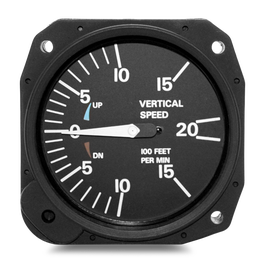
VSI. Vertical Speed Indicator. It shows the rate of climb or descent.