Microbio Lab Midterm exam
0.0(0)
Studied by 4 people Call Kai
 Learn
Learn Practice Test
 Spaced Repetition
 Match
Match Flashcards
 Knowt Play
Card Sorting
1/81

Earn XP
Description and Tags
Last updated 9:57 PM on 3/12/23
Name | Mastery | Learn | Test | Matching | Spaced | Call with Kai |
|---|
No analytics yet
Send a link to your students to track their progress
82 Terms
1
New cards
resolving power determined by
wavelength and aperture
2
New cards
immersion oil
used on 100x lens, results in less bending of light and better image quality
* has higher refractive index than air
* has better resolution
* has higher refractive index than air
* has better resolution
3
New cards
culture medium
uses soluble low molecular weight substances that are derived from complex nutrients broken down by enzymes. Used to grow microorganisms
4
New cards
agar
an extract of seaweed, a complex carbohydrate composed mainly of galactose
* liquifies at 100C
* solidifies at 40C
* liquifies at 100C
* solidifies at 40C
5
New cards
Antonie van Leeuwenhoek
first person to observe microbes, called them wee little beasties
6
New cards
resolving power
relates to how well a lens allows two objects to be seen as distinct and separate
7
New cards
total magnification
objective lens x ocular lens
8
New cards
phase contrast microscope
uses refraction and interference to see high contrast high resolution images
9
New cards
fluorescence microscope
uses fluorescent stains to produce image
10
New cards
confocal microscope
uses laser to scan plane and produce numerous 2 dimensional high resolution images at various depths that can be constructed into 3D image
* can be used for biofilms
* can be used for biofilms
11
New cards
two photon microscope
uses scanning technique, fluorochromes and long wavelength lights
12
New cards
transmission microscope
uses electron beams that pass through a specimen to visualize small images
13
New cards
scanning microscope
uses electron beam to visualize surfaces to create 3D image
14
New cards
petri dishes are incubated in an
inverted position
15
New cards
aseptic technique
practices and procedures used to prevent contamination from pathogens and minimize risk of infection
* handwashing, sterilization, keeping flasks closed
* handwashing, sterilization, keeping flasks closed
16
New cards
subculturing
transferring of microorganisms into fresh medium from its stock culture
17
New cards
streak plate
used to dilute bacteria until single cells are separated from one another for identification
* isolation of distinct colonies
* isolation of distinct colonies
18
New cards
filiform growth
continuous threadlike growth with smooth edges

19
New cards
echinulate growth
continuous growth with irregular edges
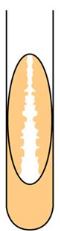
20
New cards
beaded growth
nonconfluent to semiconfluent colonies
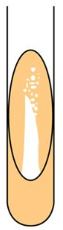
21
New cards
effuse growth
thin spreading growth
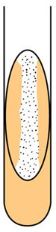
22
New cards
arborescent growth
treelike growth
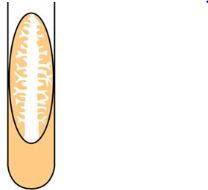
23
New cards
rhizoid growth
rootlike growth

24
New cards
spread plate
requires that a previously diluted mixture of microorganisms be used
25
New cards
stain dye
defined as an organic compound containing a benzene ring plus a chromophore and auxochrome group
26
New cards
chromogen
benzene + chromophore
* colored compound but not stain
* colored compound but not stain
27
New cards
auxochrome
enables chromogen to form salts and bind to fibers or tissues
28
New cards
acidic stains
anionic (negative charge), has strong affinity for positive parts of cell
29
New cards
basic stains
cationic (positive charge) that has a strong affinity for negatively charged parts of cell such as cell walls
30
New cards
bacterial smears
done before staining procedure, should appear translucent/semi transparent
* require heat fixation to fix bacterial proteins to glass slide before staining
* require heat fixation to fix bacterial proteins to glass slide before staining
31
New cards
gram positive
bacteria that has thick peptidoglycan layer and is stained with primary stain
* purple appearance
* purple appearance
32
New cards
gram negative
bacteria that has thin peptidoglycan layer surrounded by outer lipid containing layers
* stains with counterstain
* dyed with red counterstain
* stains with counterstain
* dyed with red counterstain
33
New cards
gram staining
1. primary stain (crystal violet)
2. mordant - gram’s iodine
3. counterstain - alcohol wash
1. counterstain - red safranin
34
New cards
acid fast staining (ziehl neelsen method)
used to detect mycobacterium that have mycolic acid (waxy polymer that is less permeable)
35
New cards
acid fast staining steps
1. primary stain - carbolfuchsin
2. steam
3. decolorizing agent - acid alcohol
4. counterstain - methylene blue
36
New cards
spore stain (schaeffer fulton method)
used to detect endospores from bacillus and clostridium
* exist as metabolically active vegetative cells
* exist as metabolically inactive spores
* exist as metabolically active vegetative cells
* exist as metabolically inactive spores
37
New cards
spore stain steps
1. primary stain (malachite green)
2. steam heating
3. decolorizing agent - water
4. counterstain - safranin
38
New cards
clostridium endospores
have slight bulge around spore
39
New cards
bacillus endospores
do not have bulge around endospore
40
New cards
general growth media
non specific media configured to cultivate a wide range of microorganisms without many restrictions
41
New cards
selective media
specifically configured to restrict growth of particular organisms while allowing others to grow
* bile salts, crystal violet, antibiotic
* bile salts, crystal violet, antibiotic
42
New cards
differential media
contains chemical compounds that cause an observable change in the medium or the medium surrounding the bacteria when a particular biochemical reaction occurs
43
New cards
autotrophs
can be cultivated in a medium consisting of inorganic compounds, use inorganic carbon in form of CO2
44
New cards
heterotrophs
cannot be cultivated in a medium consisting of inorganic compounds, must be supplied with organic nutrients such as glucose
45
New cards
mannitol salt agar
selective for staphylococcus, differential for staph aureus
* staph aureus + mannitol = fermented acid product
* phenol red → yellow halo
* staph aureus + mannitol = fermented acid product
* phenol red → yellow halo
46
New cards
blood agar
selective for pathogenic streptococci
* ability for strep to cause hemolysis
* alpha (partial), beta (full), gamma (none)
* tryptic soy agar + sheep blood
* also looks for enterococci and aerococci
* ability for strep to cause hemolysis
* alpha (partial), beta (full), gamma (none)
* tryptic soy agar + sheep blood
* also looks for enterococci and aerococci
47
New cards
macconkey agar
selective for gram negative enterobacteria
* contains bile salts/crystal violet to inhibit gram +
* distinguishescoliformsfromnoncoliforms
* containslactoseforcoliformtoferment
* neutral red indicator = red color when positive
* contains bile salts/crystal violet to inhibit gram +
* distinguishescoliformsfromnoncoliforms
* containslactoseforcoliformtoferment
* neutral red indicator = red color when positive
48
New cards
Eosin Methylene Blue
selective for gram negative enterobacteria
* contains eosin and methylene blue dye to inhibit growth of gram +
* distinguishes coliforms from non coliforms
* methylene blue → red if acidic (fermentation)
* methylene blue + eosin = green for e coli
* contains eosin and methylene blue dye to inhibit growth of gram +
* distinguishes coliforms from non coliforms
* methylene blue → red if acidic (fermentation)
* methylene blue + eosin = green for e coli
49
New cards
phenylethyl alcohol agar
selective for gram positive organisms
* inhibits growth of gram negative
* inhibits growth of gram negative
50
New cards
psychrophile
bacteria that grows between -5 to 20 C
all grow between 0 and 5 C
all grow between 0 and 5 C
51
New cards
mesophile
bacteria that grows at 20 to 45 C
52
New cards
psychrotolerant
optimum growth temperature is 20-40C
can grow at 0C
can grow at 0C
53
New cards
thermophiles
bacteria that grows at 35C and above
54
New cards
facultative thermophile
organisms that grow at 37C but optimally at 45-60C
55
New cards
obligate thermophile
bacteria that grows only at temps above 50C
56
New cards
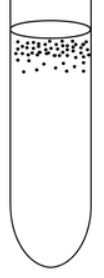
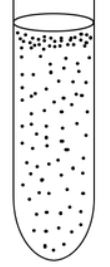
aerobes
requires presence of atmospheric oxygen, uses oxygen as final electron acceptor
57
New cards
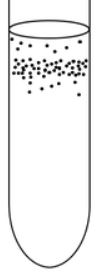
microaerophiles
require limited amounts of atmospheric oxygen for growth, excess oxygen results in death
58
New cards
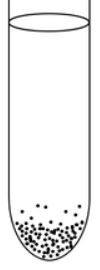
obligate anaerobes
requires absence of free oxygen for growth, presence of oxygen results in formation of toxic metabolites
59
New cards
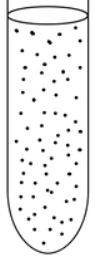
aerotolerant anaerobes
produce catalase and are not killed in presence of oxygen, do not use oxygen as final electron acceptor
60
New cards
facultative anaerobes
can grow in presence of absence of oxygen, prefer to use oxygen for aerobic respiration
61
New cards
lag phase
cells transition from maintenance metabolism to growth metabolism
* enzymes for cell growth are synthesized
* enzymes for cell growth are synthesized
62
New cards
log phase
cells are now in growth metabolism and cell number doubles regularly until max is reached
* length of this phase depends on organism and medium composition
* length of this phase depends on organism and medium composition
63
New cards
stationary phase
cells transition to maintenance metabolism and number of cells undergoing division is equal to number of cells that are dying
* toxic end products begin to accumulate
* toxic end products begin to accumulate
64
New cards
decline phase
waste products build up and cells in culture die at rapid rate
65
New cards
growth rate formula
g = t/n
* g : generation time
* t : time of exponential growth
* n : number of generations
* \*\*\* equation used only for log phase
* g : generation time
* t : time of exponential growth
* n : number of generations
* \*\*\* equation used only for log phase
66
New cards
extracellular enzymes
act on substances outside of cell, mainly hydrolytic that reduce high molecular weight substances to low molecular weight substances for entry into cell
* starch hydrolysis
* lipid hydrolysis
* gelatin hydrolysis
* starch hydrolysis
* lipid hydrolysis
* gelatin hydrolysis
67
New cards
intracellular enzymes
function inside cell and mainly responsible for synthesis of new material for cell energy
* basis of cell metabolism
* basis of cell metabolism
68
New cards
starch hydrolysis
starch is polymer of glucose molecules linked by glycosidic bonds
* starch + amylase enzymes = maltose
* starch agar flooded with iodine
* clear zone = positive
* blue black + no clear zone = negative
* starch + amylase enzymes = maltose
* starch agar flooded with iodine
* clear zone = positive
* blue black + no clear zone = negative
69
New cards
lipid hydrolysis
lipids + lipase + H2O → glycerol + fatty acids
* tributyrin agar (lipid substrate)
* clear area around growth indicates hydrolysis
* tributyrin agar (lipid substrate)
* clear area around growth indicates hydrolysis
70
New cards
gelatin hydrolysis
gelatin + gelatinase → amino acid
* gelatin deep inoculated with stab inoculation
* cultures that remain liquid after refrigeration = pos
* cultures that remain solid = negative
* gelatin deep inoculated with stab inoculation
* cultures that remain liquid after refrigeration = pos
* cultures that remain solid = negative
71
New cards
fermentation
the anaerobic breakdown of substrates like carbohydrates and alcohols with the production of organic acids and sometimes gases such as H2 or CO2
72
New cards
carbohydrate fermentation
includes nutrient broth with carbohydrate, pH indicator phenol red, inverted durham tube
* yellow coloration = fermentation
* yellow color + gas bubble = fermentation and gas
* no color change = no fermentation
* yellow coloration = fermentation
* yellow color + gas bubble = fermentation and gas
* no color change = no fermentation
73
New cards
IMViC test series
used to differentiate enterobacteria found in intestinal tract
* pathogens = salmonella, shigella
* occasional pathogens = proteus, klebsiella
* non pathogenic = E coli, enterobacter
* pathogens = salmonella, shigella
* occasional pathogens = proteus, klebsiella
* non pathogenic = E coli, enterobacter
74
New cards
indole production test
tryptophan + tryptophanase = indole + ammonia + pyruvic acid
* SIM agar contains tryptophan
* Kovac’s reagent added
* red layer = positive
* SIM agar contains tryptophan
* Kovac’s reagent added
* red layer = positive
75
New cards
methyl red test
differentiates E. coli from K. aerogenes
* glucose → organic acid end products
* indicator methyl red added
* red color = pH 4, positive E coli
* yellow color = pH 6, positive K aerogenes
* glucose → organic acid end products
* indicator methyl red added
* red color = pH 4, positive E coli
* yellow color = pH 6, positive K aerogenes
76
New cards
Voges-Proskauer test
tests for ability to produce nonacidic/neutral end products from organic acid products of glucose metabolism
* Barritt’s reagent added and reacts with acetylmethylcarbinol (AMC)
* rose colored product = positive
* Barritt’s reagent added and reacts with acetylmethylcarbinol (AMC)
* rose colored product = positive
77
New cards
citrate utilization test
tests ability of bacteria to use citrate as sole carbon source
* bromothymol blue indicator
* blue color = positive (in presence of alkaline sodium carbonate)
* green color = negative
citrate + citrase → oxalacetic acid + acetate → pyruvic acid + CO2
* CO2 + Na + H2O → sodium carbonate (alkaline)
* bromothymol blue indicator
* blue color = positive (in presence of alkaline sodium carbonate)
* green color = negative
citrate + citrase → oxalacetic acid + acetate → pyruvic acid + CO2
* CO2 + Na + H2O → sodium carbonate (alkaline)
78
New cards
hydrogen sulfide test
tests for ability to produce H2S from amino acids or inorganic compounds
* SIM medium contains sodium thiosulfate
* sodium thiosulfate + thiosulfate reductase → sulfite + hydrogen sulfide gas
* ferrous sulfate indicator
* combines with H2S gas to form black precipitate (ferrous sulfide)
* FeSO3 + H2S → FeS
* SIM medium contains sodium thiosulfate
* sodium thiosulfate + thiosulfate reductase → sulfite + hydrogen sulfide gas
* ferrous sulfate indicator
* combines with H2S gas to form black precipitate (ferrous sulfide)
* FeSO3 + H2S → FeS
79
New cards
urease test
tests for presence of enzyme urease which catalyzes hydrolysis of urea into CO2 and ammonia (alkaline)
* urea + urease → CO2 + H2O + NH3
* phenol red indicator
* turns pink in alkaline pH (positive result)
* urea + urease → CO2 + H2O + NH3
* phenol red indicator
* turns pink in alkaline pH (positive result)
80
New cards
nitrate reduction test
tests for ability to reduce nitrates to nitrites
* NO3 + 2H + 2e + nitrate reductase → NO2 + H20
* nitrites may be further reduced to ammonia or nitrogen
* test solutions A and B indicators
* red = positive
* zinc dust
* red color = negative
* no color change = positive
* NO3 + 2H + 2e + nitrate reductase → NO2 + H20
* nitrites may be further reduced to ammonia or nitrogen
* test solutions A and B indicators
* red = positive
* zinc dust
* red color = negative
* no color change = positive
81
New cards
catalase test
tests for presence of enzyme catalase which degrades hydrogen peroxide
* T soy plate
* if mixture bubbles upon addition of H2O2, O2 is produced and positive for catalase
* 2H2O2 + catalase → 2H20 + O2
* T soy plate
* if mixture bubbles upon addition of H2O2, O2 is produced and positive for catalase
* 2H2O2 + catalase → 2H20 + O2
82
New cards
oxidase test
cytochrome oxidase catalyzes oxidation of reduced cytochrome by oxygen resulting in water of hydrogen peroxide
* reagent p-aminomethylanaline oxalate oxidized in presence of cytochrome oxidase
* t soy plate becomes pink,maroon then black when positive
* pink or no color change = negative
* reagent p-aminomethylanaline oxalate oxidized in presence of cytochrome oxidase
* t soy plate becomes pink,maroon then black when positive
* pink or no color change = negative