diversity of life 2 lab quiz 9
 Call Kai
 Learn
Learn Practice Test
 Spaced Repetition
 Match
Match Flashcards
 Knowt Play
1/25

There's no tags or description
Looks like no tags are added yet.
Name | Mastery | Learn | Test | Matching | Spaced | Call with Kai |
|---|
No analytics yet
Send a link to your students to track their progress
26 Terms
Cephalochordata (subphylum)
-lancelets (amphioxus)
-persistent notochord
-pelagic larvae
-sessile adults (buried in sand)
-cilia and cirri for feeding
general fish traits
-aquatic vertebrates
-gills
-limbs modified as fins
Agnatha (super class)
-jawless fish
-very primitive fish like vertebrates
-jaws absent
-paired fins absent
-7+ paired gill slits
-sucking mouthparts
-secrete anticoagulent
-pineal gland (light sensitivity & hormone secretion)
-skin, not scales
lampreys
-Agnatha
-sucking mouthparts
-ectoparasite usually
-tidal ventilation
-undulating motion to swim
-cartilagous skeleton
-no jaws
-pineal gland directs circadian rhythm
Gnathostomata (infraphylum)
-jawed fish
-paired appendages
-semicircular canal of inner ear
-myelin sheaths of neurons
Chondrichthyes (class)
-cartilaginous fish
-jaws
-cartilage skeleton
-pectoral and pelvic paired fins
-scaled
sharks
-Chondrichthyes (class)
-ex: dogfish
-heterocercal tail: can't move in tail-first direction
-no swim bladder-> use oily liver
-placoid scales (bony denticles)
-unidirectional (ram) ventilation
-conveyer belt teeth
-protrusible jaw
Osteichthyes (superclass)
-bony fish
-operculum (gill covering)
-lung modified as swim bladder
-smooth scales
-ray finned and lobe finned division
Actinopterygii (class)
-Osteichthyes superclass
-ray finned fish
-fin spines
-protection of upper jaw
-physoclistic swim bladder: blood supplies gas for buoyancy
Teleostei (infraclass)
-Osteichthyes superclass, Actinopterygii class
-moveable maxilla and premaxilla
-homocercal caudal fin
Pumpkinseed sunfish
-Teleostei infraclass, Actinopterygii class, Osteichthyes superclass
-spines for defense
-operculum: breathe while stationary
-protrusible jaw: expedites feeding
-homocercal tail: efficient movement
Fish scales
-placoid scales: cartilaginous fish, add scales with growth
-ganoid scales: sturgeons, gars, bowfish; diamond shaped
-cycloid & ctenoid scales: teleost, smooth outer edge & toothed posterior edge
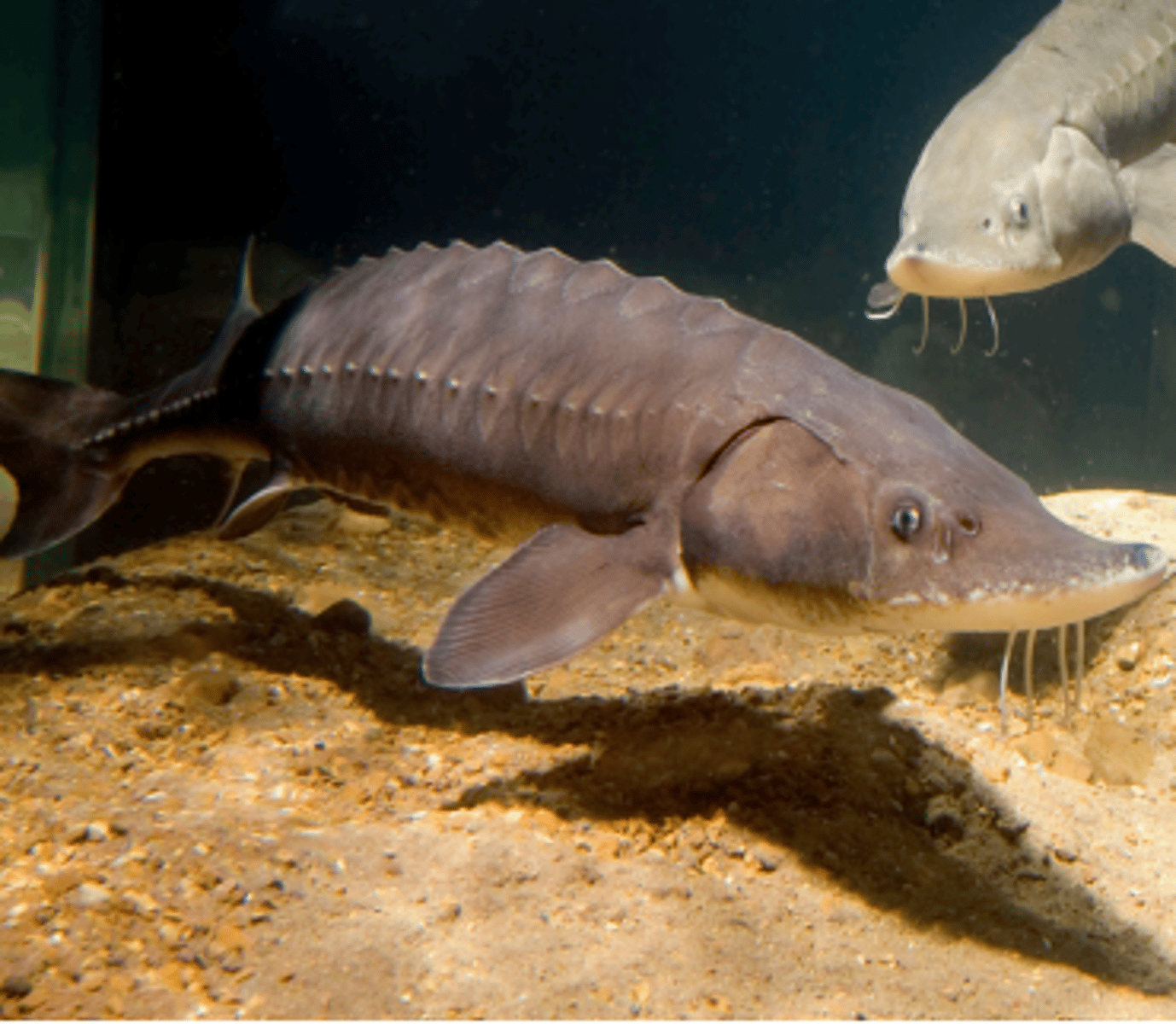
Lake Sturgeon (Acipenser fulvescens)
-Actinoptyergii class
-no teeth
-heterocercal tail
-long flattened snout
-barbels under mouth: bottom feeder
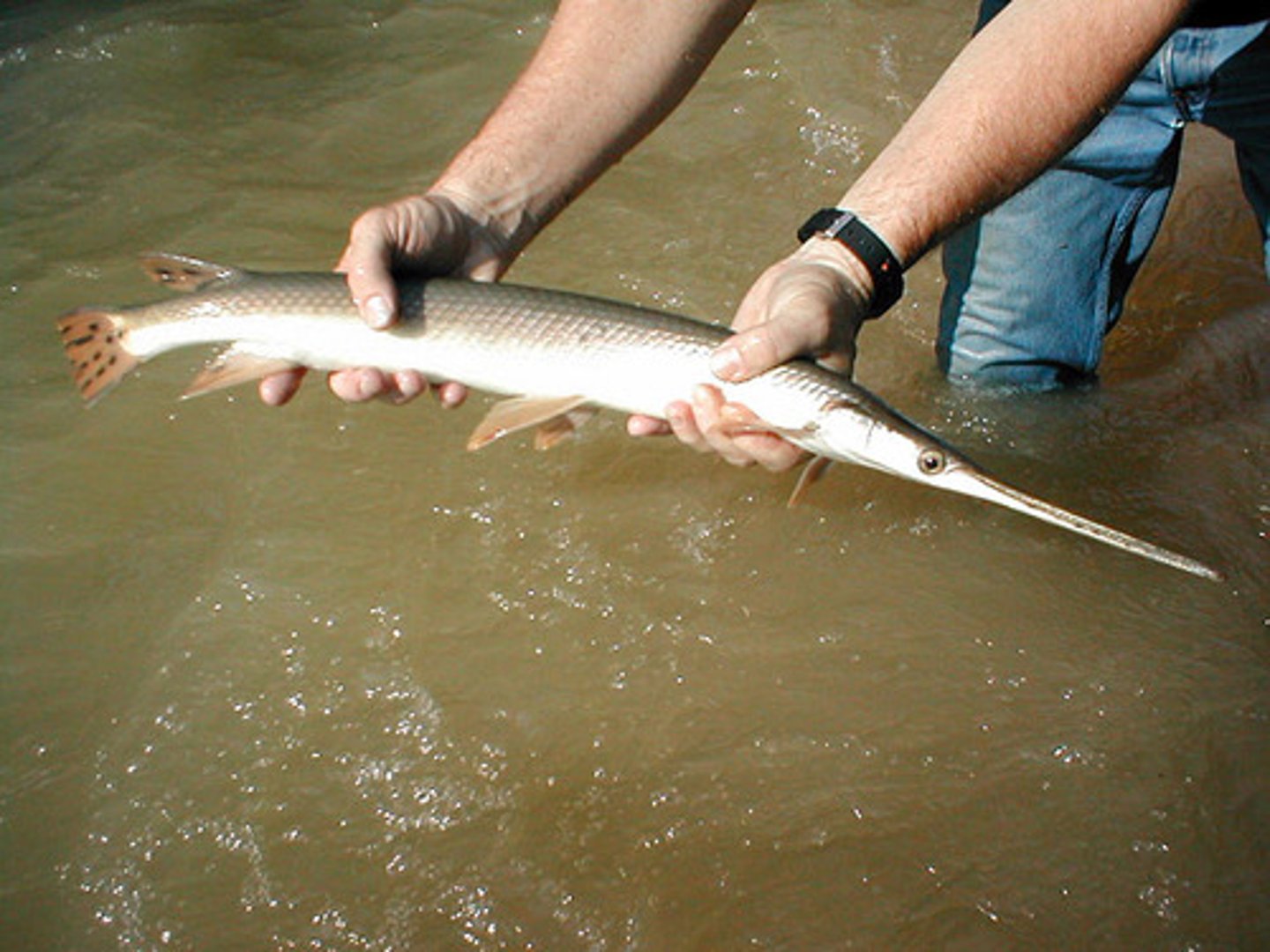
Longnose gar (Lepisosteus osseus)
-Actinoptyergii class
-physostomous swim bladder (primitive lung)
-tough & sharpp scales
-long jaw with needle like teeth
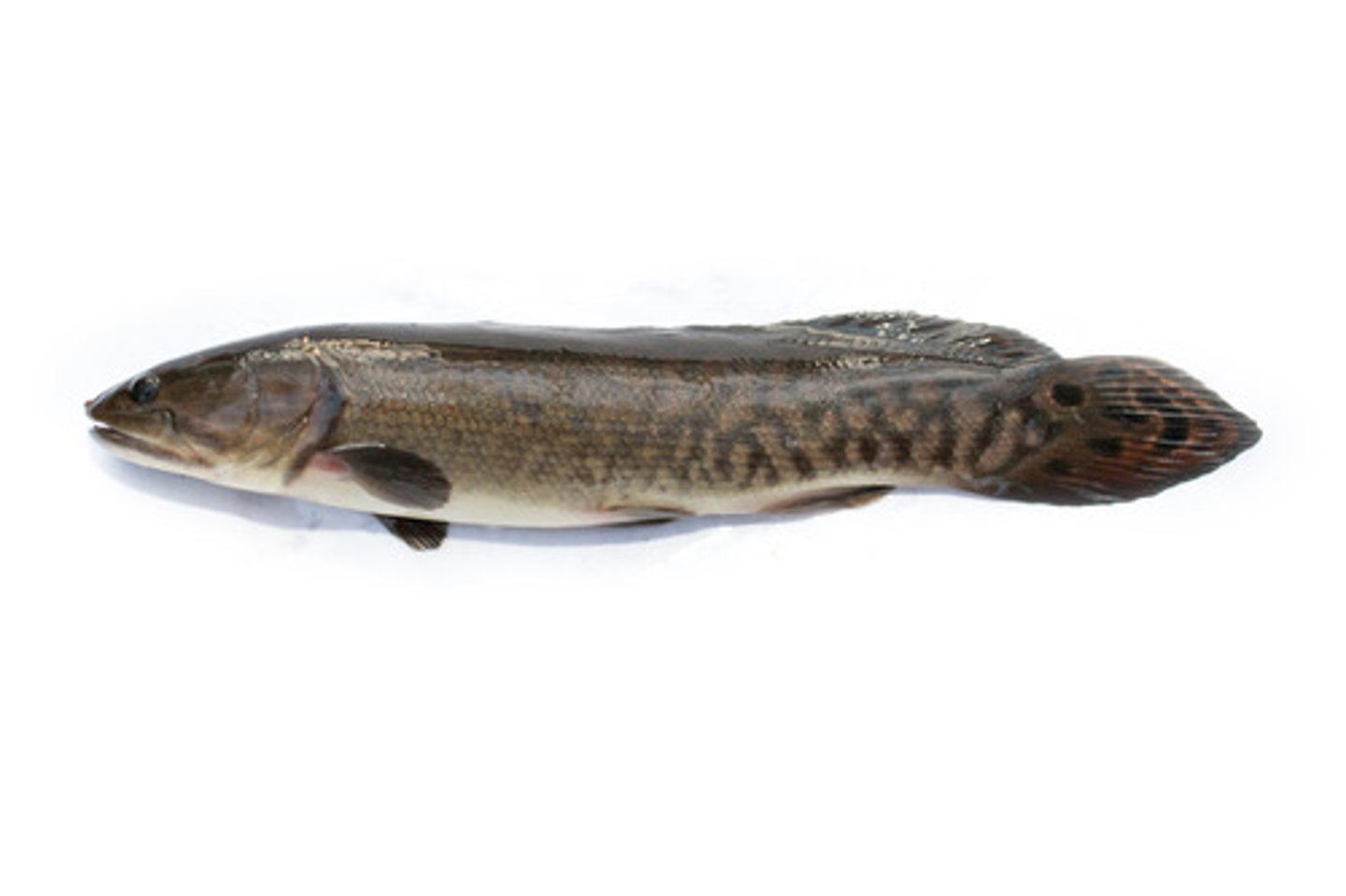
Bowfin (Amia calva)
-Actinoptyergii class
-long dorsal fin (rarely use tail fin)
-eyespot on tail
-shallow water for physostomous swim bladder
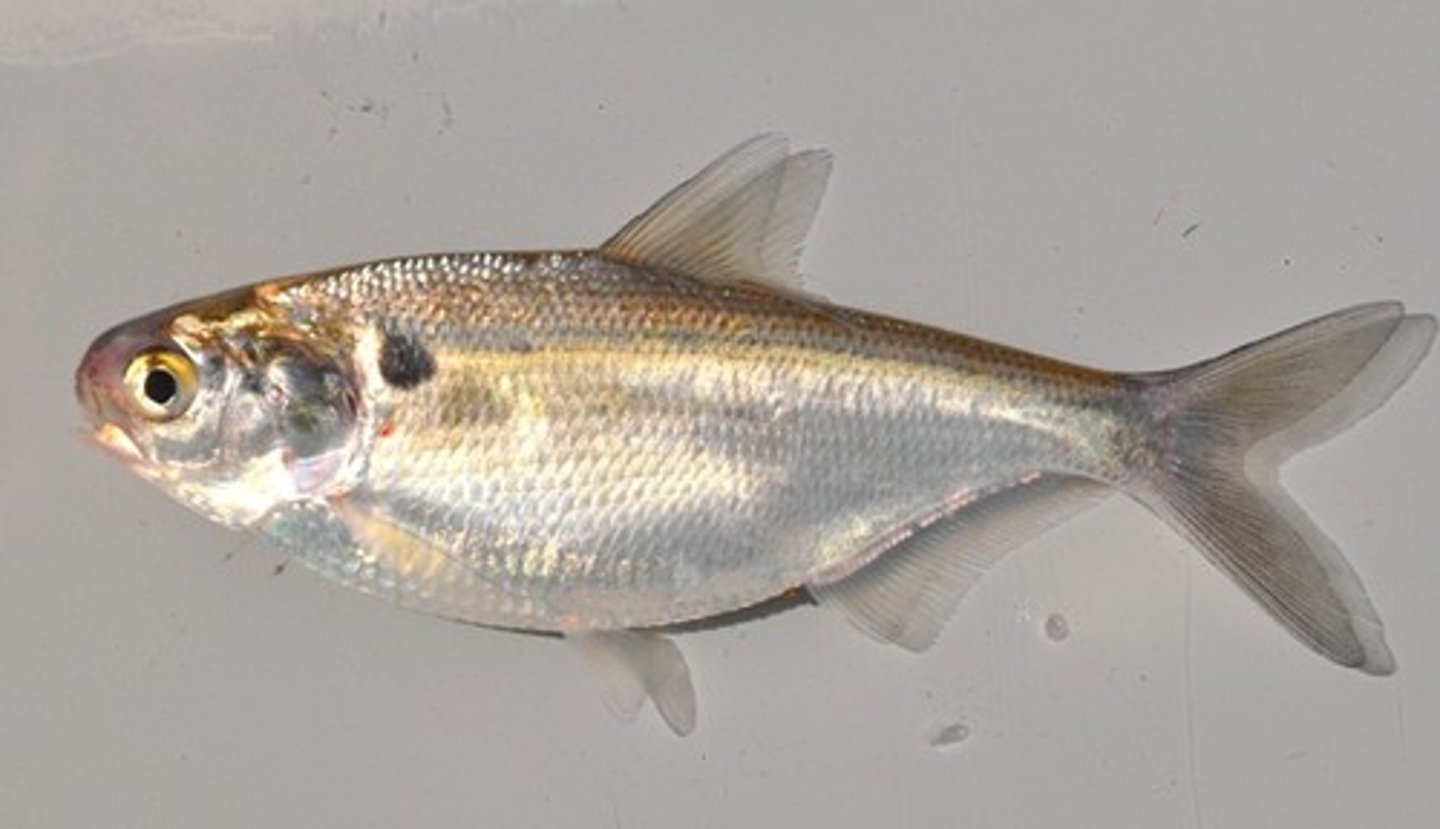
American gizzard shad (Dorosoma cepedianum)
-Clupeomorpha superorder
-primitive teleosts
-physostomous swim bladder
-sharp scales on underside (sawbellies)
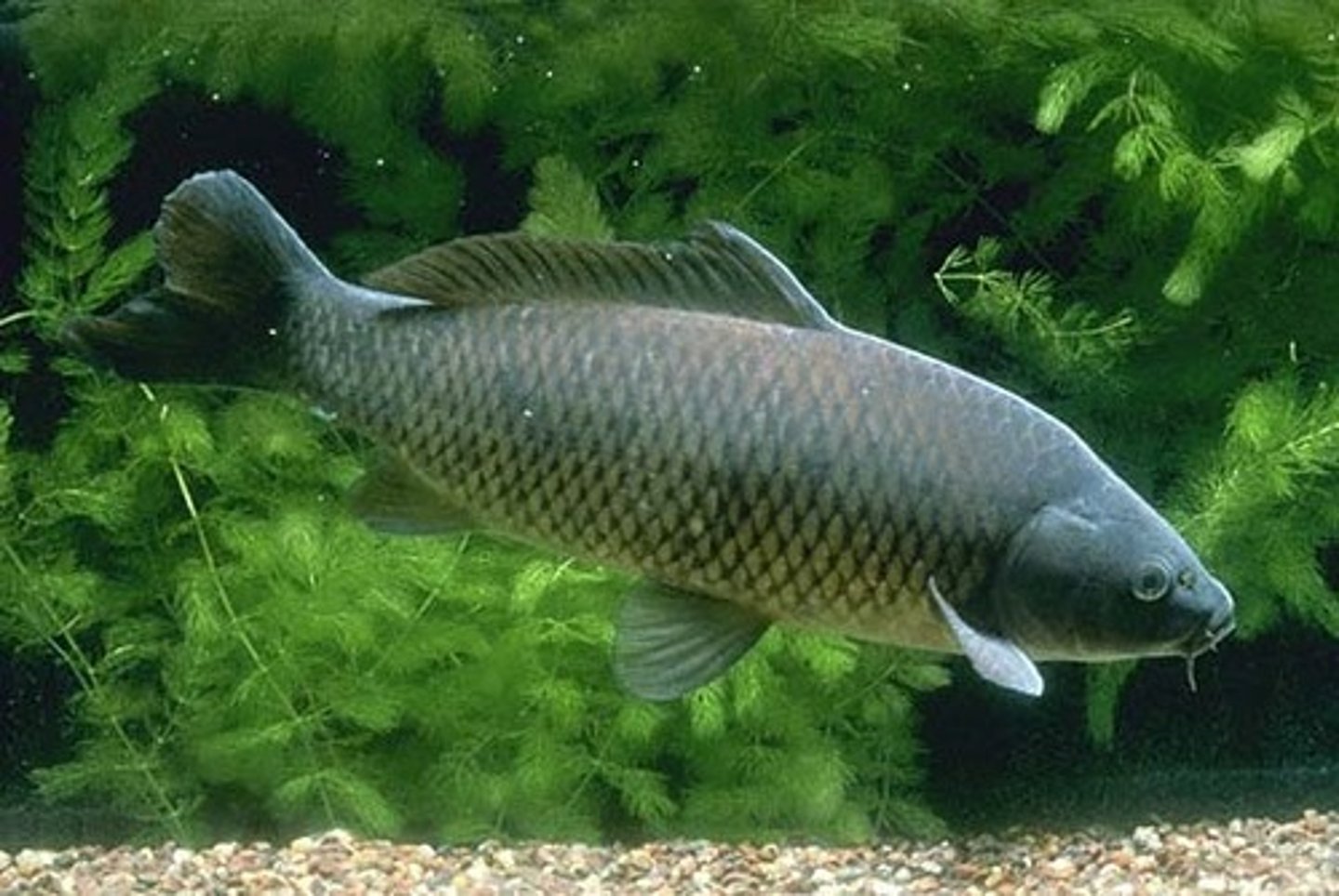
Common carp (Cyprinus carpio)
-Ostariophysi superorder
-more advanced teleosts
-alarm pheremone
-sediment scavengers: reduce competition with other fish & limit plant growth
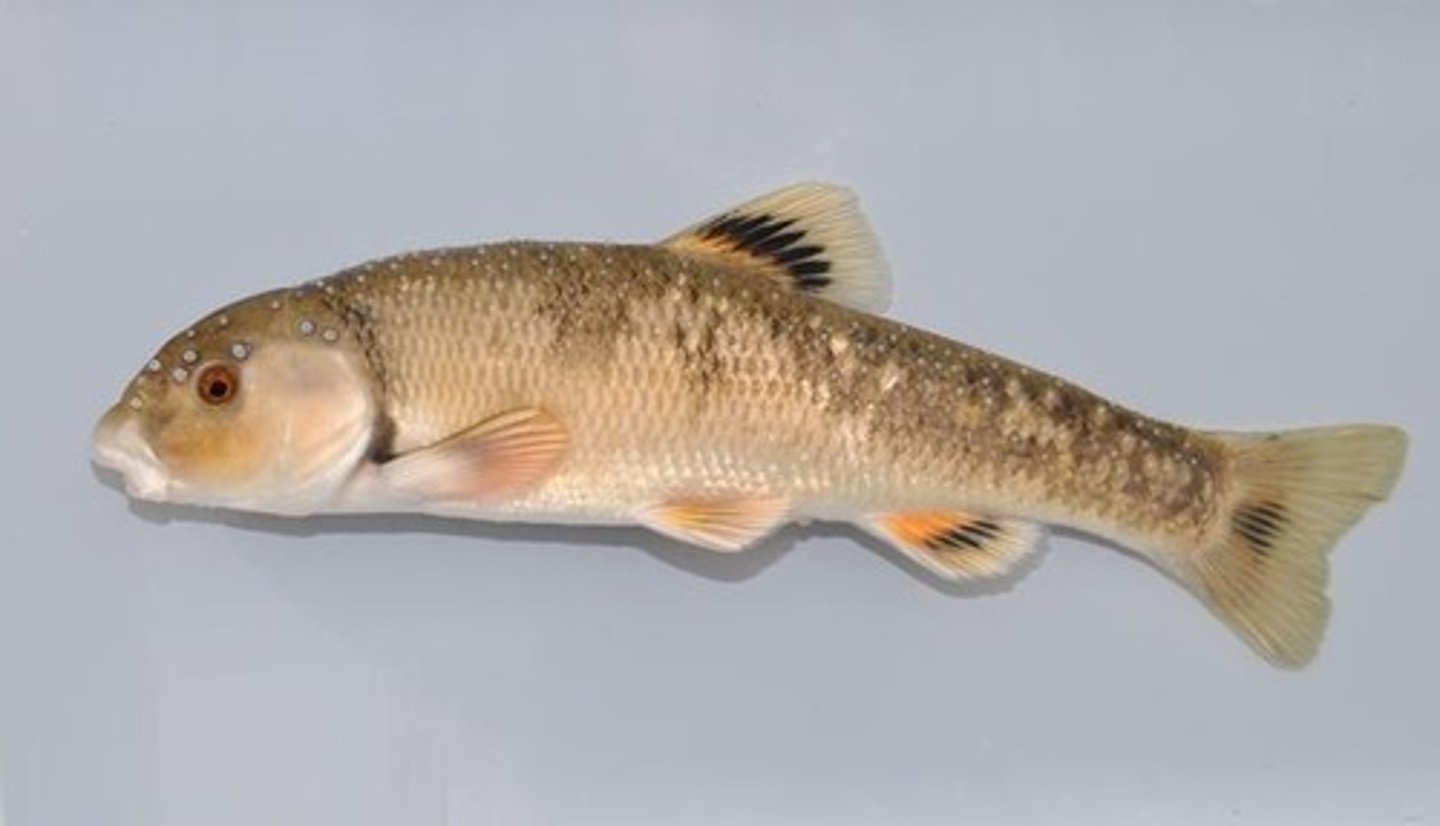
Central stoneroller (Campostoma anomalum)
-Ostariophysi superorder
-'minnow' (invalid taxonomy)
-cartilaginous ridge on lower jaw: scrape algae off for food
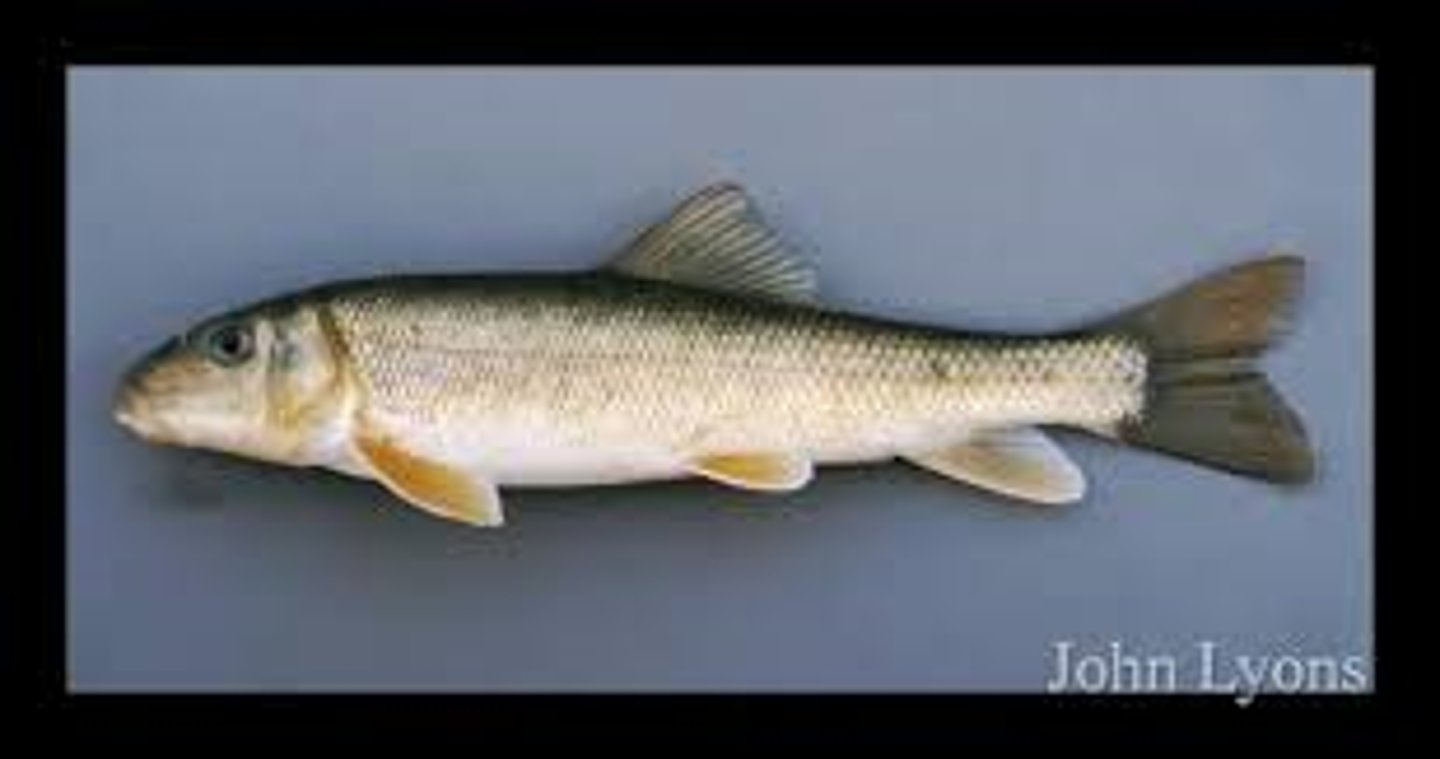
White sucker (Catostomus commersoni)
-Ostariophysi superorder
-complete lateral line (sense organ)
-small cylindrical scales
-nose doesn't overhang
-flat lips & larger mouth
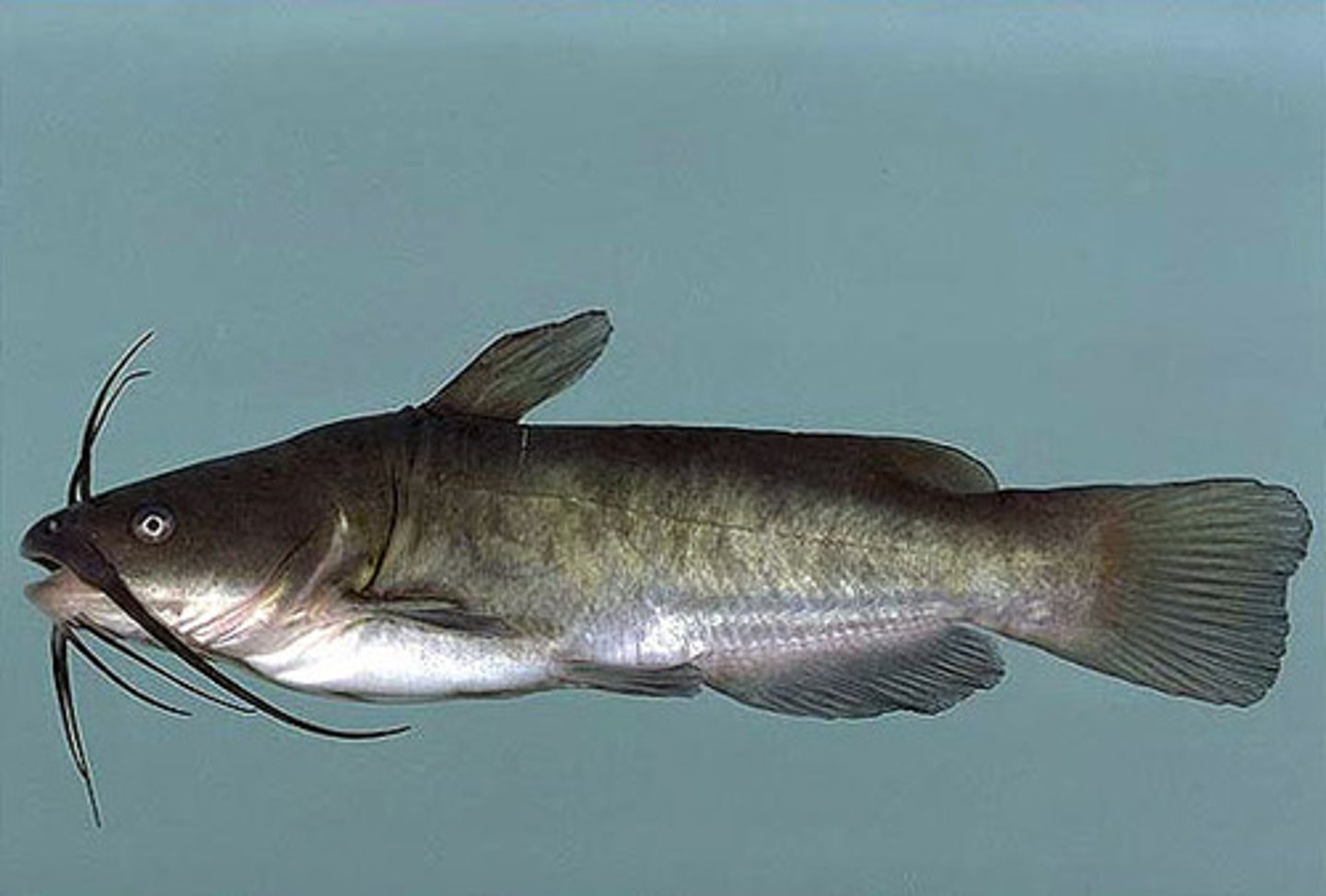
Brown bullhead catfish (Ameiurus nebulosus)
-Ostariophysi superorder
-barbels near mouth
-brown/yellow body
-no scales
-taste buds, olfactory sensors, lateral line, electroreception
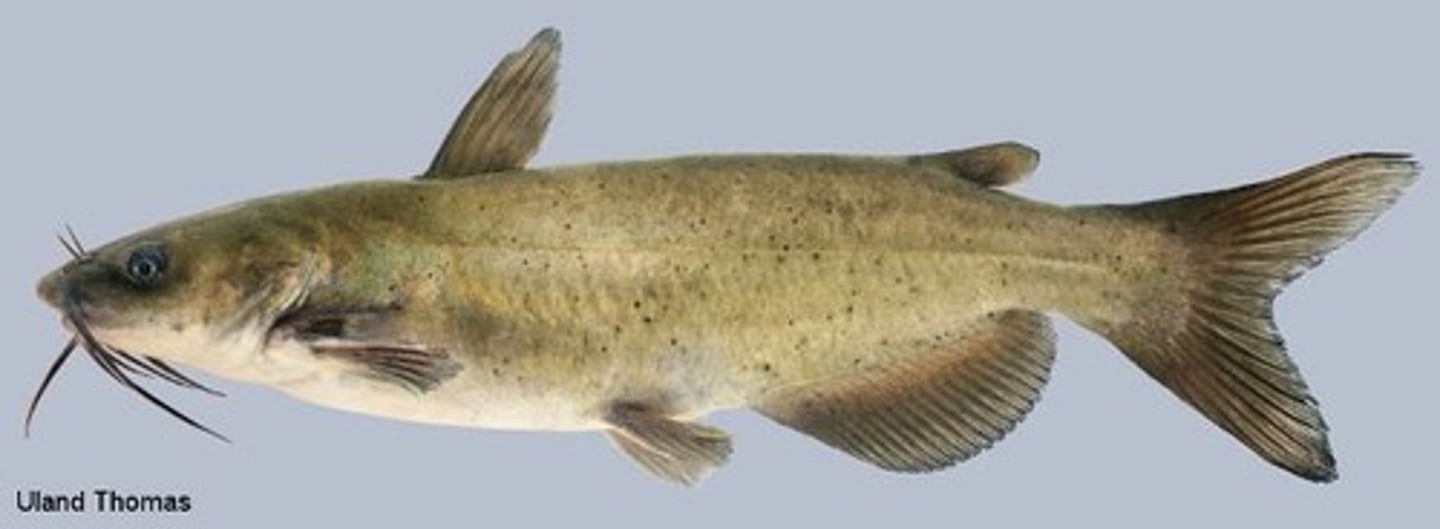
Channel catfish
-Ostariophysi superorder
-only NY catfish with spots
-forked tail
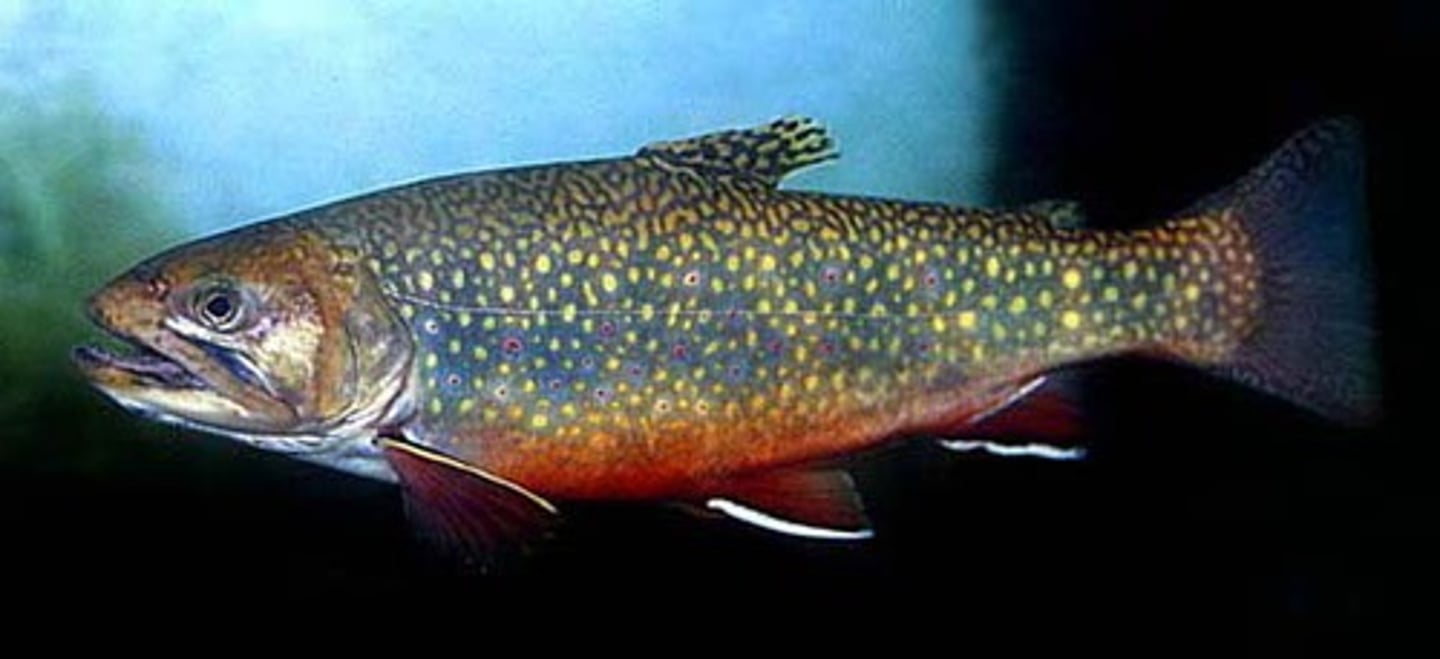
Brook trout (Salvelinus fontinalis)
-Protacanthopterygii superorder
-light spots
-top blotches look like web
-slow growth rate & short life span (often outcompeted)
-NY state fish
-smooth scaled
-fins with soft rays
-jaw extends back
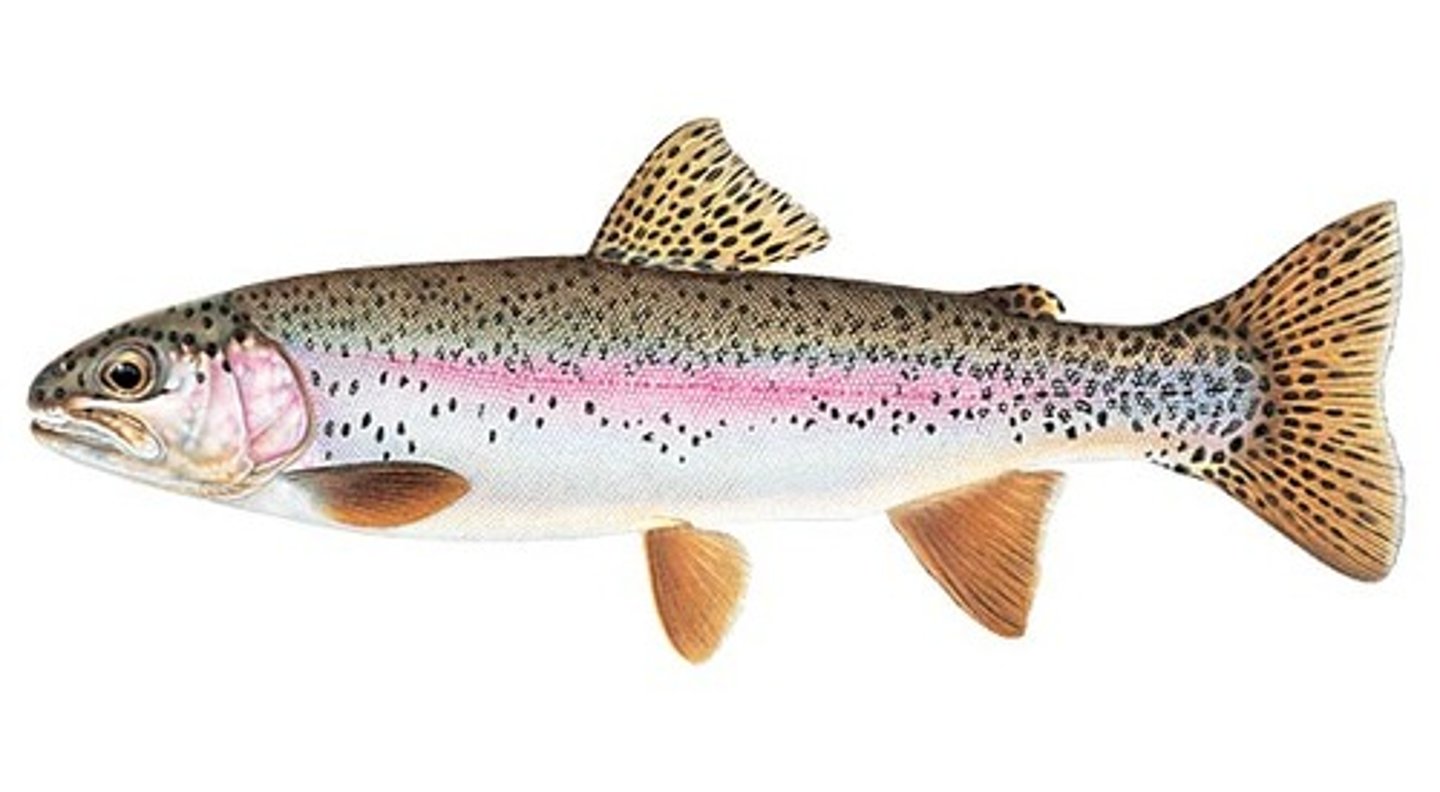
Rainbow trout (Oncorhynchus mykiss)
-Protacanthopterygii superorder
-darker spots
-stream fish: red streak
-anadromy: live in saltwater, birth in freshwater
-potadromy: live in freshwater, birth in saltwater
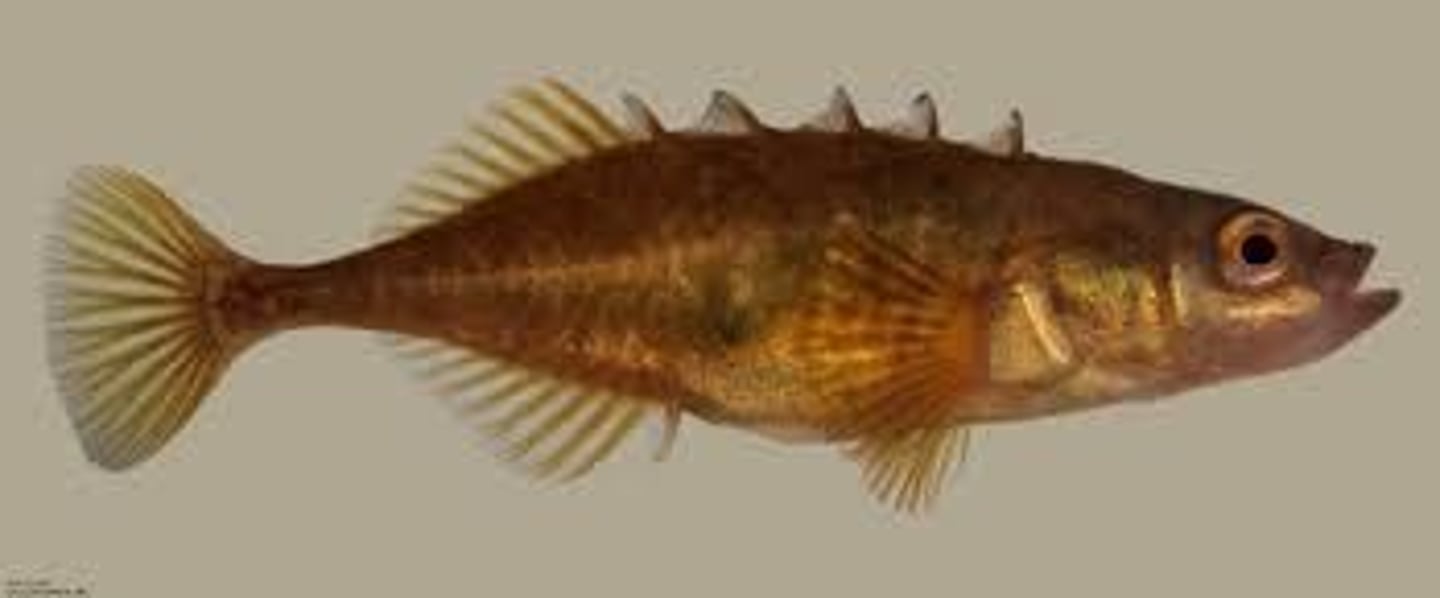
5-spined/Brook stickleback (Culaea inconstans)
-Acanthoptergyii superorder
-advanced teleosts
-no scales
-laterally compressed & small
-5 free dorsal spines (for defense)
-paternal care
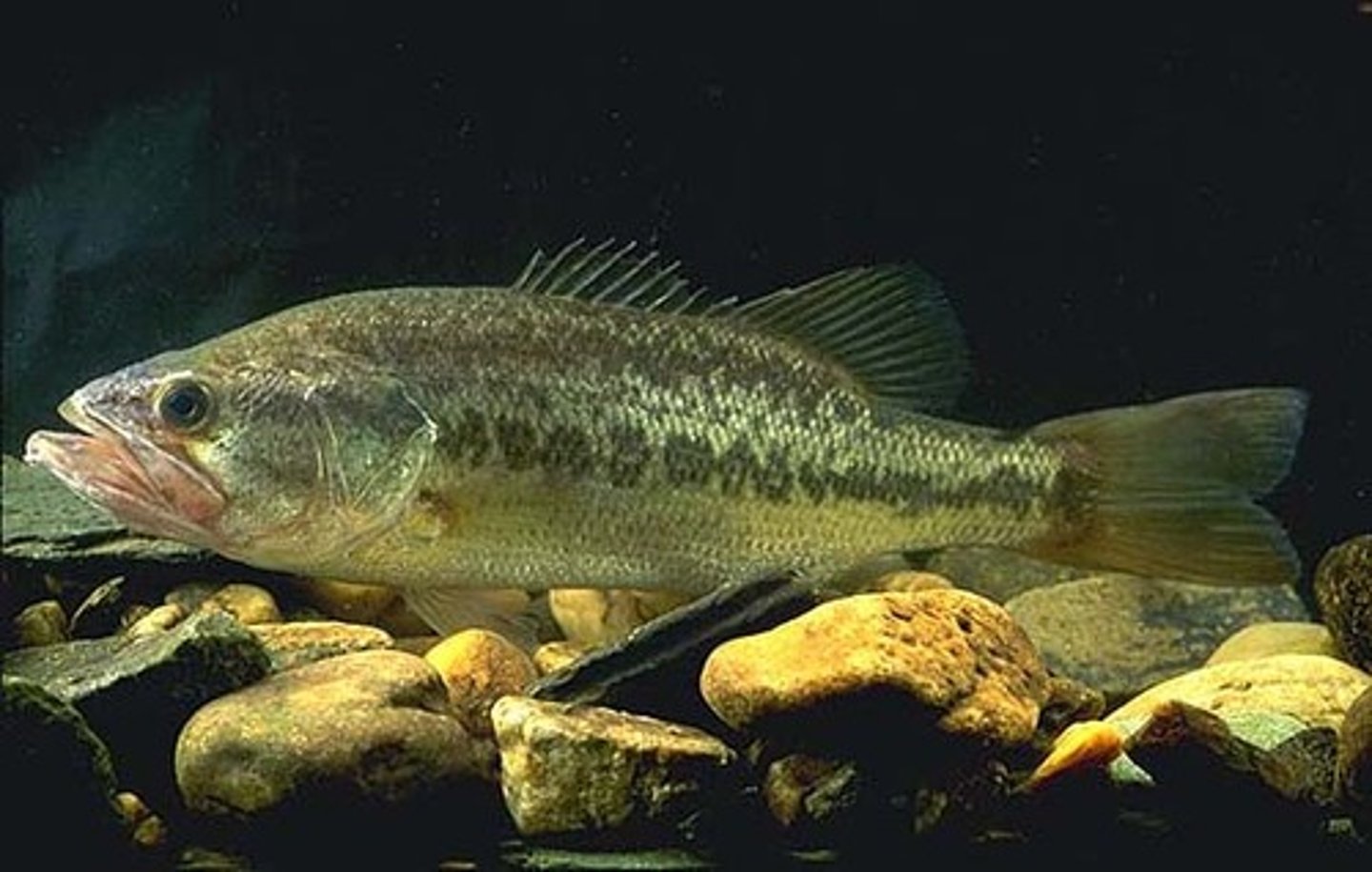
Largemouth bass (Micropterus salmoides)
-Perciformes order, Acanthopterygii superorder
-extension of upper jaw
-notched dorsal fins
-apex predators
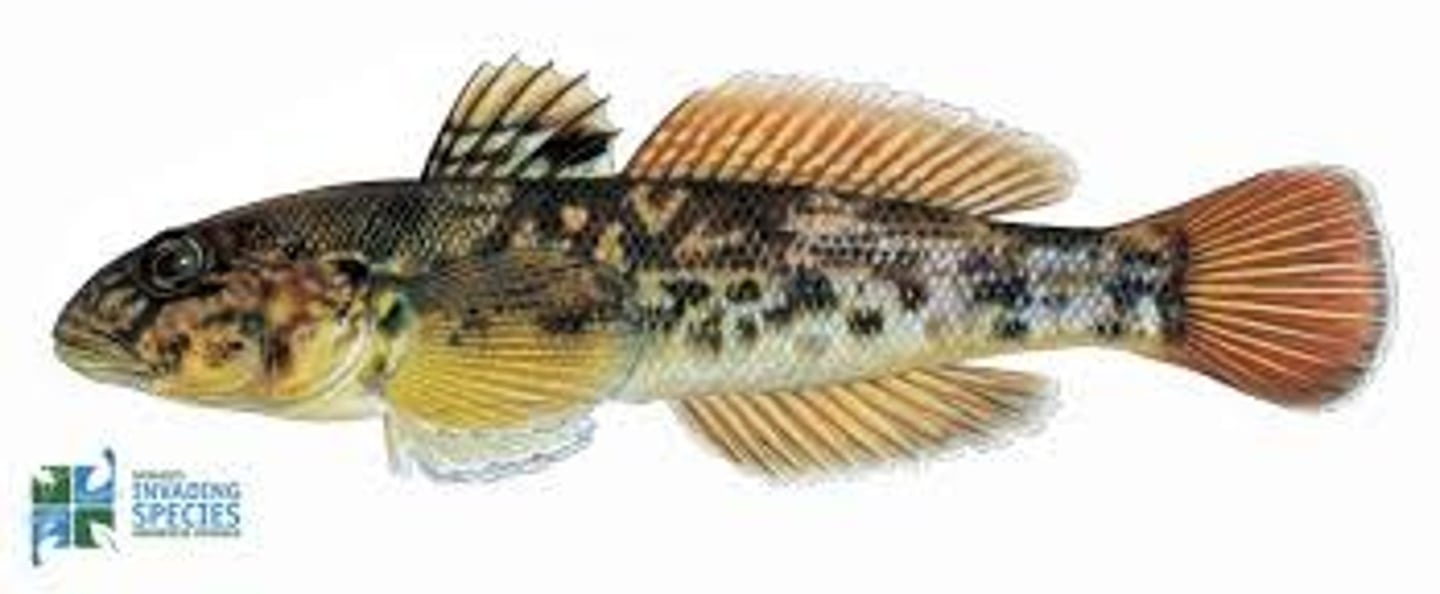
Round goby (Neogobius melanostomus)
-Gobiidae family, Perciformes order, Acanthopterygii superorder
-pelvic fins fused in suction cup shape
-invasive
-eat invasive zebra mussels