Derm/Otolar/Rheum: Week 4 (Exam 1)
 Call Kai
 Learn
Learn Practice Test
 Spaced Repetition
 Match
Match Flashcards
 Knowt Play
1/60

There's no tags or description
Looks like no tags are added yet.
Name | Mastery | Learn | Test | Matching | Spaced | Call with Kai | Chat |
|---|
No analytics yet
Send a link to your students to track their progress
61 Terms
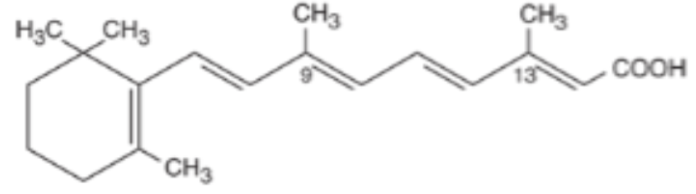
_______
Tretinoin or (all-trans-retinoic acid; ATRA) is the acid form of vitamin A (mimic at high concentrations)
Used topically for Acne Vulgaris
Targets: nuclear receptors _______ + _______.
Retinoic Acid, RAR, RxR
_______
3rd Gen retinoid specific for RAR.
Used as a cream for acne and is efficacious in mild forms of psoriasis
Tazarotene
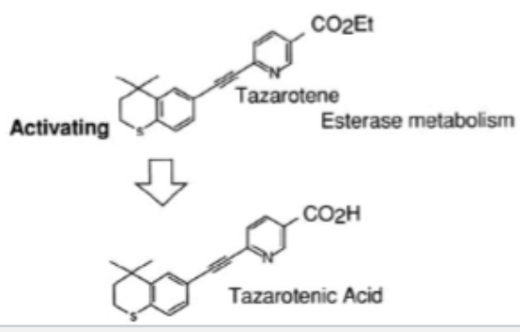
KNOW IMAGE
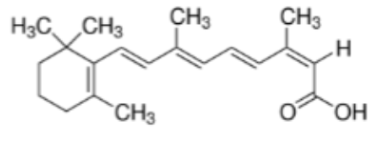
_______
Used orally for severe cystic acne.
Teratogenic
Isotretinoin
_______
Accompanied by Sxs of hypervitaminosis A, including skin dryness, itching, lipid abnormalities (increased triglycerides + LDL
Isotretinoin
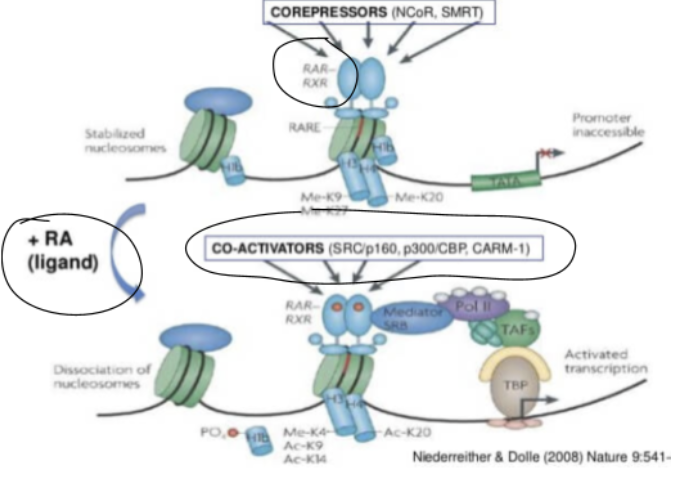
RA Ligand → _______
_______ → recruits the enzymes that express genes
Vitamin A/drug, Co-Activators
Retinoic Acid and Derivatives:
_______
_______
Acitretin, Etretinate
_______: Oral formulation → severe psoriasis
A 2nd gen retinoid that is thought to work in psoriasis via inhibition of keratinocyte proliferation.
Acitretin (Soriatane)
_______
An active acid metabolite of Etretinate
Both are agonists on the retinoid receptors
Acitretin
_______
Less lipophilic
Elimination t1/2: 2-4 days
>98% eliminated 2 months → conception after treatment
Acitretin
_______
Small amounts converted to Etretinate; accelerated by alcohol (C/I bc of the risk of acceleration of acid treatment = highly lipophilic = Etretinate = problems following conception)
Acitretin
_______ (came to the market 1st)
Highly lipophilic
Elimination t1/2: >120 days
>98% eliminated 2 or more years
Etretinate
_______
Metabolized to Acitretin
Drawback: Women cannot get pregnant
Etretinate
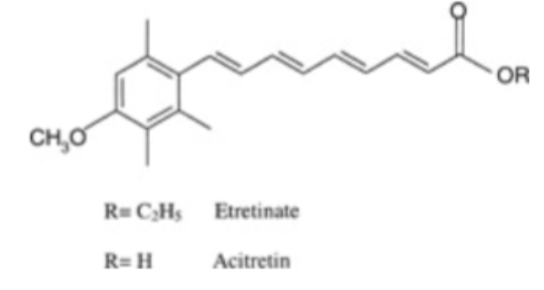
KNOW IMAGE
_______ - Modulating Agents
Coal tar → Activates TF
This signaling is important to skin homeostasis.
This responds to various endogenous + exogenous ligands → diverse biological effects.
Aryl Hydrocarbon Receptor
_______
Tapinarof binds to this receptor + downregulates ____ production, oxidative stress + increases barrier protein production.
Aryl Hydrocarbon Receptor, IL-17
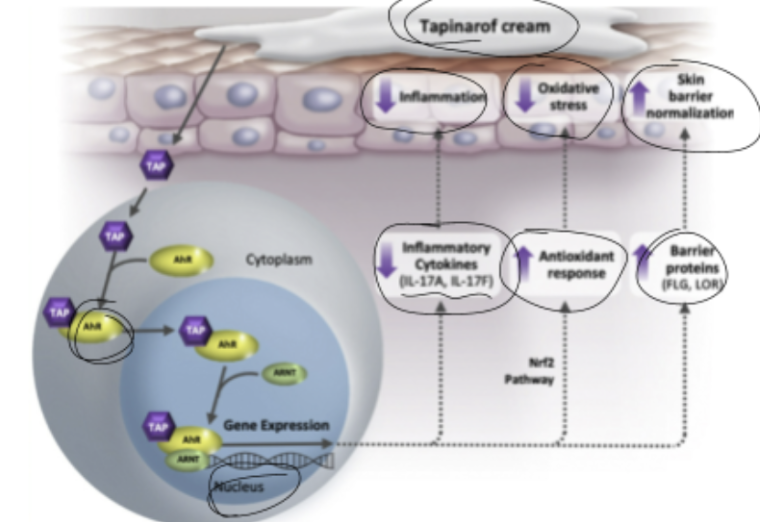
KNOW IMAGE
_______
A chronic inflammatory arthritis (joint inflammation) in association with skin psoriasis.
Distinct from RA: usually RF and ACPA NEGATIVE.
Psoriatic Arthritis
_______
IL12/23-Th17 axis → important role of pathogenesis
Th17 drives psoriasis → migrate into skin + joints → inflammation in both!
Psoriatic Arthritis
_______
Inhibitors of this axis + anti-TNF-alpha drugs are commonly used to manage this.
Psoriatic Arthritis
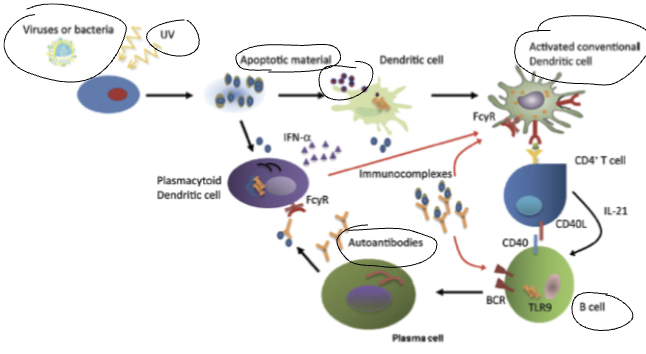
_______ Pathophysiology
The accepted model for pathogenesis involves a trigger e.g. UV light, bacteria or viral infections.
Cell apoptosis related to UV or viral/bacterial infections → nucleic-acid mediated immune response via activation of DC + B cells
SLE
SLE
Systemic: _______ + _______
Mouth + Nose: _______
Muscles: _______
Face: _______
low-grade fever, photosensitivity, ulcers, aches, butterfly rash
_______ → non-erosive arthritis involving 2 or more peripheral joints characterized by tenderness, swelling, or effusion
_______ → Cellular casts may be red cell, hemoglobulin, granular tubular or mixed
Arthritis, Renal d/o
Drug-induced lupus Erythematosus (DILE): HPI
Most commonly encountered with:
_______
_______
_______
Hydralazine, Procainamide, Isoniazid
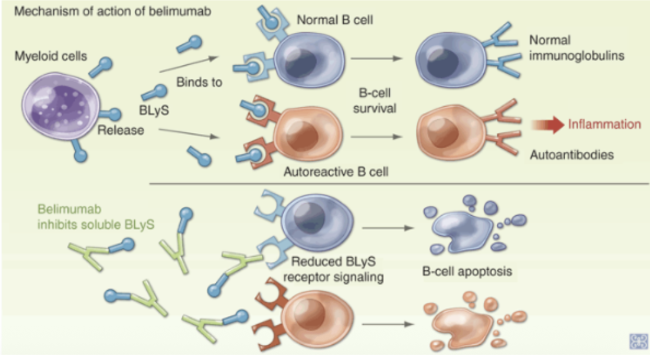
KNOW IMAGE
_______ is an endogenous mediator as a member of the group “Autacoids (very short half-life)”.
Histamine
Key aspects of histamine:
Bioactive _______ synthesized from _______ (activated _______ → dump out _______).
Released to produce local effects (both centrally/NT/dual roles + peripherally/allergic rxn)
Role of Histamine:
_______
Regulation of _______ secretion in the stomach
_______ + _______ of NT release
amine, histidine, mast cells, histidine, immediate allergic response, basal acid, NT, modulator
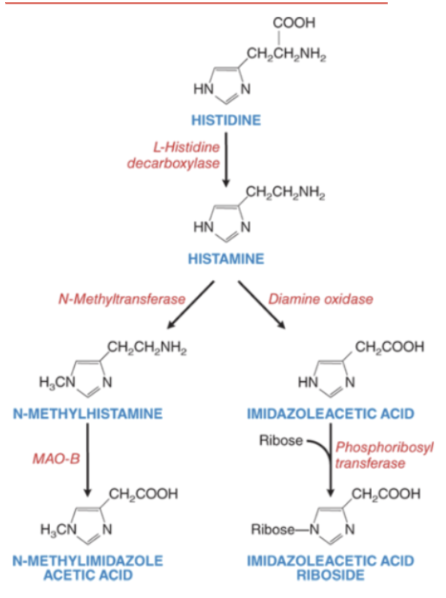
What is the image showing?
Biosynthesis and Metabolism of Histamine
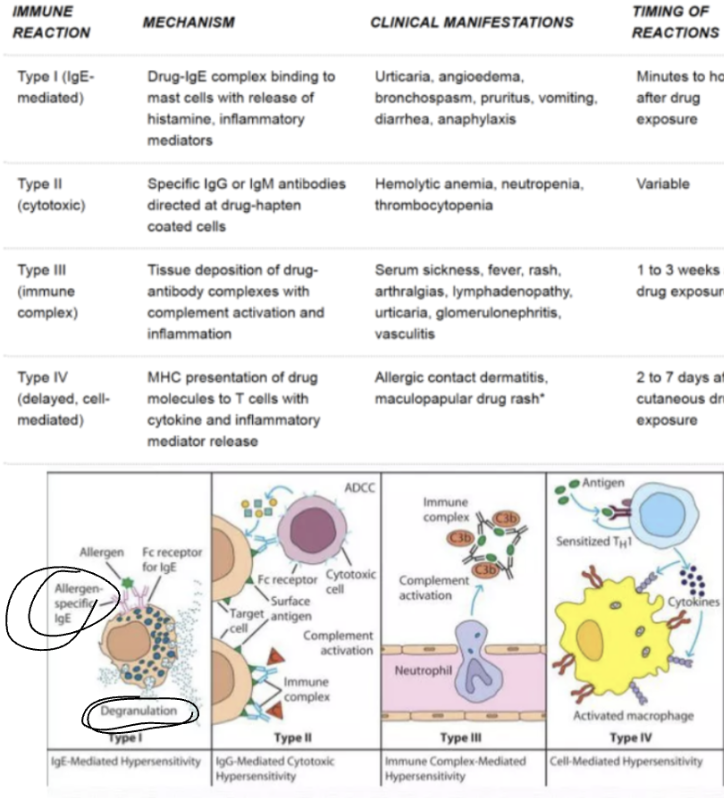
Gell-Coombs Classification of Hypersensitivity Reactions
KNOW IMAGE
Type __ (__-Mediated) KNOW!
Drug-__ complex binding to mast cells with release of histamine, inflammatory mediators
Form __ + anchors itself on the mast cells → degranulation of mast cells → releases histamine → causes allergic reactions
Can be mild (bronchoconstriction, itching, runny nose) or massive (can be fatal if not medically treated)
I, IgE, IgE, IgE
Type-__ (cytotoxic)
Attaches itself to cell surfaces + immune cells come in to destroy antigens presented on the cells
IgG or IgM
Ex. HEPARIN-Induced Thrombocytopenia
II
Type-__
Antigen with Ab → blood migrates to the tissue → tissue destruction
Ex. SLE
III
Type-__ (poison ivy, contact dermatitis)
T-cell mediated reaction confined to the skin, hypersensitivity
IV
Histamine: Triple Response of Lewis
Intradermal injection of histamine causes:
_______: Appears within a few seconds and maximal at 1 min (Direct Vasodilator Effect of H1 receptor mediated by NO production).
_______: develops more slowly due to histamine-induced stimulation of neuronal reflex causing vasodilation (indirect effect).
_______: Swelling at 1-2 min at injection site: Histamine effect on blood capillaries increasing permeability.
Red spot, flare or red flush, wheal
Clinical Symptoms Associated With Histamine Release
Mild/_______ → erythema, urticaria, and/or itching
_______ → skin rxns, tachycardia, dysrhythmias, moderate hypotension, mild respiratory distress
Severe/_______ → severe hypotension (peripheral vasodilation), ventricular fibrillations (high HR), cardiac arrest, bronchospasm, respiratory arrest
Cutaneous, Mild to Moderate, Anaphylactic
Histamine Receptors
4 subtypes, named H1, H2, H3, and H4.
All four receptors are _______.
Outcomes of receptor activation
Activation of _______ receptors causes:
Itching stimulates secretion from nasal mucosa
Contraction of bronchial smooth muscles
CNS: _______ receptors inhibit appetite + increase wakefulness
Increase in Appetite → weight gain
_______ + _______: Cooperate to induce vascular capillary dilation
_______: Increased vascular permeability
GPCRs, H1, H1, H1, H2, H1
Histamine Receptors
Activation of _______ receptors causes:
Gastric acid secretion + receptors may work with _______ receptors in certain types of hypersensitivity reactions
H2, H1
Histamine Receptors
Activation of _______ receptors causes:
Presynaptic receptors function as autoreceptors for histaminergic neurons
_______ receptor antagonists promote wakefulness.
H3, H3
Histamine Receptors
Activation of _______ receptors causes:
Chemotaxis of immune cells and secretion of proinflammatory cytokines
H4
_______ KNOW!
G Protein Coupling (2nd messengers): Gq (increased cytosolic _______, _______ + _______)
Distribution: _______ muscle, endothelial cells, CNS
Drugs that are Inhibitors of Receptor Activation: Antihistamines (1st + 2nd gens)
H1, calcium, NO, cGMP, smooth
_______
G Protein Coupling (2nd messengers): GS (increased cAMP
Distribution:
Drugs that are Inhibitors of Receptor Activation: Ranitidine
H2
_______
G Protein Coupling (2nd messengers):
Distribution:
Drugs that are Inhibitors of Receptor Activation: Pitolisant (indicated for narcolepsy)
H3
_______
G Protein Coupling (2nd messengers):
Distribution:
Drugs that are Inhibitors of Receptor Activation: N/A
H4
Physiological Histamine Antagonist
_______: Antagonizes the effect of H1 mediated bronchial smooth muscle contraction + vasodilation.
_______ receptor agonism: Vasoconstriction leading to increased SVR and reduction in mucosal edema
_______ receptor agonism: Increased inotropy + HR (increases CO)
_______ receptor agonism: bronchodilation + inhibition of further mediator release from mast cells
Epinephrine, alpha-1, Beta-1, Beta-2
Histamine Antagonism: _______
Cromolyn Sodium and Nedocromil.
MOA: Prevent _______ degranulation and release of histamine + other mediators.
Uses: Allergic rhinitis, allergic eye conditions e.g. conjunctivitis, keratitis
Mast Cell Stabilizers, mast cell
_______ Agonist → drug that produces opposite effect of agonist
_______ (Histamine) → active state preferred
_______ Agonist (AH) → inactive state preferred
H1 Inverse, Agonist, Inverse
2nd Gen AH (can be given _______ → minimal ability to get into CNS
Piperazines: Cetirizine, Levocetirizine
Piperidines: Loratidine, desloratidine, fexofenadine
Other: Azelastine, Olopatadine (available as nasal spray + eye drops), Acrivastine + Pseudoephedrine
during the day
Pharmacological Uses of Antihistamines
Other uses include (Allergic Rhinitis, Allergic Conjunctivitis, Urticaria/_______):
Management of _______.
_______
_______ associated with atopic _______
Hives, Cold sxs, eczema, pruritus, dermatitis
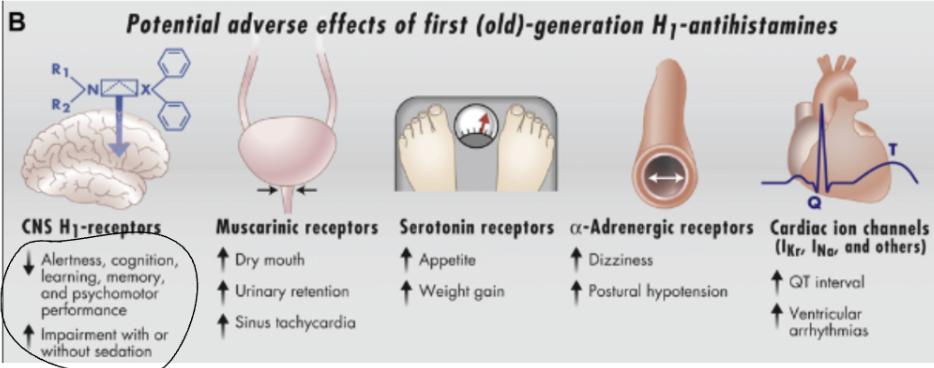
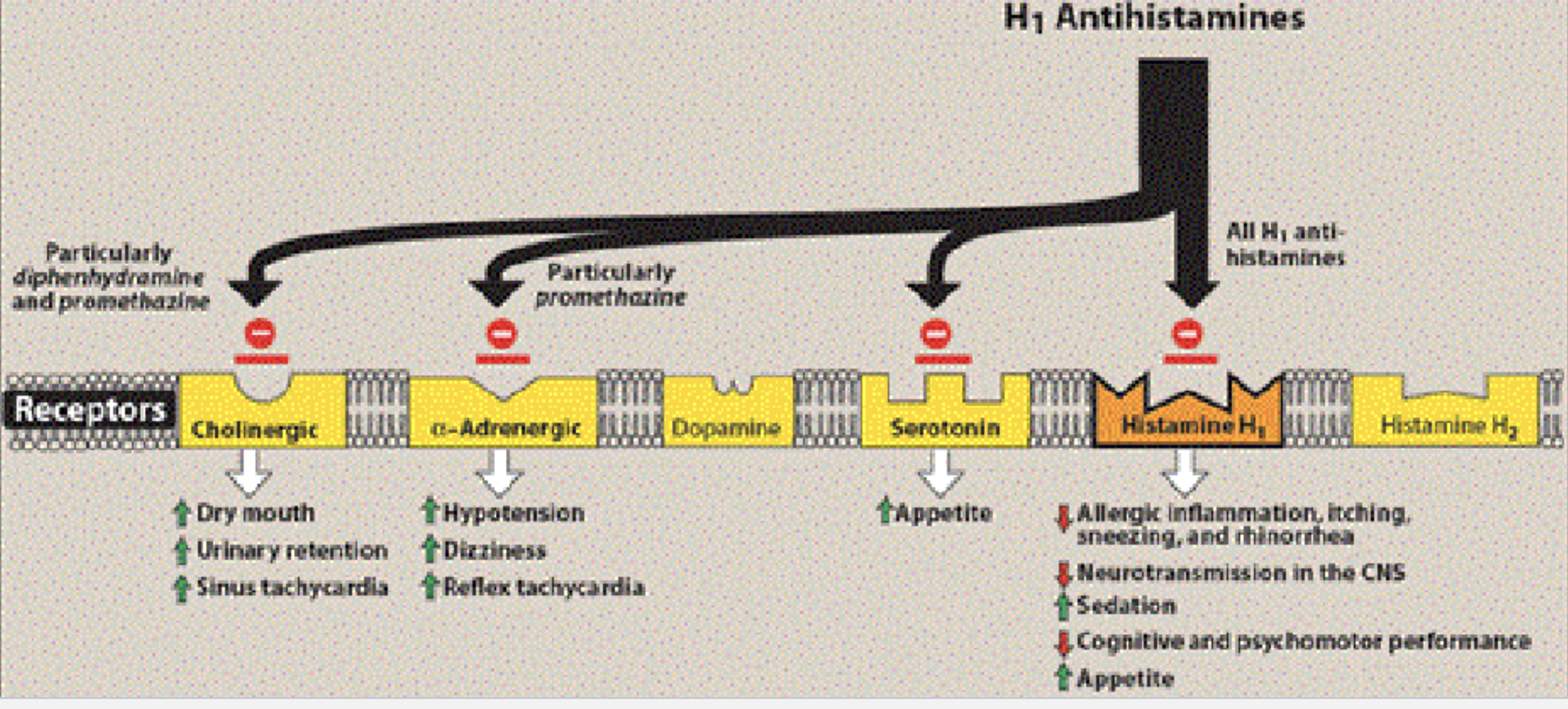
Adverse Effects of 1st generation AHs
_______ Recetors
Decreased → alertness, cognitions, learning, memory, and psychomotor performance
Increased → impairment with or w/o sedation
_______ Receptors
Increased → Dry mouth, urinary retention, sinus tachycardia
_______ Receptors
Increased → Appetite, Weight gain
_______ receptors
Increased → dizziness, postural hypotension
_______ (IKr, INa)
Increased → QT interval, ventricular arrhythmias
CNS H1, Muscarinic, Serotonin, Alpha-Adrenergic, Cardiac Ion Channels
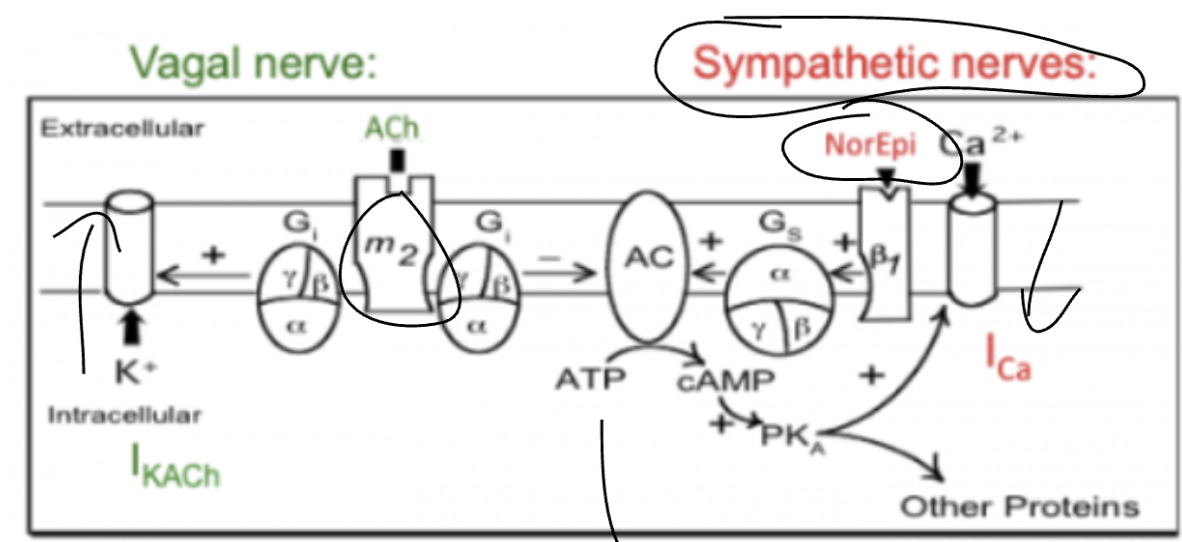
Anticholinergic drugs _______ HR by increasing _______ node firing rate
increase, SA
Other Uses for 1st Generation AHs
_______: N/V, dizziness
Pathophysiology: mediated by the _______ (vestibular system) and increased cholinergic/histaminergic neurotransmission
motion sickness, inner ear
Examples of drugs used to prevent motion sickness:
_______ (Muscarinic Receptor antagonist)
Meclizine, Dimenhydrinate (_______)
Mechanism:
_______ (vestibular system) → cholinergic + histaminergic neurons (H1 + M receptors [Histamins + ACh]) → _______ → _______ (Medulla) → _______
Scopolamine, 1st gen AH, inner ear, cerebullum, emetic center, N/V
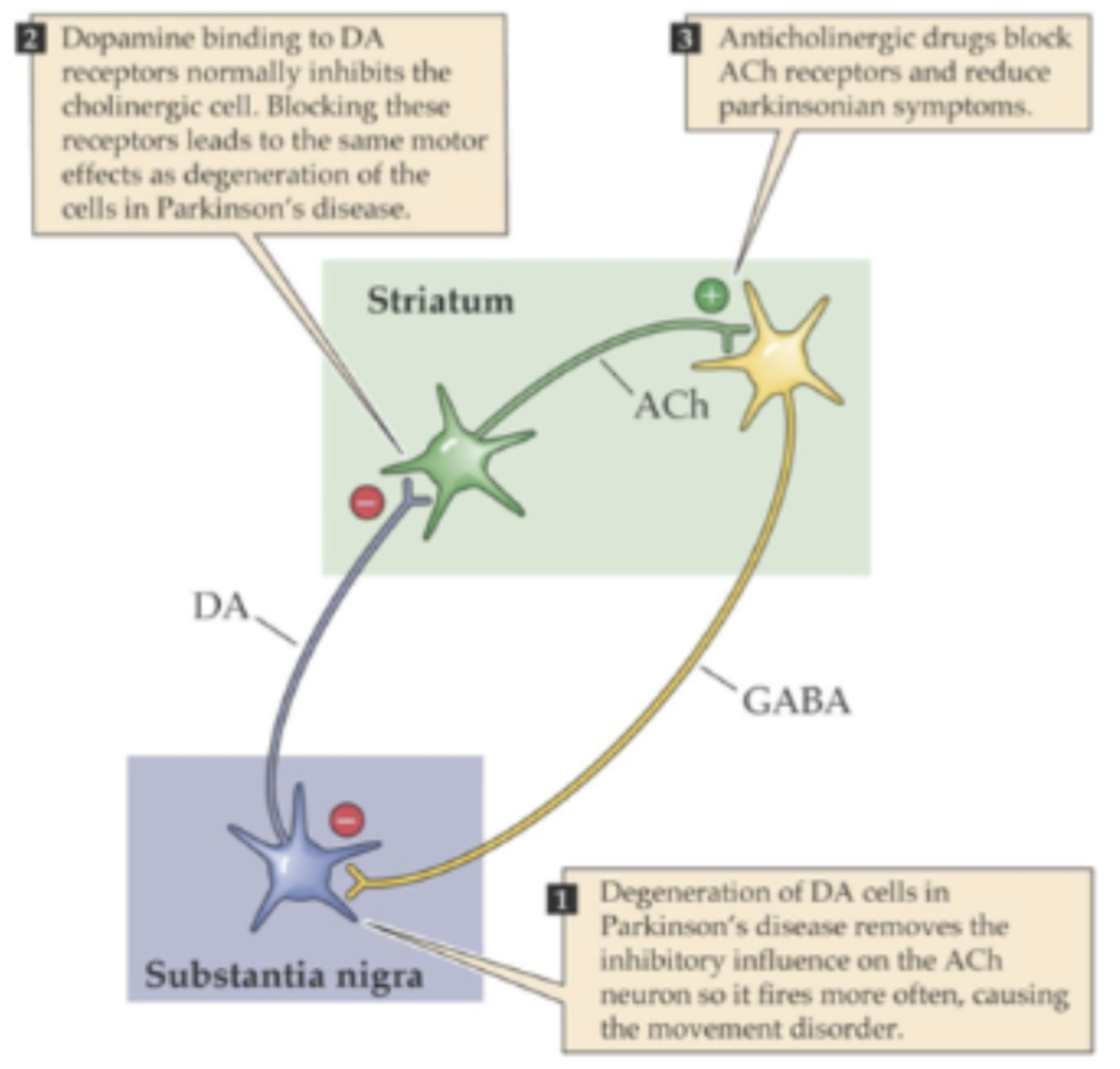
Other Uses for 1st Generation AH (Due to anticholinergic properties)
Management of acute dystonia associated with central _______
e.g. _______ (AH + ACh drug)
D2 receptor blockade, Diphenhydramine
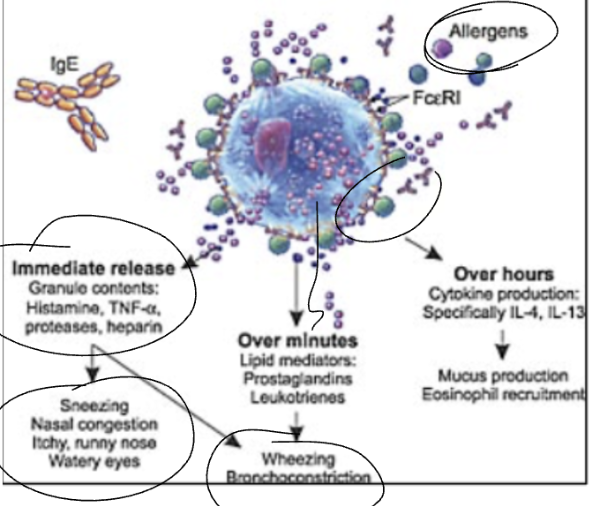
KNOW IMAGE
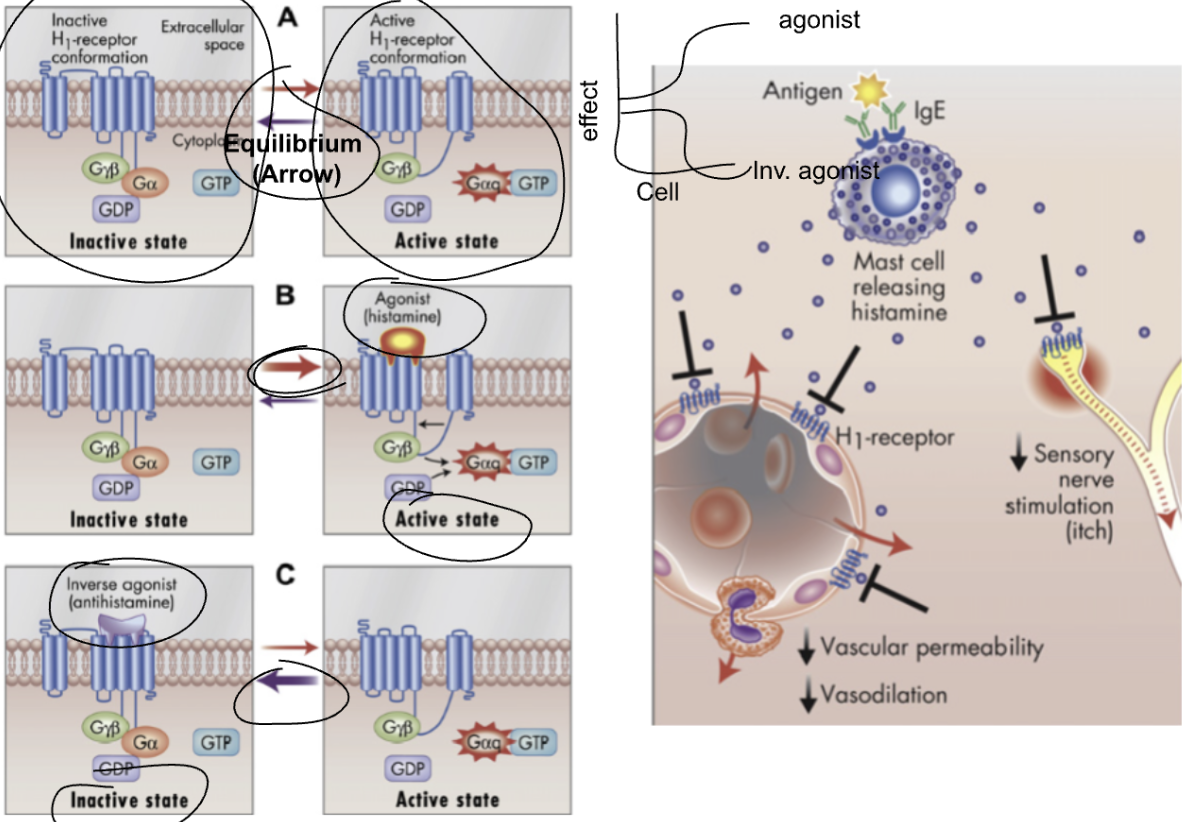
KNOW IMAGE
KNOW IMAGE
KNOW IMAGE
KNOW IMAGE
KNOW IMAGE
Non-Specific Immunosuppressants for SLE (MHA)
_______ → oral DMOD, immunosuppressant effect
_______ → DMOD for RA
_______ → immunosuppressive drug, prevent organ rejection
Methotrexate, Hydroxychloroquine, Azathioprine
1st Gen AH → _______ increase
Ciproheptidine → _______ stimulant
_______ = allergic reaction of allergies + itching, increasing sedation + appetitive
HR, appetite, H1