Turtles

0.0(0)
Studied by 6 people
call kaiCall Kai
learnLearn
examPractice Test
spaced repetitionSpaced Repetition
heart puzzleMatch
flashcardsFlashcards
GameKnowt Play
Card Sorting

1/17

flashcard set

Earn XP

Description and Tags

Last updated 2:49 AM on 10/11/23
Name
Mastery
Learn
Test
Matching
Spaced
Call with Kai

No analytics yet

Send a link to your students to track their progress

18 Terms
1
New cards
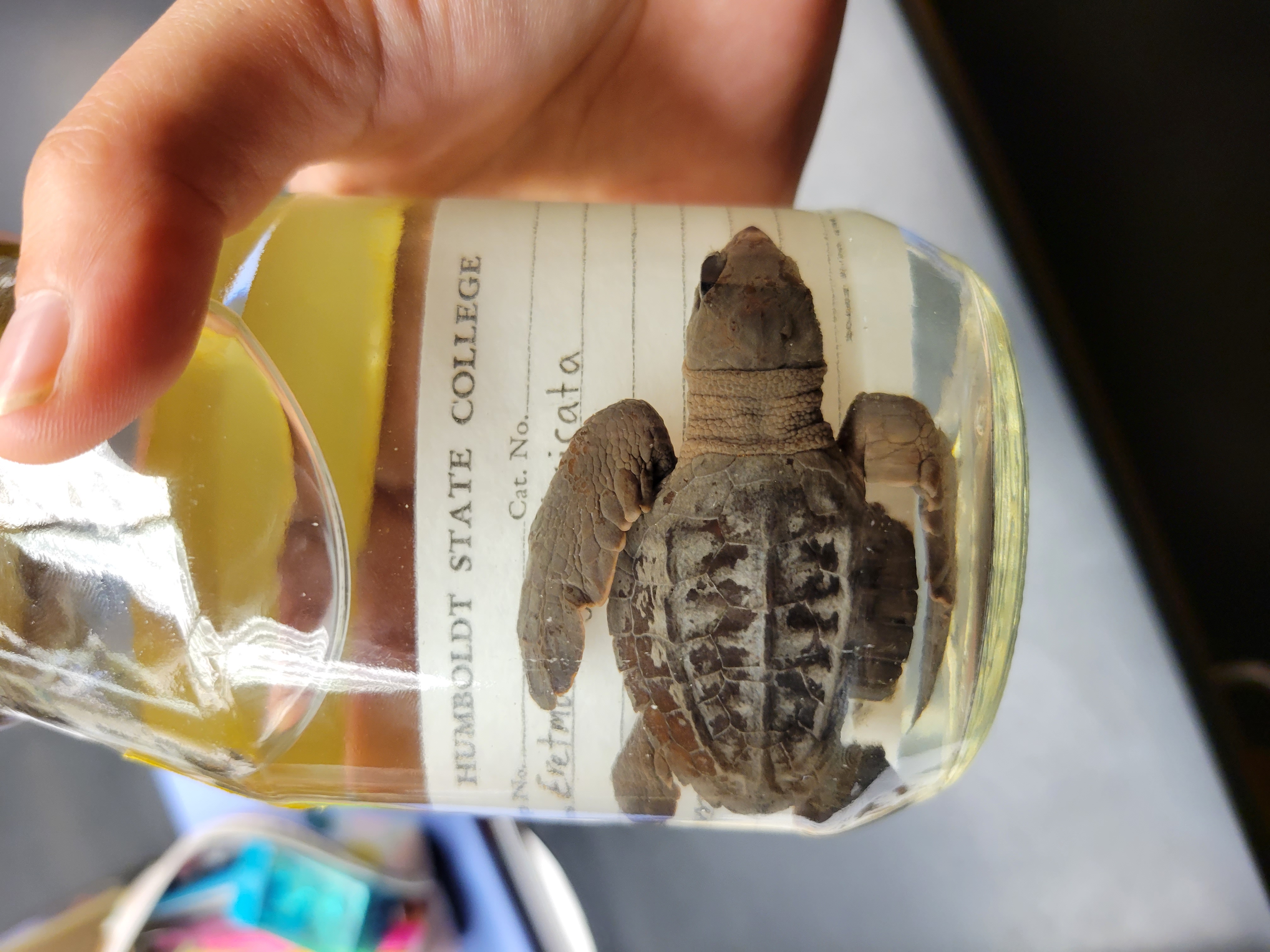
<p><span style="font-family: hurme_no2-webfont, -apple-system, system-ui, sans-serif">Hawksbill</span><br><br><span style="font-family: hurme_no2-webfont, -apple-system, system-ui, sans-serif">Carapace heart-shaped, hawk-like mandibles. Strongly overlapping, shingle-like shields. 4 costal shields on each side, 1st not touching nuchal. 4 inframargials at outer edge of bridge. 2 pairs of scales between eye. Male: tail longer and thicker than in female with curved nail on each front flipper.</span></p>

Hawksbill

Carapace heart-shaped, hawk-like mandibles. Strongly overlapping, shingle-like shields. 4 costal shields on each side, 1st not touching nuchal. 4 inframargials at outer edge of bridge. 2 pairs of scales between eye. Male: tail longer and thicker than in female with curved nail on each front flipper.


Family cheloniidae Eretmochelys imbricata
2
New cards
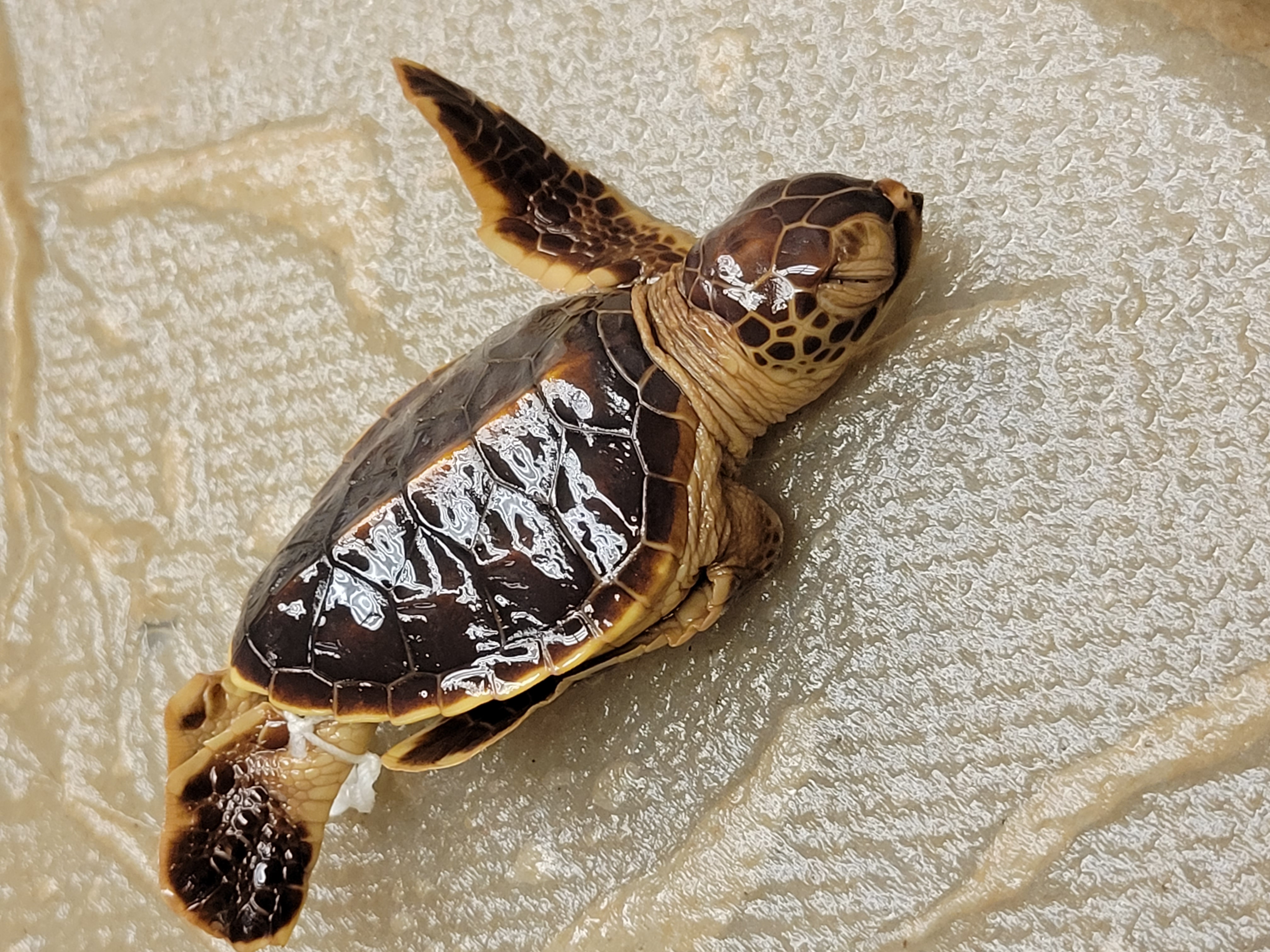
<p><span style="font-family: hurme_no2-webfont, -apple-system, system-ui, sans-serif">Green Turtle</span><br><br><span style="font-family: hurme_no2-webfont, -apple-system, system-ui, sans-serif">Carapace smooth with 4, costal shields on each side, 1st not touching nuchal. Carapace green brown, plastron pale yellowish. Single pair of large scales between upper eyelids. Head plates olive with yellow edge. Male: longer, narrower carapace. Large prehensile tail, tipped with horny nail. Enlarged curved claws on front flipper.</span></p>

Green Turtle

Carapace smooth with 4, costal shields on each side, 1st not touching nuchal. Carapace green brown, plastron pale yellowish. Single pair of large scales between upper eyelids. Head plates olive with yellow edge. Male: longer, narrower carapace. Large prehensile tail, tipped with horny nail. Enlarged curved claws on front flipper.

Family cheloniidae Chelonia mydas
3
New cards
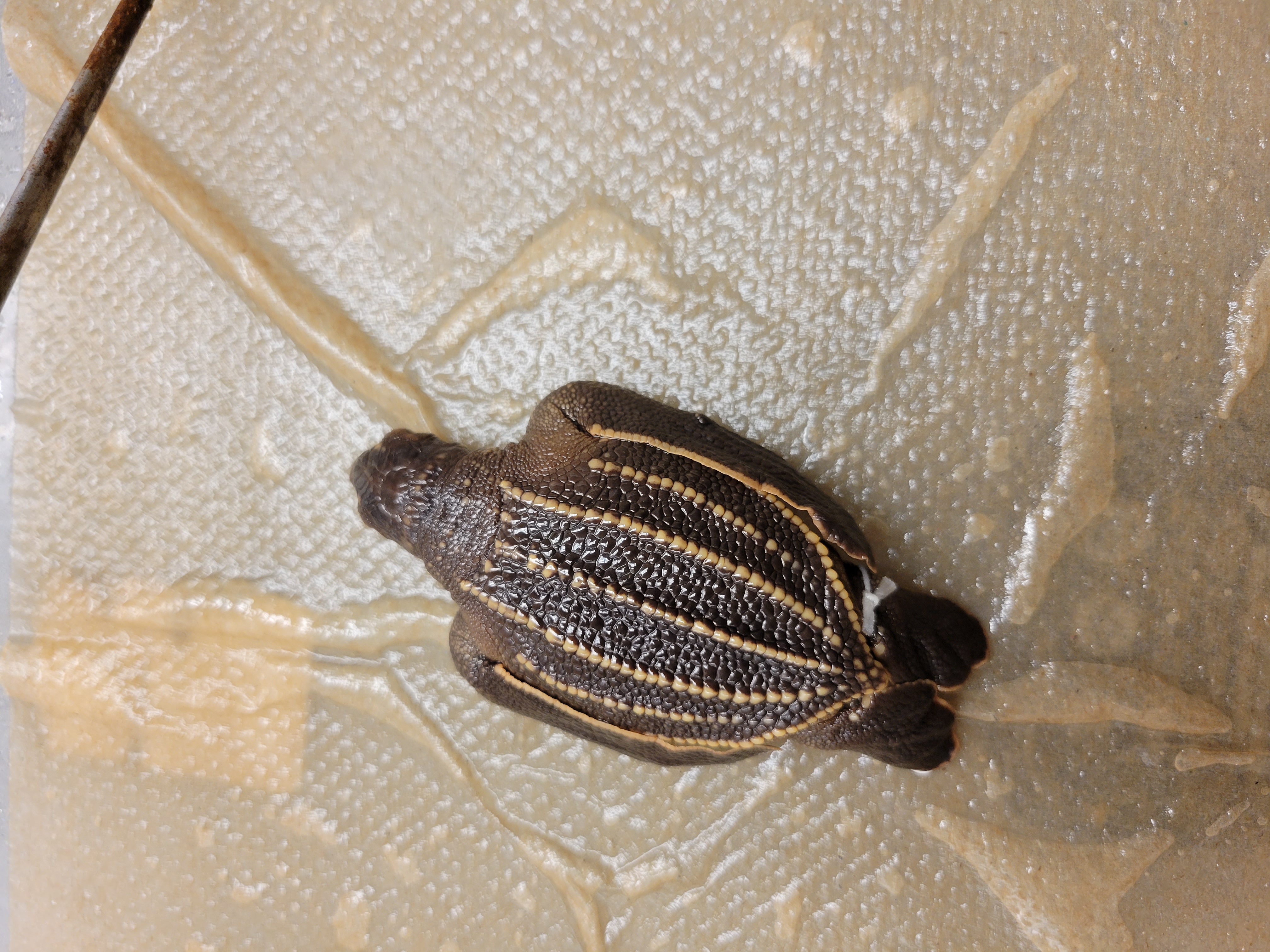
<p><span>Leatherback<br><br>Largest living turtle. Carapace and plastron with smooth leathery skin. Carapace dark brown, profile often with toothed edge.</span></p>

Leatherback

Largest living turtle. Carapace and plastron with smooth leathery skin. Carapace dark brown, profile often with toothed edge.

F: Dermochelyidae
Dermochelys coriacea
4
New cards
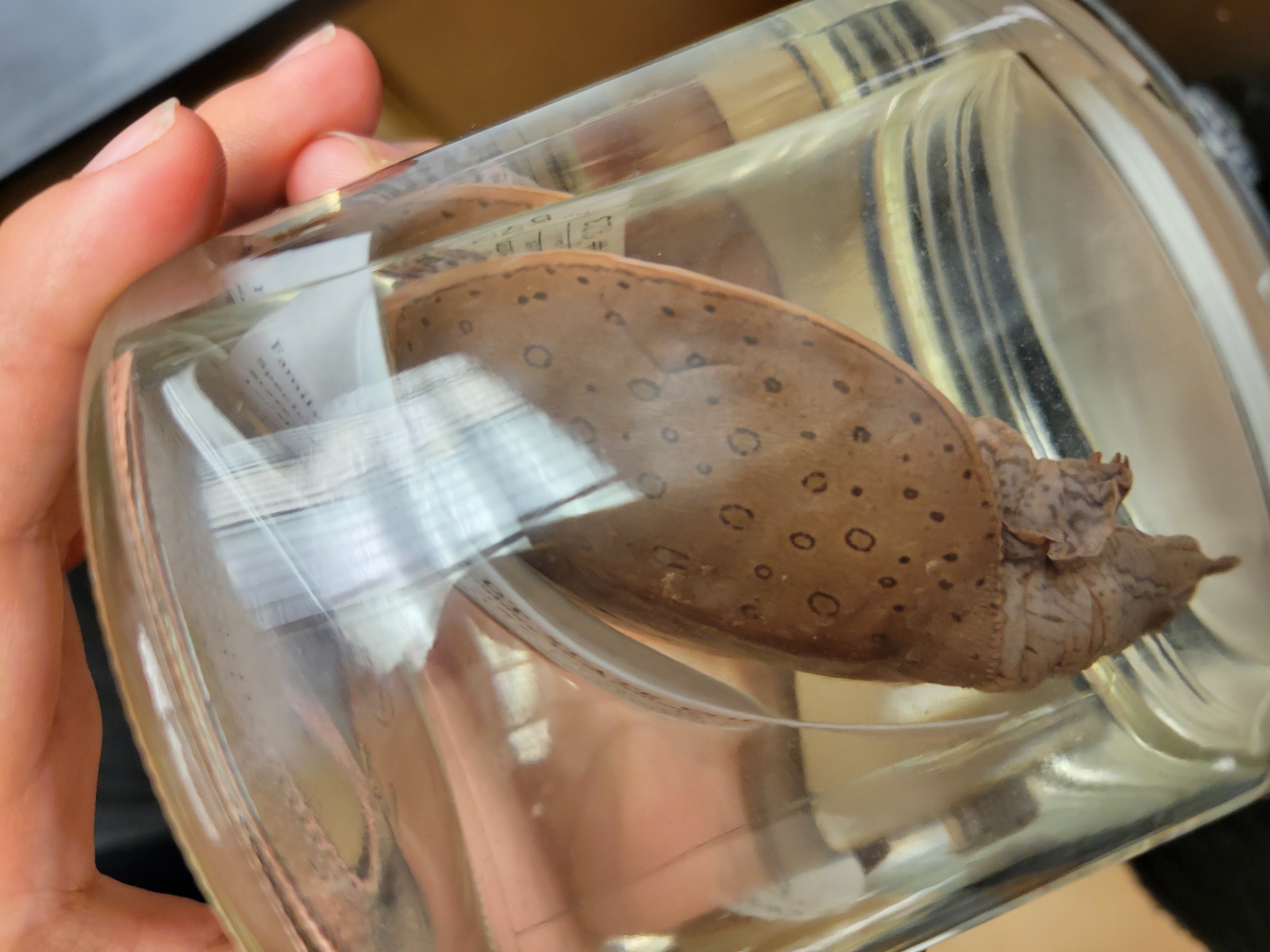
<p><span>Spiny Softshell<br><br>Extremely flat with flexible, pancake-like shell with leathery skin (not horny shield). Flexible proboscis, lips fleshy, sharp-edged jaws. Carapace yellow brown. Males: smaller than female with more contrasting pattern. Female: larger, more blotched, smoother carapace.</span></p>

Spiny Softshell

Extremely flat with flexible, pancake-like shell with leathery skin (not horny shield). Flexible proboscis, lips fleshy, sharp-edged jaws. Carapace yellow brown. Males: smaller than female with more contrasting pattern. Female: larger, more blotched, smoother carapace.

Trionychidae
Apalone spinifera
5
New cards
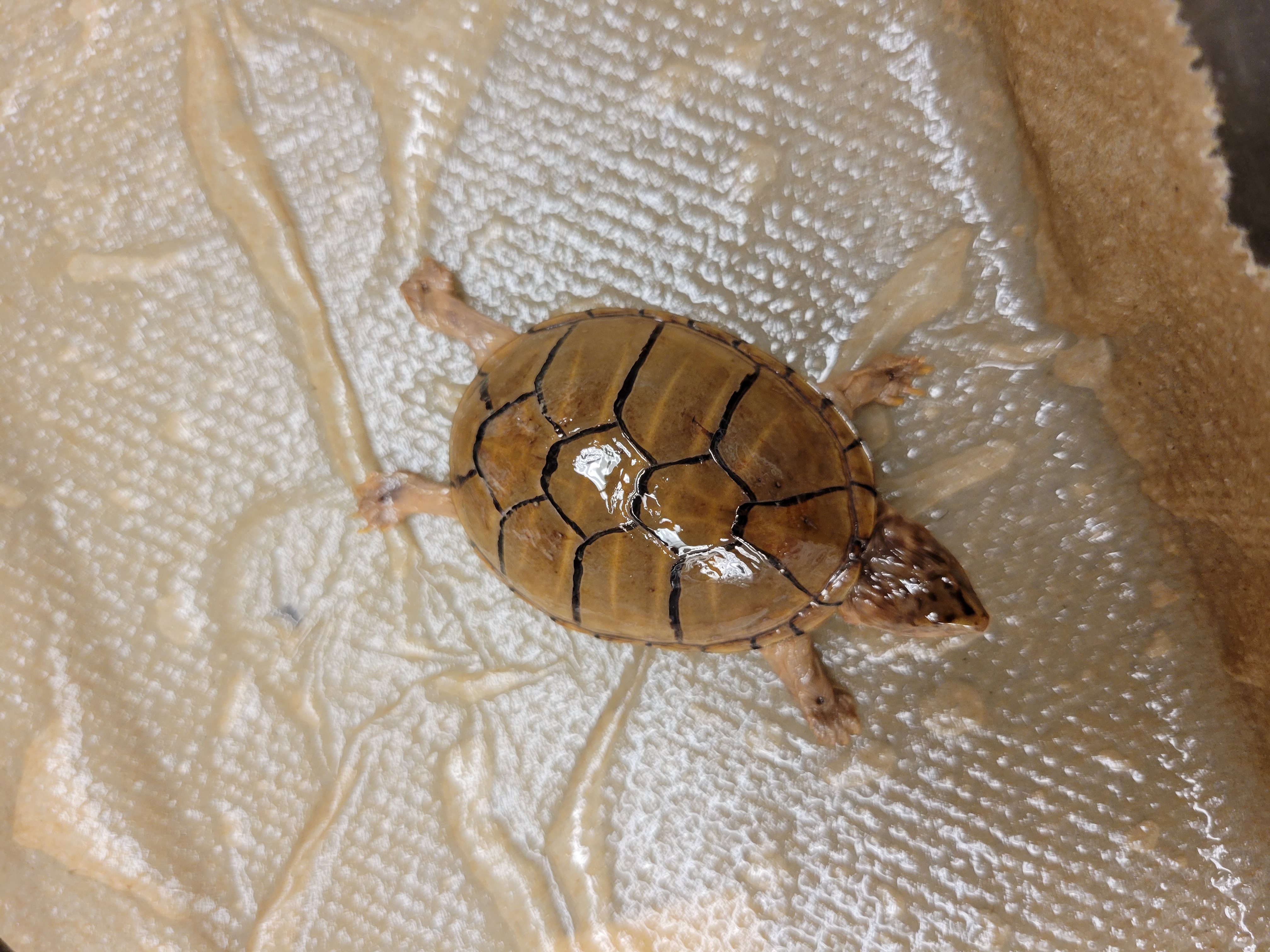
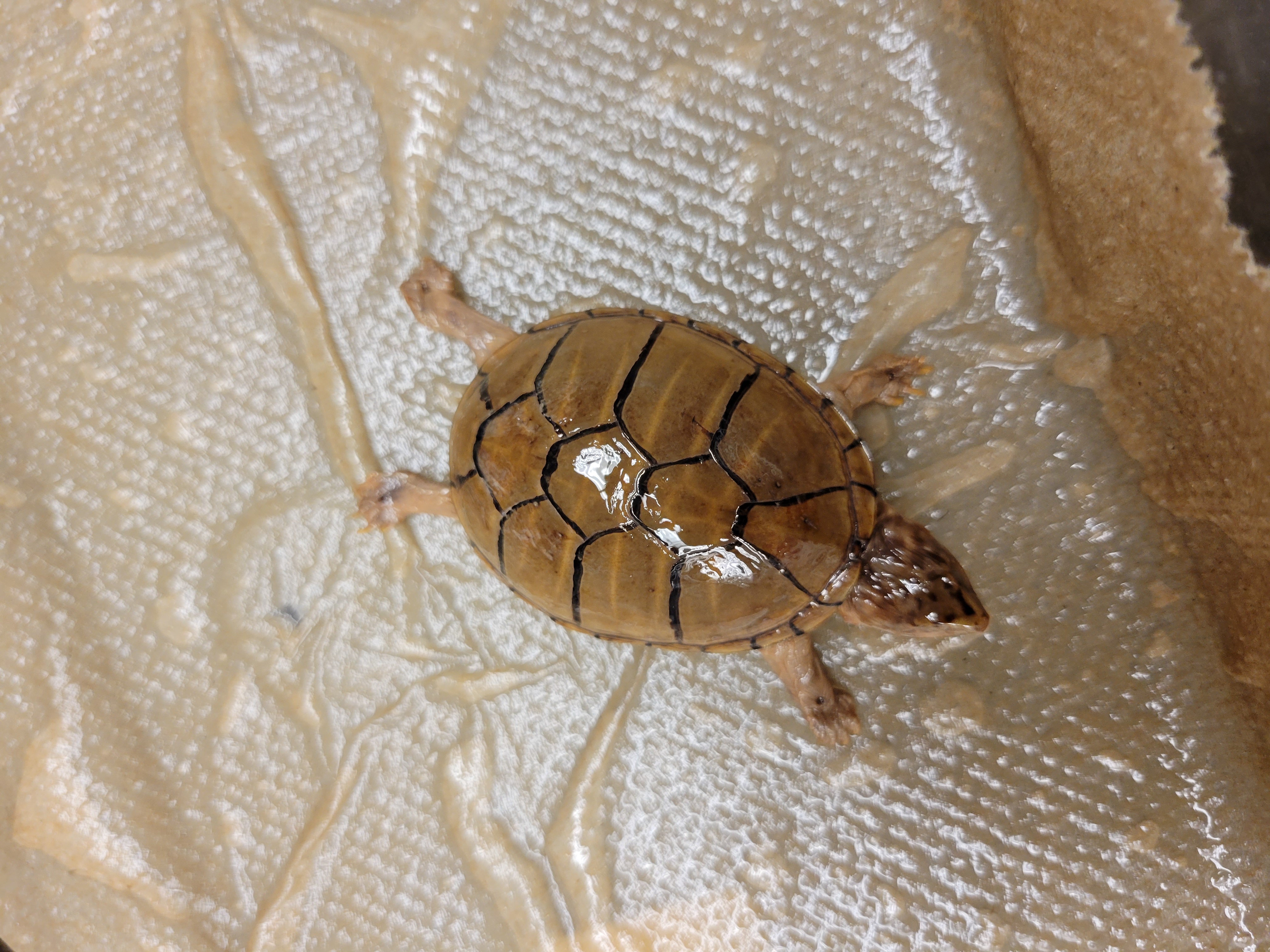
<p><span style="font-family: hurme_no2-webfont, -apple-system, system-ui, sans-serif">Eastern Musk Turtle</span><br><br><span style="font-family: hurme_no2-webfont, -apple-system, system-ui, sans-serif">Relatively small plastrons offer little protection for the legs but allows for greater mobility of the leg; good climbers. Hinge between the 2nd and 3rd pairs of plastral scutes, not readily apparent. The pectoral scutes are squarish. Two light stripes on the head and barbels on chin and throat. Males have broad areas of soft skin showing between plastral scutes; tail is long and thick and terminates in a blunt horny nail. In females, only small areas of skin show between plastral scutes and the tail is very small (with or without a sharp horny nail). This musk turtle prefers slow-moving waterways with a soft bottom.</span></p>

Eastern Musk Turtle

Relatively small plastrons offer little protection for the legs but allows for greater mobility of the leg; good climbers. Hinge between the 2nd and 3rd pairs of plastral scutes, not readily apparent. The pectoral scutes are squarish. Two light stripes on the head and barbels on chin and throat. Males have broad areas of soft skin showing between plastral scutes; tail is long and thick and terminates in a blunt horny nail. In females, only small areas of skin show between plastral scutes and the tail is very small (with or without a sharp horny nail). This musk turtle prefers slow-moving waterways with a soft bottom.

Kinosternidae
Sternotherus odoratus
6
New cards
<p><span>Sonoran Mud Turtle<br><br>Lacks supraorbital ridges. Carapace has 3 lengthwise keels, 9th marginal shield not enlarged, bride of plastron lacks lengthwise groove. A stream-dweller, frequently springs, creeks, ponds, and water holes of intermittent streams.</span></p>

Sonoran Mud Turtle

Lacks supraorbital ridges. Carapace has 3 lengthwise keels, 9th marginal shield not enlarged, bride of plastron lacks lengthwise groove. A stream-dweller, frequently springs, creeks, ponds, and water holes of intermittent streams.

F: Kinosternidae
Kinosternon sonoriense
7
New cards
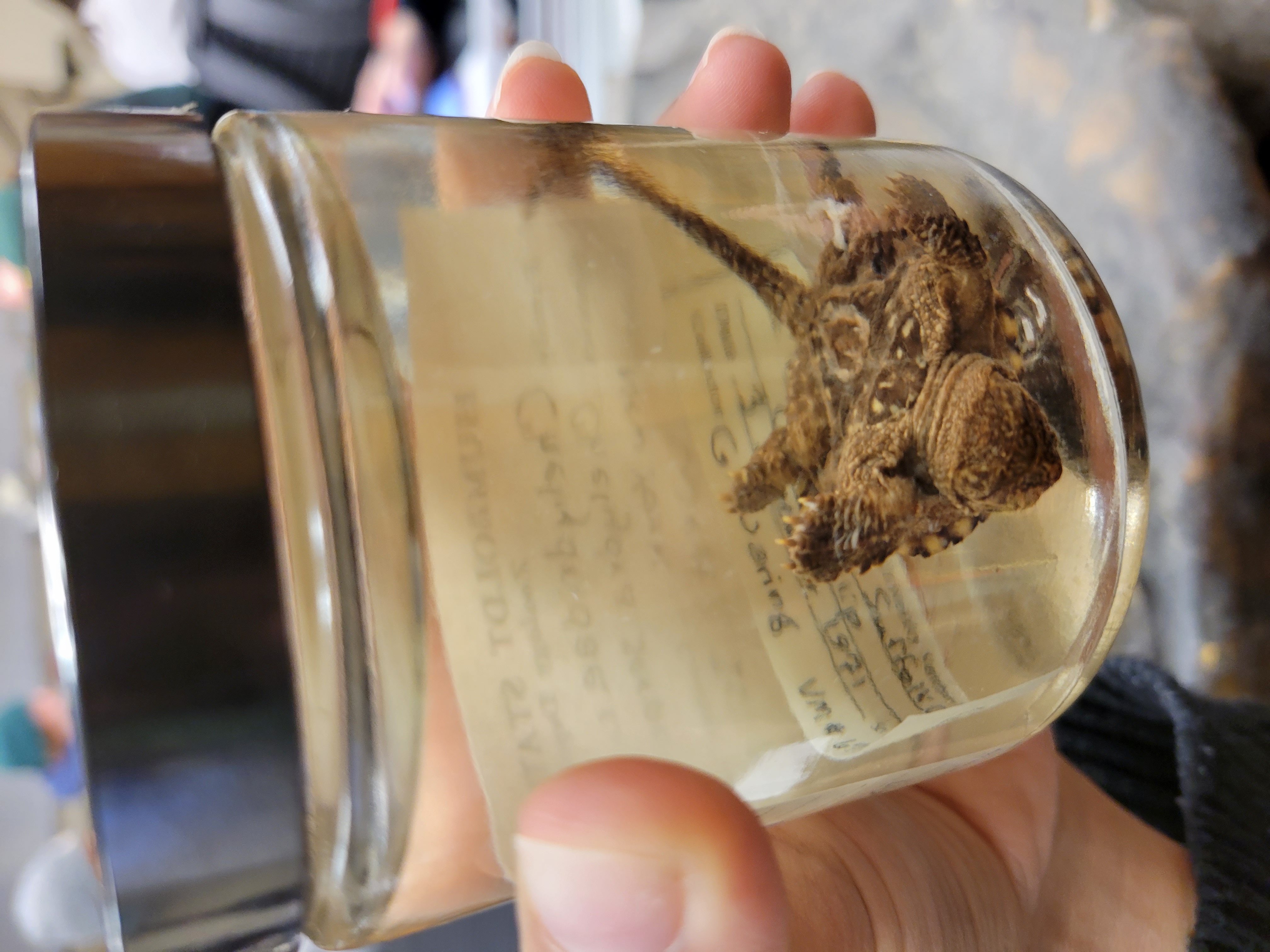
<p><span>Snapping Turtle<br><br>Small plastron and serrated tail crest distinguishes this turtle from all other western species. Tail usually longer than half the length of carapace. Carapace black, brown, olive, or horned colored. Inhabits marshes, ponds, lakes, rivers, and slow streams.</span></p>

Snapping Turtle

Small plastron and serrated tail crest distinguishes this turtle from all other western species. Tail usually longer than half the length of carapace. Carapace black, brown, olive, or horned colored. Inhabits marshes, ponds, lakes, rivers, and slow streams.

F: Chelydridae
Chelydra serpentina

8
New cards

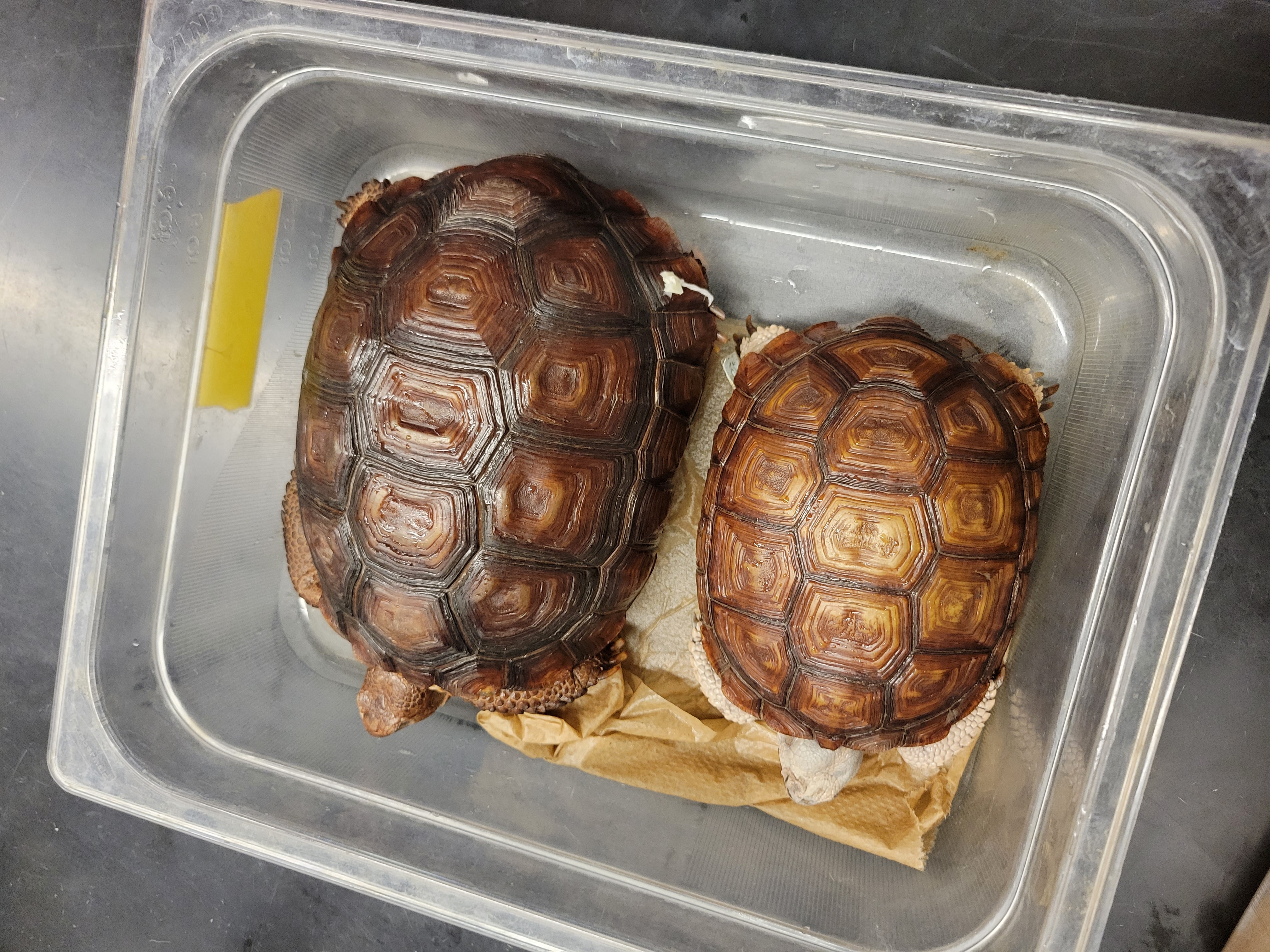
Texas Tortoise

Carapace is oblong; may be nearly as broad as long. Feet stumpy; plastron rigid. Gular scutes of plastron may be greatly elongated, forked, and curved upward, especially in adult males, which use them to overturn masculine opponents during breeding activities. Vertebrals are broader than long; the 1st is usually the narrowest, and the 3rd broadest. Carapace appears somewhat rough and ridged due to well-marked growth rings. Males have slightly longer and narrower carapaces, a longer and more deeply forked gular projection, a concave plastron, and better developed chin glands. Unlike other U.S. Gopherus species, G. berlandieri does not dig an extensive burrow.

F: Testudinidae
Gopherus berlandieri
9
New cards
<p>Mohave Desert Tortoise<br><br>Represents tortoises occurring east and south of the Colorado River in Arizona, and western Mexico. Species split based on molecular, morphological, physiological, and ecological data.</p>

Mohave Desert Tortoise

Represents tortoises occurring east and south of the Colorado River in Arizona, and western Mexico. Species split based on molecular, morphological, physiological, and ecological data.

F: Testudinidae
Gopherus morafkai
10
New cards
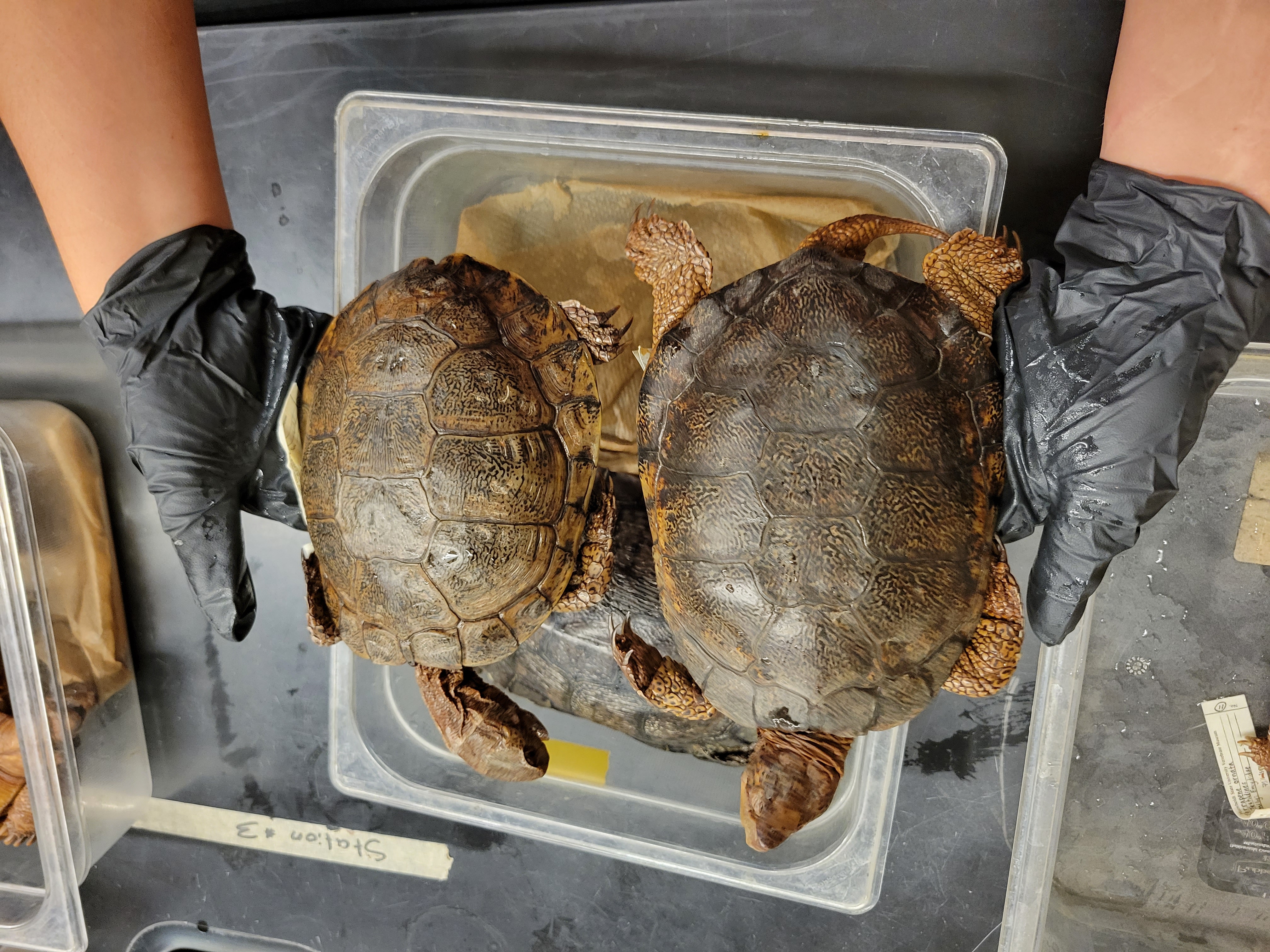
<p><span>Northern Western Pond Turtle<br><br>Carapace low, olive brown or blackish with network of spots, lines, or dashes of Brown or black. Plastron with 6 pairs of shields. Male: throat lighter, often white to yellow without flecking and shell usually flatter and less heavily marked than female.</span></p>

Northern Western Pond Turtle

Carapace low, olive brown or blackish with network of spots, lines, or dashes of Brown or black. Plastron with 6 pairs of shields. Male: throat lighter, often white to yellow without flecking and shell usually flatter and less heavily marked than female.

F: Emydidae
Actinemys marmorata
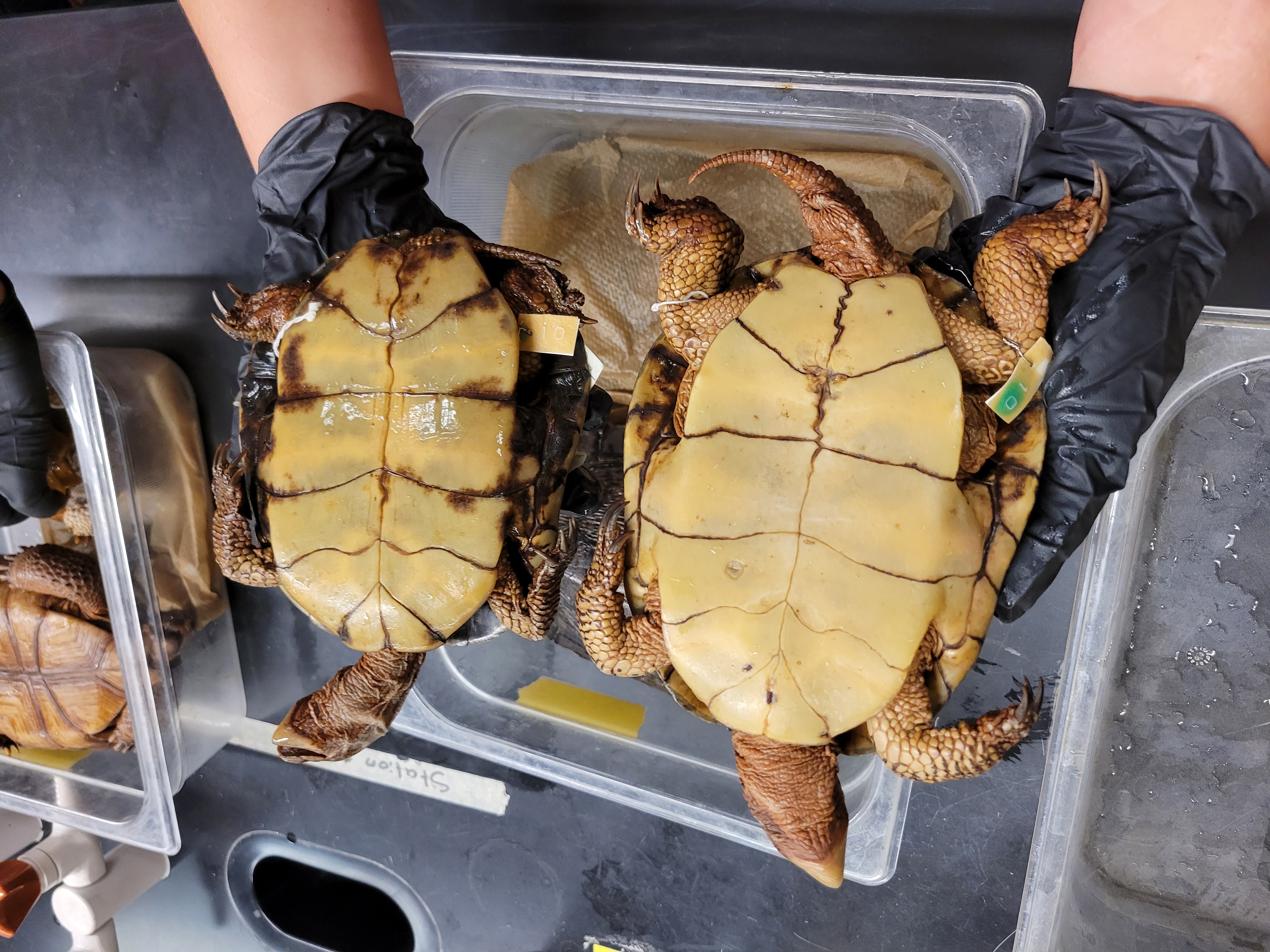
<p><span>F: Emydidae<br>Actinemys marmorata</span></p>
11
New cards
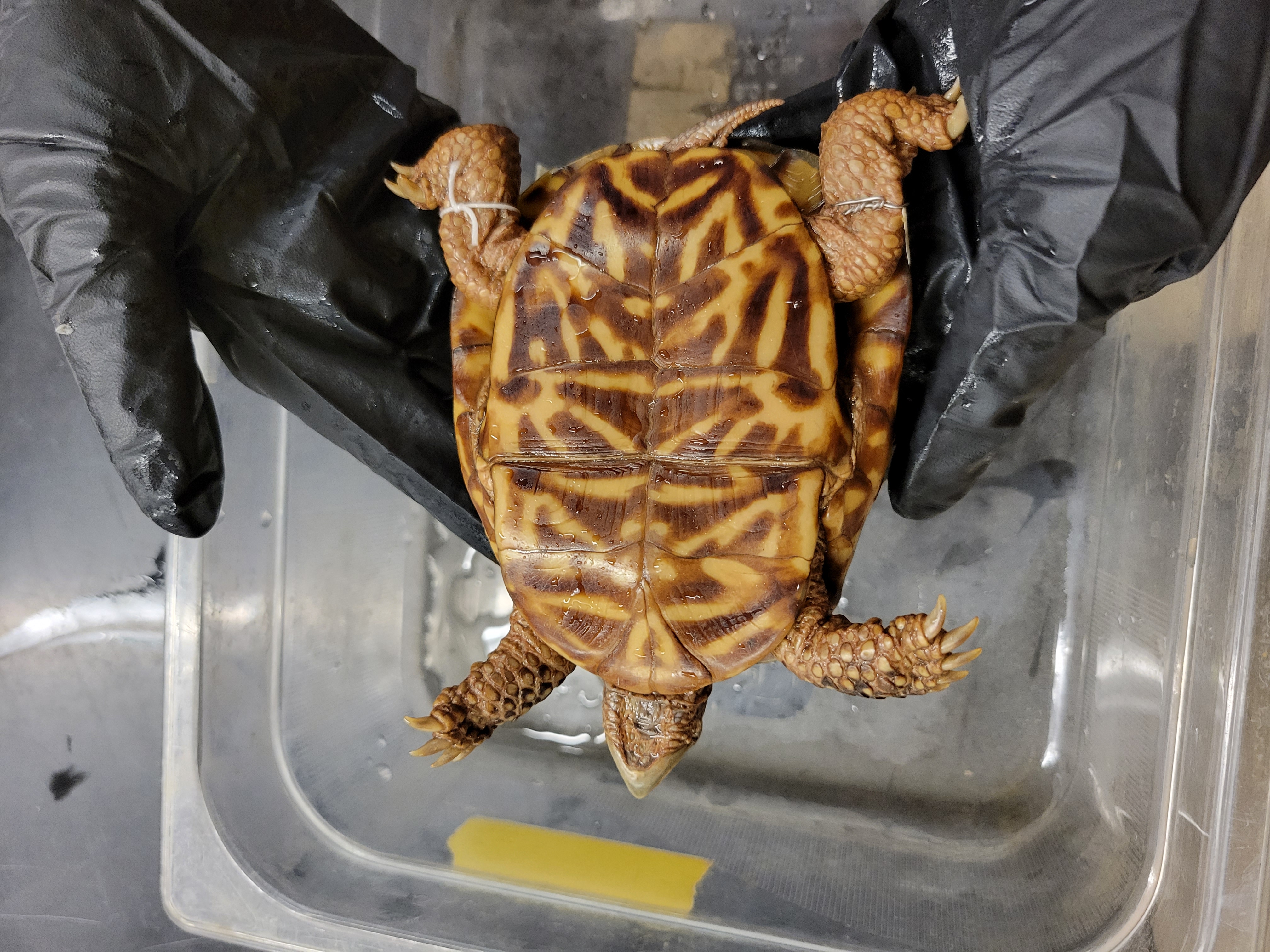
<p><span>Ornate Box Turtle<br><br>Can be distinguished from T. carolina using the following characters: (1) Its carapace is flattened or depressed on top; (2) both carapace and plastron are well ornamented.</span></p>

Ornate Box Turtle

Can be distinguished from T. carolina using the following characters: (1) Its carapace is flattened or depressed on top; (2) both carapace and plastron are well ornamented.

F: Emydidae
Terrapene ornata
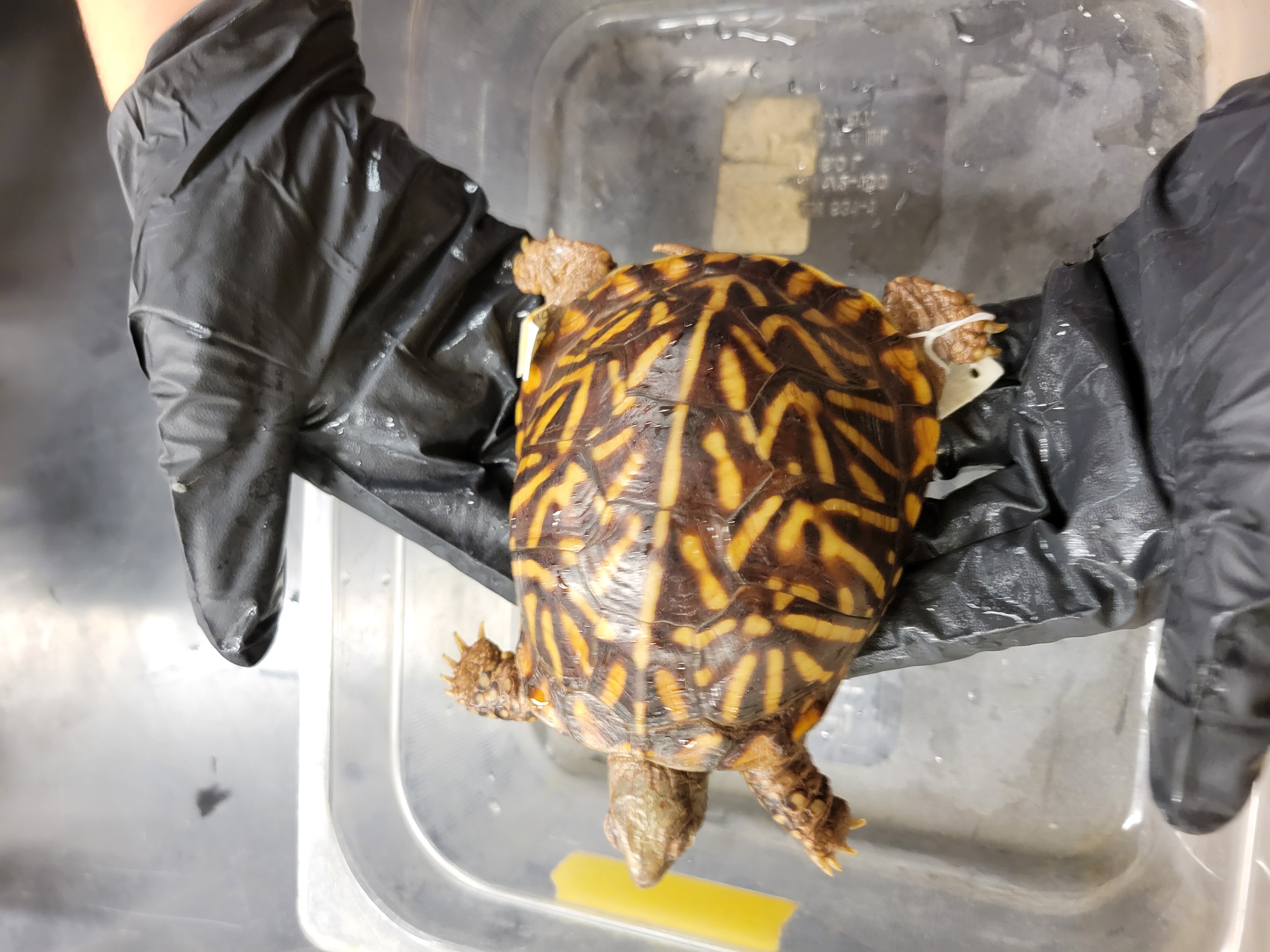
<p><span>F: Emydidae<br>Terrapene ornata</span></p>
12
New cards
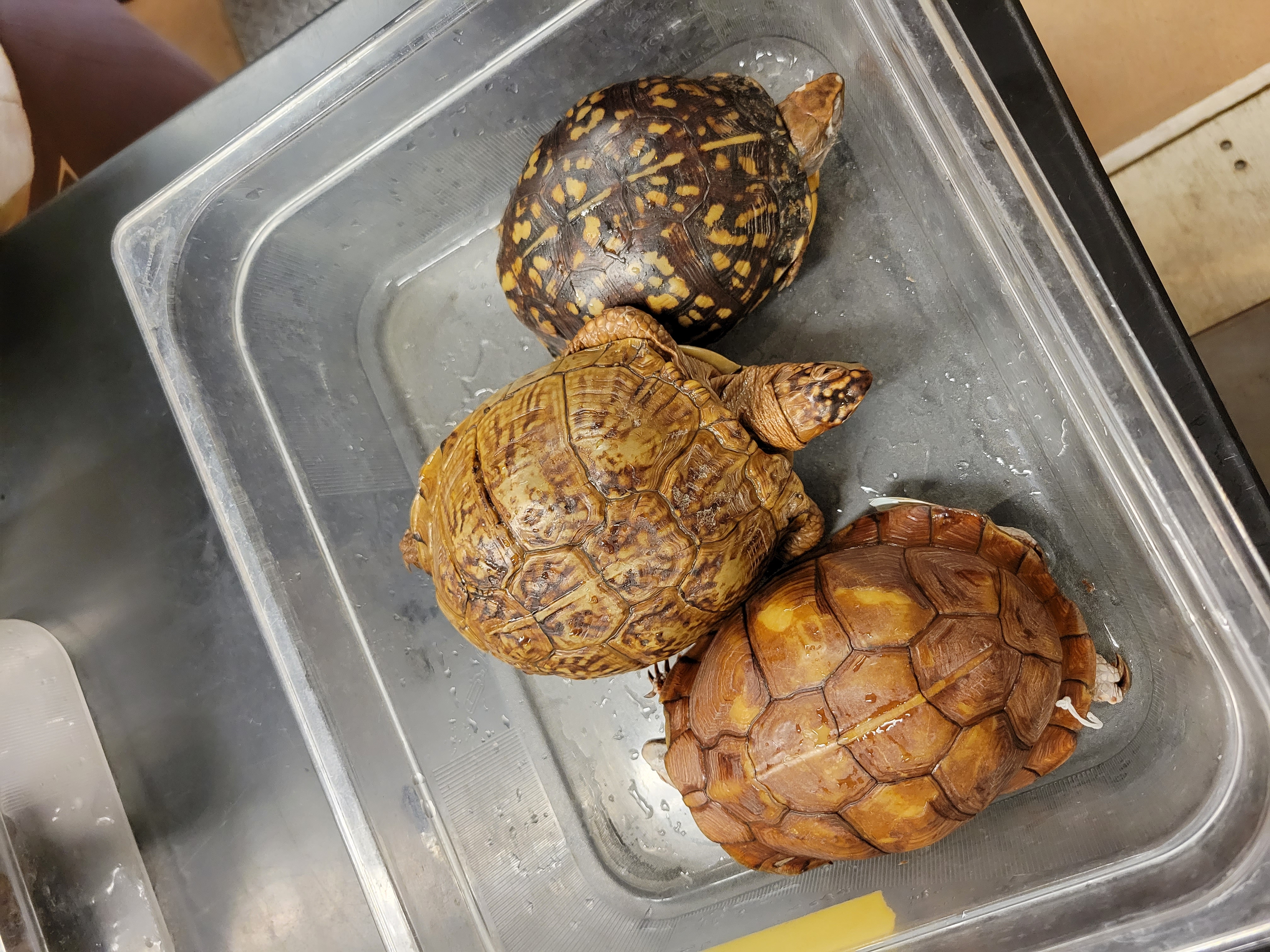
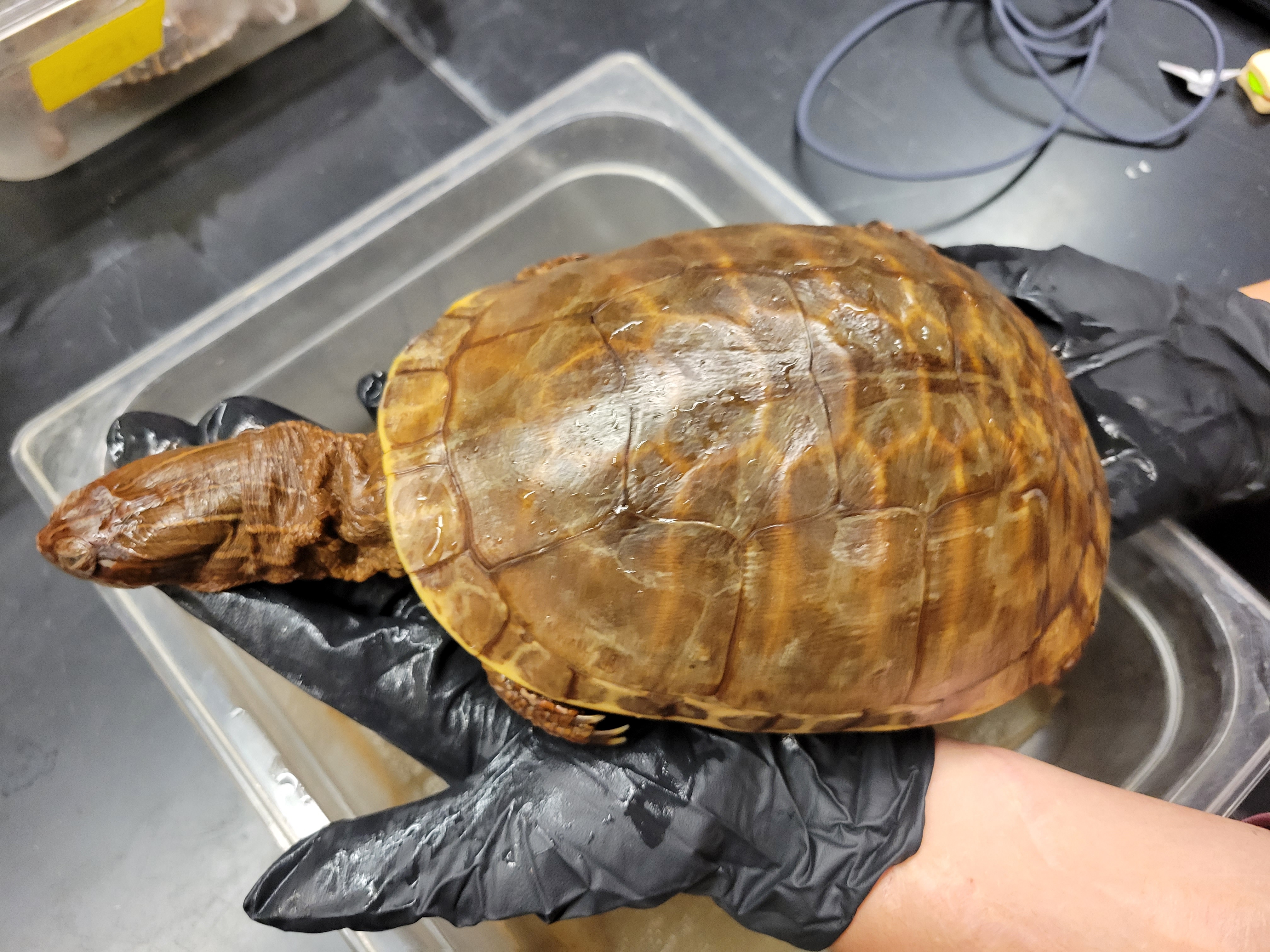
<p><span style="font-family: hurme_no2-webfont, -apple-system, system-ui, sans-serif">Eastern Box Turtle</span><br><br><span style="font-family: hurme_no2-webfont, -apple-system, system-ui, sans-serif">Characterized by a high dome-like shell and extremely variable coloration and pattern. Plastron often as long or longer than the carapace. Broad hinge across the plastron; can close their shells tightly when danger threatens. Adult males, the posterior lobe of the plastron is concave; in females it is flat or convex. Sexes also vary in the claws of the hind foot: those of males are short, stocky, and curved, those of females are longer, more slender, and straighter. Males have longer and thicker tails than do females. These turtles are essentially terrestrial, though they will sometimes soak themselves in mud or water.</span></p>

Eastern Box Turtle

Characterized by a high dome-like shell and extremely variable coloration and pattern. Plastron often as long or longer than the carapace. Broad hinge across the plastron; can close their shells tightly when danger threatens. Adult males, the posterior lobe of the plastron is concave; in females it is flat or convex. Sexes also vary in the claws of the hind foot: those of males are short, stocky, and curved, those of females are longer, more slender, and straighter. Males have longer and thicker tails than do females. These turtles are essentially terrestrial, though they will sometimes soak themselves in mud or water.

F: Emydidae
Terrapene carolina
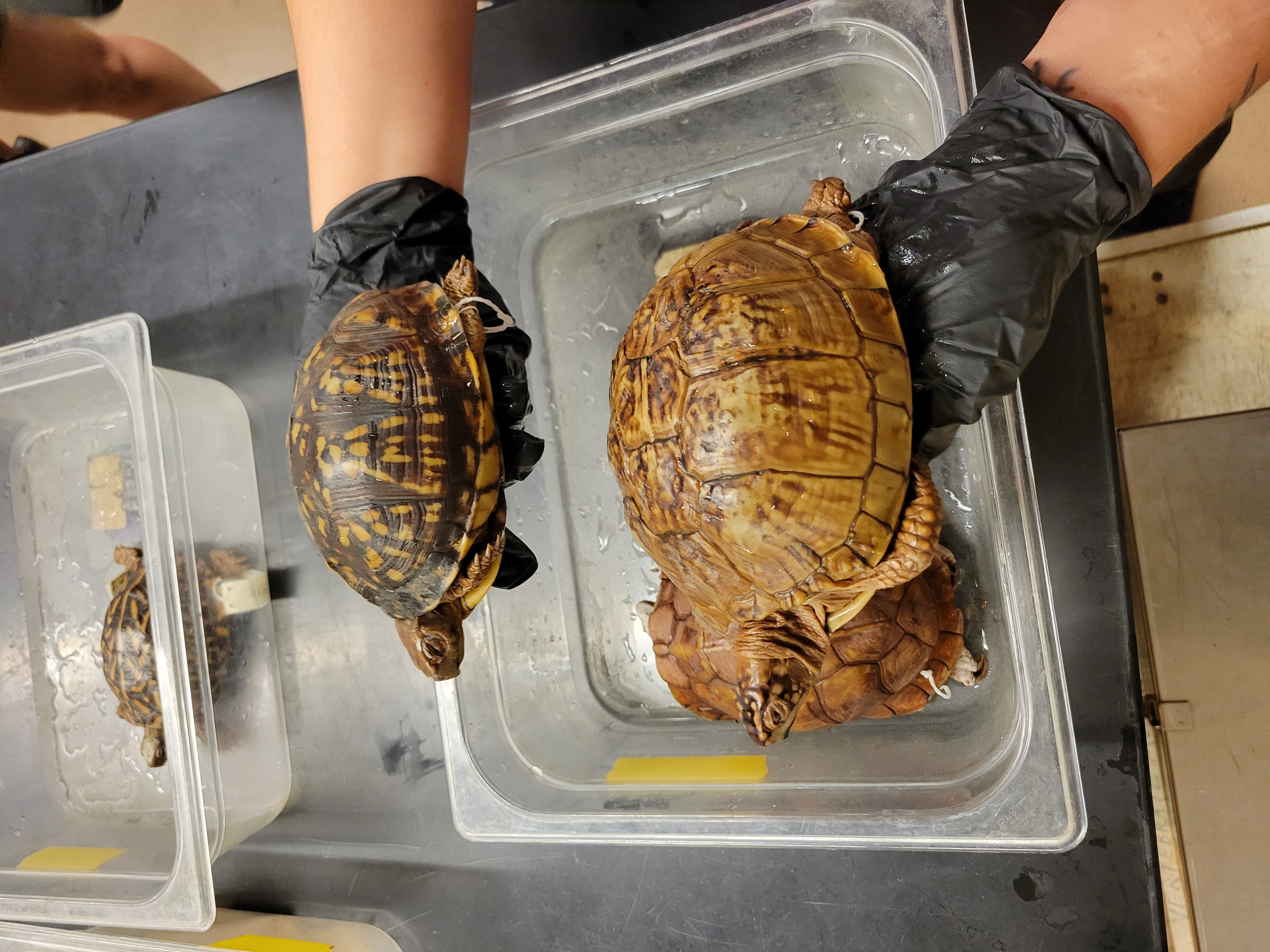
<p><span>F: Emydidae<br>Terrapene carolina</span></p>
13
New cards
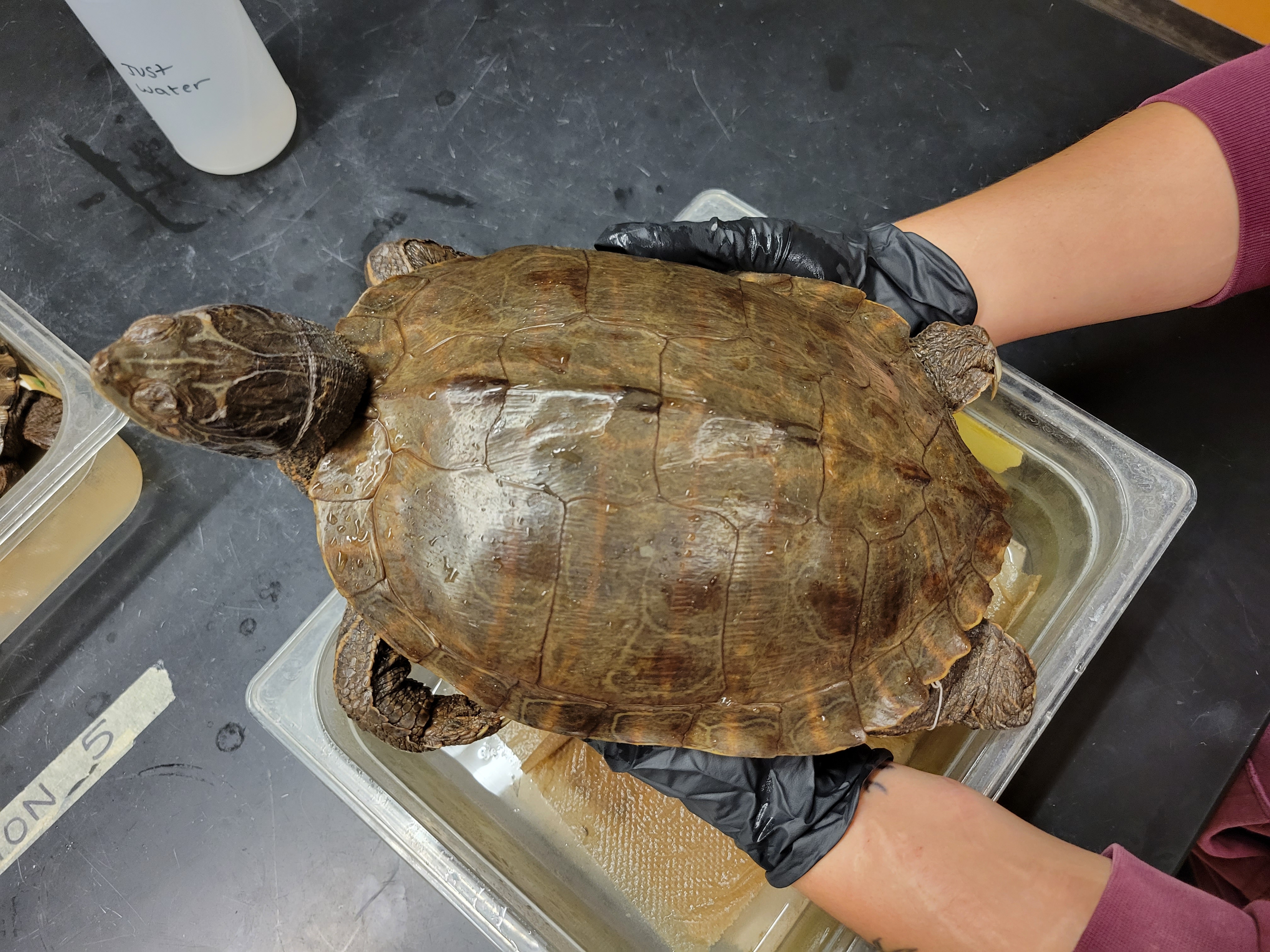
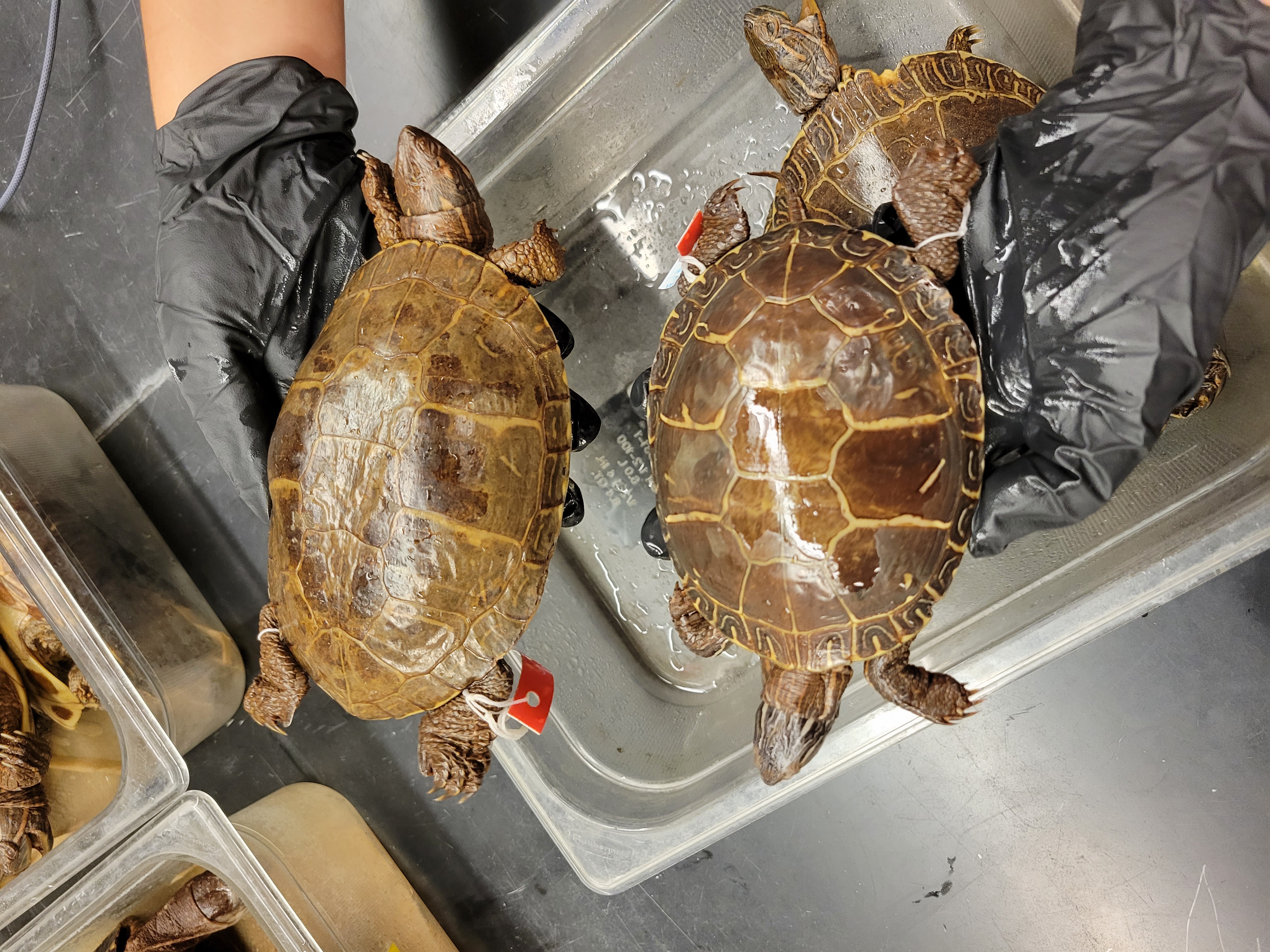
<p><span style="font-family: hurme_no2-webfont, -apple-system, system-ui, sans-serif">Map Turtles</span><br><br><span style="font-family: hurme_no2-webfont, -apple-system, system-ui, sans-serif">Genus consists of 11 species of lake and riverine turtles. Oval carapaces have a medial keel that varies from a low, raised mound to well-developed, spiny or blunt protuberances. Posterior rim of the carapace is strongly serrated. Plastron lacks a hinge. These turtles are molluscivorous. Pattern of markings on the carapace resemble contour lines on a map. The limbs and head of these turtles are heavily patterned with yellow and black stripes, whorls and curlicues.</span></p>

Map Turtles

Genus consists of 11 species of lake and riverine turtles. Oval carapaces have a medial keel that varies from a low, raised mound to well-developed, spiny or blunt protuberances. Posterior rim of the carapace is strongly serrated. Plastron lacks a hinge. These turtles are molluscivorous. Pattern of markings on the carapace resemble contour lines on a map. The limbs and head of these turtles are heavily patterned with yellow and black stripes, whorls and curlicues.

F: Emydidae
Graptemys
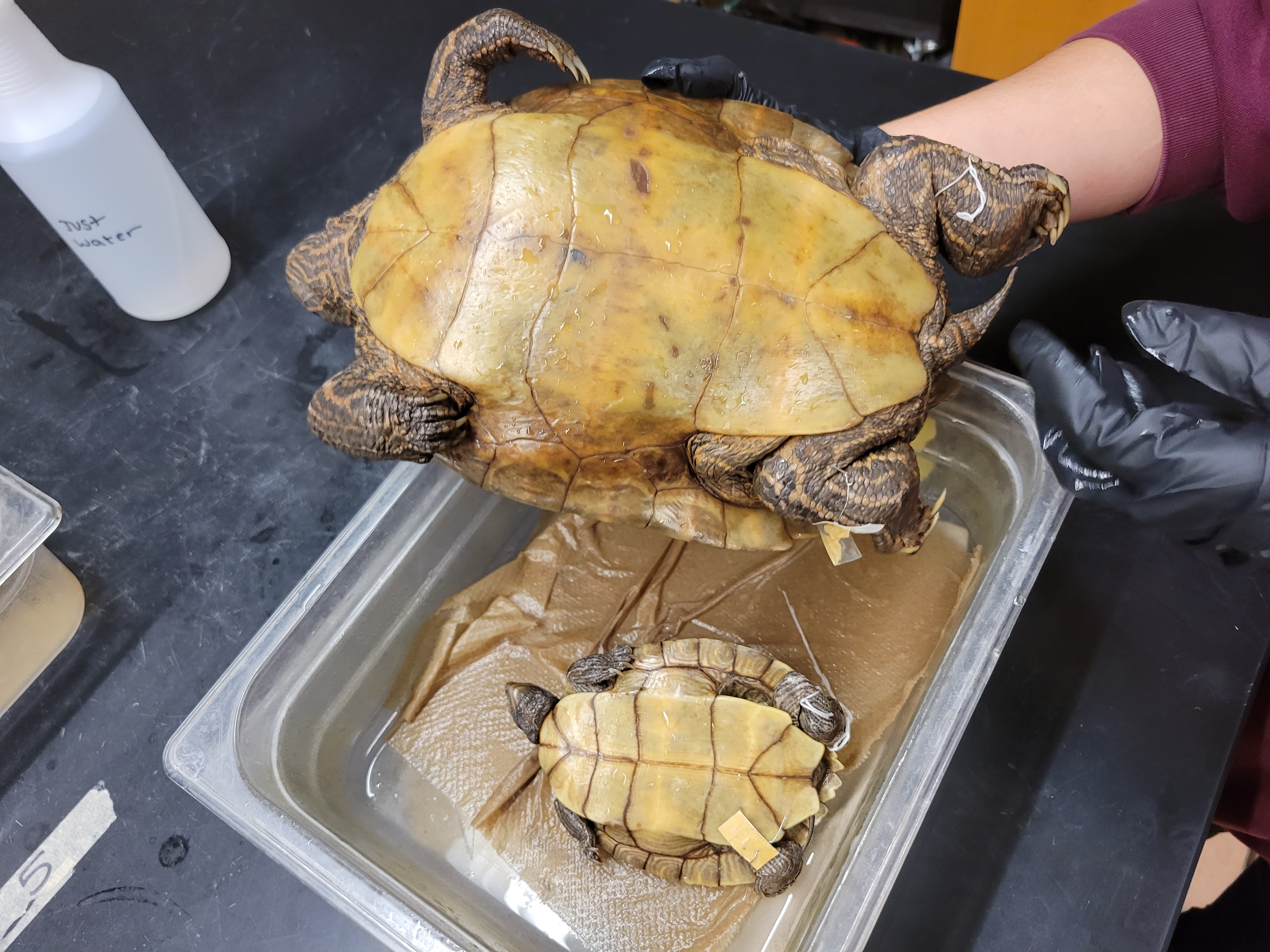
<p><span>F: Emydidae<br>Graptemys</span></p>
14
New cards
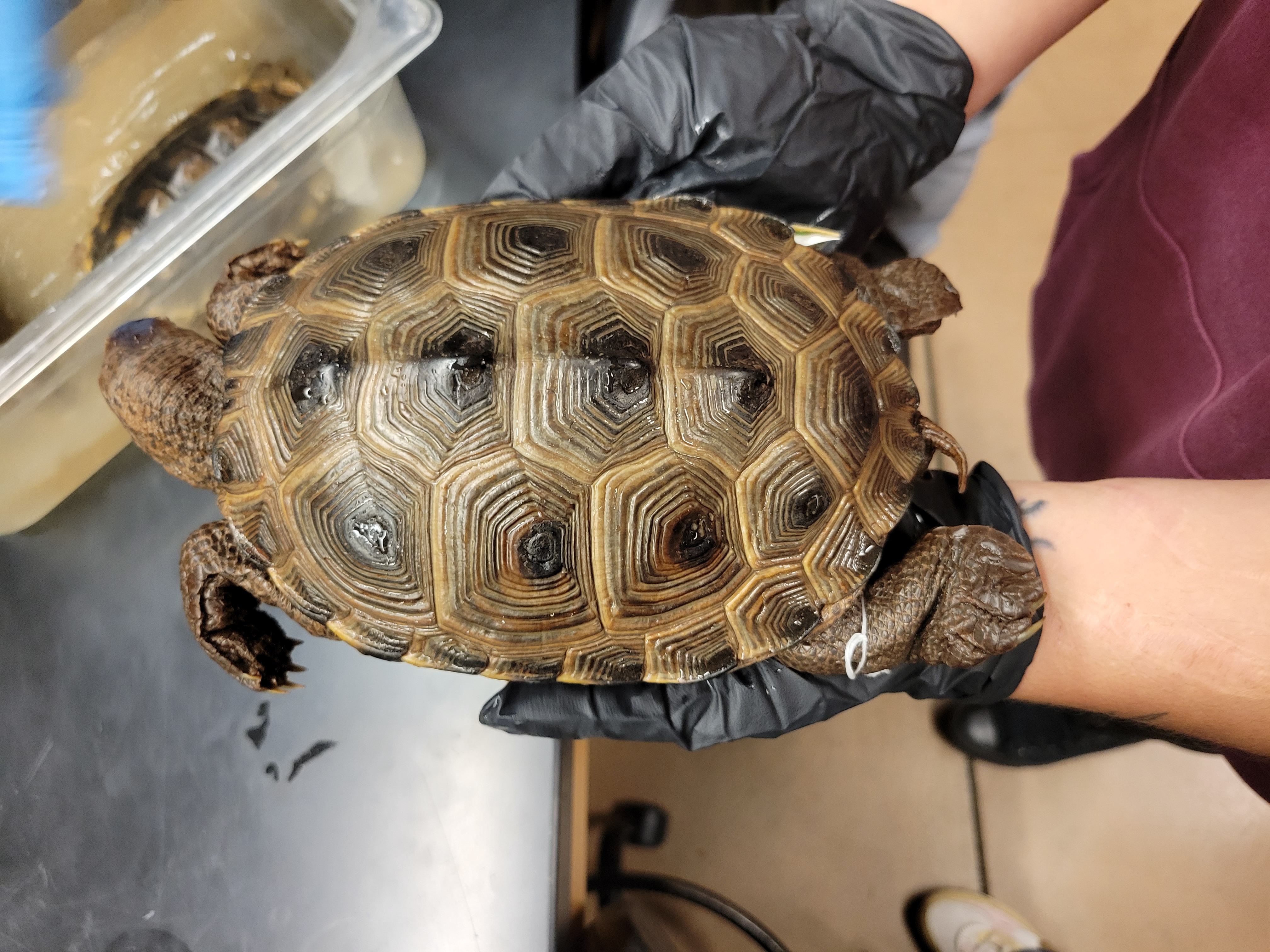
<p><span style="font-family: hurme_no2-webfont, -apple-system, system-ui, sans-serif">Diamond-backed Terrapin</span><br><br><br><span style="font-family: hurme_no2-webfont, -apple-system, system-ui, sans-serif">Only a single species in this genus. Only truly brackish water North American emydid. Spots on head, neck, and limbs. Each large scute possesses concentric rings or ridges. The limbs and head are flecked or spotted. The plastron is hingeless. Carapace has a medial keel that varies from low and inconspicuous to prominent and knobby. The head is short. Adult males are smaller than females. Females have broader, blunter heads, deeper shells, and shorter tails than males. Malaclemys ranks high among gourmets because of its succulent flesh.</span></p>

Diamond-backed Terrapin


Only a single species in this genus. Only truly brackish water North American emydid. Spots on head, neck, and limbs. Each large scute possesses concentric rings or ridges. The limbs and head are flecked or spotted. The plastron is hingeless. Carapace has a medial keel that varies from low and inconspicuous to prominent and knobby. The head is short. Adult males are smaller than females. Females have broader, blunter heads, deeper shells, and shorter tails than males. Malaclemys ranks high among gourmets because of its succulent flesh.

F: Emydidae
Malaclemys terrapin
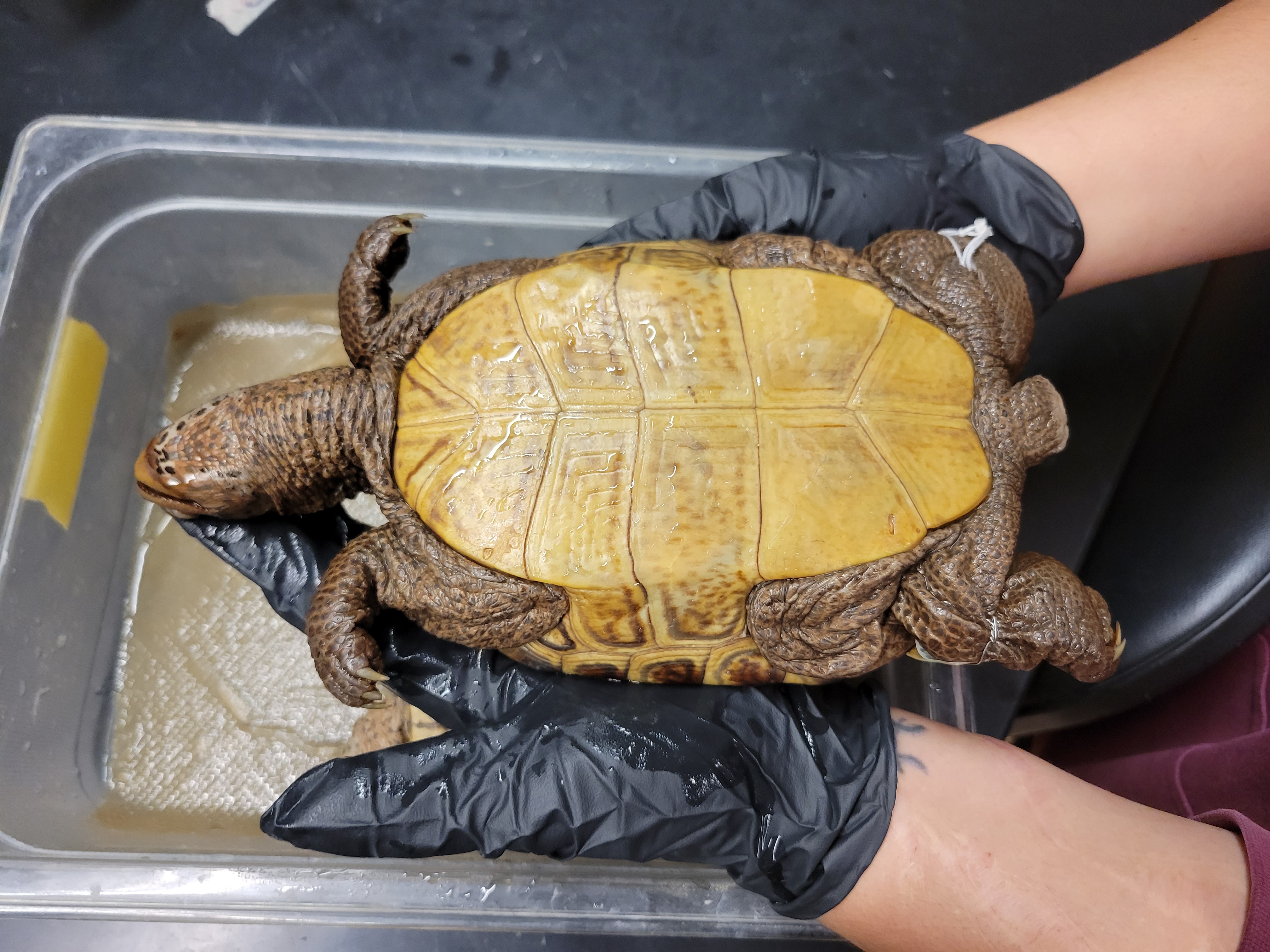
<p><span>F: Emydidae<br>Malaclemys terrapin</span></p>
15
New cards
<p><span style="font-family: hurme_no2-webfont, -apple-system, system-ui, sans-serif">Chicken Turtle</span><br><br><span style="font-family: hurme_no2-webfont, -apple-system, system-ui, sans-serif">Genus is monotypic (i.e., it contains only a single species). Extremely long striped neck and a netlike pattern of light lines on the carapace. Carapace somewhat rough and sculptured with small, longitudinal ridges, is much longer than wide, and is widest over the hind legs. Plastron hingeless and yellow. Head long and narrow with a pointed snout. Forelegs have a broad yellow stripe across its front surface; hind legs are vertically striped. Females are larger than males; males have long, thick tails. Prefers still-water habitats.</span></p>

Chicken Turtle

Genus is monotypic (i.e., it contains only a single species). Extremely long striped neck and a netlike pattern of light lines on the carapace. Carapace somewhat rough and sculptured with small, longitudinal ridges, is much longer than wide, and is widest over the hind legs. Plastron hingeless and yellow. Head long and narrow with a pointed snout. Forelegs have a broad yellow stripe across its front surface; hind legs are vertically striped. Females are larger than males; males have long, thick tails. Prefers still-water habitats.

F: Emydidae
Deirochelys reticularia
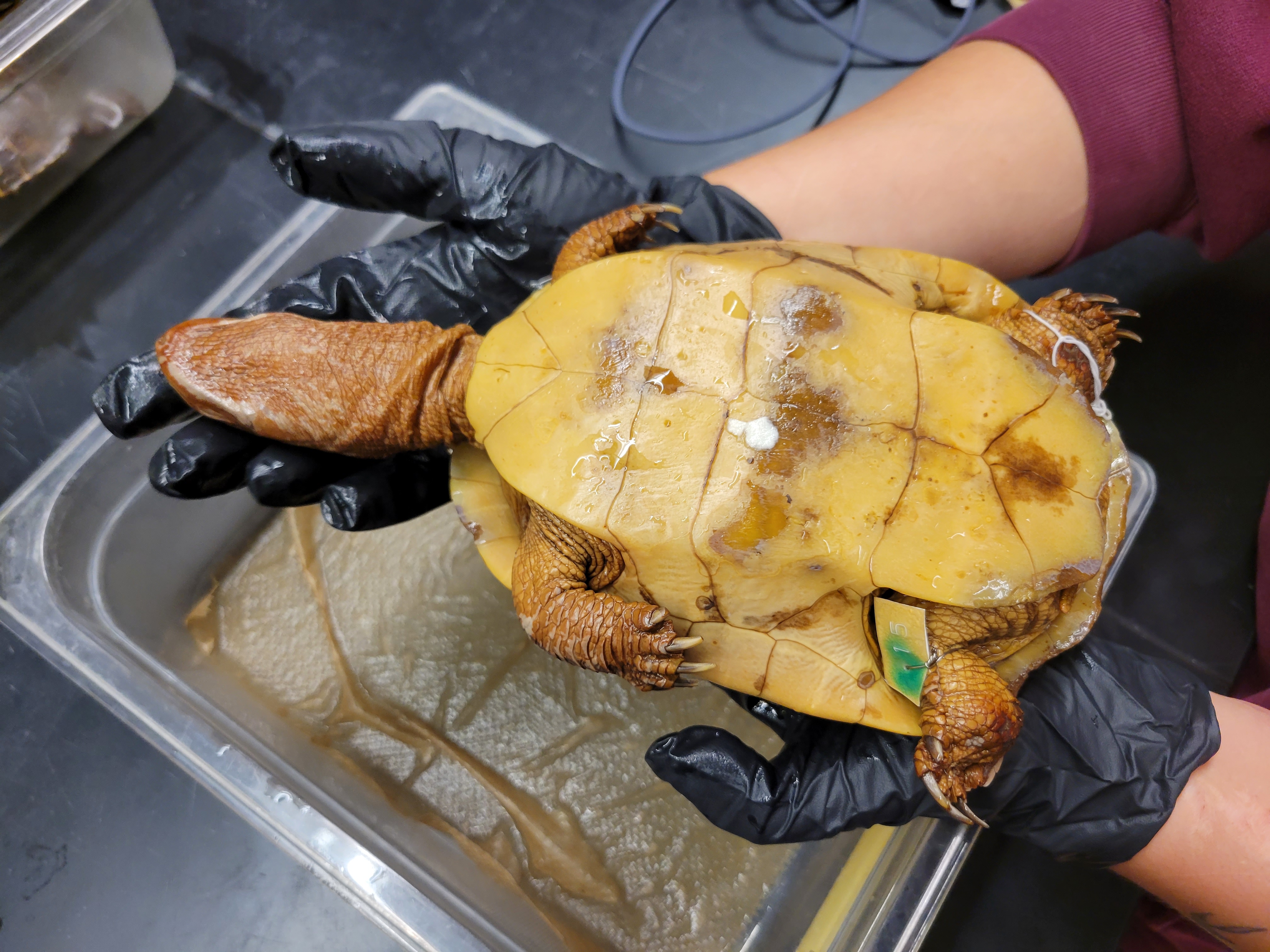
<p><span>F: Emydidae<br>Deirochelys reticularia</span></p>
16
New cards
<p><span>Painted Turtle<br><br>Carapace low, smooth and unkeeled. Black or brown shell with red or yellow middsoral stripe. Yellow lines on head and limbs. Plastron usually marked with red and with a dark figure that branches out along scutes. Males: smaller than female, very long nails on front feet.</span></p>

Painted Turtle

Carapace low, smooth and unkeeled. Black or brown shell with red or yellow middsoral stripe. Yellow lines on head and limbs. Plastron usually marked with red and with a dark figure that branches out along scutes. Males: smaller than female, very long nails on front feet.

F: Emydidae
Chrysemys picta
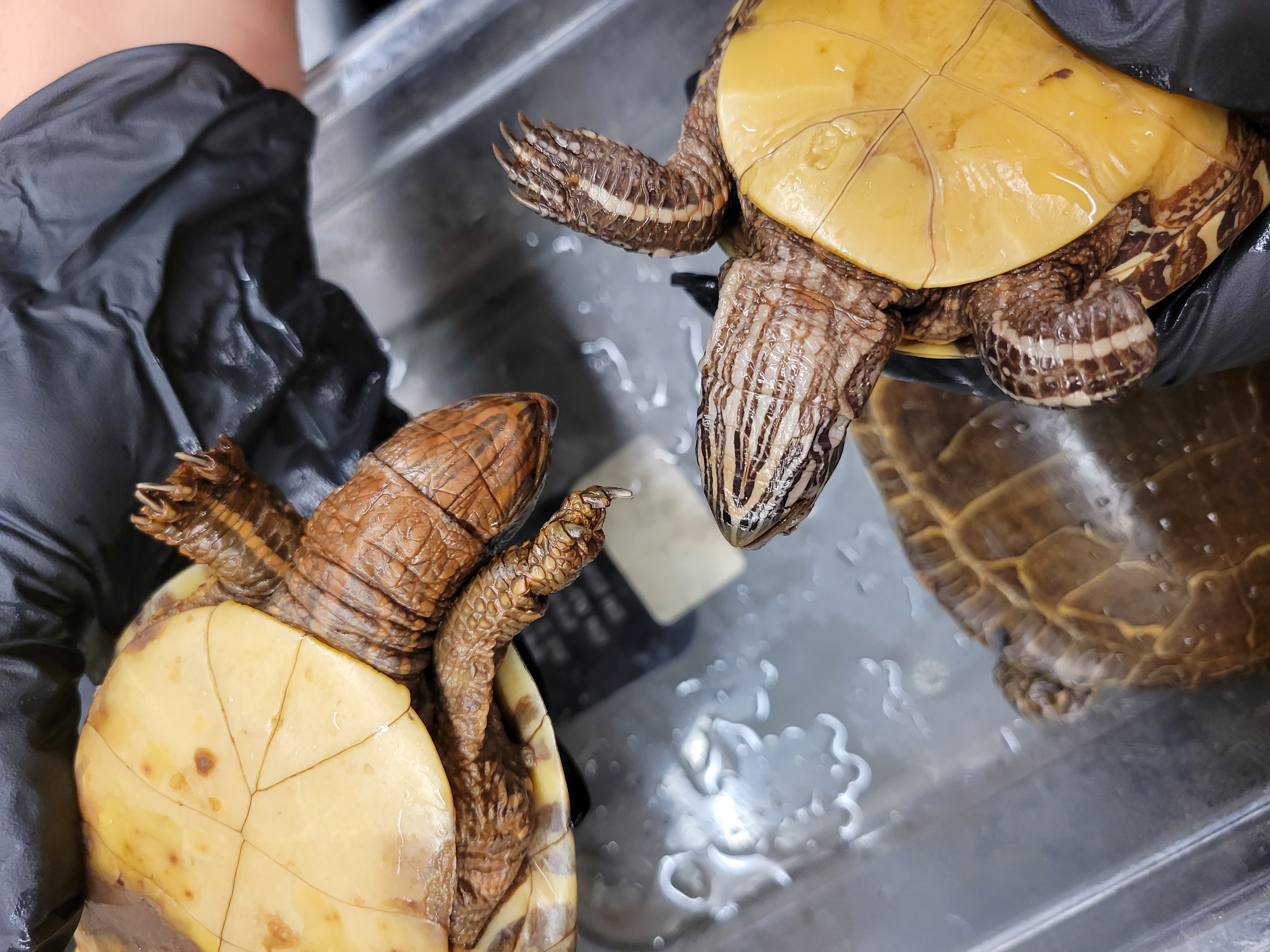
<p><span>F: Emydidae<br>Chrysemys picta</span></p>
17
New cards
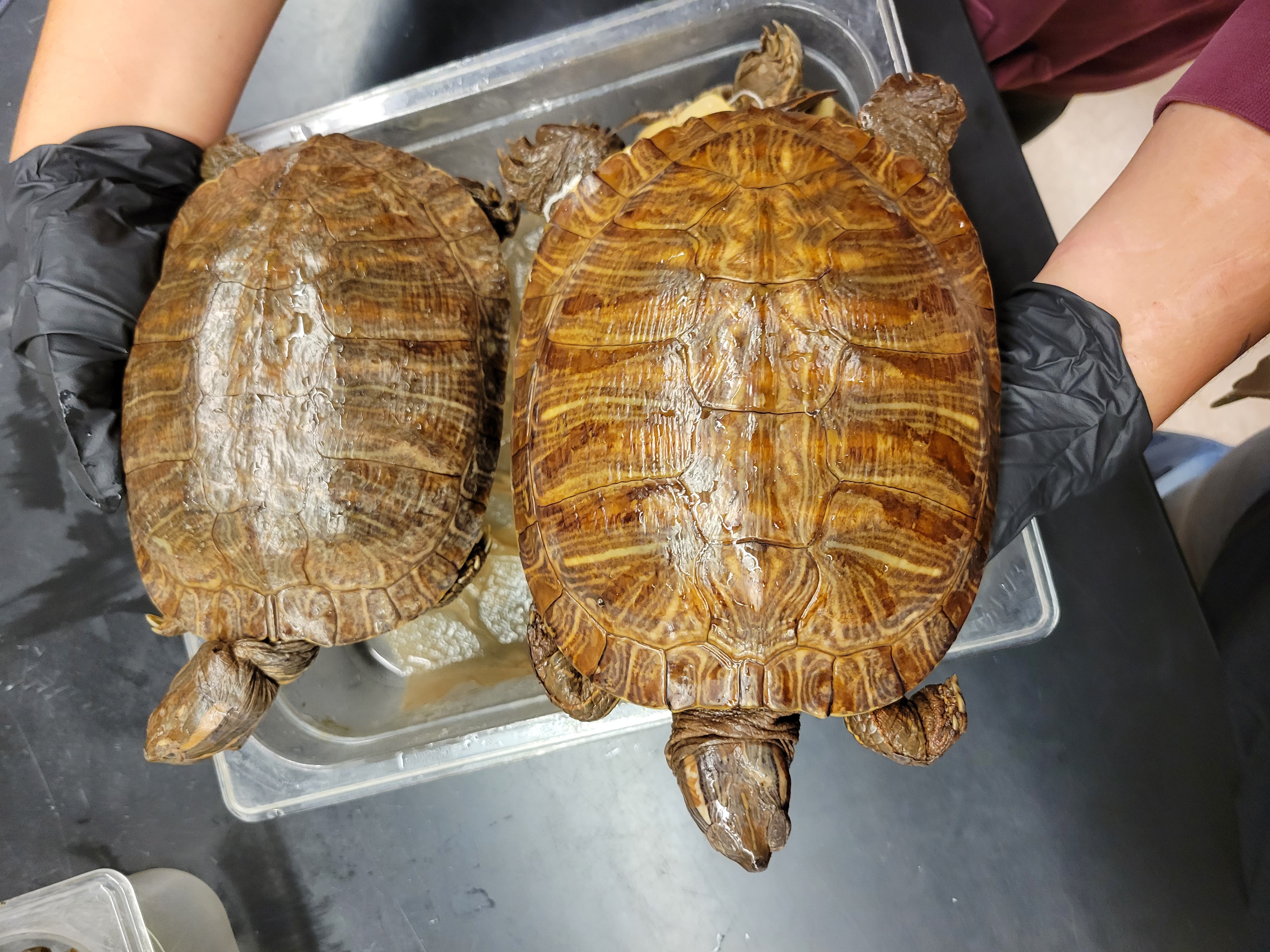
<p><span style="font-family: hurme_no2-webfont, -apple-system, system-ui, sans-serif">Pond Slider</span><br><br><span style="font-family: hurme_no2-webfont, -apple-system, system-ui, sans-serif">Carapace usually has lengthwise wrinkles and streaks and bars of yellow on olive or dusty background. Streaking on 2nd or 3rd costal shields tend to be parallel long axis of shields. Head and limbs striped with yellow. Plastron usually has dark eye-like spots. Rear of carapace with saw-toothed margin.</span></p>

Pond Slider

Carapace usually has lengthwise wrinkles and streaks and bars of yellow on olive or dusty background. Streaking on 2nd or 3rd costal shields tend to be parallel long axis of shields. Head and limbs striped with yellow. Plastron usually has dark eye-like spots. Rear of carapace with saw-toothed margin.

F: Emydidae
Trachemys scripta
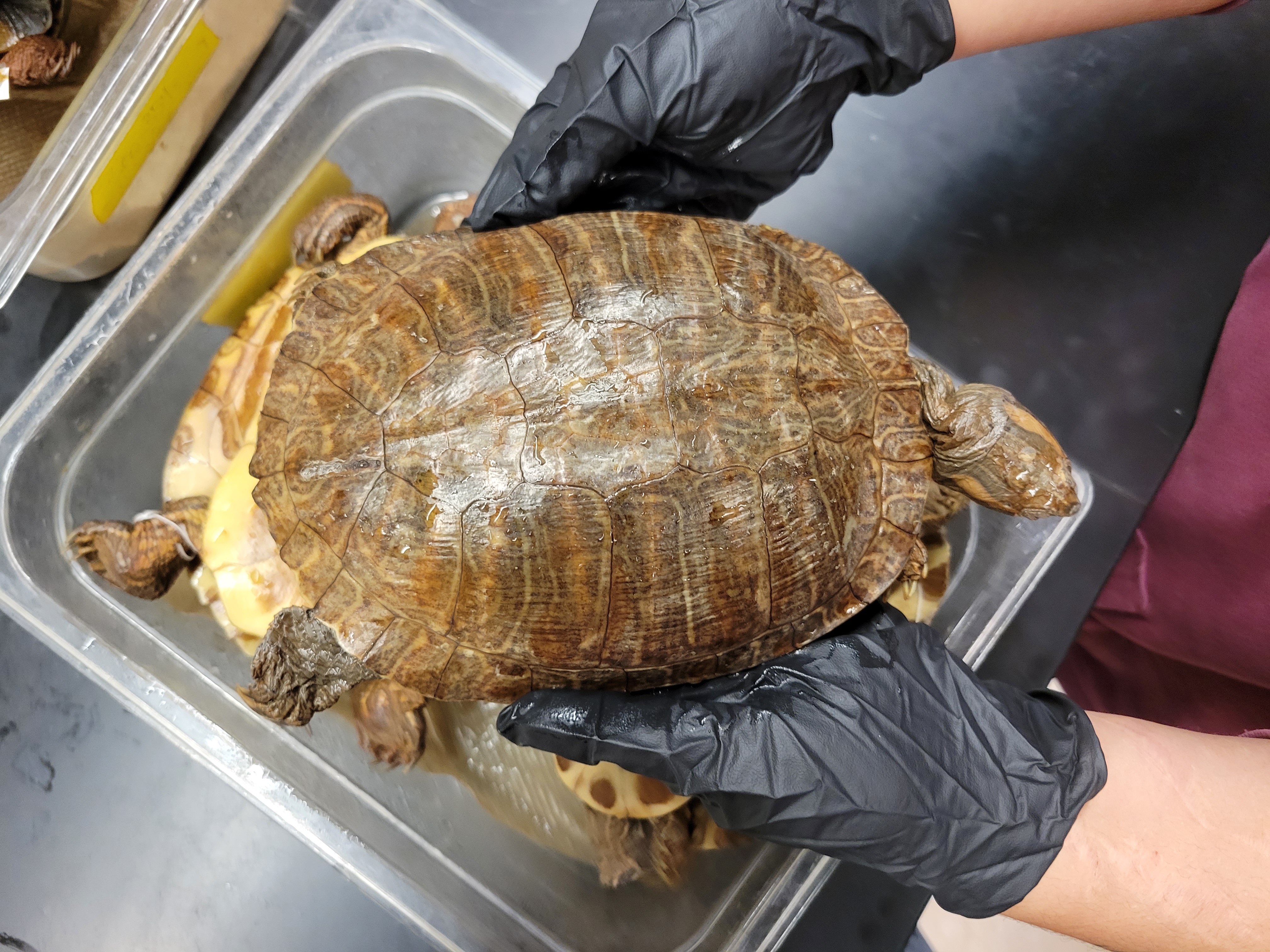
<p><span>F: Emydidae<br>Trachemys scripta</span></p>
18
New cards
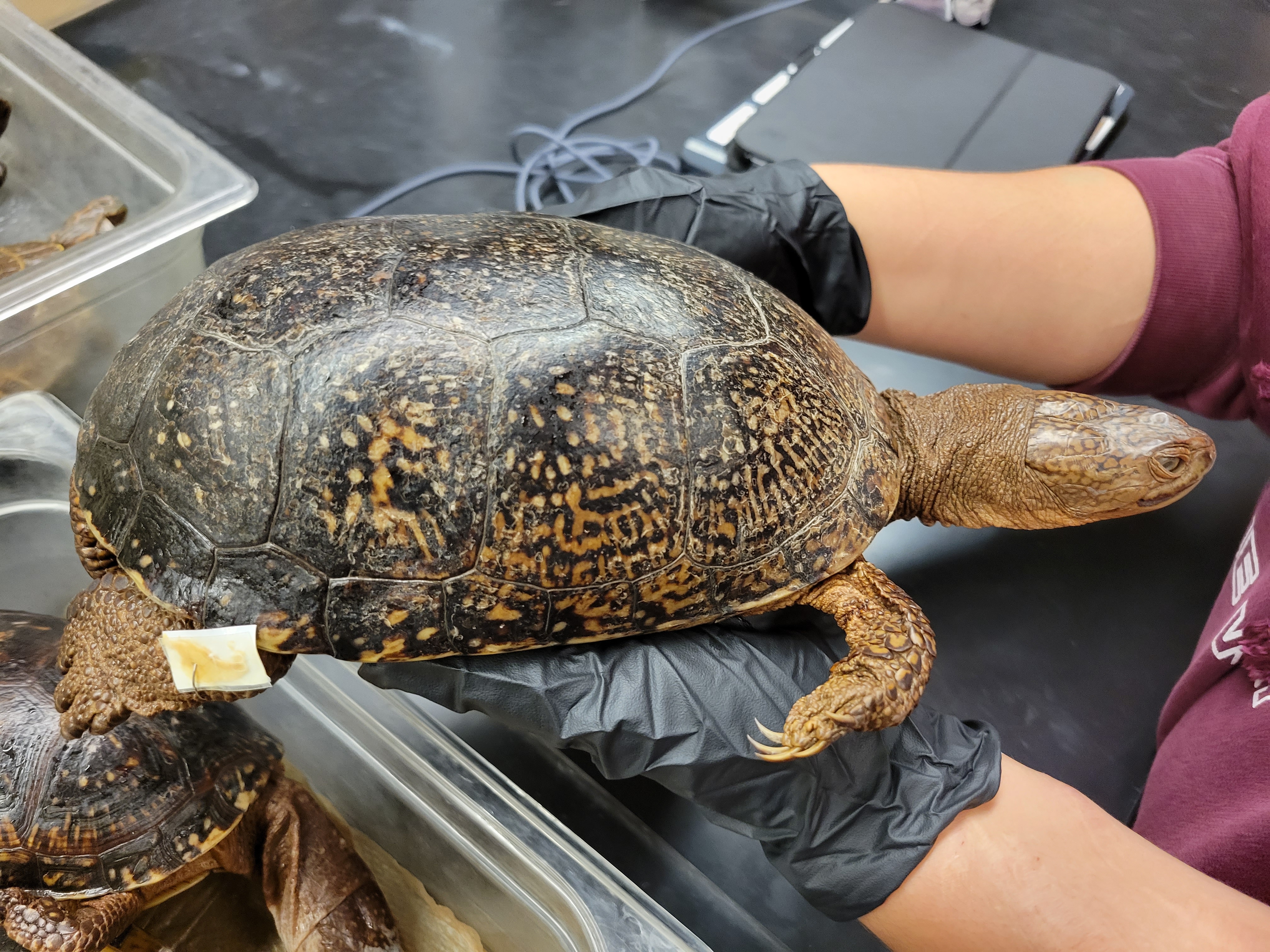
<p><span style="font-family: hurme_no2-webfont, -apple-system, system-ui, sans-serif">Blanding's turtle</span><br><br><span style="font-family: hurme_no2-webfont, -apple-system, system-ui, sans-serif">Only a single species in this genus. Carapace elongated and smooth, neither keeled or serrated, with profuse light spots. Plastron has a hinge between the pectoral and abdominal scutes. Plastron yellow with large, dark, symmetrically arranged blotches. Neck is very long, and the toes are webbed. Bright yellow on chin and throat. Sexual dimorphism is not pronounced. Prefers shallow water with a soft bottom and abundant aquatic vegetation.</span></p>

Blanding's turtle

Only a single species in this genus. Carapace elongated and smooth, neither keeled or serrated, with profuse light spots. Plastron has a hinge between the pectoral and abdominal scutes. Plastron yellow with large, dark, symmetrically arranged blotches. Neck is very long, and the toes are webbed. Bright yellow on chin and throat. Sexual dimorphism is not pronounced. Prefers shallow water with a soft bottom and abundant aquatic vegetation.

F: Emydidae
Emydoidea blandingii
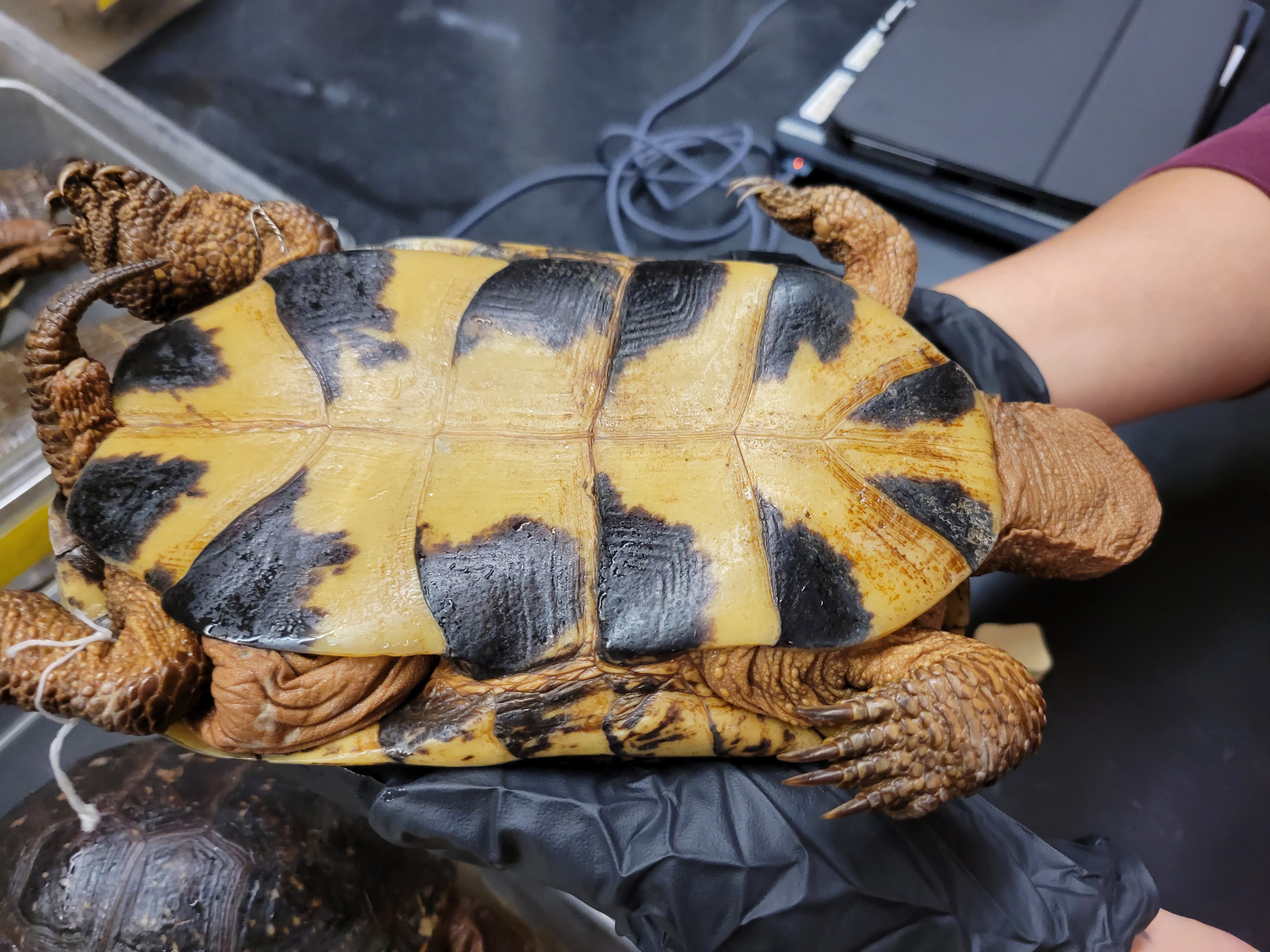
<p><span>F: Emydidae<br>Emydoidea blandingii</span></p>