A and P 2 exam 3
 Call Kai
 Learn
Learn Practice Test
 Spaced Repetition
 Match
Match Flashcards
 Knowt Play
1/180

There's no tags or description
Looks like no tags are added yet.
Name | Mastery | Learn | Test | Matching | Spaced | Call with Kai |
|---|
No analytics yet
Send a link to your students to track their progress
181 Terms
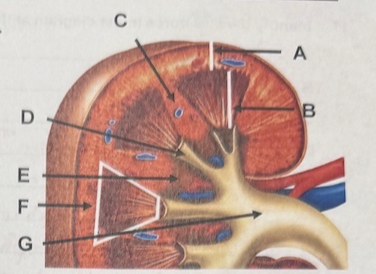
A
Renal Cortex
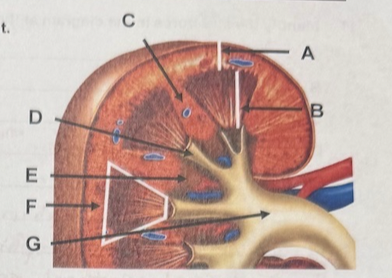
B
Renal Medulla
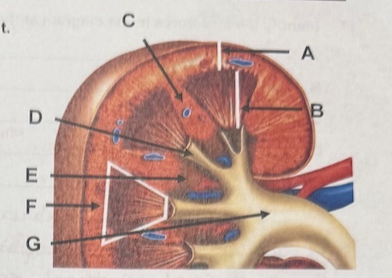
C
Renal Column
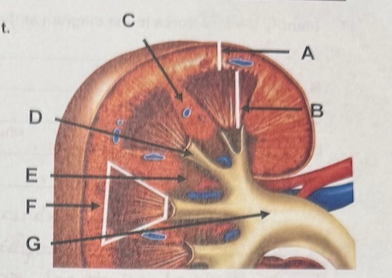
D
Minor Calyx
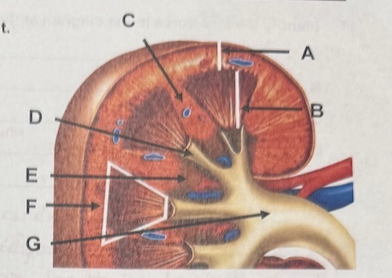
E
Renal Sinus
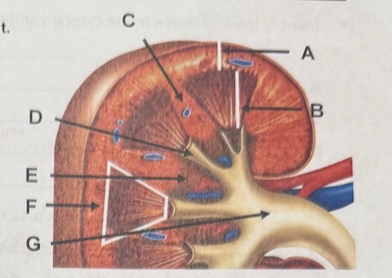
F
Renal pyramids
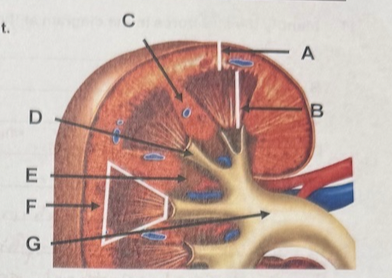
G
Renal pelvis
ureters does what
takes urine directly to the urinary bladder
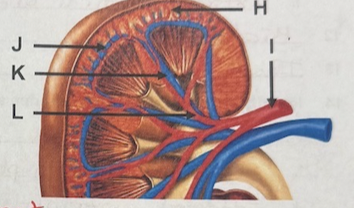
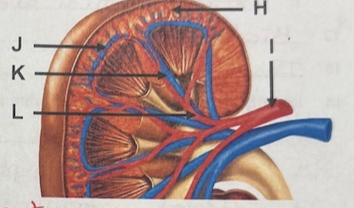
H
cortical radiate artery
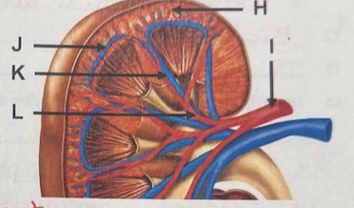
I
Renal artery
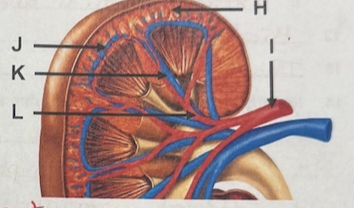
J
Arcuate vein
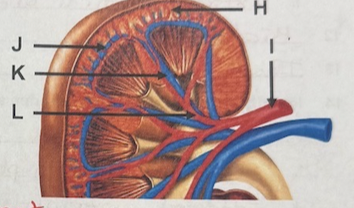
K
Interlobar vein
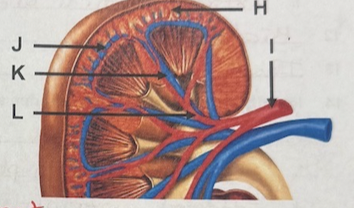
L
Segmental Artery
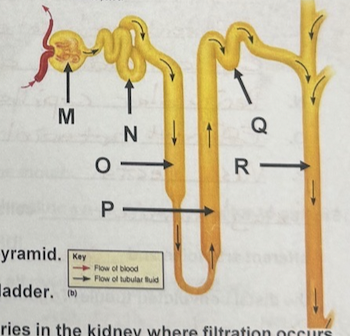
what flows to the efferent arteriole?
Blood
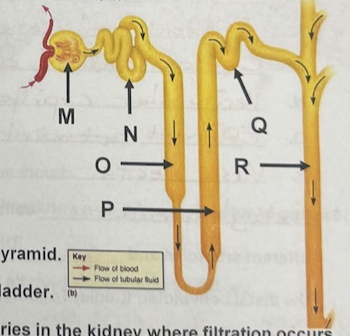
M
Glomerulus
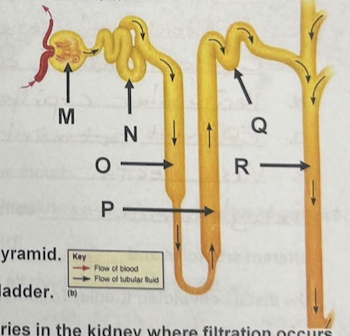
N
Proximal convoluted tubule
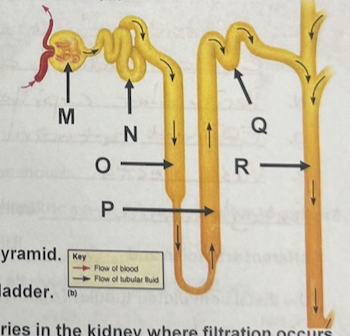
O
descending limb
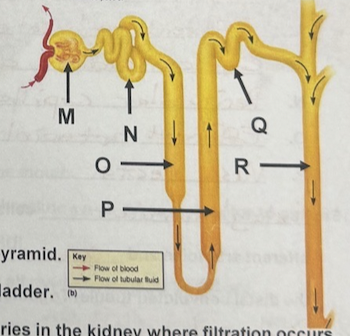
P
Ascending limb
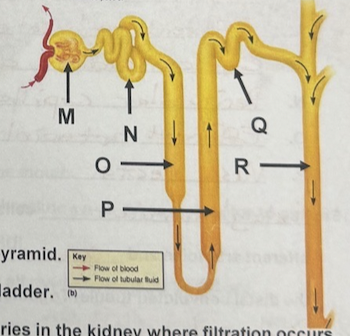
Q
Distal convoluted tubule
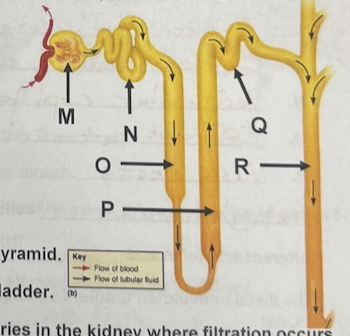
R
Collecting Duct
What is the tip of a renal pyramid
renal papilla
what cell type lines the bladder
transitional epithelium
what is the cluster of capillaries in the kidney where filtration occurs
Glomerulus
What takes urine from the bladder to the exterior of the body
Urethra
What is the position of the kidneys relative to the parietal peritoneum
retro peritoneal
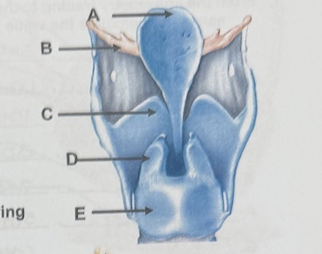
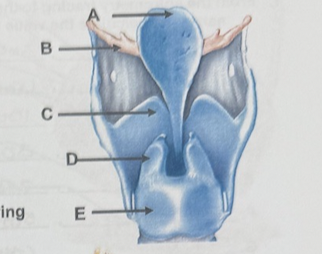
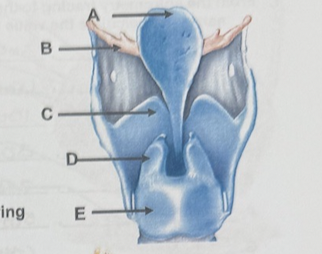
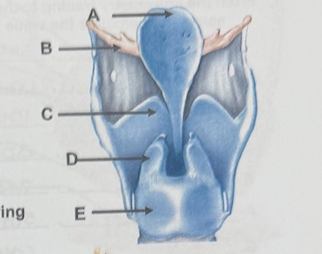
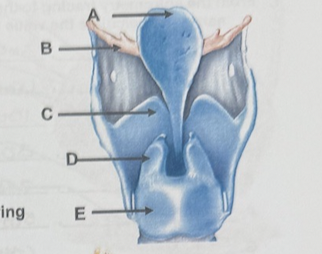
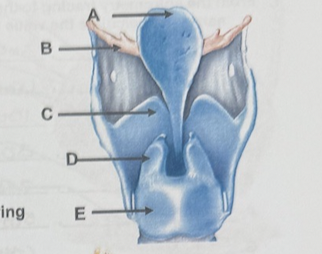
A
Epiglottis
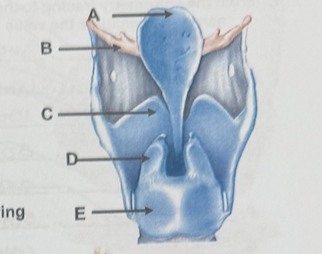
B
Hyoid bone
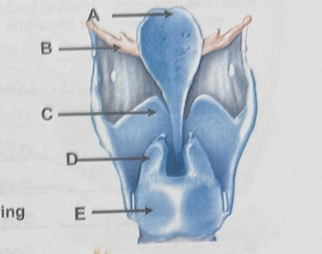
C
Thyroid Cartilage
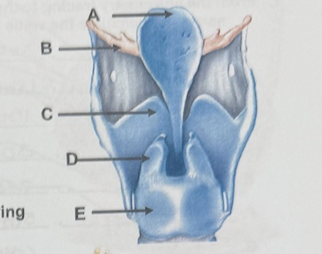
D
Arytenoid cartilage
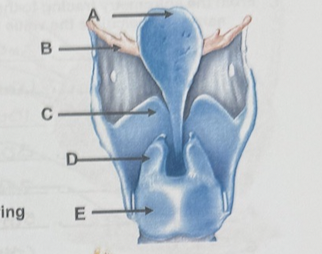
E
Cricoid cartilage
Epiglottis
protects the glottis from the fluid entering the larynx
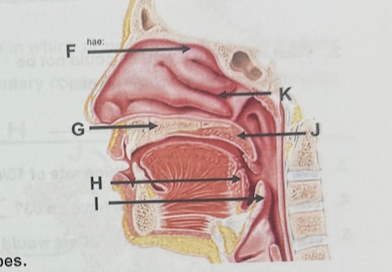
F
Superior nasal concha
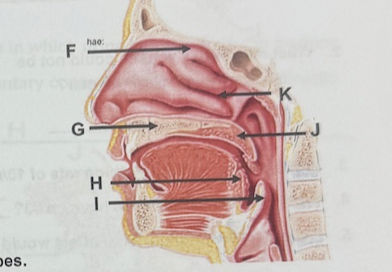
G
Hard palate
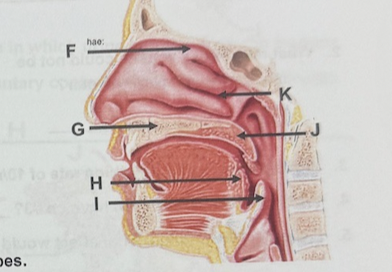
H
lingual tonsil
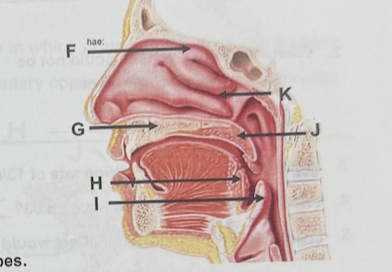
I
Epiglottis
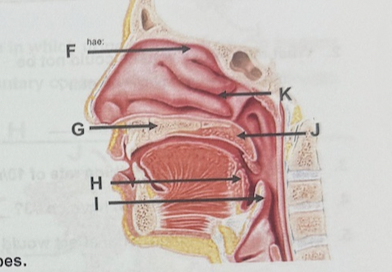
J
soft palate
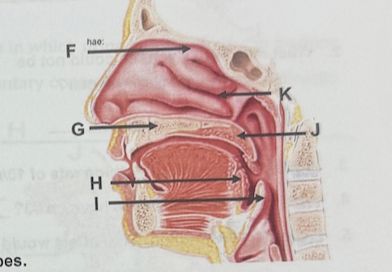
K
Middle meatus (opening)
What lobe has 3 lobes in a human
the right
lungs are located
Pleural caviities
visceral pleura membrane
attaches directly to lungs
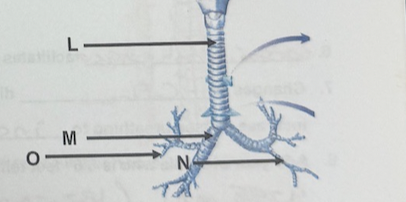
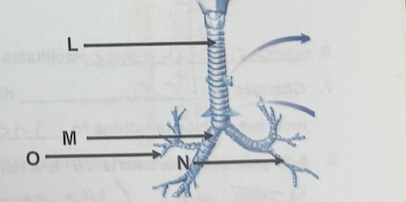
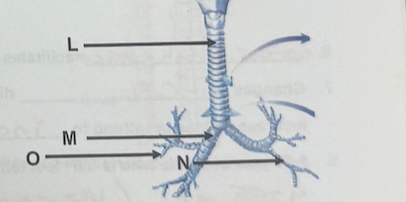
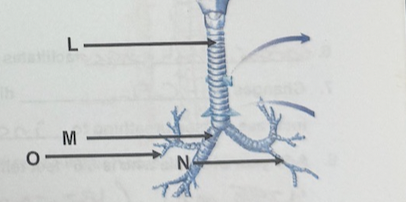
L
Trachea
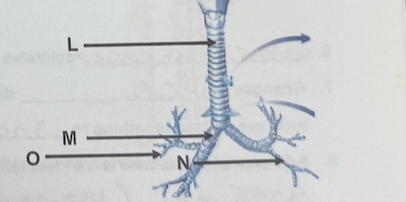
M
primary bronchus
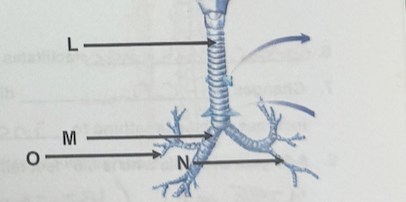
N
Secondary bronchus
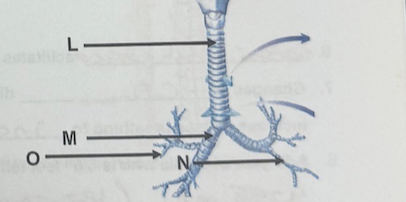
O
Tertiary bronchus
Main muscles of inspiration is the
diaphragm
When the diaphragm contracts thoracic volume
increases
when the diaphragm contracts, the pressure in the alveoli
decreases
When holding one breath, blood O2 levels (inc/dec) and CO2 (inc/dec).
decrease; Increase
The increasing levels of CO2 cause an (inc/dec) in blood pH
decrease
tidal volume
is the amount of air inhaled or exhaled with each breath and under resting conditions averages about 500 ml
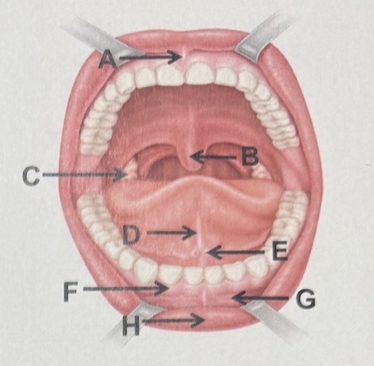
A
Superior labial frenulum
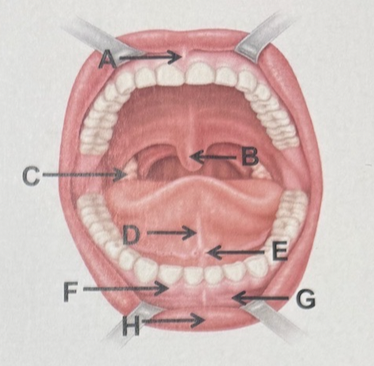
B
Uvula
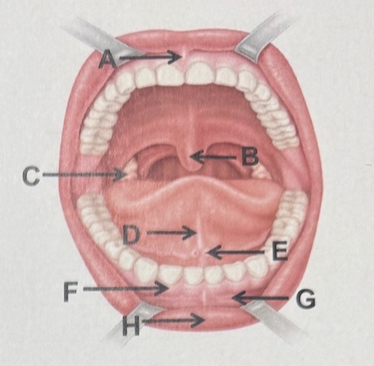
C
Palatine tonsil
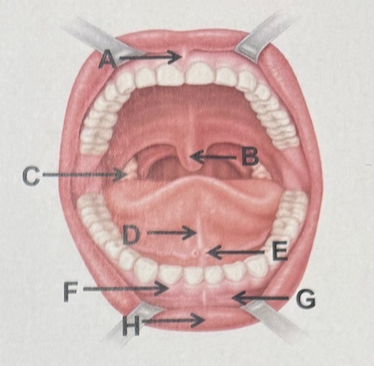
D
lingual frenulum
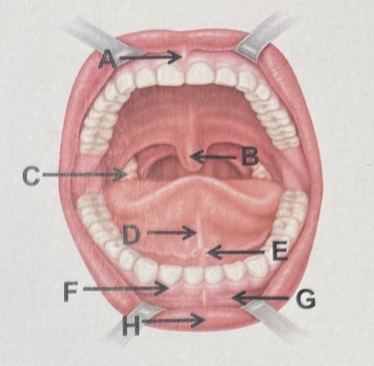
E
submandibular orifice
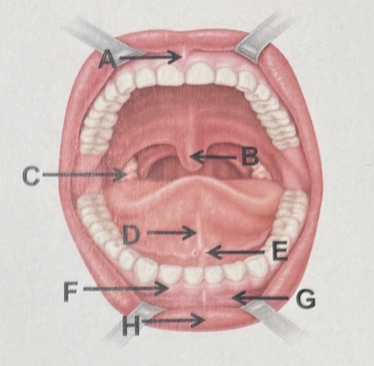
F
Gingiva
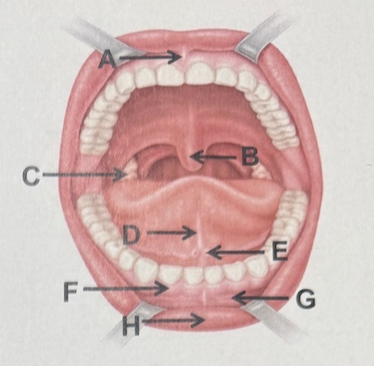
G
Vestibule
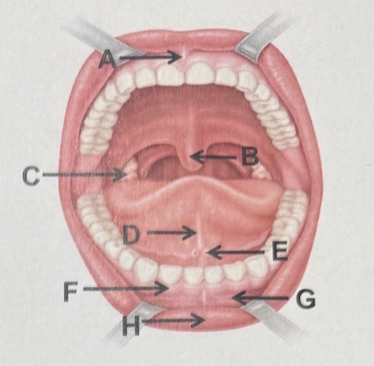
H
Lower lip
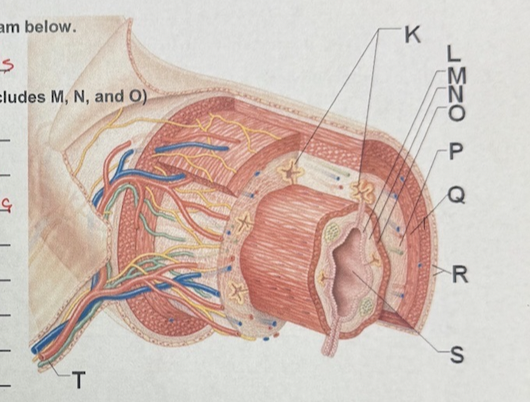
K
Submucosal Glands
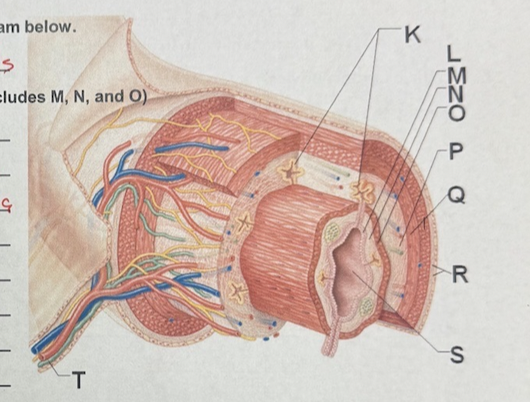
L
Mucosa ( including M, N, and O)
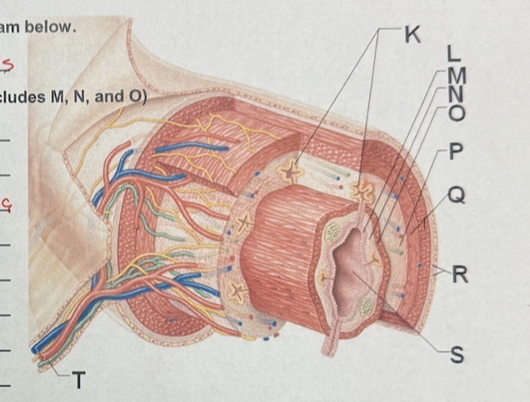
M
epithelium
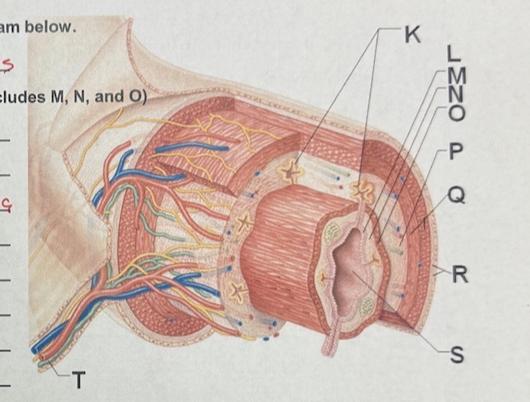
N
Lamina Propria
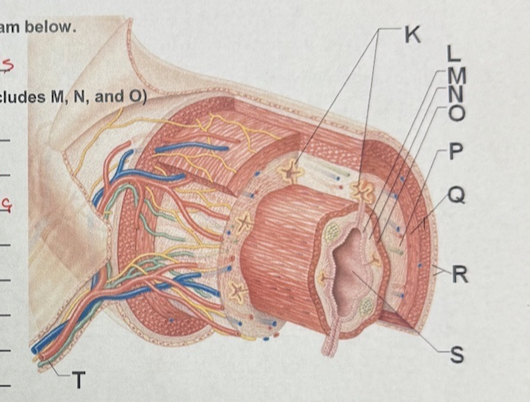
O
Muscularis mucosa
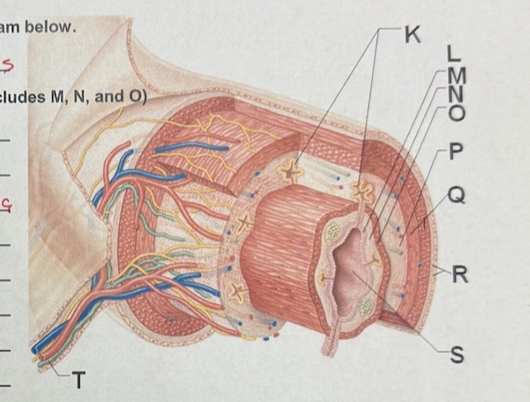
P
Sub mucosa
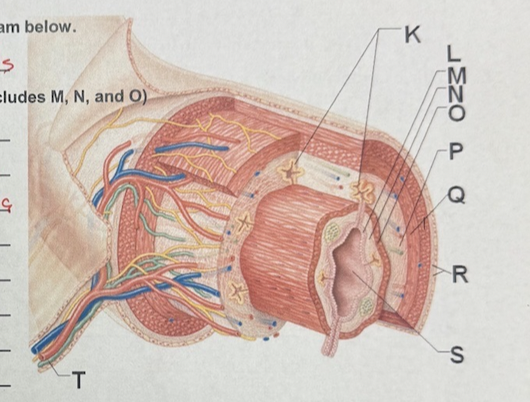
Q
Muscularis externa
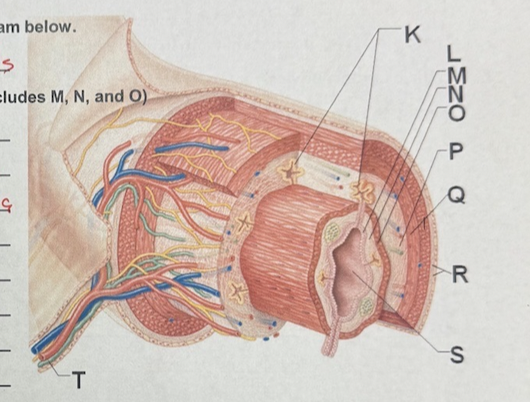
R
Serosa
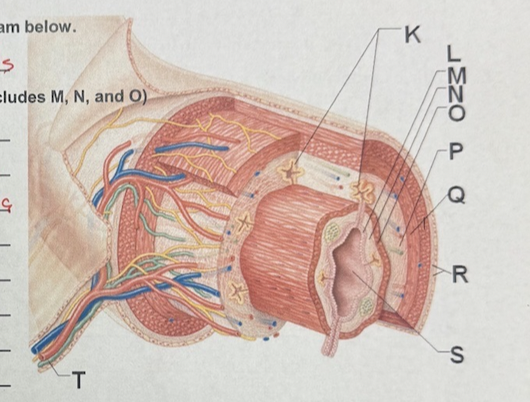
S
lumen
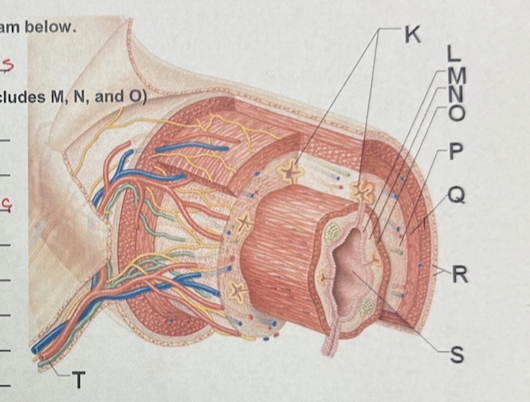
T
Lymph Vessel
Salivary amylase
is the enzyme that begins starch digestion in the mouth
Hydrolysis
is the chemical breakdown of larger molecules to smaller ones
parietal cells
produce HCI
small intestine
is where nearly all nutrient absorption occurs
What are the 3 structural modifications that increase the surface area of the small intestine
circular folds, villi, and microvilli
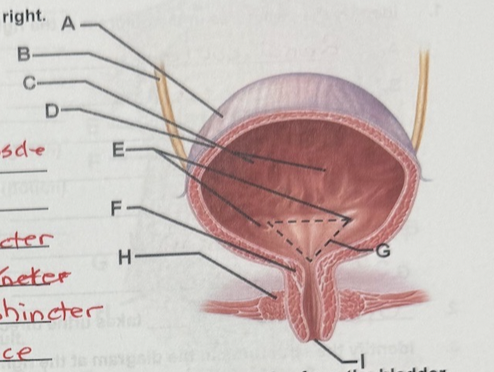
A
Peritoneum
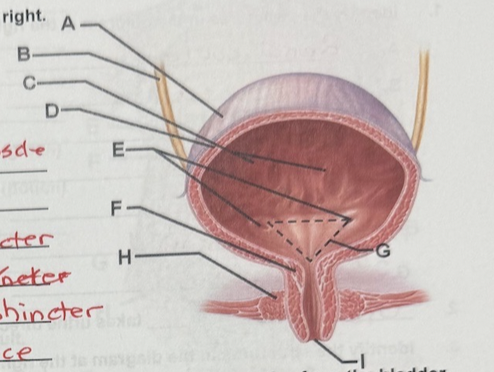
B
Ureter
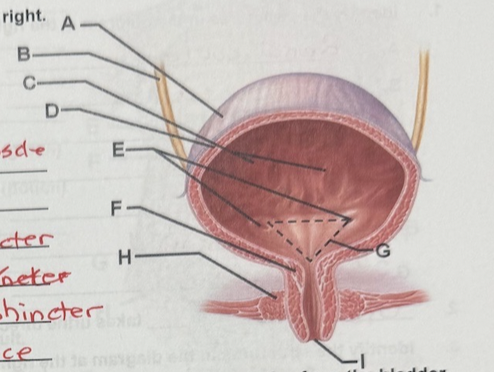
C
Rugae
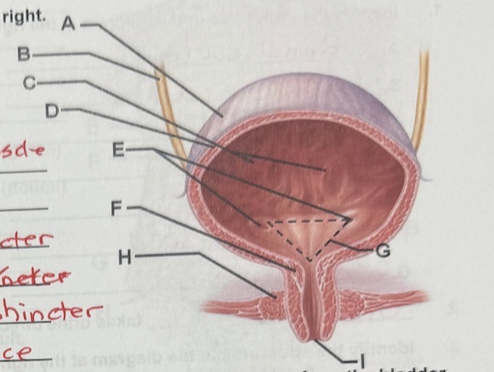
D
Detrusor muscle
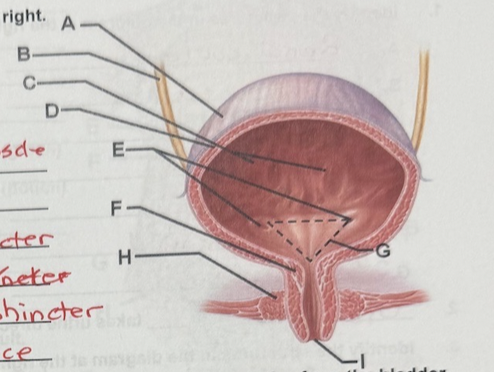
E
Uretral openings
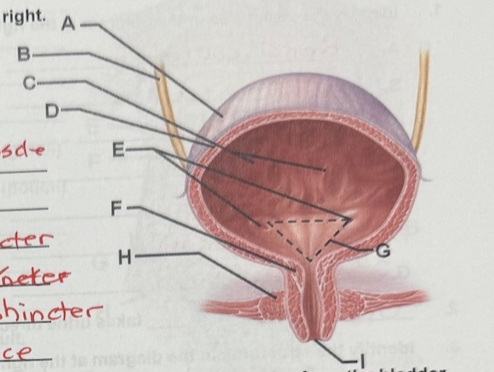
F
internal urethral sphincter
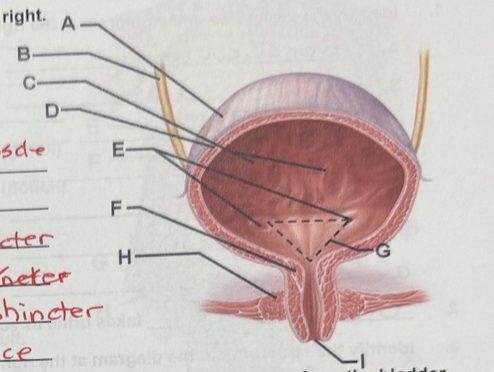
G
Trigone
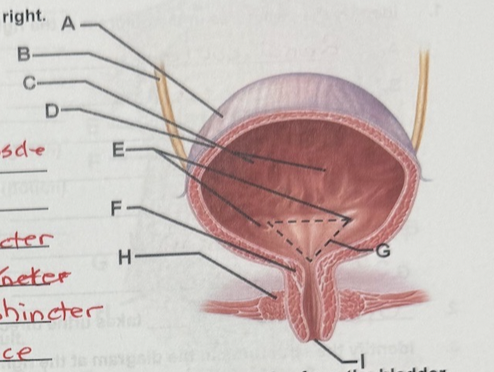
H
External urethral sphincter
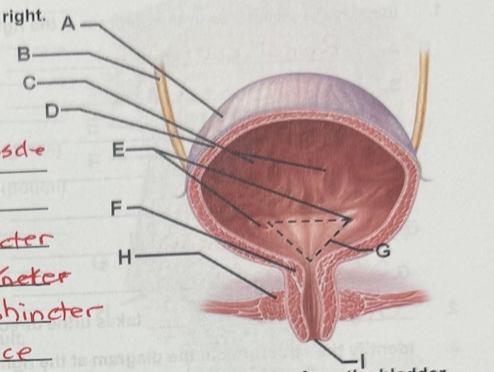
I
External urethral orifice
micturition
is the process in which urine empties from the bladder.
Incontinence
is lack of voluntary control over the external sphincter.
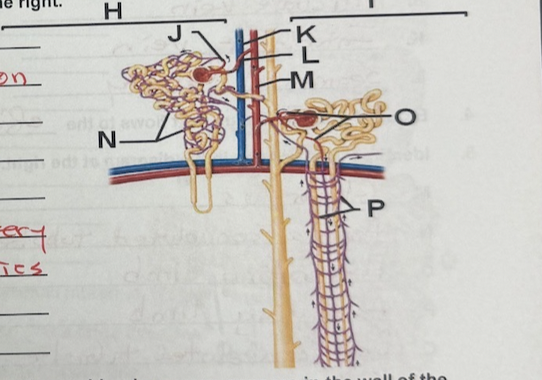
H
Cortical nephron
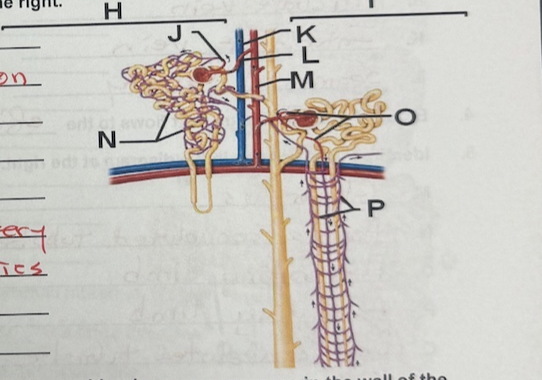
I
Juxtamedullary nephron
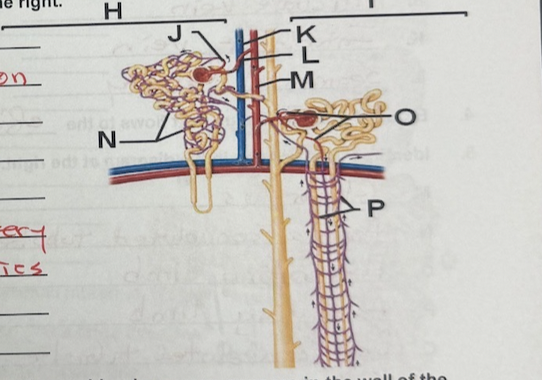
J
efferent arteriole
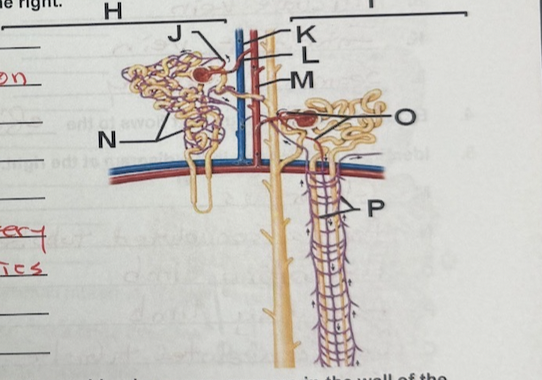
k
cortical radiate vein
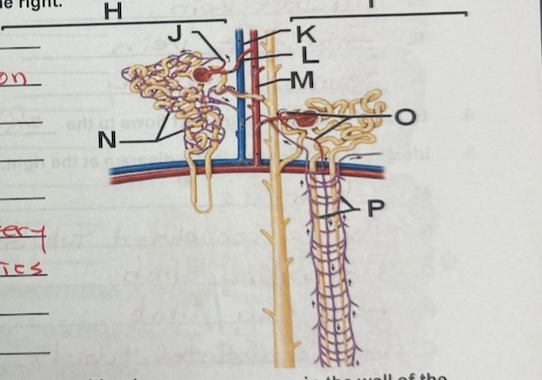
L
Afferent arteriole
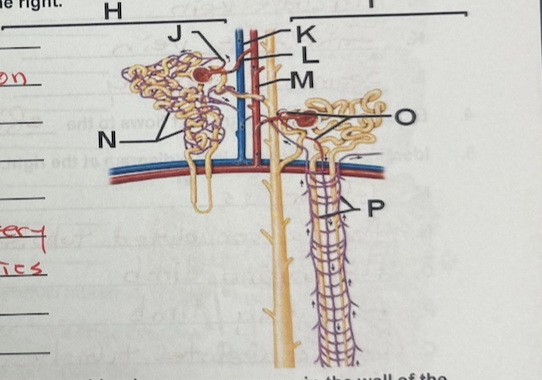
M
Cortical radiate artery
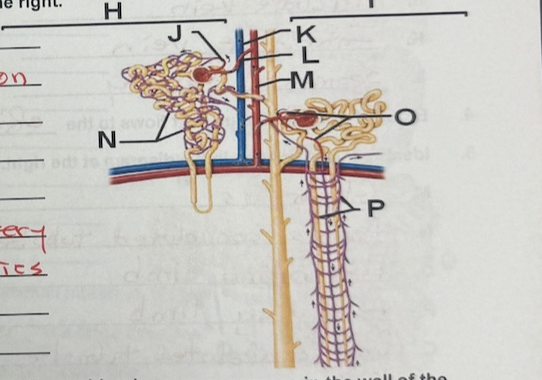
N
peritubular capillaries
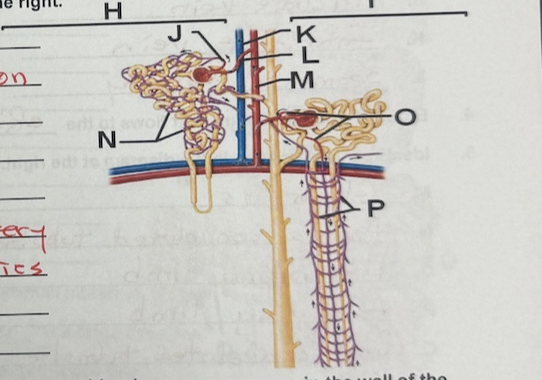
O
Efferent arterioles
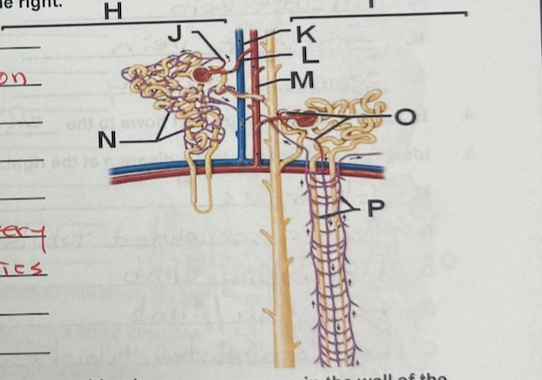
P
Vasa recta
juxtaglomerular
Cells function as blood pressure sensors in the wall of the afferent arterioles, and the Macula densa function as chemoreceptors in
the distal convoluted tubule
reapsorbtion
is when filtrate contents are reabsorbed into the blood
secretion
is when substances move from the blood to the filtrate.
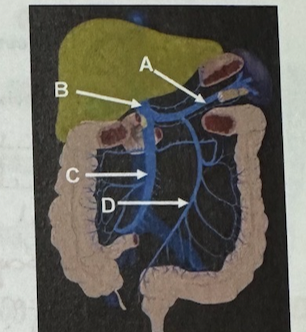
A
Splenic V.
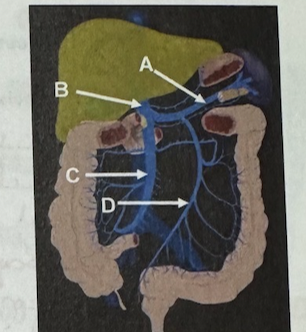
B
Hepatic portal v.
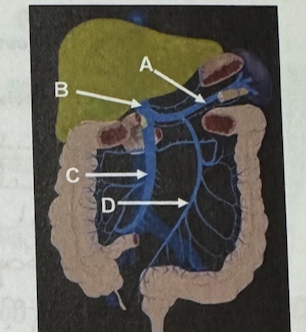
C
Superior mesenteric V.
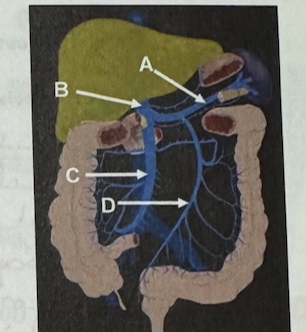
D
Inferior mesenteric V.