Alkane and Alkyne Addition Reactions
 Call Kai
 Learn
Learn Practice Test
 Spaced Repetition
 Match
Match Flashcards
 Knowt Play
1/33

There's no tags or description
Looks like no tags are added yet.
Name | Mastery | Learn | Test | Matching | Spaced | Call with Kai |
|---|
No analytics yet
Send a link to your students to track their progress
34 Terms
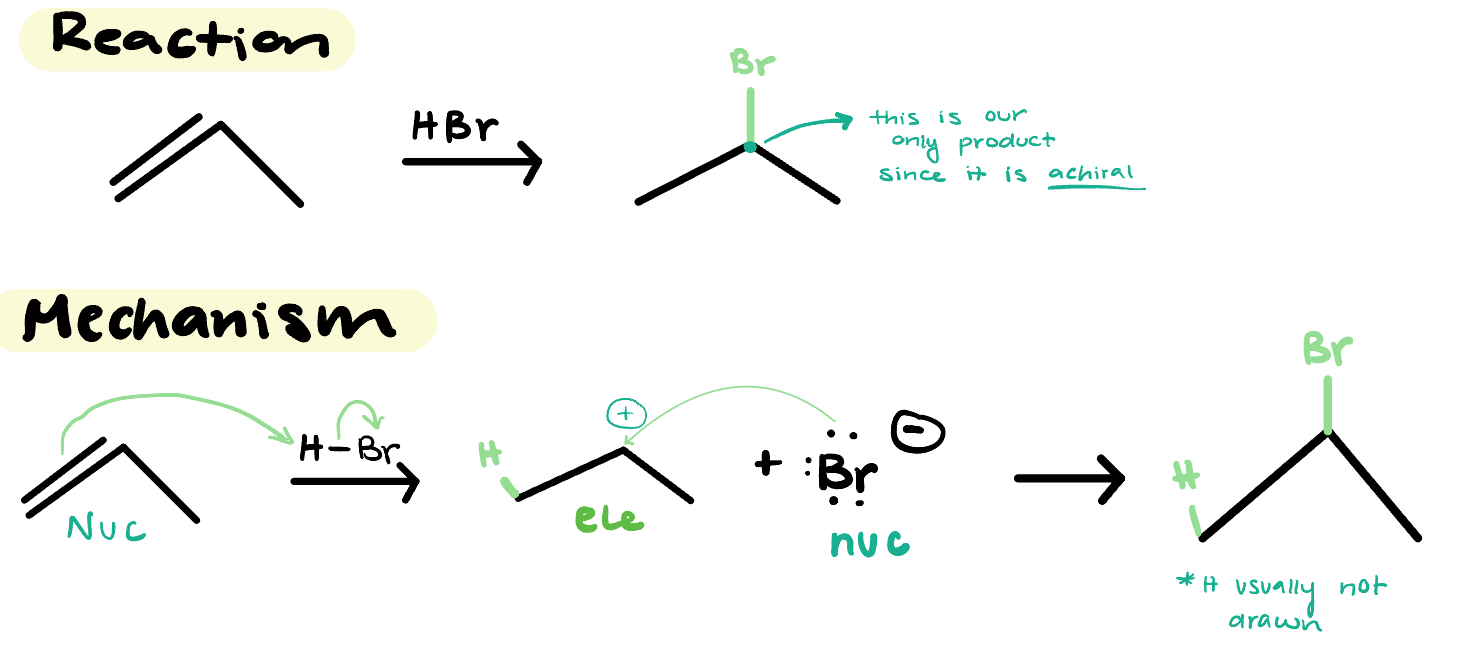
list the groups added, regioselectivity, and stereospecificity for: hydrohalogenation
H + X (Cl, Br, I)
Markovnikov (antimarkovnikov if ROOR is present)
None
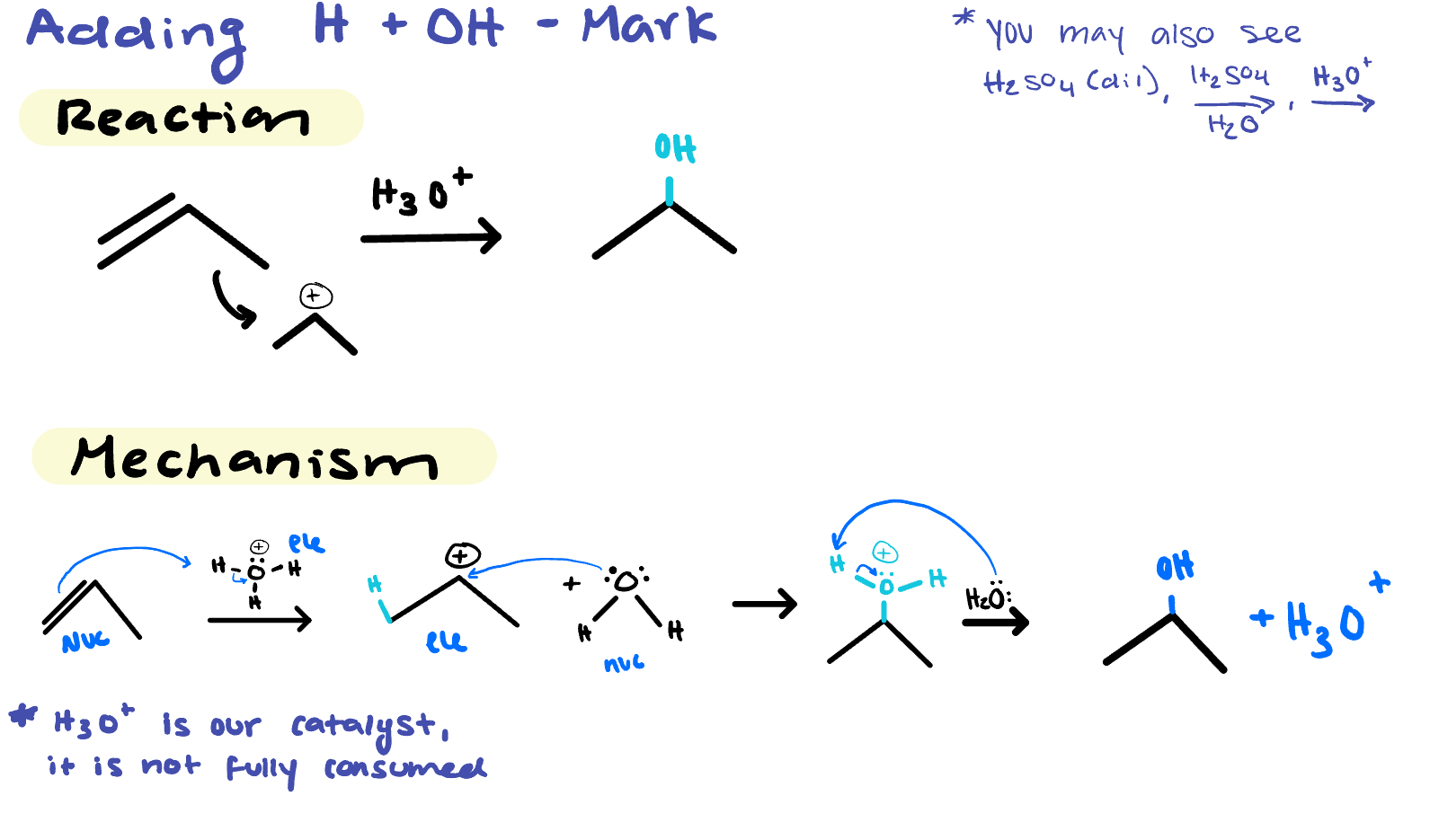
list the groups added, regioselectivity, and stereospecificity for: Acid Catalyzed Hydration
H + OH
markovnikov
none
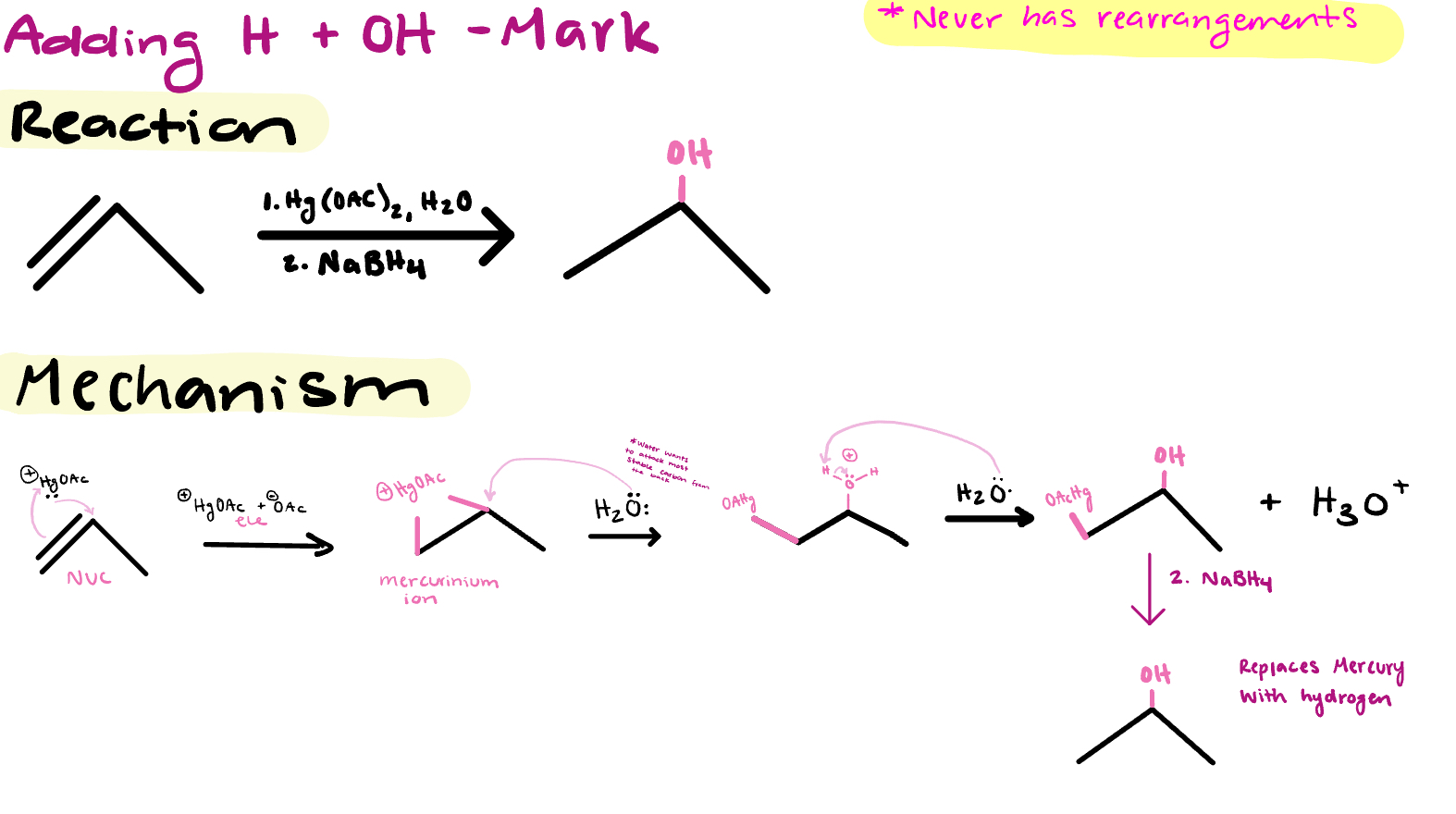
list the groups added, regioselectivity, and stereospecificity for: Oxymercuration-demurcuration
H + OH
markovnikov
anti
*never has carbocation rearrangement
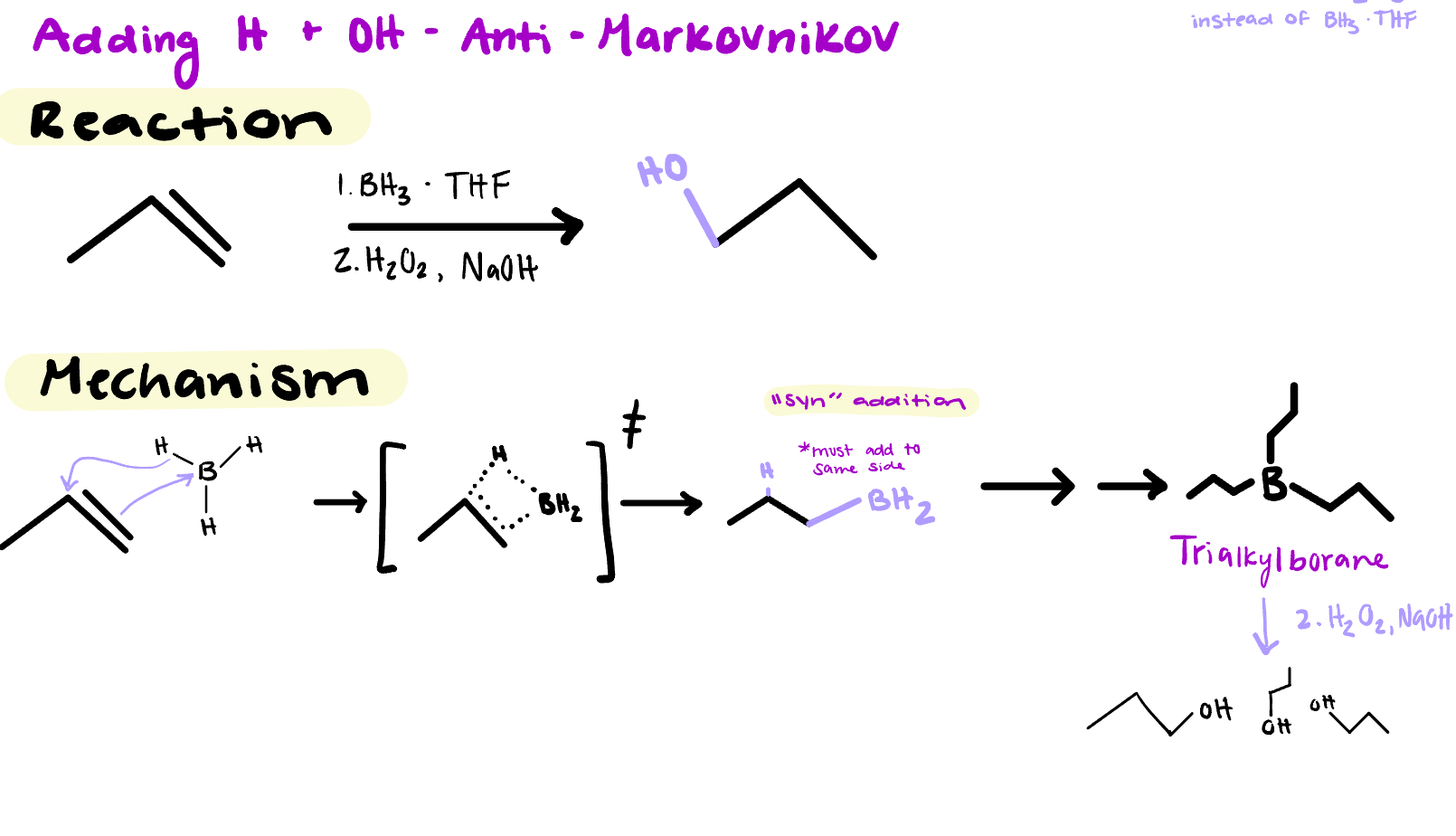
list the groups added, regioselectivity, and stereospecificity for: Hydroboration oxidation
H + OH
antimarkovnikov
syn
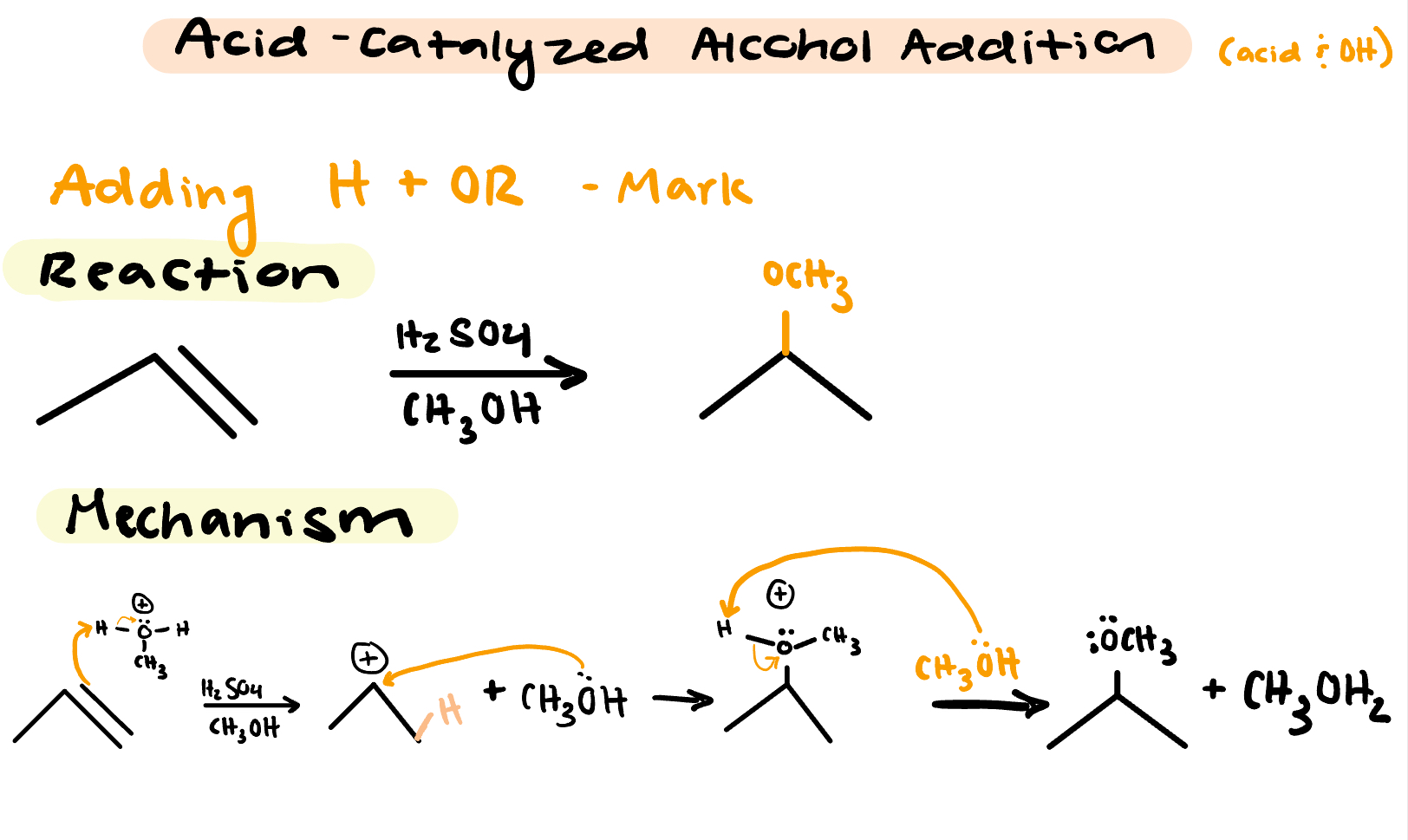
list the groups added, regioselectivity, and stereospecificity for: Acid-catalyzed alcohol addition
H + OR (commonly O connected to CH3)
Markovnikov
none
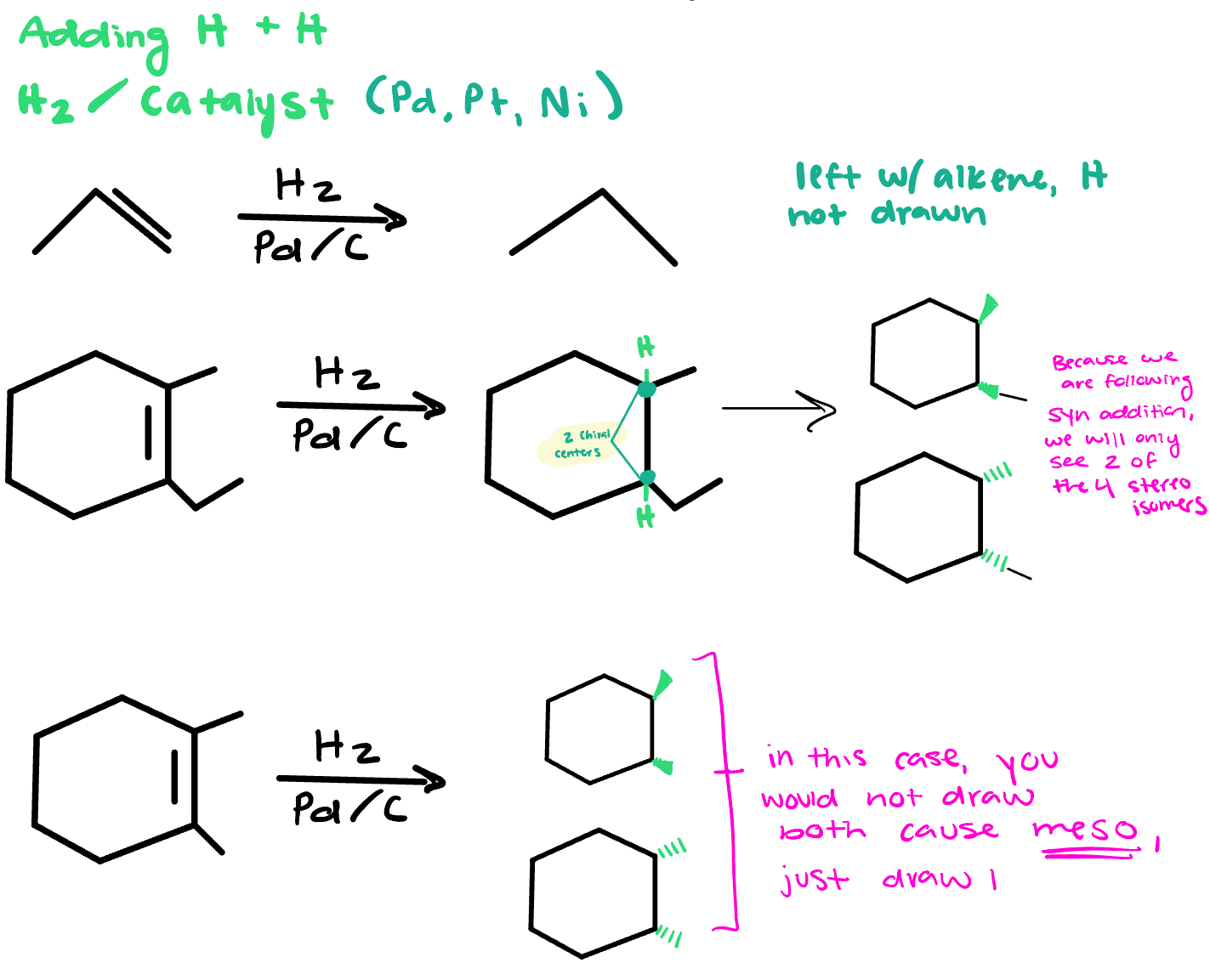
list the groups added, regioselectivity, and stereospecificity for: catalytic hydrogenation
H2/catalyst (Pd, Pt, Ni)
n/a
syn
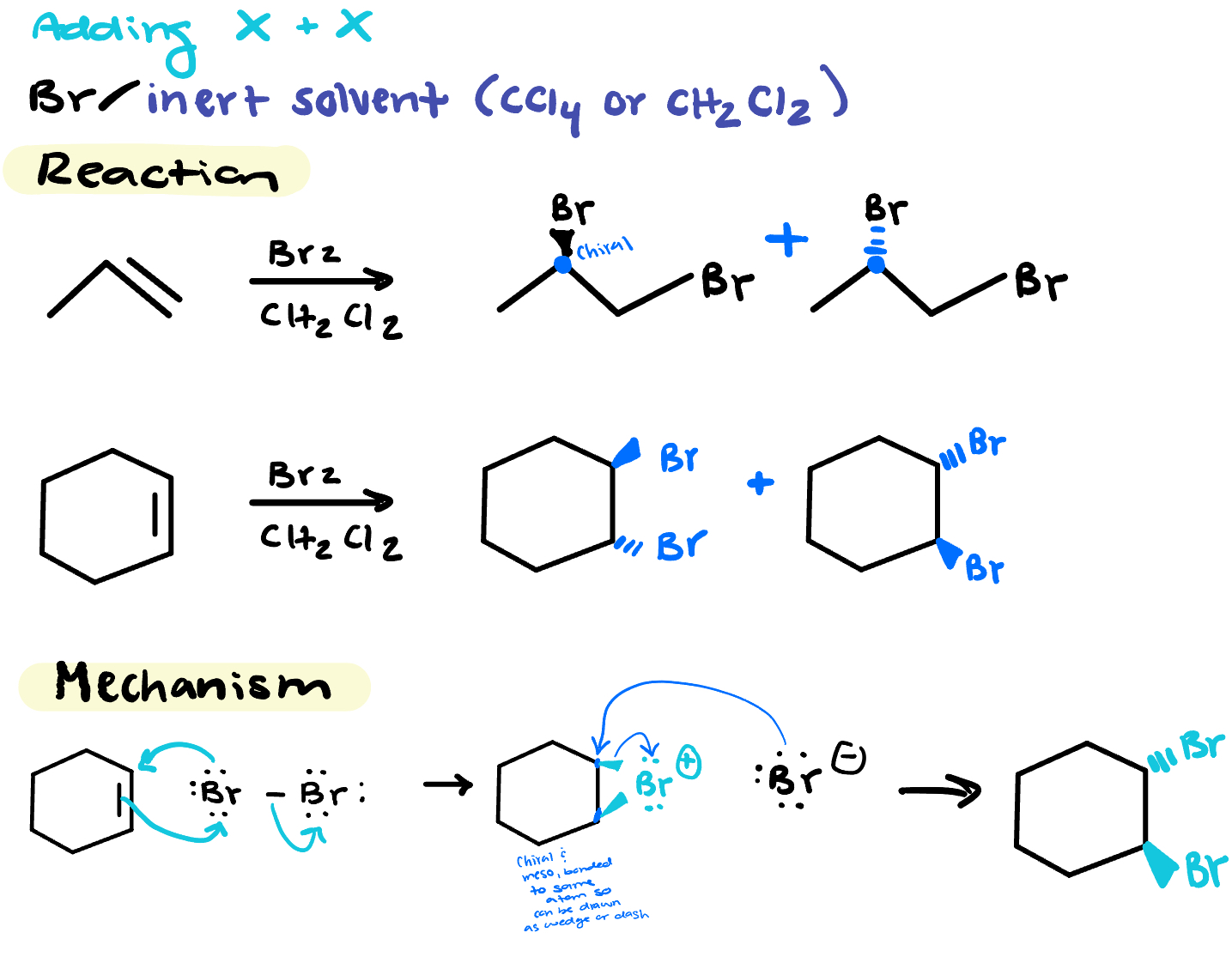
list the groups added, regioselectivity, and stereospecificity for: halogenation
Br/inert solvent (CCl4, CH2Cl2)
N/a
anti
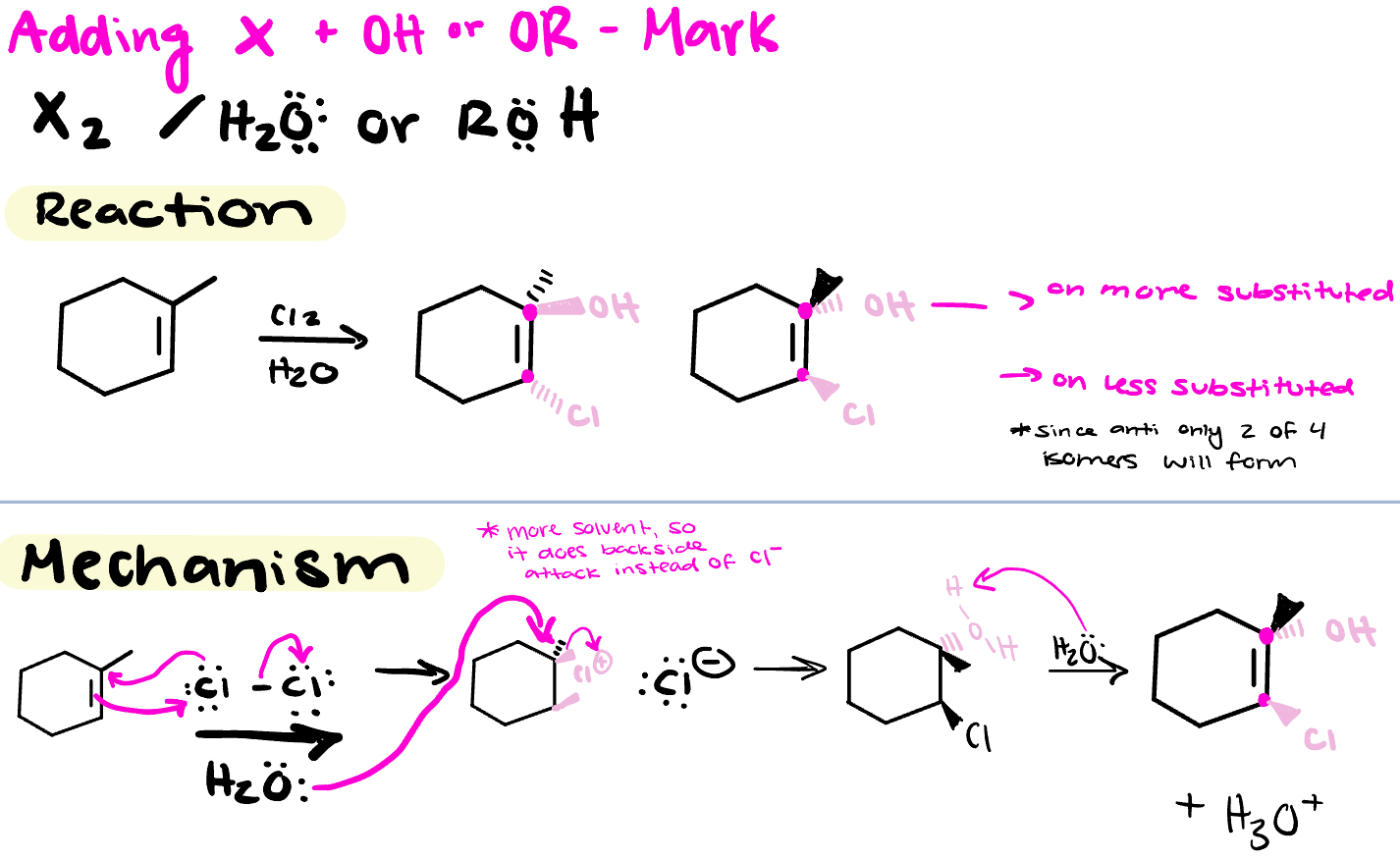
list the groups added, regioselectivity, and stereospecificity for: Halohydrin Formation
X2 (CL2, Br2, I2)/ H2O or ROH
markovnikov
anti
list the groups added, regioselectivity, and stereospecificity for: Epoxidation
O
n/a
syn
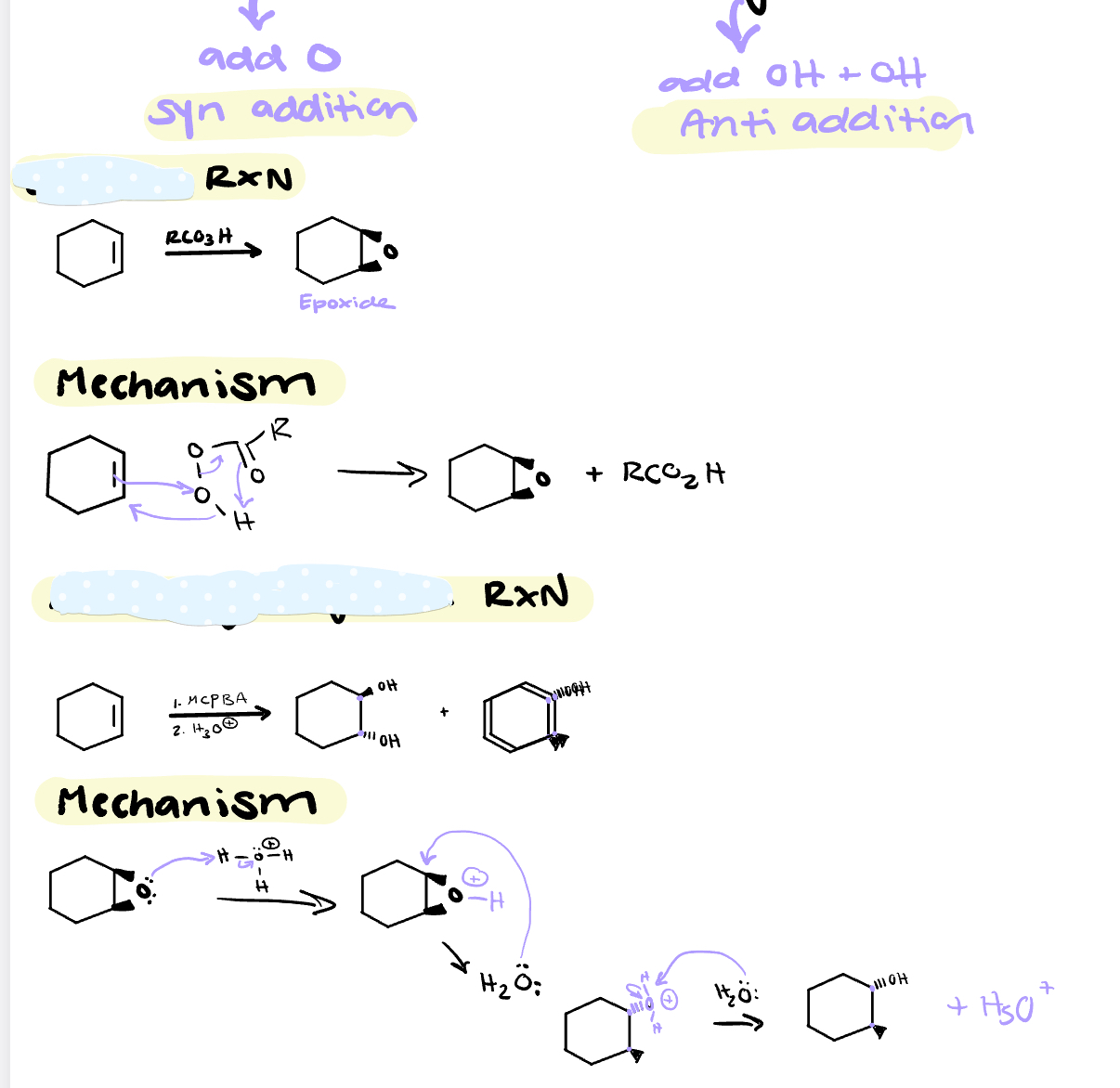
list the groups added, regioselectivity, and stereospecificity for: Anti-dihydroxylation
OH + OH
n/a
anti
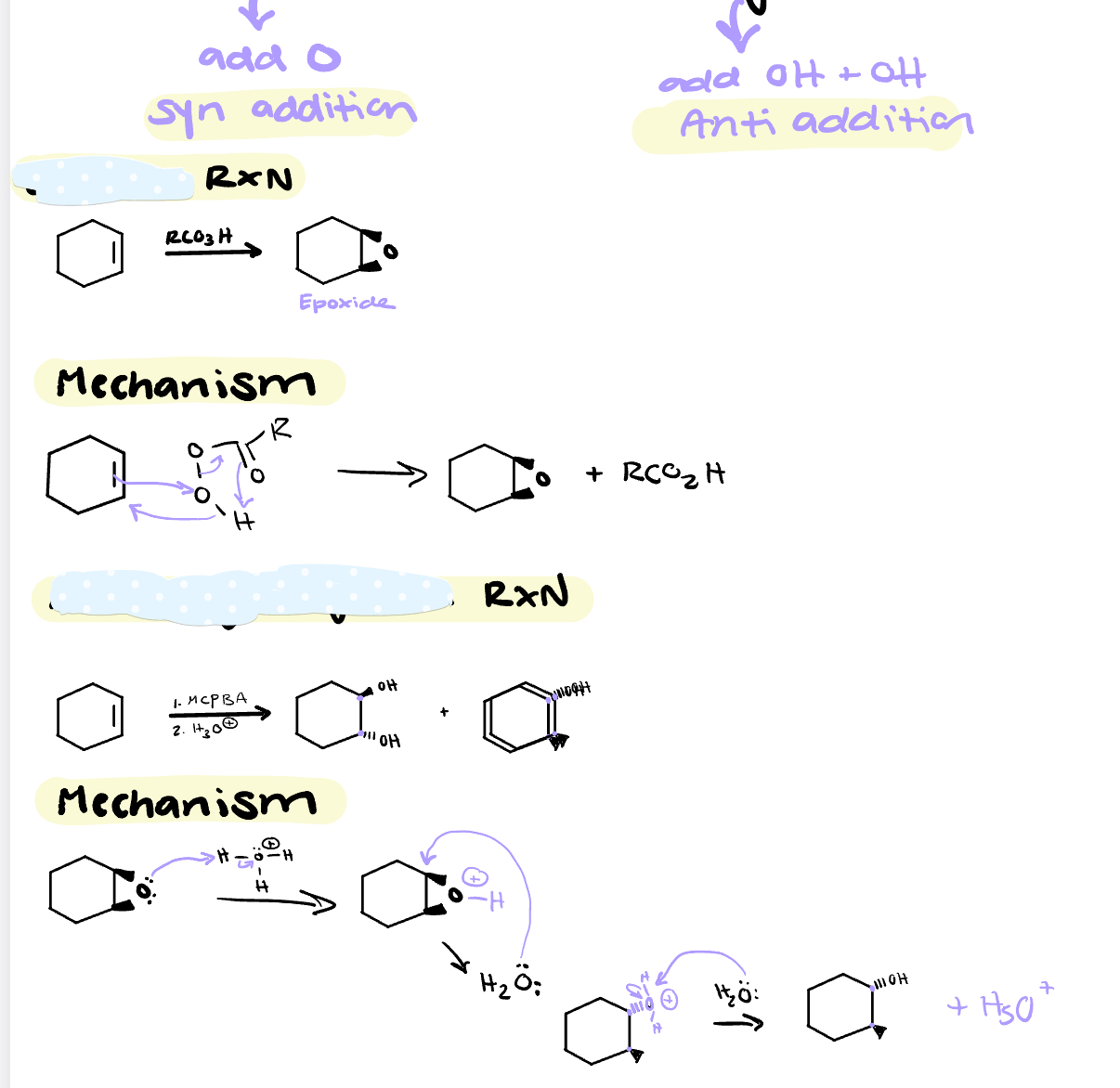
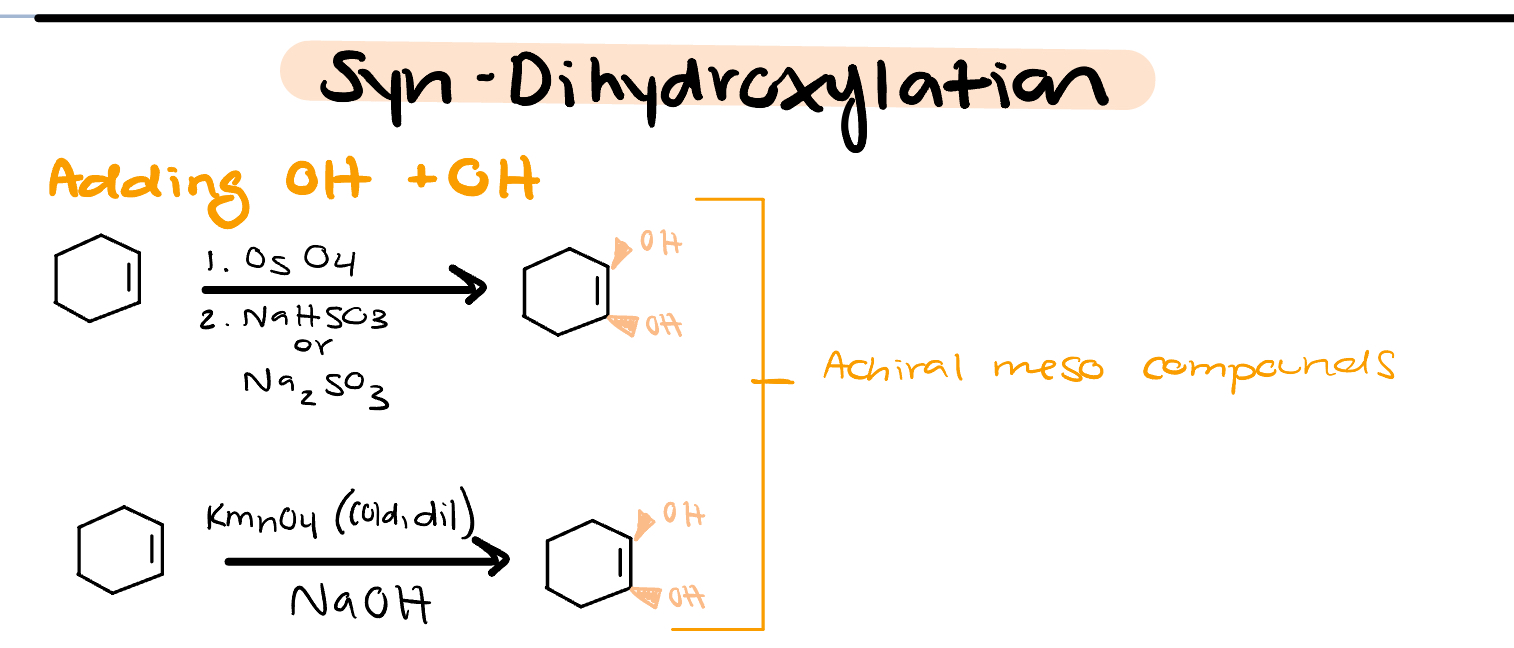
list the groups added, regioselectivity, and stereospecificity for: Syn Dihydroxylation
OH + OH
n/a
syn
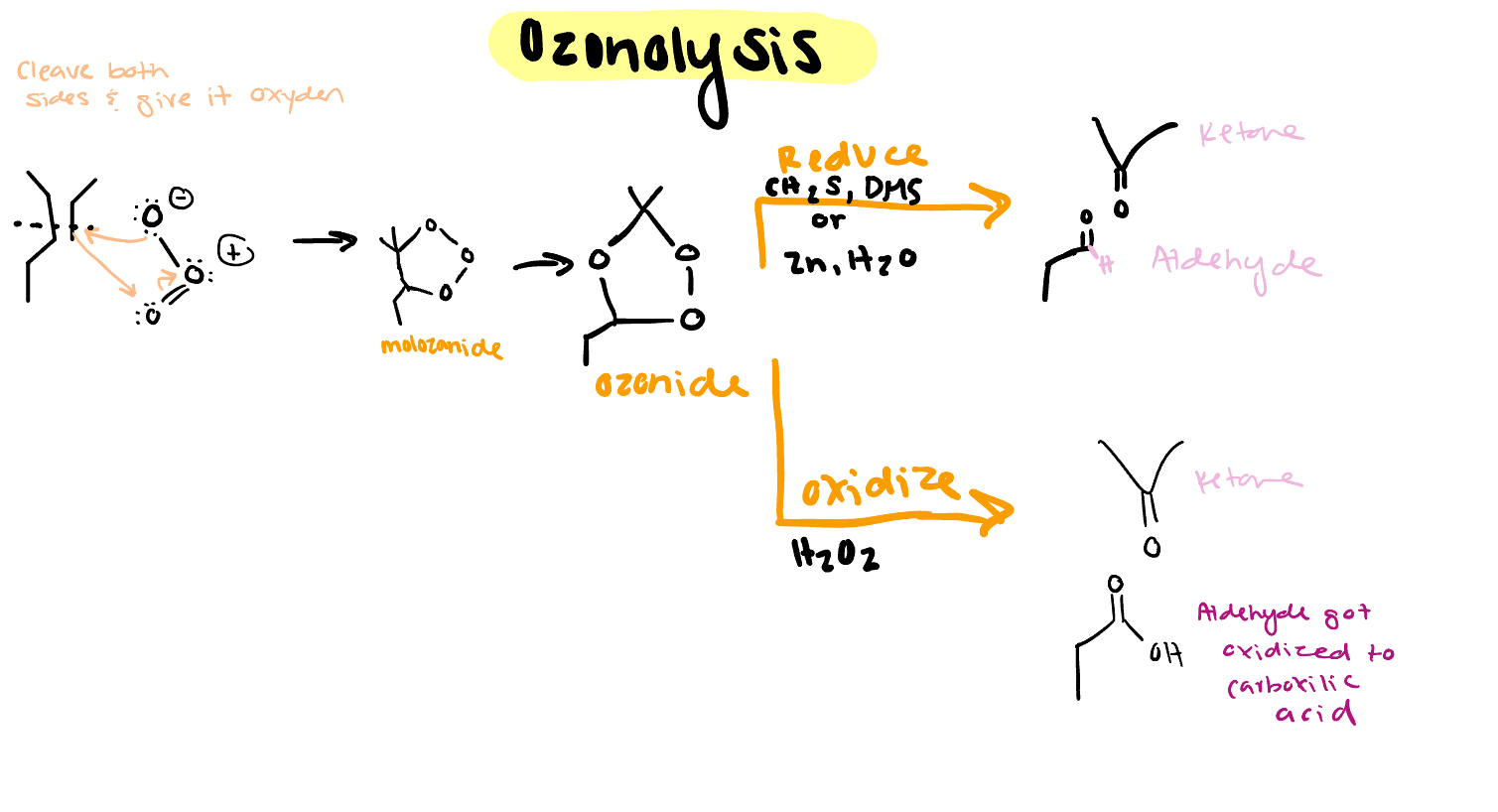
list the groups for: ozonolysis
if reduction (CH2s, DMS, Zn, H2O). Then a ketone (double bond O) and an aldehyde (double bond O with H attached) will be added
if oxidation (H2O2), then a ketone and carboxylic acid will be added
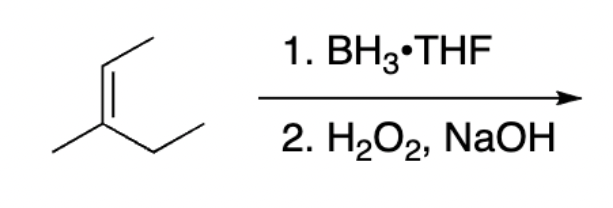
name the type of alkene addition that is occurring
Hydroboration oxidation
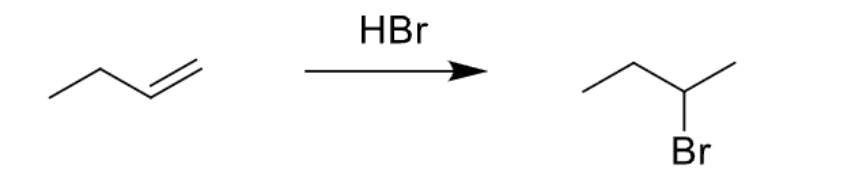
name the type of alkene addition that is occurring
hydrohalogenation
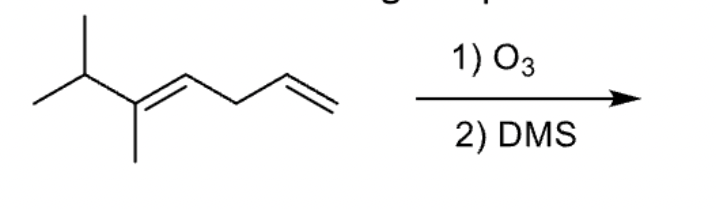
name the type of alkene addition that is occurring
ozonolysis w/ reduction
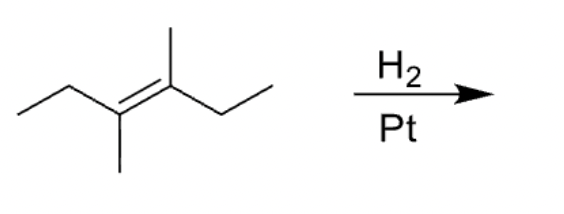
name the type of alkene addition that is occurring
catalytic hydration
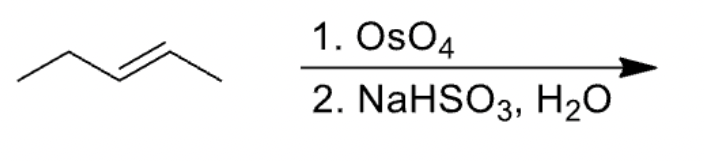
name the type of alkene addition that is occurring
syn-dihydroxylation
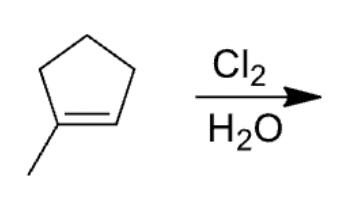
name the type of alkene addition that is occurring
halohydrin formation
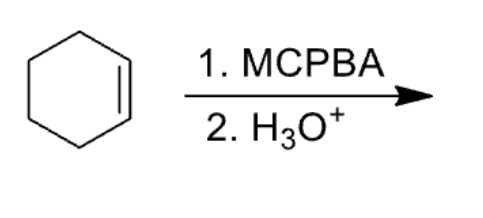
name the type of alkene addition that is occurring
anti-dihydroxylation
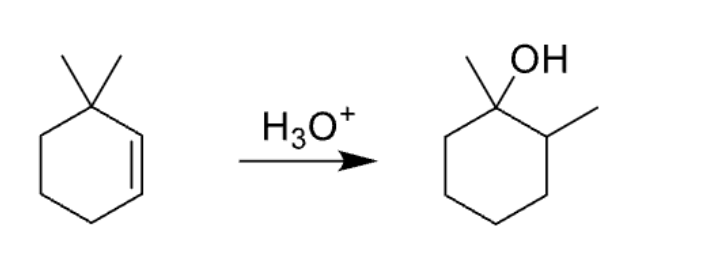
name the type of alkene addition that is occurring
acid-catalyzed hydration
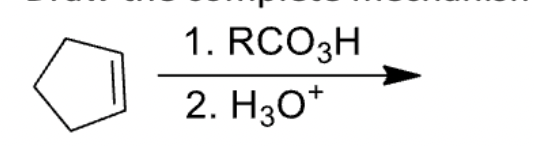
name the type of alkene addition that is occurring
epoxide
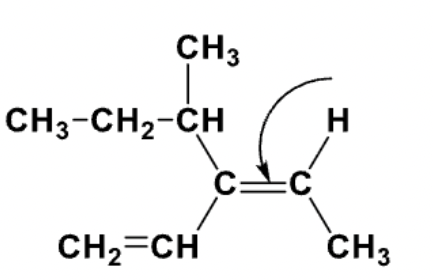
Z or E
E
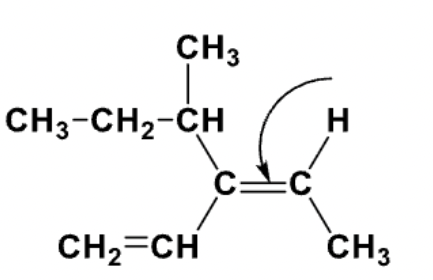
Z or E
Z
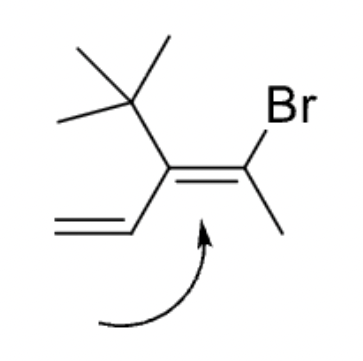
Z or E
Z
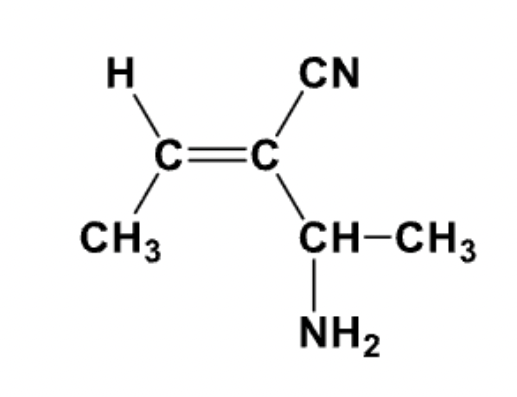
E or Z
E
when eliminating a geminal or vicinal dihalide to make an alkyne, what reagents can we use
excess NaNH2
H2O
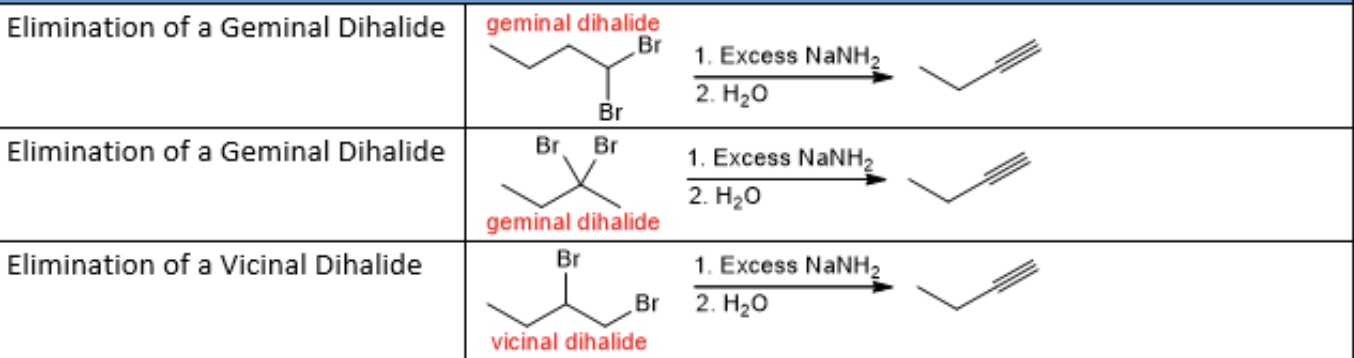
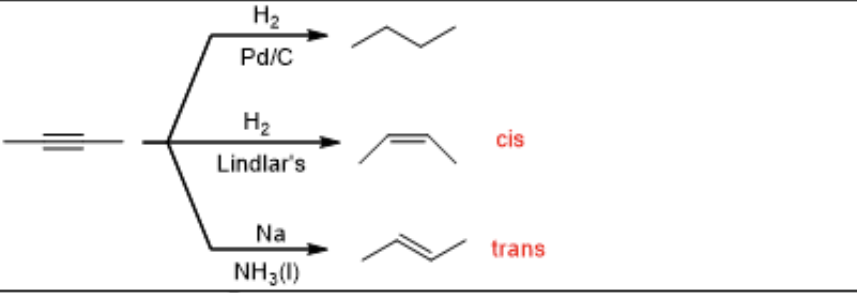
when reducing an alkyne vis hydrogen addition, what reagents will be used to get an alkane, cis alkene, and trans alkene
alkane = H2/PD, Pt or Ni
cis alkene = H2 and Lindlar’s
trans alkene = Na and NH3(l)
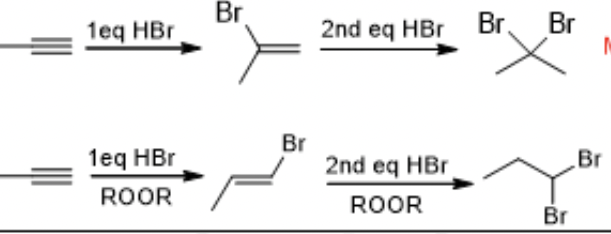
what is the difference between these 2 hydrohalogenation reactions
the first is markovnikov and the second is anti markovnikov since it was treated with ROOR
in 1 eq BR2 (halogenation reaction), is the major product cis or trans
trans

when given a terminal alkyne, what kind reagents can be used to result in a markovnikov addition of a ketone
HgSO4 and H2SO4 - acid catalyzed hydration

if Sia2BH * THF and H2O2 NaOH was used on a terminal alkyne (hydroboration oxidation), what would the product yield
Aldehyde will be added via anti markovnikov

if we were to do a hydration reaction on an internal alkyne, what would the resulting structure be
we would get 2 possible ketone products - there is no markovnikov

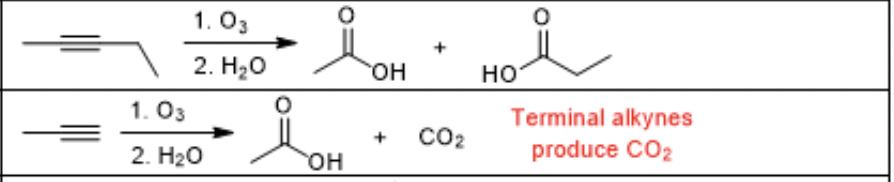
what is the difference between oznolysis of an internal vs terminal alkyne
internal results in 2 carboxylic acids, while terminal alkynes will result in 1 carboxylic acid and CO2
what reagent do we use for alkylation synthesis
NaNH2 and it will add a carbon cain via SN2
