U1 Definitions
 Call Kai
 Learn
Learn Practice Test
 Spaced Repetition
 Match
Match Flashcards
 Knowt Play
1/27

There's no tags or description
Looks like no tags are added yet.
Name | Mastery | Learn | Test | Matching | Spaced | Call with Kai |
|---|
No analytics yet
Send a link to your students to track their progress
28 Terms
Electron Transition
The distance of travel when an electron emits radiation and falls down to a lower E level
Heterogeneous
Cannot be distributed evenly
Homogeneous
Uniform
Volatility
Tendency of a substance to vaporize
Isotopes
Atoms of the same atomic number but different mass number.
Radioisotopes
Isotopes with an unstable nuclei. Emits radiation as they change to become stable.
Relative Atomic Mass
The weighted average of all naturally occurring isotopes of an atom relative to 1/12 of the mass of one atom of carbon-12.
symobl: Ar
Relative Formula Mass
The sum of the relative atomic mass of all the atoms in a covalent molecule or formula unit of an ionic compound
symbol: Mr
Molar Mass
The mass in grams of one mole of a substance
unit: g mol^-1
The Mass Spectrometer
An analytical instrument used to measure the masses of the isotopes of an element and their abundances. It determines the composition of an unknown molecular substances.
Solid Sphere Model
John Dalton 1803

Plum Pudding Model
JJ Thompson 1904
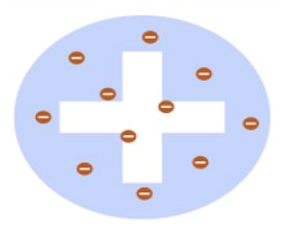
Nuclear Model
Ernest Rutherford 1911 (Gold foil experiment )
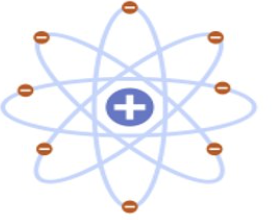
Planetary Model
Niels Bohr 1913
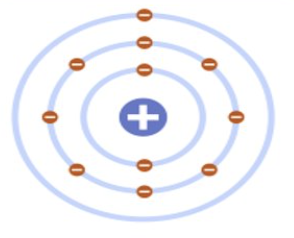
Quantum Model (“Clouds of possibility”)
Erwin Schrodinger 1926

Orbitals
Volume of space where electrons have a high possibility of being found
Sublevels
Levels within energy levels becaus electrons need more space than just one line of the main level
s<p<d<f
Aufbau Principle
When adding electrons to an atom, the lower energy sublevels must be filled first in the order of overlapped sublevels
Hund’s Rule
Each orbital within a given sublevel must be filed with a single electrons before electrons are paired up. You may pair up electrons beginning from the left.
Pauli exclusion principle
Orbitals can only hold 2 electrons with opposite spin. The same direction of spin would repel the arrows and cause instability.
Mandeleev
Founded the current model of periodic table. Elements not yet found were positioned correctly on the pt because the chemical and physical properties of an element can show it’s relativity to other elements. The patterns on the pt can then be used to position those elements
isoelectric
Particles with the same number of electrons
First ionization energy
The energy required to remove one mole of electrons from one mole of atoms in the gaseous state.
Coulumb’s Law
2 factors that canc ahnge the force of attraction
charge magnitude: more charge, more force
distance between charges: more distance, less force
Effective Nuclear Charge
Net charge of force of attraction a valance electrons experiences with the shielding of inner electrons
ENC = # of p - # of inner e
ultraviolet
Lyman
Visible Light
Balmer
Infared
Paschen