connective tissue histology
 Call Kai
 Learn
Learn Practice Test
 Spaced Repetition
 Match
Match Flashcards
 Knowt Play
1/6

There's no tags or description
Looks like no tags are added yet.
Name | Mastery | Learn | Test | Matching | Spaced | Call with Kai |
|---|
No analytics yet
Send a link to your students to track their progress
7 Terms
what are the 3 types of cartilage
what 3 structures do they not contain
3 types: hyaline (articular is a specialised form), elastic and fibrocartilage
No BVs, nerves or lymphatics
what properties does collagen and proteoglycans provide in cartilage
Collagen types give high tensile strength
Proteoglycans give high compressibility
ECM - proteoglycans
what are they made up of 2
what do GAGs provide
They consist of a core protein with one or more glycosaminoglycan GAG chain
GAGs provide hydration and swelling pressure to the connective tissue enabling it to withstand compressional forces
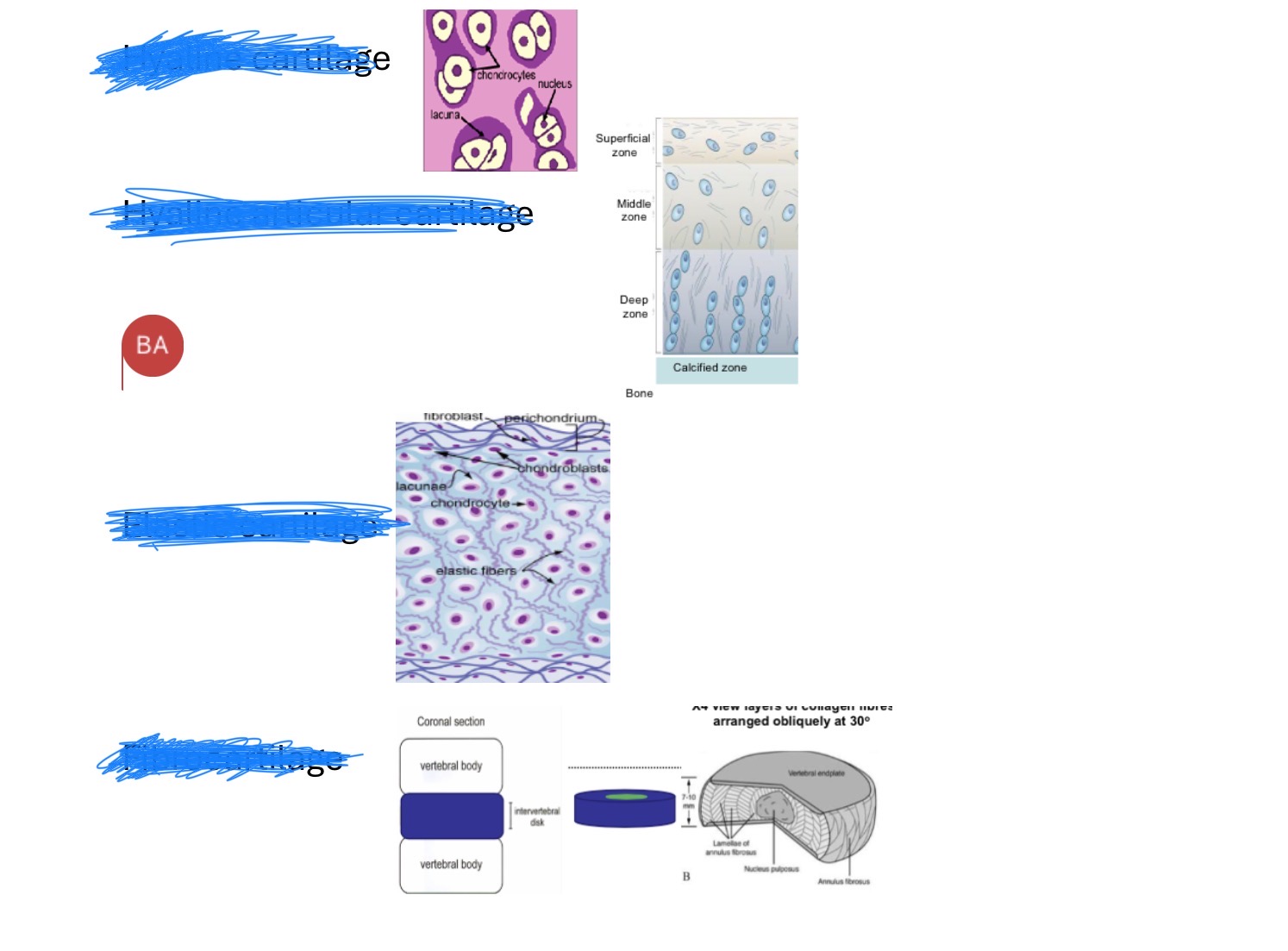
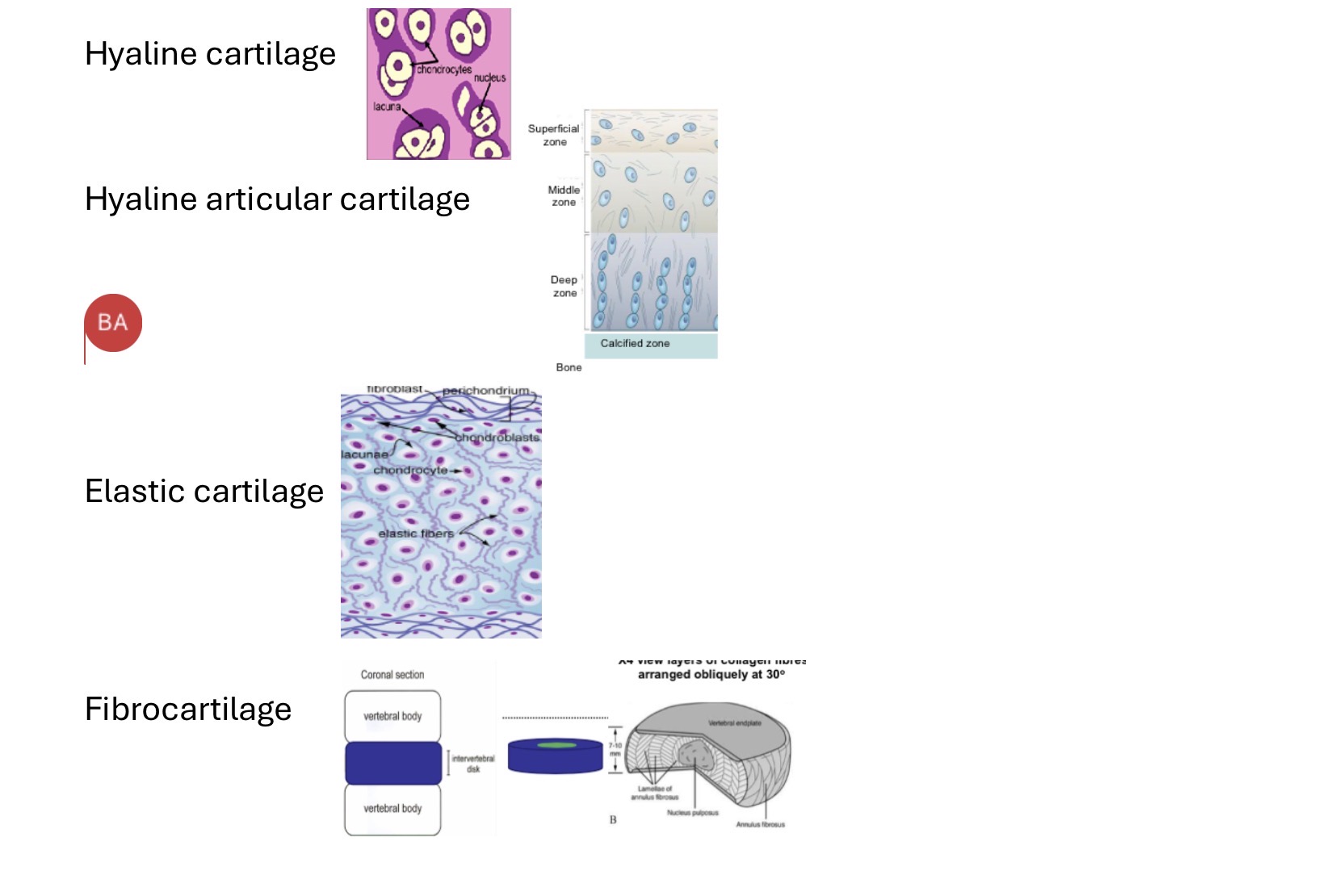
label:
fibrocartilage
hyaline articular cartilage
elastic cartilage
hyaline cartilage
what are the two bone layers
what do collagen and minerals provide for bones
compact and cancellous/trabecular
Collagen types gives it flexibility
Mineral salts give it resistance to stress/force
osteoclast function
osteoblast function
what structure does cortical bone contain O
OSTEOCLASTS
Reabsorb bone
Multinucleated
Fewer
OSTEOBLASTS
Form bone
Mononucleated
More of them
CORTICAL BONE
Contain osteons
embryology MSK
in embryo, where are bones formed from
flat bones
long bones
In the embryo, bones are formed from muscular stem cells
Flat bones are formed directly from MSCs
Long bones are formed from cartilage templates