Chapter 22: Medical Genetics and Cancer
 Call Kai
 Learn
Learn Practice Test
 Spaced Repetition
 Match
Match Flashcards
 Knowt Play
1/12

There's no tags or description
Looks like no tags are added yet.
Name | Mastery | Learn | Test | Matching | Spaced | Call with Kai |
|---|
No analytics yet
Send a link to your students to track their progress
13 Terms
What are the four common patterns of inheritance?
Autosomal recessive
Autosomal dominant
X-linked recessive
X-linked dominant
What is Genome-Wide-Association-Studies (GWAS)?
An approach to identify genetic variation that causes or contributes to human diseases is by analyzing human genome sequences directly
GWAS is the examination of a genome-wide set of genetic variants among different individuals to see if any variant is associated with a disease or other trait
Usually tries to find an association between one or more single nucleotide polymorphisms (SNPs) and a disease or other trait
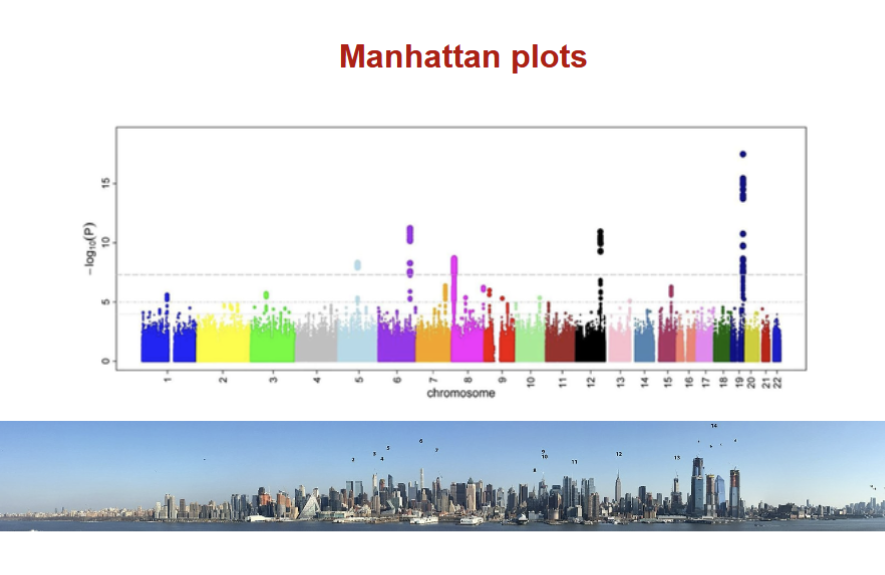
Manhattan plot
A graph for genes on chromosomes resembling a city, hence “Manhattan”
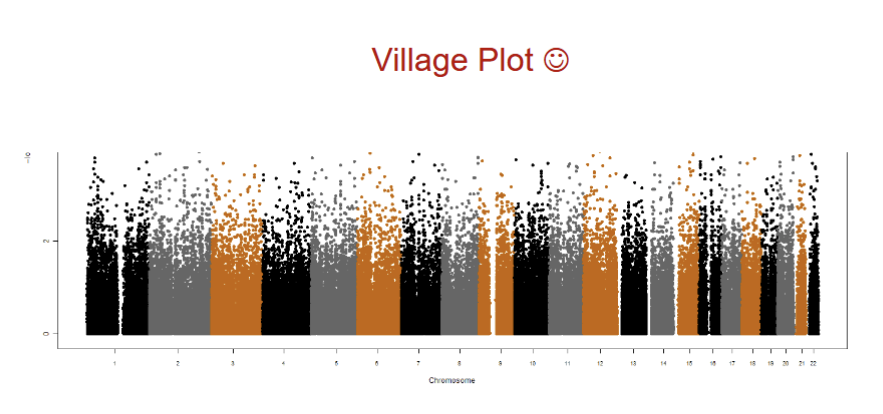
Village plot
A smaller Manhattan plot, also graphing genes on chromosomes, for a smaller group of results
Genetic Testing vs Genetic Screening
Genetic testing refers to the use of tests to discover if an individual has a genetic abnormality
Genetic screening refers to population-wide genetic testing
What are the two types of genetic testing before birth?
Noninvasive Prenatal Testing
Analyze the cell-free DNA (cfDNA) present in the blood of the pregnant mother
cfDNA is usually identical to the DNA of the fetus
Can be conducted as early as week 10 of pregnancy
Amniocentesis
Fetal cells are obtained from the amniotic fluid
Grown for 1-2 weeks to increase cell numbers
Karyotyping performed on cells to observe chromosome number and structure
What is the Genetic Basis of Cancer?
Cancer is a disease characterized by uncontrolled cell division
It is a genetic disease at the cellular level
Human cancers are classified according to the type of cell that has become cancerous
More than 100 kinds have been identified
What are the three characteristics of Cancer?
Most cancers originate from a single cell
A growth is clonal in origin
A cancer cell divides to produce two cancer cells
Cancer is a multistep process
Begins as a precancerous benign growth (not invasive)
Additional genetic changes lead to cancerous growth
Cancer growth is malignant
Invasive cancer cells invade surrounding healthy tissues
Metastatic – Moves to a different site in body and causes secondary tumors
Oncogenes vs Tumor Suppressor Genes
Genes that are involved in cancers are classified as
Oncogenes
Mutant gene that is overexpressed and overactive
Contributes to cancerous growth
Most of oncogenes result from Growth Factor genes (e.g., Epidermal growth factor)
Tumor suppressor genes
Gene that prevents cancers
Loss-of-function in a tumor-suppressor gene can allow cancerous growth to occur
What are the four types of mutation that can change a proto-oncogene into an oncogene?
Missense mutation
Gene amplification (i.e. duplication)
Chromosomal translocation
Viral integration
What are the characteristics of Tumor Suppressor Genes?
Tumor suppressor genes prevent cancerous growth
When tumor suppressor genes are mutated that leads to inactivation, cancer is more likely to occur
Both copies of a tumor-suppressor gene need to be inactivated to promote cancerous growth
What are the two ways that the function of Tumor-Suppressor genes can be lost?
A mutation in the tumor-suppressor gene itself
The promoter could be inactivated
An early stop codon could be introduced in the coding sequence
Aneuploidy
Chromosome loss may contribute to the progression of cancer if the lost chromosome carries one or more tumor-suppressor genes
How do epigenetic changes contribute to cancer and other diseases?
Several types of chromatin modifications are found to be abnormal in cancer cells:
DNA methylation
Covalent modification of histones
Chromatin remodeling