Unit 3: Molecules of Life
 Call Kai
 Learn
Learn Practice Test
 Spaced Repetition
 Match
Match Flashcards
 Knowt Play
1/87

There's no tags or description
Looks like no tags are added yet.
Name | Mastery | Learn | Test | Matching | Spaced | Call with Kai |
|---|
No analytics yet
Send a link to your students to track their progress
88 Terms
Functional Group
An atom (other than hydrogen) or a small molecule group bonded to a c arbon of an organic compound; imparts a specific chemical property
Hydrocarbon
A nonpolar organic compound consisting entirely of hydrogen and carbon atoms, commonly found in fossil fuels and lipids.
Organic
Compounds containing carbon, often with hydrogen. They include molecules such as carbohydrates, proteins, lipids, and nucleic acids.
Carbon has ___ vacancies soit can form ___ covalent bonds with other atoms, including other carbon atoms.
Four
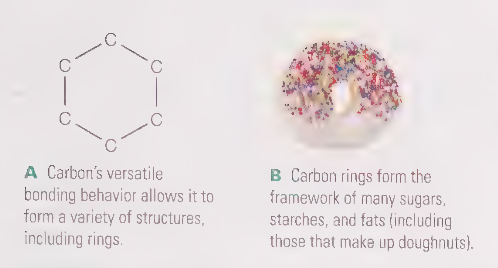
Organic molecules have at least ____ functional group.
One
Hydroxyl Group (—OH)

Adds polar character to an organic compound, increasing ability to dissolve in water. Occur most abundantly in alcohols and sugars.
Methyl Group (—CH3)

Adds nonpolar character and dampens the effect of polar functional groups. Found in diverse organic compounds.

Sulfydryl Group (—-SH)
Polar and reactive. Bonds between these groups stabilize the structure of many proteins, maintaining the tertiary structure of proteins due to ability to form disulfide bonds. Located in proteins and cofactors.
Carbonyl Group (—CO)
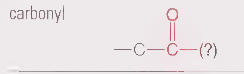
Polar and reactive. Commonly found in sugars, it can exist as either an aldehyde or a ketone, contributing to the reactivity of organic molecules.
Carboxyl Group (—COOH)
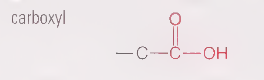
Polar and acidic. Contributes to the acidity of amino acids and fatty acids and can donate hydrogen ions (H+) in solution.
Ketone Group (—CO—)
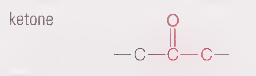
Polar. Parts of simple sugars and nucleic acids that contain a carbonyl group (C=O) within the carbon chain. They are important in various biological processes and are involved in metabolic pathways.
Aldehyde Group (—CHO)
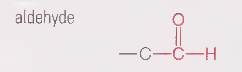
Polar and reactive. Located in simple sugars. Function as reducing agents in biochemical reactions and are characterized by a carbonyl group (C=O) bonded to at least one hydrogen atom.
Acetyl Group (—COCH3)
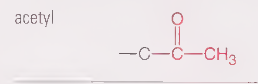
A functional group derived from acetic acid, containing a carbonyl group (C=O) and a methyl group (—CH3). Polar and acidic. Located in proteins and coenzymes.
Amide Group (—C(O)N—)
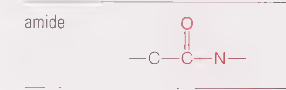
A polar functional group characterized by a carbonyl group (C=O) directly attached to a nitrogen atom (N). Found in proteins and nucleic acids. Formed through the reaction of a carboxylic acid with an amine.
Amine Group (—NH2)
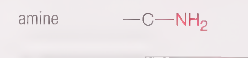
A functional group consisting of a nitrogen atom (N) bonded to two hydrogen atoms (H). It is basic and polar, commonly found in proteins and nucleic acids and can participate in hydrogen bonding.
Phosphate Group (—PO4)
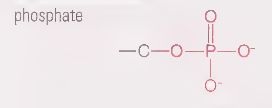
A functional group consisting of a phosphorus atom (P) bonded to four oxygen atoms (O). It is polar, acidic, and plays a crucial role in energy transfer through molecules like ATP, as well as in nucleic acids and phospholipids.
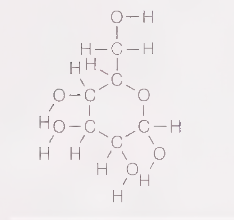
Structural Formula
A representation of a molecule that shows the arrangement of atoms and the bonds between them. The overall structure can be obscured by detail.
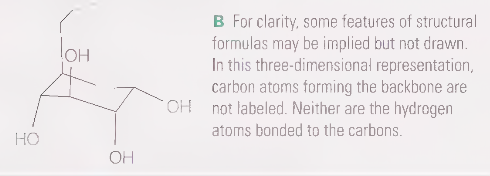
Skeletal Formula
Depict the molecule's framework without showing all atoms explicitly.
Ball-and-stick model
A 3D representation of a molecular structure that uses spheres to represent atoms and sticks to represent chemical bonds between them.
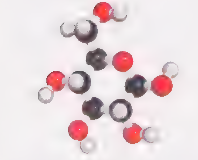
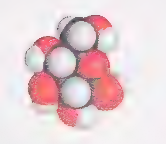
Space-filling model
A 3D representation of a molecule where spheres are scaled to represent the size of atoms, showing the overall shape without displaying the bonds explicitly.
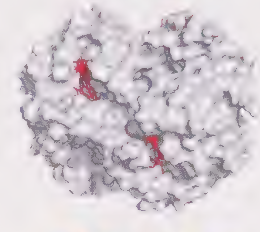
Surface Model
A 3D representation that illustrates the surface topology of a molecule, providing details on atomic arrangements and interactions.
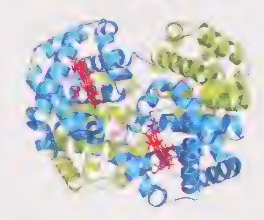
Ribbon Model
A 3D representation of a protein's secondary and tertiary structure that uses ribbons to illustrate the folding patterns, such as alpha helices and beta sheets.
Monomer
Molecule that is a subunit of a polymer.
Polymer
Molecule that consists of repeated monomers.
Reaction
Process of molecular change.
Metabolism
All of the enzyme-meditated reactions in a cell.
Hydrolysis
Process of breaking down polymers into monomers by adding water.
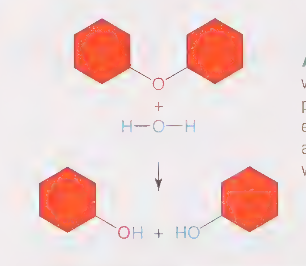
Condensation
Process of joining monomers to form polymers by removing water.
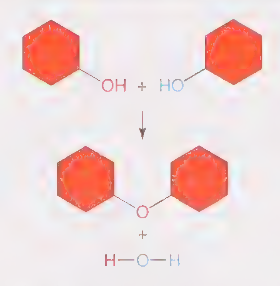
Carbohydrates
Organic compounds made of carbon, hydrogen, and oxygen, typically in a 1:2:1 ratio. They serve as a primary energy source and structural components in living organisms.
Monosaccharides
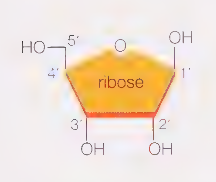
Simple sugars that are the most basic form of carbohydrates, consisting of single sugar units. Most common have backbone of 5-6 carbon atoms, one carbonyl group, and two or more hydroxyl groups.
Oligosaccharides
Short chains of 3 to 10 monosaccharides linked by glycosidic bonds. They play roles in cell recognition and signaling. Can also function in immunity.
Disaccharides
Carbohydrates formed from two monosaccharides linked by a glycosidic bond. Common examples include sucrose and lactose, which serve as energy sources.
Polysaccharides
Carbohydrates made up of long chains of monosaccharides linked through glycosidic bonds.
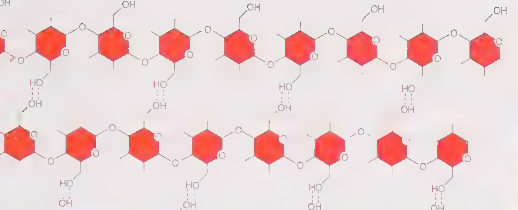
Cellulose
A polysaccharide where hydrogen bonds crosslink long, straight chains of glucose units that form a structural component in plant cell walls. Insoluble and is not easily broken down. Most abundant molecule on Earth.
Starch
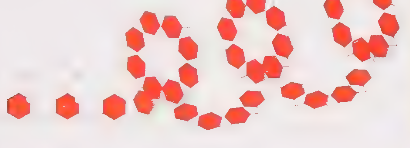
A polysaccharide composed of long, coiled chains of glucose units, serving as an energy storage molecule in plants. It can be broken down into glucose when needed. Located in roots, stems, leaves, seeds, and fruits.
Glycogen
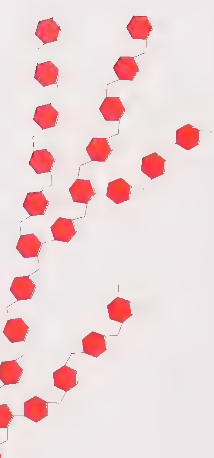
A highly branched polysaccharide that serves as an energy storage molecule in animals. It can be rapidly converted into glucose to meet energy demands. Abundant in the liver and muscles.
Dietary Fiber, “Roughage”
A type of dietary fiber that does not dissolve in water and helps add bulk to the digestive system, promoting regular bowel movements. It is found in whole grains, nuts, and vegetables.
Chitin
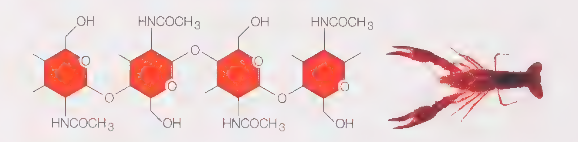
A polysaccharide that provides structural support in the cell walls of fungi and exoskeletons of arthropods, composed of N-acetylglucosamine units. It is not digestible by humans but plays a role in the diet as dietary fiber.
Lipids
A diverse group of hydrophobic organic molecules, including fats, oils, and steroids, that serve as energy stores, structural components of cell membranes, and signaling molecules in biological systems.
Fatty Acid
A long hydrocarbon chain with a carboxylic acid group at one end, fatty acids are building blocks of lipids and can be saturated or unsaturated.
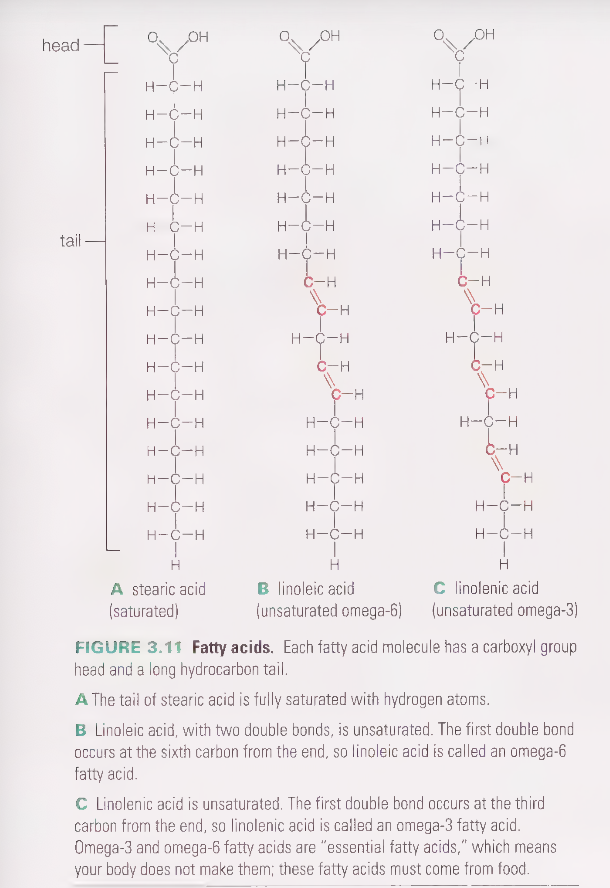
Saturated Fatty Acid
A type of fatty acid containing no double bonds between carbon atoms in the hydrocarbon chain, resulting in a straight structure. Their carbon chains are fully saturated with hydrogen atoms. Saturated fatty acids are typically solid at room temperature and are found in animal fats.
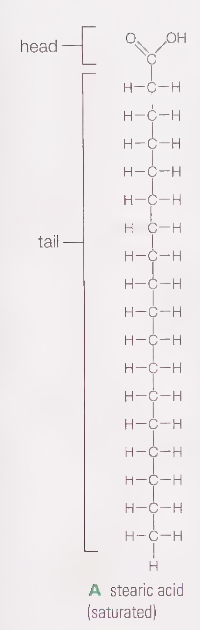
Dual Properties of Fatty Acids as the main component in soap: the hydrophobic ____ attract oily dirt, and the hydrophilic ____ dissolve the dirt in water.
Tails; Heads
Unsaturated fatty acids
Contain one or more double bonds in the hydrocarbon chain, leading to a kinked structure that prevents tight packing. These fats are usually liquid at room temperature and are primarily found in plant oils.
Cis bond
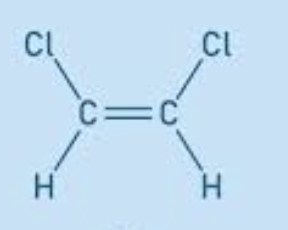
A type of double bond in which the hydrogen atoms are on the same side of the carbon chain, resulting in a bend in the fatty acid.
Trans bond
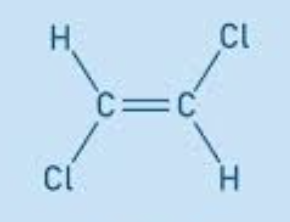
A type of double bond where the hydrogen atoms are on opposite sides of the carbon chain, resulting in a straighter fatty acid.
When a fatty acid reacts with a _____, the fatty acid loses its hydrophilic character.
Glycerol (a type of alcohol)
Triglyceride
A type of lipid formed from a glycerol molecule bonded to three fatty acids, serving as a significant energy storage form in organisms. Entirely hydrophobic and does not dissolve in water.
Fat
A triglyceride molecule
Saturated Fat
A type of fat that has three saturated fatty acid tails that can pack tightly together. This structure makes saturated fats solid at room temperature, and they are typically found in animal products and some plant oils.
Unsaturated Fats
Triglycerides with one or more unsaturated fatty acid tails.
Partially hydrogenated vegetable oils are ___ at room temperature due to the trans double bond that keeps their tails straight.
Solid
Polyunsaturated fat
A type of fat that contains two or more double bonds in its fatty acid chains, which prevents tight packing and typically keeps them liquid at room temperature.
Monounsaturated fat
A type of fat that contains one double bond in its fatty acid chain and is typically liquid at room temperature, found in foods like olive oil and avocados.
Phospholipid
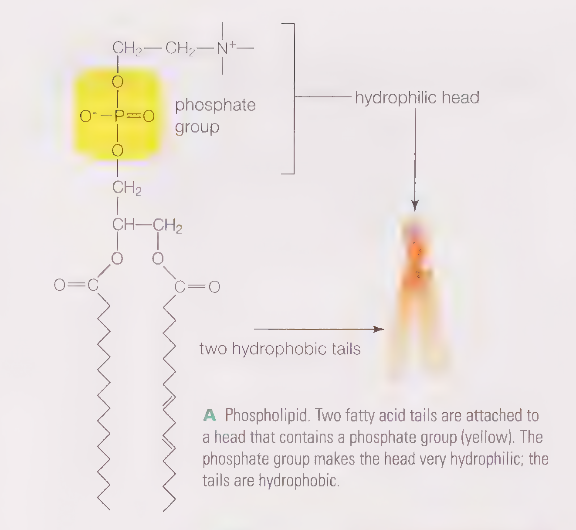
A molecular compound made of glycerol, two long hydrocarbon tails, and a phosphate group, forming a bilayer structure in cell membranes.
Steroids
Lipids with no hydrocarbon/fatty acid tails; they have a rigid backbone consisting of 20 carbon atoms arranged in a characteristic pattern of four rings. Functional groups attached to the rings determine its type. They play vital roles in cell signaling and membrane structure.
Cholesterol
A type of steroid essential for cell membrane structure and function, also serves as a precursor for the synthesis of steroid hormones, bile acids, and vitamin D.
Wax
A type of lipid that is nonpolar and hydrophobic, composed of long-chain fatty acids esterified to a long-chain alcohol. Waxes provide protective coatings and are found in plant cuticles and animal fur. They are firm and solid because they can pack tightly together.
Protein
Large, complex molecules made up of amino acids that perform various functions, including catalyzing biochemical reactions, providing structural support, and facilitating immune responses.
Amino Acid
A small organic compound with an amine group (—NH2), a carboxyl group (—COOH, the acid), and one of 20 “R groups” that defines its type.
Peptide Bond
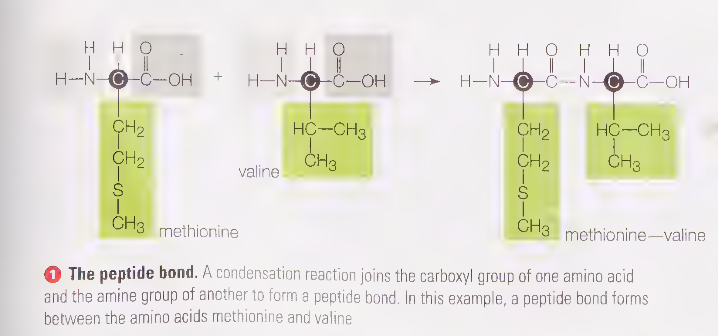
A covalent bond formed between the carboxyl group of one amino acid and the amino group of another, releasing a molecule of water in the process. Peptide bonds link amino acids together in proteins.
Peptide
A short chain of amino acids
Polypeptide
A long chain of amino acids linked by peptide bonds, which form proteins.
Primary Structure
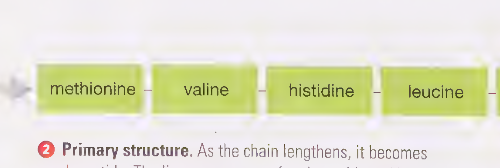
The linear sequence of amino acids in a polypeptide chain, which determines the protein's unique properties and functions.
Secondary Structure
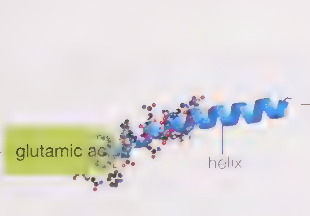
The local folded structures that form within a protein, primarily through hydrogen bonding, including alpha helices and beta sheets.
Alpha Helix
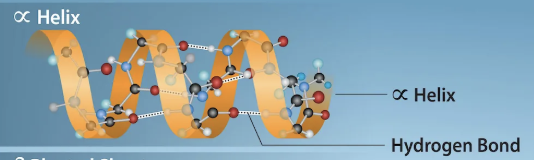
A common type of secondary structure in proteins, characterized by a right-handed coil where each amino acid helps form a turn of the helix, stabilized by hydrogen bonds. The backbone (N-H) group of one amino acid bonds to the (C=O) group of another amino acid located exactly four residues ahead.
Beta-Pleated Sheet
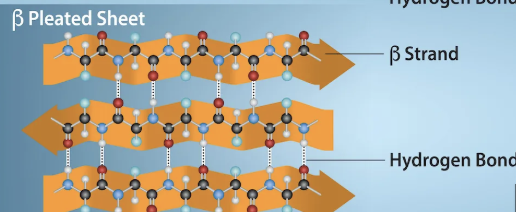
A secondary structure in proteins that consists of beta strands connected laterally by hydrogen bonds, forming a sheet-like arrangement. Intermolecular or inter-strand. The backbone (N-H) groups on one strand bond to the (C=O) groups on an adjacent strand.
Tertiary Structure
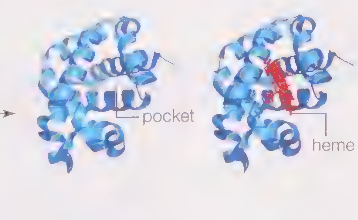
The overall three-dimensional shape of a protein, determined by interactions among various side chains (R groups) of the amino acids. It results from multiple forces including hydrogen bonds, ionic interactions, hydrophobic interactions, and disulfide bridges.
Zinc Finger
A type of protein structural motif that stabilizes protein-DNA interactions. It typically consists of a zinc ion coordinated by cysteine and histidine residues, facilitating the binding of the protein to specific DNA sequences.
Quaternary Structure
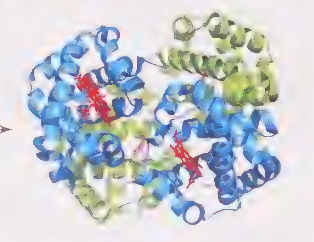
The complex formed when two or more polypeptide chains aggregate, resulting in a functional protein. This structure is stabilized by various interactions, including hydrogen bonds, ionic interactions, and hydrophobic forces between the individual polypeptides.
Denaturation
The process in which a protein loses its native structure due to external factors such as heat, pH changes, or chemicals, resulting in the loss of its biological function.
Prion
A type of infectious protein that can induce misfolding of other normal proteins. Prions are associated with neurodegenerative diseases such as mad cow disease.
Amyloid Fibrils
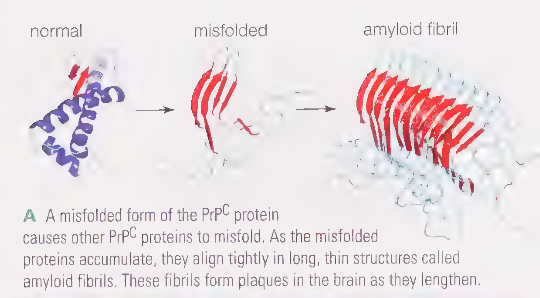
Aggregates of misfolded proteins that form insoluble fibers, often associated with various diseases, including Alzheimer's. They resist degradation and prevent cell function, forming plaques in the brain.
Variant Creutzfeldt-Jakob Disease (vCJD)
A rare and fatal neurodegenerative disorder caused by prions, leading to progressive brain damage and symptoms such as memory loss and personality changes.
Nucleotide
The basic building blocks of nucleic acids, consisting of a monosaccharide (5C, either ribose or deoxyribose), a phosphate group, and a nitrogenous base. Nucleotides are essential for storing and transferring genetic information.
Adenosine Triphosphate (ATP)
A nucleotide that serves as the primary energy carrier in cells, composed of adenine, ribose, and three phosphate groups. ATP is crucial for various cellular processes, including metabolism and muscle contraction.
Nucleic Acids
Biomolecules essential for storing and transmitting genetic information, primarily DNA and RNA. They consist of long chains of nucleotides linked by phosphodiester bonds.
Ribonucleic Acid (RNA)
A type of nucleic acid involved in protein synthesis, consisting of a single strand of nucleotides with ribose sugar and nitrogenous bases adenine, uracil, cytosine, and guanine.
Deoxyribonucleic Acid (DNA)
A type of nucleic acid that contains the genetic instructions for the development and functioning of living organisms, composed of two strands forming a double helix, with deoxyribose sugar and four nitrogenous bases: adenine, thymine, cytosine, and guanine.
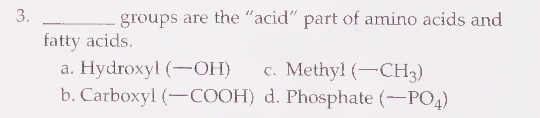
Carboxyl (—COOH)

Ribose

Amino acids; nucleotides.
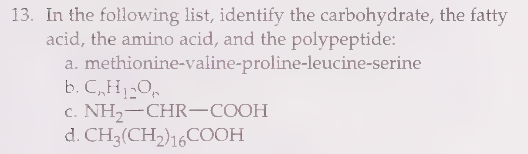
a. Polypeptide
b. Carbohydrate
c. Amino acid
d. Fatty acid
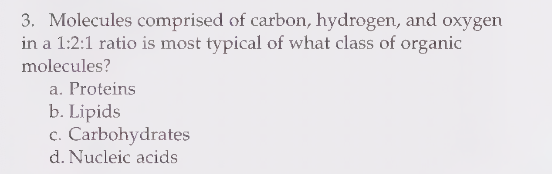
Carbohydrates
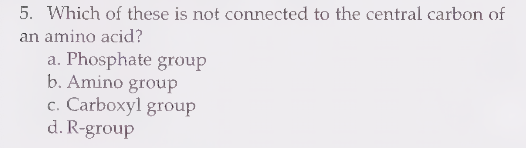
Phosphate Group
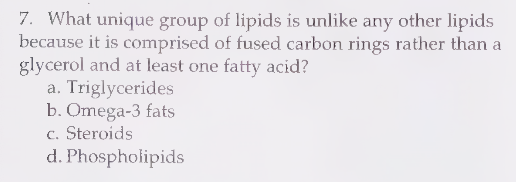
Steroids
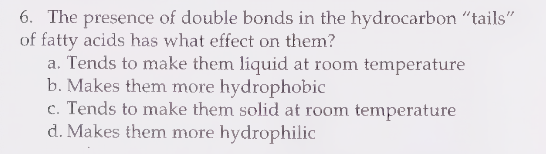
Tends to make them liquid at room temperature.
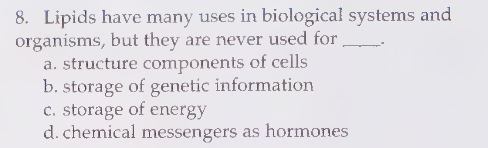
Storage of genetic information.
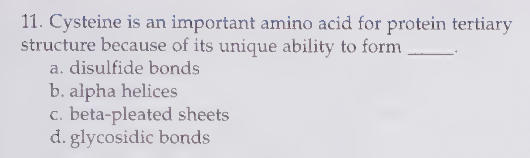
Disulfide bonds. Cysteine contains a thiol (–SH) group in its side chain. When two cysteine residues are in close proximity within a protein, their thiol groups can oxidize to form a covalent disulfide bond (S-S). These bonds are crucial for stabilizing the protein's tertiary structure.