Intro to critical care &EM
 Call Kai
 Learn
Learn Practice Test
 Spaced Repetition
 Match
Match Flashcards
 Knowt Play
1/7

Earn XP
Description and Tags
Dr. Ko 644
Name | Mastery | Learn | Test | Matching | Spaced | Call with Kai |
|---|
No analytics yet
Send a link to your students to track their progress
8 Terms
Acuity
complexity and severity of patient’s medical condition
High acuity
more severely ill, could be based on many factors:
Abnormal lab values
Unstable vital signs
Requires close cardiac or neurological monitoring
Multiple medications or interventions needed (complex treatment plans)
Comorbidities
Triage
Patients are triaged based on their acuity
Triage: determine how quickly a patient needs care
ED patients are seen/examined in order of acuity NOT order of arrival
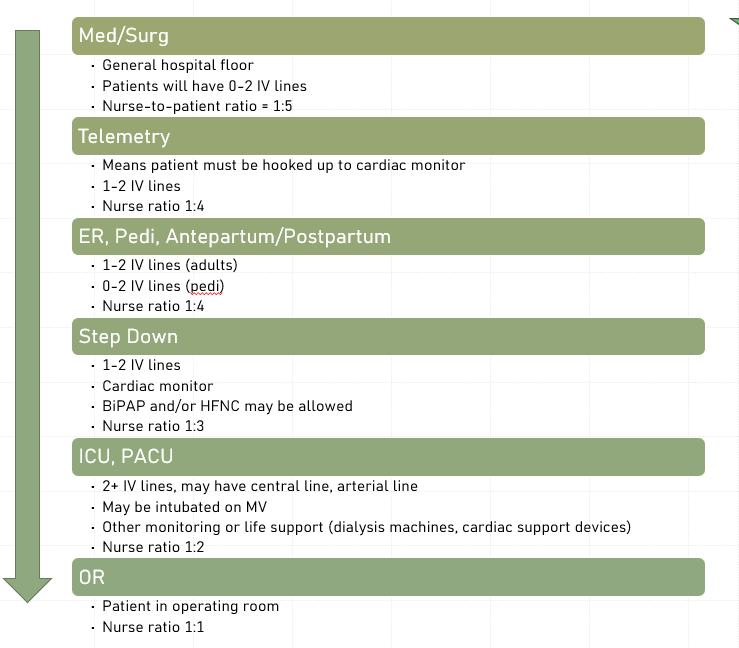
Hospital units: lowest to highest level of care
note where intubated patients are
Acute care
care that is provided in a hospital setting
urgent or emergent
umbrella term which also includes critical care
Critical care
Highest acuity, most unstable patients
Without immediate action & resources, patient could decompensate and/or code
Requires many personnel to assist; many interventions happening at once
Role of EM/ICU Pharmacist
Rapid assessment & critical thinking with sometimes minimal information (ED setting)
Ensure effective medications are ordered and administered safely
Quickly gather relevant information from patient (weight/height, allergies, medication history)
Ensure medications are dosed correctly (especially pediatrics!) in fast-paced environment
Recommend appropriate therapies
Prepare medications at the bedside using rapid IV compounding & labeling
Programming of IV infusion pump
Answering drug info questions (IV compatibility, monitoring, adverse effects)
Educate providers, nurses, and patients
Practical skills of EM/ICU Pharmacists
Teamwork & communication
Patient advocacy
Know your resources
Streamline/tailor your recommendations and education to the audience & pace
Ability to triage and ask for help
Resiliency & willingness to seek resources to cope with tragedy