HIST 224 -- Pirates and Hackers Final Exam UNR
 Call Kai
 Learn
Learn Practice Test
 Spaced Repetition
 Match
Match Flashcards
 Knowt Play
1/161

There's no tags or description
Looks like no tags are added yet.
Name | Mastery | Learn | Test | Matching | Spaced | Call with Kai |
|---|
No analytics yet
Send a link to your students to track their progress
162 Terms
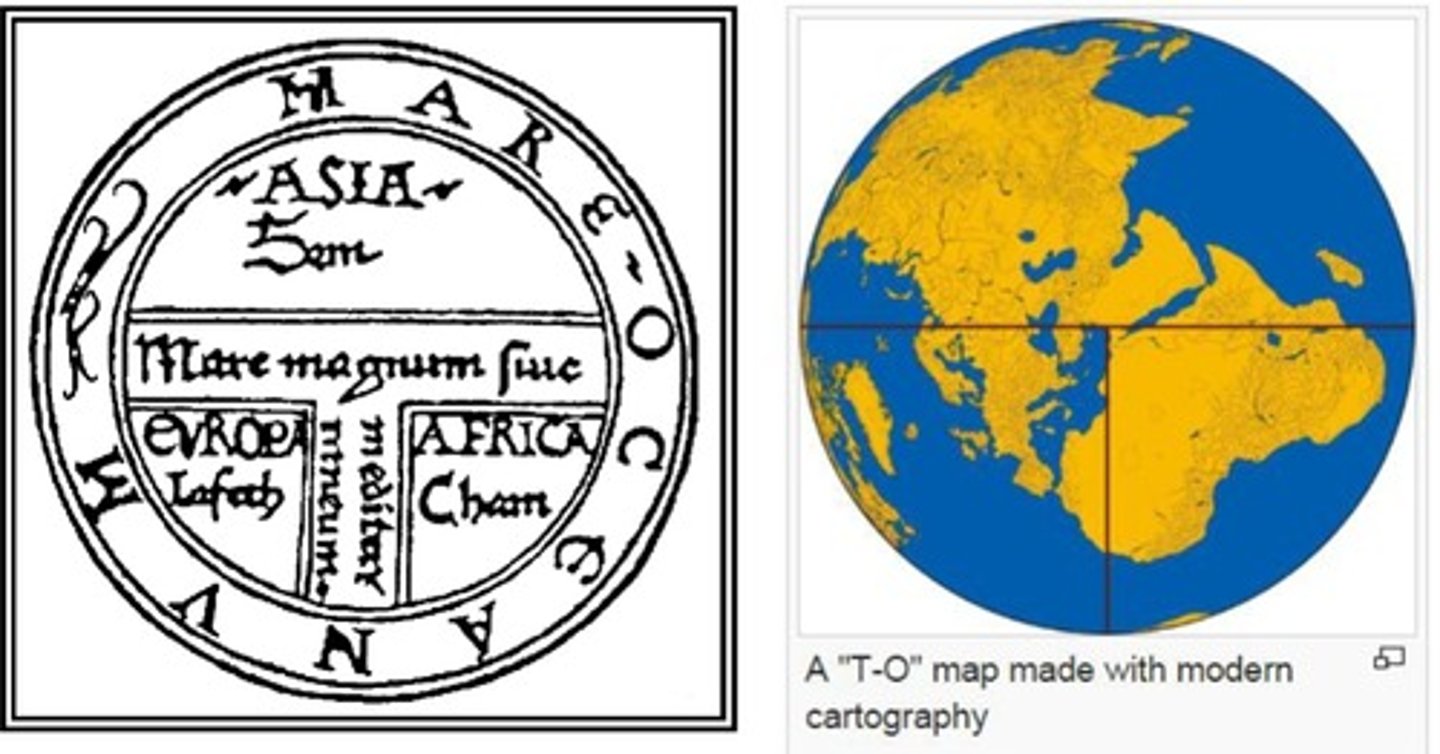
T.O Map
-8th Century.
-based on Mare Nostrum
-Jerusalem at the center.
-Pirates concept of the known world.
Odysseus
-Homer's Odyssey.
-Originated in Mediterranean seas, with Greek piracy that participated in raids, trading, and abduction.
-The Greeks turned to piracy after the Trojan War.
-"There I sacked the town and put the people to the sword. We took their wives and also much booty, which we divided equitably amongst us..."
-Story of Nobody + Polyphemus: the earliest literature of piracy.
Drake and Hawkins (AKA Sea Dogs)
-16th Century English privateers and slave traders.
-Used contraband by force of arms.
-Led to Anglo-Spanish war.
Asiento
-16-19th century.
-Used to accommodate lack of native slaves, Spain offered the contract to other nations that would supply them with slaves.
-Eventually became harder to regulate and easier for smugglers.
War of Spanish Succession
-1701-1714 Spain, England, France, Germany, Holland.
-King died with no heir, nations fought for land.
-Led to privateers becoming pirates because lack of privateering jobs.
Sugar Revolution
-1650.
-Sugar was in high demand for trade globally and was a defining feature of the new world.
-It was the main moneymaker over gold and silver at the time.-Rise in slave numbers in Barbados.
Contraband by Force of Arms
-Used by Hawkins and Drake in the 1500s.
-Ensured cooperation of trade.
-Allowed for Spanish to claim they "had" to trade with outside forces in defense.
Barbarossa Bros
-Oruc (the eldest brother) and Hizir (the youngest brother).
-Dominated the Mediterranean Sea.
-They created a situation in which corsairing was legitimized.
-Following Oruc's death in 1518, Khizr inherited his brother's nickname "Barbarossa," Redbeard in Italian.
-Khizr, aka Barbarossa, is the well known and popular of the two.
Prize Acts
-Naval Prize Act of 1864.
-All privateers must bring back plunder and documents to UK, integral part in making privateering more of an institution.
Smuggling
-16th and 17th century.
-Mainly utilized by colonists in the New World (especially 13 colonies and the Caribbean).
-Provided a better economy in the colonies and only hindered the state, which in turn caused conflict between the state and the colonies.
Greco-Roman Piracy
-Lots of trade across Aegean Sea.
-Broken up into city states: no central authority--piracy flourishes (no consequences).
-All major Greek cities and coastal towns within 1-2 miles of coastal lines defended from pirate raids.
Somalian Piracy
-Modern Piracy.
-Somali pirates first attacked large fishing boats because they took fish from their waters, then started to take huge cargo ships for ransom.
-This affects the global market greatly because it is a main shipping route (Suez Canal to Gulf of Aden) and piracy is the main source of profit for Somalia.
Declaration of Paris
-Piracy Act of 1700: Jamacia and Bahamas can try pirates as criminals.
-Turned local opinion against pirates.
The U.S. Civil War
-1861-1865.
-Last use of privateers by the U.S. in a war.
-Confederacy had no navy, had to turn to privateering.
-Shows the end of privateering.
Henry Morgan and the Buccaneers
-1635-1688.
-Pirate and admiral for British Navy.
-Puerto del Principe (1668) attacked Cuba with bucccaneers Treaty of Madtrid (1670) Spain recognized as English territory, leading to freedom movement in the Caribbean.
Spanish Main / Mule Trains / Galleons
-The Spanish Main was the vast area of the New World the Spanish controlled in the 16th century.
-Mule trains brought silver and wealth from their colonies to Panama.
-Silver and gold was put onto Spanish Galleons that transported the wealth to Spain.
Ching Shih
-1775-1844, China.
-Most successful Pirate of all time, took over her husbands duties and negotiated with Chinese gov for positions for her crewmembers in military.
Mary Read + Anne Bonny
-1700s.
-English women pirates who were raised as boys.
-Fought with Calico Jack, convicted, got off by claiming pregnancy.
-Representation of the false depiction of pirates, and the sexuality of women.
Grace O'Malley
-1530-1603.
-Daughter of Chief in Ireland, became pirate from widowing.
-Accused of backing rebellion and opposed English encroachment.
-Refused to bow for Queen.
Calico Jack
-1700s.
-Eccentric clothing, not a good pirate.
-Operated mainly in Cuba and the Bahamas.-Harbored women pirates.
-Iconic Jolly Roger skull + crossbones design. "Death, violence, no time."
Prostitution
-Lack of women on boats, progressive pirates still abused and treated women terribly.
-High concentration of men and few women in new world.
-Gender inequality and mistreatment of women.
Piratical Codes, Myths, Superstitions, and Women
-Women on ships are seen as bad luck.
-Some ships had rules against sleeping with or raping women.
Anne Piers of Padstow
-1580s.
-Distributed pirated goods and fenced them out of the British Isles.
-Showed how women played a crucial role in piracy.
-Described as "Loose woman by the docks."
Elizabeth I
-The protestant queen and last of the Tudors.
-During Golden Age.
-Used a vast network of privateers to take from the Spanish and build her empire.-Shows how state was involved in piracy.
-Used privateers like Drake and Hawkins, knighted Drake.
-Inspired the song "Elizabethan sessions: Shores of Hispaniola."
Edward Edmondes
-1604.
-Mother and wife hid him and vouched for him against the state.
-Women saved him by rallying locals against authority.
-Showed how much locals disliked authority and liked social bandits.
Gladys Hulette / The Pirate Fairy
-Prudence the Pirate, 1916.
-Modern piracy and sexualization of female pirates.
Patriarchy / Gender Roles
-Protestants in Golden Age (17th-18th century), particularly Englishmen.
-Church on top, over everything.
-Father in middle, protects and makes money.
-Wife on bottom, manages the house and kids.
-Shows why more women did not take a larger role in piracy.
Torture and the Tale of Two Terrors
-1726 William Fly + Cotton Mather.
-Cotton Mather led a crusade against piracy, tried to get Fly to accept Christ.
-Fly wanted himself to be a warning to all captains and sailors, described the horrible conditions.
-Shows consequence of captains being too harsh and why sailors turn to piracy.
Bartholomew Roberts + The Pirate Code
-1719-1722.
-One of the most successful pirates of the Golden Age, created the Pirate Code that many pirates followed and gave a look into how the ship operated.
-Operated off the coast of Africa and the Americas.
-Last major pirate of the golden age.
The Jolly Roger
-1721-1723, originated in the Americas + Africa.
-Pirates had no fear of death.
-The flag would strike fear into the enemy and was personalized to each pirate.
William Fly
-1726, English Pirate.
-Reigned as a captain for 3 months before being seized and hanged in Boston.
-Public hanging was a sign to mark the end of the Golden Age.
-Known for his speech against ship owners and treatment to sailors.
Cotton Mather
-White American Prominent Massachusetts Judge.
-1663-1723.
-Wanted to cut out pirates from society.
-Known for rhetoric against pirates and the start of the decline of public opinion toward pirates.
Edward Teach
-1720s, English, Blackbeard.
-Savage, struck fear into people.
-Became popular for his capture of the warship Scarborough.
-Operated off coast of Carolina's.
Captain Charles Johnson
-Golden Age.
-Created modern conceptions of pirates, "The General History of Pyrates" (1724) was sensationalized to sell more copies.
Trading Companies / Joint-Stock Companies
-17th and 18th Centuries.
-East India Trading Company had most power, main contributor to the British economy, giving it a lot of power over trade.
-British held and British controlled. Imported spices.
-Shows how much power and control the states gave these companies.
-In a joint-stock venture, stock was sold to high net-worth investors who provided capital and had limited risk.
-The risk was small, and the returns were fairly quick.
Royal Navy + The Golden Age and the Decline of New World Piracy
-Formed in 1546, largely consisted of impressed sailors.
-The impressment of troops, particularly by England, created more pirates.
Social Bandits
-Golden Age.
-They reflect the disruption of an entire society.
-State views them as criminals, people view them as heroes.
Invisible Hand / Invisible Hook
-Early 1700s (Golden Age).
-Criminal self-interest led to pirates hiring black sailors to their crews.
-"Equal paw for equal pray" more valuable as crew than slaves.
-Shows that the effect of piracy on economies is not completely bad in terms of capitalism.
Abolition of the Slave Trade
-1807 (Reconfigured).
-Domestic pressures and interested prevented effective enforcement of the law, which caused demand for smuggling of slaves and corruption at every level.
-Louisiana became a haven for selling slaves.
Sugar
-Spinal cord of Caribbean.
-Intense demands on producing sugar.
-Slavery fueled over sugar productions.
-Backbone of Industrial Revolution.
Jamaica Act of 1683
-Golden Age, passed by parliament of England.
-Prohibited trade with pirates due to increase in profit from sugar.
-Shows switch between methods of income and states feelings towards piracy.
Piracy Act 1700
-Allows trying a pirate in any English colony rather than just in England.
-Allowed people to trust the New World and governors not to cater to pirates.
The Laffite Bros + Piracy, Smuggling, and the Illicit 19th Century Slave Trade
-1780-1823.
-After the Embargo Act of 1807, they moved operations to Barataria Bay, Louisiana.
-Had a very profitable smuggling op and engaged in piracy.
-Got legal pardon for smugglers.
-Helped U.S. in War of 1812.
Contraband
-Helped to advance smuggling and make it more relevant in the new world.
Louisiana, Barataria, and Galveston
-1800s, Reconfigured Era.
-Haven for selling slaves and smugglers, since these cities had swamps and areas to sneak past inspection.
Admiralty Courts
-1340.
-Enforced maritime laws and regulations.
-Established in colonies in 1637.
-Gave punishment to pirates, regulated piracy.
Molasses Acts / Tariffs
-1733.
-Imposed a tax on molasses, sugar, and rum on non-British NA colonies.
-Traders were taxed due to losses from pirate raids.
-First series of taxes that lead to the revolution.
Rise of Free Trade
-Around in the 1600s through 1800s.
-Started to rise in 1750s through 1775s.
-Trade becomes more globalized, in which piracy has evolved to adapt new economic landscape (i..e legal strategies and extracting wealth from foreign governments).
-Seen through the "Revenue Act" of 1764 and "Wealth of Nations" of 1776.
Embargo Act 1807
-Passed by Thomas Jefferson, prohibited American ships from trading in all foreign ports.
-Led to smuggling and impressment of troops by Britain and eventually the War of 1812.
Jim Bowie
-1780-1823, Texas and Louisiana.
-One of the most notorious slave smugglers, worked with pirates, made $1.3 million.
-Bowie knife.
-Worked with Lafitte to illegally smuggle slaves.
Boston, MA + Privateering in 18th and 19th Century
-18th and 19th century smuggling center.
-Biggest town in colonies, strong maritime presence.
-Shows how biggest port in U.S. was central to smuggling and privateering.
7 Years' War
-1756 to 1763.
-Began with fighting between the French and the Colonists.
-Also called the "French and Indian War."
-Turned into a European conflict that involved France, Austria, and Russia against Britain and Prussia.
-Peace was made through the Peace of Paris.
-This ended french power in North America.
War for American Independence
-1775-1783 Revolutionary War.
-U.S. hired as many privateers as possible with John Hancock handing out as many letters of Marque as possible.
-Shows that privateering played a key role in the foundation of this country.
War of 1812
-1812-1815.
-British impressment of U.S. sailors, U.S. relied on privateers.
-British would sail to the Americas, capture merchant ships and claim them as their own, making the merchants British slaves.
-Ended in stalemate.
Commerce Raiders vs Privateers
-Privateers attack any enemy ship that flies a different flag.
-Commerce raiders attack enemy MERCHANT ships.
-Jefferson David and the Confederacy used commerce raiders primarily.
Anaconda Plan and Blockade Runners
-1861-1865 (Civil War) Union set it up to cut off Confederate trade, thus making smugglers more valuable.
-Confederacy used blockade runners that were faster than Union ships.
-Overall, showed how much the Confederacy relied on smuggling.
Jefferson Davis and Stephen Mallory
-Jefferson was the confederate president during the Civil War.
-Mallory served as secretary of the Navy for the confederacy and played a major role in purchasing refurbished ships from Europe and building the confederate Navy.
-Shows how Jefferson Davis and Stephen Mallory devised the plan to rely heavily on smuggling and privateers in the Civil War.
Congress of Paris (Declaration of Paris) + Marcy Amendment
-1856, Paris, France.
-"Privateering is, and is to remain abolished" with the exception of war.
-Marcy Amendment passed in U.S. to say privateering is NOT abolished.
Piracy Trails (Jeff Davis, Petrel, Savannah)
-1861.
-Confederate privateers trying to steal Union ships were charged with piracy.
-Jefferson Davis argued that they were privateers for a sovereign nation.
-Shows the sentiment towards privateering and how it has come to an end.
Hacking / Cracking
-1950s to present day.
-Initially started with the "Tech model Railroad Club" at MIT.
-Early hacking led to the development of modern giant companies (i.e. Apple and Microsoft) which shows how critical it is to our current society.
Hacker Ethic
-Popularized by Steven Levy in his 1984 book "Hackers: Heroes of the Computer Revolution". 6 Tenets.
-Access to computers and anything which might teach you something about the way the world works.
-Should be unlimited and total. Always yield to the Hands-On imperative!
-All information should be free.
-Mistrust authority - promote decentralization.
-Hackers should be judged by their hacking, not bogus criteria such as degrees, age, race, or position.
-You can create art and beauty on a computer.
-Computers can change your life for the better.
The Mentor
-An alias used by "Loyd Blankership," a young man who wrote "The Hacker's Manifesto", a popular essay in hacker culture.
Guy Fawkes
-A man who attempted to assassinate King George I with a massive gun powder explosion to institute a Catholic leadership. He was caught and fell and broke his neck shortly before his execution.
-This is often celebrated on the fifth of November in England.
-Internet groups such as Anonymous use his likeness as a symbol.
-Fawkes's face was used for "V for Vendetta."
Peer-to-Peer
-A process which allows computers to share processing powers making downloading and sharing content possible (i.e. Napstar).
Copyright History
-Started with Aldus Manutius during the Italian Renaissance when other printers would replicate his work and sell it for less
-The Licensing Act of 1662 prevented the printing of treasonable and unlicensed books and pamphlets and regulated the printing press
-First official act on copyright was the Statute on Anne passed by English parliament in 1710.
-The Founding Fathers put a copyright law in the constitution.
Aldus Manutius
-Italian publisher living in the 15th century.
-His works began being copied and sold by rival companies.
-Created the concept of copyright to stop such a thing from happening.
Changing Technology
-1981: computers operated at 1.2Kbps making a mp3 song take 11 hours to download.
-Mid 80s: up to 28.8Kbps but would cost around $1000 to get that computer.
-Mid 90s: emails could be sent in just 3 or 4 seconds.
-1998: 56K speeds downloads became faster but to download a film it would take 59 hours.
-Early 2000s: Online piracy became an issue due to the increase in speed allowing you to download a song in 6 minutes.
-This shows how along with the evolution of the computer we can see this evolution of the hacker as well.
Intellectual Property / Information / Patents / Etc.
-intellectual property and information became property.
-Government restricted access to information.
-People like Aaron Swartz believed all information should be free.
MIT Tech Model Train Club
-Founded in 1946.
-Members started "hacking" (the practice of changing the circuitry of the model railroad track).
-It marked the start of hacking and looking for improvements in electronics--created the term "hacker."
Tor / BitCoin
-An online network which scatters a user's information over seven thousand possible servers, making their identity and location harder to track.
Anonymous / Pseudonymous + Hacking as a Tool: Open-Source and Free Intellectual Trade
-Anti-corporatism and anti-capitalism.
-Business suits with no face--could be anyone.
-Current form in 2008: threatens the church.
-No leadership..
BitTorent (NEEDS MORE EXPLANATION)
-Peer to peer.
-Plants seeds.
-Only takes small parts from each seed.
Open Access
-Open access refers to the practice of making peer.
-Reviewed scholarly research and literature freely available online to anyone interested in reading it.
-Gratis makes it free to look at but you can not copy it.
-Libre allows you to reuse or remix the information.
Open Source
-Software with source code that anyone can inspect, modify, or enhance.
-This allows the free flow of information through the computer code and allows hackers to modify and change something if they think that they can improve it.
Net Neutrality
-ISP enables internet content and apps regardless of source.
-Does not favor or block access.
-ALL internet traffic is same.
Pirate Parties
-Advocates for evidence based policy, egalitarianism, meritocracy, and the hacker ethic as well as the rolling back of corporate personhood and welfare.
-Stand for net neutrality, open access and open source. Sharing is caring (intellectual AND physical).
-Goal is to use open source software/hardware: share info whenever possible.
-in a perfect economy, everyone wins.
Aaron Portnoy
-Founder of Exodus.
-Finds bugs through computer vulnerabilities THEN Sells said bugs to individuals and big companies.
-Represents historic piracy through Jolly Roger.
White Hat / Grey Hat / Black Hat
-White Hats: perform cybercrime but it is permission by the state or a big corporation.
-Grey Hats: Do things that are not completely set in stone illegal but what you are not supposed to do.
-Black Hats: Do the same things that White Hats do but are not given permission.
Reveton
-Crypto lock style program.
-Infected 5 million worldwide and had the potential profit of $800 million.
Ransomware / Data jacking
-Dates back to the 1980s and took off after 2006 starting in Europe.
-Ransomware encrypts all of the information on the computer and you do not get the password unless you give the hacker what they want which is usually around $100-300.
-There is often a time-frame where you have to give them what they want in that time frame or everything in the computer is deleted.
-Police and government or state institutions just like it are often the target because of how old their system is.
DDOS
-Stands for Distributed Denial of Service.
-Overwhelms a computer with information so that the targeted computer can not communicate.
-With everything becoming connected to the internet it is becoming easier and easier for hackers to exploit these systems and use them for an attack.
Sextortion
-Hackers will search computers for explicit photos and then, especially with children, convince them to upload more.
Silk Road and Ross Ulbricht (Dread Pirate Roberts)
- Ross Ulbricht.
-Drug/gun market like amazon.
-Tor borrower.
-Caught and shutdown--tried to build support for his products/ astrosurfed on websites using name "Altoid."
Wikileaks
-Unaffiliated online source that posts secret government and corporate documents.
-Designed to correct abusive practices and promote public dialogue and involvement.
Anonymous + Hacking as a Weapon and Relationship to State Authority
-Hacker group.
-Attacked government, religious/corporations.
-Fights decentralization and internet freedom.
Stuxnet
-USA (NSA) made to stop Iran from using centrifuges.
-Important as it allowed cyber attacks to be used to affect physical things (opened Pandora's box).
Bugs / Cyber Warfare
-Computer bugs are becoming these weapons in cyber warfare which is conducted every day.
-High schoolers are making thousands of dollars if not millions for the computer bugs or zero days that they find being compared to arms dealers in a new war.
Identity Theft
-The rate for identity theft in children is much higher than adults.
-Minors under 18 are targets for identity thieves because they are a blank slate on credit.
-Medical records: $5-$50 per record--past addresses, relatives, bank account numbers, SSN.
Bitcoin + Hacking as a Weapon and Relationship to State Authority
-Digital currency where encryption techniques are used to regulate the generation of units of currency and verify the transfer of funds and operates independent of a central bank.
Ukraine and Russian Hackers
-Russia hacked Ukraine.
-Upturned infrastructure.
-Cut electricity.
Cyber Warfare + Hacking as a Weapon and Relationship to State Authority
-Warfare that was conducted purely in the Cyber realm until the release of Stuxnet and it is a constant pursuit by state entities to try and gain information or data.
Exploit (Zero Days)
-An exploited attack that only the attacker knows about making it harder to solve and find since you never knew it was there in the first place.
_i.e. Stuxnet had 4 and it took the security team a month to even find the main purpose of the attack.
William Gibson
-The man who invented cyberspace.
Deck / Console Cowboy
-A person especially skilled at navigating cyberspace, specifically someone employed as a digital thief, who steals money or data.
Meatspace vs Cyberspace
-Meatspace: a physical world.
V.S
-Cyberspace: a version of space like virtual reality. A virtual environment.
AI
-Artificial Intelligence.
Cybernetics
-Greek: good at steering, governance.
-Integration of IT into the human body, an extension of yourself.
-The scientific study of control and communication in the animal and the machine."
Cyberpunk
-Name used by law enforcement for those who wreak havoc on the internet.
-Street attitude + cybernetics.
-A bad person who does something good on accident--term coined by Bruce Bethke.
Reagan + Cyberpunks and Cyber-Culture
-Shift in political figure that allowed for free electronic market for youth.
-80's saw technological consumer revolution in youth.
Transnational (Multinational) Corporations
-Businesses that operate in multiple countries.