the physiology and pathophysiology of pain
 Call Kai
 Learn
Learn Practice Test
 Spaced Repetition
 Match
Match Flashcards
 Knowt Play
1/61

There's no tags or description
Looks like no tags are added yet.
Name | Mastery | Learn | Test | Matching | Spaced | Call with Kai |
|---|
No analytics yet
Send a link to your students to track their progress
62 Terms
Where is pain defined?
By the person experiencing it
What is the significance of this definition?
Pain is subjective and exists whenever the patient says it does
Where does nociception occur?
Across peripheral nerves, spinal cord, and brain
What is the function of nociception?
Allows the body to detect, transmit, and interpret noxious stimuli
Where does transduction occur?
In nociceptors within damaged tissues
What is the function of transduction?
Converts noxious stimuli into electrical impulses
Where are sensitising substances released?
From damaged cells and tissues
What is the function of sensitising substances?
Activate nociceptors and lower the threshold for pain
Where do prostaglandins, bradykinin, serotonin, substance P, and histamine act?
At the site of tissue injury
What is their significance?
Increase nociceptor sensitivity and initiate pain signalling
Where does transmission occur?
Along A‑delta and C‑fibres to the dorsal horn of the spinal cord
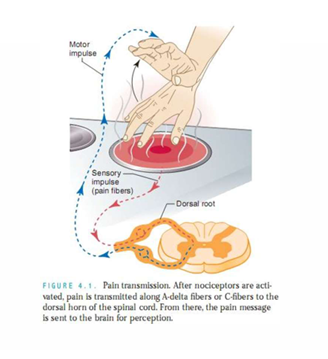
What is the function of transmission?
Moves the pain impulse from the site of origin to the CNS
Where do A‑delta fibres transmit pain?
Through fast, myelinated pathways
What is their significance?
Carry sharp, well‑localised pain
Where do C‑fibres transmit pain?
Through slow, unmyelinated pathways
What is their significance?
Carry dull, aching, poorly localised pain
Where does the pain impulse travel after reaching the spinal cord?
Up ascending pathways to the brain
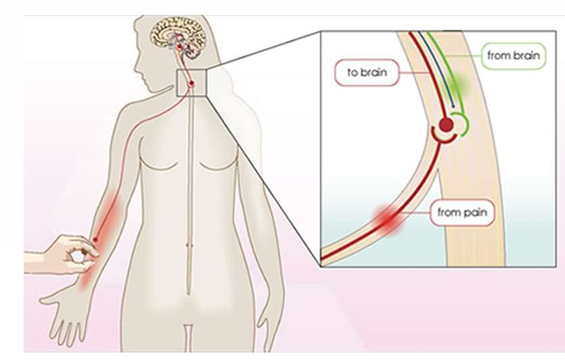
What is the significance?
Allows conscious awareness of pain
Where does perception of pain occur?
In the cerebral cortex
What is the function of perception?
Interprets pain based on sensory input and past experiences
Where is the affective component of pain generated?
In cortical and limbic structures
What is its significance?
Shapes emotional and behavioural responses to pain
Where does modulation occur?
In descending neural pathways from the brain to the spinal cord
What is the function of modulation?
Inhibits or dampens pain transmission
Where are endogenous opioids released?
From descending inhibitory pathways
What is their significance?
Block transmission of noxious stimuli and produce analgesia
Where does pain serve a protective purpose?
Throughout the body
What is the function of pain?
Prevents injury, promotes withdrawal from harmful stimuli, and signals tissue damage
Where does modulation of pain occur?
In descending neural pathways from the brain to the spinal cord
What is the function of modulation?
Inhibits pain transmission after the message has been interpreted
Where are endogenous opioids released?
From descending inhibitory fibres
What is the function of endogenous opioids?
Block transmission of noxious stimuli and produce analgesia
Where are enkephalins and endorphins released?
In the CNS during modulation
What is their function?
Reduce pain perception by inhibiting neurotransmission
Where does pain serve a protective purpose?
Throughout the body
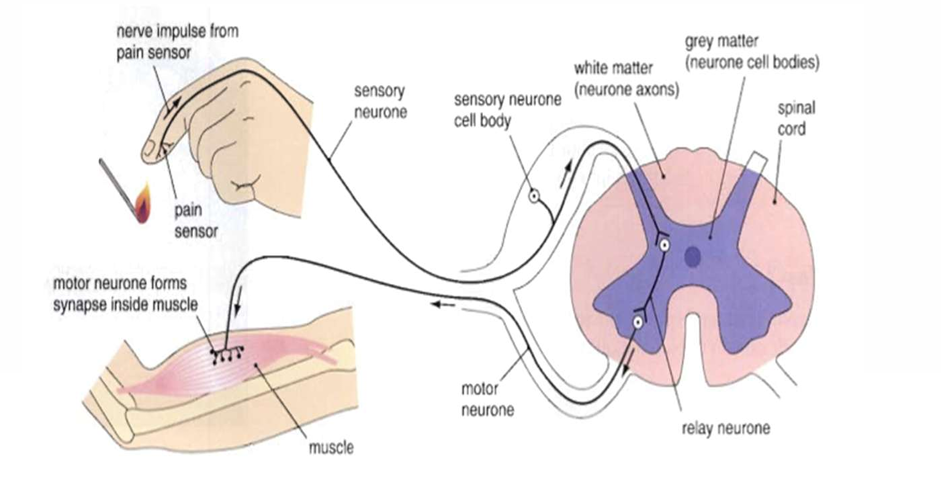
What is the function of pain?
Prevents or reduces tissue injury and signals potential harm
Where does pain encourage withdrawal?
At the site of noxious stimuli
What is the significance?
Helps protect the body from further damage
Where is pain useful diagnostically?
In identifying location of potential tissue injury
What is the significance?
Helps guide clinical assessment and intervention
Where does nociceptive pain originate?
From normal processing of noxious stimuli
What is the significance of nociceptive pain?
Usually acute and protective
Where does cutaneous pain originate?
In skin and subcutaneous tissue
What is the significance of cutaneous pain?
Sharp, well‑localised pain
Where does somatic pain originate?
In tendons, ligaments, nerves, bones, and blood vessels
What is the significance of somatic pain?
Deep, aching, or throbbing pain
Where does visceral pain originate?
In thoracic, cranial, or abdominal organs
What is the significance of visceral pain?
Poorly localised and often referred
Where does acute pain occur?
Following sudden injury or noxious stimuli
What is the function of acute pain?
Signals immediate harm and resolves with healing
Where is acute pain duration defined?
As days to weeks
What is its significance?
Short‑term and linked to tissue injury
Where does chronic pain occur?
When pain persists beyond normal healing time
What is the significance of chronic pain?
Lasts 3–6 months or longer, often without ongoing stimuli
Where does chronic pain impact psychological health?
In emotional and cognitive domains
What is the significance?
Leads to depression, anxiety, irritability, and reduced quality of life
Where does phantom limb pain originate?
From neural pathways after amputation
What is its significance?
Example of chronic neuropathic pain
Where does rheumatoid arthritis pain originate?
From chronic inflammatory joint disease
What is its significance?
Example of chronic nociceptive pain
Where does stroke‑related pain originate?
From central nervous system injury
What is its significance?
Example of chronic central pain syndrome