Religion Unit 5
 Call Kai
 Learn
Learn Practice Test
 Spaced Repetition
 Match
Match Flashcards
 Knowt Play
1/46

There's no tags or description
Looks like no tags are added yet.
Name | Mastery | Learn | Test | Matching | Spaced | Call with Kai |
|---|
No analytics yet
Send a link to your students to track their progress
47 Terms
Scholasticism
Having to do with knowledge of God -
using reason as the primary argument.
Belief is not only based on faith in God...
Reason
Logic
Inquiry
Thomas Aquinas
One of the greatest names in
scholasticism
Italian Dominican
theologian.
He was the
foremost medieval
Scholastic.
The father of the
Thomastic school of
theology.
Summa Theologiae
the greatest work of Thomas Aquinas, the high point of Christian
Scholasticism.
Summas three parts
A- God as God
B-God as God relates to humans
C-Christ as mediator between God and
Humans
The Babylonian Captivity
1309-1377)
After the death of Pope Innocent -
This period in the life of
the Church began when
Clement V moved the
papacy to Avignon, France,
citing that because of
frequent wars in Italy, it
was unsafe for the popes.
how many popes lived in avignon
7
Pope Clement V: 1305-1314 (curia moved to
Avignon March 9, 1309)
Pope John XXII: 1316-1334
Pope Benedict XII: 1334-1342
Pope Clement VI: 1342-1352
Pope Innocent VI: 1352-1362
Pope Urban V: 1362-1370 (in Rome
1367-1370; returned to Avignon 1370)
Pope Gregory XI: 1370-1378 (left Avignon to
return to Rome on September 13, 1376)
Catherine of Siena
wrote letter to Pope Gregory XI in france to return to the papacy in italy
The Great Western Schism
Also known as the Papal Schism:
a split within the Roman Catholic Church
from 1378 to 1417 - 40 years
Several men simultaneously claimed to be
the true pope.
Renaissance literally means
rebirth
what does the renaissance put emphasis on?
rediscovery of Ancient Greece, Rome, and
even Egypt Stresses Nature and Humanity
Puts education first
Causes of the Renaissance
*Fall of Constantinople by Muslims
(1453)
*Greek scholars fled to Italy - They
brought ideas, innovation, blue prints.
*The Eastern Empire (Byzantium)
flourished while the rest of the Roman
empire was in the Dark Ages
(Major city centers) Venice:
Republic ruled by oligarchy: a social structure
in which power effectively rests with powerful families and nobles.
(Major city centers) Milan:
Visconti and Sforza families.
(Major city centers) Florence (Tuscany):
Republic ruled by the Medici
family
(Major city centers) Papal States:
Ruled by the Pope - thanks to pepin the short
(Major city centers) Kingdom of Naples:
Ruled by a feudal Spanish monarch King of Aragon.
Humanism
Part of the Renaissance Movement
An intellectual and artistic movement
that called for cultural and religious
reform
Critical of Ecclesiastical abuses
Emphasis was on Sacred Scripture and
the Patristic Period
Erasmus
The leading humanist of the age
Devoted his life to laying the groundwork
for a new biblical, critical, and historical
theology.
Studied ancient languages
Translated New Testament from Latin to
Greek
Encourage the Church to return to
ancient roots
Wrote editions on the Early Church
Fathers
Erasmus best known work
In Praise of Folly (1509)
Discoursed on the foolishness and misguided
pompousness of the world
considered the
greatest literary work composed in the
Italian language and a masterpiece of
world literature.
Dantes Divine comedy
Hell
Inferno
Purgatory
Purgatorio
Heaven
Paridiso
First Circle of Hell
Limbo
Second Circle of Hell
lust
Third Circle of Hell
gluttony
Fourth Circle of Hell
greed
Fifth Circle of Hell
anger
Sixth Circle of Hell
heresy
Seventh Circle of Hell
violence
Eighth Circle of Hell
fraud
Ninth Circle of Hell
treachery
Dante's nine spheres of Heaven
the Moon, Mercury, Venus,
the Sun, Mars, Jupiter, Saturn, the Fixed Stars,
and the Primum Mobile
EMPYREAN,
Above the Primum Mobile and is the abode of God
14 Renaissance Popes:
Martin V
Eugene IV
Nicholas V
Calixtus III
Pius II
Paul II
Sixtus IV
Innocent VIII
Alexander VI
Pius III
Julius II
Leo X
Adrian VI
Clement VII
What was different about these popes?
were more men of culture or
rulers than spiritual or religious leaders.
were more involved in
secular affairs and Renaissance culture;
promoting art and learning; failed to deal
with spiritual matters
Filippo Brunelleschi
was probably the
most influential and famous architect of
the Italian Renaissance. He was best
known for building and designing domes
that usually went atop churches.
The most famous building he is associated
with is the domed cathedral Duomo in
Florence.
Leonardo da Vinci
1452-1519
17 paintings
Notebooks/Designs
Drawings of unfinished works
Diverted rivers to prevent flooding
Principles of turbine
Cartography (map-making)
Submarine
Flying machine
Parachute
Michelangelo
Lived in the
Medici palace
Studied anatomy
Several pieces for
the Medici tombs,
etc.
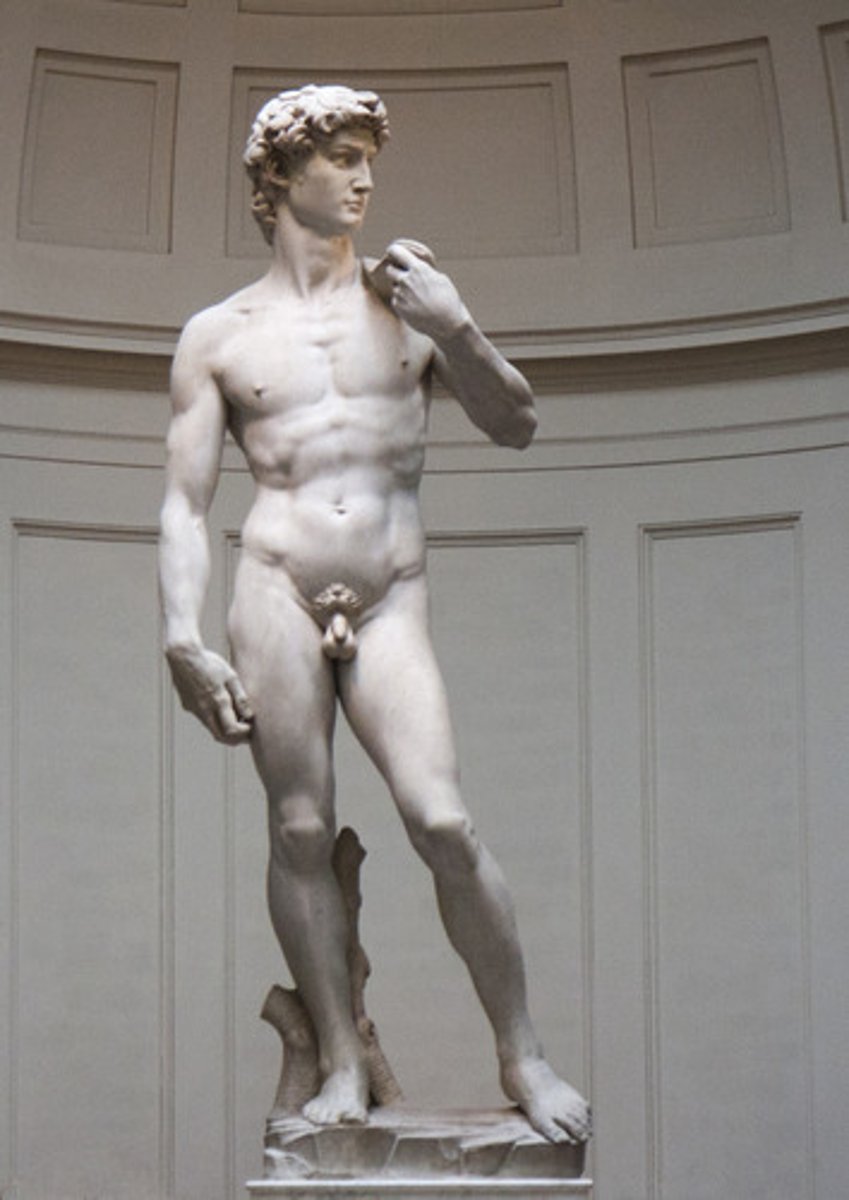
Michelangelos very famous statue
David
Purgatorio
7 levels representing the 7 deadly sins
This is the second section of Divine Comedy
Donatello
Worked on tomb
for Julius II
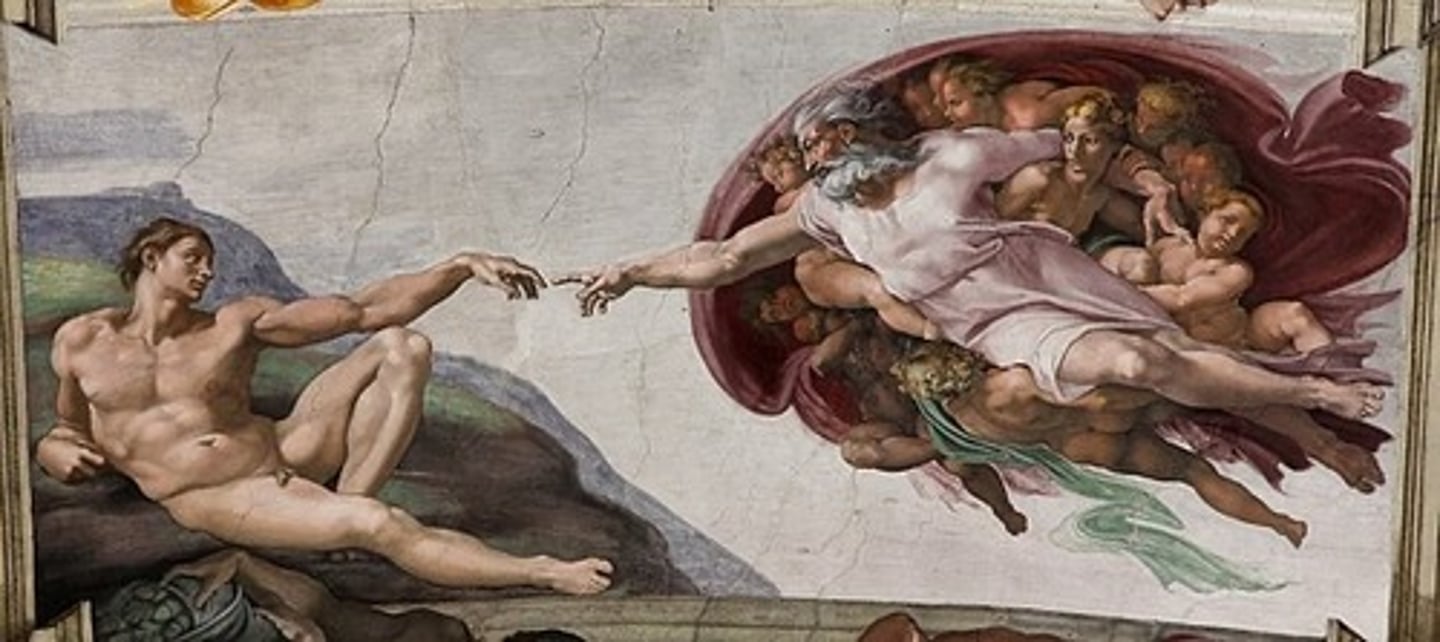
Sistine Chapel
The Creation of Adam
Sistine Chapel
Imparting the knowledge of God to man
The brain of God!
Why does Michelangelos Moses statue have horns
because of the
mistranslation of the Hebrew
Scriptures into Latin by St
Jerome. Moses is actually
described as having "rays of the
skin of his face", which Jerome
in the Vulgate had translated as
"horns".
Raphael
Borrowed techniques from other
great artists
Often sketched women and children
Architect for St. Peter's
Died at 37 and buried in the
Pantheon
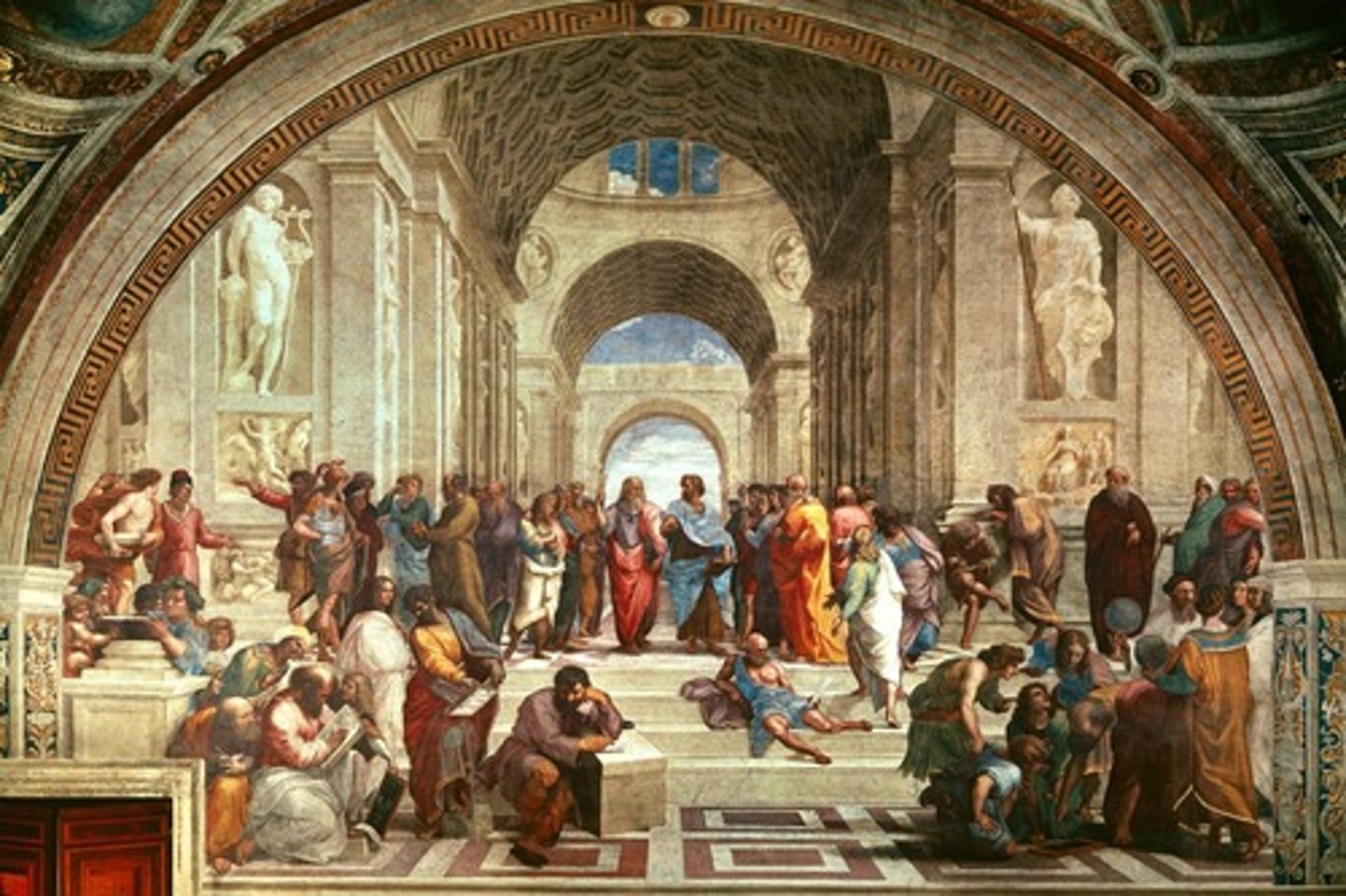
School of Athens
Painted by Raphael
Giovanni Palestrina
Wrote over 100 masses
Gregorian chant
Mass in Honor of Pope Marcellus
Influenced later music
Buried in St. Peter's Basilica
"The Prince of Music"