Hyper-modernism and Neoliberalism 1980s-2000: Architecture in the Modern Age
 Call Kai
 Learn
Learn Practice Test
 Spaced Repetition
 Match
Match Flashcards
 Knowt Play
1/24

There's no tags or description
Looks like no tags are added yet.
Name | Mastery | Learn | Test | Matching | Spaced | Call with Kai |
|---|
No analytics yet
Send a link to your students to track their progress
25 Terms
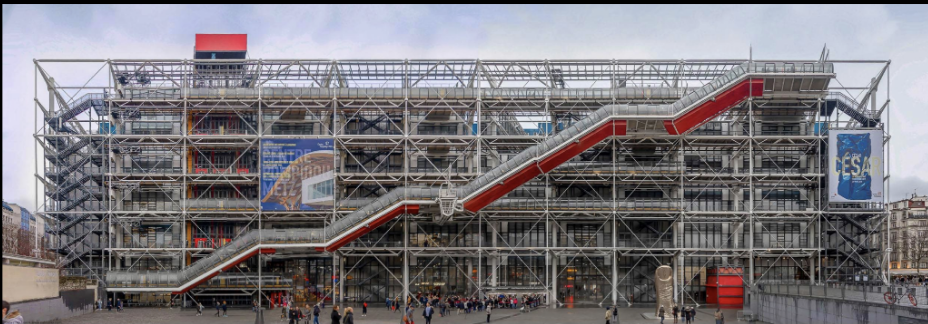
Renzo Piano (born 1937), Richard Rogers (1933-2021), Peter Rice (1935-1992), Su Rogers (born 1939), et. al.
Centre Pompidou, Paris, France, 1977
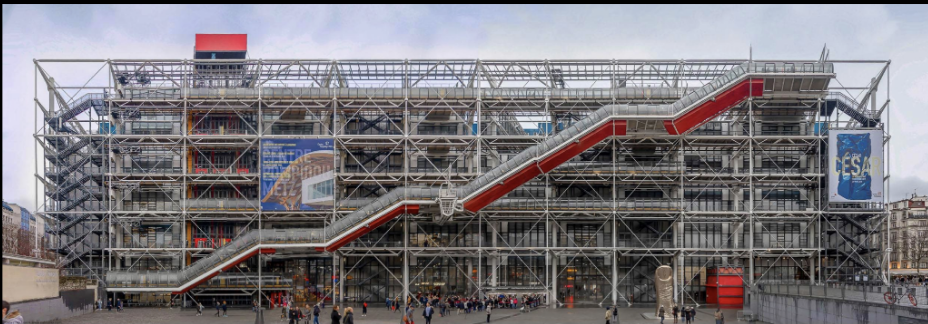
Describe the overall architecture of the Centre Pompidou and its significance
arts center, diffuse rectangular prism, steel frame, innards on the outside, sealed grid, multi chromatic to denote function: blue=air, yellow=electric, red=human, opens up interior=customization, inspiration from sci-fi, consumerist critique: steel space frame, ephemerality= constant construction and dismantling/in progress
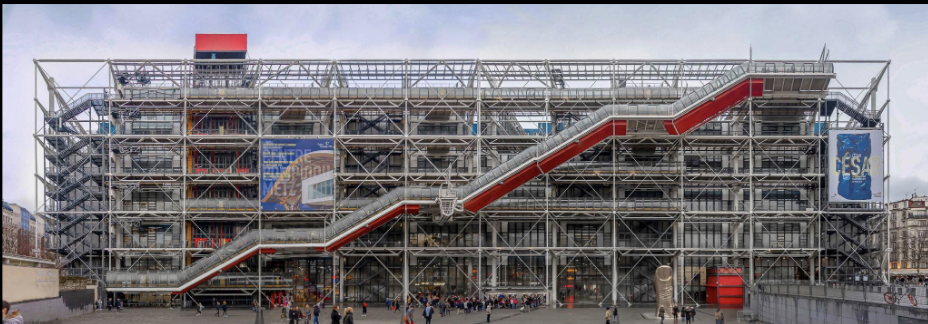
Describe the construction/production of the Centre Pompidou and its significance
rigid compressed members and tension rods, orderly: configuration of labor dictated to laborers: shows status of labor, walls not fixed=adaptable, elevation=complicated parts: skeleton of scant mass, whole not parts: elevator visible, color coding=purification, shapes and interchangeable=efficiency/mass produced, steel members large because not assembled on-site
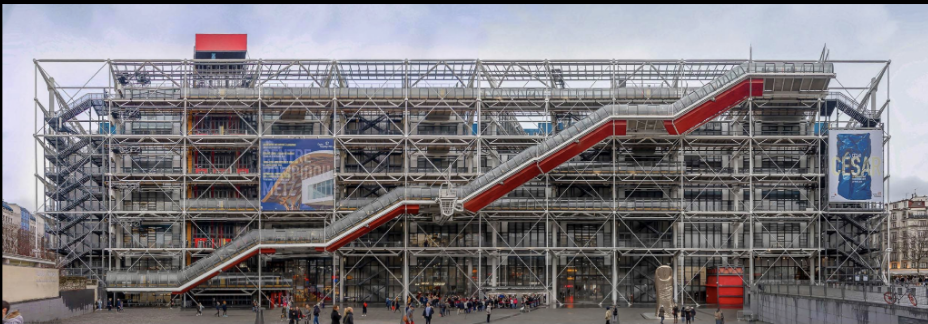
Describe the interior of the Centre Pompidou and its significance
multi-level lobby: wide and broad, exact and playful
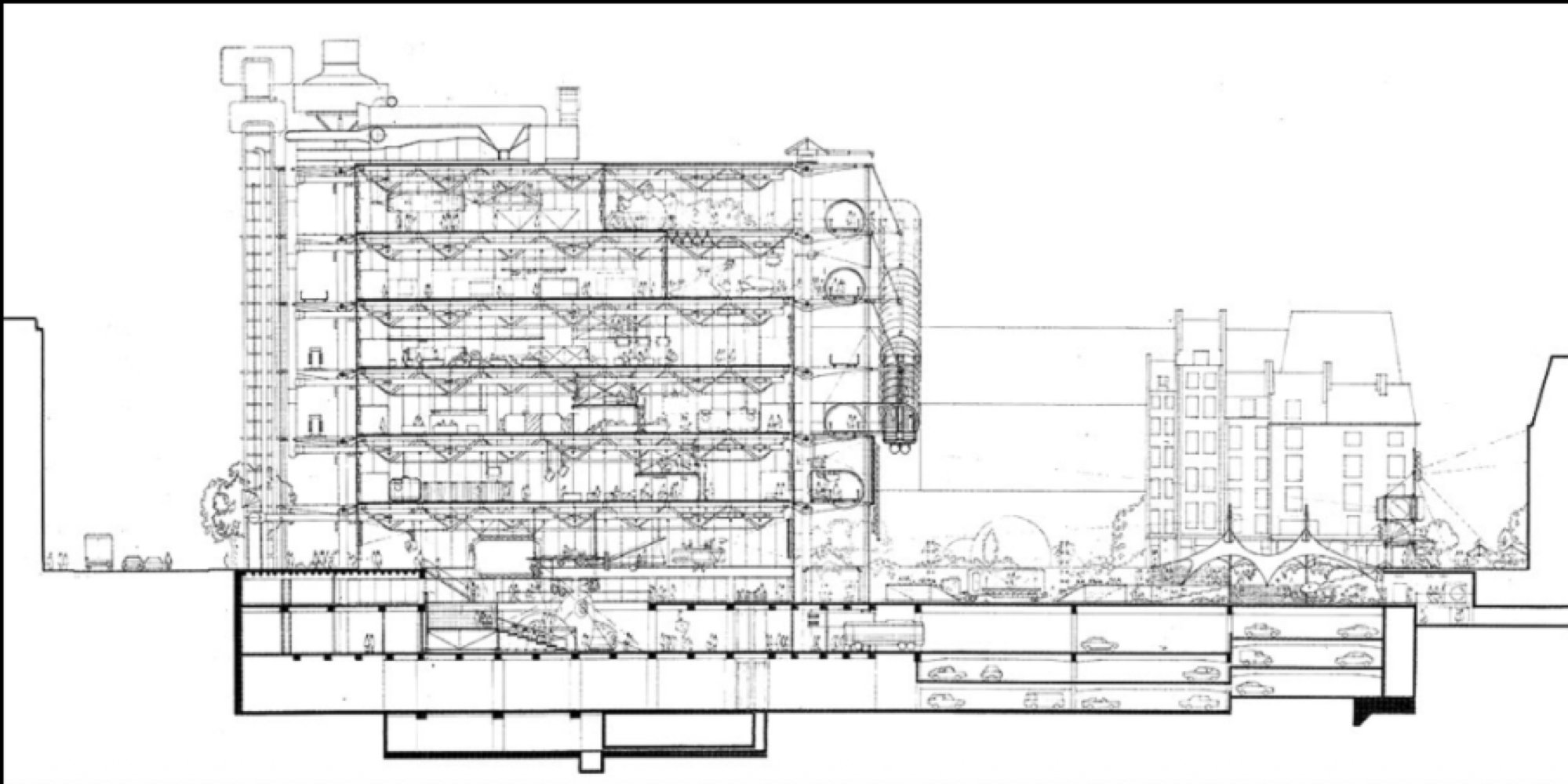
Describe the plan of the Centre Pompidou and its significance
emptiness, record of other factors, cut shows its thinness: includes people=hive of activity
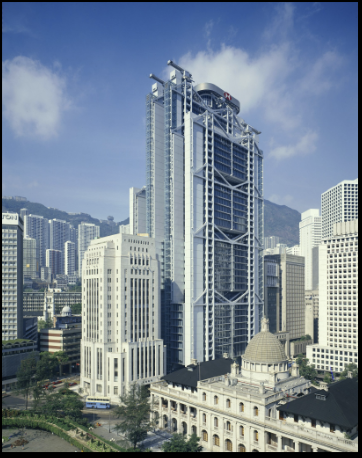
Foster Associates / Norman Foster (born 1935) and Wendy Cheesman (1937-1989)
Hongkong & Shanghai Bank Headquarters, Hong Kong, 1986
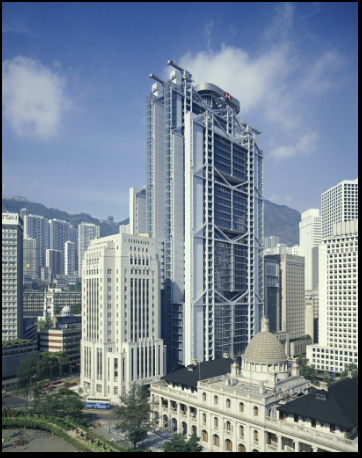
Describe the overall architecture of the Bank HQ and its significance
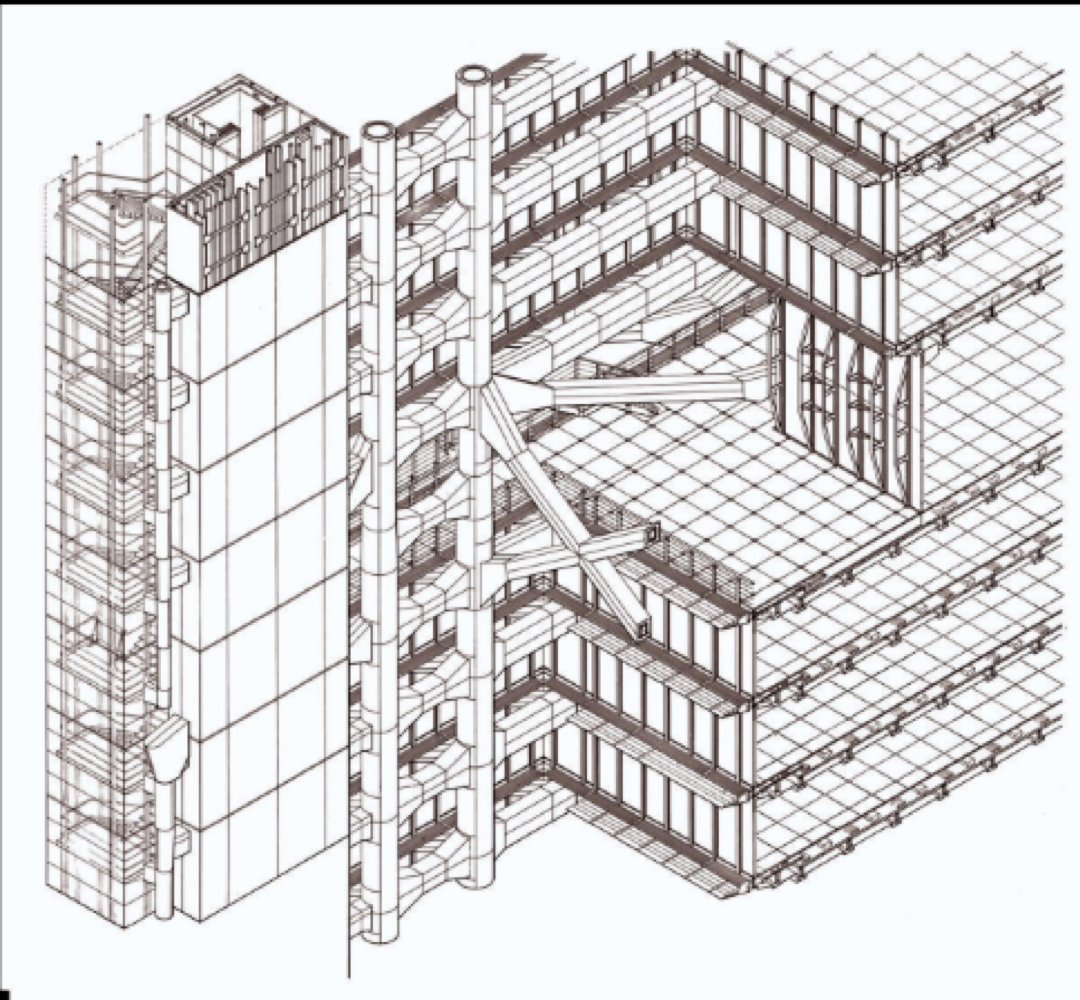
high tech aesthetic=British superiority culmination: cosmopolitan quality, express structure on the interior: masts with columns that hold trusses=hold weights hung exact detailing: blue columns with bow-tie members and bracing, satin finish=crisp definition, specifically for office workers, site in central business district= reminder of British colonial control
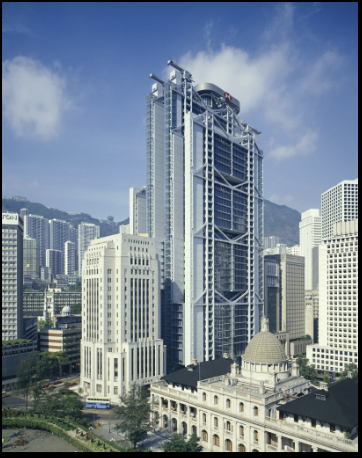
Describe the construction/production of the Bank HQ and its significance
Parts shipped to the sight: showed manufacturing prowess (steel=Scottish and cranes), labor executed by workers, not cranes: ideological myth of machine aesthetic, “sun scoop” held with bamboo during contruction
Describe the plan of the Bank HQ and its significance
confident certainty, pushed to exterior=open and extensive atrium, rotated escalator to 7 story atrium which brings light in and ascends through the glass ceiling that saggs, high tech architecture
Lina Bo Bardi (1914-1992)
SESC Pompéia, São Paulo, Brazil, 1986
Describe the overall architecture of the SESC Pompeia and its significance
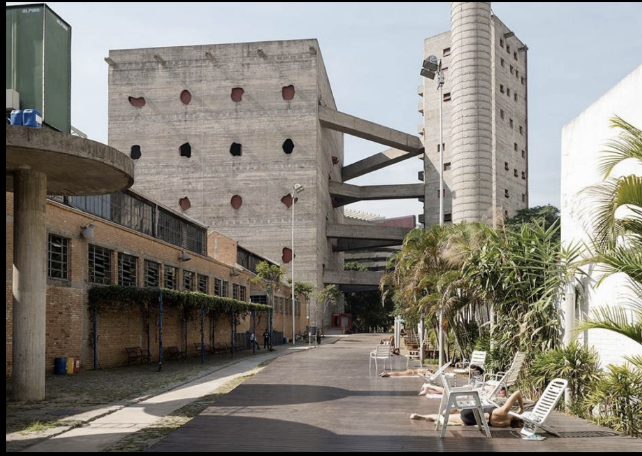
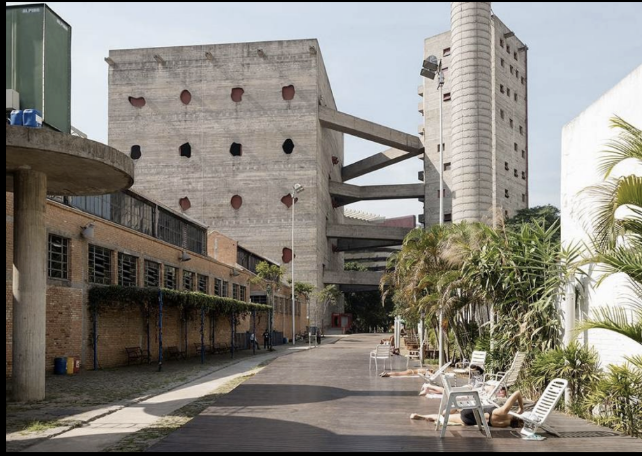
recreation center: repurpose old buildings/factories=de-industrialization and re-animation, concrete blocks and water tower: connected with Y and V shaped bridges, rough, scattered windows confuse, irregular openings": poor architecture in an artisanal sense/humble means of making
Describe the construction and plan of the SESC Pompeia and its significance
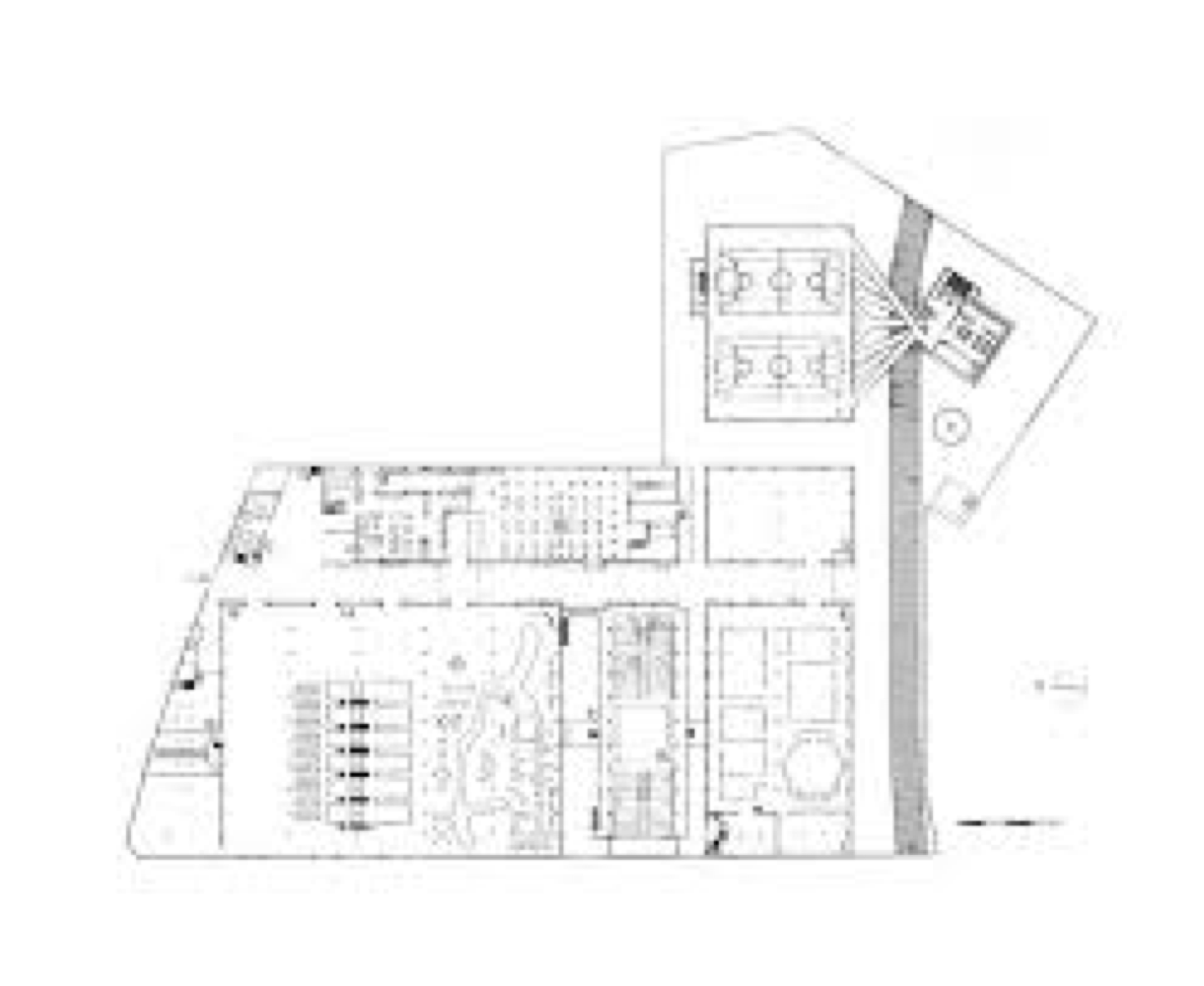
concrete around steel=looks like effortless horizontality, squat block=gym, taller=other facilities, restaurant, library, and theatre, middle=water feature winds through former factories floor, planned while under construction=empowers builders/laborers
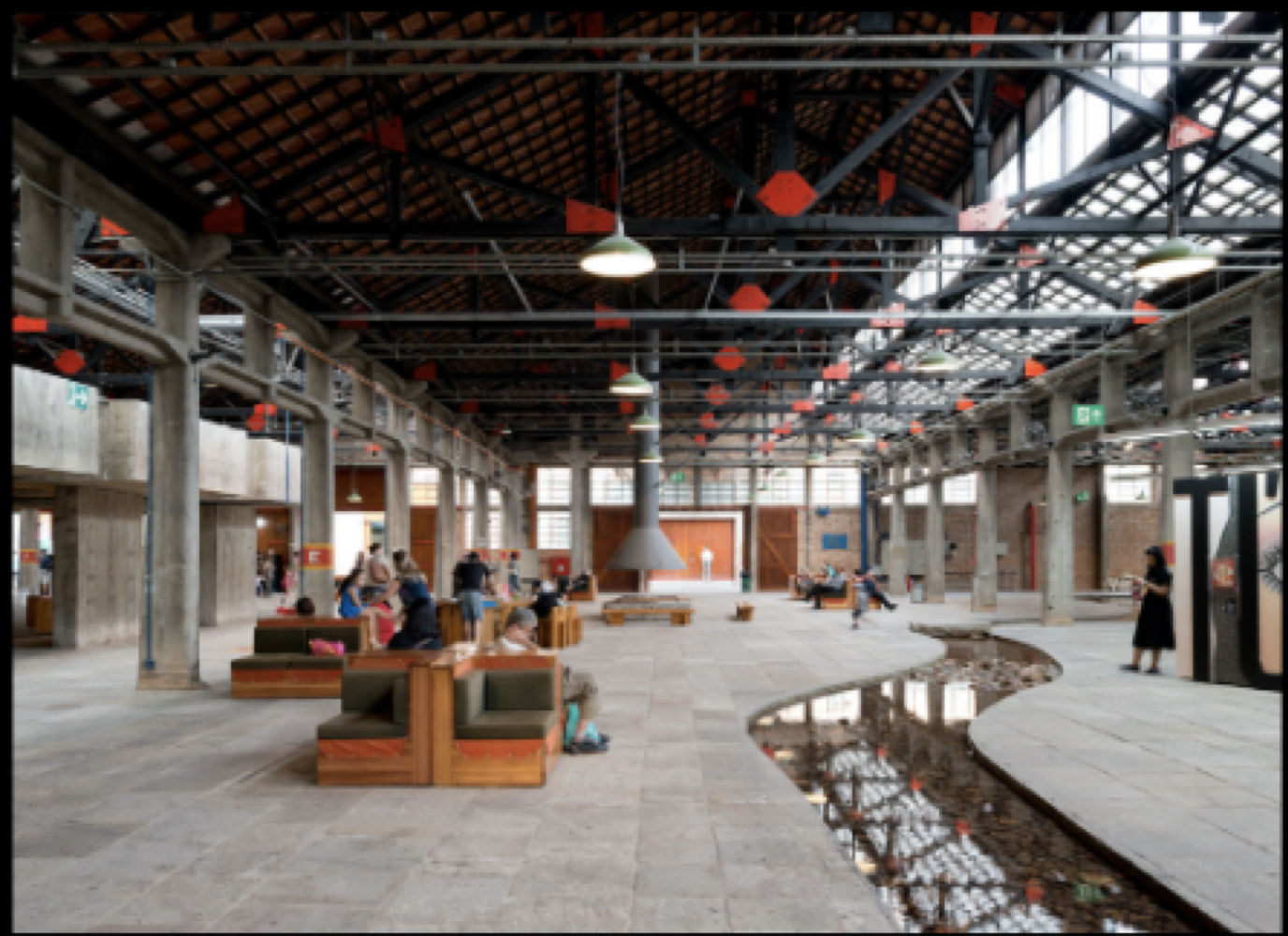
Describe the interior of the SESC Pompeia and its significance
Theatre, restaurant: the hearth=central element, community is familiar through architecture, treat interior as landscape=revitalization, ceiling= waffle slab of concrete: wiring, filter light and water, wooden window screens, facilitate freedom of will
Office for Metropolitan Architecture / Rem Koolhaas (born 1944)
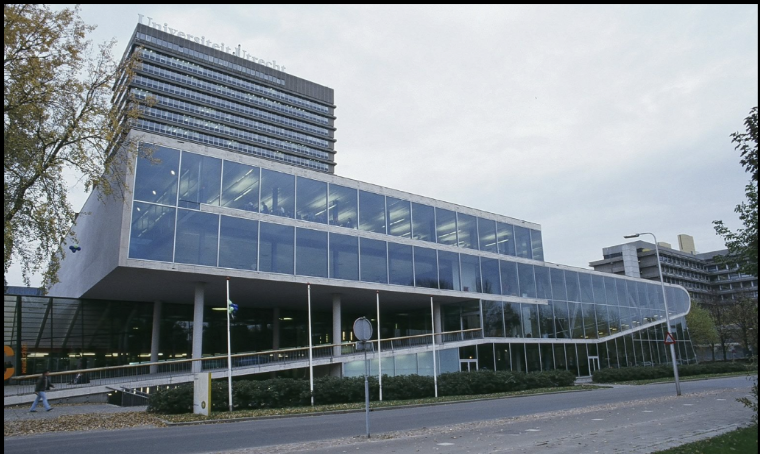
Educatorium, Utrecht, The Netherlands, 1992-1997
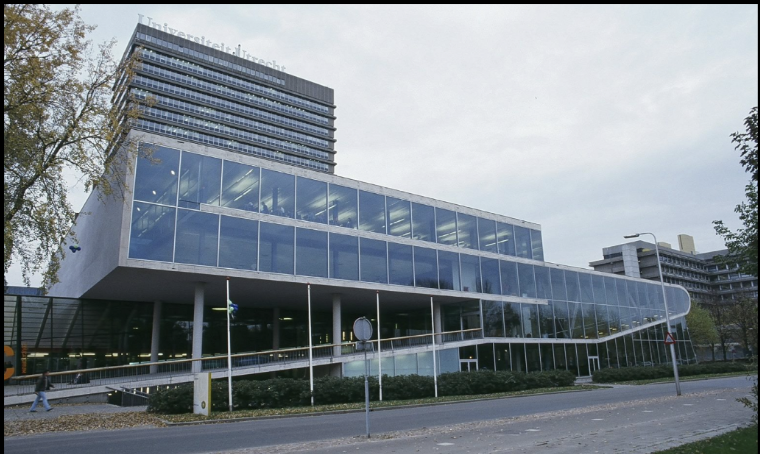
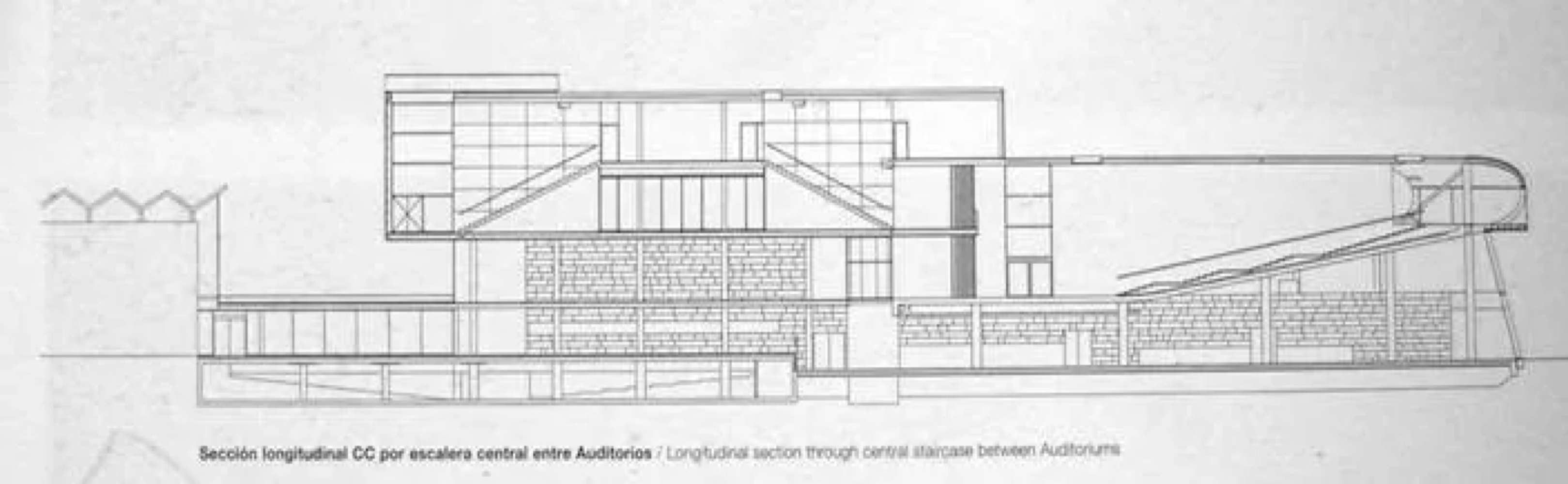
Describe the overall architecture of the Educatorium and its significance
university building= “factory for learning” and “field of play”, 2 folding planes wrap and bend around each other with ramps, dynamics of capital: scale extends beyond, folding planes=domains are fluid and unbound, geometric extrusion, intentionally embedded in city: sidewalk pulled up and integrated
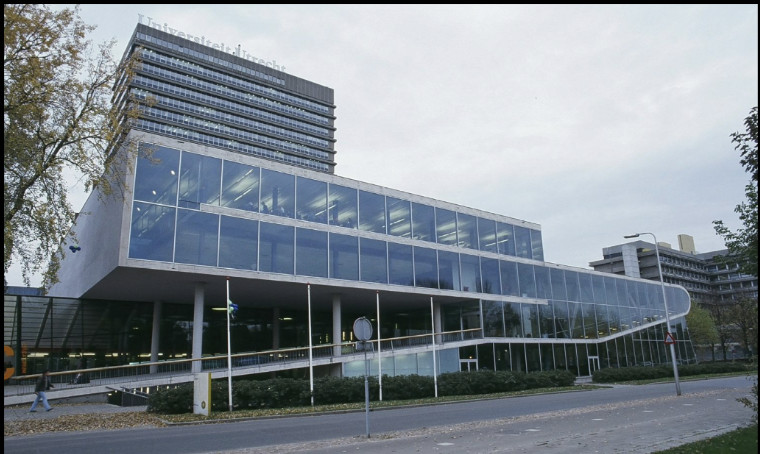
Describe the interior of the Educatorium and its significance
planes slope=lecture hall, under=cafeteria, stairs are awkward alignments that meet in cylindrical column: push against aesthetic assumptions
Describe the plan of the Educatorium and its significance
bent planes: ground dips down under building, sculpt ground plane and pulls it up=connection to urban, quadrants, multi-level spaces with folding planes and elevator building=directionality, curved wall: math controlled=adopt new tools, section takes priority, levels never detached from each other=view and connection between floors: draws them together, branching paths= serendipitous meetings to coax people put into communal architecture
Balkrishna Doshi (1927-2023)
Amdavad ni Gufa, Ahmedabad, India, 1995
Describe the overall architecture of the Amdavad ni Gufa and its significance
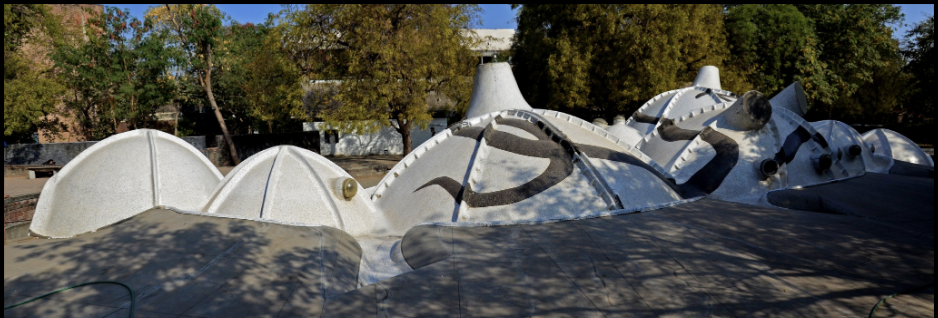
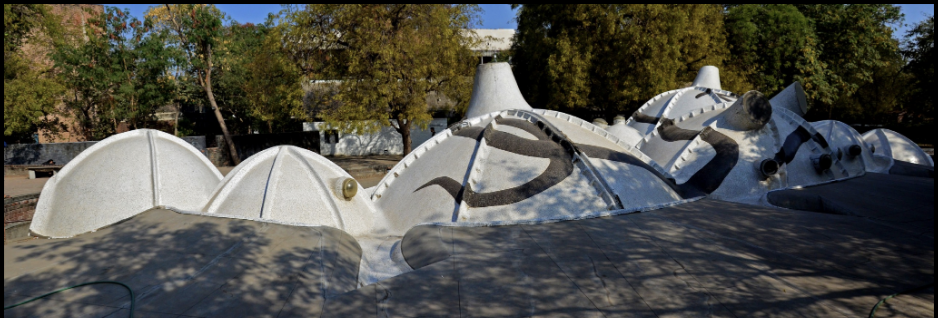
local approaches fuses with modern architecture, embedded in ground and place, a cave for Amdavad, invoke tortoise shells, refers to Borominis domes, white tile coated=inside cool and shield sun, light canon shoots: smooth warps=draw in sun, steel bars in plaster with bamboo netting then tiles- articulate to builders, contrast between shimmering tiles and concrete with snake, circles connect like soap bubbles
Describe the inside of the Amdavad ni Gufa and its significance
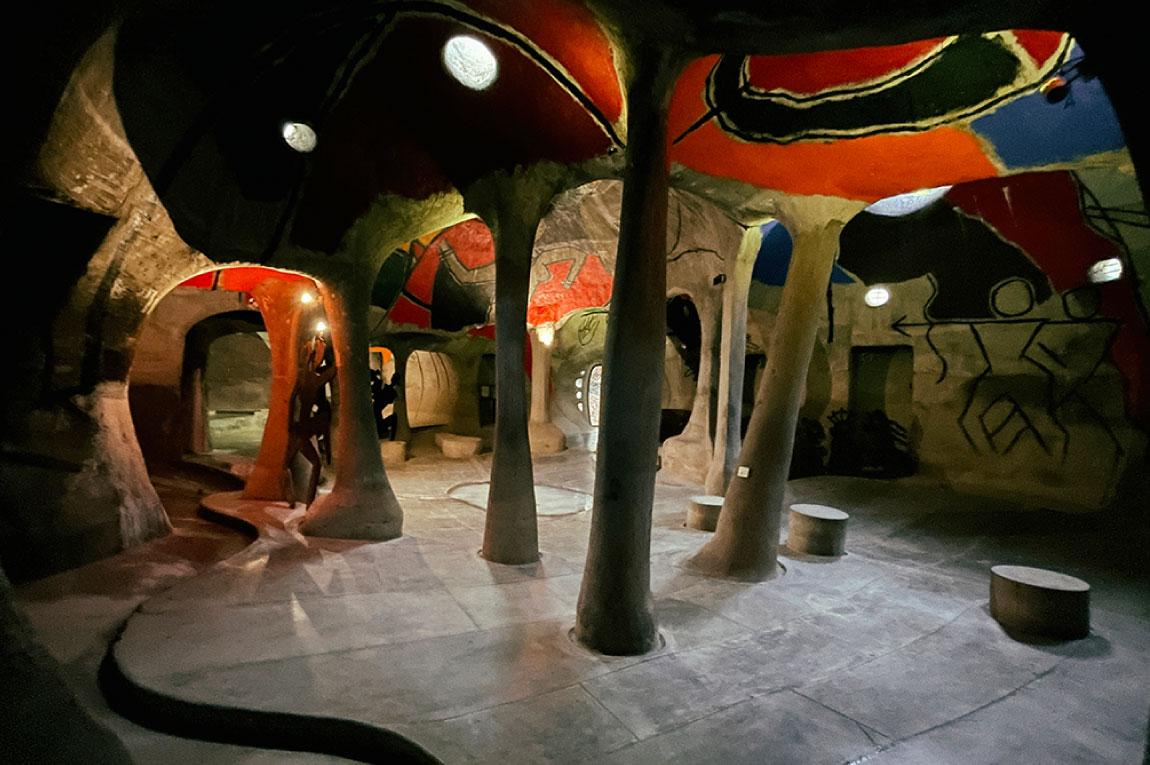
columns merge into vaulting=monolithic feel, swell and sag, from projections with math and digital modeling=thin surfaces vs. thick assemblies, sculptural painted interior with zoomorphic figures, entry into ground=immersion into matter, Paleolithic cave paintings with curving columns
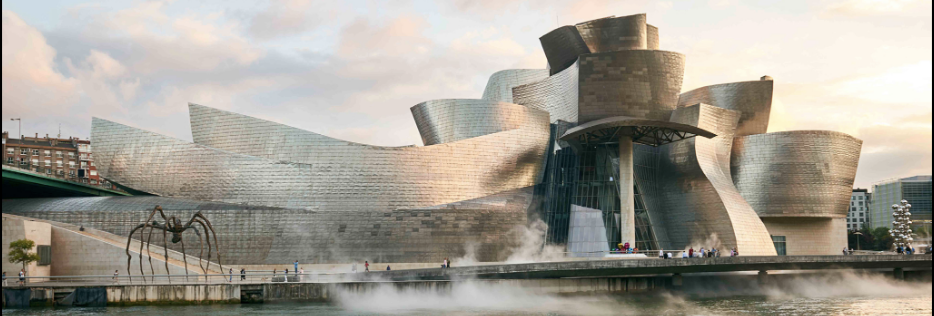
Frank Gehry (1929-2025)
Guggenheim Museum Bilbao, Bilbao, Spain, 1996
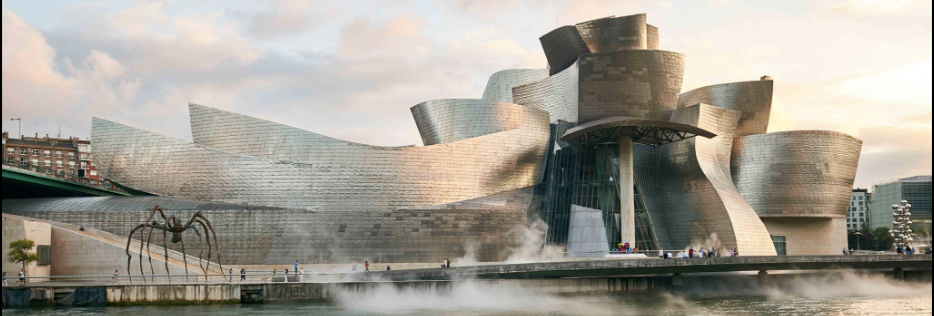
Describe the overall architecture of the Guggenheim and its significance
shapes flare out, stacked volumes, audacity is captivating, 3 or 4 arms radiate out
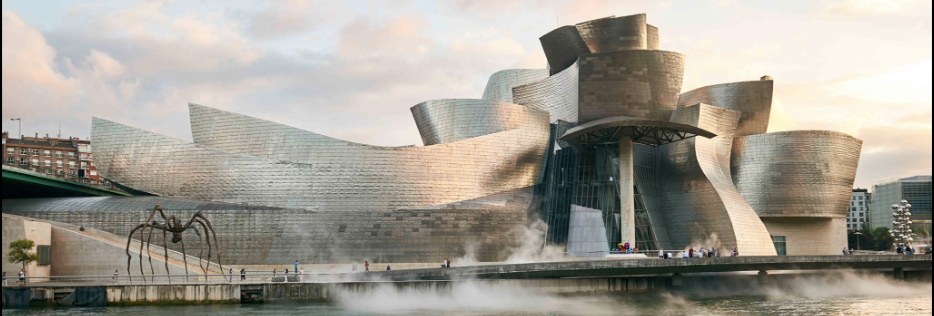
Describe the production of the Guggenheim and its significance
context of steel manufacture and ship building in Spain, replaced with cultural industry, planning included security, titanium not common: extraction was expensive and multicultural production, but Soviet union collapsed so it was more affordable, used digital modeling software: possible for trades to coordinate trans-continental, precision of tolerance and computational technology
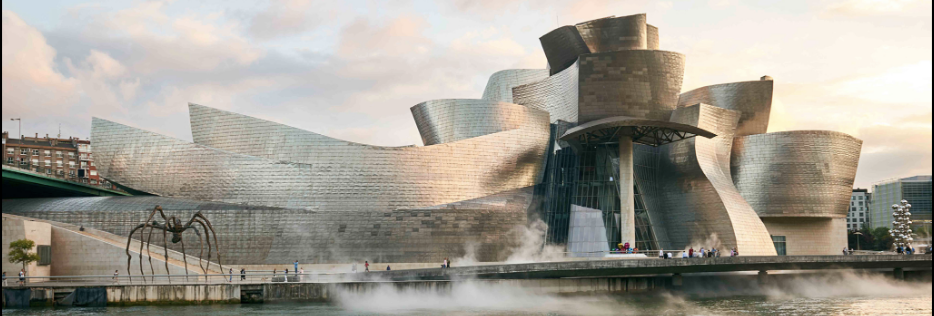
Describe the interior of the Guggenheim and its significance
dedicated to exhibition space: fish-like space, white cube galleries, tall entry hall/lobby: limestone, drywall, and glass, penetrate, curved, rough and refined textures, raw practicality to induce tourism and draw people during low economy, gallery interior with original steel beams and cords, tense relationship between art and architecture= rectangular galleries,
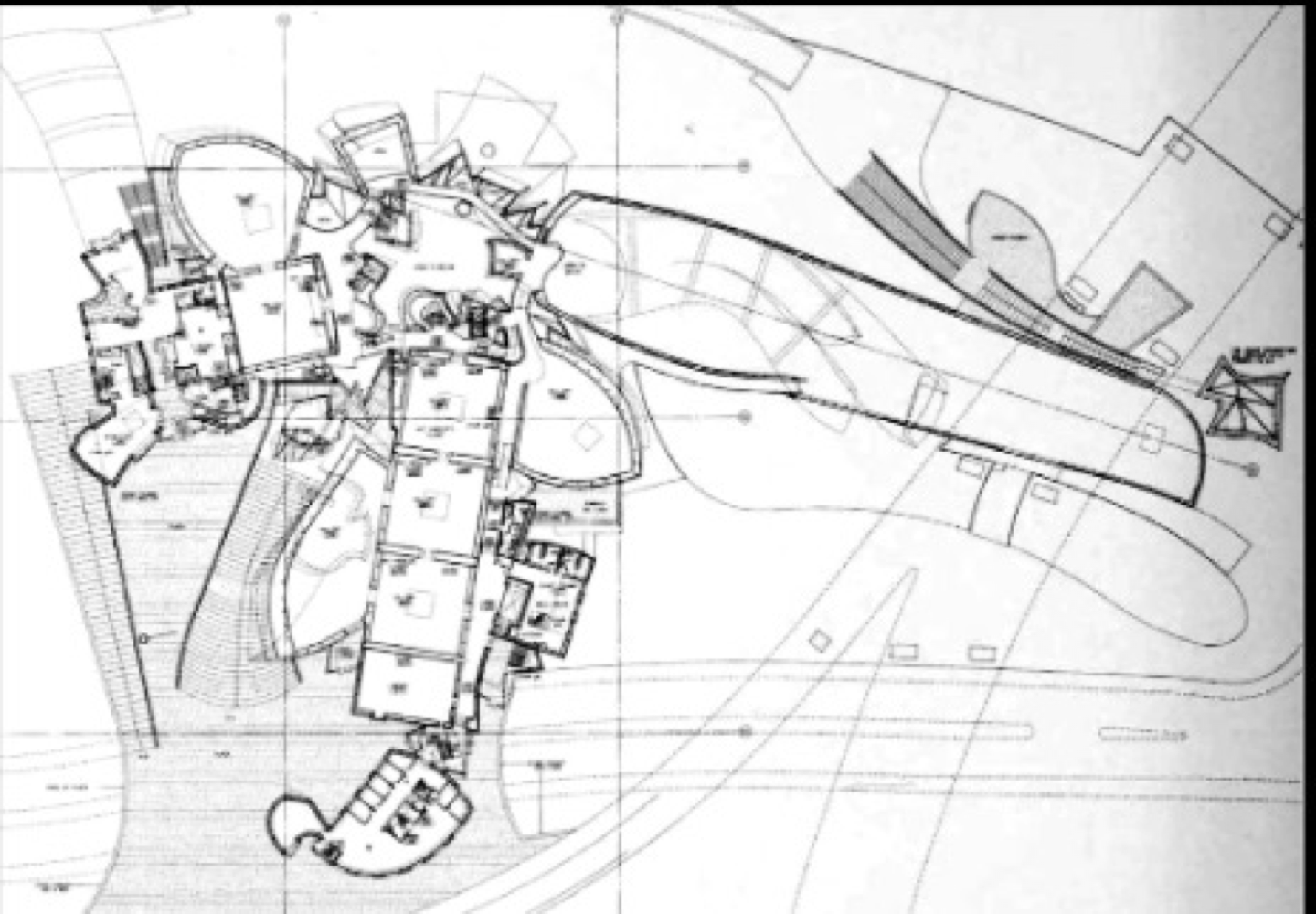
Describe the plan of the Guggenheim and its significance
not perspectival/flattened, hatching represents limestone, shows reflections, dynamism visible in sections, slumping parallel pipes, railroad and pathways: manipulate ground-plane and lift up urban terraces, surfaced converge and diverge