GB Unit 4
 Call Kai
 Learn
Learn Practice Test
 Spaced Repetition
 Match
Match Flashcards
 Knowt Play
1/53

There's no tags or description
Looks like no tags are added yet.
Name | Mastery | Learn | Test | Matching | Spaced | Call with Kai |
|---|
No analytics yet
Send a link to your students to track their progress
54 Terms
chromosomes
large piece of DNA w/ genes on it
genes
piece of info. that encodes for a trait
more than one chromosome in them
chromatin
all chromosomes congregated in the nucleus, consisting of DNA and proteins
protein embedded on DNA —> can coil DNA into thicker bundle that’s shorter in length
mitosis
Asexual
division of material in nucleus
M phase
one 2n cell divides into 2 2n cells
form of cellular reproduction for growth and repair
Cytokinesis
cell physically divides into 2
Meiosis
sexual
2n cells produce 1n cells
used to reduce the chromosome number during the development of sperm and egg
must keep 46 chromosomes
Zygote
fertilized egg
has copies of mom (1 copy/ 1n) + dad (1 copy/ 1n) chromosomes —> 2n
23 chromosomes + 23 chromosomes
- ½ genetic info…keep gen to gen consistent + mix up gene pool
sister chromatids
direct, identical copies of a particular chromosome
start with 1 chromatid
DNA replication happens
now we have 2 chromatids/ singular duplicated chromosome/ sister chromatids
mitosis happens and the sister chromatids are pulled apart at the centromere
now we have daughter chromosomes that are genetically identical
centromere
chromosomal region where chromosomes of a particular type join for cell division
homologous chromosomes
chromosomes of the same type of chromosome, but from a different parent
NOT IDENTICAL
ex: eye color chromosome are slightly different between mom and dad
steps of mitosis
premitotic
prophase
metaphase
anaphase
telophase/cytokinesis
Interphase
G1, S, G2
eukaryotic cell duplicates the contents of the cytoplasm
DNA replicates in the nucleus
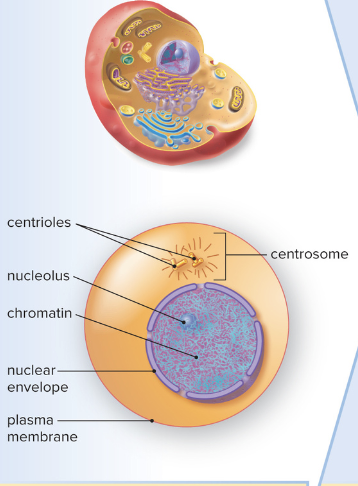
Prophase
chromosomes condensing (winding up → fatter, coiled)
2 sister chromatids held together at centromere
outside the nucleus, the spindle starts to assemble between centrosomes
spindle fibers from each pole attach to the chromosome at protein complexes on each side of the chromosome chromosome moves toward one pole, then toward the other
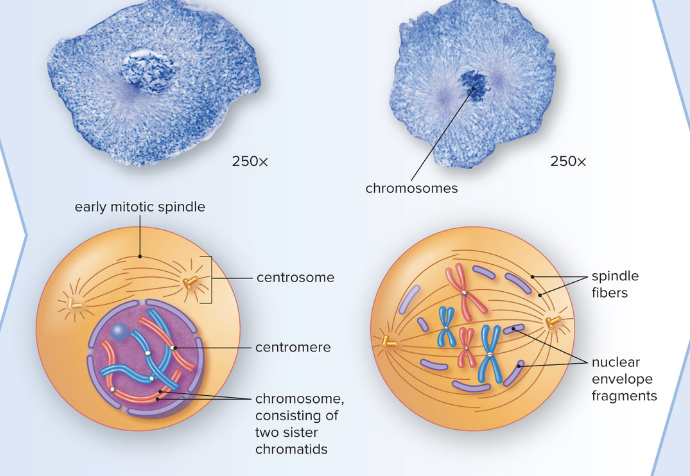
metaphase
spindle fibers connect to centromeres
all 46 sister chromatids line up in middle of cell
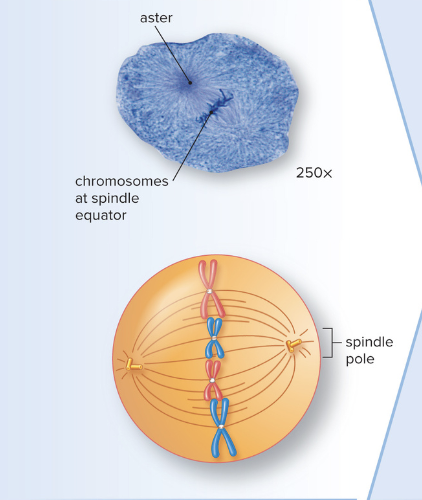
anaphase
sister chromatids separate and become daughter chromosomes
the spindle fibers disassemble and each pole gets a set of daughter chromosomes
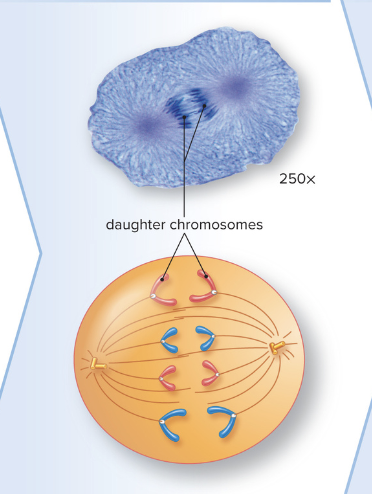
telophase
spindles disappear and new nuclear envelopes form around daughter chromosomes
division of cytoplasm begins
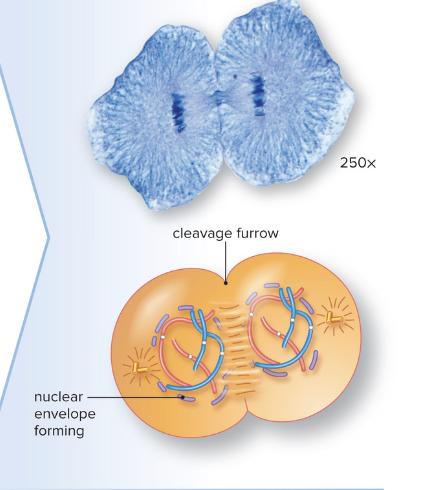
what is the main difference between meiosis I and meiosis II
I: separating homologous chromosomes
II: separating sister chromatids
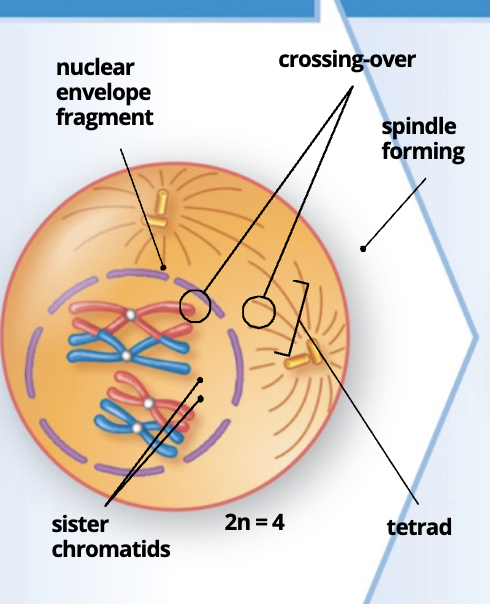
Meiosis I: Prophase I
Tetrads form, and crossing-over occurs as chromosomes condense; the nuclear envelope fragments
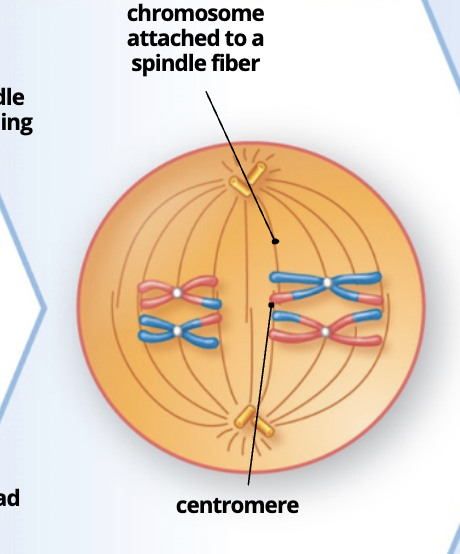
Meiosis I: Metaphase I
Tetrads align at the spindle equator. Either homologue can face either pole
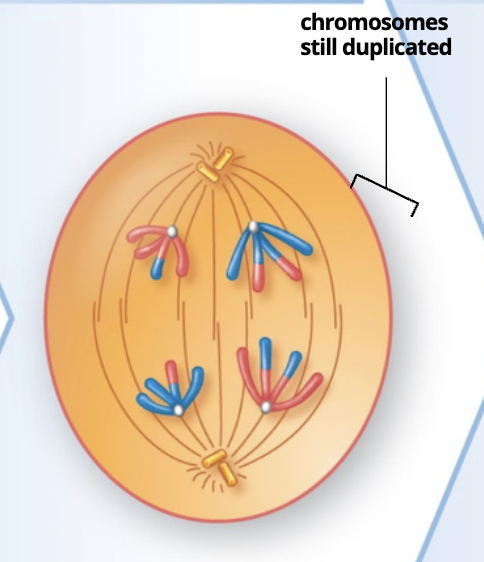
Meiosis I: Anaphase I
Homologues separate, and dyads move to poles
Meiosis I: Telophase I
Daughter nuclei are haploid, having received one duplicated chromosome from each homologous pair
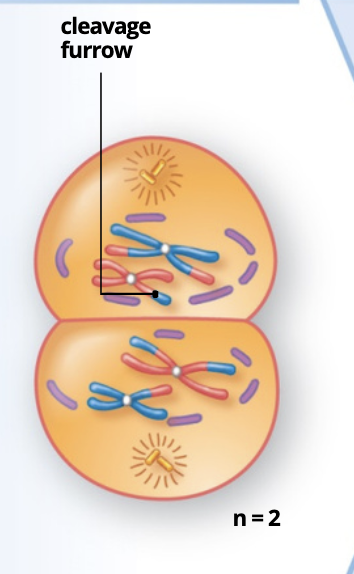
Meiosis II: Prophase II
Chromosomes condense, and the nuclear envelope fragments.
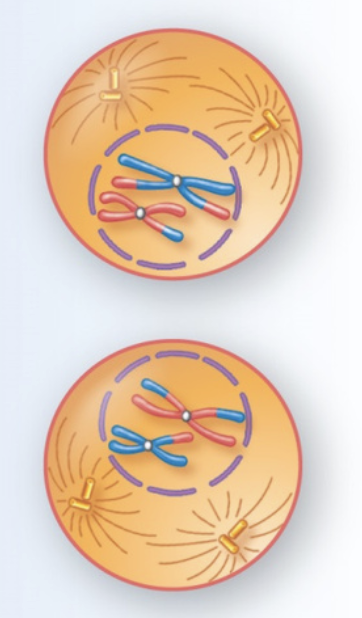
Meiosis II: Metaphase II
The dyads align at the spindle equator.
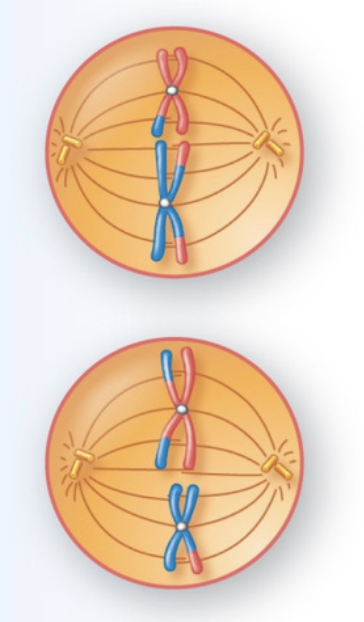
Meiosis II: Anaphase II
Sister chromatids separate, becoming daughter chromosomes that move to the poles.
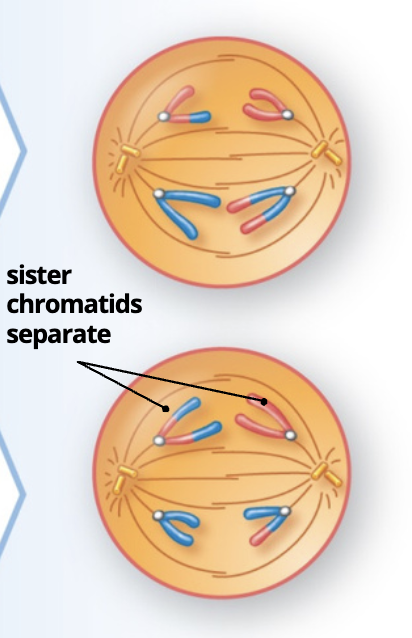
Meiosis II: Telophase II
Four haploid daughter cells are genetically different from each other and from the parent cell
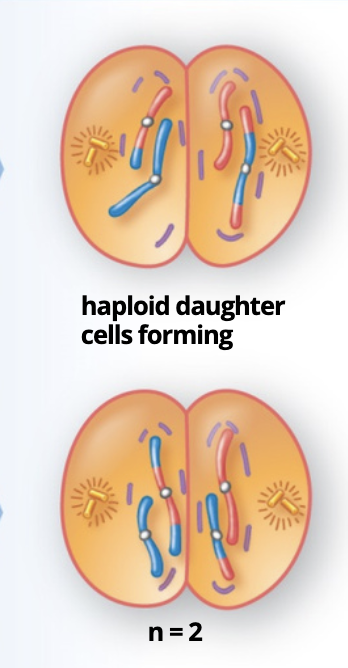
How many divisions in mitosis v. meiosis
1 v 2
How many daughters per cells cycle in mitosis v. meiosis
2 v 4
where does mitosis and meiosis occur in?
somatic
germline
Nondisjunction
(Chromatids/Chromosomes fail to separate) - generally lethal
Trisomy
three copies of a chromosome
Monosomy
single copy of a chromosome
how can there be changes in chromosome number in Meiosis I and II
both members of a pair go into the same daughter cell
sister chromatids fail to separate
Modes of inheritance
patterns in which single-gene traits and disorders occur in families
Cystic fibrosis
autosomal recessive (need cc to have)
Affects both sexes and can skip generations through carriers
Respiratory tract wants to stay liquid…lungs pump salt into mucus → osmosis —> water goes into mucus
CF —> missing gene for protein from both parents —> can’t make protein…mucus dries out easily
what do genes encode for?
proteins
Independent assortment
Ex: what purple and white do independent of short and tall
Ex: having a boy as a first child doesn’t impact the chances of the next child being a boy
Mendel’s First “Law”
Segregation
hybrids hide one expression of a trait
reappears when hybrids are self-crossed
each element was packaged in a separate gamete
Principle of segregation
Mendel’s idea that each element (gene) separates in the gametes. This reflects the actions of chromosomes and the genes they carry during meiosis
Product Rule
Ex:
probability of having a girl = ½
probability of having another girl = ½
probabilty of having 2 girls = ½ x ½ = ¼
Homozygous
carry same alleles TT or tt
Heterozygous
carry different alleles Tt
Genotype
Organism’s alleles
Phenotype
Outward expression of an allele combination
Wild Type
Most common phenotype (Recessive or dominant)
Mutant phenotype
Variant of a gene’s expression that arises when the gene
undergoes mutation
Autosome
genes are here
non sex chromosome
chromosomes 1-22
sex chromosome
gene here
X and Y
For Autosomal Dominant and Recessive inheritance what is the difference between the frequency that males and females are affected?
they’re both affected with equal frequency
How does Autosomal Dominant inheritance move through generations?
successive generations until no one inherits the mutation
Does someone with Autosomal dominant inheritance have an affected parent?
YES unless they have a new mutation
How does Autosomal recessive inheritance move through generations?
can skip generations
Does someone with Autosomal recessive inheritance have an affected parent?
they have parents who are affected or who are carriers
Achondroplastic dwarfism
caused by a gain-of-function mutation in a gene (FGFR3) that normally inhibits growth of the long bones of arms and legs
Autosomal Dominant
BUT if you’re AA, the skeletal defect is so severe that it wouldn’t survive embryonic development
So…
Aa x Aa
AA
Aa
Aa
aa
—> AA never born
probability of not having dwarfism goes from 2/3 to 1/3
do most traits follow Mendel’s patterns? why?
no
polygenic: MANY genes that contribute to a trait
environment plays a role as well