Unit 4 + 9 + 10
 Call Kai
 Learn
Learn Practice Test
 Spaced Repetition
 Match
Match Flashcards
 Knowt Play
1/99

There's no tags or description
Looks like no tags are added yet.
Name | Mastery | Learn | Test | Matching | Spaced | Call with Kai |
|---|
No analytics yet
Send a link to your students to track their progress
100 Terms
UNIT 9 PRIMARY DENTITION
Done
What age are the roots of the primary dentition completed
Age 3
What is the order between these:
Lateral incisior
Canine
First molar
Central incisor
Second molar
Central incisor
Lateral incisor
First molar
Canine
Second molar
Which teeth develop first: mandibular or maxillary
Mandibular
What age range is the process of exfoliation of primary teeth
7-12
where does root resorption start
Apical end
What direction does root resorption continue
Direction of the crown
When does root resorption occur
1-2 years after root formation is complete
After what is established does root resorption occur
Apical foramen establishment
What causes the crown to be lost
Lack of support as root resorbs
What does lack of support from root resorption cause
Crowns to be lost
How many primary teeth are there
20
Which teeth are deciduous: permanent or primary
Primary
What age is the first permanent molar appearing
Age 6
is the first permanent molar lost before any primary teeth are lost
Yes
What age is primary dentition completed
Age 2.5
Are the incisors more upright in permanent teeth than primary
No, other way around
Do the permanent teeth have more or less spacing between the teeth compred to the primary
Less
What replaces the primary molars
Premolars
Do primary or permanent teeth have more prominent cervical ridges
Primary teeth
Do primary or permanent teeth have narrower cervixes
Primary
Do primary or permanent teeth have more widely flared roots
Primary teeth
are primary or permanent teeth darker in colour
permanent
do primary or permanent teeth have narrower mesiodistal lengths
Permanent
Do primary or permanent anterior teeth have thicker and shorter roots
Permanent
Do primary or permanent posterior teeth have longer or narrower roots
Primary
Are the roots in primary posterior teeth wider than the crown widths
Yes
Are there any primary teeth wider buccolingually than their permanent teeth counterpart
No
Does the 2nd premolar replace the primary 2nd molar
No, 1st premolar replaces the primary 2nd molar
Are the premolars narrower mesiodistally than the primary molars they replace
No
Primary molars are wider mesiodistally than the permanent premolars
Are there any primary teeth wider mesiolingually than their permanent teeth counterpart
(Excluding how molars are replaced by premolars)
No
Are there any primary teeth wider mesiolingually than their permanent teeth counterpart
(Including how molars are replaced by premolars)
Yes
Primary molars are wider mesiodistally than the permanent premolars
Do primary or permanent teeth have less prominent cervical ridges of the anterior teeth
Permanent
Do primary or permanent posterior teeth have narrower cervixes mesiodistally
Primary
Do primary or permanent molars teeth have more protruding buccal and lingual surfaces
Permanent
Do primary or permanent teeth have thinner enamel and consistent depth
Primary
Do primary or permanent teeth have thicker dentine thickness between pulp chamber and enamel
Permanent
Do primary teeth have short pulp horns
No
Primary teeth have high pulp horns
Are the primary teeth pulp chambers Large
Yes
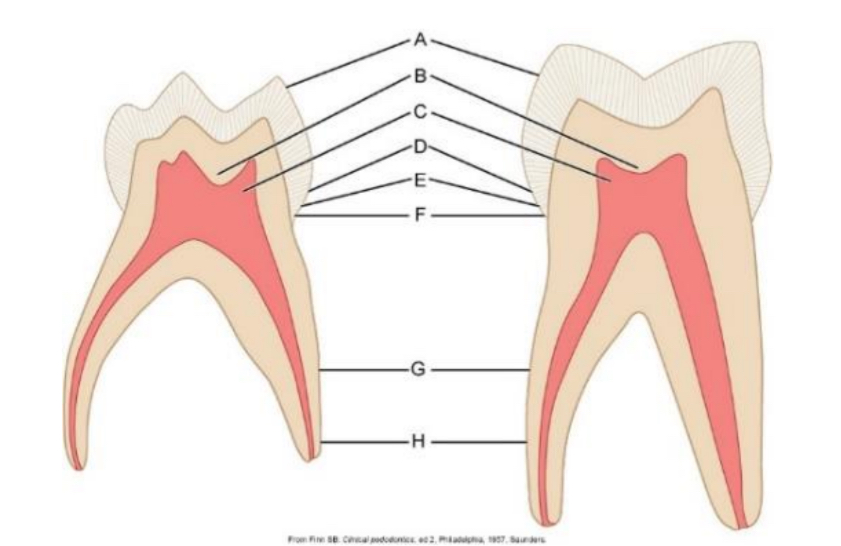
Where is the greatest dentine thickness
B - Over pulpal wall at occlusal fossa
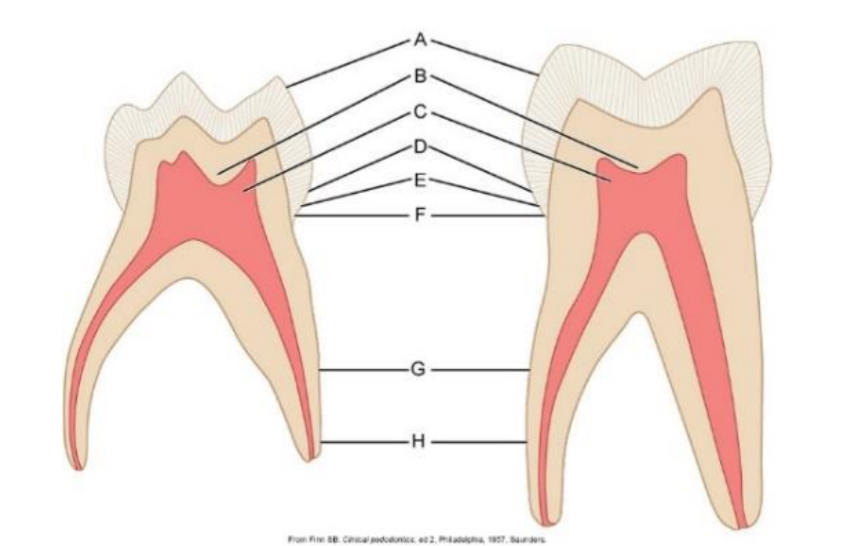
Where is the enamel thinner and with more consistent depth
A
Are the pulp horns higher in the primary or permanent teeth
Primary
Are the pulp chambers larger in primary or permanent teeth
Primary
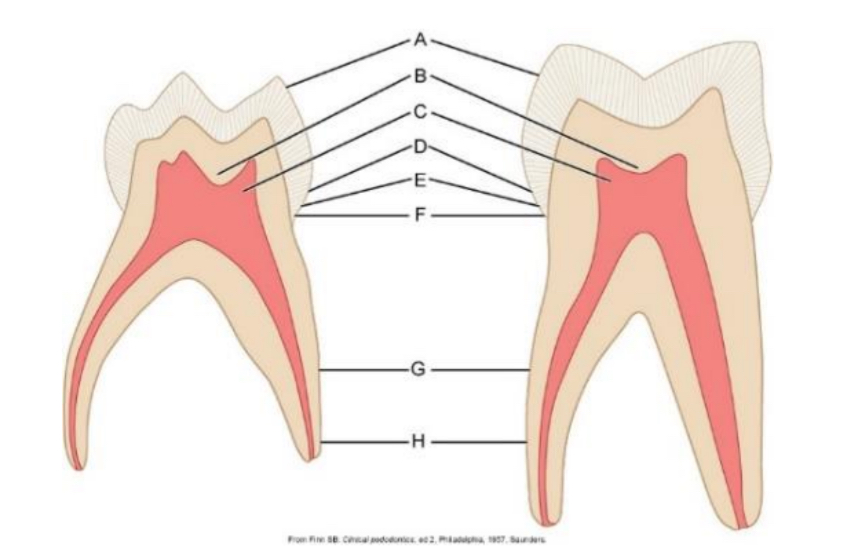
Which letter shows the cervical ridges are more pronounced in primary teeth
D
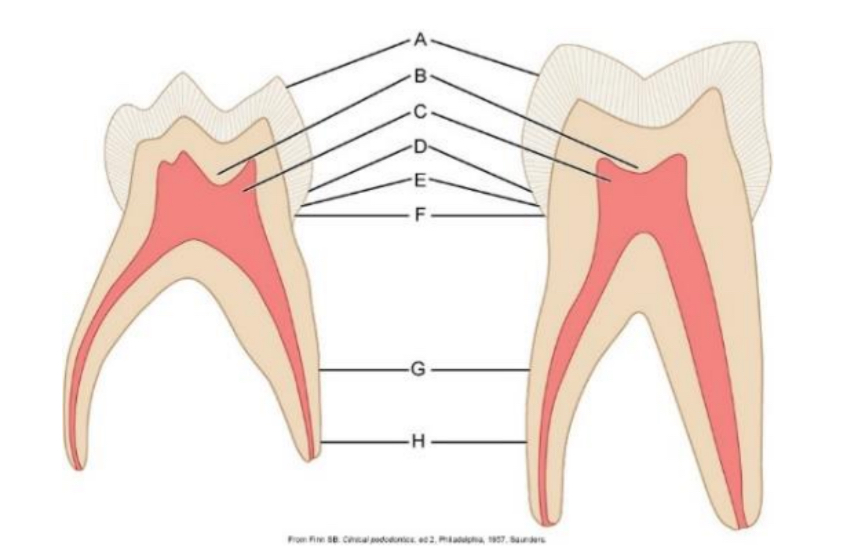
Which letter shows the roots are longer and narrower in primary teeth as compared to permenant teeth
G