Pyrexia, Hyperthermia, Fever
 Call Kai
 Learn
Learn Practice Test
 Spaced Repetition
 Match
Match Flashcards
 Knowt Play
1/20

There's no tags or description
Looks like no tags are added yet.
Name | Mastery | Learn | Test | Matching | Spaced | Call with Kai |
|---|
No analytics yet
Send a link to your students to track their progress
21 Terms
What part of the brain functions as the thermoregulatory center (“thermostat“)?
Anterior Hypothalamus
How do animals cool down/initiate heat loss?
Panting
Vasodilation
Postural changes (IMAGE)
Precipitation (paws)
Increased grooming (cats)
Seek cool environments
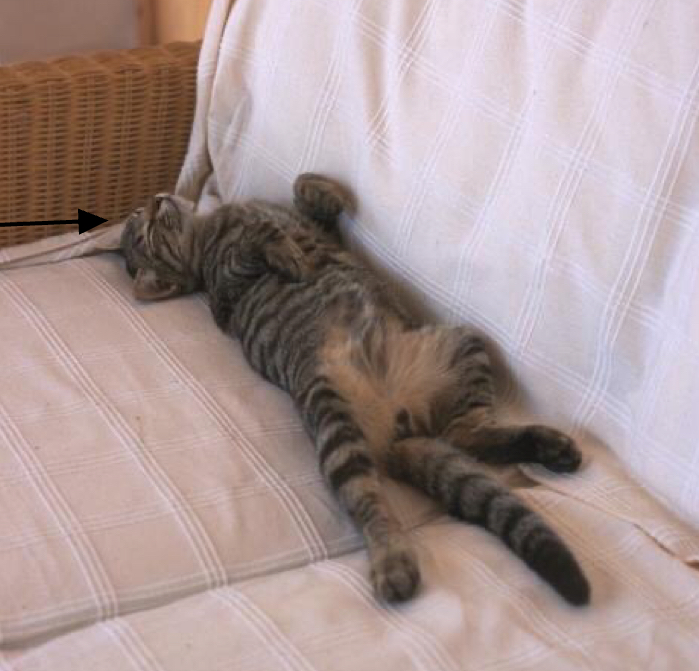
What is the difference between Hyperthermia and Fever/Pyrexia?
Hyperthermia
Body temperature that is in excess of the normal range
Fever and Pyrexia
Synonymous terms
A type of hyperthermia where the “set point“ in the hypothalamus has been reset
The body is now trying to maintain a body temperature higher than normal values
What causes the anterior hypothalamus to be reset to a higher temperature?
Pyrogens
Exogenous Pyrogens
Foreign substances induce the immune system to release endogenous pyrogens in an attempt to kill the invader
Endogenous Pyrogens
Cytokines released by the host cell to induce fever
What is the most important cytokine involved in inducing fever?
Interleukin-1 (IL-1)
What is the primary cell involved with Endogenous Pyrogens?
Macrophages
How do endogenous pyrogens affect the Anterior Hypothalamus?
They travel in the blood to the AH (brain)
Bind to vascular endothelial cells
Stimulate the release of prostaglandins (PGE2)
Set point is reset at a higher temperature
T/F: NSAIDs are good at treating hyperthermia
False, they are good at treating Pyrexia/fever
Why can NSAIDs be used to treat Pyrexia?
They block the release of Prostaglandins (PGE2) in the AH, preventing the internal temperature from being reset
What is Heat Stroke? Can NSAIDs treat it?
Inadequate heat dispersion
The body cannot handle the excess temperature
It’s not fever so NSAIDs are ineffective
How is heat stroke treated? How is exercise hyperthermia treated?
Total Body Cooling
IV fluids
These diseases have similar issues just slightly different causes
What is one way a patient can have exercise hyperthermia without performing a strenuous activity (hunting, jogging, working)?
Seizures/tremors
What is Pathologic Hyperthermia? Can it be treated with NSAIDs?
Lesions in the AH that disrupt the thermoregulatory centre
Ex: Hydrocephalus
No
T/F: Hypermetabolic disorders can cause severe hyperthermia
False, they typically can only cause mild hyperthermia
Name 2 metabolic conditions (hyper metabolic disorders) that could cause hyperthermia
Hyperthyroidism
Thyroid hormone is responsible for body temperature, development, metabolism
Pheochromocytoma
Tumor of adrenal medulla
Causes excess eppinepherine
What are the steps you should take in order to differentiate fever from inadequate heat dispersion (hyperthermia)?
Just because the pet’s temperature is increased does not mean that it has a fever
Look for evidence of attempted heat dispersion
Panting, postural changes
If present, then this is not a fever or the fever is breaking
When the fever is less than 106°F (41°C), how should you treat it?
The fever is not life-threatening at this stage and likely has benefits
Inhibit viral replication, increased leukocyte function
Identify and treat the underlying disease, not the fever
When the fever is between 106-109°F (<41°C), how should you treat it?
Consider treatment, the fever may be doing more harm than good
Use NSAIDs
IV fluids
When the fever is >109°F (43°C), how should you treat it?
This is a life-threatening hyperthermia
Loss of cell membrane integrity, enzyme denaturation, DIC, and organ damage
Guarded prognosis
Treatment depends on the cause
If pyrexia
NSAIDs, IV fluids, cool patient down ASAP
If heat stroke
Total body cooling
Cool water bath (ICE COLD IS BAD IT CAUSES VASOCONSTRICTION)
Wet towels (change constantly)
Fans
Wet paws with alcohol
IV fluids
Cold water enema
What is one thing that you have to be very conscious of when treating a patient with heat stroke?
Overcooling
You want to correct the hyperthermia without causing hypothermia
Stop cooling the patient when they get under 104°F (40°C)
Let the patient return to normal temperature itself, 104°F is not a dangerous fever
What are the steps involved in diagnosing a fever of unknown origin (FUO)?
Complete history and physical exam
Bloodwork
CBC, Chem, UA, urine culture
Diagnostic imaging
Radiographs, ultrasound, echocardiogram
Specific infectious disease testing
Viral (FeLV, FIV), bacterial (lepto), protozoal, rickettsial, fungal
Specialized diagnostic tests
Arthrocentesis (Immune-mediated polyarthritis), CSF tap, CT/MRI