Chapter 25 Reproductive System
 Call Kai
 Learn
Learn Practice Test
 Spaced Repetition
 Match
Match Flashcards
 Knowt Play
1/16

There's no tags or description
Looks like no tags are added yet.
Name | Mastery | Learn | Test | Matching | Spaced | Call with Kai |
|---|
No analytics yet
Send a link to your students to track their progress
17 Terms
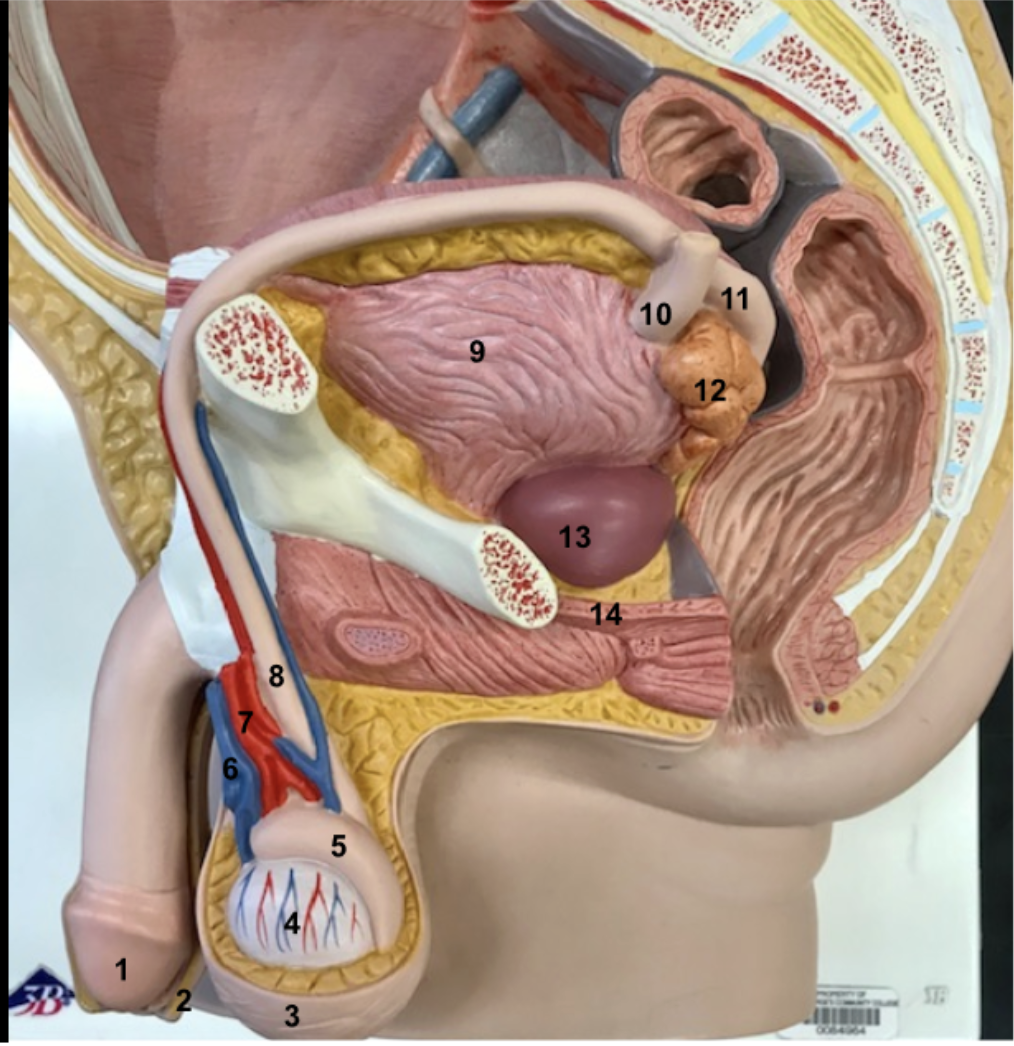
Identify 1-14
What is the function of #4? How does the location of #3 aid in the function of #4?
What is the function of #12 & #13?
1.Glans penis
2.Prepuce
3.Scrotum
Testes are housed in scrotum, which is located below the abdominal cavity. This provides the testes with a slightly cooler environment than body temperature, which facilitates sperm production.
4.Testis: produce sperm and testosterone
5.Epididymis
6.Testicular vein
7.Testicular artery
8.Vas deferens (or ductus deferens)
9.urinary bladder
10.Ureter
11.Ampulla of vas deferens
12.Seminal vesicle: produce alkaline solution in semen
13.Prostate gland: recieve content from ejaculatory duct and produce alkaline fluid in semen
14.Urogenital diaphragm
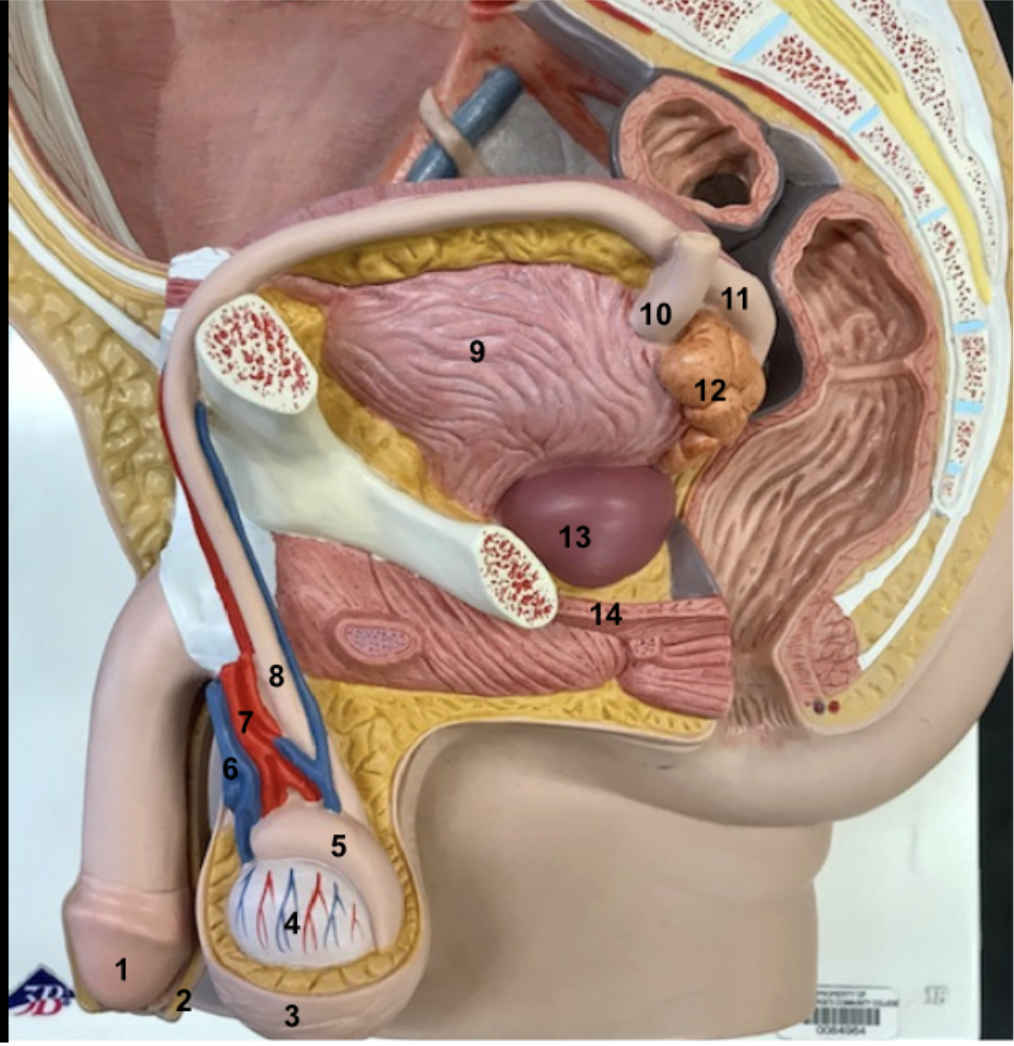
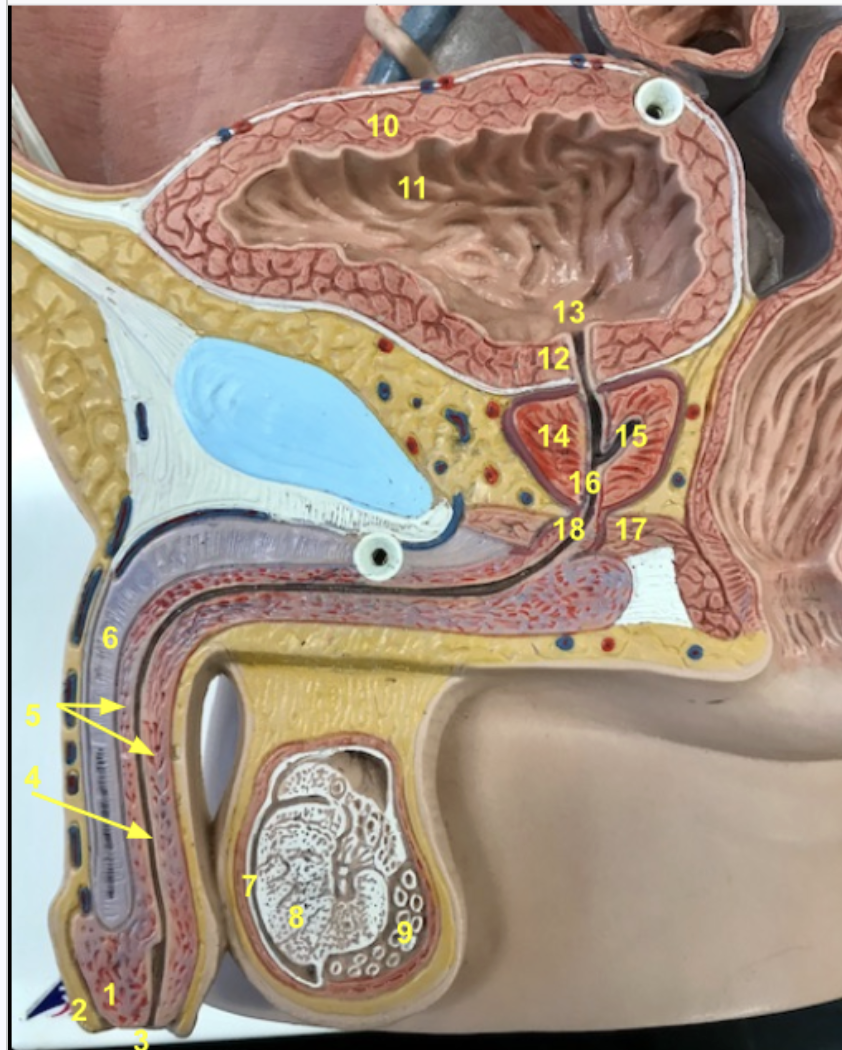
Identify 1-18
1.Glans penis
2.Prepuce
3.Urethral orifice
4.Terminus of the penile/spongy urethra
5.Corpus
6.corpora cavernosa (of which we see one (6)).
7.tunica albuginea
8.Testis
9.Epididymis
10.Detrusor muscle
11.Rugae of urinary bladder
12.Internal urethral sphincter
13.Internal urethral orifice
14.Prostate gland
15.Ejaculatory duct
16.Prostatic urethra
17.Urogenital diaphragm
18.Urethra
Identify 1-11
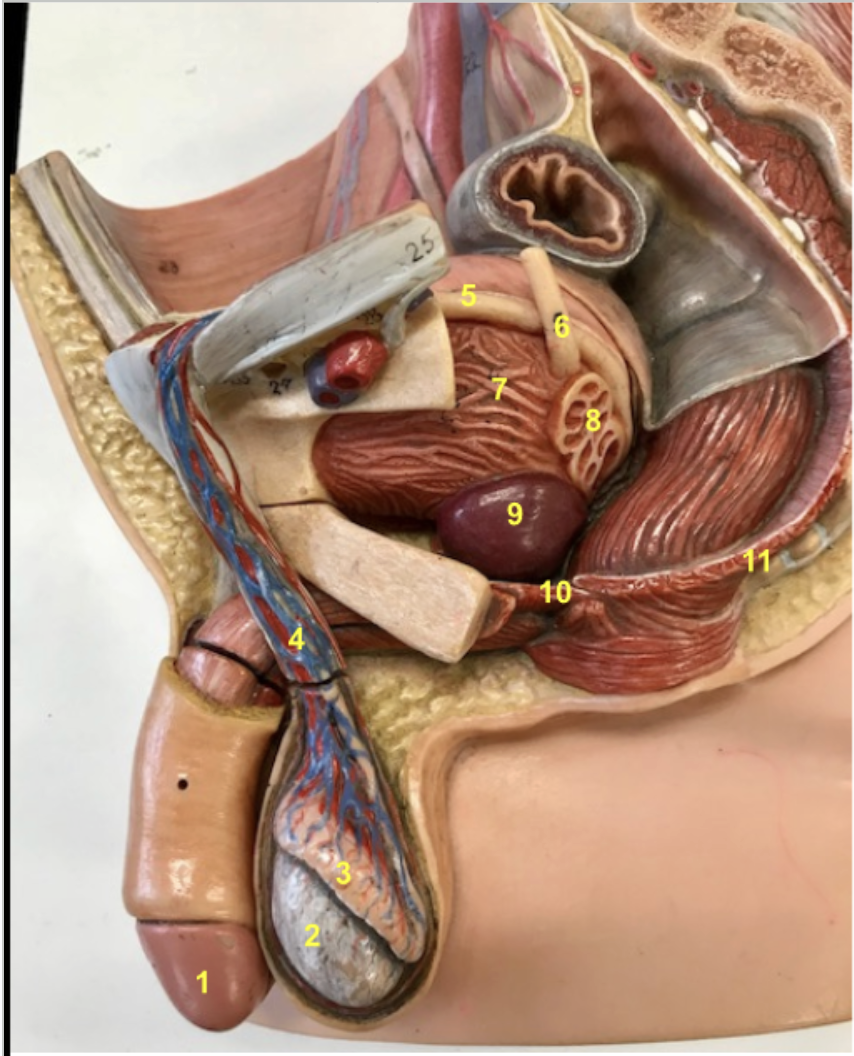
#4 is made up of what structures?
1.Glans penis
2. Testis
3. Epididymis
4. Spermatic cord: made up of vessels, nerves, and the vas deferens that extend from abdomen to the scrotum
5. Vas deferens
6. Ureter
7. Urinary bladder
8. Seminal vesicle
9. Prostate gland
10. Urogenital diaphragm
11. Pelvic diaphragm
Identify 1-16
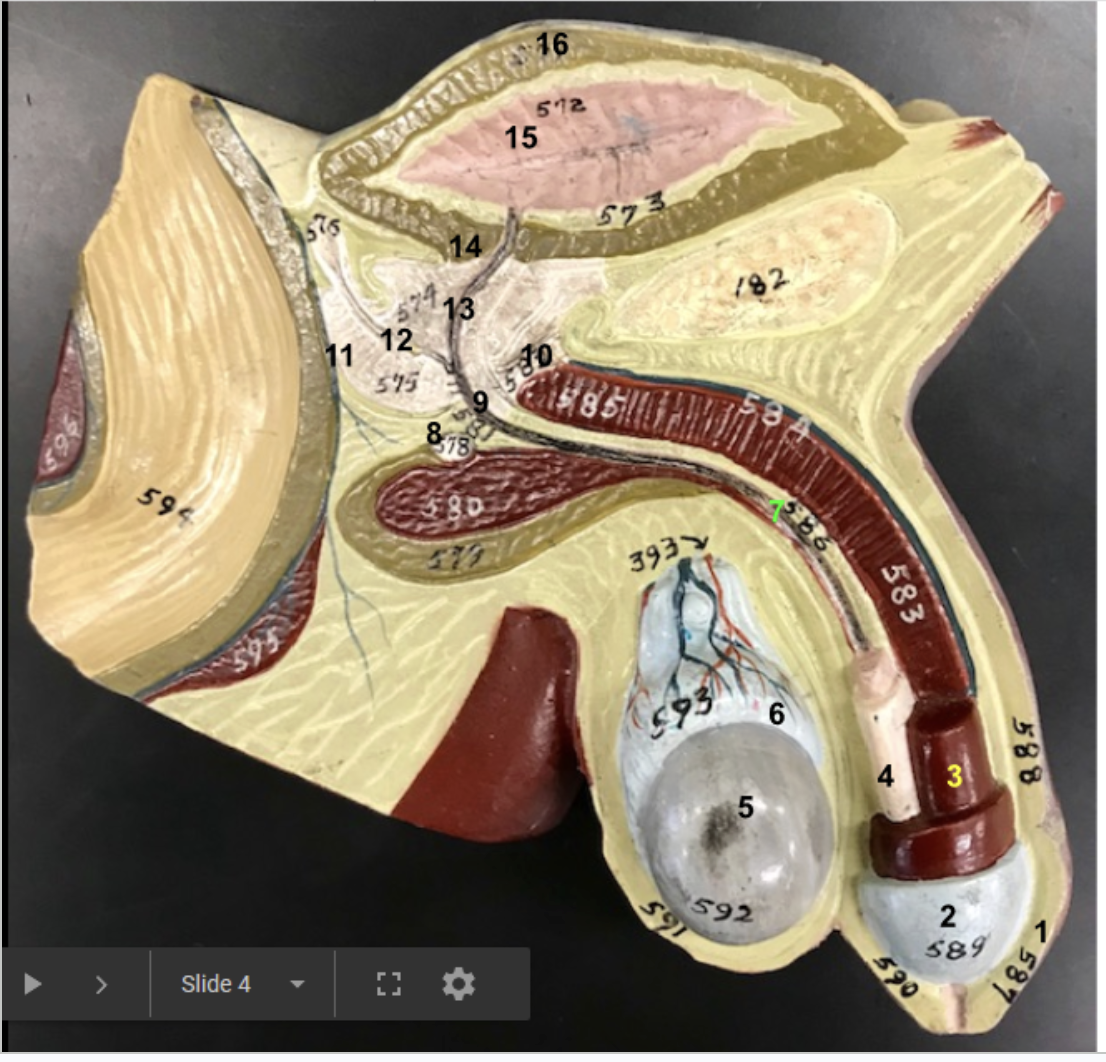
Function of 8
1.Prepuce
2.Glans penis
3.Corpus cavernosa
4.Corpus spongiosum
5.Testis
6.Epididymis
7.Penile/Spongy urethra
8.Bulbourethral gland: secerete alkaline mucus (post erection but pre-ejaculation) to neutralize any remaining acidic urine in urethra
9.Membranous urethra
10.Urogenital diaphragm
11.Prostate gland
12.Ejaculatory duct
13.Prostatic urethra
14.Internal urethral sphincter
15.Urinary bladder with rugae
16.Detrusor muscle
What organ is this?
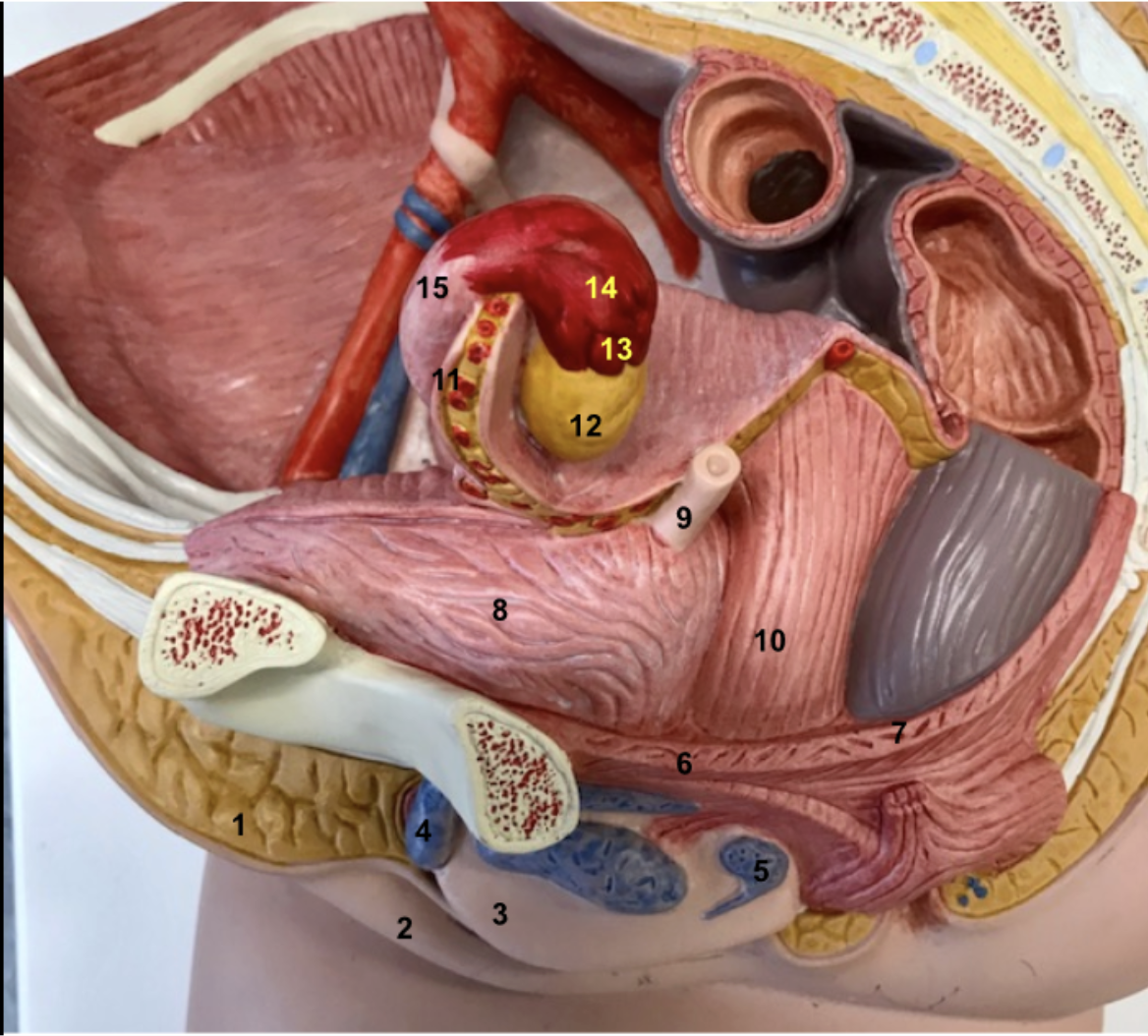
Identify 1-15. Structures 1-4 are collectively referred to as what?
Function of 5 & 15
Female pelvis
1.Mons pubis
2.Labium majus
3.Labium minus
4.Clitoris
The labia, clitoris, and mons pubis are collectively referred to as the vulva.
5.Greater vestibular gland: secretes mucus into the vestibule for vaginal lubrication
6.Muscular urogenital diaphragm
7.Pelvic diaphragm
8.Urinary bladder
9.Ureter
10.Vagina
11.Broad ligament: this is the mesentery of the internal genitalia
12.Ovary
13.Fimbriae of fallopian tube
14.Infundibulum of fallopian tube
15.Ampulla of fallopian tube: site of fertilization.
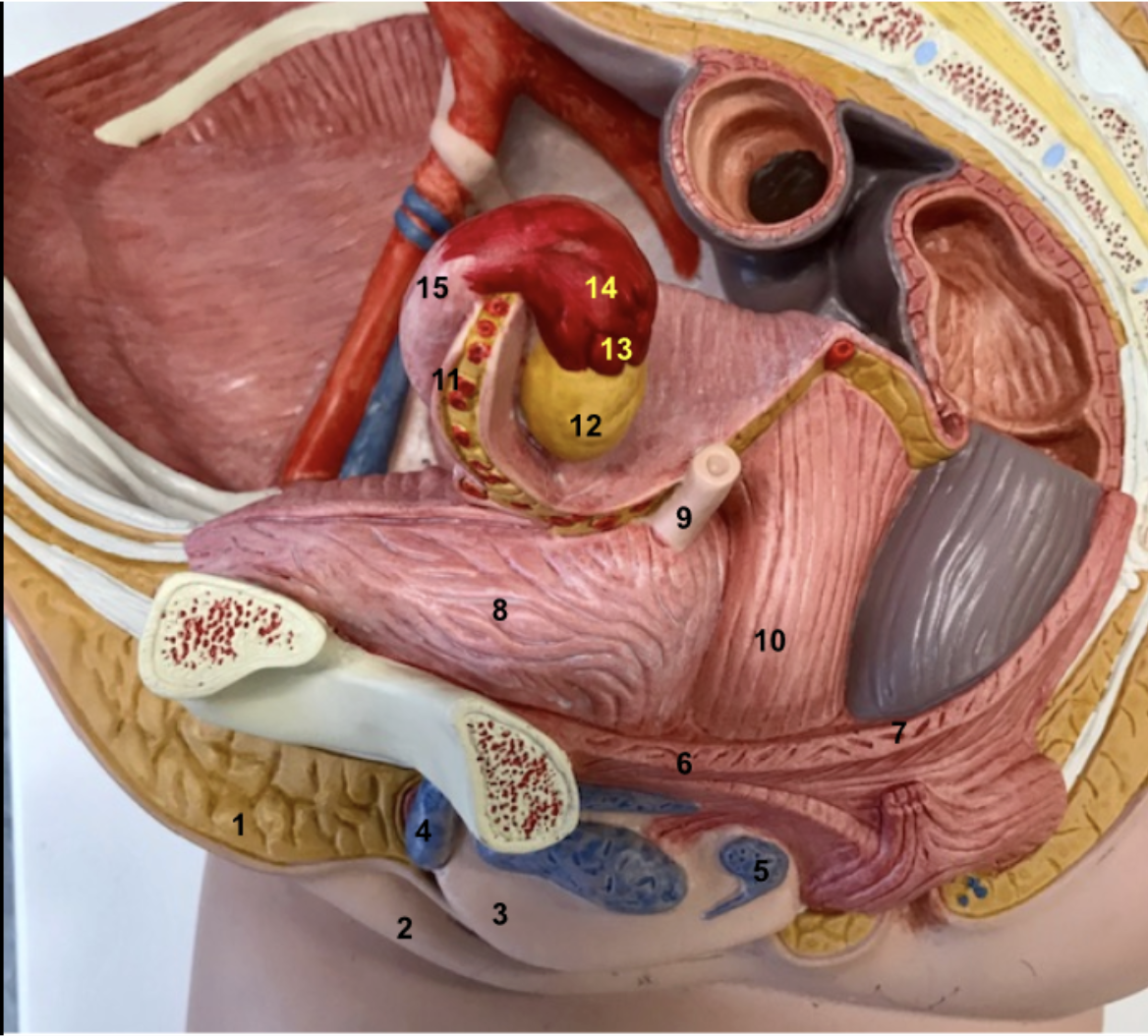
What is the mesentery of the internal gentalia?
Broad ligament
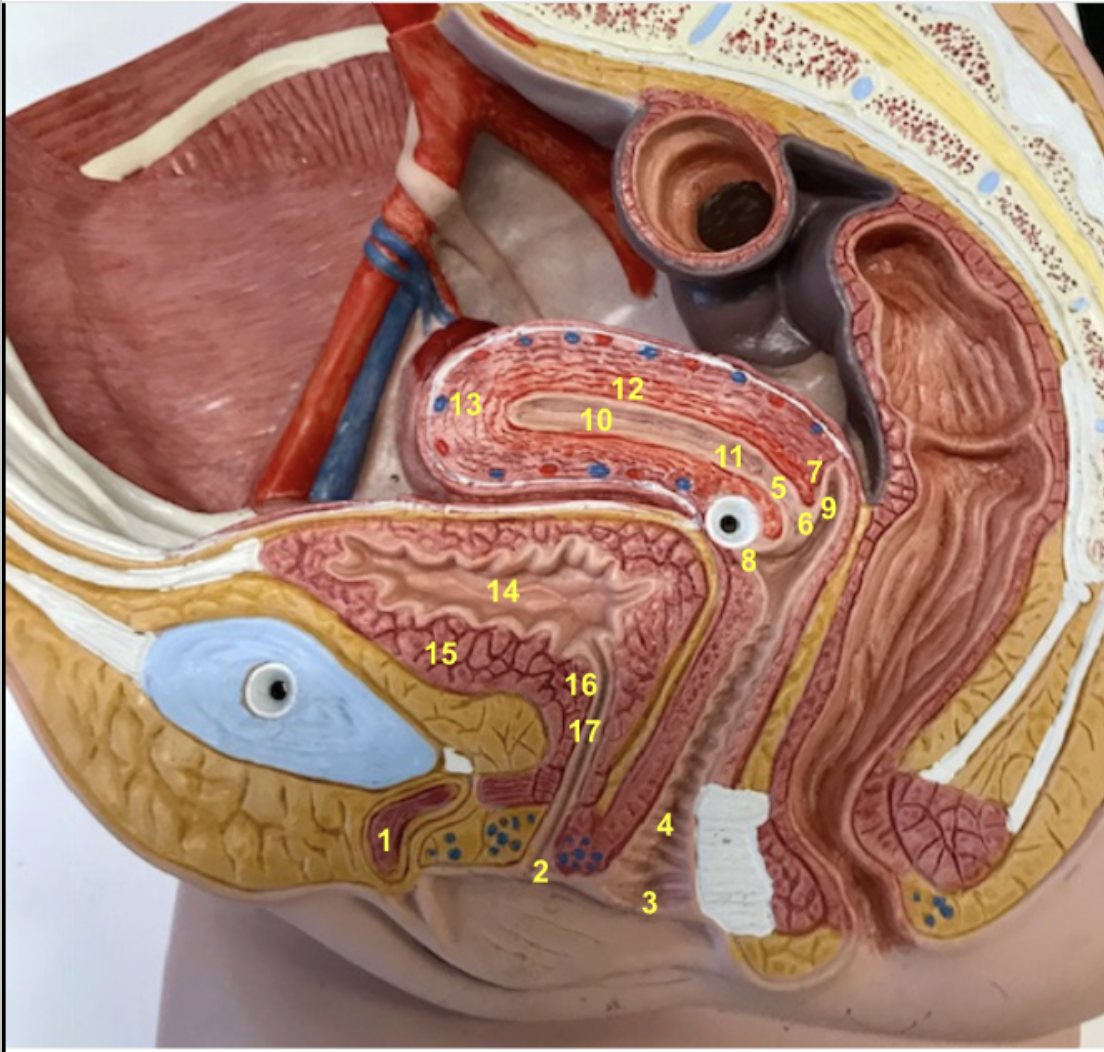
Identify 1-17
1.Clitoris
2.External urethral orifice
3.External vaginal orifice
4.Rugae of vaginal canal
5.Cervical canal
6.External os
7.Cervix
8.Anterior fornix
9.Posterior fornix
10.Uterine cavity
11.Internal os
12.Endometrium
13.Myometrium (smooth muscle layer)
14.Urinary bladder with rugae
15.Detrusor muscle
16.Internal urethral sphincter
17.Urethra
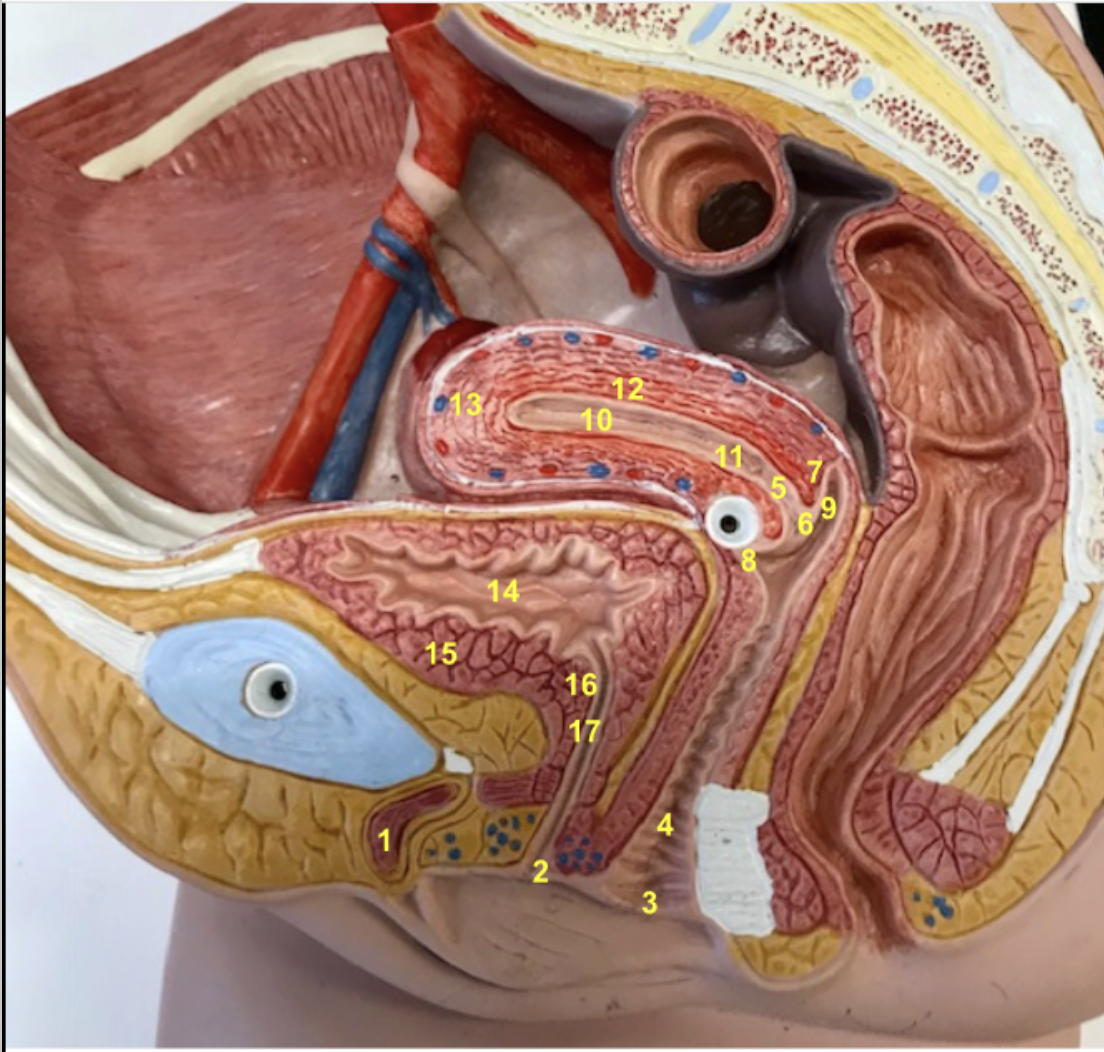
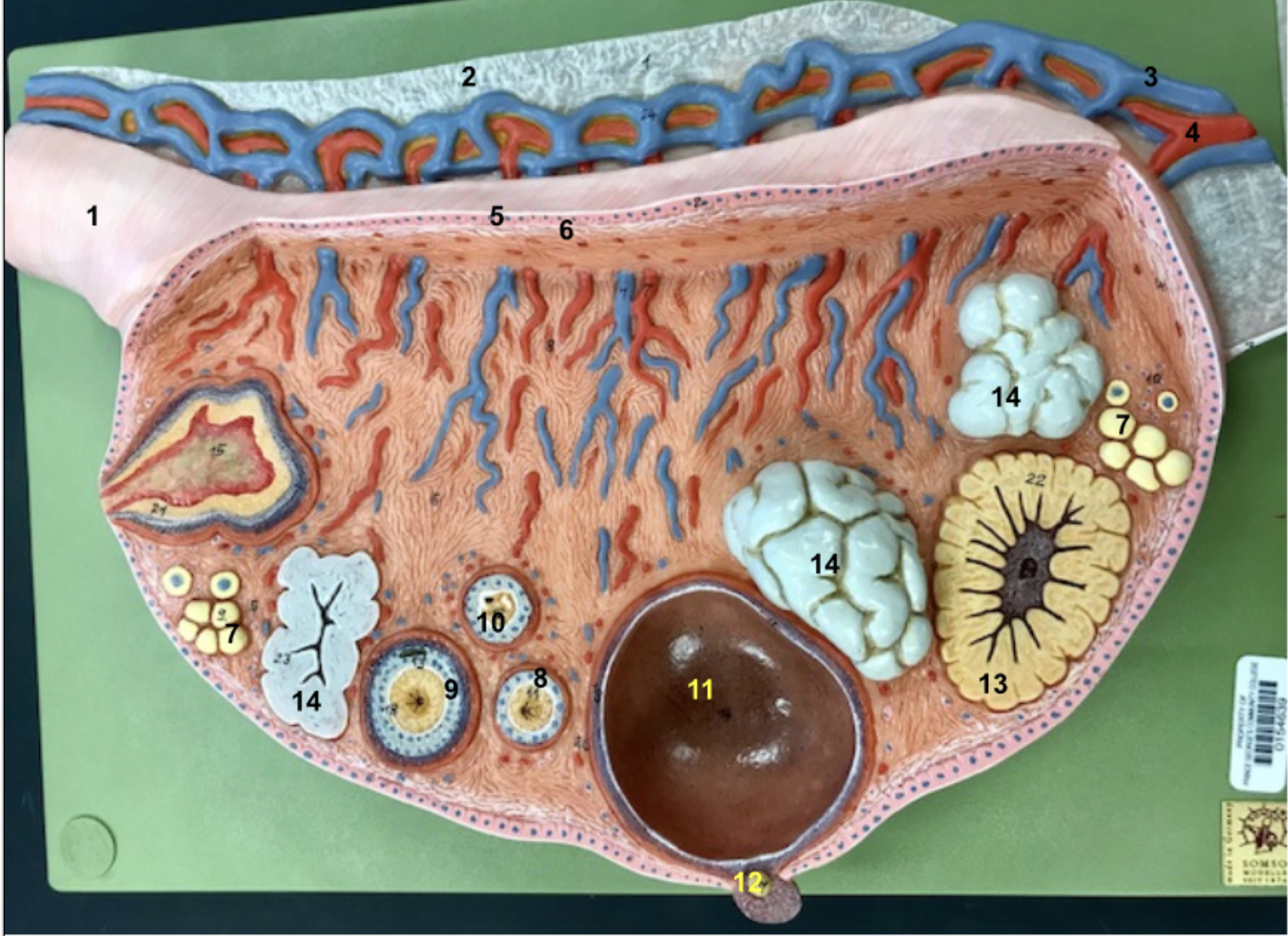
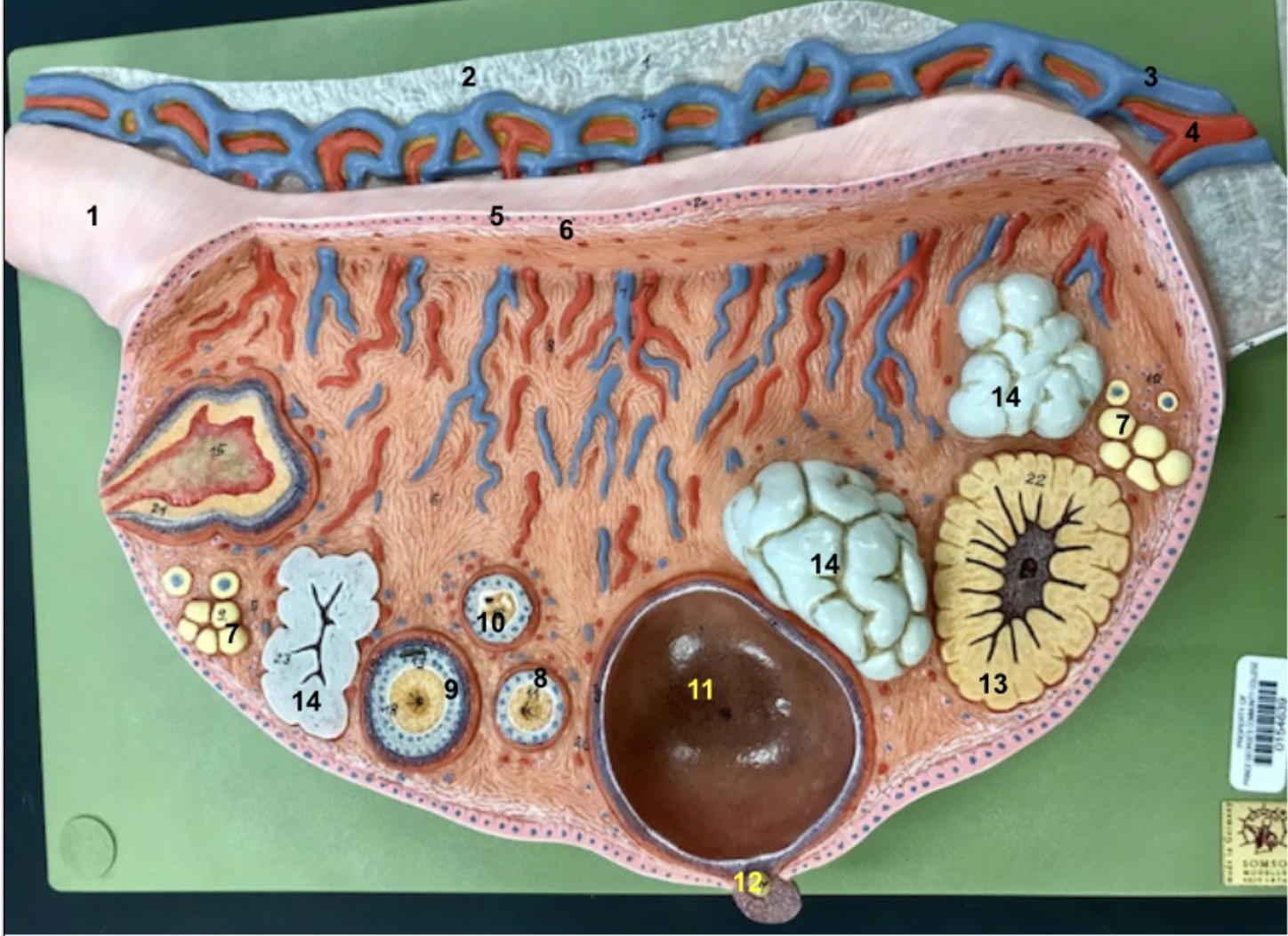
Identify 1-14
1.Ovarian ligament: attaches the ovary to the uterus
2.Broad ligament
3.Ovarian vein
4.Artery
5.Germinal epithelium
6.Tunica albuginea
7.Primordial follicles
8.Primary follicle
9.Late primary follicle
10.Dying follicle
11.Mature graafian follicle
12.Secondary oocyte
13.Corpus luteum
14.Corpus albicans
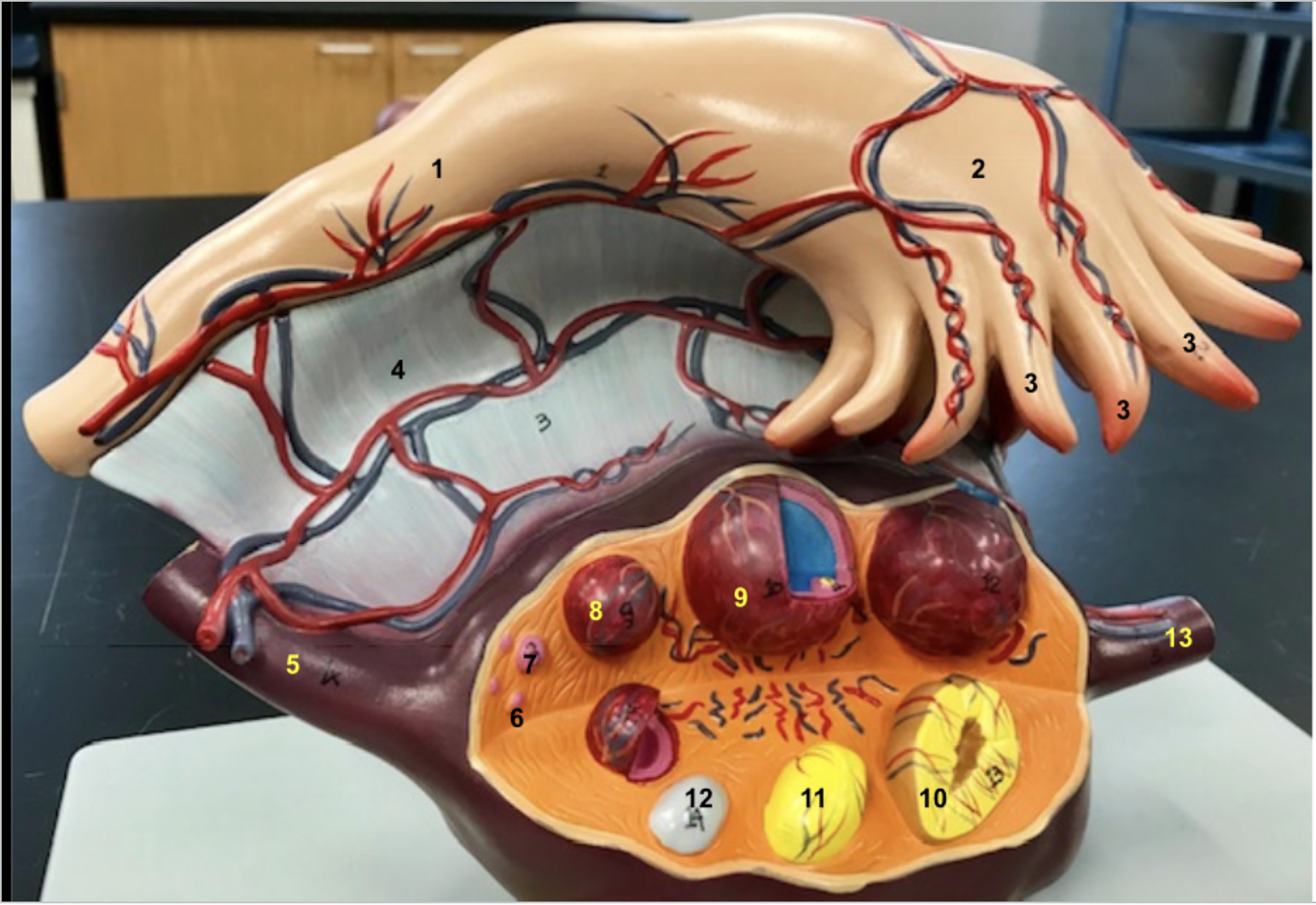
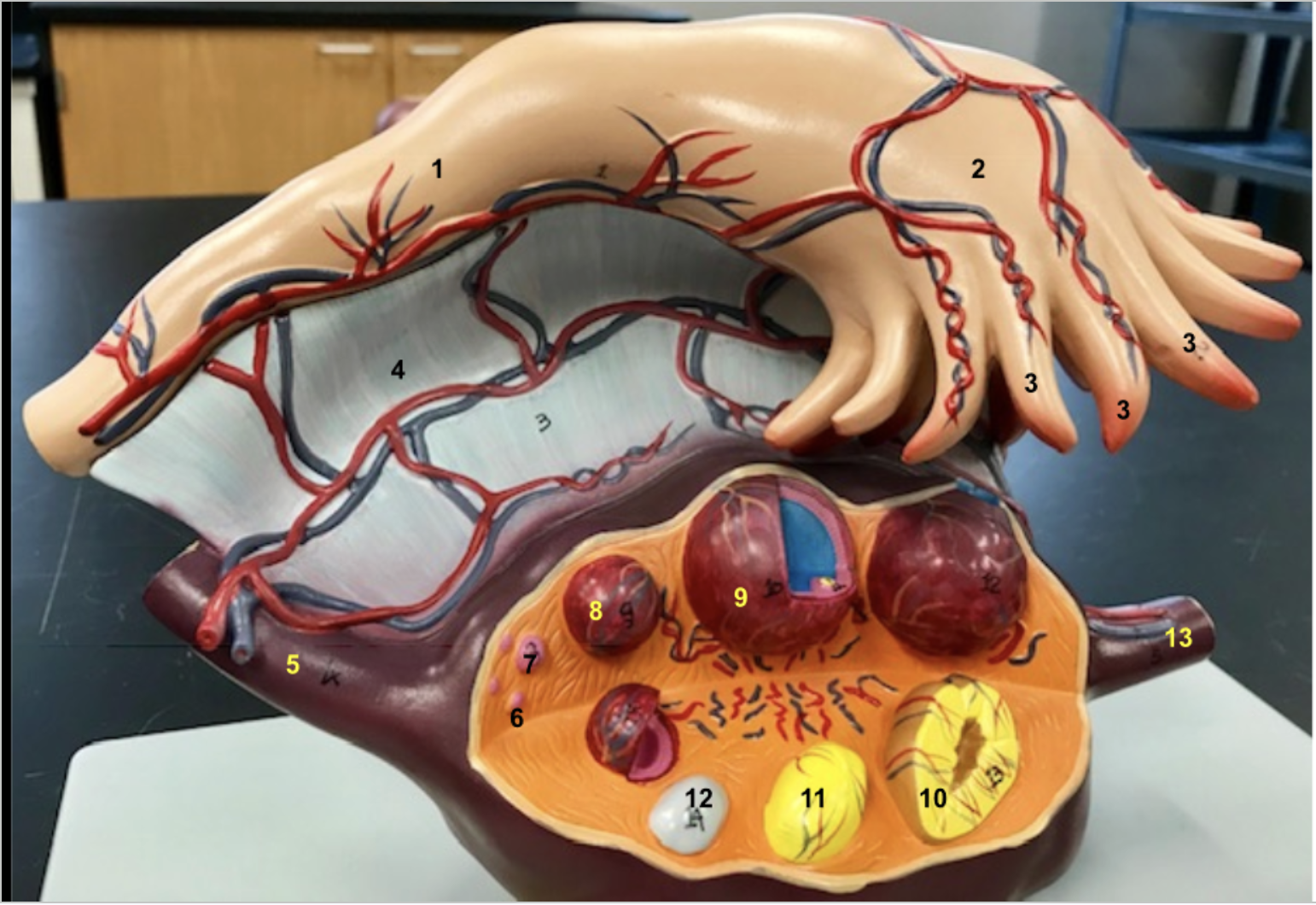
Identify 1-13
1.Ampulla of fallopian tube
2.Infundibulum of fallopian tube
3.Fimbriae of fallopian tube
4.Broad ligament
5.Ovarian ligament
6.Primordial follicles
7.Primary follicle
8.Secondary follicle
9.Grafian follicle
10.Corpus luteum
11.Degenerating corpus luteum
12.Corpus albicans
13.Suspensory ligament
What are the 3 erectile tissues? Function?
The two corpora cavernosa and the single corpus spongiosum. These 3 have vascular sinuses that fill with blood during erection.
Why would a reproductive tract infection be more likely to lead to an inflammation of the peritoneum in a female than in a male?
Because the female reproductive duct system is open to the peritoneum whereas the male duct system is not
What layer of the uterus would contain the most actin?
Myometrium
The term ampulla refers to which structures in bth the male and female reproductive systems?
Ductus deferens (proximal end) and uterine tube (distal end)
Trace the path of a single sperm from the site of its production to the site of fertilization
Seminiferous tubule > epididymis > ductus deferens > ejaculatory duct > prostatic urethra > membranous urethra > penile urethra > vagina > external os > cervical canal > internal os > uterine cavity > fallopian tube > ampulla of fallopian tube
What accessory organs contribute to the composition of semen? Which makes up the most?
-Seminal vesicles, prostate glands, and bulbourethral glands
- Seminal vesicles. They produce alkaline fluid which makes up 60% of semen. (Prostate gland is 30% and bulbourethral gland is the least)
What is circumcision?
Removes the prepuce (foreskin) of the glans penis
Explain the mechanism that draws an ovulated oocyte into the lumen of a uterine tube.
The sweeping of the cilia of fimbriae creates a current of peritoneal fluid that draws the secondary oocyte into the uterine tube