C1.3: HL (C1.3.9-C1.3.19)
 Call Kai
 Learn
Learn Practice Test
 Spaced Repetition
 Match
Match Flashcards
 Knowt Play
1/20

There's no tags or description
Looks like no tags are added yet.
Name | Mastery | Learn | Test | Matching | Spaced | Call with Kai |
|---|
No analytics yet
Send a link to your students to track their progress
21 Terms
What is a photosystem?
A molecular array of chlorophyll and other accessory pigments, with a special chlorophyll acting as a reaction centre from which an excited electron is emitted.
• Always located in membranes
• Found in the thylakoids of chloroplasts (photosynthetic eukaryotes) and in the membranes of cyanobacteria
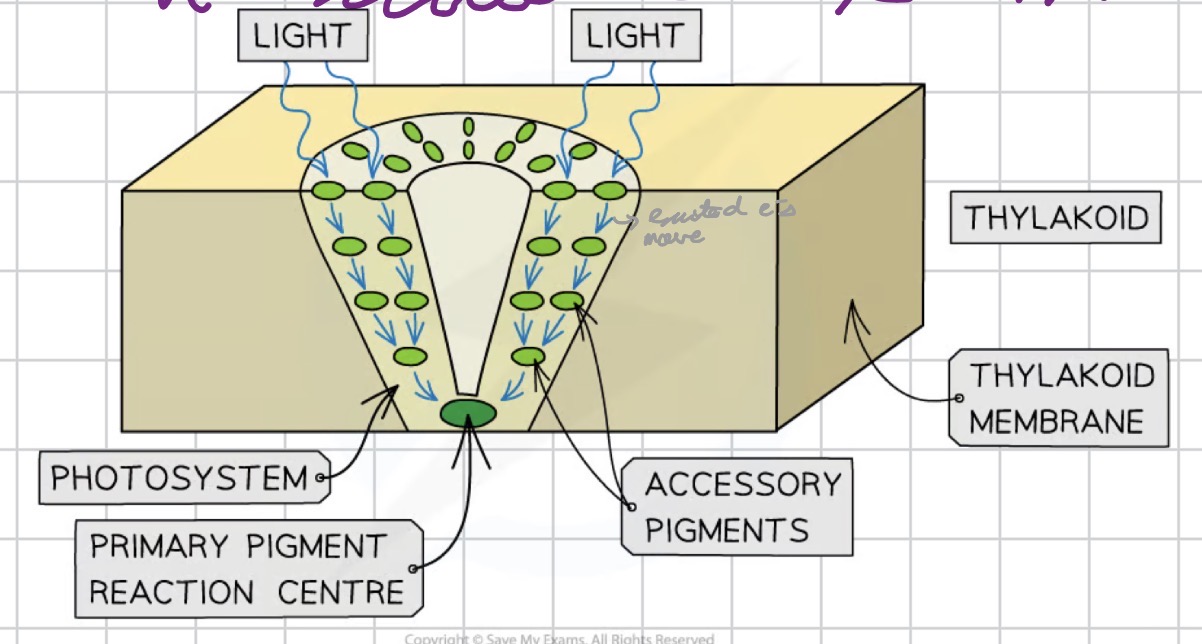
• Excited electrons are controlled
• Electrons can be directed along the electron transport chain
• A single pigment alone would not be enough — photosynthesis wouldn't happen
• Photolysis of water in PSII generates protons and electrons used in the light-dependent reactions
• O₂ is released as waste
• Photosynthetic organisms saturated the environment with O₂, transforming oceans and geological processes
• Earth's oceans initially contained high iron → O₂ reacted with it to form iron oxide (precipitate) → Banded Iron Formations (BIFs)
• Once iron was fully consumed, O₂ began accumulating in the atmosphere
• Free O₂ was toxic to obligate anaerobes (many died) but necessary for aerobes
• Eventually led to the formation of the ozone layer
Describe ATP production by chemiosmosis in the light-dependent reactions.
• Electrons from the photosystems pass along the electron transport chain (composed of multiple electron-shuttling carrier proteins)
• Electrons lose energy — this energy is used to pump H⁺ from the stroma into the thylakoid lumen
• H⁺ build up creates a concentration gradient across the thylakoid membrane
• H⁺ return to the stroma down their gradient via ATP synthase (= chemiosmosis)
• ATP synthase uses the kinetic energy of proton passage to catalyse synthesis of ATP from ADP + Pi
• This process is called photophosphorylation (light provided the initial energy)
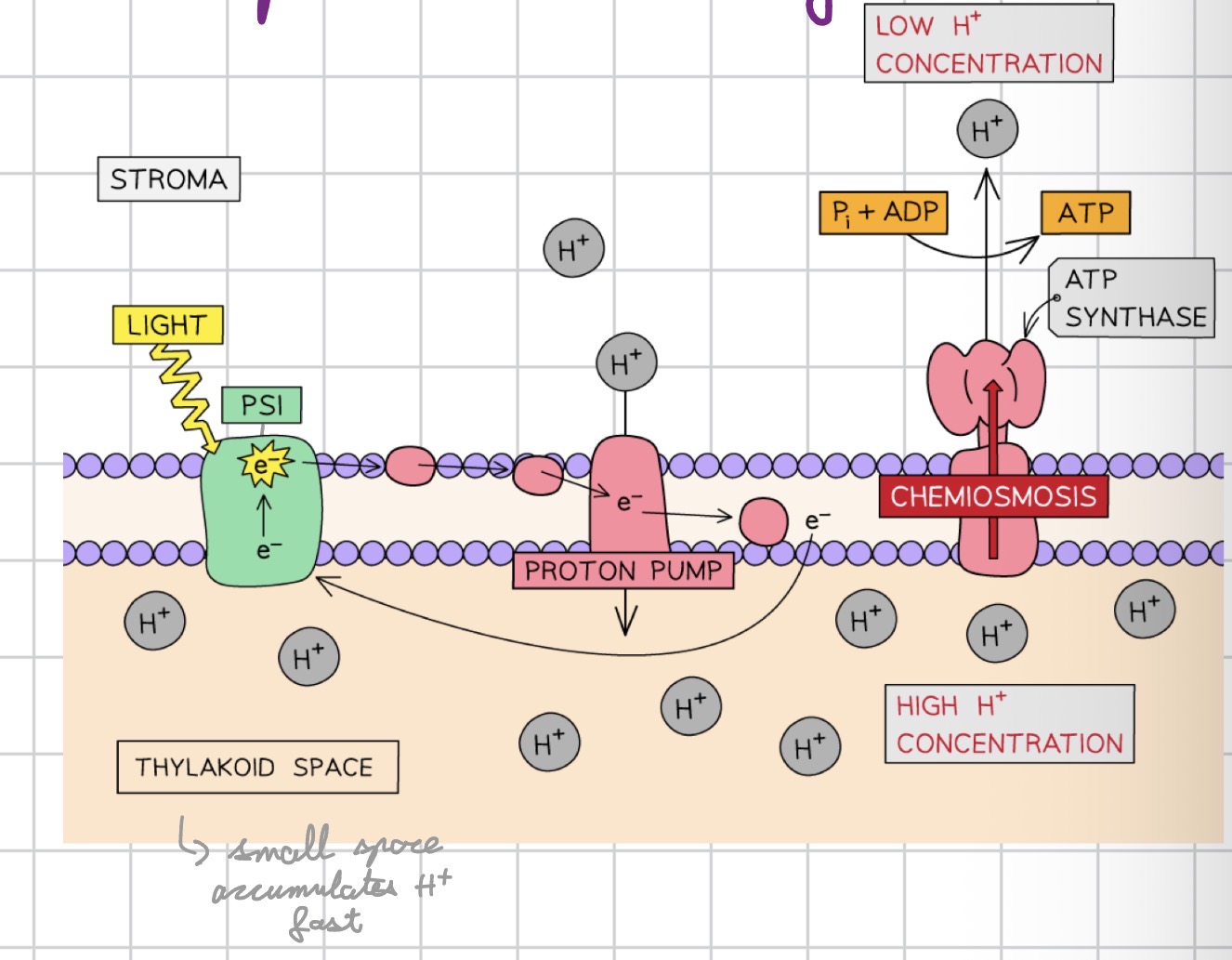
• Light excites electrons in the photosystems
• Energy lost by electrons in the ETC is used to build a H⁺ gradient
• Proton flow through ATP synthase drives ATP synthesis
How is NADP reduced in Photosystem I?
• NADP is the electron carrier in photosynthesis — it must be reduced to form NADPH
• The reaction is catalysed by the enzyme NADP reductase
• NADP reductase uses electrons (from PSI) and H⁺ to reduce NADP
• De-energized electrons coming from PSII (via the ETC) replace those emitted from PSI
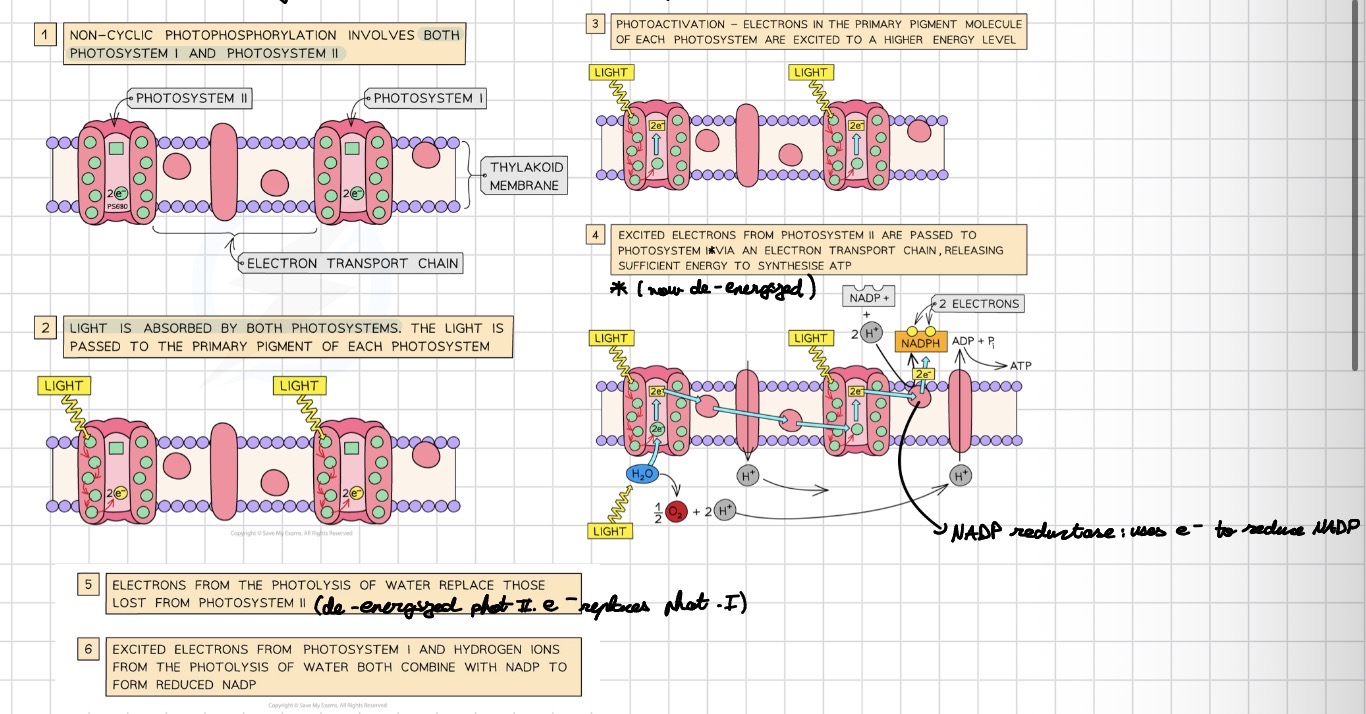
• "NADP" and "reduced NADP", OR
• "NADP⁺" and "NADPH"
Never mix the two notations in the same answer.
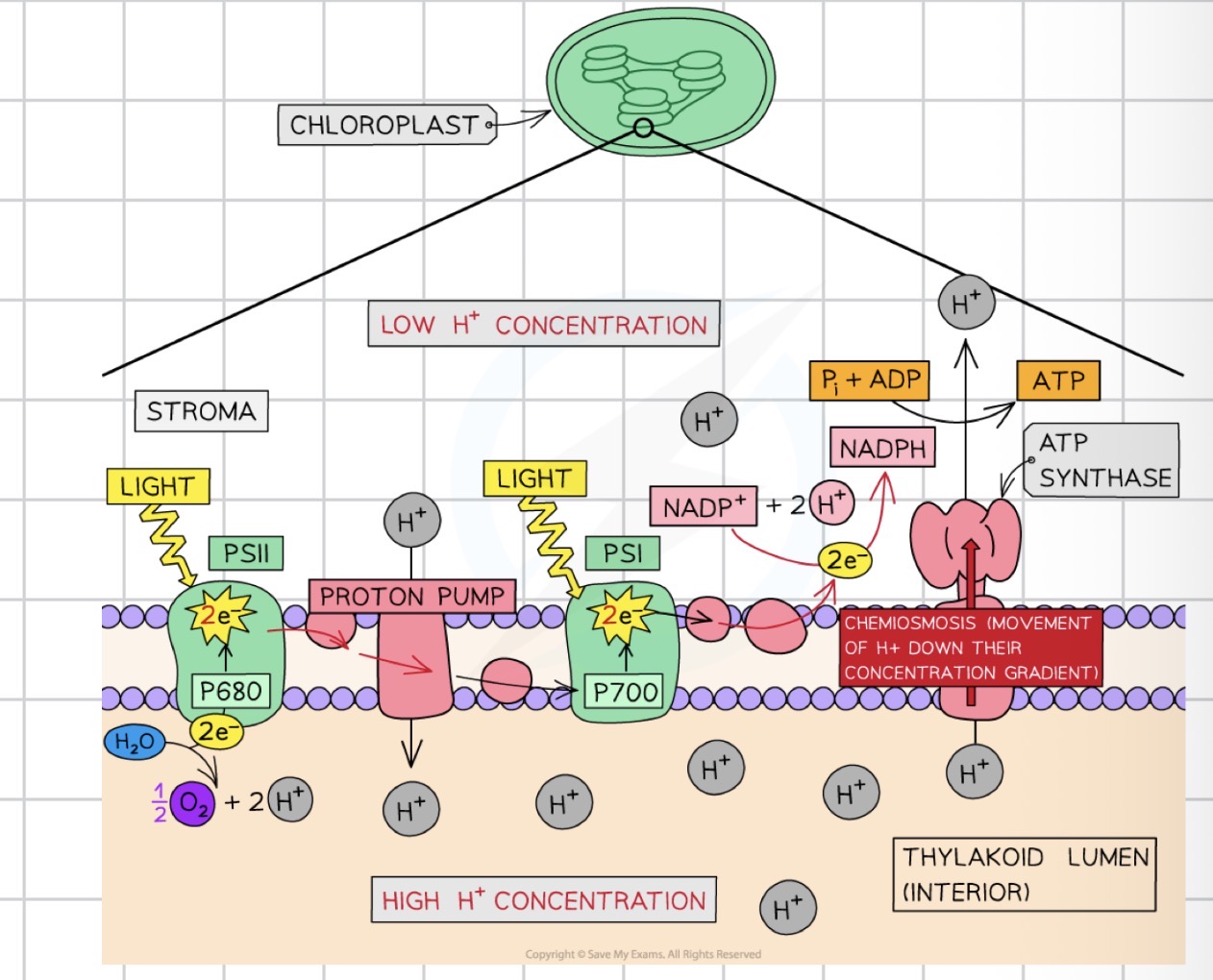
What are thylakoids?
The site of the light-dependent reactions of photosynthesis.
The light-dependent reactions include:
• Photolysis of H₂O
• Synthesis of ATP by chemiosmosis
• Reduction of NADP
In cyanobacteria, thylakoids are embedded in the cell membrane.
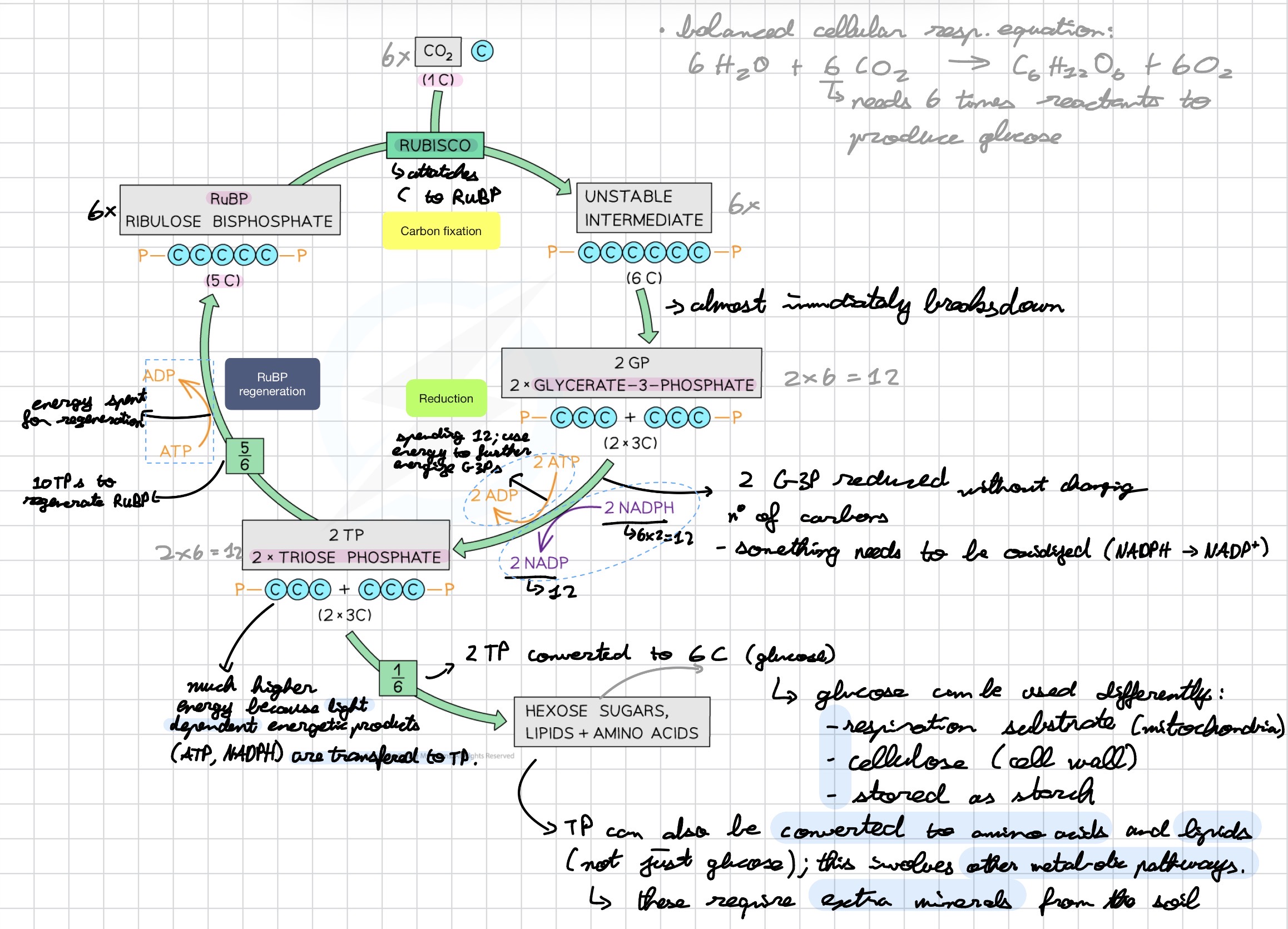
What is the Calvin cycle?
The light-independent reactions of photosynthesis, whose end goal is to produce C₆H₁₂O₆ (glucose).
Three stages:
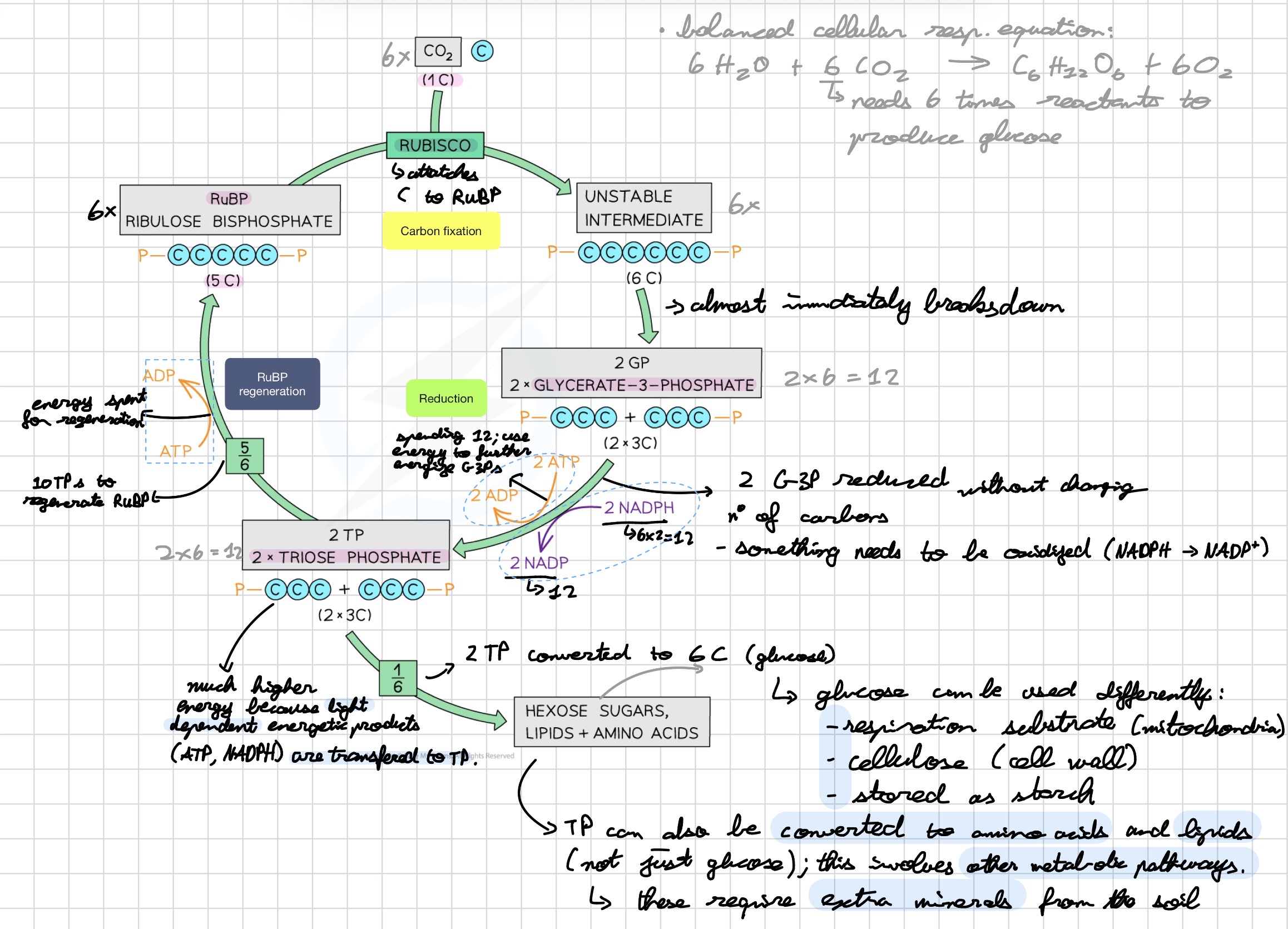
Carbon fixation
Reduction
RuBP regeneration
What is carbon fixation in the Calvin cycle?
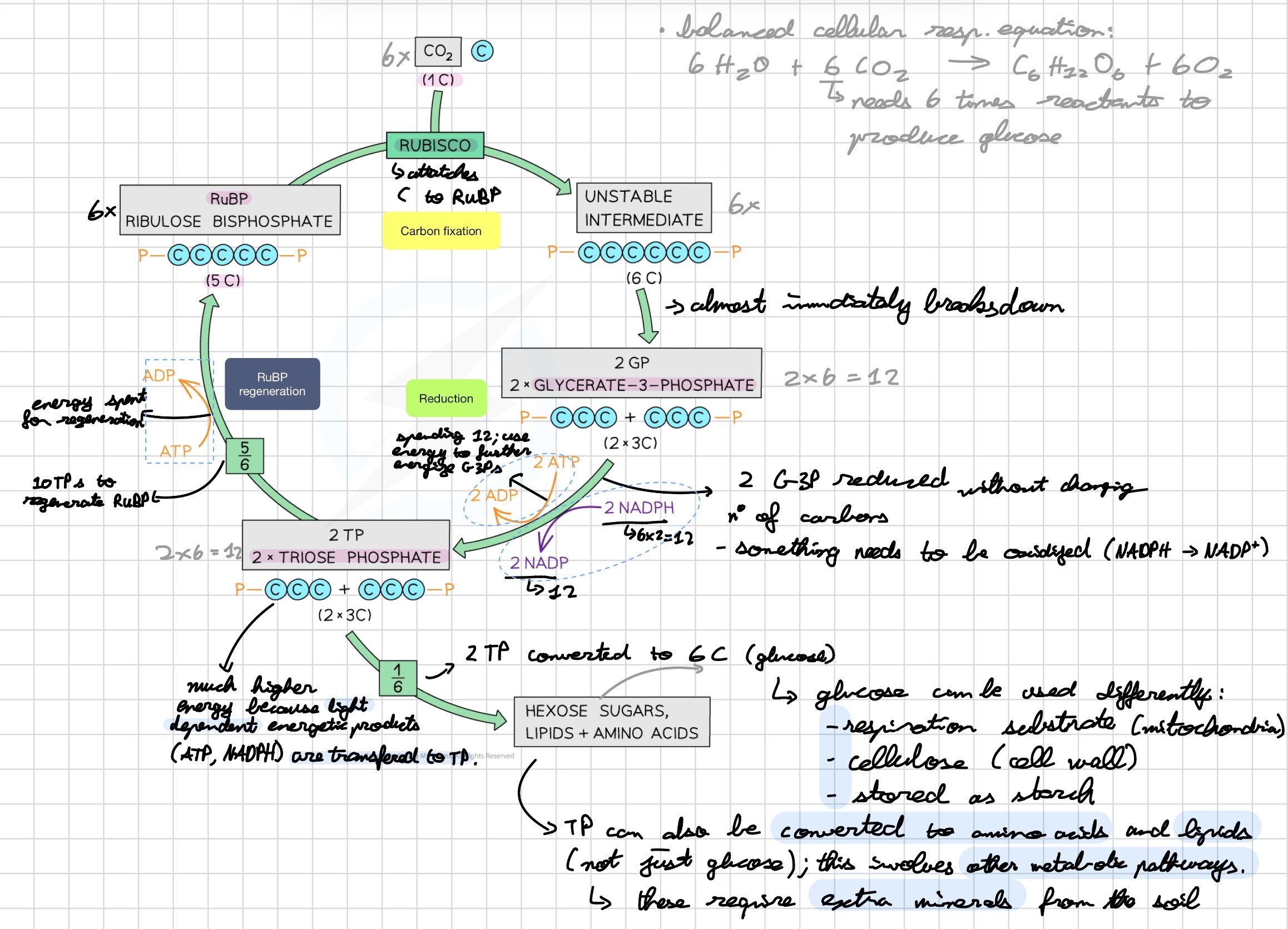
The attachment of a CO₂ molecule to RuBP, catalysed by rubisco.
• CO₂ + RuBP (5C) → unstable 6-carbon intermediate
• The intermediate almost immediately breaks down into 2 molecules of glycerate-3-phosphate (GP, 3C)
• For 1 glucose: 6 CO₂ are fixed to 6 RuBP → 12 GP
What is rubisco?
Ribulose Bisphosphate Carboxylase — the enzyme responsible for carbon fixation in the Calvin cycle.
• The most abundant enzyme on Earth
• Needed in high concentrations in the stroma because it works slowly
Describe the reduction stage of the Calvin cycle.
Causes the synthesis of triose phosphate (TP, also called G3P).
• GP is reduced to TP (the number of carbons does not change — both are 3C)
• Requires the NADPH and ATP made in the light-dependent reactions
• ATP provides phosphate and energy
• NADPH provides electrons (gets oxidized back to NADP⁺)
• For 1 glucose: 12 GP + 12 ATP + 12 NADPH → 12 TP
Describe RuBP regeneration in the Calvin cycle.
• A cycle is more efficient than a linear pathway, so RuBP must be regenerated
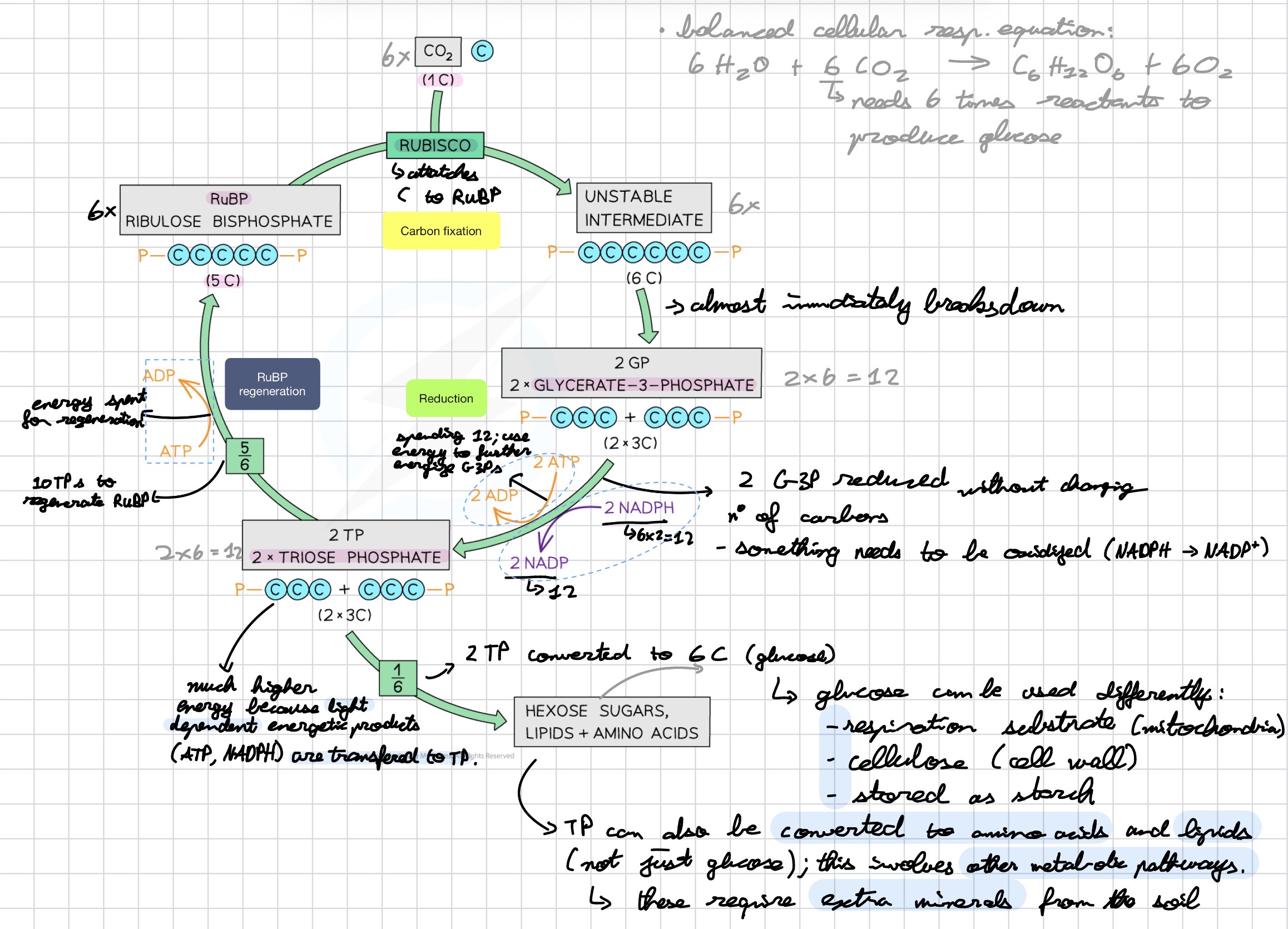
• 5/6 of the TP produced is used to regenerate RuBP
• For 1 glucose: 10 of the 12 TP are used to regenerate 6 RuBP, while the remaining 2 TP leave the cycle to form glucose
• Additional ATP is required for this regeneration
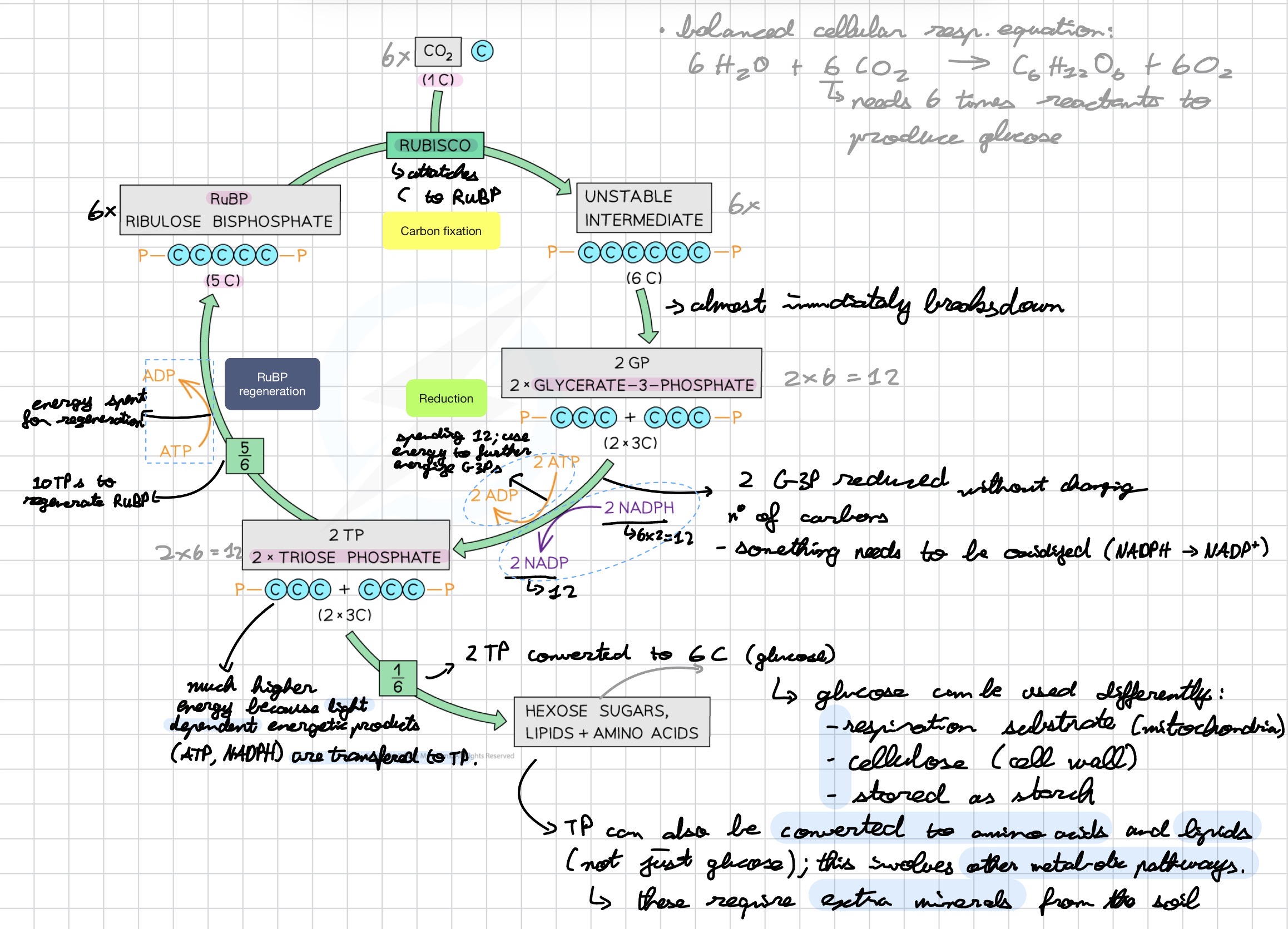
• 6 CO₂ are fixed
• 12 NADPH are used (in the reduction stage)
• ATP is used in both the reduction and regeneration stages
• 12 TP are produced → 2 leave the cycle to form glucose, 10 regenerate RuBP
What can the products of the Calvin cycle be used for?
Glucose can be used as:
• A respiration substrate (in mitochondria)
• Cellulose (for the cell wall)
• Stored as starch
TP can also be converted to amino acids and lipids via other metabolic pathways.
• These conversions require extra minerals from the soil (e.g. nitrogen, sulfur, phosphorus)
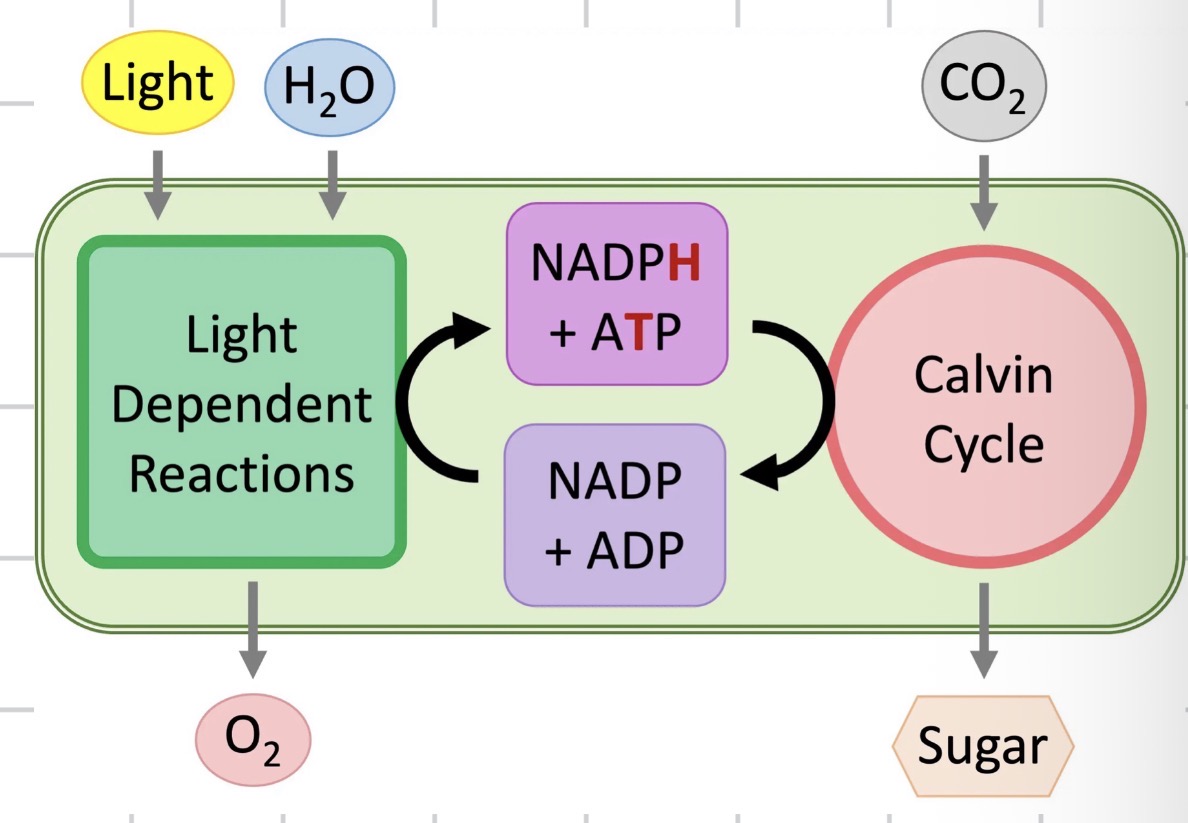
How are the light-dependent (LD) and light-independent (LID) reactions interdependent?
• LD reactions produce ATP and reduced NADP
• LID reactions (Calvin cycle) require ATP and reduced NADP to continue
• Photosystem II produces ATP (from ADP)
• Photosystem I produces reduced NADP (from NADP)
• A lack of CO₂ stops the Calvin cycle → NADP⁺ and ADP are not regenerated → the light-dependent reactions are also inhibited
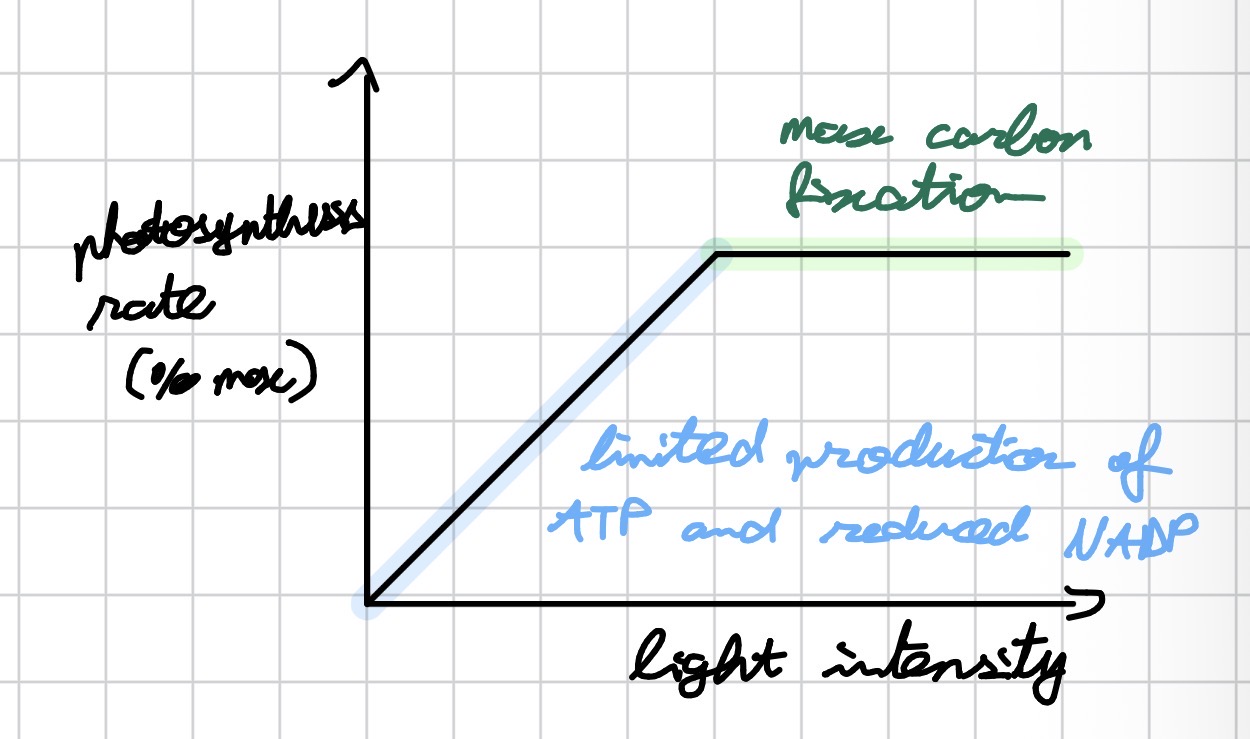
How does light intensity affect the rate of photosynthesis?
• At low light intensity: limited production of ATP and reduced NADP → carbon fixation is slow
• As light intensity increases: rate of photosynthesis increases proportionally
• At high light intensity: carbon fixation reaches a maximum / plateau — further increases in light don't raise the rate (another factor becomes limiting, e.g. CO₂)
• 5/6 of the TP produced is used to regenerate RuBP
• This allows the cycle to continue indefinitely, as long as CO₂, ATP and NADPH are availab