Module 1.2 Organization of the Nervous System
 Call Kai
 Learn
Learn Practice Test
 Spaced Repetition
 Match
Match Flashcards
 Knowt Play
1/26

There's no tags or description
Looks like no tags are added yet.
Name | Mastery | Learn | Test | Matching | Spaced | Call with Kai |
|---|
No analytics yet
Send a link to your students to track their progress
27 Terms
Central Nervous System (CNS)
consists of the brain and spinal cord
Peripheral Nervous System (PNS)
all other nerves branching off the brain
Afferent division of PNS
sensory division
receives information about the outside world
Efferent division of PNS
motor division
Autonomic Nervous System
involuntary motor system
Somatic Nervous System
voluntary motor system
Sympathetic Nervous System
"fight or flight" response
Parasympathetic Nervous System
"rest and digest" response
Afferent signal
towards CNS
Efferent signal
away from CNS
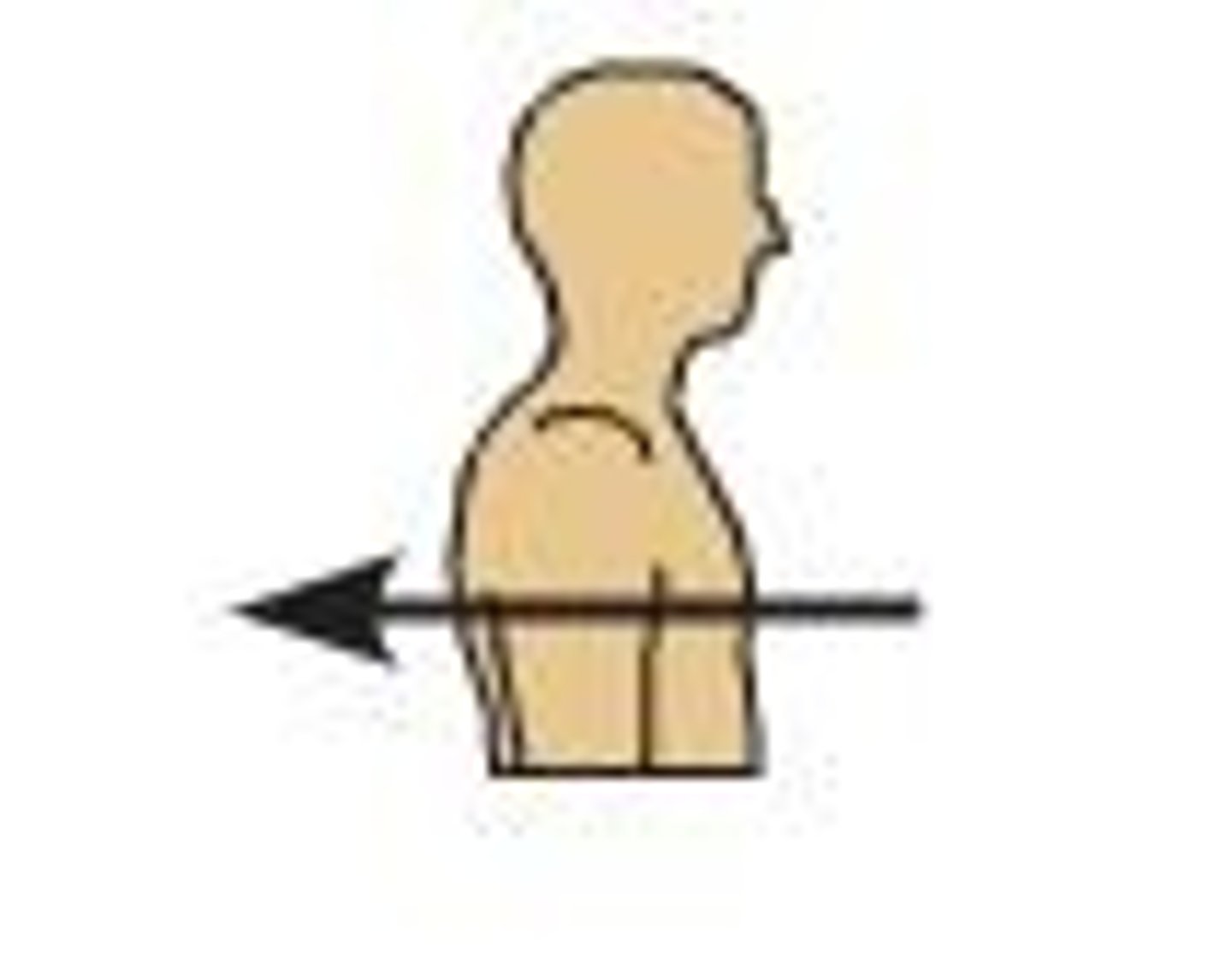
Anterior
in front of, toward the face
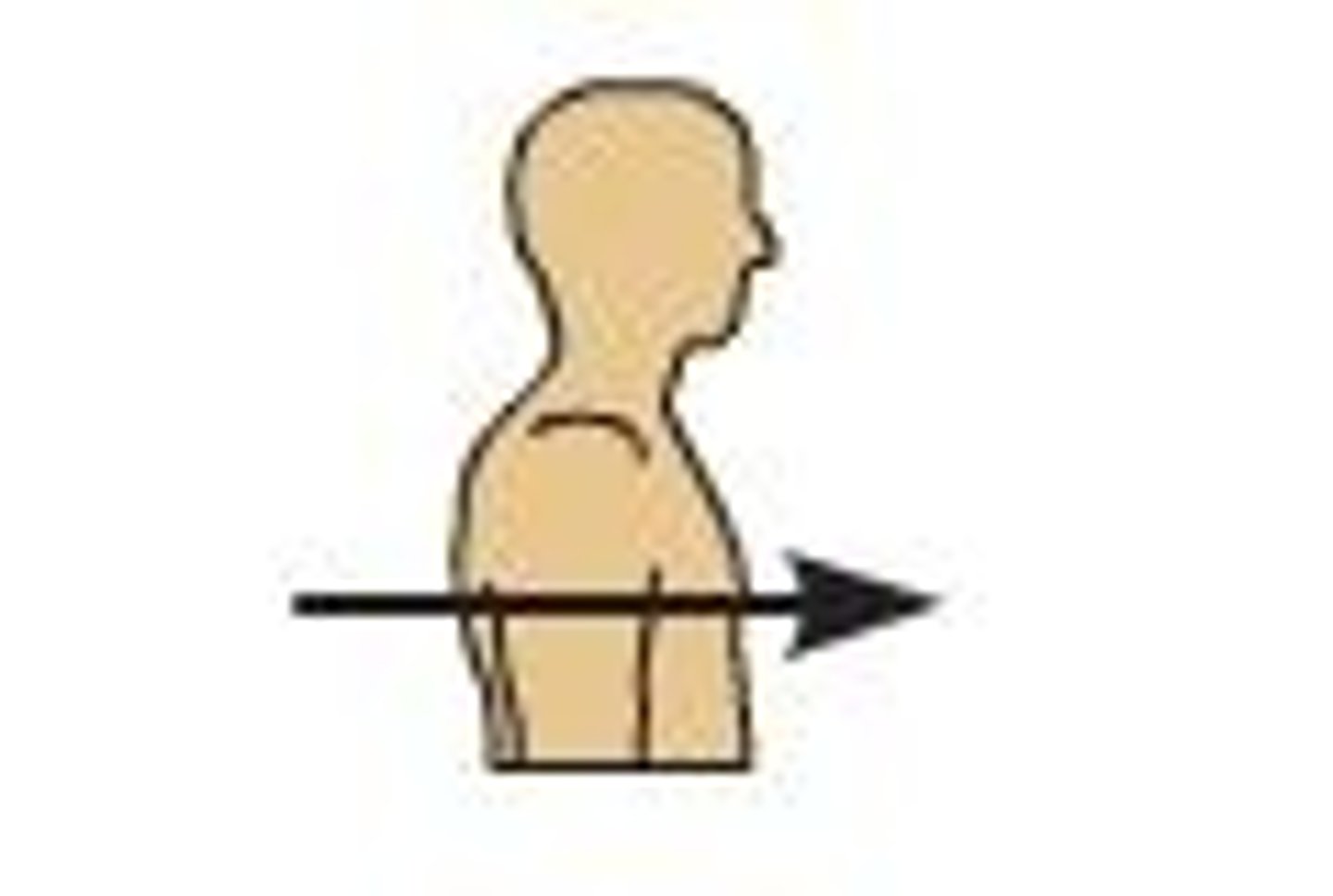
Posterior
behind, toward the back/rear
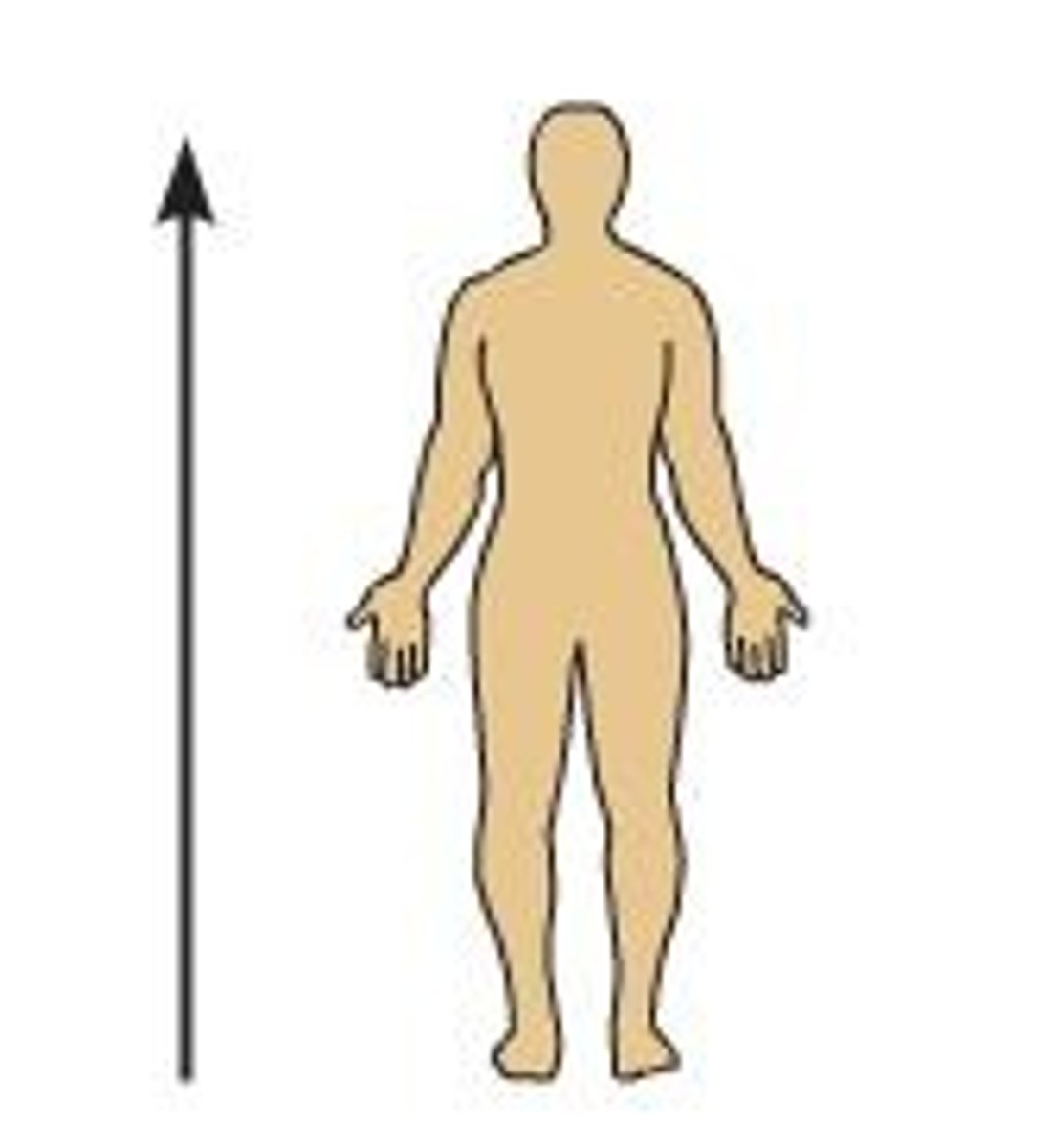
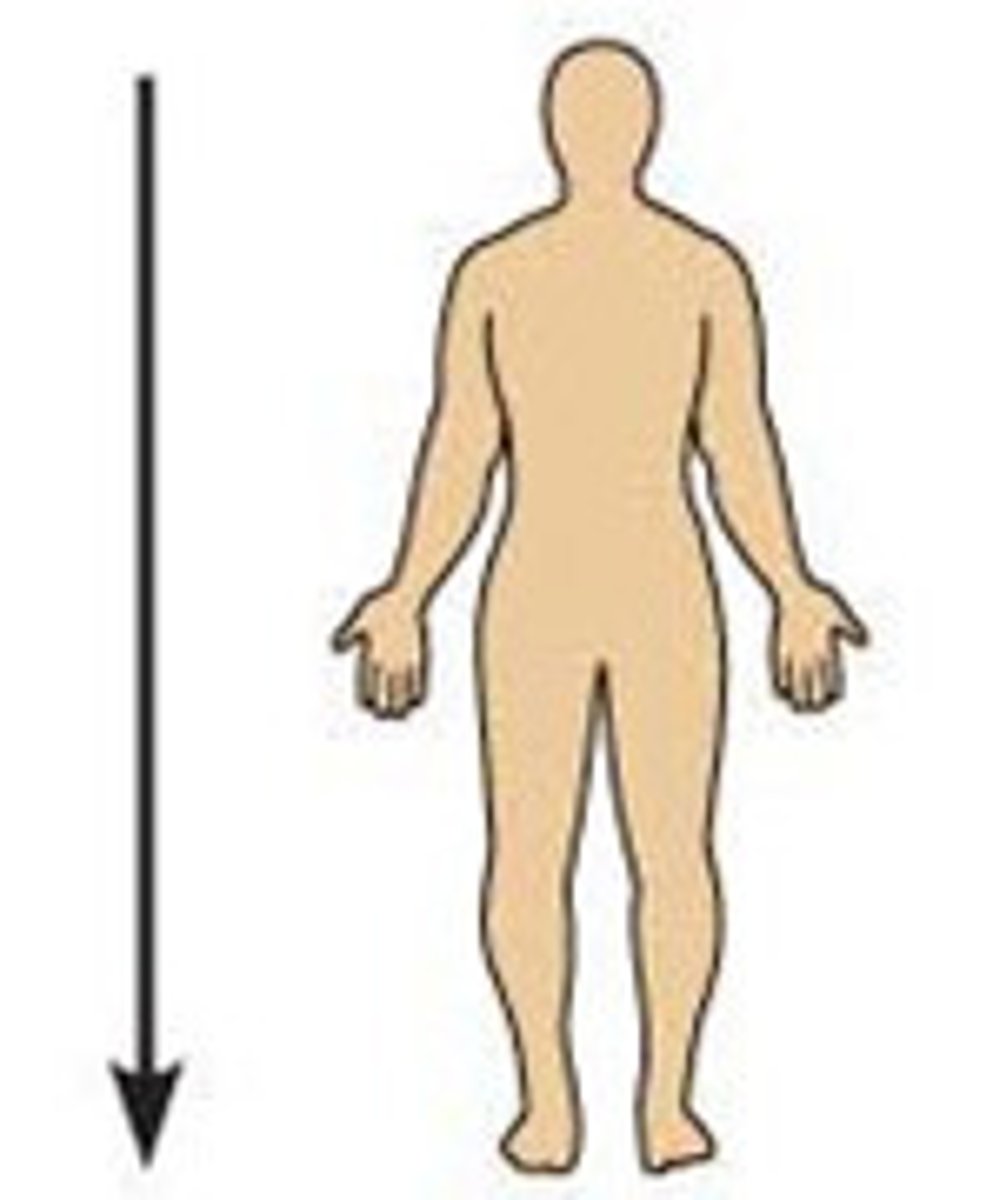
Superior
above, toward the head
Inferior
below, toward the feet
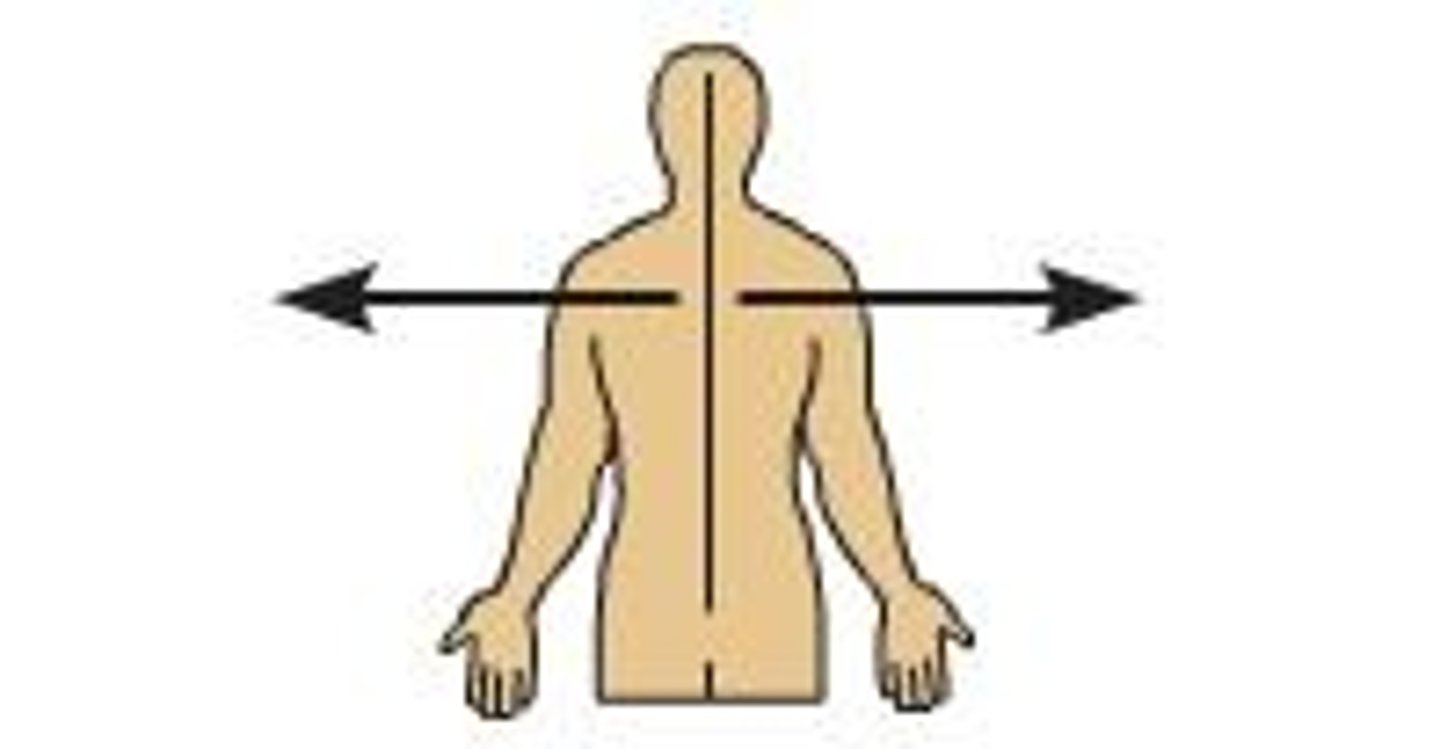
Medial
toward the midline of the body
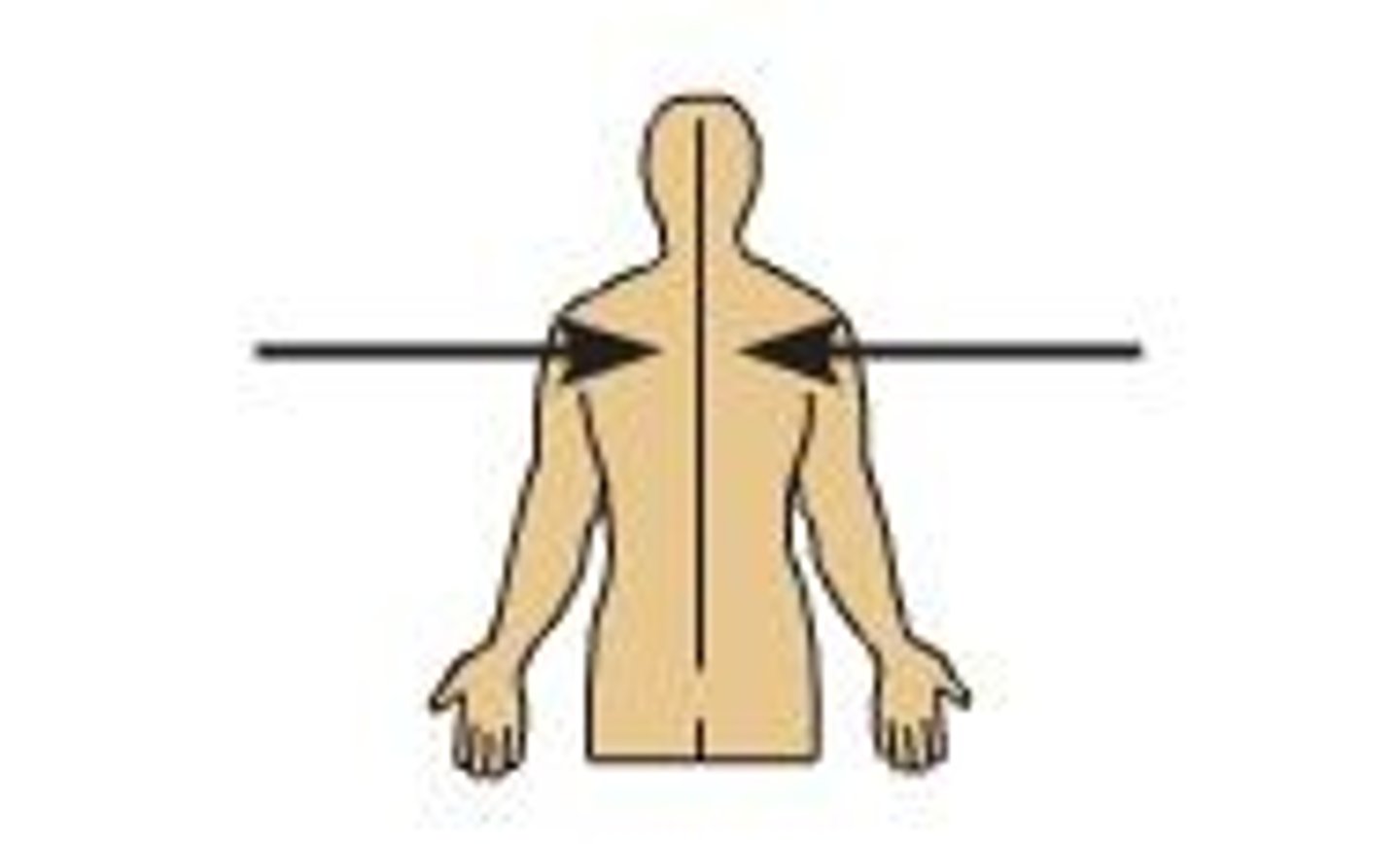
Lateral
toward the side, away from the midline
Dorsal
toward the top of the brain
the back of the spinal cord
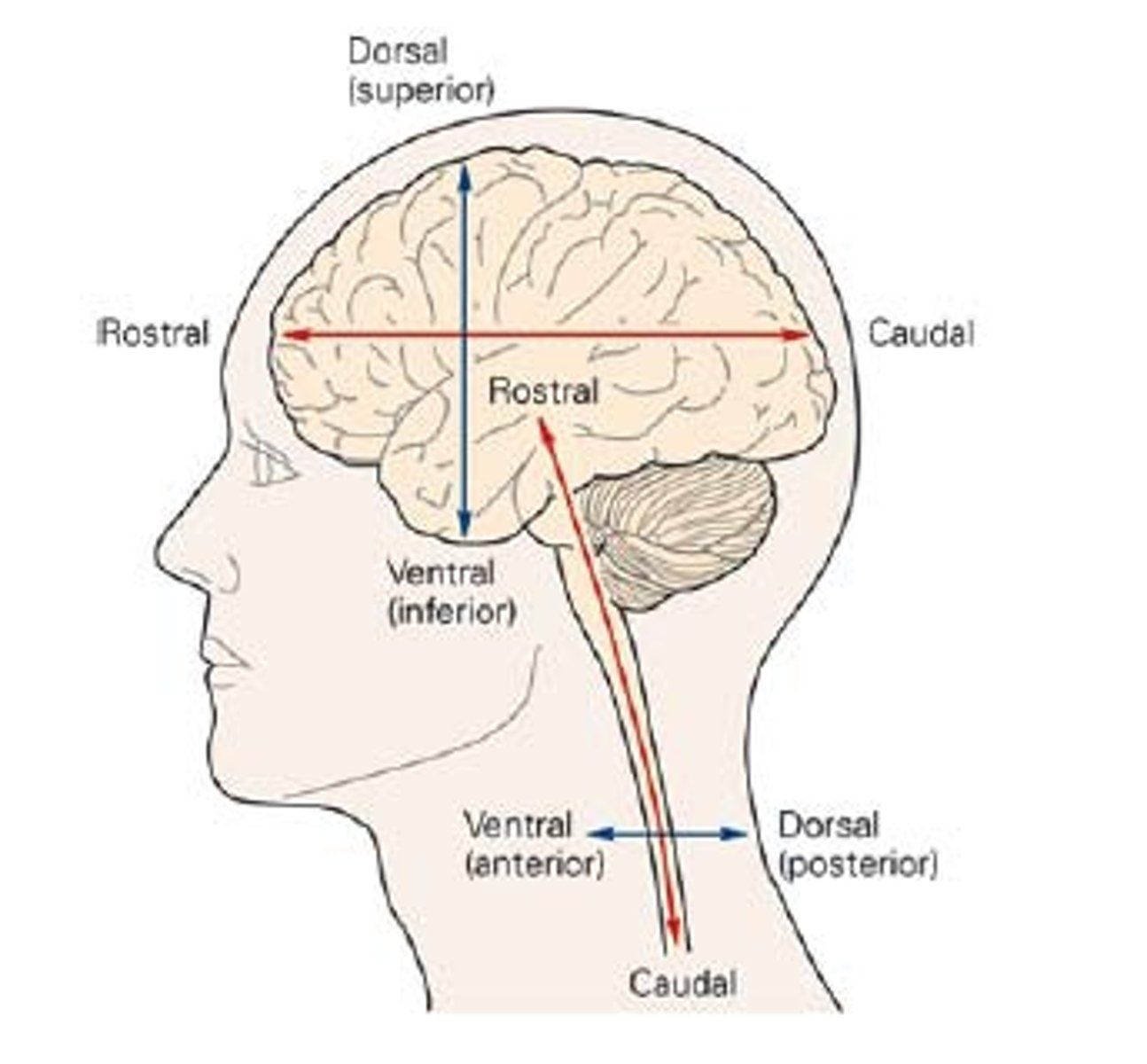
Ventral
toward the bottom of the brain
front of the spinal cord
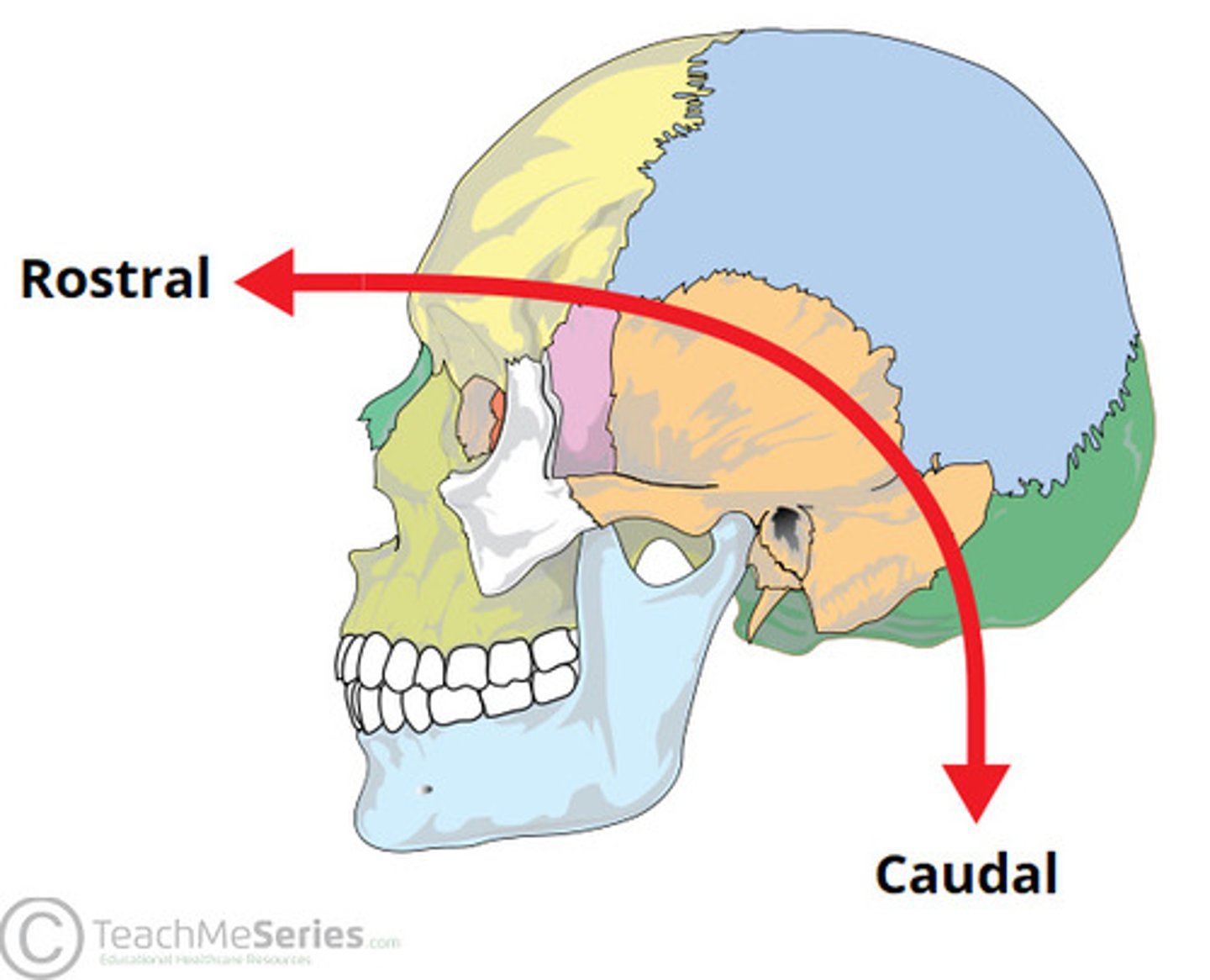
Rostral
toward the front of the brain
top of the spinal cord
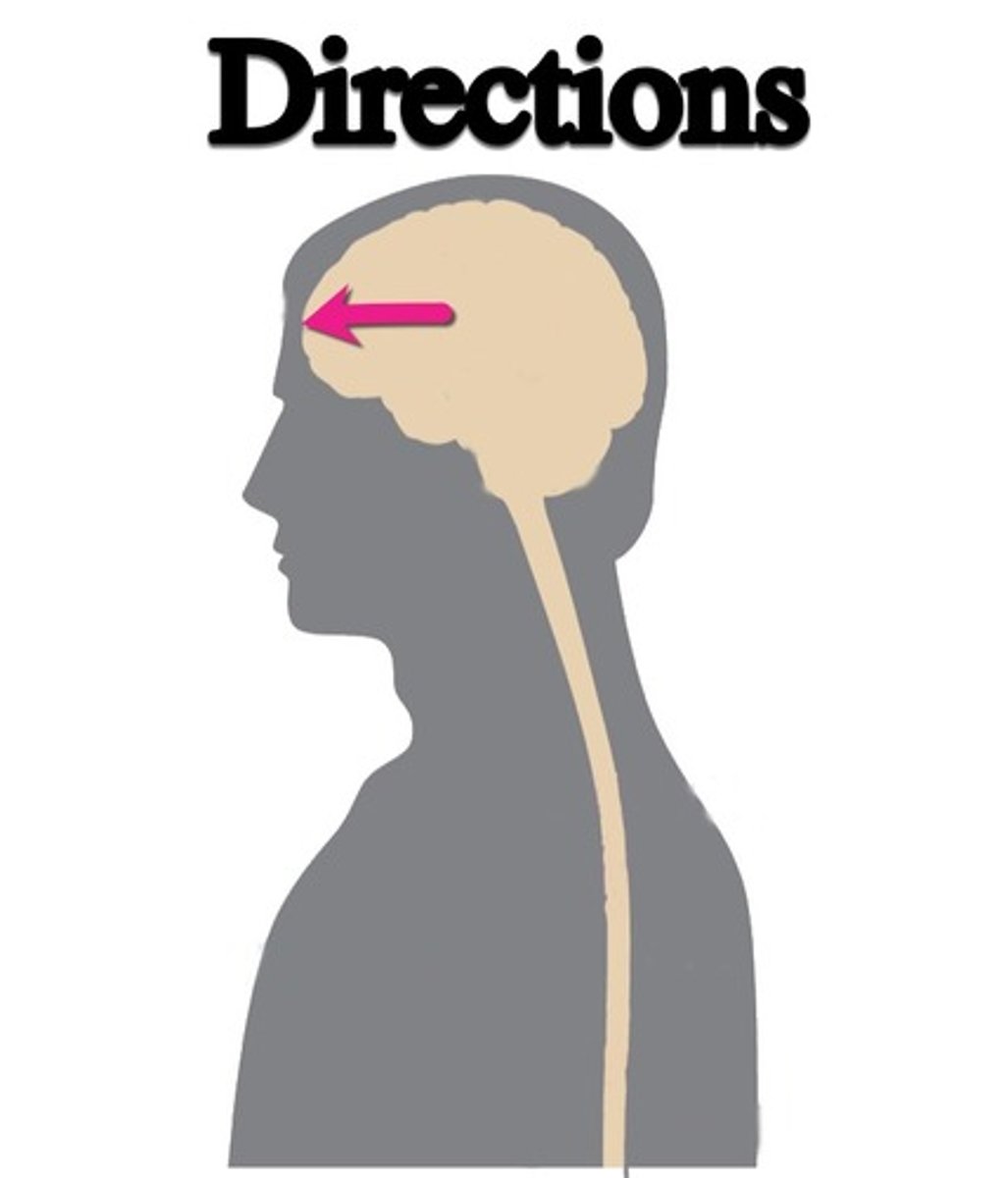
Caudal
toward the back of the brain
bottom of the spinal cord
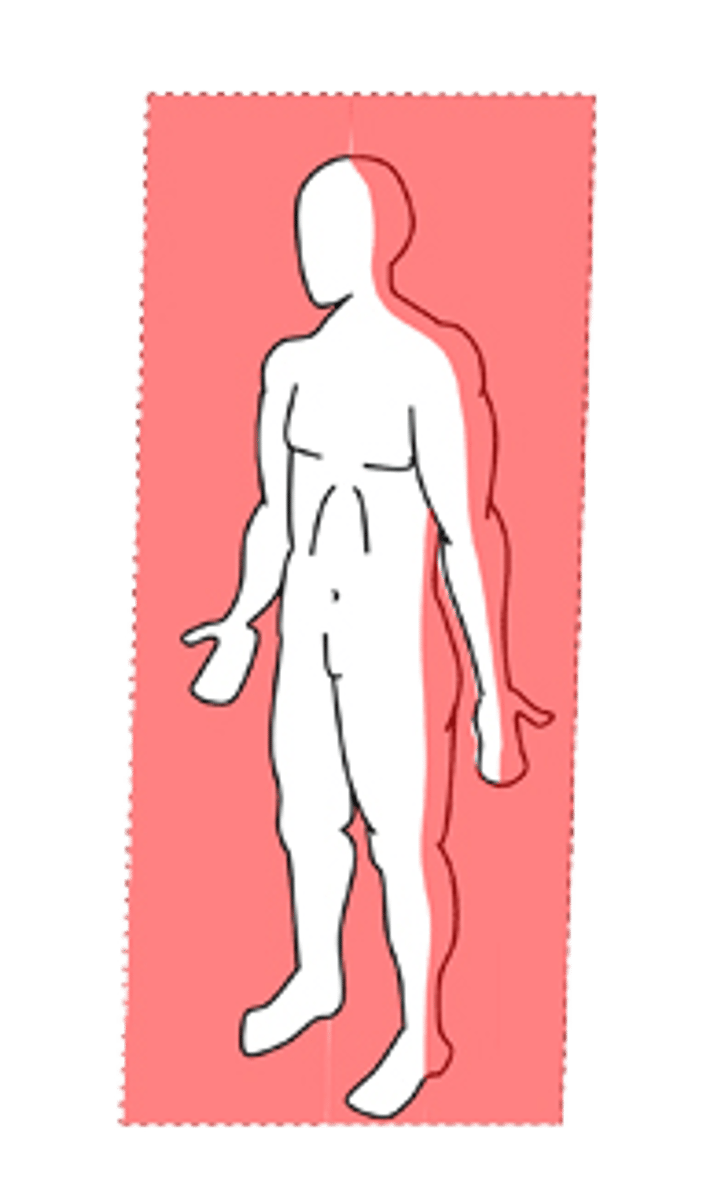
Frontal/coronal plane
vertical plane, dividing the body into front and back pieces
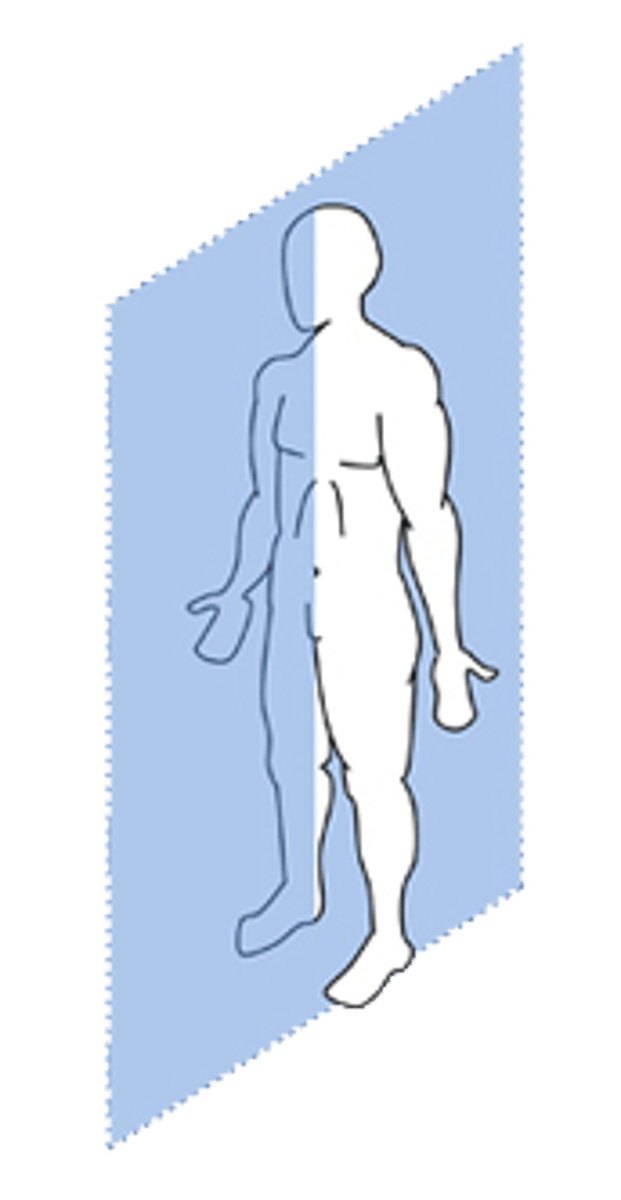
Sagittal plane
vertical plane, divides the body into right and left regions
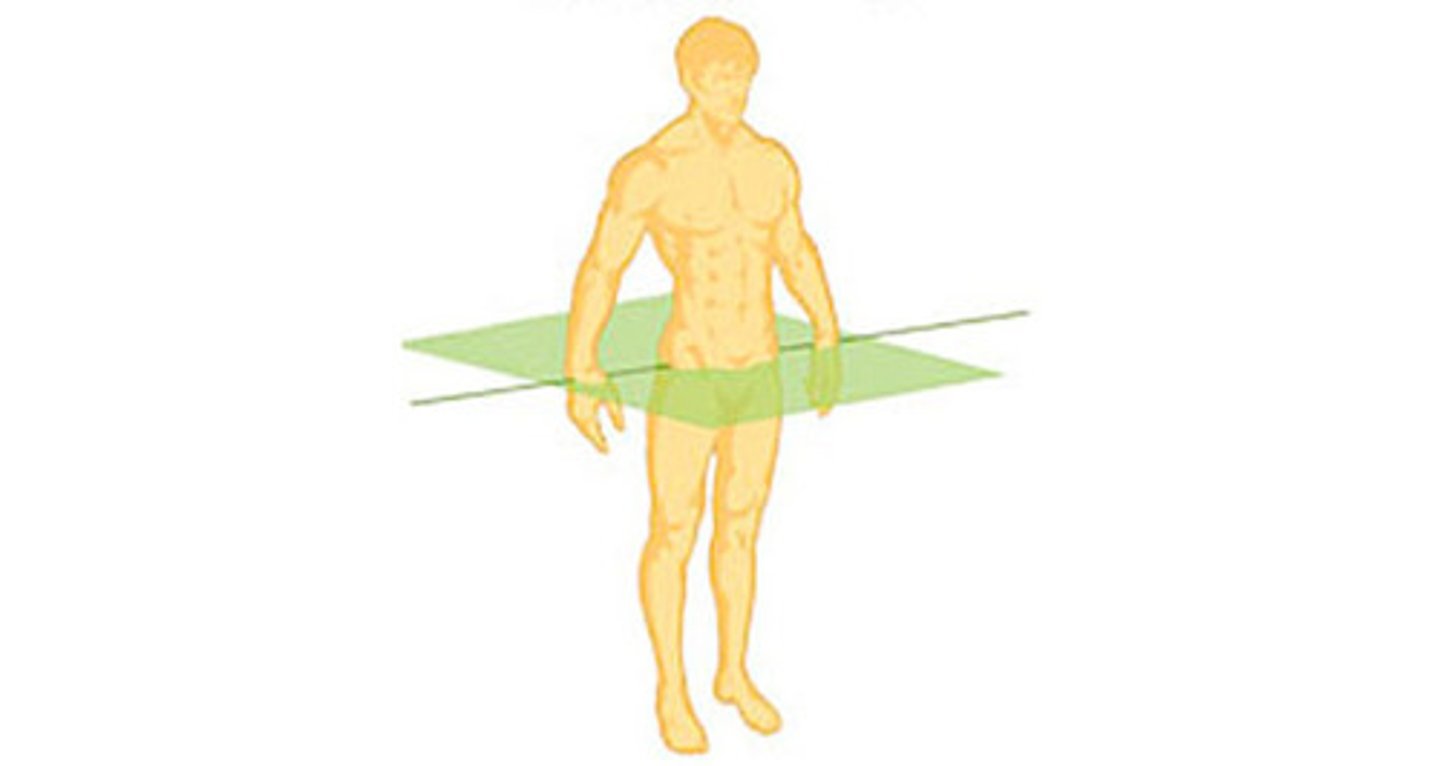
Transverse/horizontal
horizontal plane, divides the body into top and bottom regions
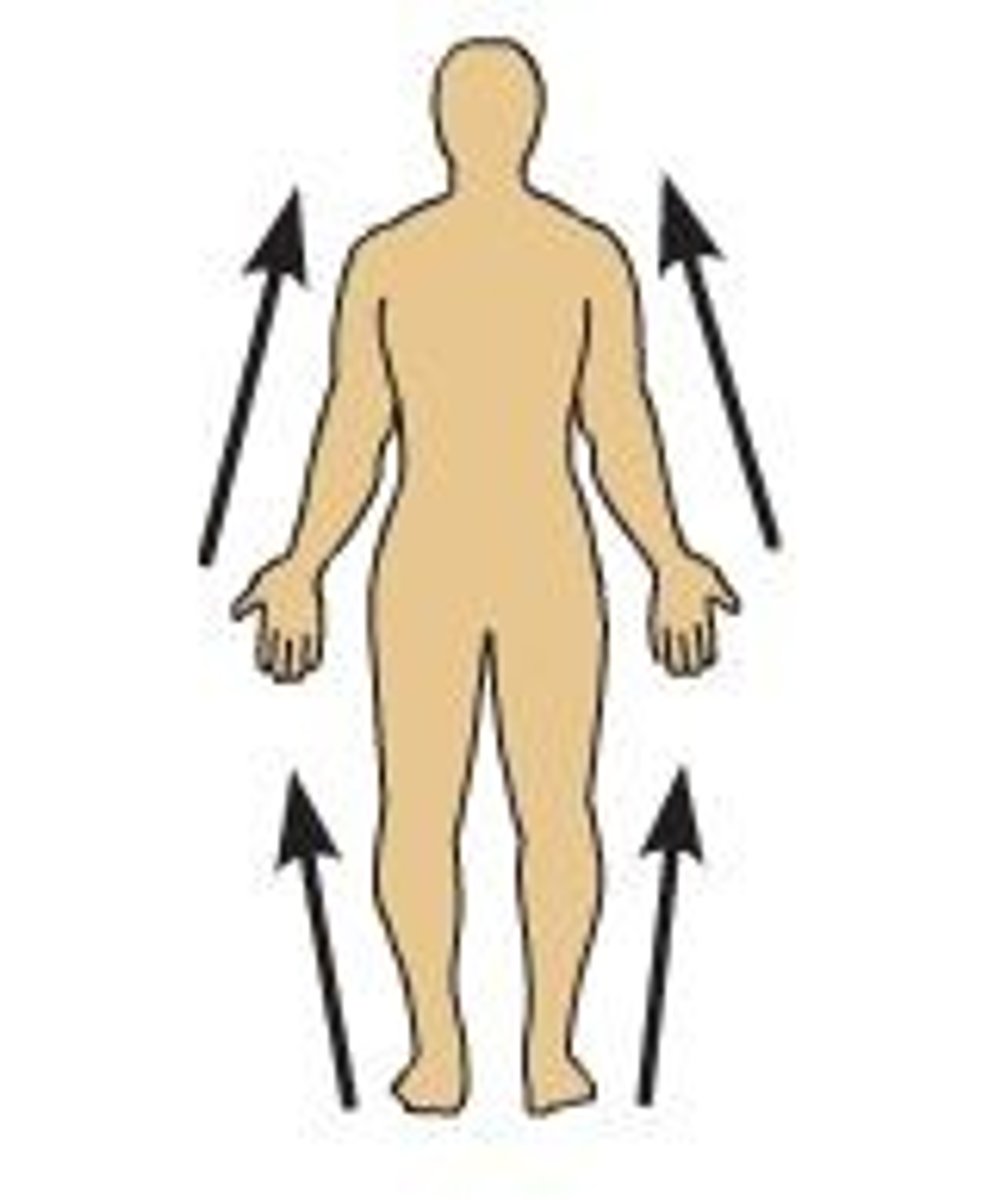
Proximal
part of the body that is in close proximity to the CNS
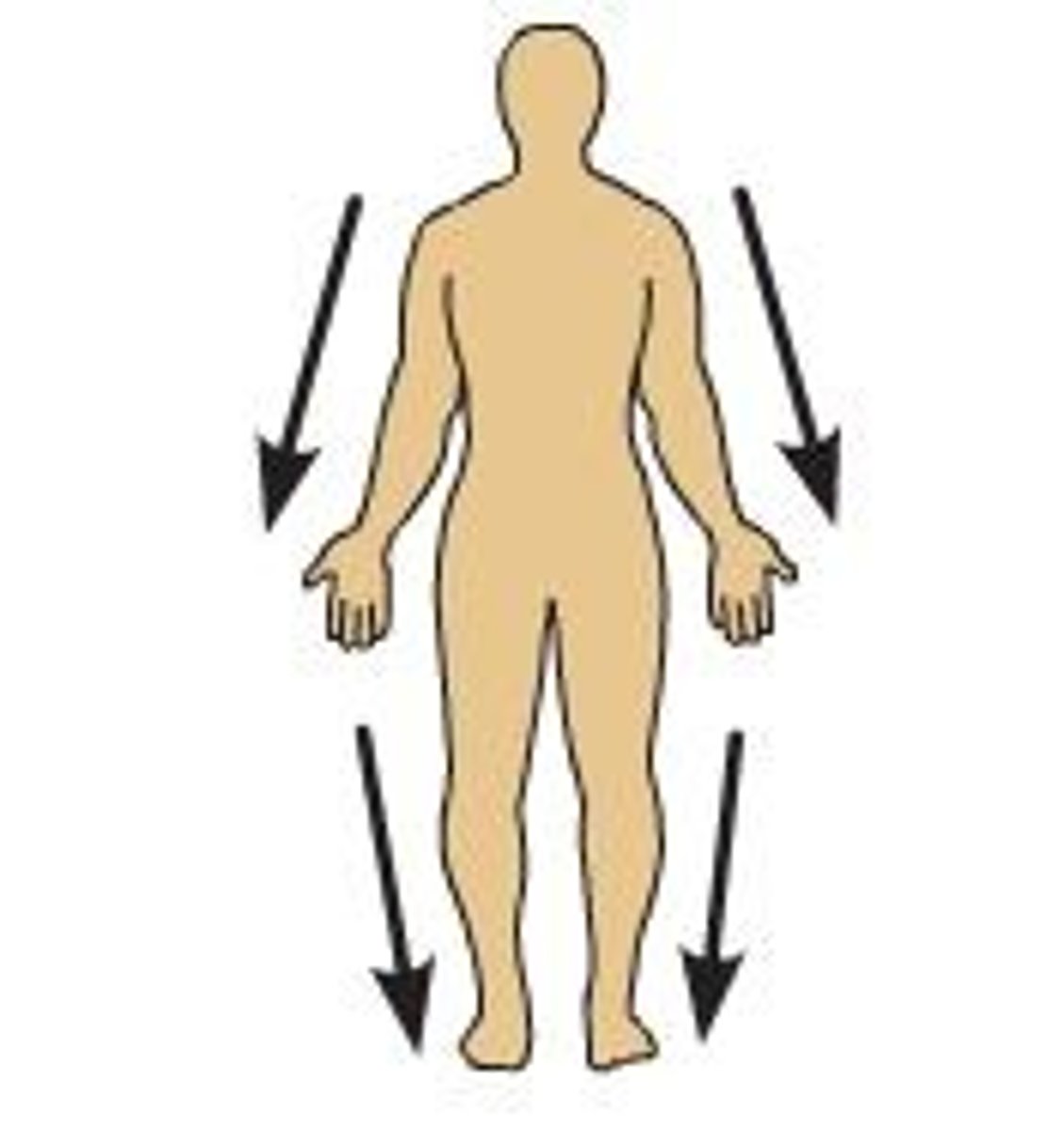
Distal
part of the body that is more distant from the CNS
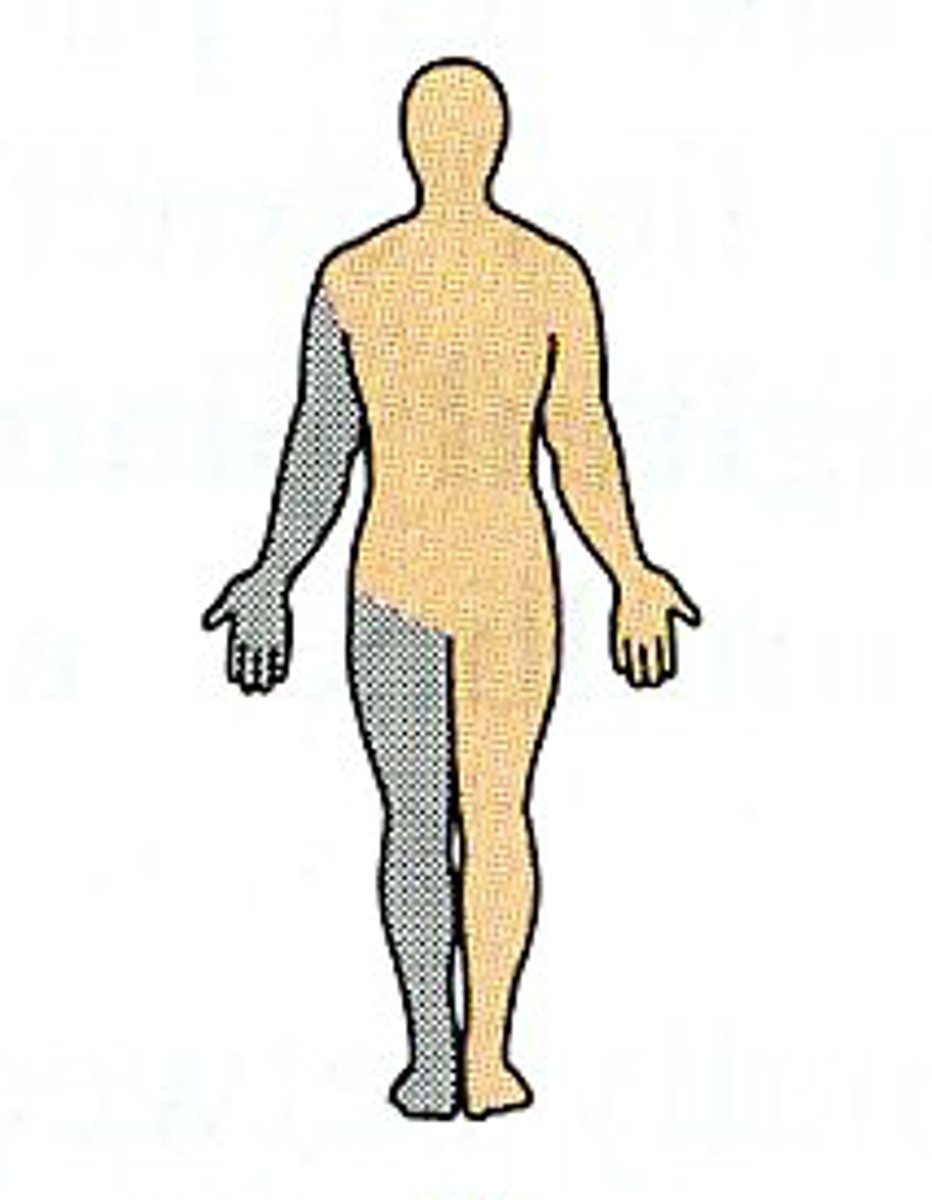
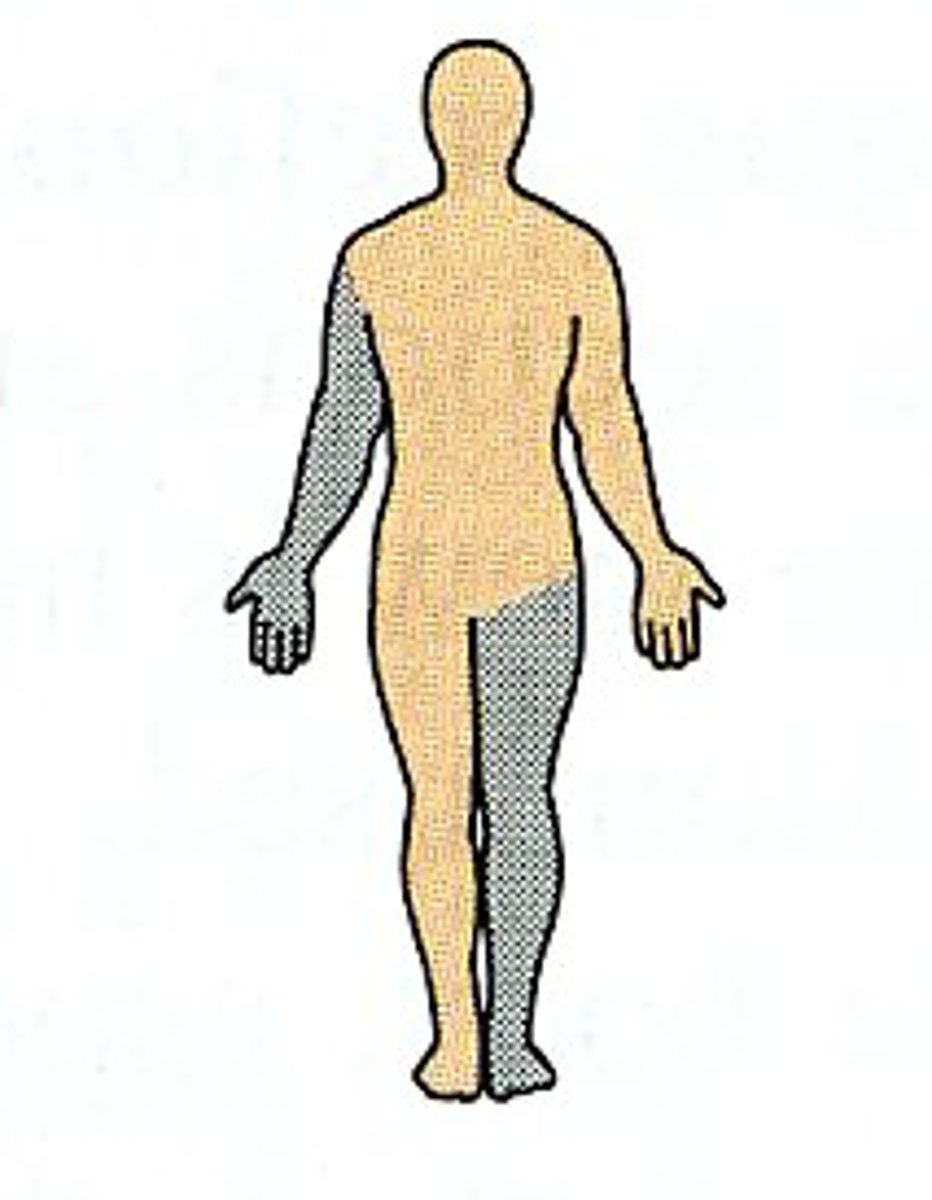
Contralateral
on the opposite side of the body from a particular side of the nervous system
L hand is contralateral to the R hemisphere of the brain
Ipsilateral
on the same side of the body as that half of the nervous system
R hand is ipsilateral to the R hemisphere of the brain