Direct Examination Questions - Case File
 Call Kai
 Learn
Learn Practice Test
 Spaced Repetition
 Match
Match Flashcards
 Knowt Play
1/6

There's no tags or description
Looks like no tags are added yet.
Name | Mastery | Learn | Test | Matching | Spaced | Call with Kai |
|---|
No analytics yet
Send a link to your students to track their progress
7 Terms
What evidence was submitted to the laboratory?
A bag which contained a white colored powder was submitted to the laboratory.
What test was used to analyze the evidence?
The white colored powered was first weighed to be approximately 1.45 grams. It was then prepared for gas chromatography – mass spectrometry (GC-MS) analysis which is an instrumental technique used to analyzed, identified, purified, and quantified substances present in a sample.
You may rise. Please orient the jury on your visual exhibit (GC-MS)
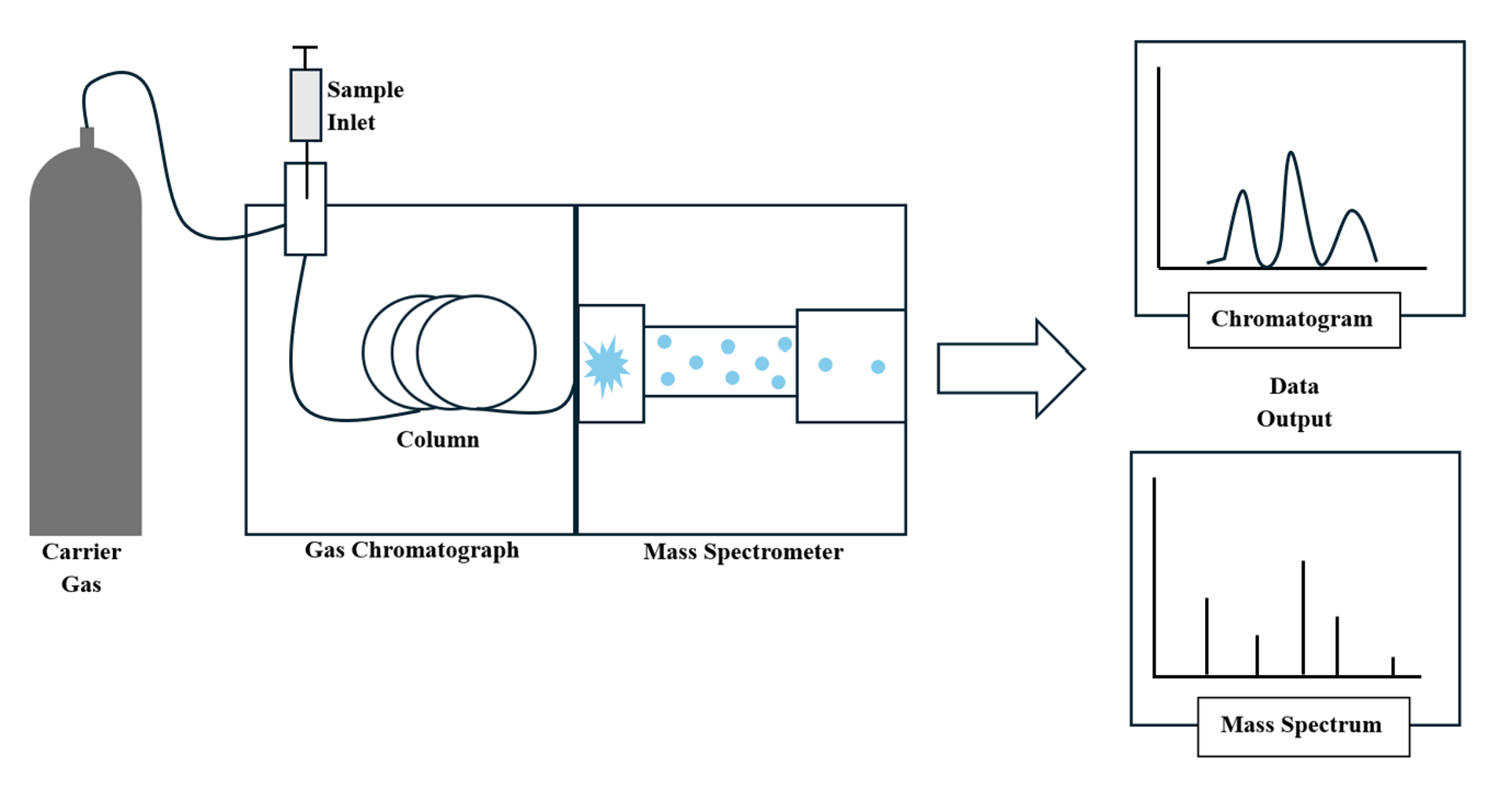
GC-MS analysis utilize two instruments: the chromatograph and the spectrometer. The sample is introduced at the injection port located on the chromatograph where it is heated up. It then introduced into the column of the chromatograph where it move through by the introduction of carrier gas which can be hydrogen, helium, or nitrogen. As it move through the column, components of the sample will stick to the column with different affinities resulting in it leaving the chromatograph and entering the spectrometer at different times.
When a component enter the spectrometer, it is fragmented into particles that are charged either negatively or positively. Those charged particles enter into the detector which measure the relative abundance of each charged particle, and it masses to charge ratio. Mass to charge ratio is the ratio of a particle’s mass to its electrical charge.
Two types of graphs are produced from using the gas chromatograph – mass spectrometer: a chromatogram and a mass spectrum. The chromatogram showcase the time when each component of the sample left the chromatograph. The mass spectrum, on the other hand, showcase the particles produced when the components was fragmented in the mass spectrometer. The graph showcases the relative abundance against the mass to charge ratio.
The mass spectrum can be compared to other spectra of known substances which are collected in a library to identify the component
You may be seated. What was the result of the GC-MS analysis of the sample?
The white powder sample was positive for cocaine.
How did you come to this conclusion?
The white powder had one component appeared on the chromatogram at a retention time 10.45 minutes. That component mass spectrum was analyzed and compared to other mass spectrum in a library. It matched cocaine’s mass spectrum. It shared the following mass to charge ratio: 51, 68, 82, 94, 105, 122, 152, 182, 198, 272, 303.
Most abundant peak in order: 182, 82, 94, 105, 303, 198, 272, 122, 51
Did you write a report?
Yes, I wrote a report
Was your report peer reviewed?
Yes, it was peer reviewed by Liam Metcalf, a criminalist III at Boston University Biomedical Laboratory.