Operations management Unit 3 AOS 3 edrolo notes
 Call Kai
 Learn
Learn Practice Test
 Spaced Repetition
 Match
Match Flashcards
 Knowt Play
1/82

There's no tags or description
Looks like no tags are added yet.
Name | Mastery | Learn | Test | Matching | Spaced | Call with Kai |
|---|
No analytics yet
Send a link to your students to track their progress
83 Terms
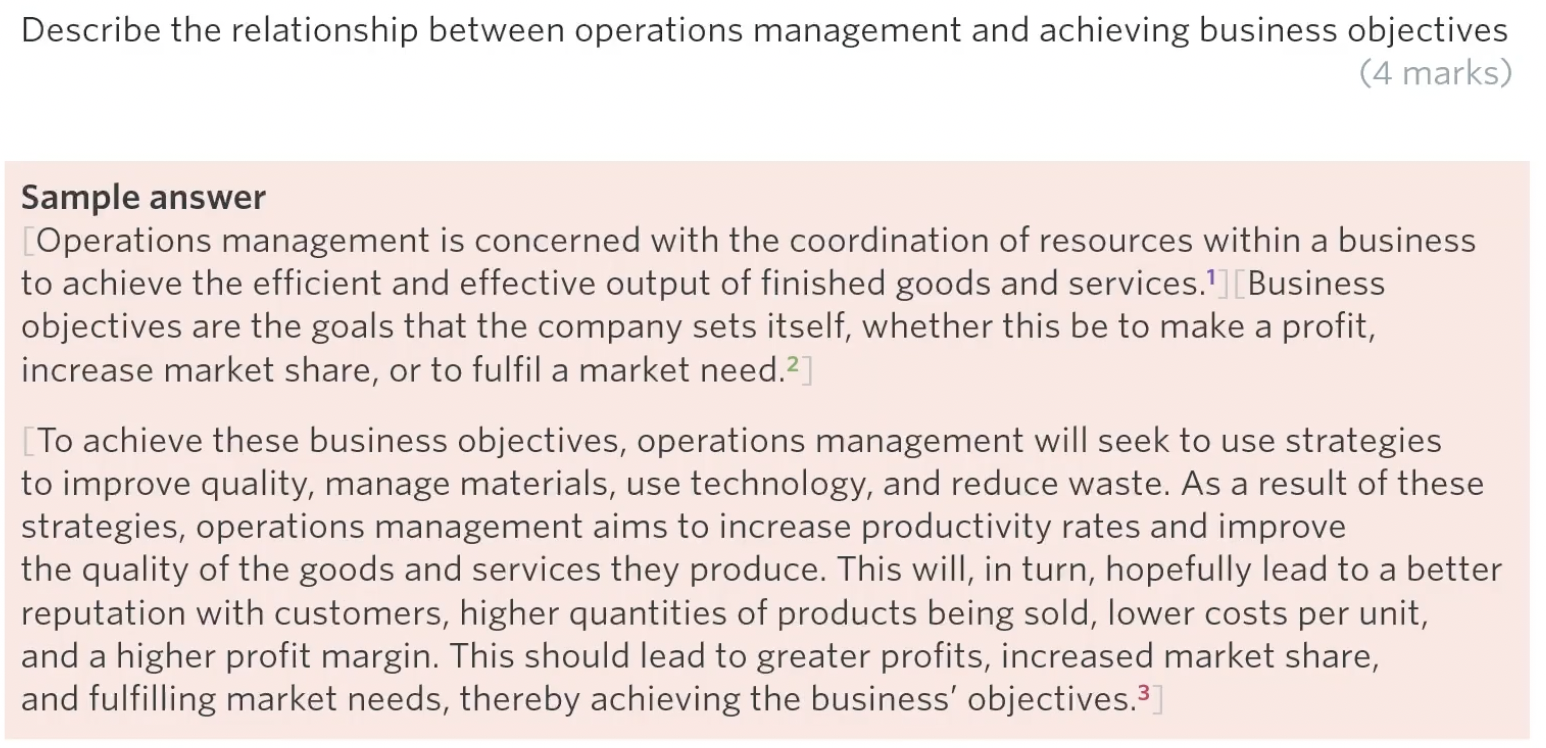
Operations management
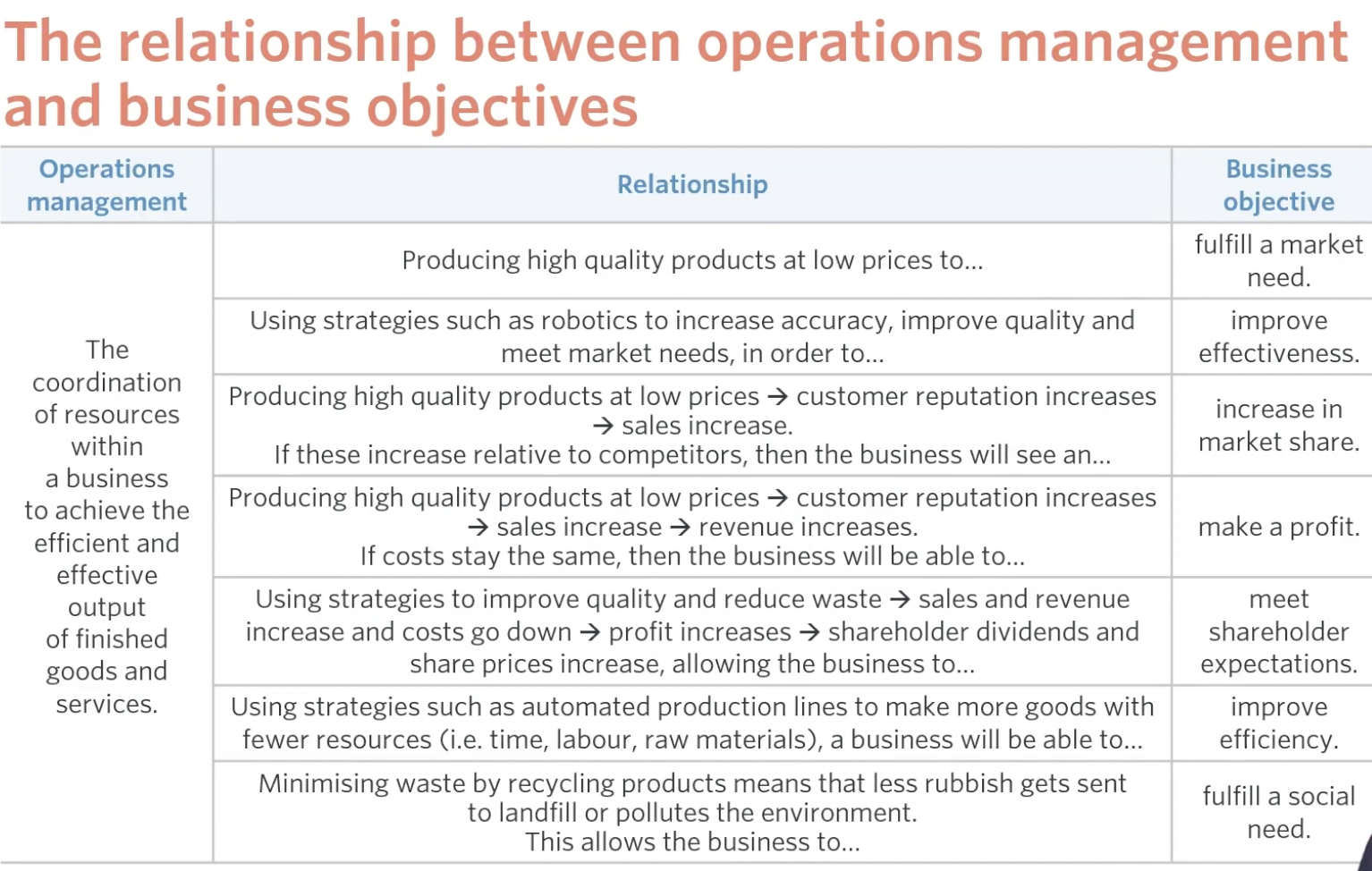
The coordination of resources within a business to achieve the efficient and effective output of finished goods and services.
7 Business objectives PMMSSEE
Making a profit: this is most businesses objective & it is needed for a business to operate and exist
Increasing Market share: if a business is able to increase market share % its likely to increase its profit margin
Fulfilling a Market & Social need: in order for a business to be successful it needs to be innovative and fulfil a gap in the market to stand out from competitors and make maintain profit.
Meeting shareholder expectations: if shareholders expectations are met this allows a business to expand from the income they receive from people who buy shares
To improve efficiency: refers to when a business uses its resources (inputs) efficiently to produce the product or service (outputs). This allows a business to use its recourses to the best of their potential while minimising waste.
To improve effectiveness: refers to how successful a business has been in terms of achieving its stated objectives.
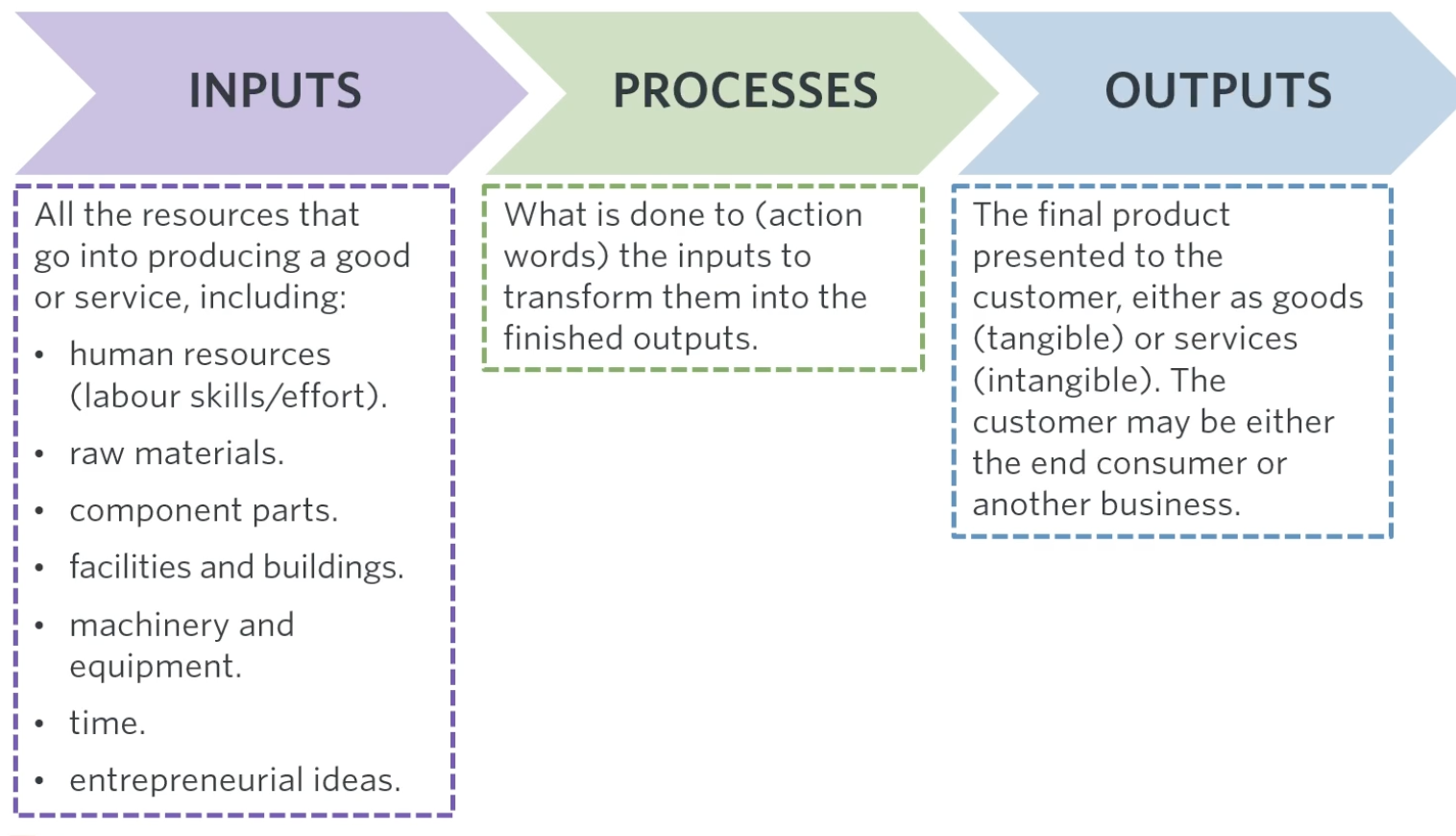
Key elements of operations system- IPO
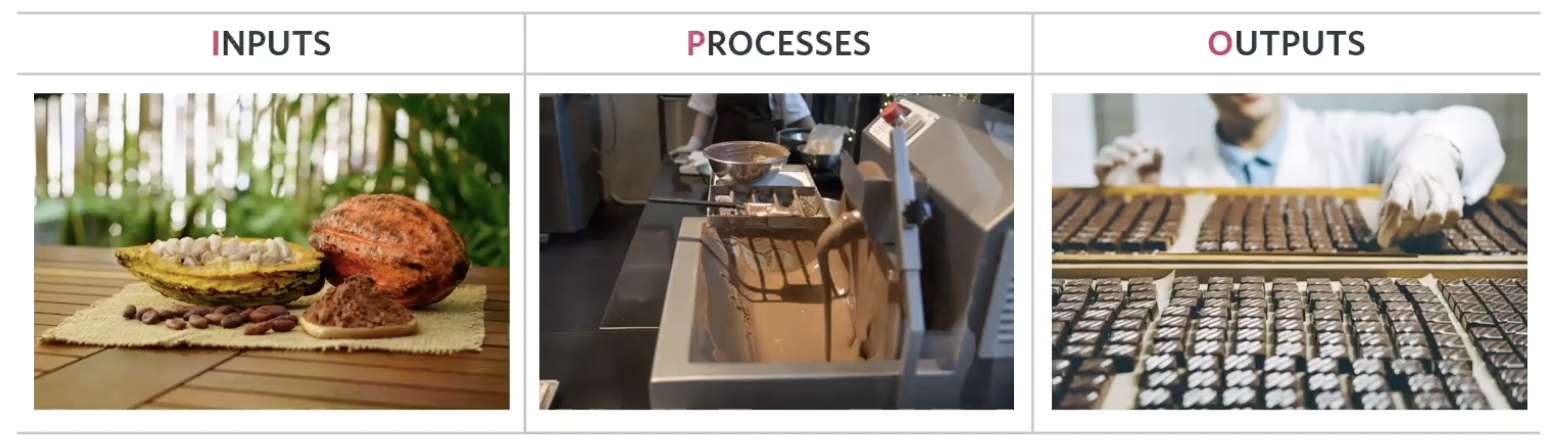
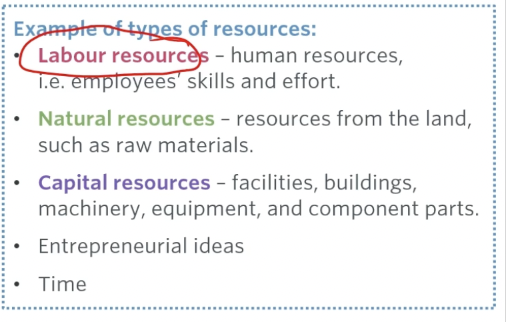
Inputs
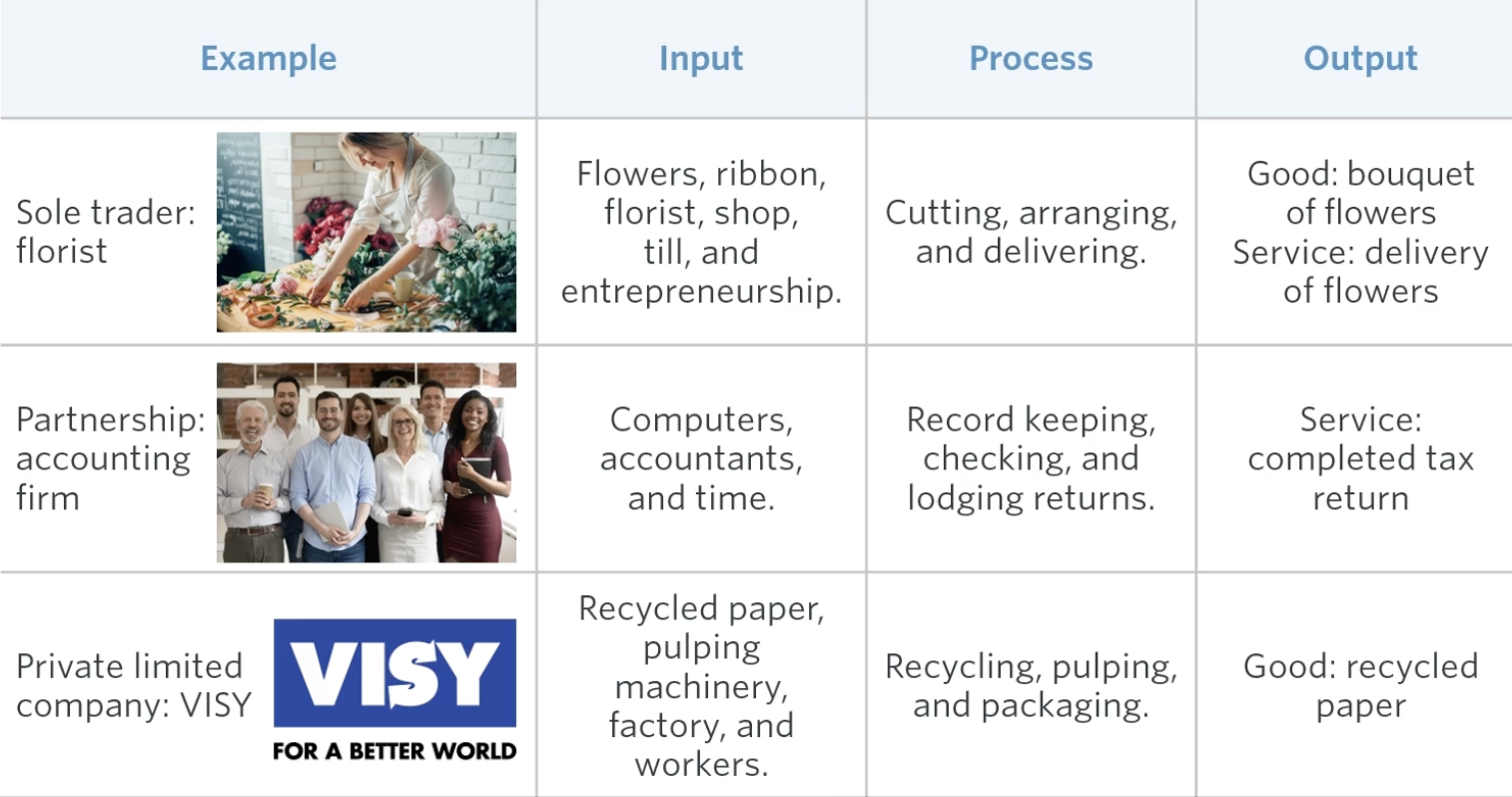
All the resources that go into producing a good or service.
Processes
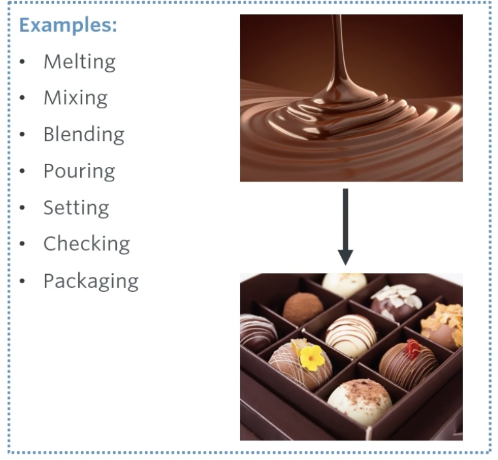
What is done to the inputs to transform them into the finished outputs.
Outputs
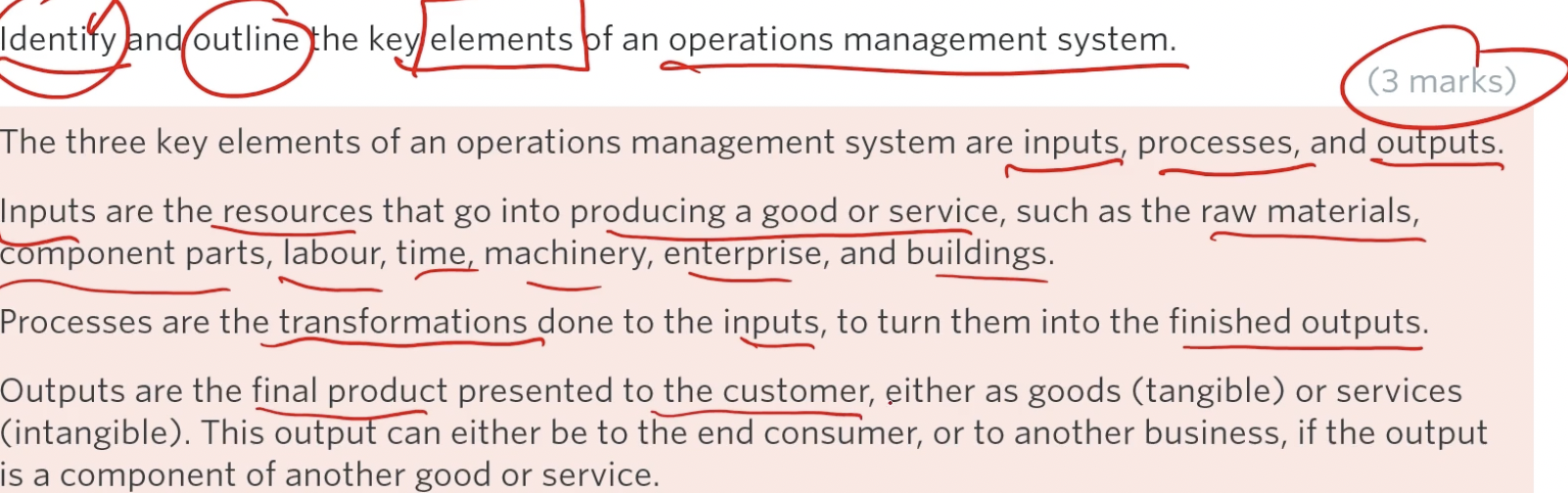
The final goods or services produced as a result of a businesses operations system that are delivered or provided to customers.
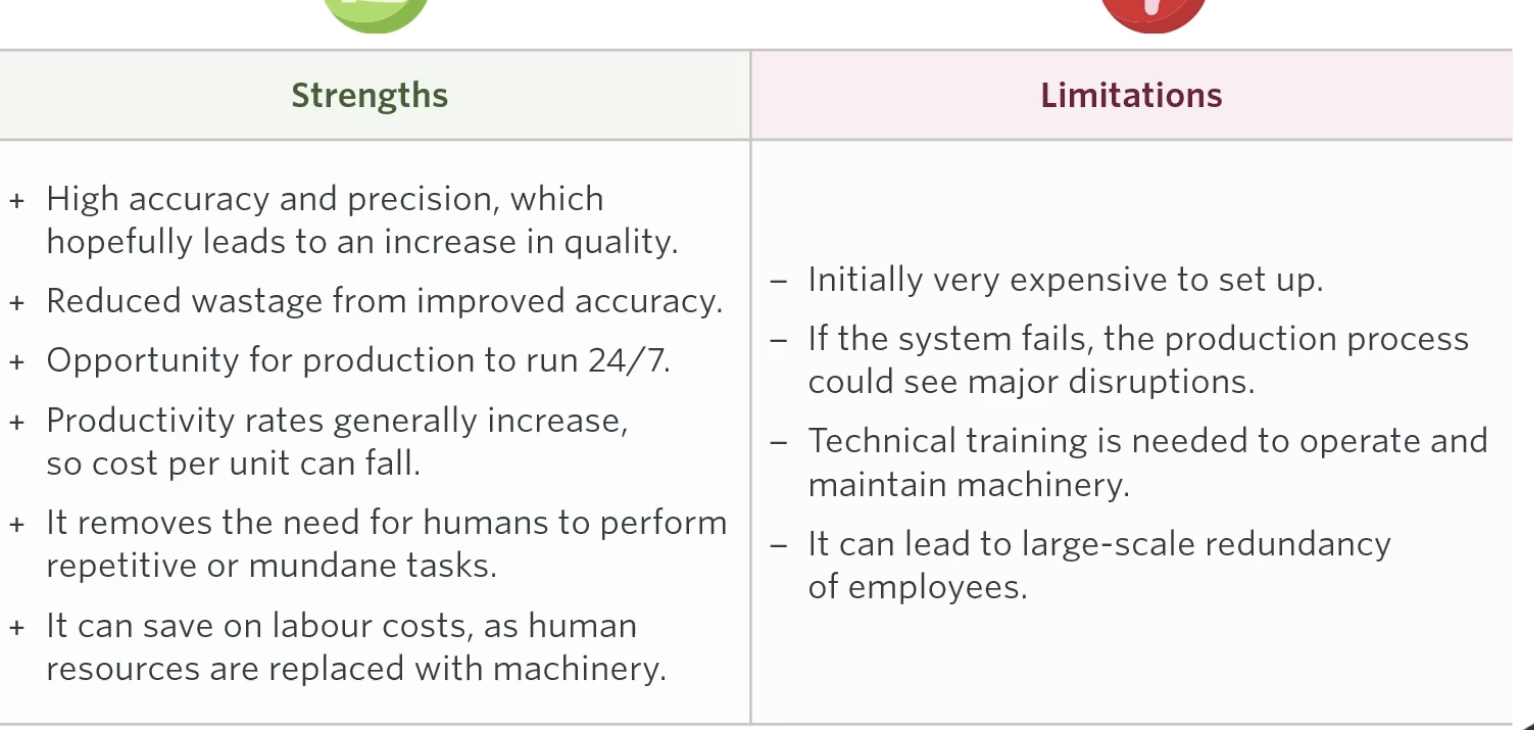
Automated production lines
Machinery and equipment that are arranged in a sequence, where the product is developed as it proceeds through each step.
Automation involves replacing human effort by machinery and technology due to advances in engineering and robotics.
Automated production lines work generally in manufacturing industries where mass production of a standardised product is possible. Each station performs a specific operation in sequence, preferably with automatic transfer between each station.
Automated production lines can also be used in service industries, eg. Australia Post's sorting line.
Pros and cons of Automated production lines
Robotics
Programmable machines that are capable of performing specified tasks.
Industrial manufacturing, i.e. where weight and safety for humans are an issue.
Standardised or repetitive tasks, i.e. stock control.
Tasks requiring a high level of accuracy, i.e. precision welding in car manufacture.
Pros and cons of robotics
Computer-aided design CAD
Digital design software that aids the creation, modification, and optimisation of a design and the design process.
These programs can also allow for the creation of 3D designs.
Architects and engineers can use these program to draw and adjust 3D designs based on client requests, which can then be emailed and reviewed from anywhere in the world.
This has applications where designers of products like planes and cars can operate in different countries to the manufacturing team.
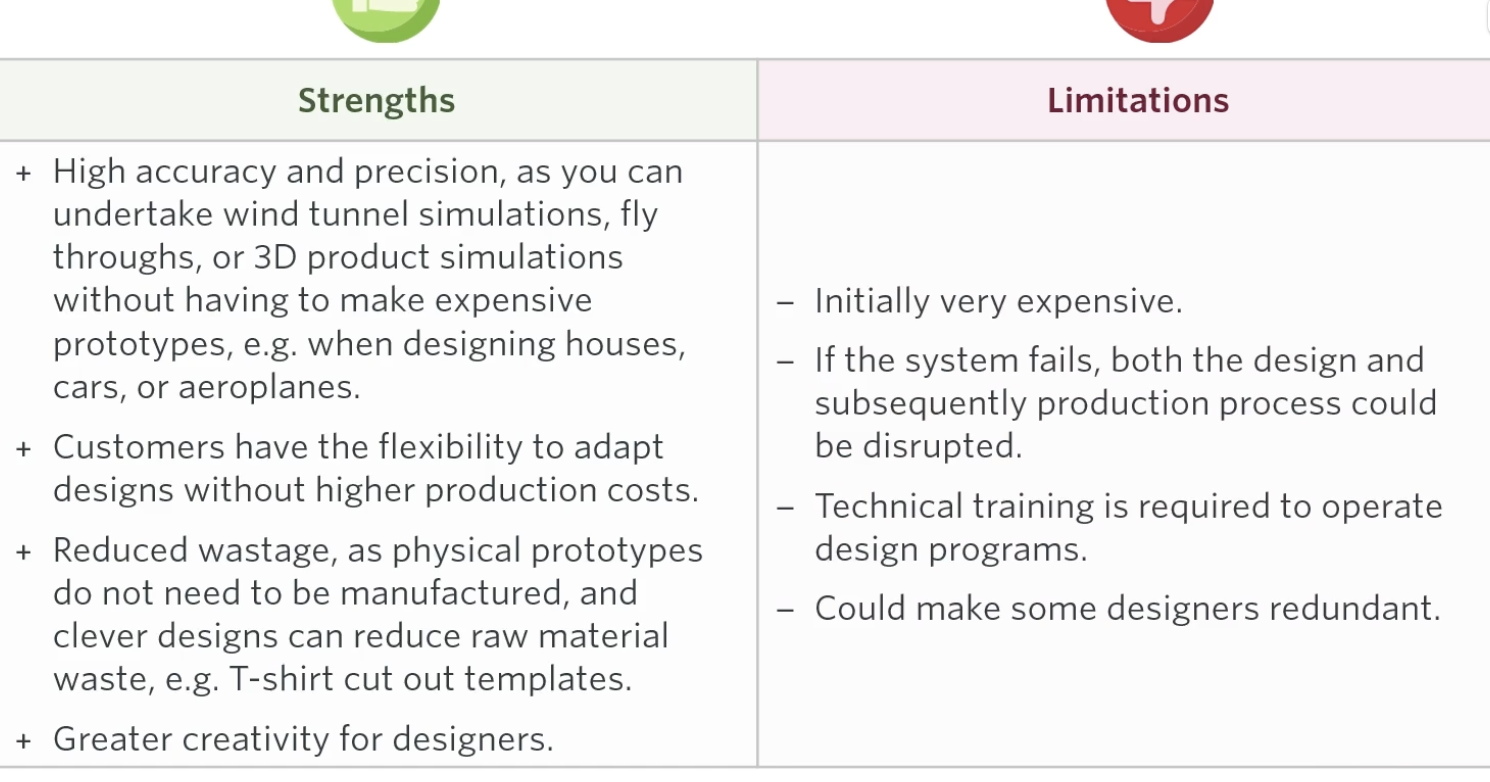
Pros and cons of CAD
Computer aided manufacturing CAM
The use of software that controls and directs production processes by coordinating machinery and equipment through a computer.
Machines are fed instructions from a computer which then manufacture the product.
Some examples of uses include robotics in construction, collaborative robotics, and remotely operated robots.
Pros and cons of CAM
Pro + It can remove the need for staff to operate heavy and dangerous machinery
Artificial intelligence
Refers to any computer system that perceives its environment and takes actions that maximise its chance of achieving its goals.
Using computerised systems to simulate human intelligence and mimic human behaviour.
Business applications of Al
Advanced web search engines (Google).
Recommendation systems (used by YouTube, Amazon, and Netflix).
Understanding human speech (Siri and Alexa) and predicting human behaviour (Uber).
Self-driving cars (Tesla).
Automated decision-making and competing at the highest level in strategic game systems (such as chess and Go).
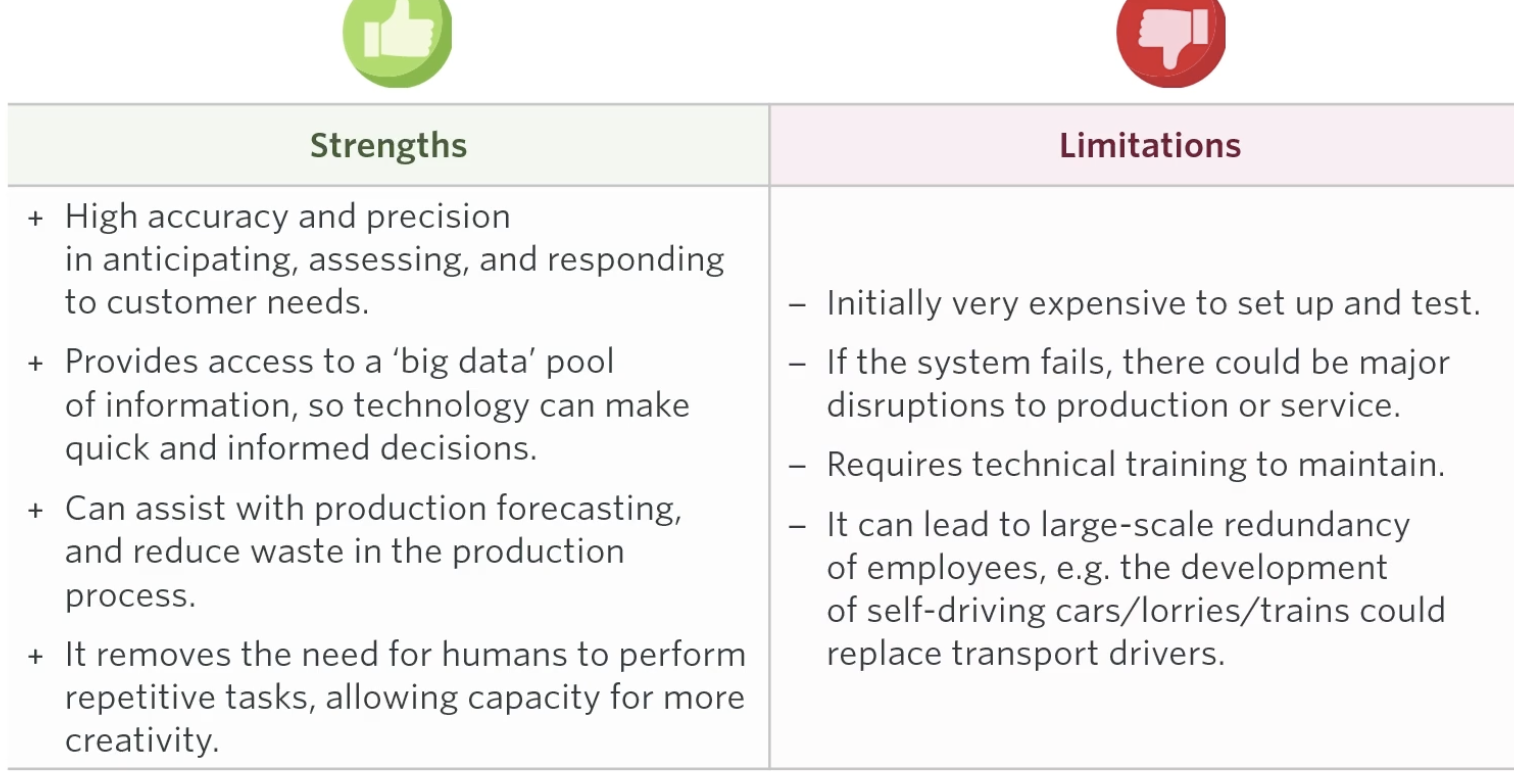
Pros and cons of AI
Online services
Services such as web pages, apps, and platforms that allow businesses to provide their service to customers through the internet.
Business applications of online services:
Travel services, such as Webjet, AirBnB, Uber, Skyscanner, and Wotif.
Streaming media content, such as Spotify, Netflix, Stan, Binge, Disney+, Paramount+, and Optus.
Online retailers, such as Ebay, Amazon, ASOS, The Iconic, and Shopify.
Cloud services that allow businesses to connect with clients, prepare and share work, and provide services from anywhere in the world, such as Google Workspace.
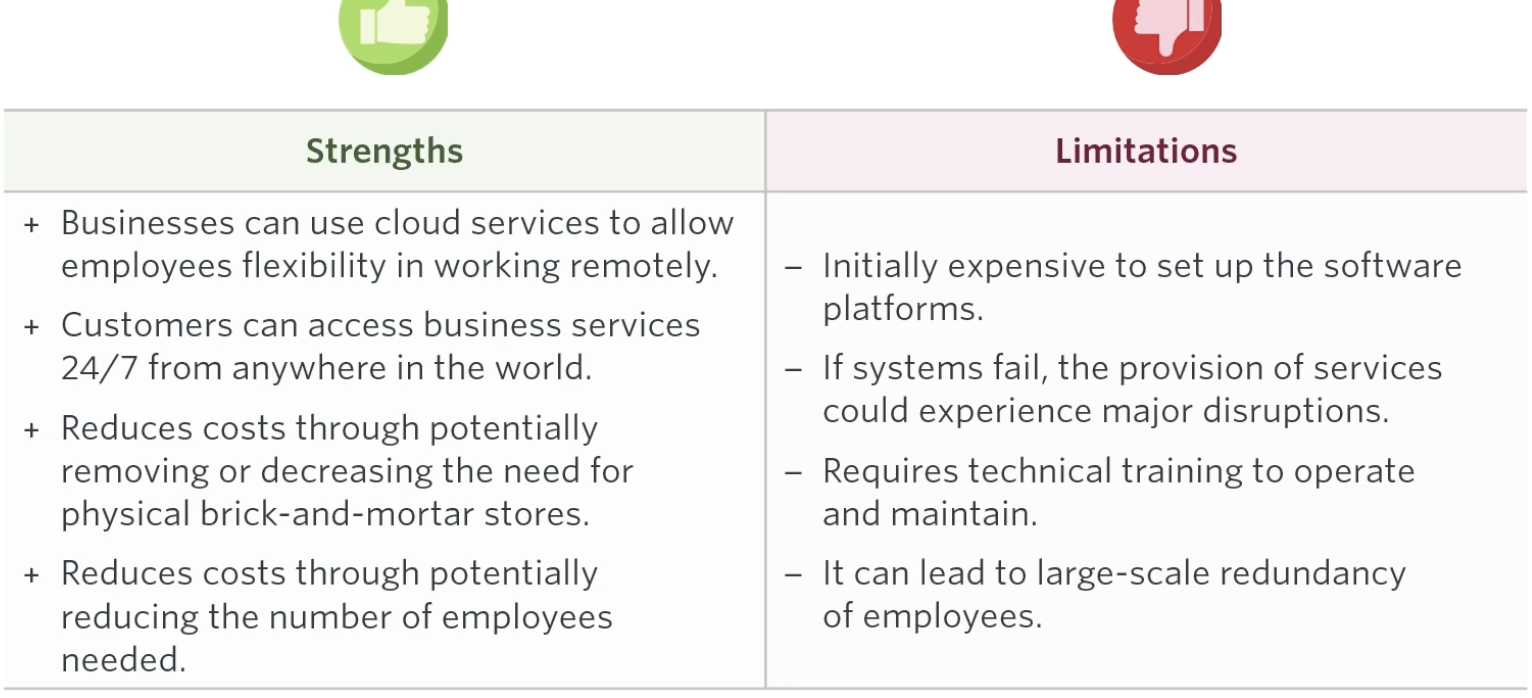
Pros and cons of online services
Materials management
Involves organising and monitoring the delivery, storage, and use of raw materials (one of our resources) required for production.
The management of materials is a fine and constantly changing art.
Too little, and you must stop production, disrupt deliveries, and anger customers.
Too much, and you tie up capital, waste storage space, and risk raw materials perishing or getting damaged.
Forecasting
A materials planning tool that predicts customer demand for an upcoming period using past data and market trends.
This involves predicting what materials will be required, and in what quantities.
Make the prediction too low, and you run out of product and lead to customer dissatisfaction.
Make the prediction too high, and you order too much stock, which either goes out of date and is wasted, or takes up storage space.
Forecasting considerations
Special customer demand times, e.g. Easter, Christmas, Valentine's day, Mother's Day.
(Chocolate, for example, experiences higher demand in Winter than in Summer).
Supplier delivery times, e.g. global cocoa can take a while to arrive from origin countries like Ghana.
Price fluctuations for different goods, e.g. as global exchange rates change.
Market conditions can change, e.g. if a report comes out linking chocolate with childhood obesity, then this could decrease demand for chocolate.
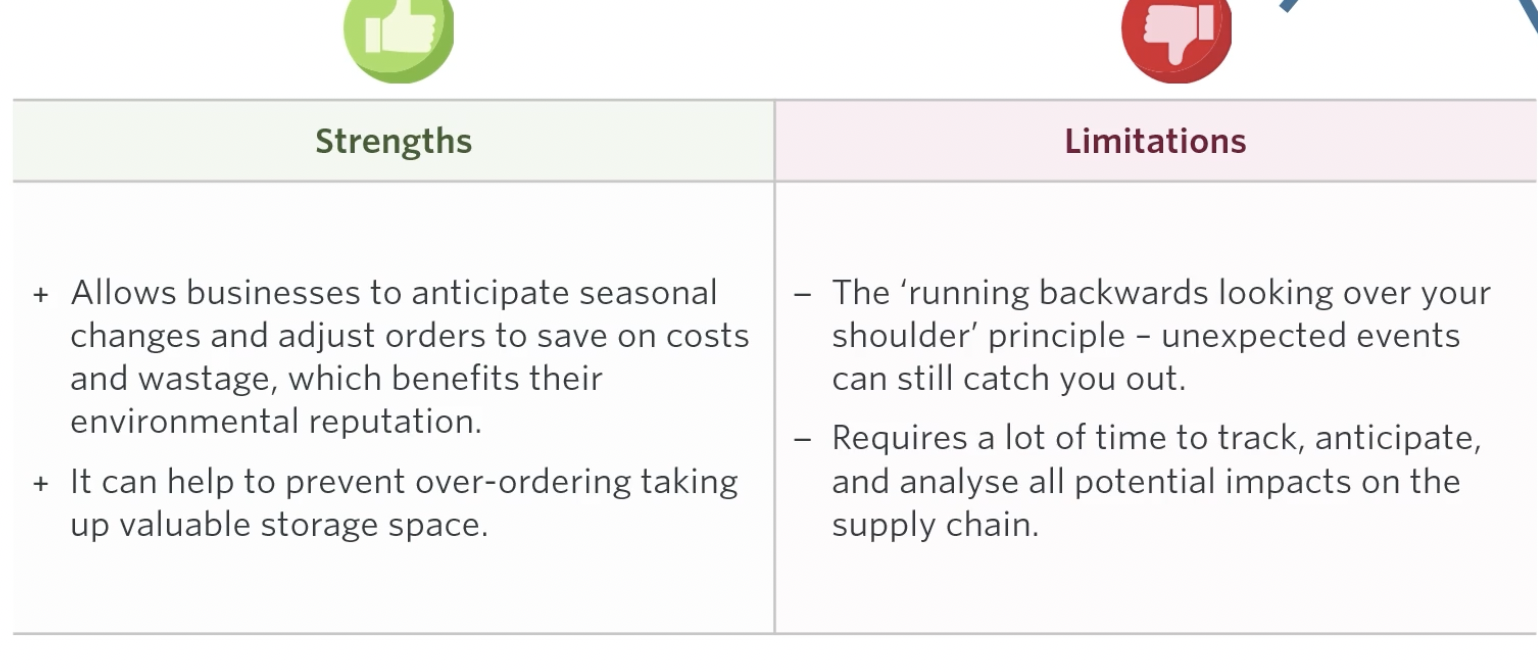
Pros and cons of forecasting
A master production schedule (MPS)
A plan that outlines what a business intends to produce, in specific quantities, within a set period of time.
It can be thought of as the 'who, what, when, where, how' manual of materials management.
By breaking down the whole production process into stages and determining exactly what is required, what needs to be produced, and by when, this document can determine the quantity demand of inputs over time.
An MPS will include:
what goods are to be produced.
how production will occur (production methods).
when production is to take place.
where production is to take place.
who will do the work (staffing needs).
which materials are required
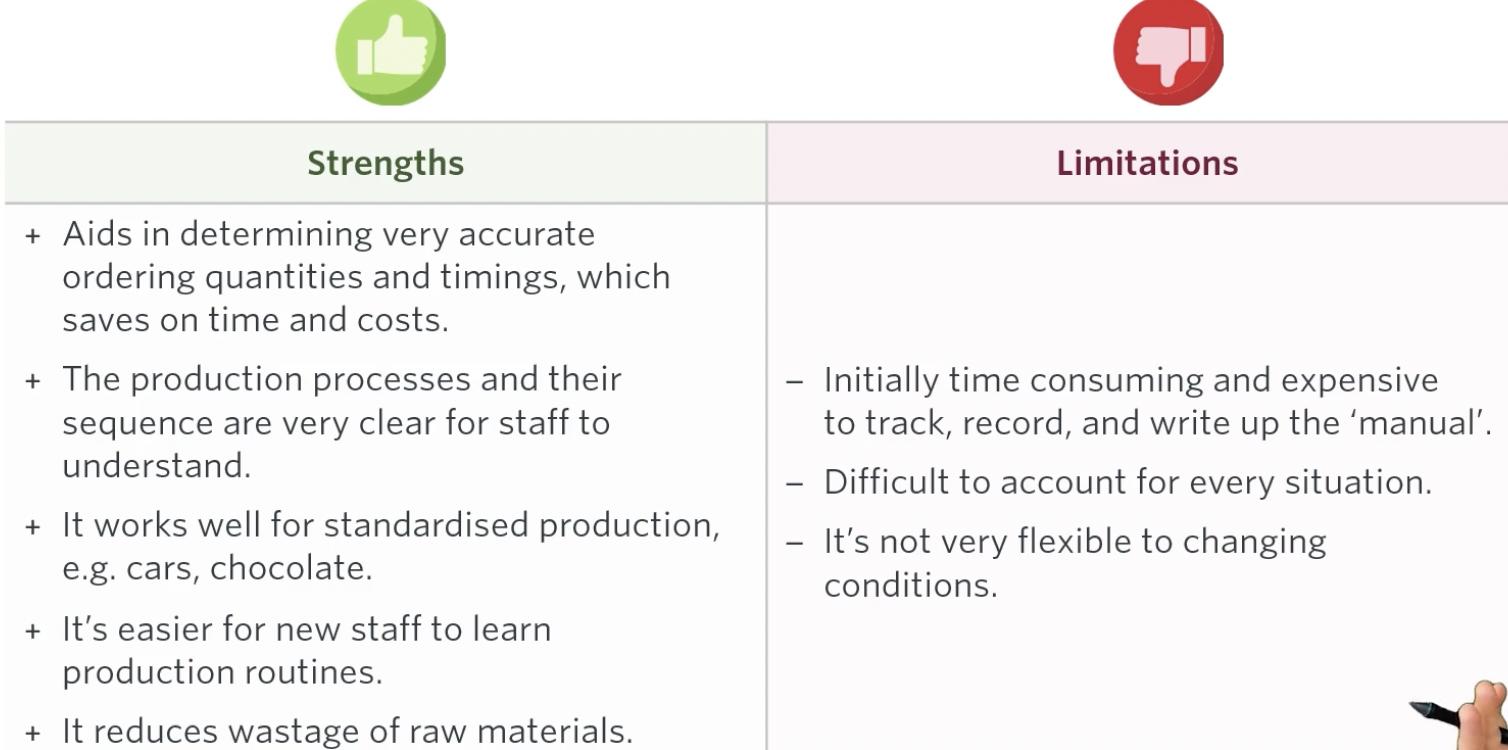
Pros and cons of MPS
Materials requirement planning (MRP)
A process that itemises the types and quantities of materials required to meet production targets set out in the master production schedule.
An MRP will include:
the stock or raw materials required for the quantity determined in the master production schedule (MPS).
the stock or materials on hand.
the stock or materials to be ordered.
Business applications of MRP:
Shelving stock control at i.e. Woolworths or Bunnings
Placing orders for fish at a fish and chip shop
Ordering coffee beans for a café
Pros and cons of MRP
Just in Time (JIT)
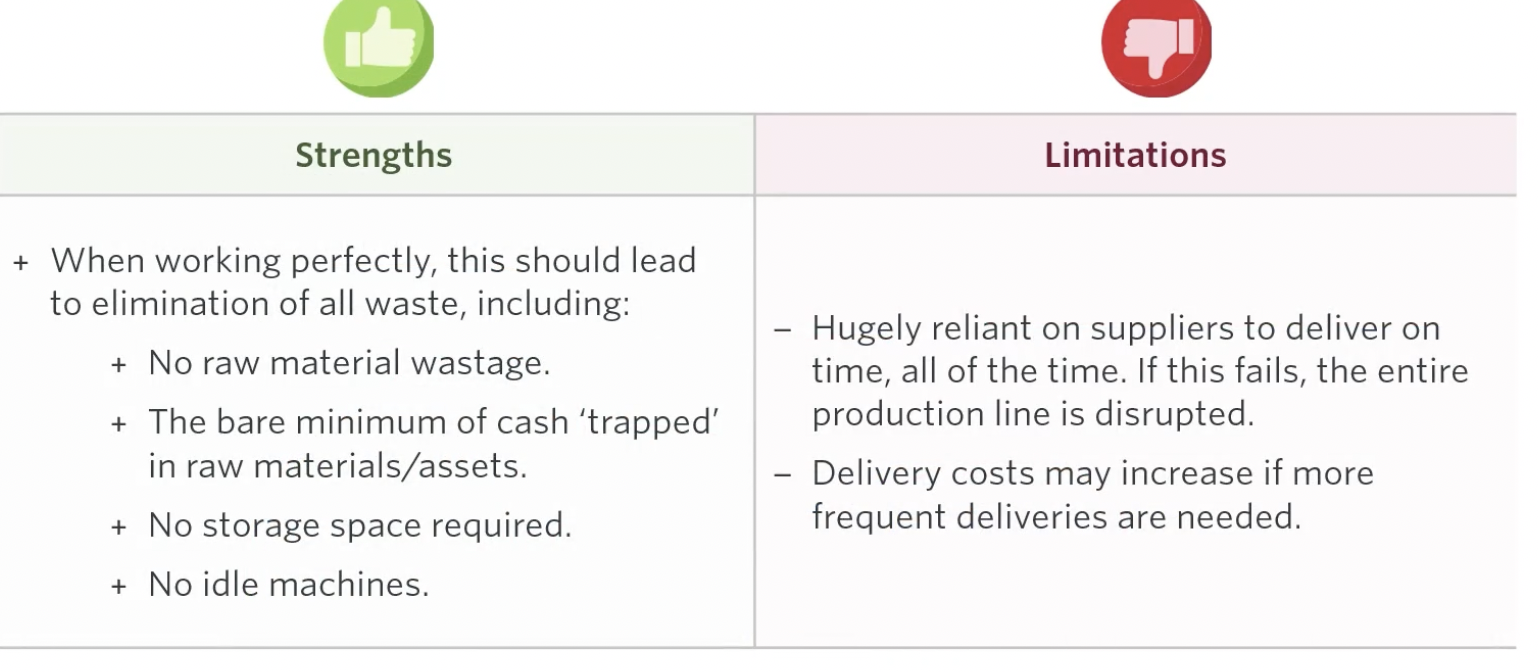
An inventory control system that delivers the correct type and quantity of materials, just as they are needed for production.
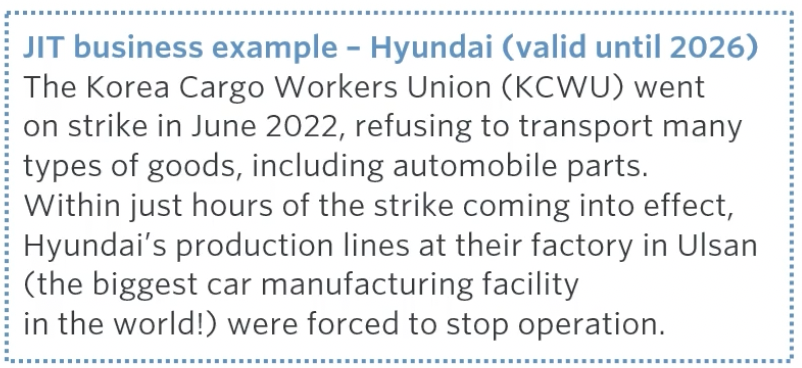
This requires complex tracking of supplies, often using a computer monitoring system. It requires a very good relationship between a company and its suppliers to be successful.
Business applications of JIT:
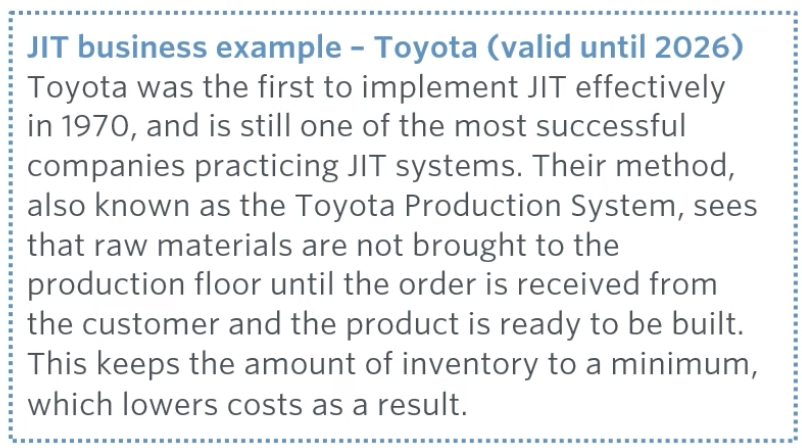
The Toyota Production System
Apple's production of devices like iPads and iPhones
Fast food restaurants like McDonalds
These use JIT inventory to serve their customers on a daily basis.
Orders (burgers, sundaes, etc.) are not assembled until purchases have been made!
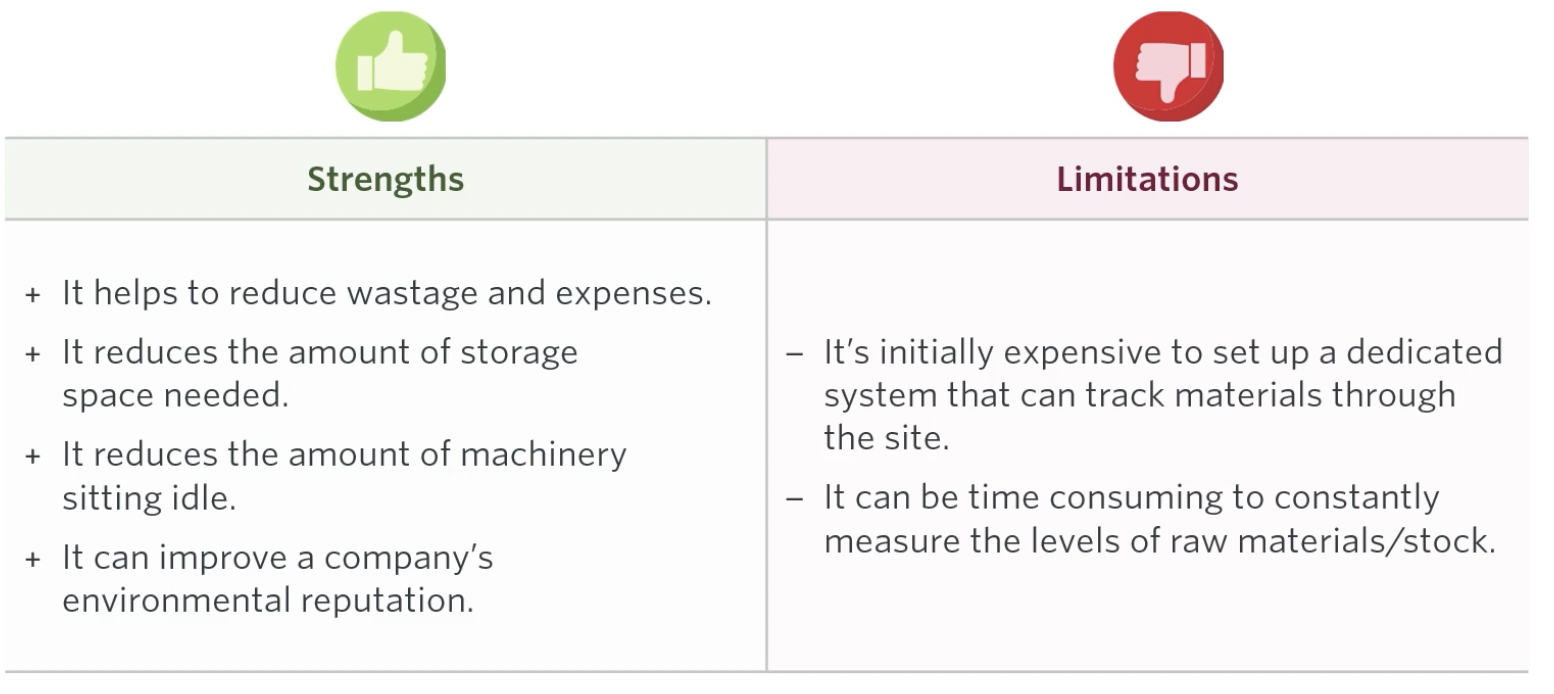
Pros and cons of JIT
CSR considerations for globally sourcing inputs (pros and cons)
Pros:
+ Reduce costs
+ Tap into new markets
+ Can obtain skills and resources that are not available in Australia which gives an competitive advantage
+ Increase capacity
Cons:
- Hidden costs with different cultures and time zones
- Exposure to high risk financial and political
- Longer lead times
Quality
A good or service's ability to satisfy a customer's need.
If your product or service has better quality than a rival, then you will have a competitive advantage over them.
How do we measure quality?
Reliability
Durability
Delivery
Consistency
Quality and luxury are not the same thing from a production point of view.
Factors affecting quality:
Technology
Materials
Equipment
Training
Worker motivation

Reactive
Responding to a situation after something has occurred.
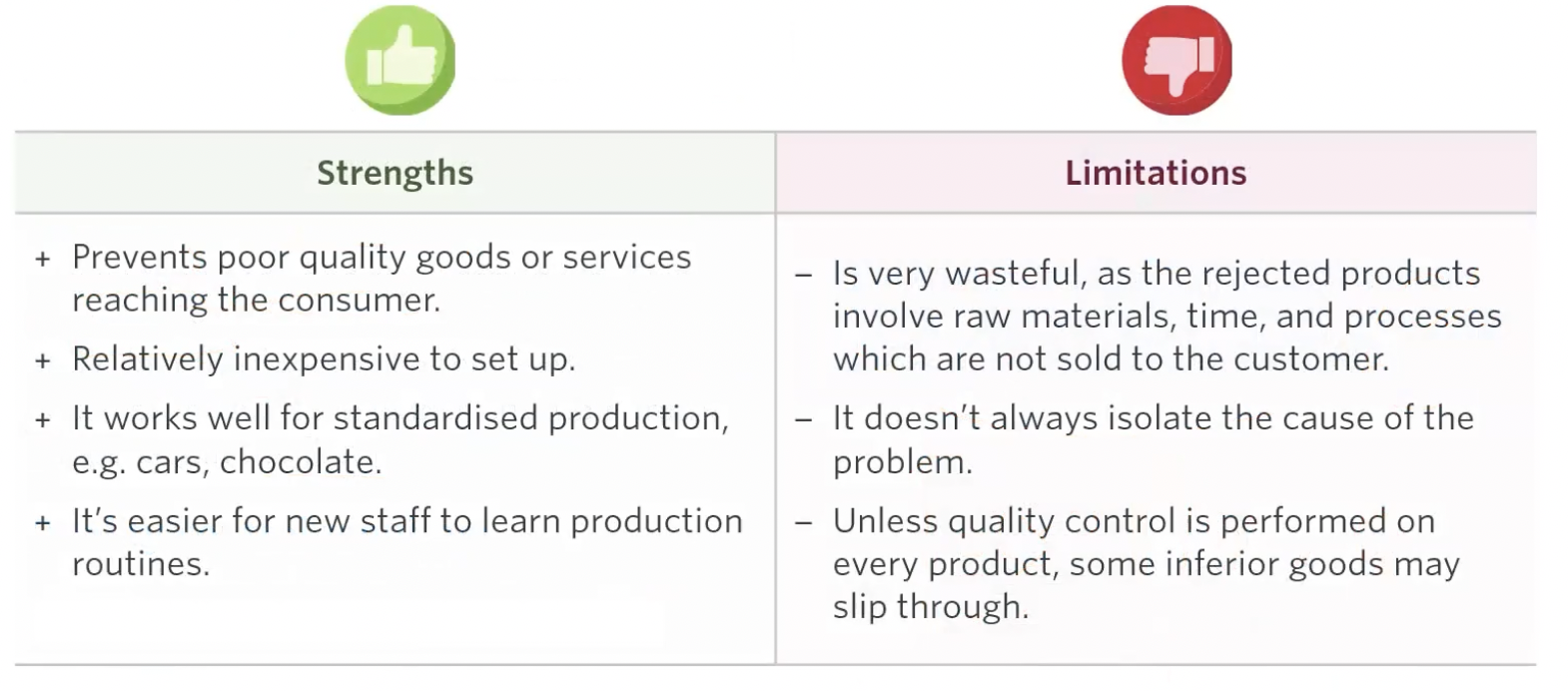
Quality control
Inspecting a product at various stages of the production process, to ensure it meets designated standards, and discarding those that are unsatisfactory.
Involves the use of a series of checks at different stages of the production process to ensure that goods and services meet predetermined standards.
It uses the check and reject principle.
This is a reactive process, as the aim is to detect and reject the faults once they have occurred, rather than to prevent them from happening in the first place.
Quality control requires:
Established standards of quality
Regular inspections
Comparison against standards
Goods or services to be removed if they don't meet the standards
Pros and cons of Quality control
Quality assurance
Involves a business achieving a certified standard of quality in its production, after an independent body assesses its operations system.
This is a proactive process, as it aims to build quality into work processes and thereby avoid errors in the first place.
Quality assurance usually involves an external organization.
For example, SAI Global is the body that issues the International Organisation for Standardisation (ISO) certification and is invited into the business to assess the processes of the business against its predetermined standards.
Complying with the standards is the objective, and by doing so, the business receives certification which it can then use to promote to customers.
This thereby 'assures' its customers and stakeholders of a certain standard of quality.
Proactive
Performing actions to prevent problems before they occur.
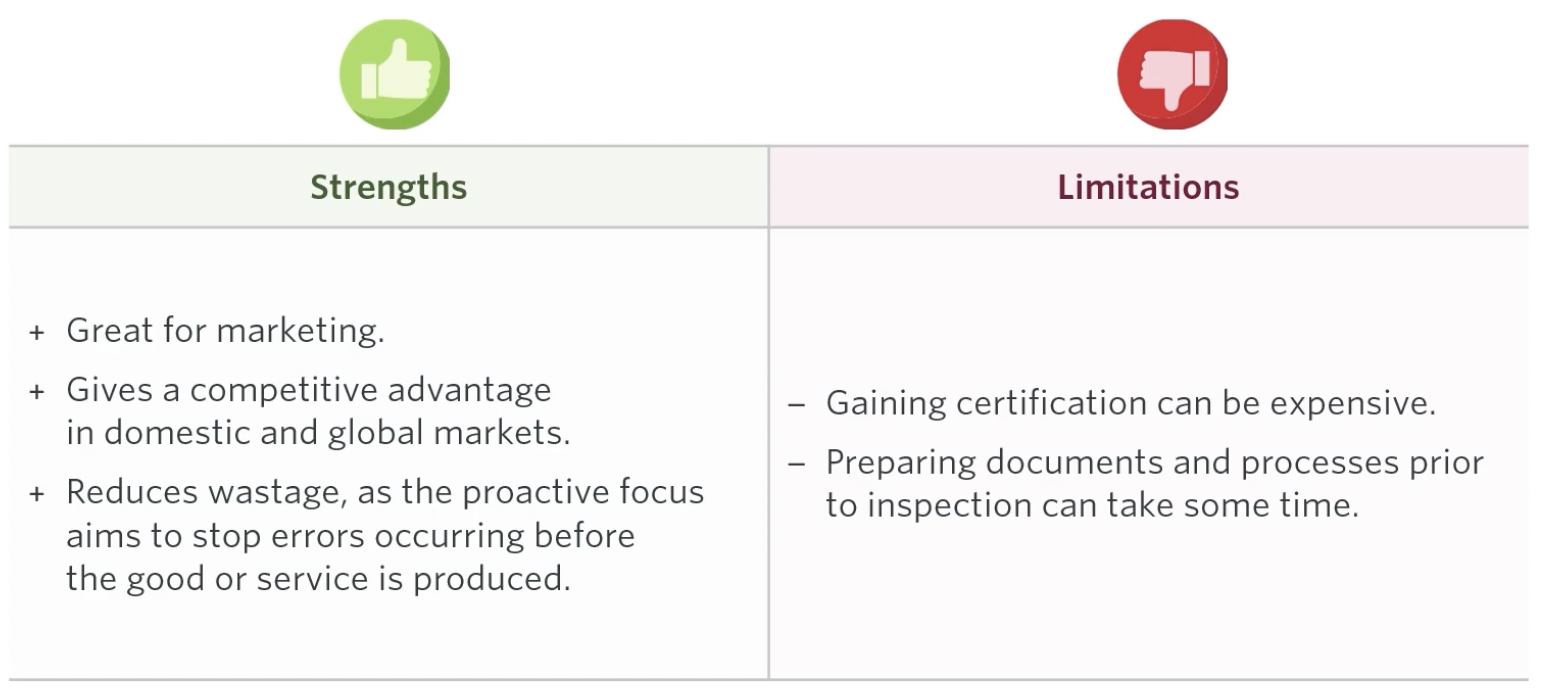
Pros and cons of Quality assurance
Total Quality Management
A holistic approach whereby all employees are committed to continuously improving the business' operations system to enhance quality for customers.
All employees are involved in the continuous pursuit of quality in everything they do.
The aim of TQM is to create zero defects TQM was championed by an engineer named William Deming and taken up in a big way by Japanese manufacturing businesses such as Toyota.
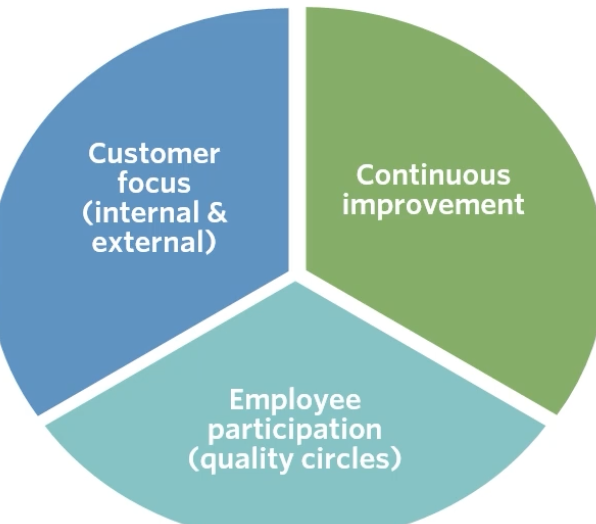
There are three key principles behind TQM:
1. Striving for continuous improvement
2. Customer focus
3. Employee participation
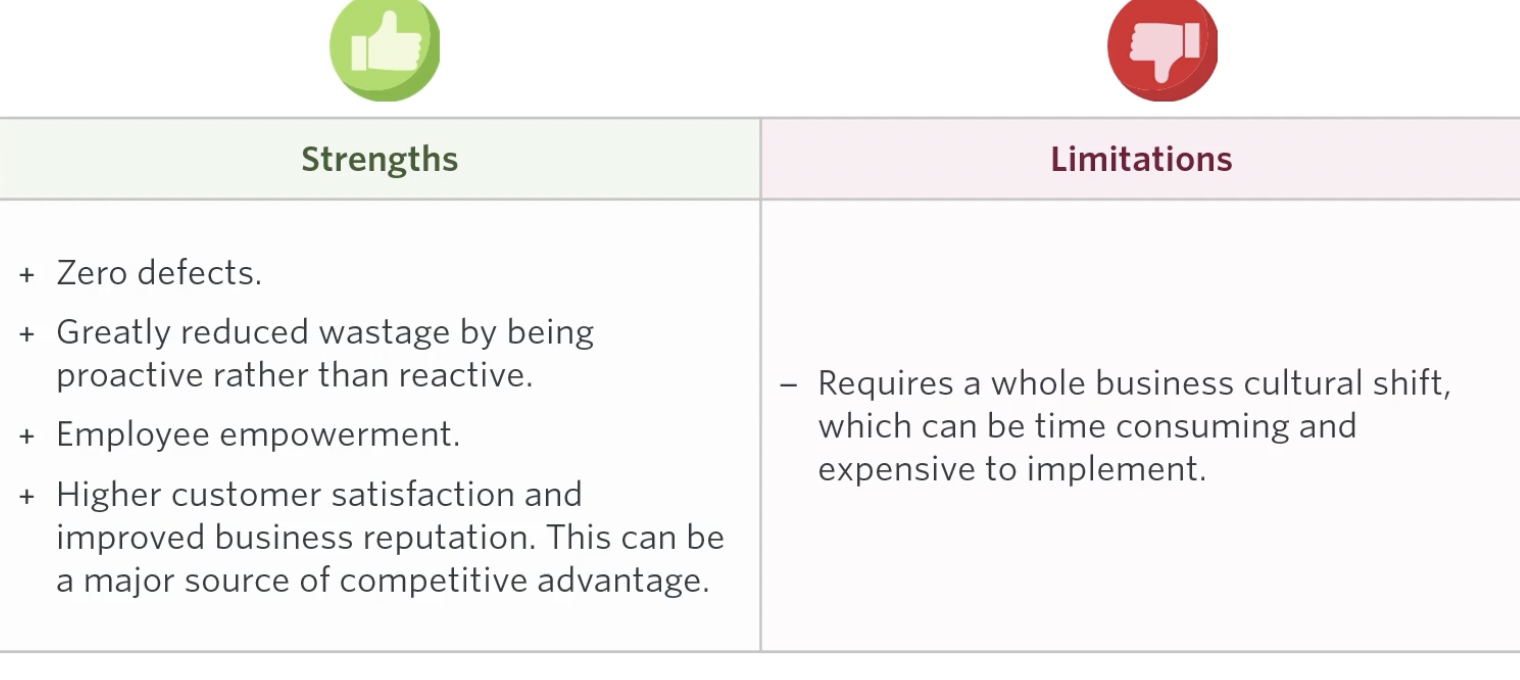
Pros and cons of total quality management
Waste
Any resource that is discarded because it cannot be further used in the production process.
Waste minimisation
The process of reducing the amount of unused material, time, or labour within a business.
Negative impacts of waste on business
Money gets wasted on raw materials.
Over produced goods can go off/expire whilst in storage. This could also lead to the goods having to be discounted to sell them.
A company can be fined or prosecuted by the Environmental Protection Authority (EPA) if waste damages the environment.
Customer complaints and returns of poor quality goods can damage the reputation of the business.
Staff can get bored and demotivated if they are idle on the production line.
Positive impacts of waste minimisation
It can help reduce resource costs.
It can reduce waste treatment costs
It can prevent legal breaches and costly legislation infringement fines.
It can prevent fines from the EPA.
It can increase marketing opportunities through being more sustainable.
Reduce
A waste minimisation strategy that aims to decrease the amount of resources, labour, or time discarded during production.
In the context of waste minimisation is to decrease the amount of products, raw materials, resources, labour, or time discarded during production.
Business applications of reducing waste
A business may choose to lower the number of employees producing goods if there is more labour than customer demand.
Businesses may use movement light sensors in their shops/offices so lights only turn on when people need them, in an effort to reduce energy consumption.
Clothing manufacturers use CAD programs to reduce the amount of material wasted when they cut cloth for their designs.
Bakeries reduce waste of eggs by using the 'Just In Time' inventory management system.
Reuse
A waste minimisation strategy that aims to make use of items which would have otherwise been discarded.
To reuse is to make multiple uses of items that would otherwise have been discarded.
Business applications of reusing waste:
A glass drink bottle business may choose to have customers return used glass bottles so they can clean and re-bottle drinks.
Cafés use reusable ceramic coffee cups rather than disposable ones for dine-in customers.
Carlton United Brewery reuse beer kegs that get sent to public houses for draught beer.
Bakeries reuse silicon moulds for cupcakes.
Recycle
A waste minimisation strategy that aims to transform items which would otherwise have been discarded.
Involves transforming items which would otherwise have been discarded into another product.
Business applications of recycling waste:
Domino's Pizza have established a recycling relationship with Visy by recycling cardboard from their pizza boxes.
Carlton United Brewery melts down and recycles broken bottles and glass from its automated production line.
Bakeries can recycle cupcake wrappers.
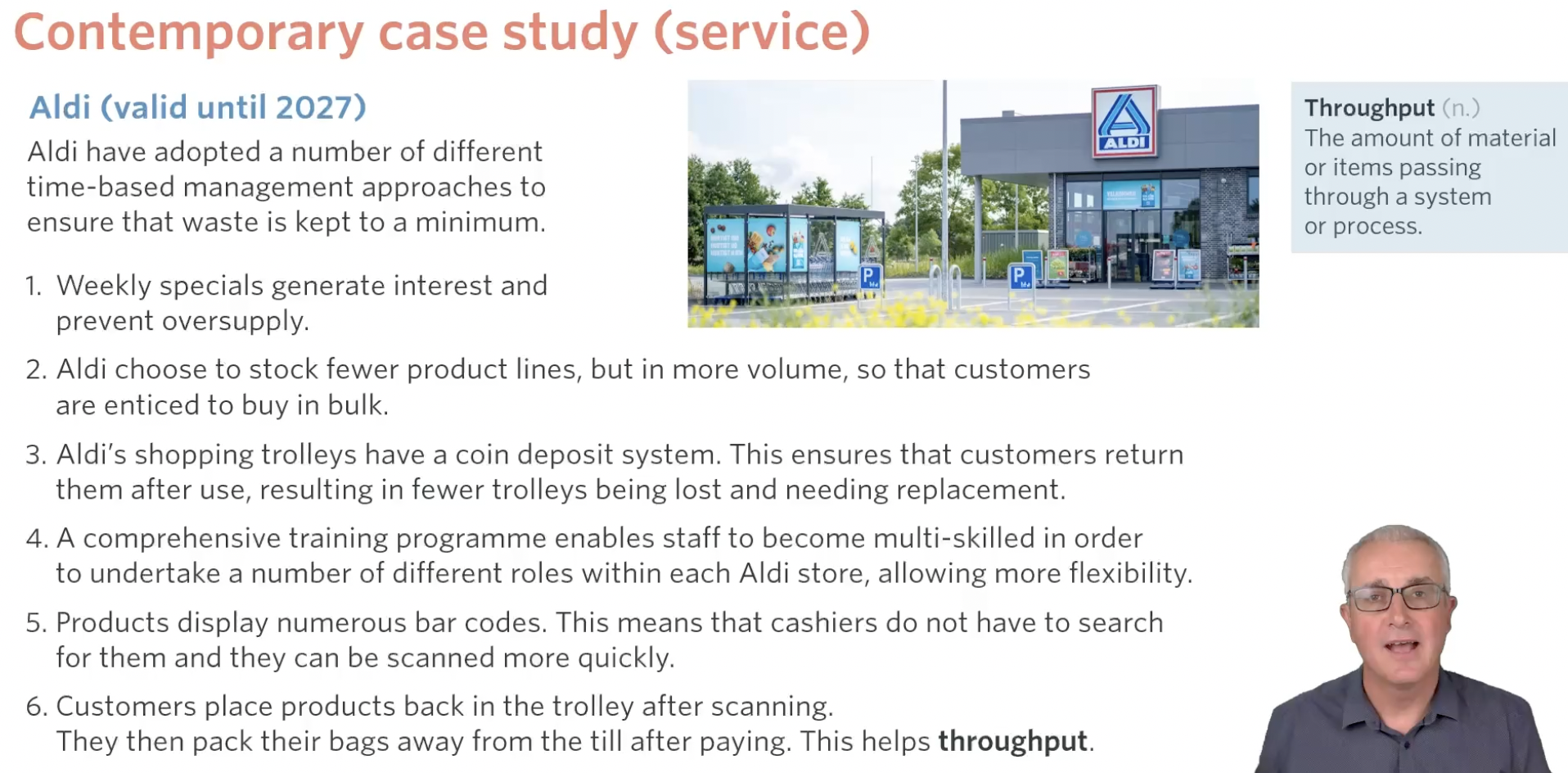
Lean management
The process of systematically reducing waste in all areas of a business's operations system whilst simultaneously improving customer value.
Involves a systematic process for eliminating waste so that, from the customer's perspective, they are getting the most value with fewer resources.
Lean is a management philosophy- a way of thinking that considers first and foremost what the customer is willing to pay for, or in other words, added value.
Activities that do not add value to the end product or customer are defined as waste and should be reduced or eliminated to free up resources that can be used for adding value.
Lean management evolved from lean manufacturing (also known as lean production), which is a production method aimed primarily at reducing waste of resources within the production system.
Lean management principles
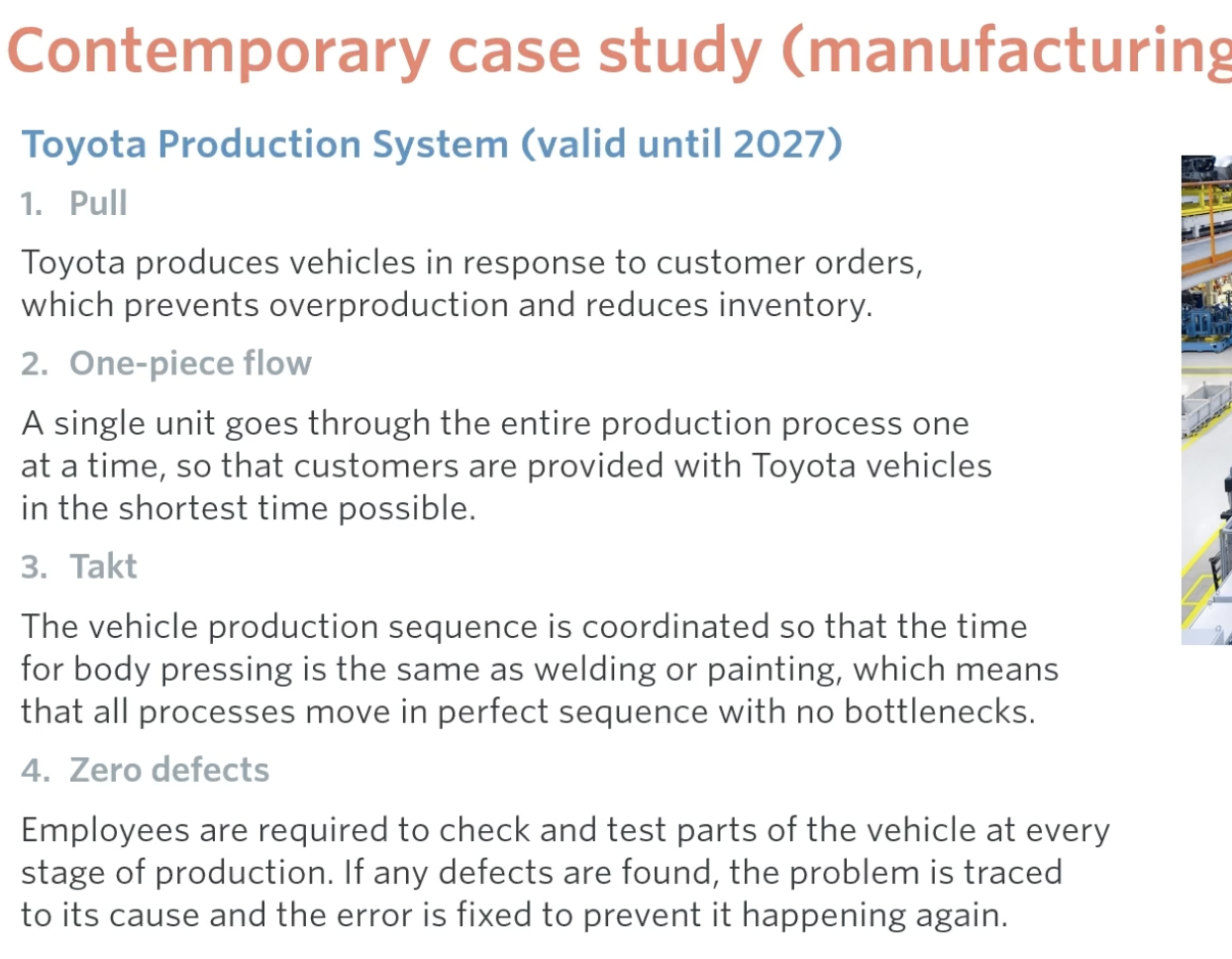
The pull strategy- A lean management strategy that involves customers determining the number of products a business should produce for sale.
The one-piece flow strategy- A lean management strategy that involves processing a product individually through a stage of production, and passing it onto the next stage of production before processing the next product, continuing this process through all stages of production.
The takt strategy- A lean management strategy that involves synchronising the steps of a business's operations system to meet customer demand.
The zero defects strategy- A lean management strategy that involves a business preventing errors from occurring in the operations system by ensuring that there is an ongoing attitude of maintaining a high standard of quality for final output.
The pull strategy
A lean management strategy that involves customers determining the number of products a business should produce for sale.
Involves production of the good or service only starting when a customer places an order.
The customer order 'pulls' at the production system with their demand.
The one-piece flow strategy
A lean management strategy that involves processing a product individually through a stage of production, and passing it onto the next stage of production before processing the next product, continuing this process through all stages of production.
Involves the operations process focusing on one good or service at a time.
The takt strategy
A lean management strategy that involves synchronising the steps of a business's operations system to meet customer demand.
Seeks to create a rhythm, whereby all the steps in the production of the good or service are synchronised to create a 'continuous flow'.
The zero defects strategy
A lean management strategy that involves a business preventing errors from occurring in the operations system by ensuring that there is an ongoing attitude of maintaining a high standard of quality for final output.
Involves striving for perfection by continuously improving until the operations process achieves zero defects.
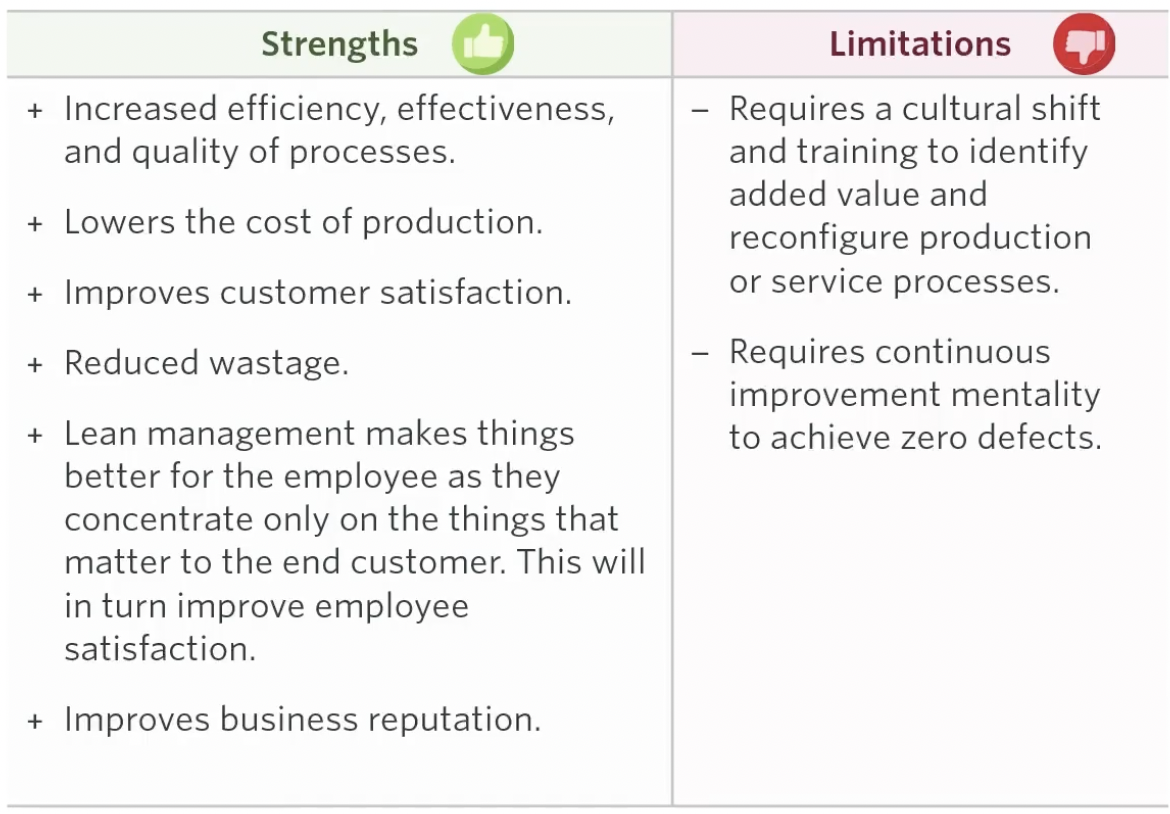
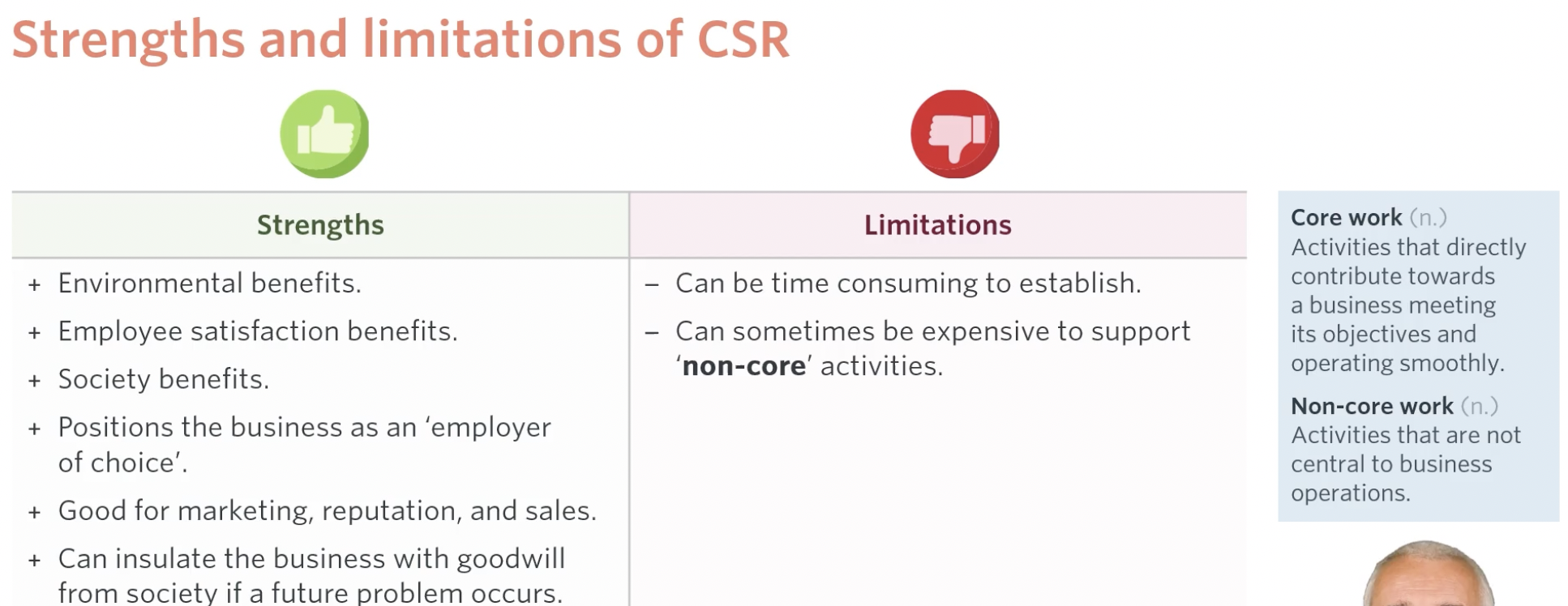
Strengths and limitations of lean management
Corporate social responsibility
The ability of a business to go above and beyond what they are legally obligated to do in consideration of the community, environment and economy while pursuing profit.
Contemporary business examples of CSR (valid until 2027)
Using only fair-trade ingredients.
Lessening light or noise pollution from a factory.
Ensuring that the end product is recyclable, e.g. mobile phones and shoes.
CSR considerations for inputs
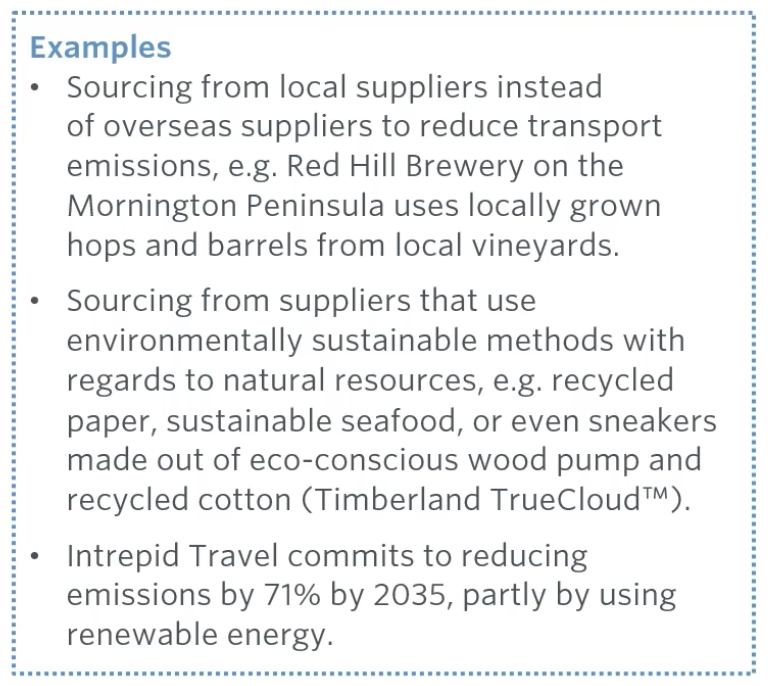
Sourcing materials and resources that are environmentally sustainable is one way to consider CSR for inputs.
This means ensuring that your inputs (raw materials, labour, machinery, factories) do not damage or deplete natural resources.
CSR considerations for processes
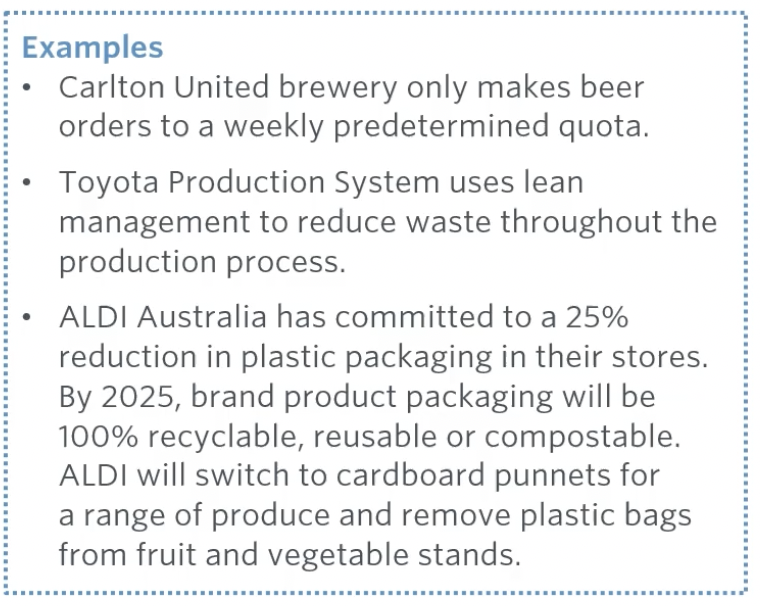
Reducing waste during production is a CSR consideration for processes.
Companies can aim to reduce waste through strategies like forecasting, lean management, and Just in Time.
CSR considerations for outputs
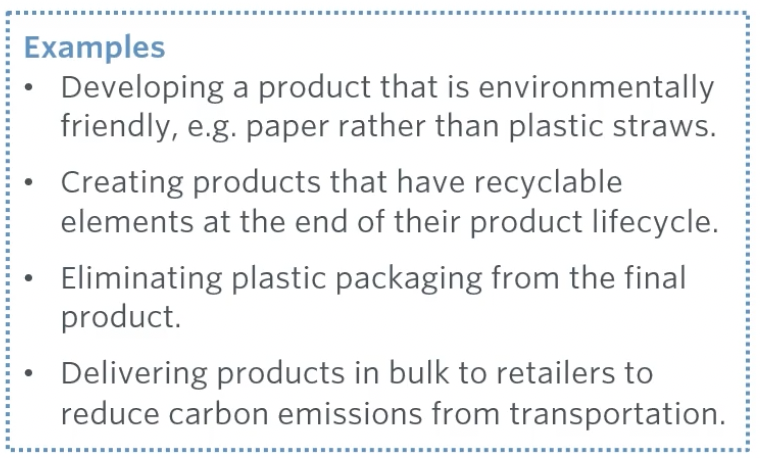
While the output of a business is meant to create value to the customer, it is socially responsible to ensure that the goods and services produced do not cause harm to the wider community.
Global sourcing of inputs
A business acquiring raw materials and resources from overseas suppliers.
When a business acquires raw materials or resources from overseas suppliers.
Global sourcing of inputs can be considered if:
1. the raw material you need to manufacture only comes from overseas.
2. the raw material you require is cheaper to source from overseas rather than locally.
Eg. a business sourcing cocoa beans from overseas as the raw input for making chocolate.
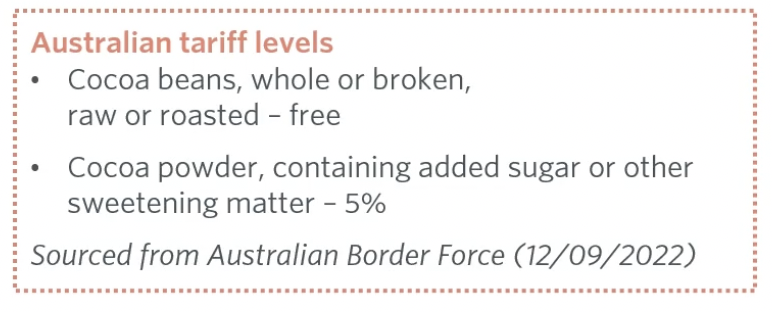
Tariff
Taxes that must be paid to a government for particular imports and exports.
Quota
The limitations, in international trade, on the amount of a particular product that can be imported and exported into/from a country, which are usually set by a government.
Free trade
The absence of government protections to restrict goods being imported into a country.
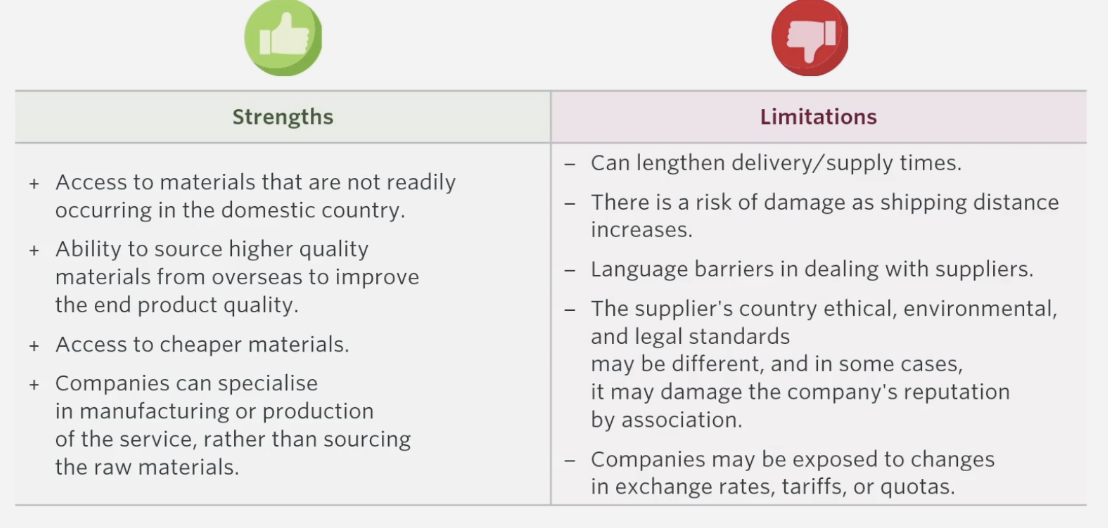
Pros and cons of sourcing inputs globally
Overseas manufacture
A business producing goods or services outside of the country where its headquarters are located.
Means to produce goods or services in a location outside of a business's headquarters country.
These businesses set up their manufacturing plant in an overseas country.
The business still has complete control of manufacturing operations, but may be able to access labour at a higher skill level or at a lower cost than in the domestic country.
Another consideration may be to locate manufacturing closer to the raw materials, or to avoid tariff or quota barriers to export markets.
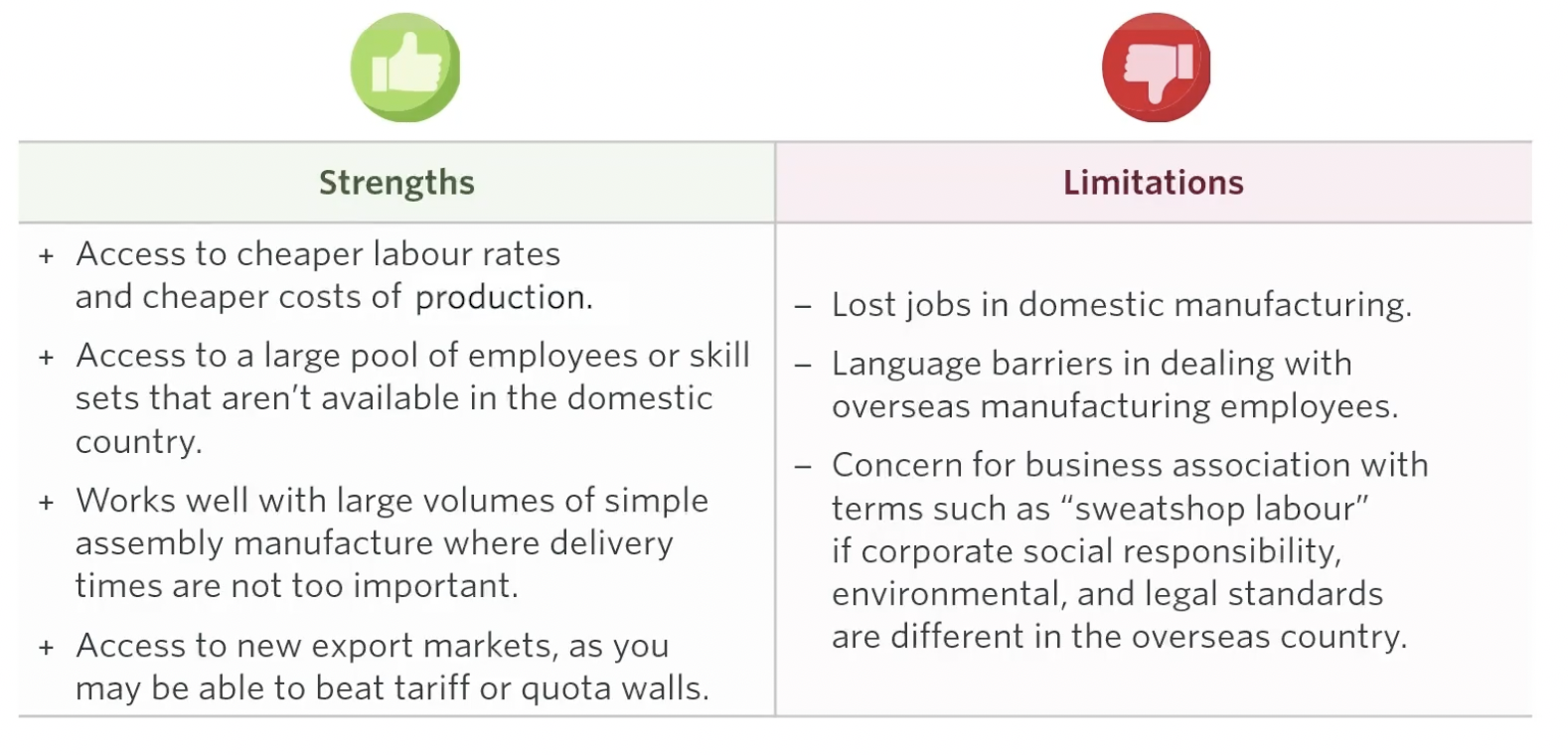
Pros and cons of overseas manufacture
Global outsourcing
Transferring specific business activities to an external business in an overseas country.
Global outsourcing may involve moving:
human resource management and payroll
IT and technology support
call centres and customer service support
operations and production
... to be completed by external businesses on your behalf.
Outsourcing
The transfer of specific activities to an external business.
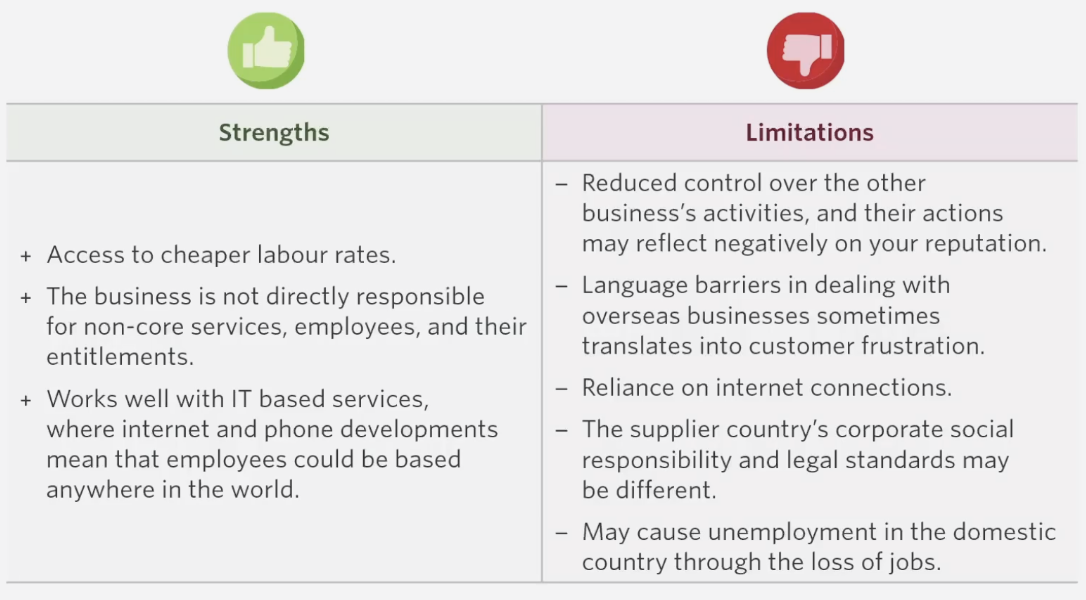
Pros and cons of global outsourcing