classification and evolution
 Call Kai
 Learn
Learn Practice Test
 Spaced Repetition
 Match
Match Flashcards
 Knowt Play
1/84

There's no tags or description
Looks like no tags are added yet.
Name | Mastery | Learn | Test | Matching | Spaced | Call with Kai |
|---|
No analytics yet
Send a link to your students to track their progress
85 Terms
what is classification?
arranging organisms into groups based on similarities and differences
what is the point for classification?
easier for scientists to study
what is taxonomy?
study of classification
what is the order for classification?
domain
kingdom
phylum
class
order
family
genus
species
what is domain?
highest taxonomic rank
3 domains are Archaea, Eubacteria, Eukaryote
what is kingdom?
traditionally 5 kingdoms which are plantae, animalia, fungi, protoctista, prokaryotae
what is phylum?
groups organisms to do with body plan (backbone or net etc)
what is class?
groups organisms to do with general traits (umber of legs etc)
what is order?
groups according to organismś nature (carnivore/herbivore)
what is family?
groups of similar genera, based on reproductive characterisitcs
what is genus?
groups of similar species
what is species?
group of organisms that can interbreed to give fertile offspring
what is the mnemonic to remember the classifcation?
Did King Peter Come Over For Green Soup?
what is the binomial system?
organisms are given 2 latin names
universal across countries and languages
same organisms may have different local names
what the features of animalia?
eukaryotic
no cell wall
a nucleus and other membrane bound organelles
heterophic (large organic molecules digested into smaller ones for absorption)
food stored as glycogen
what are examples of animalia?
jellyfish, worms, sponges, fish, reptiles, birds, mammals
what are features of plantae?
eukaryotic
multicellular
cellulose cell wall
use light to produce food by photosynthesis (autotrophic)
store food as starch
what are examples of plantae?
algae, ferns, mosses, conifers, flowering plants
what are features of fungi?
eukaryotic
chitin cell walls
usually multicellular (can be unicellular, yeast) or have mycelium
no chloroplasts
saprophytic feeders
store food as glycogen
what are examples of fungi?
moulds, mushrooms, yeast
what are features of prokaryotae?
prokaryotic
unicellular
cells have no nucleus (circular DNA)
absorb nutrients or produce internally by photosynthesis
what are examples of prokaryotae?
bacteria e.g. E.Coli, Staphylococcus Aureus, blue-green algae
what are features of protocista?
eukaryotic
single cell organisms or a colony of single cells
some have chloroplasts
move using cilia/ flagellum, amoeboid mechanisms
nutrients acquired by photosynthesis (autotrophic) or ingesting other organisms (heterotrophic)
what is artificial classifcation?
based on observed characteristics
organisms adapt to their environment so often look similar if they live in a similar habitat
what is the problem with artificial classification?
convergent evolution
what is natural classification?
includes natural relationships, internal and external features
based on evolutionary relationships
evidence used from DNA sequences and amino acid sequences
mutations in DNA, alter proteins and therefore characteristics
how do we use DNA sequences?
changes in DNA are caused by mutations
the more differences between the DNA of different species the less closely related they are
when one species evolves from another, the DNA will be very similar
what is DNA hybridisation used for?
used to determine how similar DNA from 2 species is
how is DNA hybridisation carried out?
DNA is extracted, purified and cut into small pieces
DNA is heated to about 90 degrees to break H bonds
when cooled, the strands combine with others that have complementary base sequence
the more similar the more H bonds
what is the use of hybridisation?
used recently to aid in classification of flowering plants, no longer use number of leaves
what is immunological comparisons of proteins?
antibodies of one species will respond to specific antigen on proteins in the blood serum of another (eg. Albumin)
what is the Immunological comparison method?
Inject serum albumin from Bradley into a rabbit
The rabbit produces antibodies specific to Bradleyś antigens
take serum from the rabbit (now contains antibodies for Bradleyś antigens)
mix with serum from a spider monkey and baboon
the response is formation of a precipitate
the greater the precipitate the more antigens in common and the more closely related the species
why have we got 3 domains?
hydrothermal vents discovered in 1977, prokaryotes found in the extreme conditions ‘extremophiles’ which had features in common with bacteria and eukaryotes
difference in rRNA, cell membrane structure, flagella structure
what did Carl Woese do?
introduced domain as a new taxonomic rank
molecular biology now given greater weight that other features
extremophiles now classified in a new domain, archaea
since then other archaea have been discovered, which are not all extremophiles
what are the 3 domains?
bacteria
archaea
eukarya
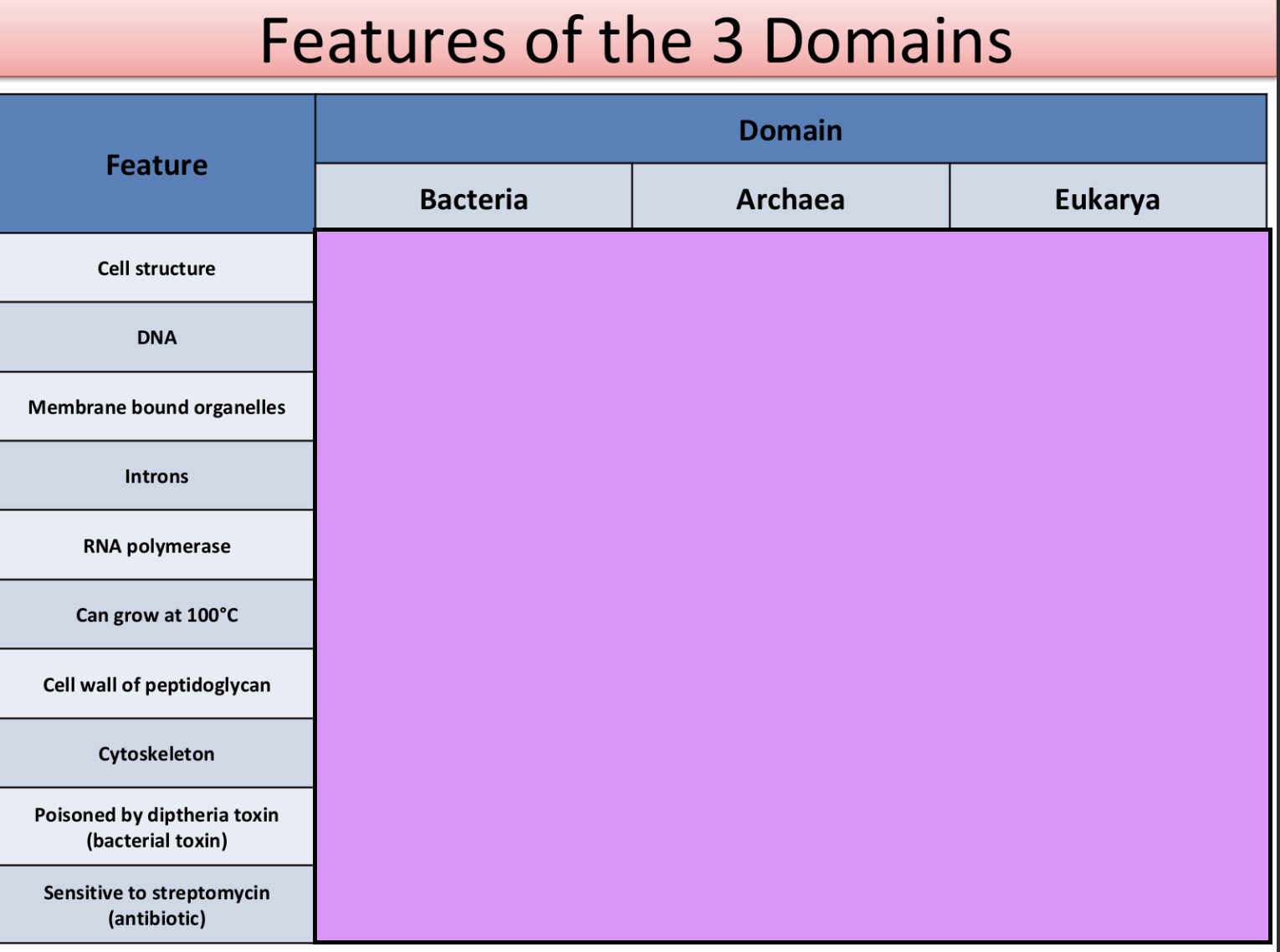
fill in gaps
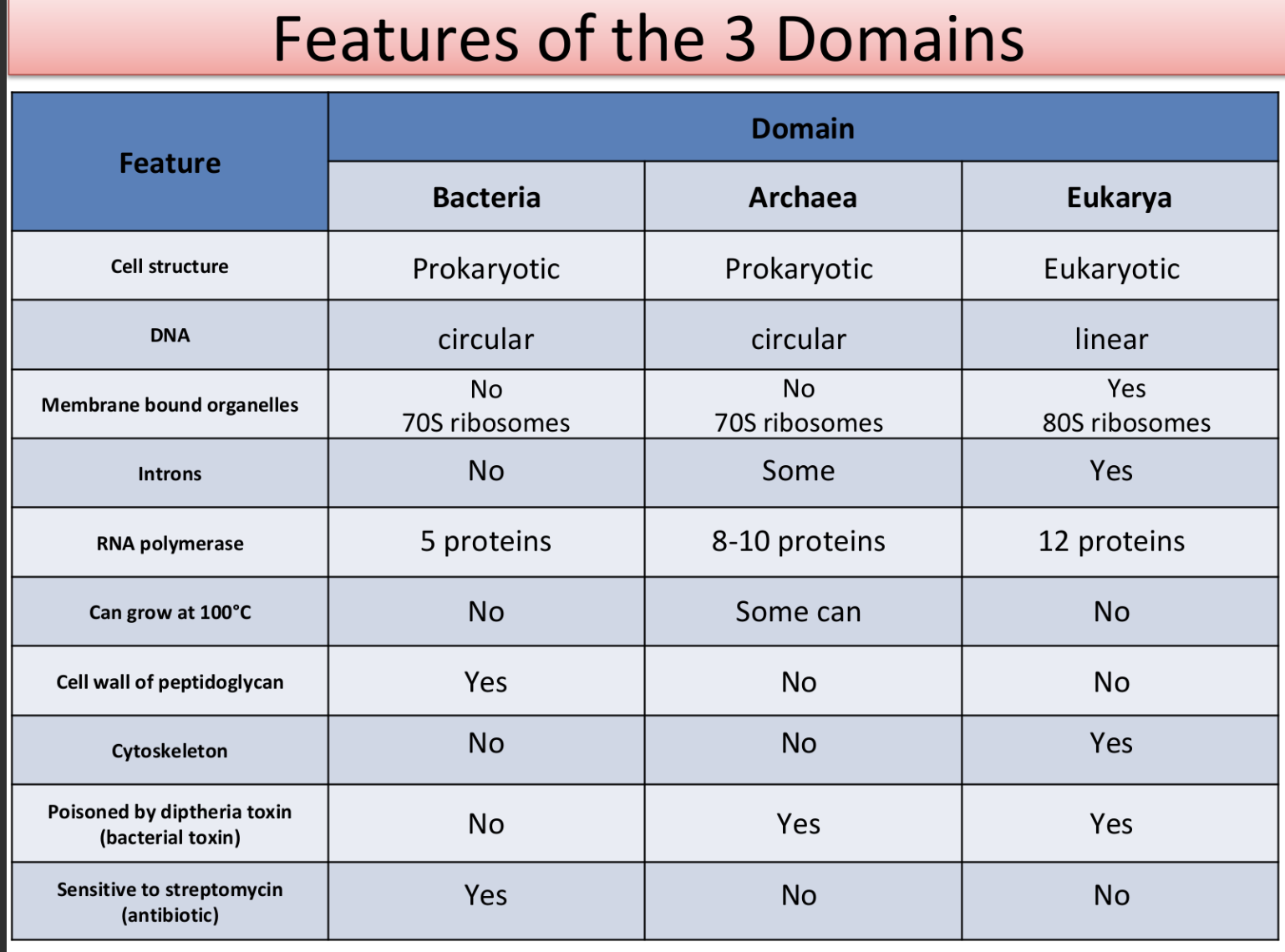
what is phylogeny?
evolutionary relationships between organisms
it looks at how closely organisms are related
what is phylogenetic?
study of evolutionary relationships
what is monophyletic?
belong to the same phylogenetic group
what are features of phylogenetic trees?
time flows from bottom of tree to top
branch points are called nodes, nodes show a common ancestor of descendants
2 defendants from same node are called sister groups
what is interspecific variation?
the differences between different species
what is intraspecific variation?
the differences between individuals of same species
phenotypic differences can be quite difficult to see sometimes, or can be easier to see
what is continuous variation?
qualitative-any feature that can be measured
there is a range of measurements between 2 extremes controlled by (multiple) genes and environment
e.g. height, length of leaves, length of stalk
what is discontinuous variation?
qualitative- includes any feature that can’t be measured numerically
No ‘in between values’, controlled by genes alone
e.g. blood group, eye colour, shape of bacteria
represented by bar graphs/piecharts
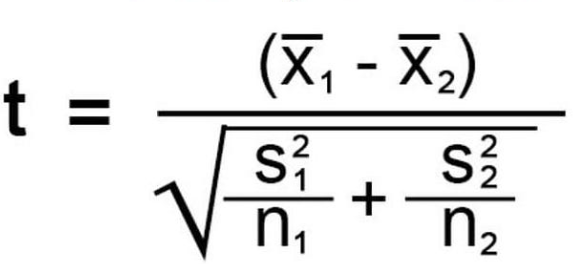
what does the symbols of unpaired t-test stand for?
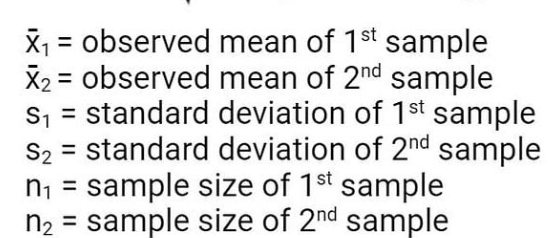
what is difference between paired or unpaired T tests?
if you have 2 different data, from same sample you do paired T-test as there is a relationship between 2 groups
If you have 2 different samples, you do an unpaired T-test
what does a T-test do?
will tell you if there is a statically significant difference between tow means when:
the sample size is less than 25
the data is normally distributed
give an example of how you would write a null hypothesis?
there is no statistically significant difference between the germination success of seeds in two soils of different pH
when can you reject the null hypothesis?
if the value for t exceeds the critical value (P=0.05 or a 5% confidence level), you can reject the null hypothesis (therefore there IS a significant difference)
what did James Hutton say about uniformitarianism?
natural process shape the land and have always done so (sedimentation, wind erosion and deposition) I challenge the view that biblical events caused these changes
what did Charles Lyell say after Hutton?
fossils are evidence that animals lived millions of years ago, I agree about uniformitarianism I’ll include it in my new book, principles of geology
what did Darwin say after Lyell?
‘Principles of geology’ was a great book gave me some ideas. Uniformitarianism eh? Evolution must be a slow process then…
what was Darwin’s theory of Evolution?
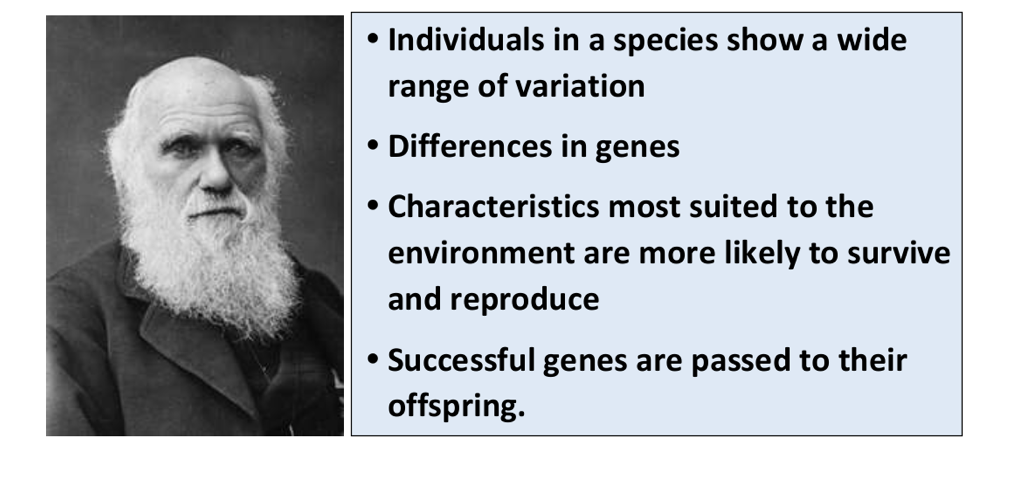
individuals in a species show a wide range of variation
differences in genes
characteristics most suited to the environment are more likely to survive and reproduce
successful genes are passed to offspring
what did Dawin find out aboutt tortoise shells?
the shape of tortoise shells corresponded to different habitats
what happened which led to a a collaboration between Wallace and Darwin?
1818 Wallace travelled to Amazon and looked at nature of different species
1854-1862 trophies to Malaysia to study the difference between animals
1858 asks Darwin for a peer review
what happened in 1859?
Theory of evolution by Natural selection in book of the origin go species by Charles Darwin
why was Darwin’s theory of evolution controversial?
God created Man in the image of himself- suggesting we evolved form apes is an insult
The Earth was created about 6000 years ago not millions like Darwin suggested
what is palaeontology?
study of fossils
what is comparative anatomy?
study of similarities and differences of organisms
what is comparative biochemistry?
study of similarities and differences between the chemical make up of organisms
what is homologous structure? (part of comparative anatomy)
same underlying structure even though may appear different and have different function
what is divergent evolution?
homologous structure provides evidence that species evolved form a common ancestor, each species with a different set of adaptive features
how would you compare biochemical make up of organisms?
comparing oder of DNA bases, amino acid sequences, proteins e.g. cytochrome and ribosomal RNA
what is comparative embryology?›
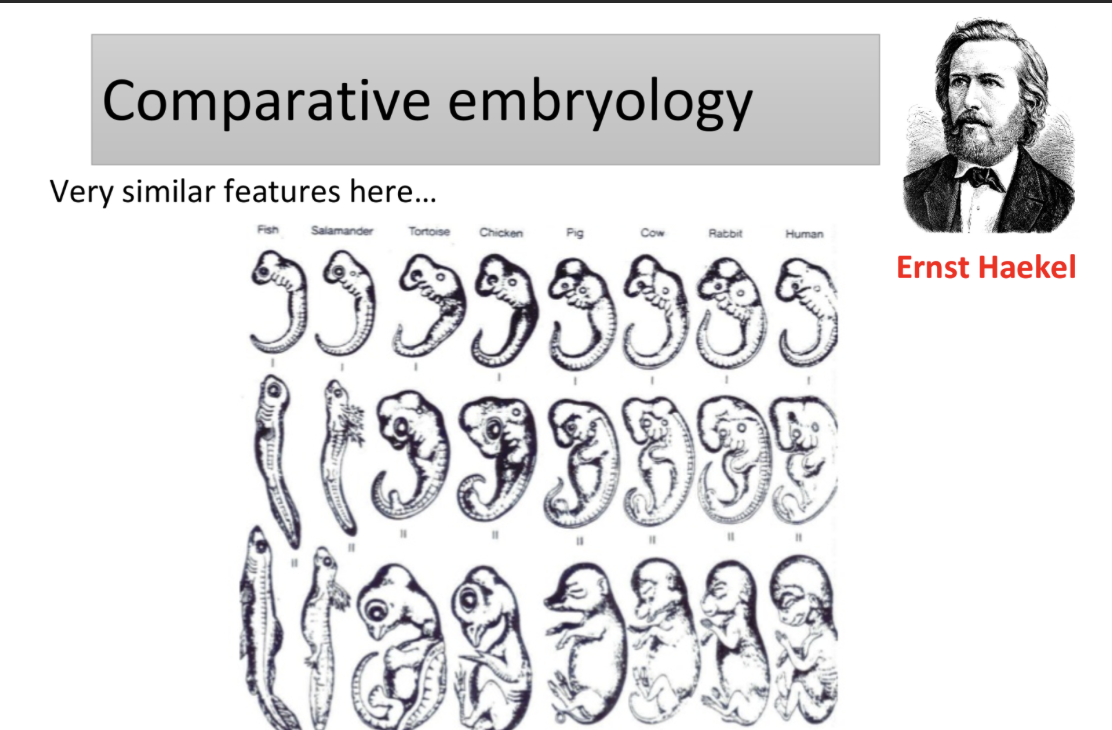
what is and adaptation?
modified structure, function or behaviour that helps and organism to survive
what are 3 types of adaptations?
anatomical- physical features (internal and external)
physiological - processes that take place inside the organism
behavioural- the way an organism acts
what are types of anatomical adaptations?
body covering e.g feathers, hair, scales, spines, shells
colour e.g camouflage
teeth e.g adapted for the diet the organism has
mimicry e.g copying another animal’s appearance to warn of predators
What are anatomical adaptations of marram grass?
sunken stomata
rolled leaves
thick cuticle
hairs on inside of leaf
what are examples of physiological adaptations?
antibiotic production
venom production
hibernation
what are behavioural adaptations?
survival e.g Possums playing dead
courtship e.g scorpions dancing
seasonal e.g migration,hibernation
how can animals get behavioral adaptations?
innate so inherited through genes
learned so by observing other animals
can be combination of both
what does anatomical adaptations provide evidence for?
convergent evolution because different parts of the world can provide the same niches. the animals the fill those niches can be closely related or sometimes they aren’t related at all but have evolved similar features because of needing to survive in similar habitats
what are features of marsupials?
have s short pregnancy
don’t develop a full placenta
born early in development and climb into mothers pouch, attach to a teat and continue to develop
what are features of placental mammals?
longer gestation period
develop placenta which allows the exchange of nutrients and waste products
born more fully developed
what are features of monotremes?
lay eggs
secrete milk
fur
what does gene pool mean?
total number of alleles in a particular population at a specific time
what is an allele?
the form of a gene
what is a phenotype?
the characteristics of an organism
what is a genotype?
the genetic composition of an organism, the alleles it possesses
what is Darwin’s theory of evolution?
how does natural selection work?
all organisms are exposed to selective pressures these will affect an individuals chances of survival, the better adapted the more likely to survive
for peppered moth, selection pressure was it’s visibility on the tree, the less visible the moth the better able to survive
organism that are better adapted a re more likely to survive, the will reproduce and pass on the genes including those for the advantageous phenotype, the characteristic will increase in the population
what are 4 steps that could lead to evolution?
variation in population caused by differences in genes e.g. mutations
survival advantage because those organisms are better adapted a selection pressure, they are more likely to survive (survival of the fittest)
alleles are passed on, as successful organism will breed and pass on their alleles for the advantageous characteristics
process is repeated generation after generation so frequency of the allele increases through the population
How does antibiotic resistance take place?
bacteria reproduce quickly during replication mutations can occur in the DNA
some mutations may lead to bacteria becoming resistant to an antibiotic so variation in population
when antibiotic used, most bacteria die, those resistant survive and they reproduce passing on the alley for resistance
proportion of these bacteria increases
how does pesticide resistance take place?
e.g sheep blowfly
organophosphates used to kill/ prevent these laying eggs on sheet
within 6yrs the flies had become resistant to this pesticide
this happened fast as blowflies had pre-adapted resistance against it, as resistance had occurred randomly before it was needed and hadn’t been lost because it was advantageous
how has flavobacterium evolved?
evolved to digest nylon 6 found in waste from factories
scientist believe it was a gene duplication combined with frame shifts mutations which gave this bacteria the enzymes to digest
good as it can be used to digest some plastic waste