BIOLOGY- U1 AOS 1
0.0(0)
Studied by 2 people Call Kai
 Learn
Learn Practice Test
 Spaced Repetition
 Match
Match Flashcards
 Knowt Play
Card Sorting
1/48

Last updated 9:26 PM on 2/10/23
Name | Mastery | Learn | Test | Matching | Spaced | Call with Kai |
|---|
No analytics yet
Send a link to your students to track their progress
49 Terms
1
New cards
What are Living Things
A living things is composed of cells
2
New cards
What Type of Cell is a Virus
Acellular
3
New cards
Are viruses Living or Non Living things
Viruses are non living
4
New cards
What cells are Living Things
Eukaryotes, Protists and Fungi
5
New cards
What are the Characteristics often used to Define an Organism
* Organised structure
* Reproductive capacity
* Growth
* Metabolism
* Homeostasis: Respond to the environment that modifies the internal condition of the body
* Responsiveness to Stimuli (changes)
* Movement
* Death
* Composed of cells
* Obtain and use energy
* Excrete waste
* Reproductive capacity
* Growth
* Metabolism
* Homeostasis: Respond to the environment that modifies the internal condition of the body
* Responsiveness to Stimuli (changes)
* Movement
* Death
* Composed of cells
* Obtain and use energy
* Excrete waste
6
New cards
What is a Cell
* A cell is the smallest unit that is capable of performing life functions
* It is the smallest building blocks of living things = organisms
* The size and shape of a cell relates to its function
* It is the smallest building blocks of living things = organisms
* The size and shape of a cell relates to its function
7
New cards
What is meant by the term ‘Unicellular’
Organisms that are made up of one cell which performs all the functions for that organism
8
New cards
What is meant by the term ‘Multicellular’
Organisms that are made up of many cells each performing a specialised function for an organism called multicellular
9
New cards
What is an example of a Unicellular Organism
Bacteria
10
New cards
What are examples of Multicellular Organisms
Animals, Plants and Fungi
11
New cards
What type of cells are Prokaryotic cells
Simple cells
12
New cards
What type of cells are Eukaryotic cells
Complex cells
13
New cards
How many Domains in Life are there
3
14
New cards
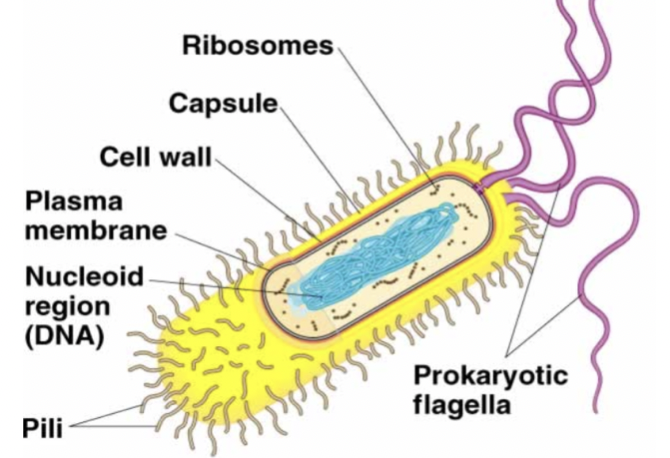
What are Prokaryotes
* Much smaller than eukaryotes
* Simple in structure
* Have non membrane bound organelles and no true nucleus- singular circular loop of DNA
* Some bacteria called ‘gram negatives’ have a second lipid membrane outside their cell wall
* Examples: Bacteria, Pond Scum, Simple Algae
* Simple in structure
* Have non membrane bound organelles and no true nucleus- singular circular loop of DNA
* Some bacteria called ‘gram negatives’ have a second lipid membrane outside their cell wall
* Examples: Bacteria, Pond Scum, Simple Algae
15
New cards
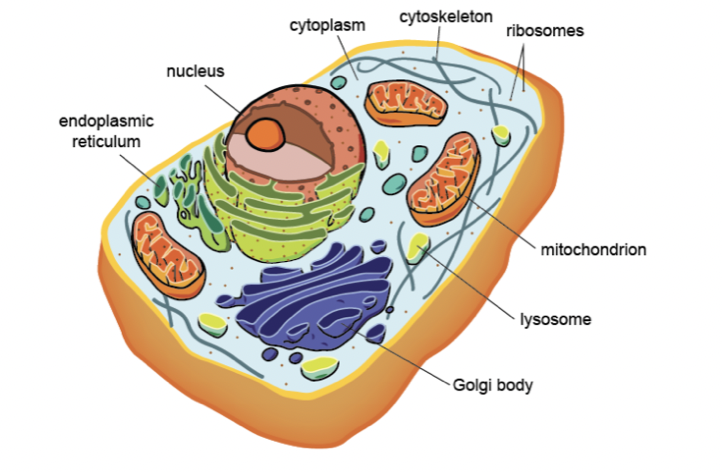
What are Eukaryotes
* Much more complex than prokaryotes
* Cells with membrane bound organelles
* Can either be unicellular or multicellular
* Examples: Animals, Plant, Fungi and Protists
* Cells with membrane bound organelles
* Can either be unicellular or multicellular
* Examples: Animals, Plant, Fungi and Protists
16
New cards
What is the differences between Archaea and Bacteria
* The cell wall of bacteria is made of peptidoglycan whereas archaea lack peptidoglycan
* The lipid membranes are made of different things
* The genetic code for a fundamental unit of ribosomes is very different
* The flagella are made of different proteins and are powered differently
* The lipid membranes are made of different things
* The genetic code for a fundamental unit of ribosomes is very different
* The flagella are made of different proteins and are powered differently
17
New cards
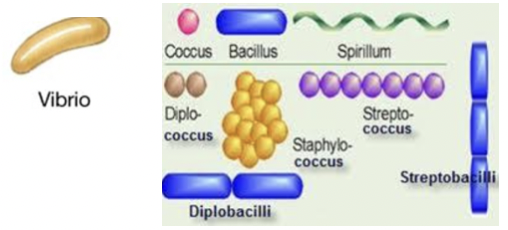
What are the Prokaryotic Shapes
* Vibrio
* Spirilla
* Cocci
* Bacilli
* If in pairs its diplo
* If in chains it is strepto
* If in bunches it is called staphylo
* Spirilla
* Cocci
* Bacilli
* If in pairs its diplo
* If in chains it is strepto
* If in bunches it is called staphylo
18
New cards
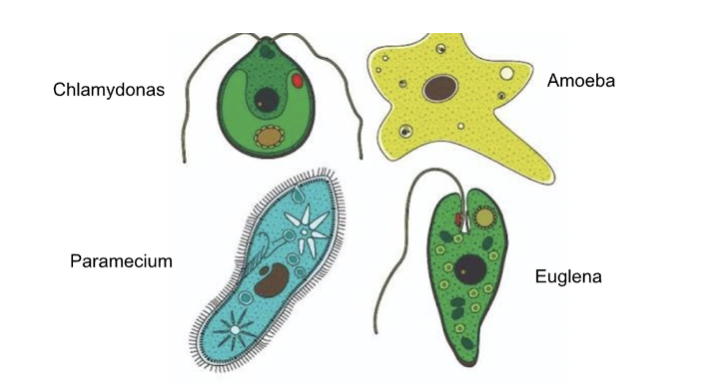
What are Protists
* Most are unicellular
* They require water (live in water or moist soils)
* Most are free living in ponds, lakes, streams or other freshwater
* Some have animal like features whilst others have plant like features
* Many Protista have food and waste vacuoles for storing and digesting wastes and food
* Many are able to move around the water they live in as they gave flagella and cilia
* Some can detect light with a light sensitive eye spot
* They require water (live in water or moist soils)
* Most are free living in ponds, lakes, streams or other freshwater
* Some have animal like features whilst others have plant like features
* Many Protista have food and waste vacuoles for storing and digesting wastes and food
* Many are able to move around the water they live in as they gave flagella and cilia
* Some can detect light with a light sensitive eye spot
19
New cards
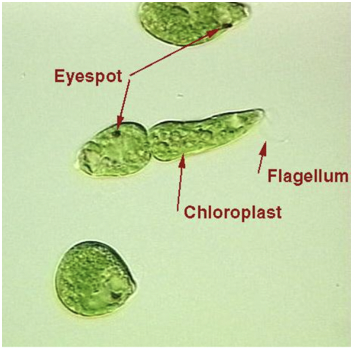
What are Euglena
* Euglena has chloroplasts that carry out photosynthesis
* It has flagellum allowing it to move in the water
* The presence of an eyespot allows it to detect the light and swim towards it
* Animal and Plant like features
* It has flagellum allowing it to move in the water
* The presence of an eyespot allows it to detect the light and swim towards it
* Animal and Plant like features
20
New cards
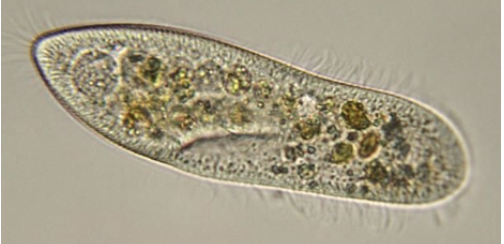
What are Paramecium
* Paramecium have cilia that help it move in its watery environment
* It has a food vacuole to store its food after digestion
* It eats like all animals
* It has a contractive vacuole that pumps excessive water out if the cell to avoid it bursting
* No cell wall as it needs to be flexible in order to move
* It has a food vacuole to store its food after digestion
* It eats like all animals
* It has a contractive vacuole that pumps excessive water out if the cell to avoid it bursting
* No cell wall as it needs to be flexible in order to move
21
New cards
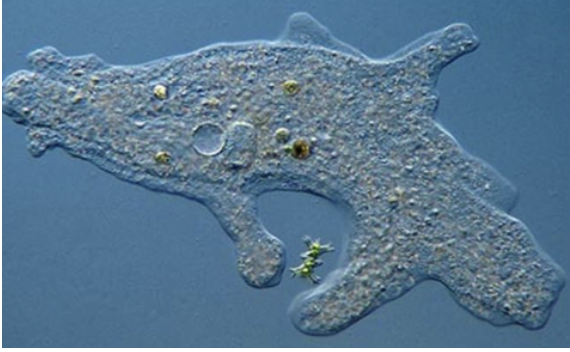
What are Amoeba
* They have Pseudopodia that are known as ‘false feet’ and are made when the cytoplasm in this unicell flows into a fake foot extension
* This method is used for movement and also used to capture food by trapping it
* This method is used for movement and also used to capture food by trapping it
22
New cards
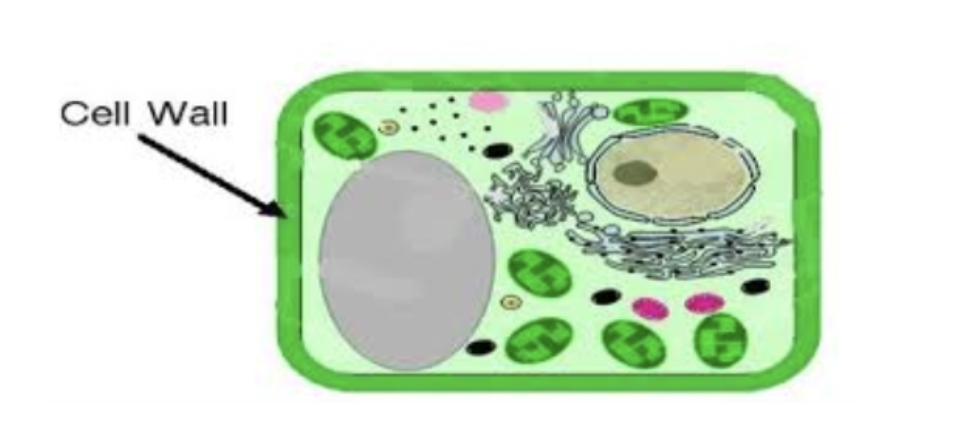
What is the Cell Wall
* Protects the cell
* Gives the cell shape and provides structural support (very rigid structure)
* Is made of cellulose (plants)
* A cell wall is found in plants, algae, fungi and most of bacteria
* Gives the cell shape and provides structural support (very rigid structure)
* Is made of cellulose (plants)
* A cell wall is found in plants, algae, fungi and most of bacteria
23
New cards
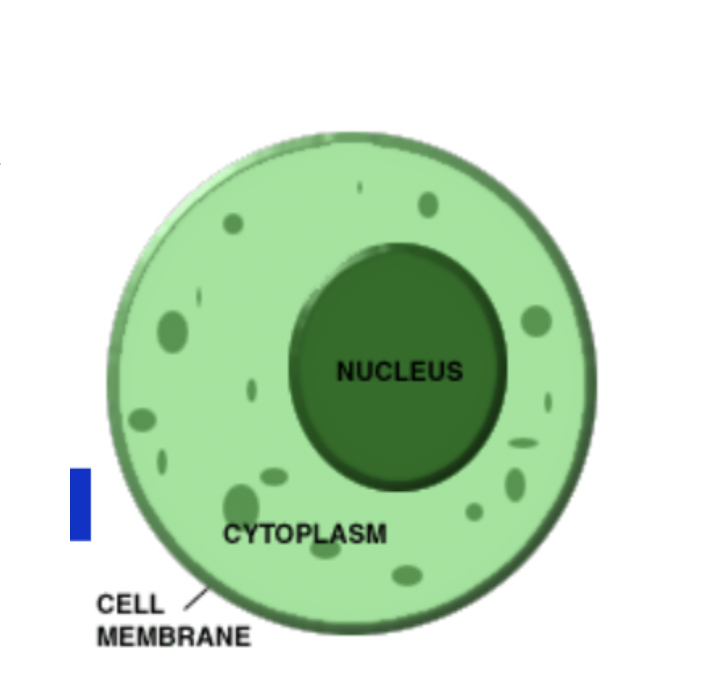
What is the Cell Membrane
* Thin outer boundary, protective layer around all cells
* For cells with cell walls, the cell membrane is inside the cell wall
* Controls the movement of substances in and out of the cell (Controls what enters and exits the cell)
* All eukaryotic and prokaryotic cells have a cell membrane
* For cells with cell walls, the cell membrane is inside the cell wall
* Controls the movement of substances in and out of the cell (Controls what enters and exits the cell)
* All eukaryotic and prokaryotic cells have a cell membrane
24
New cards
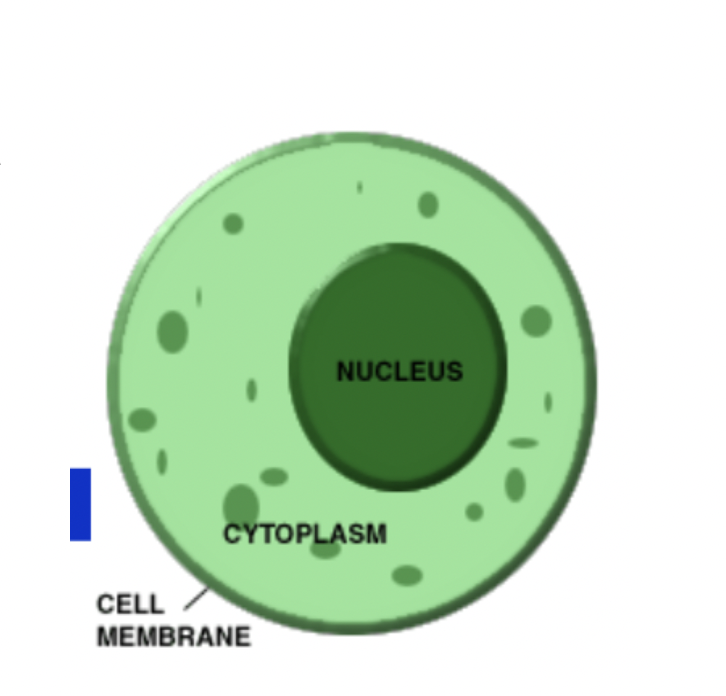
What is the Cytoplasm
* Cytoplasm (Gel Fluid and Organelles), Cytosol (only gel fluid)
* Gel like fluid inside cell membrane
* Consists largely of water
* Liquid environment where chemicals reactions occur within the cell
* Also called protoplasm or cytosol (only the gel fluid)
* Gel like fluid inside cell membrane
* Consists largely of water
* Liquid environment where chemicals reactions occur within the cell
* Also called protoplasm or cytosol (only the gel fluid)
25
New cards
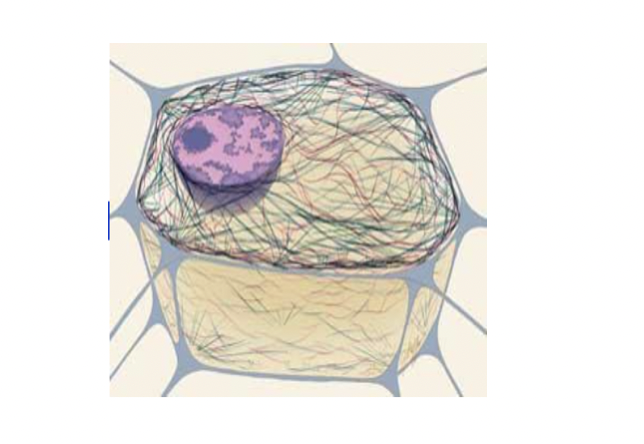
What is the Cytoskeleton
* Scaffolding like structure in the cytoplasm
* Helps the cell maintain or change its shape
* Made or protein
* Spindle during mitosis
* Helps the cell maintain or change its shape
* Made or protein
* Spindle during mitosis
26
New cards
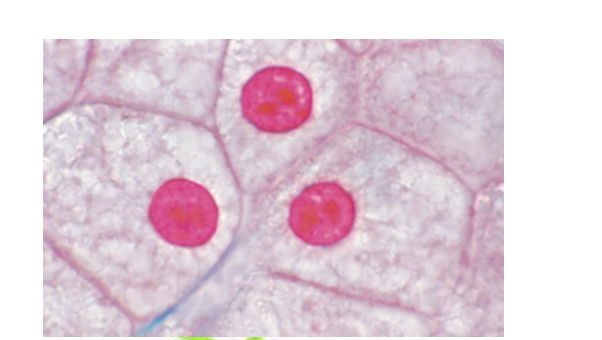
What is the Nucleus
* Directs all cell activities
* Control centre of the cell
* DNA is located in the nucleus
* Perforated by nuclear pores
* Control centre of the cell
* DNA is located in the nucleus
* Perforated by nuclear pores
27
New cards
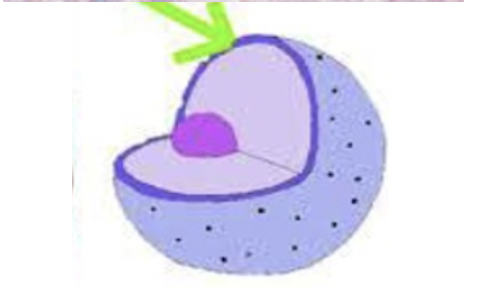
What is the Nuclear Membrane
* Separates nucleus from cytoplasm
* Controls movement of materials in and out of the nucleus
* Controls movement of materials in and out of the nucleus
28
New cards
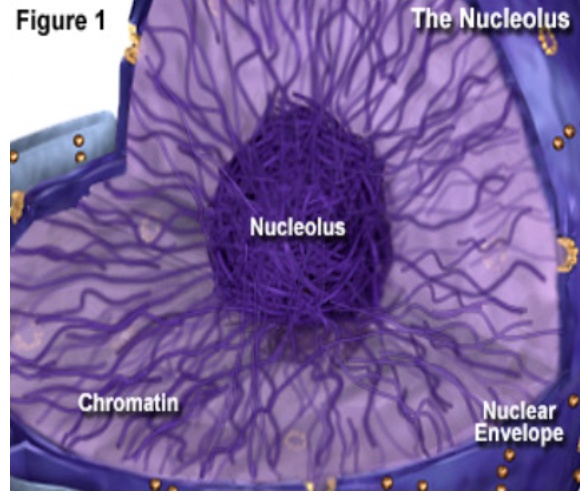
What is the Nucleolus
* Found inside the nucleus
* Site of where ribosomes are made
* Seen as the dark region
* Site of where ribosomes are made
* Seen as the dark region
29
New cards
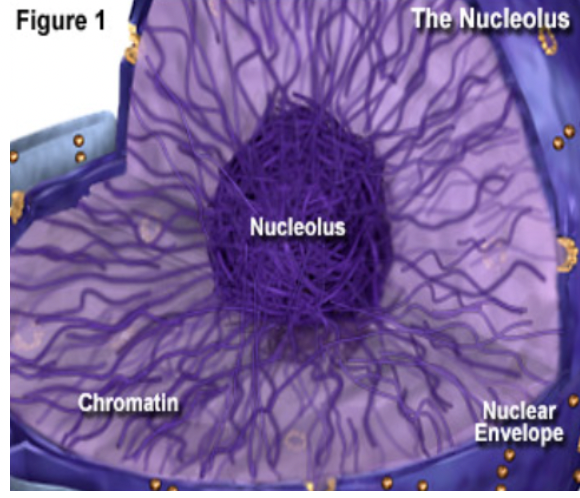
What is Chromatin
* Contains the genetic code that controls cell development and growth
* Chemicals that make up chromosomes
* Made of DNA and proteins (DNA and proteins make chromatin)
* Chemicals that make up chromosomes
* Made of DNA and proteins (DNA and proteins make chromatin)
30
New cards
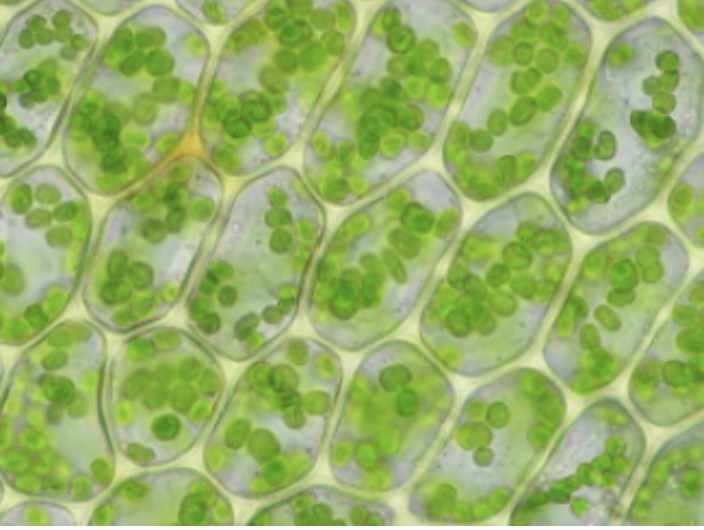
What are Chloroplasts
* Site of Photosynthesis
* Green round organelles that make plant food= glucose by photosynthesis
* Found only in plant cells and some protists like Euglena
* Green round organelles that make plant food= glucose by photosynthesis
* Found only in plant cells and some protists like Euglena
31
New cards
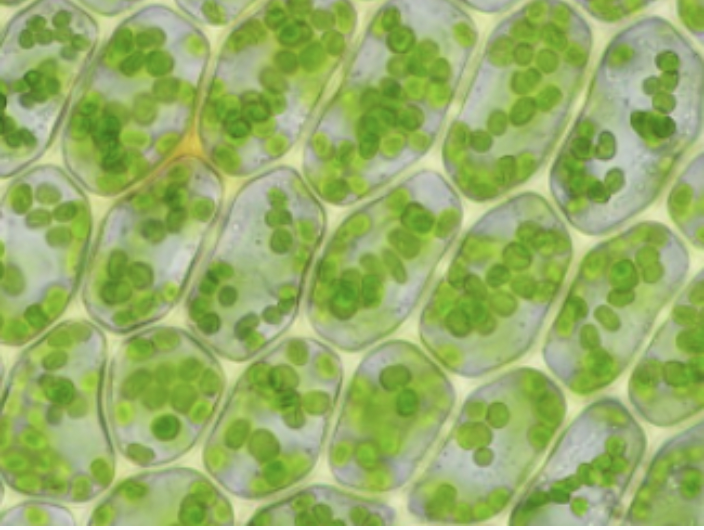
What is Chlorophyll
* A green pigment that gives leaves and stems their colour
* Found in chloroplasts
* Captures sunlight energy (red+blue) that is produce glucose (food for plant) which is a type of sugar
* Found in chloroplasts
* Captures sunlight energy (red+blue) that is produce glucose (food for plant) which is a type of sugar
32
New cards
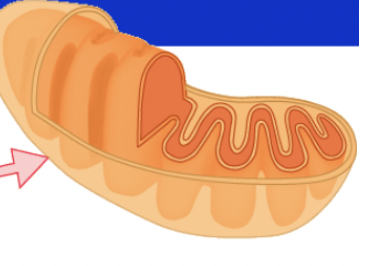
What is the Mitochondria
* Site of aerobic respiration
* Bread down glucose to produce usable energy for the cell
* This energy is released by breaking down food into carbon dioxide and water
* Powerhouse of cell as they release energy from food to be used for cell activities
* Bread down glucose to produce usable energy for the cell
* This energy is released by breaking down food into carbon dioxide and water
* Powerhouse of cell as they release energy from food to be used for cell activities
33
New cards
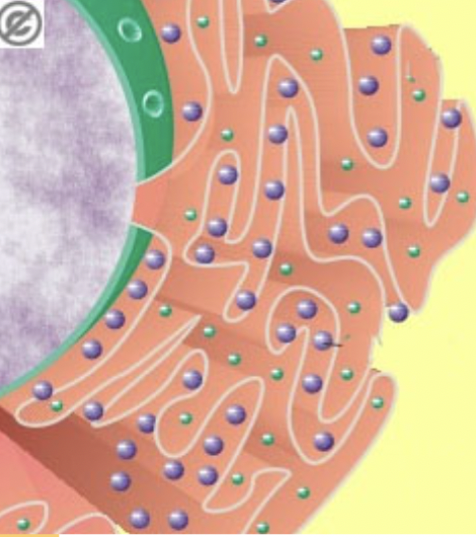
What are the Ribosomes
* Make proteins
* Float freely in cytoplasm to attached to the endoplasmic reticulum (ER)
* Ribosomes are made in the nucleolus
* Smallest organelle (doesn’t have a membrane)
* Float freely in cytoplasm to attached to the endoplasmic reticulum (ER)
* Ribosomes are made in the nucleolus
* Smallest organelle (doesn’t have a membrane)
34
New cards
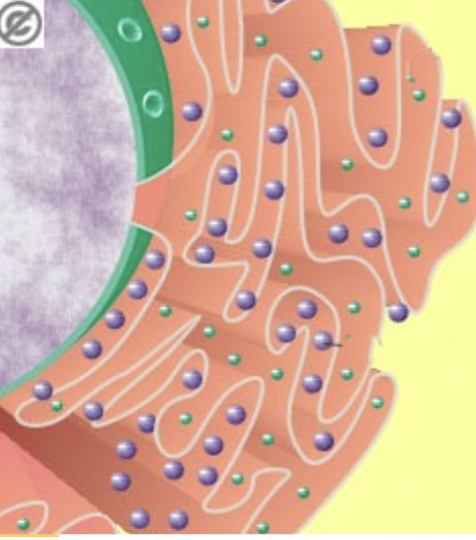
What is the ER (Endoplasmic Reticulum)
* A series of folded membranes that move materials (proteins) around in a cell
* Like a conveyor belt
* Materials are transported throughout the cytoplasm, through the ER
* Smooth ER- ribosomes not attached to ER
* Rough ER- ribosomes attached to ER
* Smooth ER lipid synthesis and Rough ER protein synthesis
* Like a conveyor belt
* Materials are transported throughout the cytoplasm, through the ER
* Smooth ER- ribosomes not attached to ER
* Rough ER- ribosomes attached to ER
* Smooth ER lipid synthesis and Rough ER protein synthesis
35
New cards
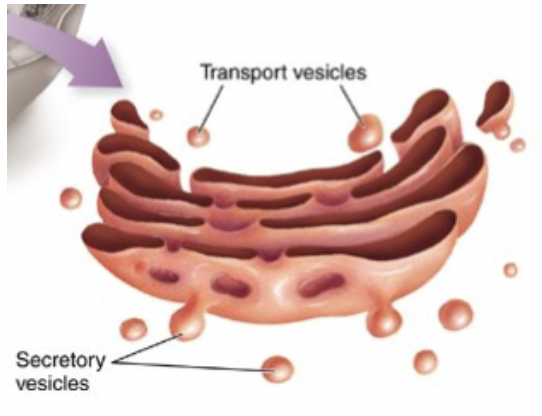
What are Golgi Bodies
* Stacked flattened membranes
* Sort and package for export out of the cell
* Proteins are packaged into vesicles
* Sort and package for export out of the cell
* Proteins are packaged into vesicles
36
New cards
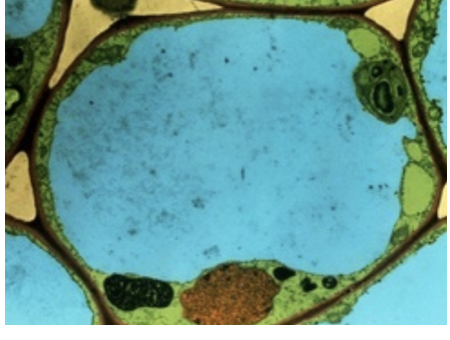
What are Vacuoles
* Temporary storage spaces
* Storage food, water and waste
* Large vacuoles are found in plant cells
* Storage food, water and waste
* Large vacuoles are found in plant cells
37
New cards
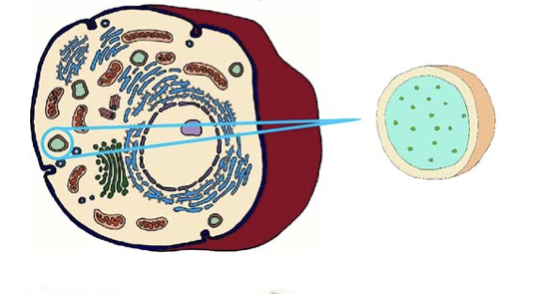
What are Ribosomes
* The purpose of the lysosome is to digest things. They might be used to digest food to break down the cell when it dies (any worn out cell parts and materials
* Suicide button for cells (infected, DNA mutation, not needed)
* Breakdown food molecules, cell wastes and worn out cell parts
* Contain digestive enzymes
* Only found in animal cells
* Suicide button for cells (infected, DNA mutation, not needed)
* Breakdown food molecules, cell wastes and worn out cell parts
* Contain digestive enzymes
* Only found in animal cells
38
New cards
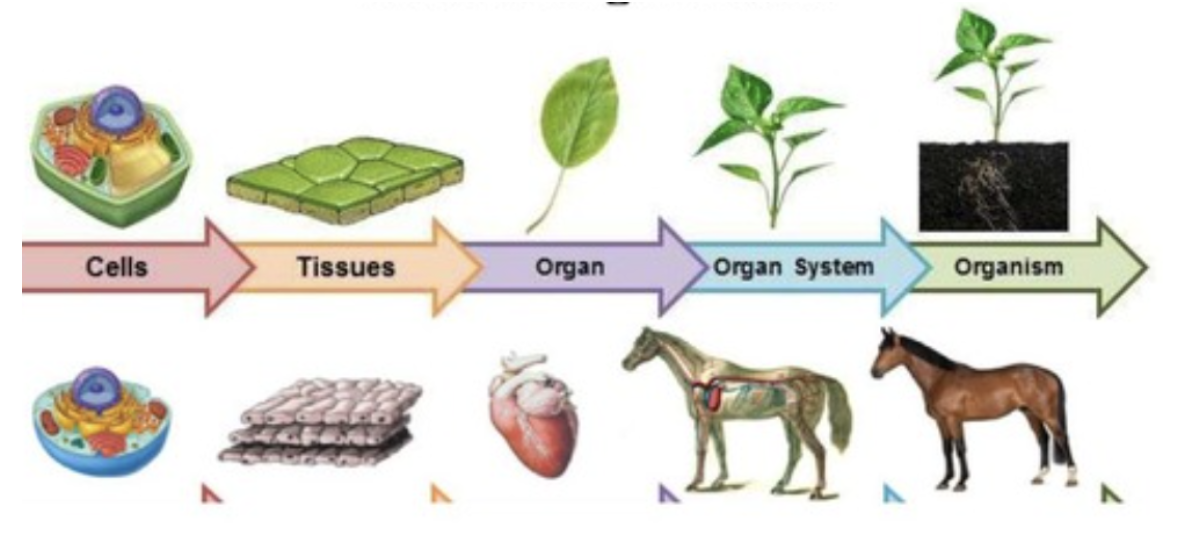
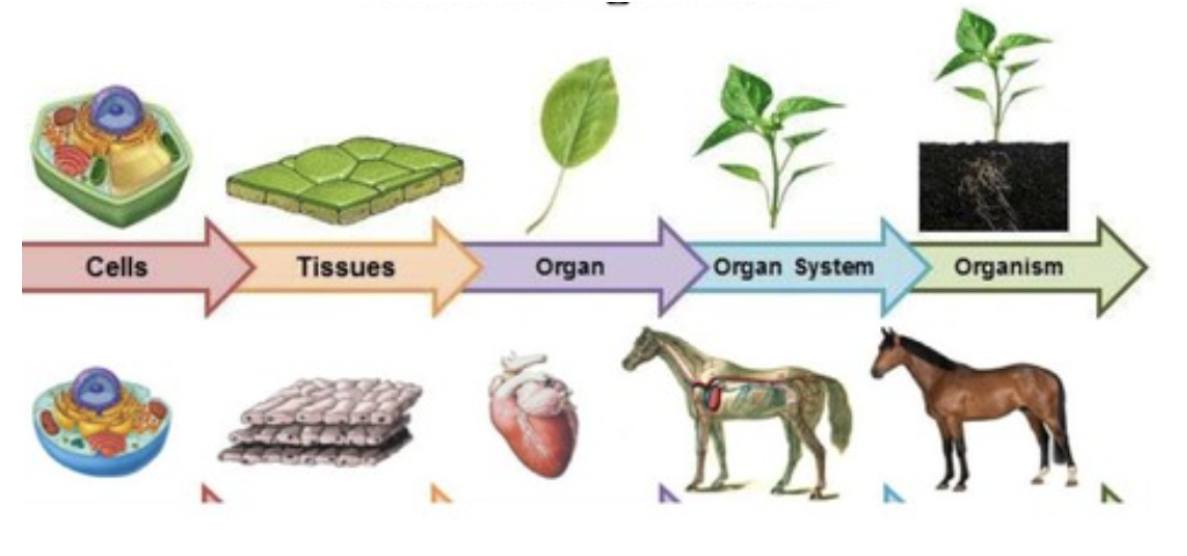
What is the Order from a Cell to an Organism
1. Cell: The basic unit of life
2. Tissue: Group of cells working together
3. Organ: Group of tissues working together
4. System: Group of organs working together
5. Organism: Any living thing made of cells
39
New cards
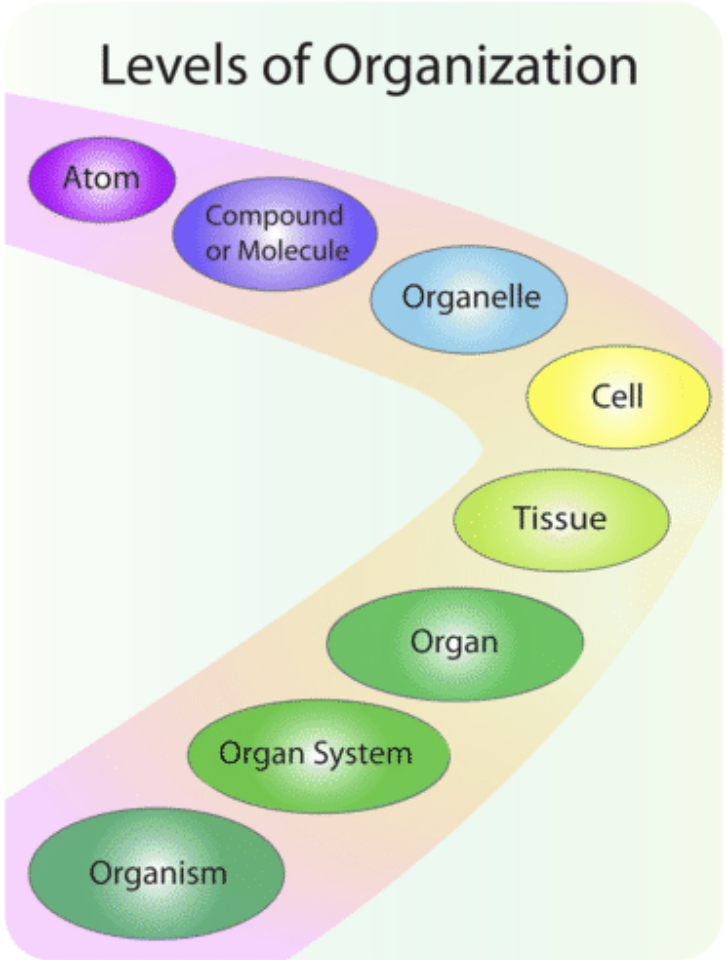
What is the Level of Organisation in the Body
1. Atom
2. Molecule
3. Macromolecule
4. Cell
5. Tissue
6. Organ
7. Organ System
8. Whole Organism
40
New cards
Viruses are not usually considered to be living a reason for that is
1. living things have metabolic processes but viruses do not
2. Living things have an organised structure but viruses do not
3. Living things evolve over time but viruses do not
4. Living things are able to reproduce but viruses are not able
1. living things have metabolic processes but viruses do not
2. Living things have an organised structure but viruses do not
3. Living things evolve over time but viruses do not
4. Living things are able to reproduce but viruses are not able
Answer (1)
41
New cards
Which of the following statements accurately compares the cells of prokaryotes to eukaryotes?
1. Eukaryotes contain DNA whereas prokaryotes don’t.
2. Eukaryotes have a cell membrane whereas prokaryotes don’t.
3. Eukaryotes contain a nucleus whereas prokaryotes don’t.
4. Eukaryotes are much smaller than prokaryotes.
1. Eukaryotes contain DNA whereas prokaryotes don’t.
2. Eukaryotes have a cell membrane whereas prokaryotes don’t.
3. Eukaryotes contain a nucleus whereas prokaryotes don’t.
4. Eukaryotes are much smaller than prokaryotes.
Answer (3)
42
New cards
Which of the following statements is true?
1. All prokaryotes are bacteria.
2. All bacteria are prokaryotes.
3. Bacteria contain ribosomes but archaea do not.
4. Spherical bacteria are called bacilli.
1. All prokaryotes are bacteria.
2. All bacteria are prokaryotes.
3. Bacteria contain ribosomes but archaea do not.
4. Spherical bacteria are called bacilli.
Answer (2)
43
New cards
Why are Cells so Small
* Cells need to be small so they can gain sufficient nutrients and expel wastes quickly enough to survive. By having a small SA:V ratio diffusion is quicker which is why cells are so small
44
New cards
Cells and Diffusion
* Cells obtain their nutrients and remove their wastes by a process called diffusionS
45
New cards
Rate of Diffusion due to Factors
* Temperature
* Concentration gradient
* The surface area of the cell
* The volume of the cell
* The size and molecule moving by diffusion
* Concentration gradient
* The surface area of the cell
* The volume of the cell
* The size and molecule moving by diffusion
46
New cards
SA: V RATIO
* As a cell gets larger it SA:V ratio gets smaller and its rate of diffusion is slower
* As a cell gets smaller its SA:V ratio decreases and it rate for diffusion is faster
* As a cell gets smaller its SA:V ratio decreases and it rate for diffusion is faster
47
New cards
Cell Shape and Size
* Small, Flat Shape: Fast Diffusion- Serves to INCREASE the SA:V ratio and promotes a FASTER rate of diffusion
* Large, Circular Shape: Slow Diffusion
* Large, Circular Shape: Slow Diffusion
48
New cards
SA and Volume Formulas
* SA: 6 x length x width (6xlxw)
* Volume: length x width x height (lxwxh)
* Volume: length x width x height (lxwxh)
49
New cards
Cells are small because this provides
1. A small surface area compared with volume for exchange of molecules with the environment
2. A large surface area compared with volume for exchange of molecules with the environment
3. A large volume compared with surface area for exchange of molecules with the environment
4. A large surface area and large volume for exchange of molecules with the environment
1. A small surface area compared with volume for exchange of molecules with the environment
2. A large surface area compared with volume for exchange of molecules with the environment
3. A large volume compared with surface area for exchange of molecules with the environment
4. A large surface area and large volume for exchange of molecules with the environment
Answer: B