Animal diversity 2: arthropods, molluscs, annelids, dissection
 Call Kai
 Learn
Learn Practice Test
 Spaced Repetition
 Match
Match Flashcards
 Knowt Play
1/56

There's no tags or description
Looks like no tags are added yet.
Name | Mastery | Learn | Test | Matching | Spaced | Call with Kai |
|---|
No analytics yet
Send a link to your students to track their progress
57 Terms
Ecdysozoa
Supergroup of protostomes; characterized by periodic molting of their exoskeleton. Include the roundworms and arthropods.
Ecdysis
molting
Arthropoda
Chelicerates, crustaceans, insects, myriapods
Arthropod circulatory system
Open, hemolymph flows through hemocoel
Hemolymph
In invertebrates with an open circulatory system, the body fluid that bathes tissues.
Arthropod exoskeleton
made of chitin
Chelicerates
1. Sea spiders and horseshoe crabs
2. arachnida
Chelicerae
pair of mouthparts in chelicerates that contain fangs or pinchers
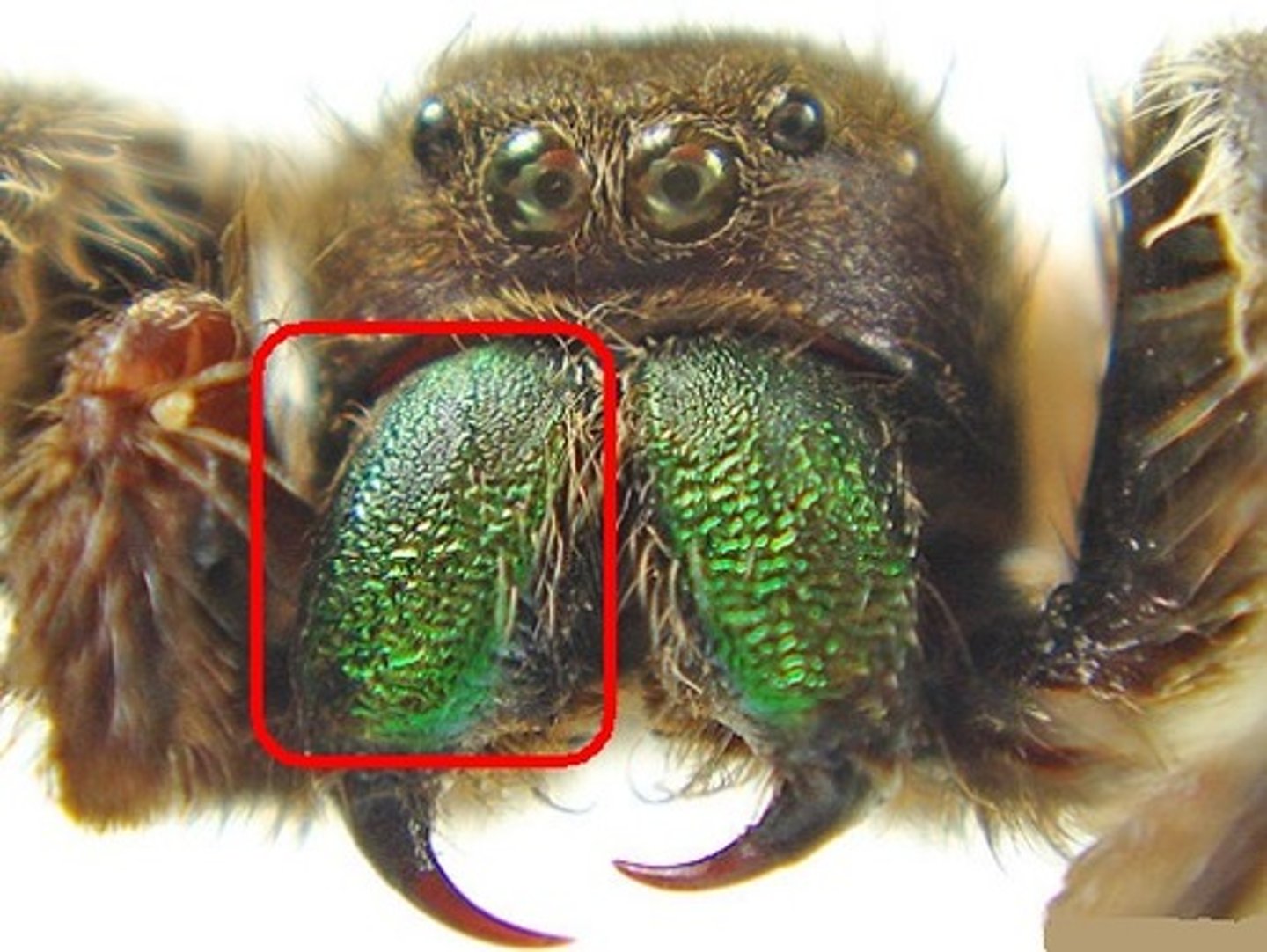
Pedipalps
pair of mouthparts in chelicerates that are usually modified to grab prey
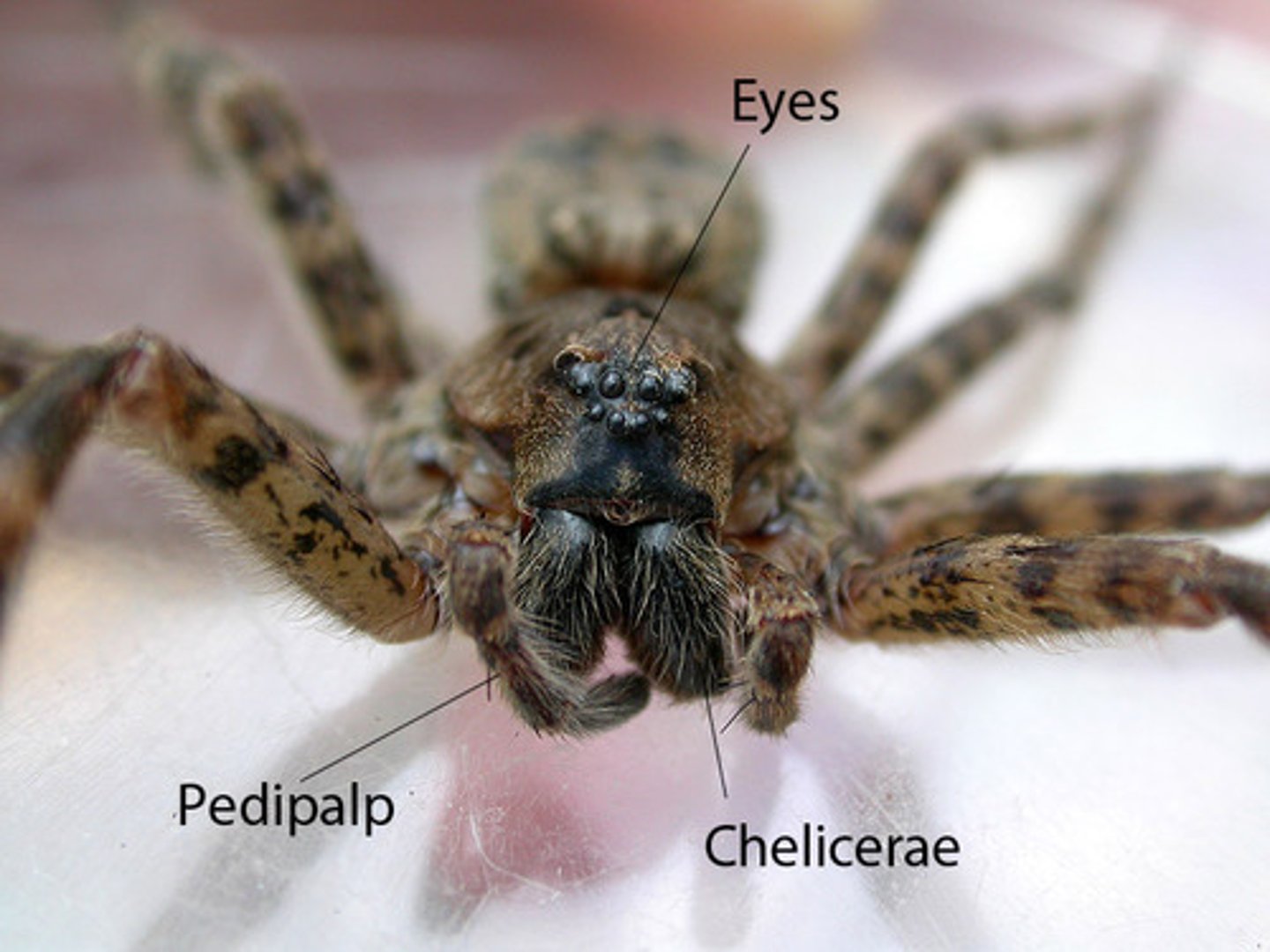
Arachnida
spiders, scorpions, ticks, mites
Arachnid and crustacean body plan
cephalothorax and abdomen
Total number of arachnid appendages
6 pairs total, chelicerae, pedipalps, and 4 pairs of walking legs
Crustaceans
1. Lobsters, crayfish, crabs, shrimp
2. copepods and barnacles
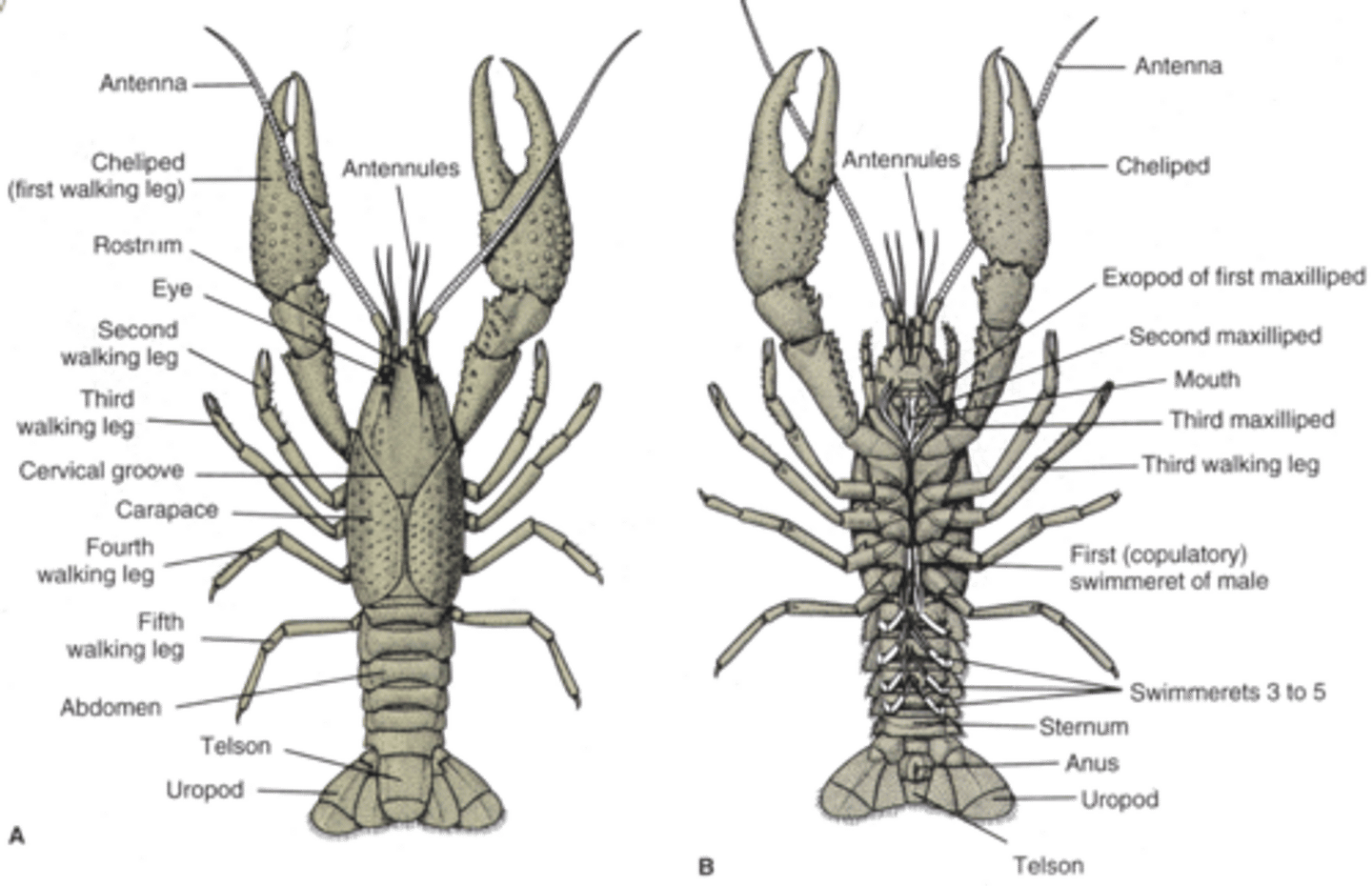
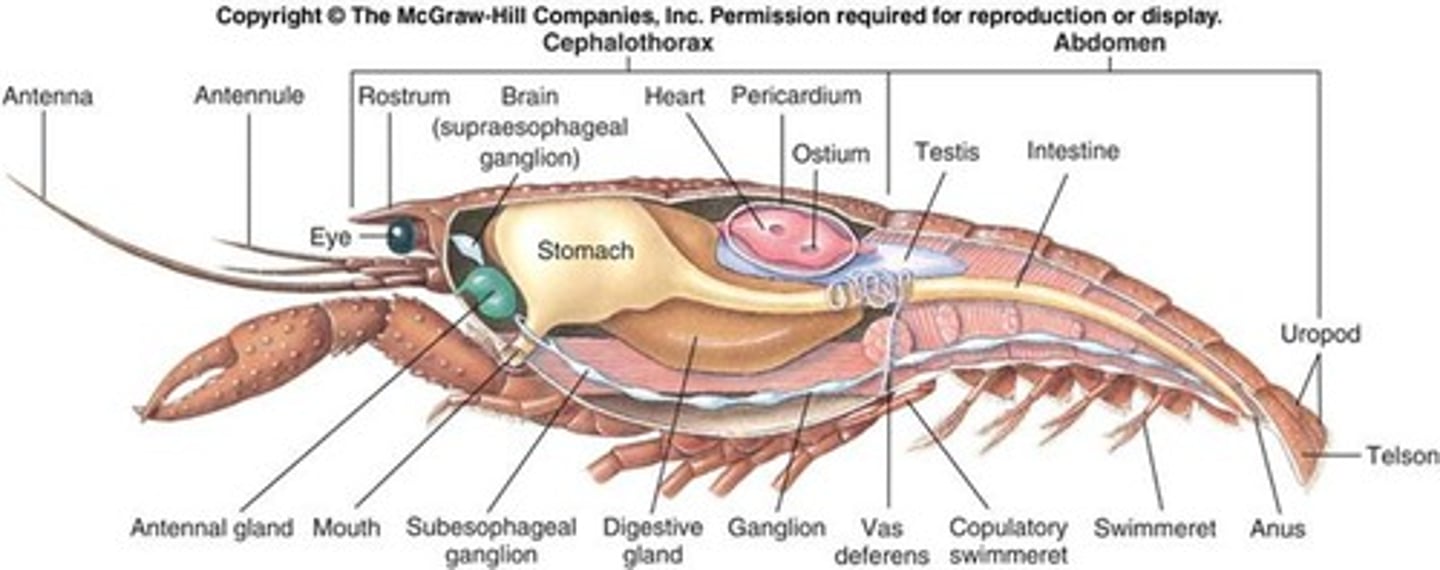
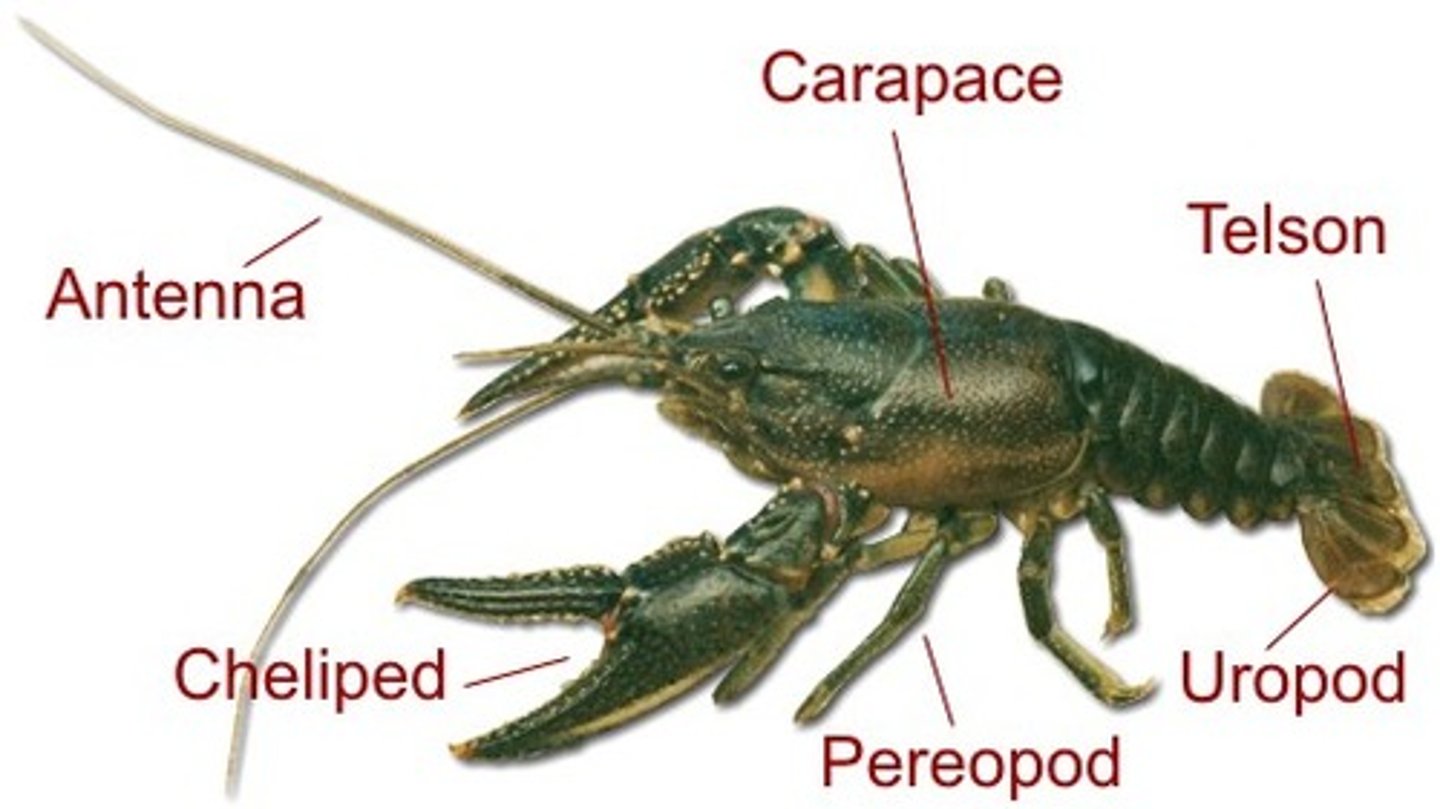
crayfish
19 body parts, antennae, mouthparts (maxillipeds), claws (chelipeds), 4 pairs of walking legs, swimmerets, telson (tail)
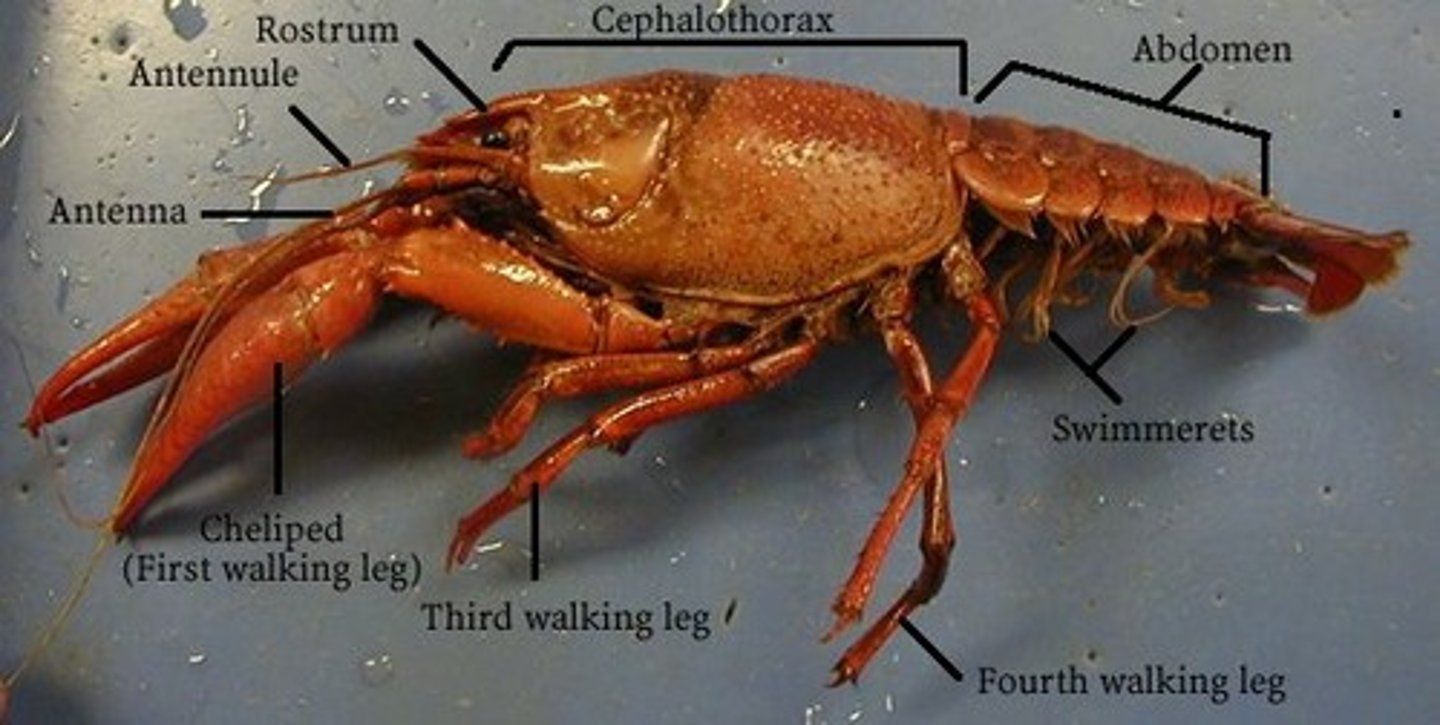
External crayfish anatomy
Internal crayfish anatomy
insects
Bees, butterflies, fleas, grasshoppers, true bugs, etc
Insect body plan
head, thorax, abdomen
Insect Anatomy
Modified mouthparts, antennae, 3 pairs of walking legs, wings are extension of cuticle
Insect tracheal system
a network of air tubes that branch throughout the body
Spiracles
breathing tubes of insects located on abdomen
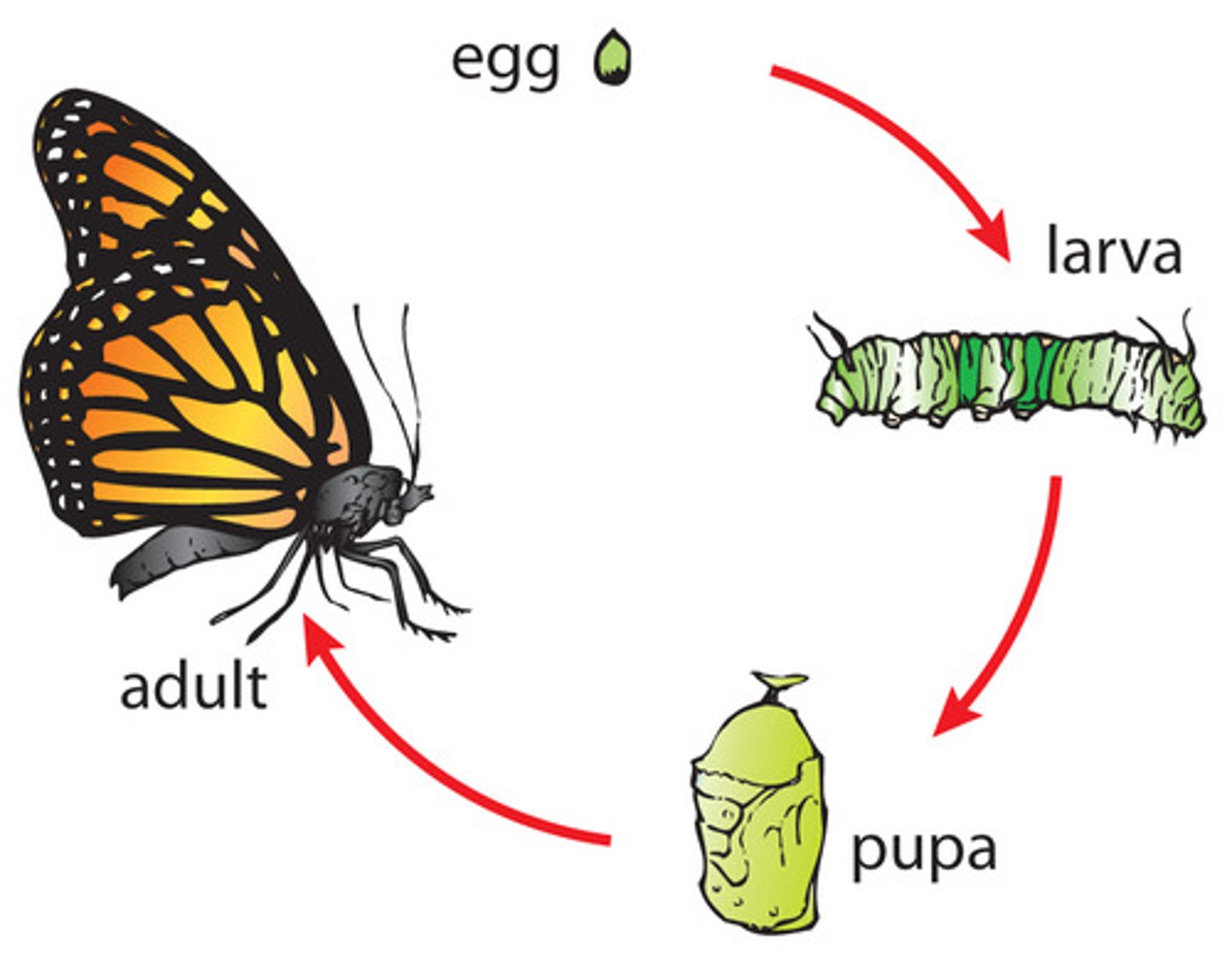
complete metamorphosis
Insect development consisting of four stages: egg, larva, pupa, and adult
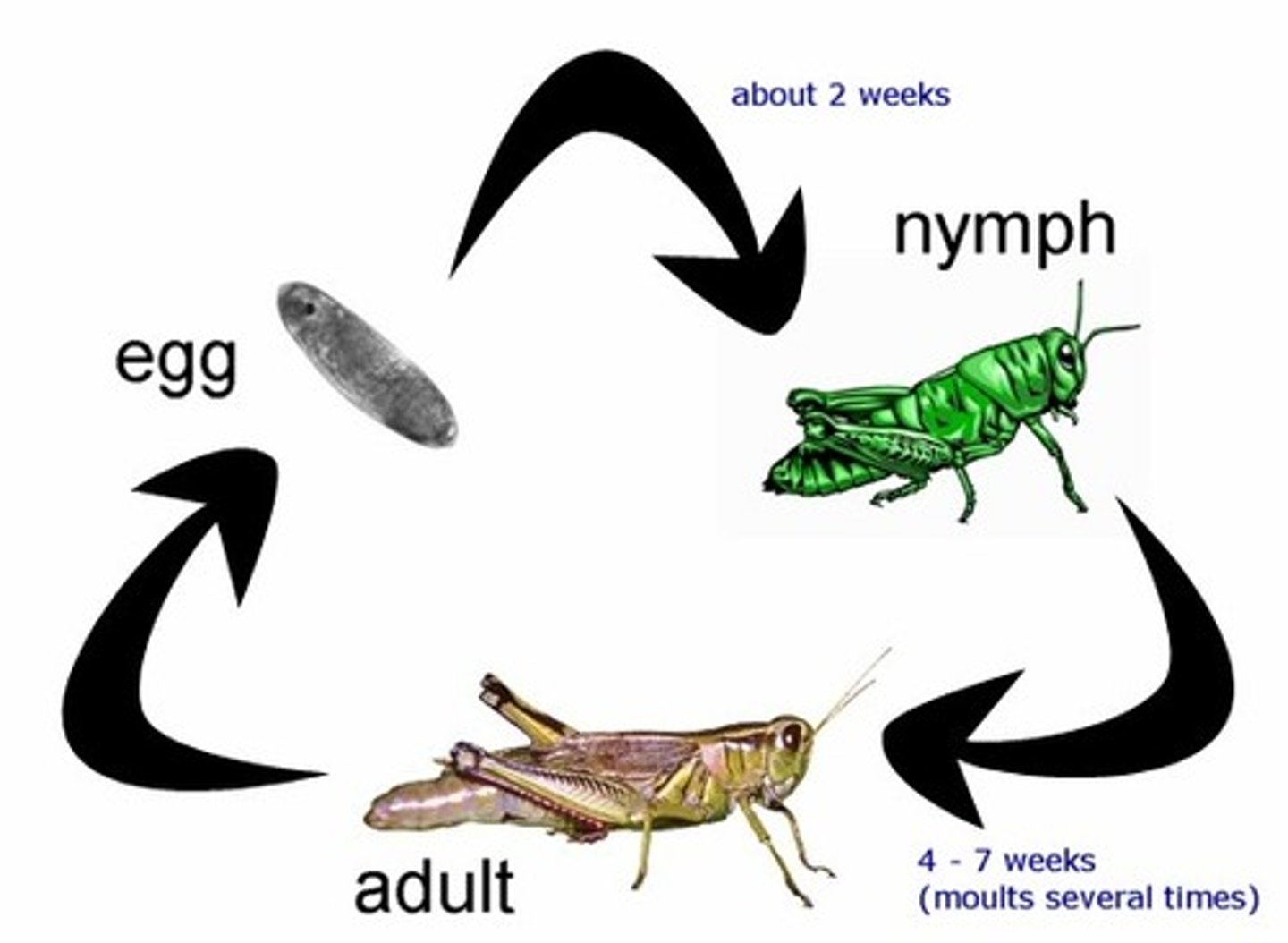
incomplete (gradual) metamorphosis
Insect development consisting of three stages: egg, nymph, and adult
Myriapods
centipedes and millipedes
Centipedes
segmented bodies, 1 pair of legs per segment, predators with a pair of venomous claws
Millipedes
A terrestrial arthropod that has two pairs of short legs for each of its numerous body segments and that eats decaying plant matter.
Detritivore
organism that feeds on plant and animal remains and other dead matter
Mollusca
Lophotrochozoan: chitons, gastropods, bivalves, cephalopods
Mollusc circulatory system
Open except for cephalopods
Mollusc Anatomy
Visceral mass, muscular foot, shell, mantle
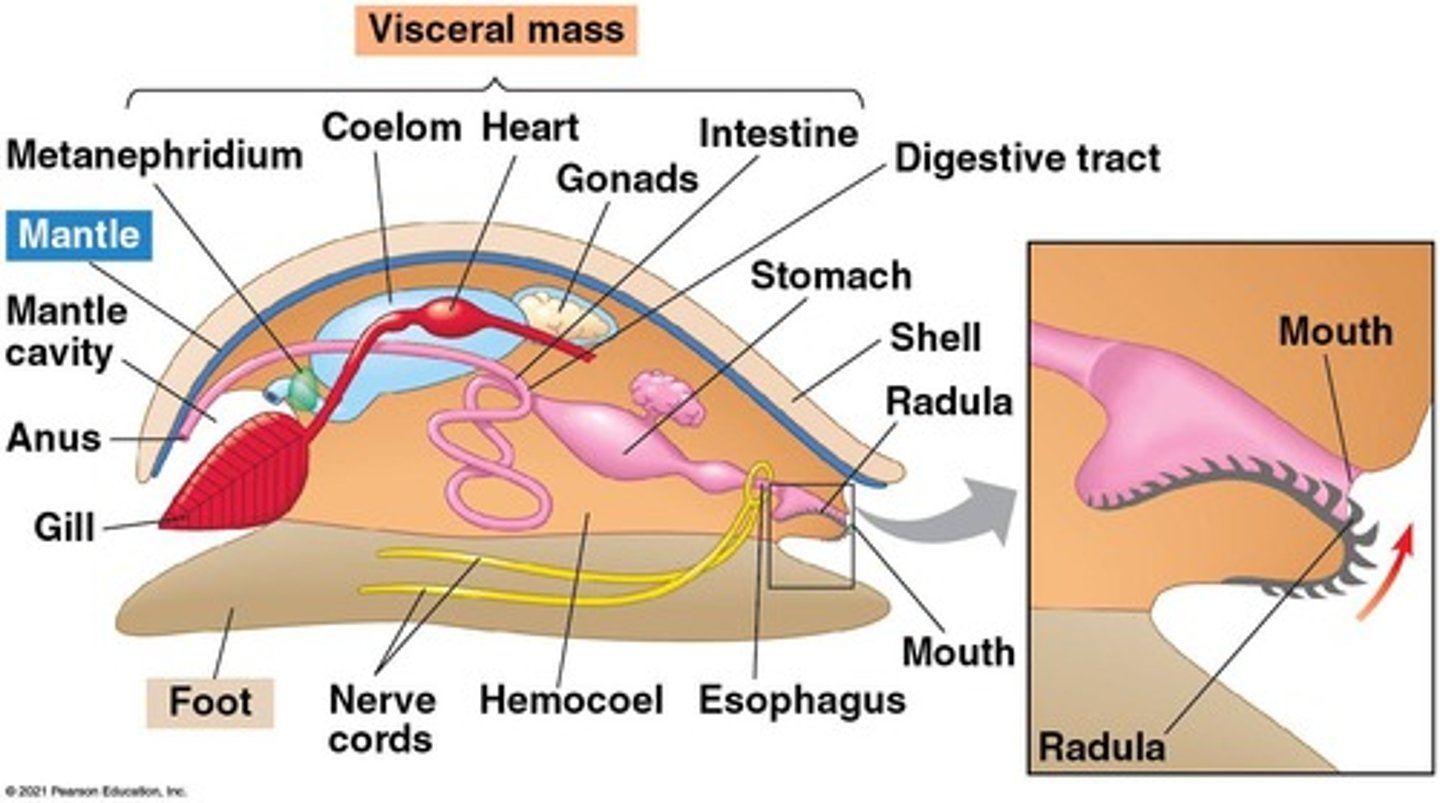
visceral mass
area beneath the mantle of a mollusk that contains the internal organs
Muscular foot
used for movement
Mantle
Secretes shell
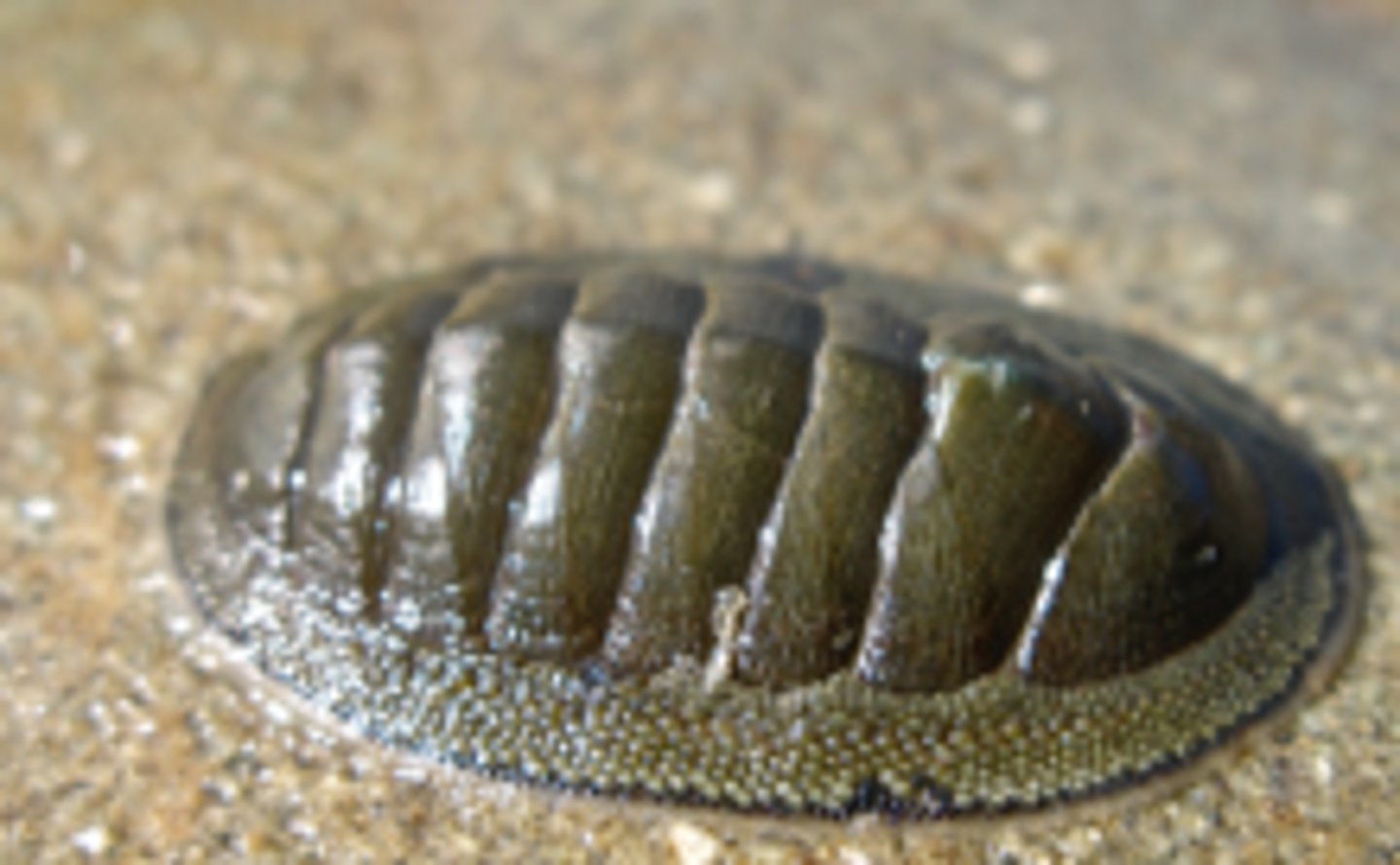
Chitons
8 plates
Gastropods
Snails and slugs
Bivalves
clams, oysters, mussels
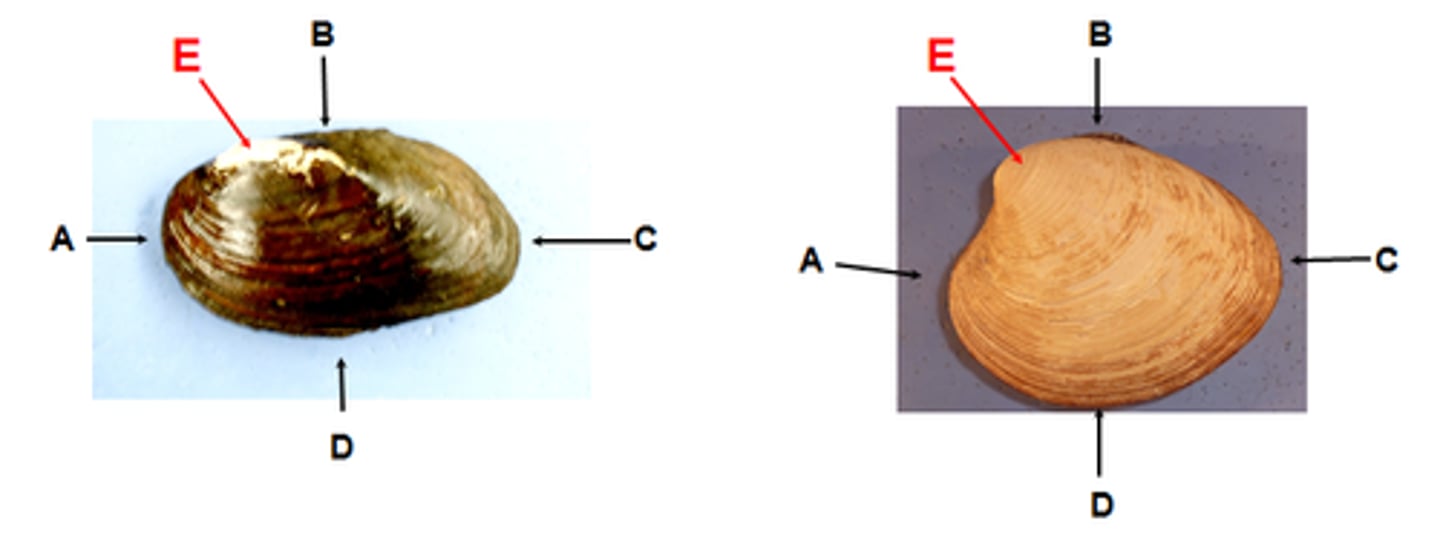
Umbo
oldest part of the shell of a bivalve from which the shell grows
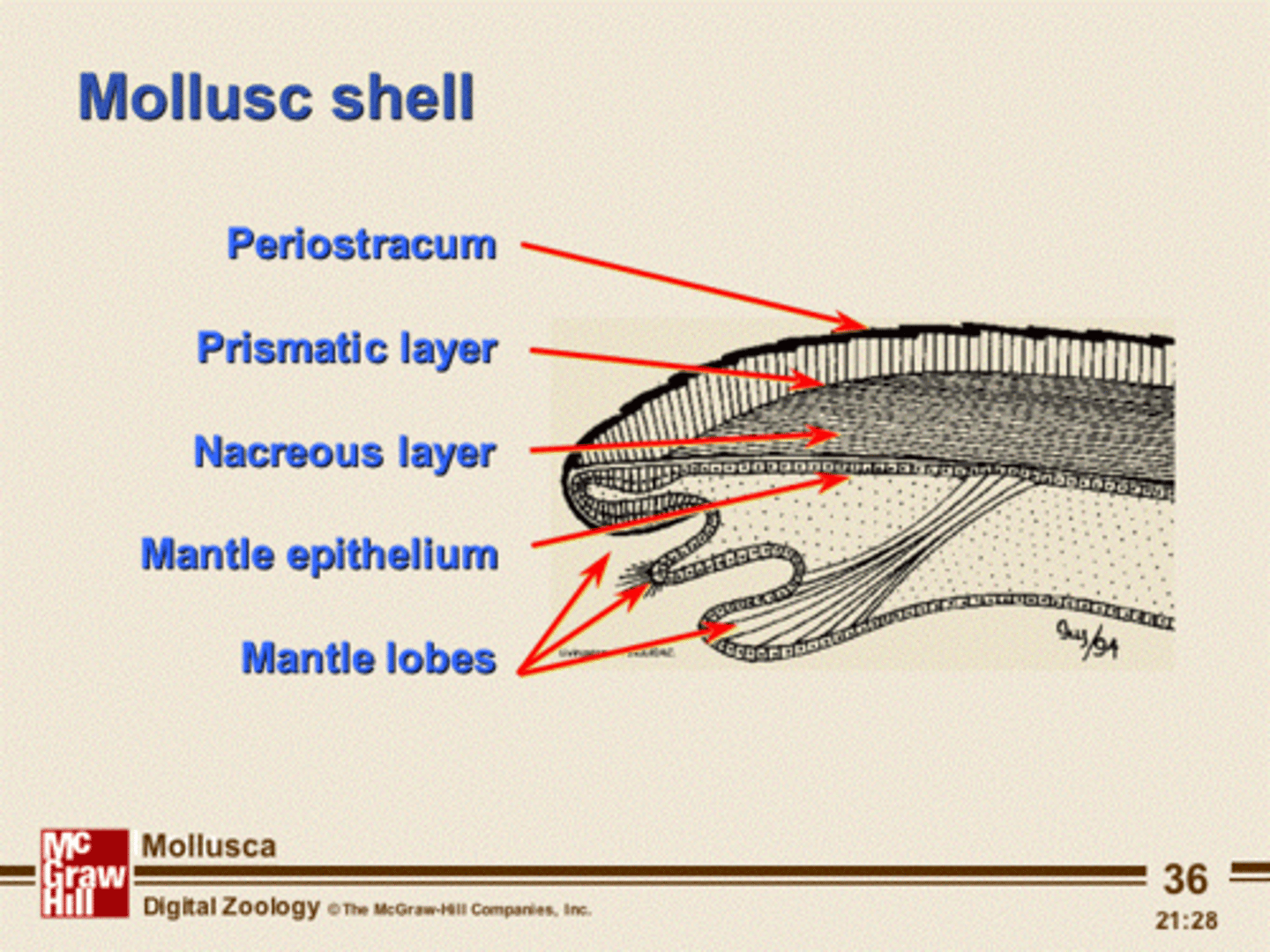
Layers of clam shells
Periostracum (outer layer), prismatic layer (middle layer), nacre (mother of pearl), iridescent inner layer
Clam anatomy
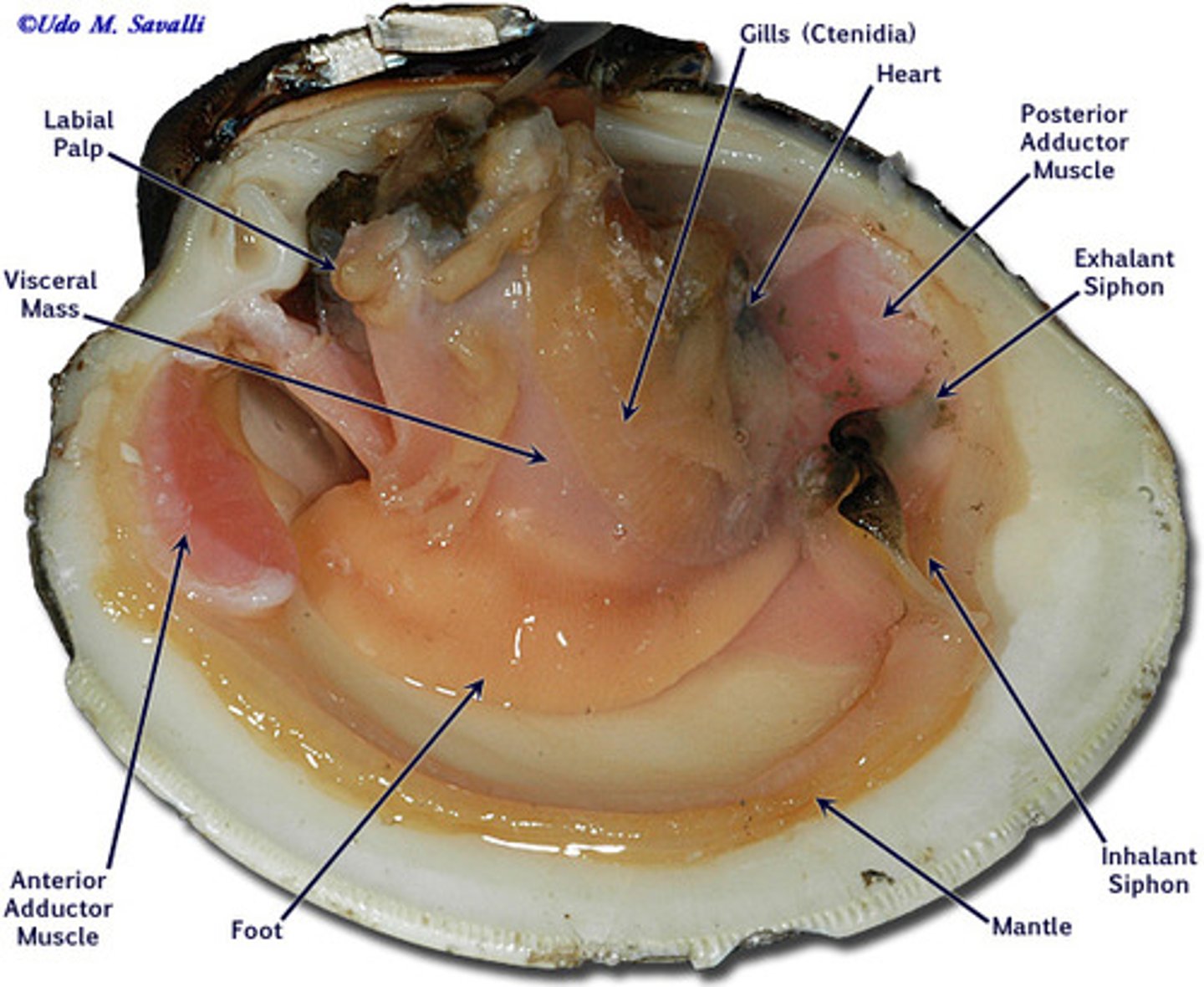
Cephalopods
Squids, octopi, nautilus
Pen (squid)
Inner shell
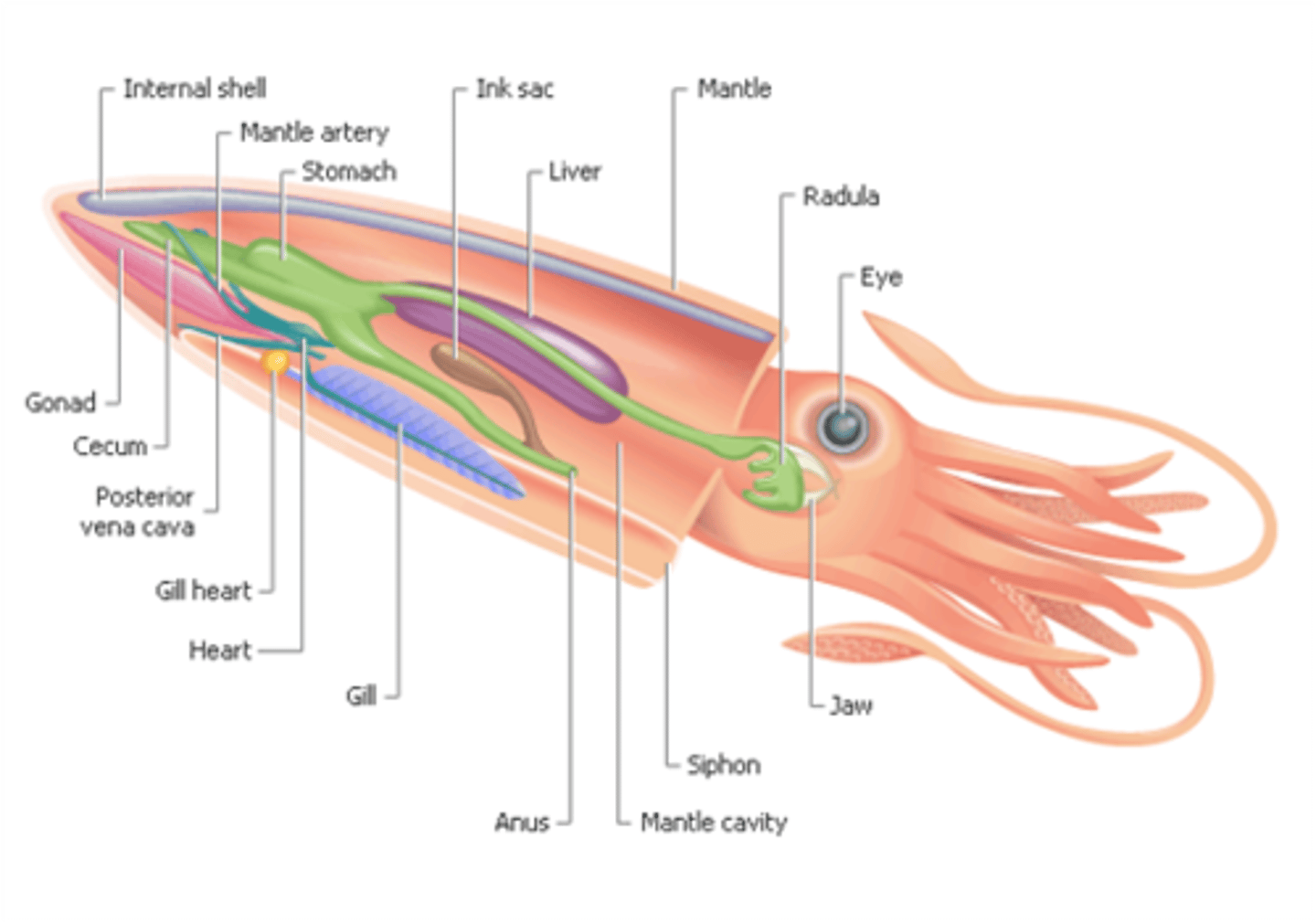
Radula
feeding structure
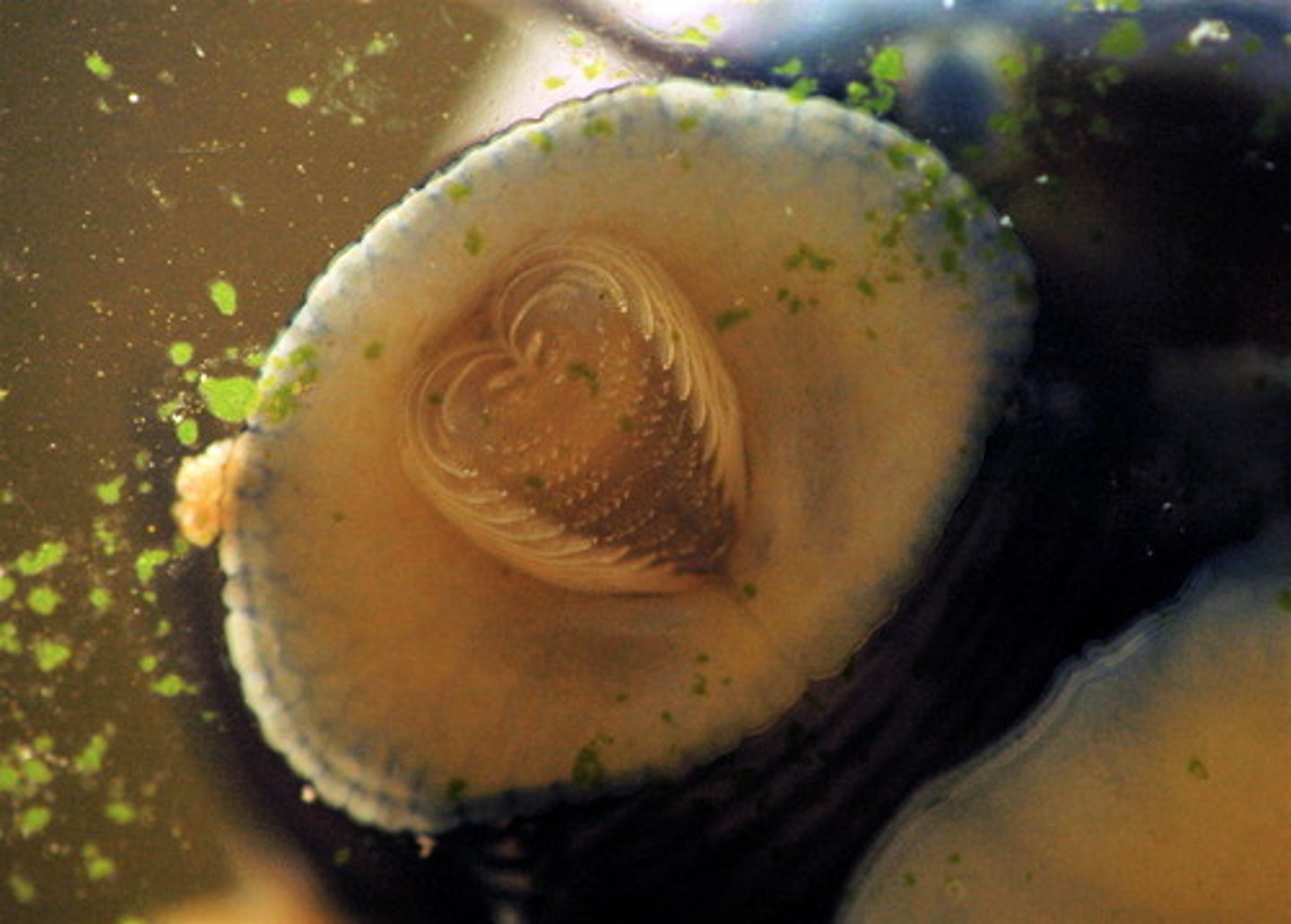
beak (squid)
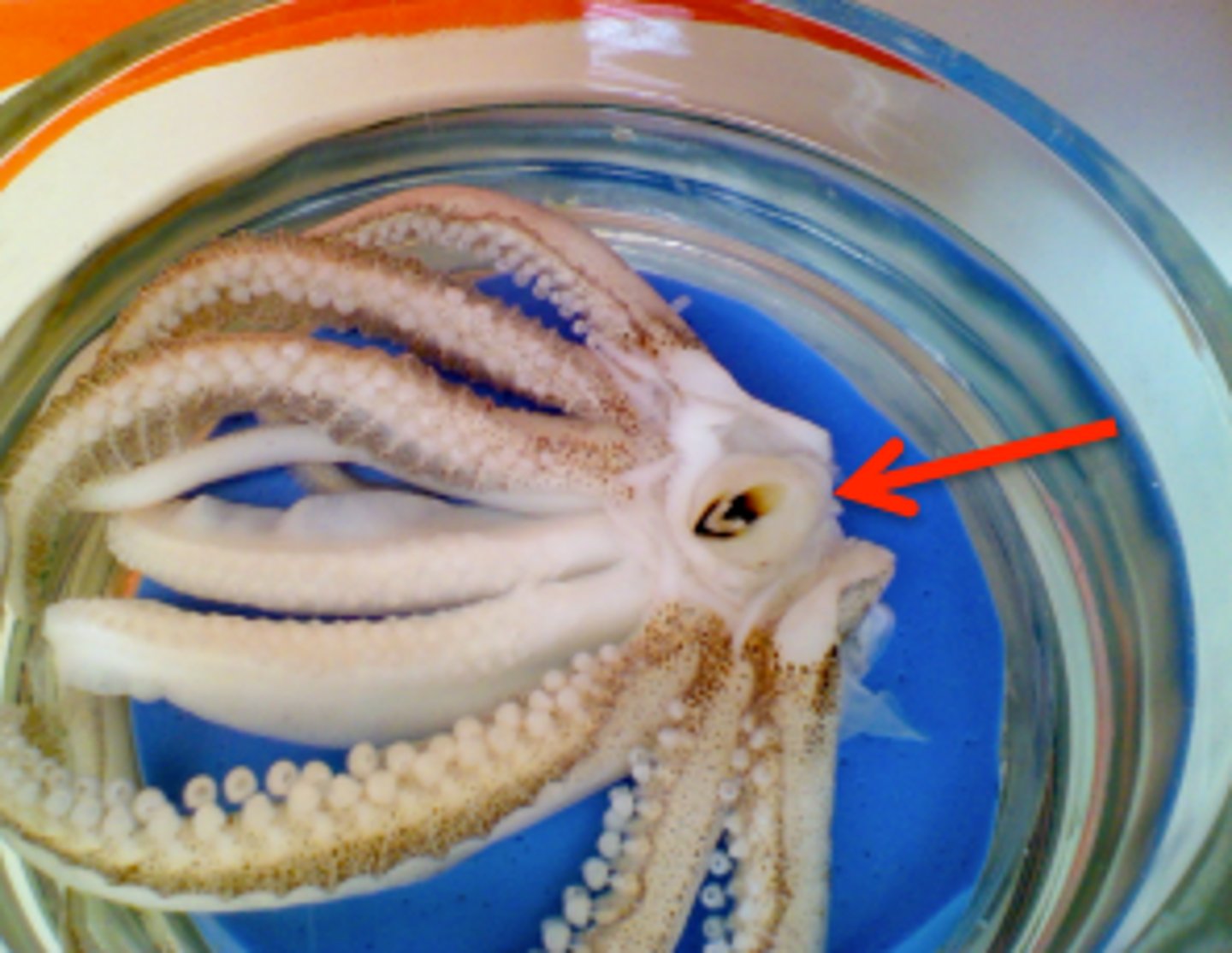
diverticulum (squid)
the ink sack of a mollusc, you saw one in the squid.
Annelida
Annelid circulatory system
Closed
septae
Divisions between segments
Setae
Aka chaetae, bristles on each segment
Clitellum
Band of thickened, specialized segments in annelids that secretes a mucus ring into which eggs and sperm are released
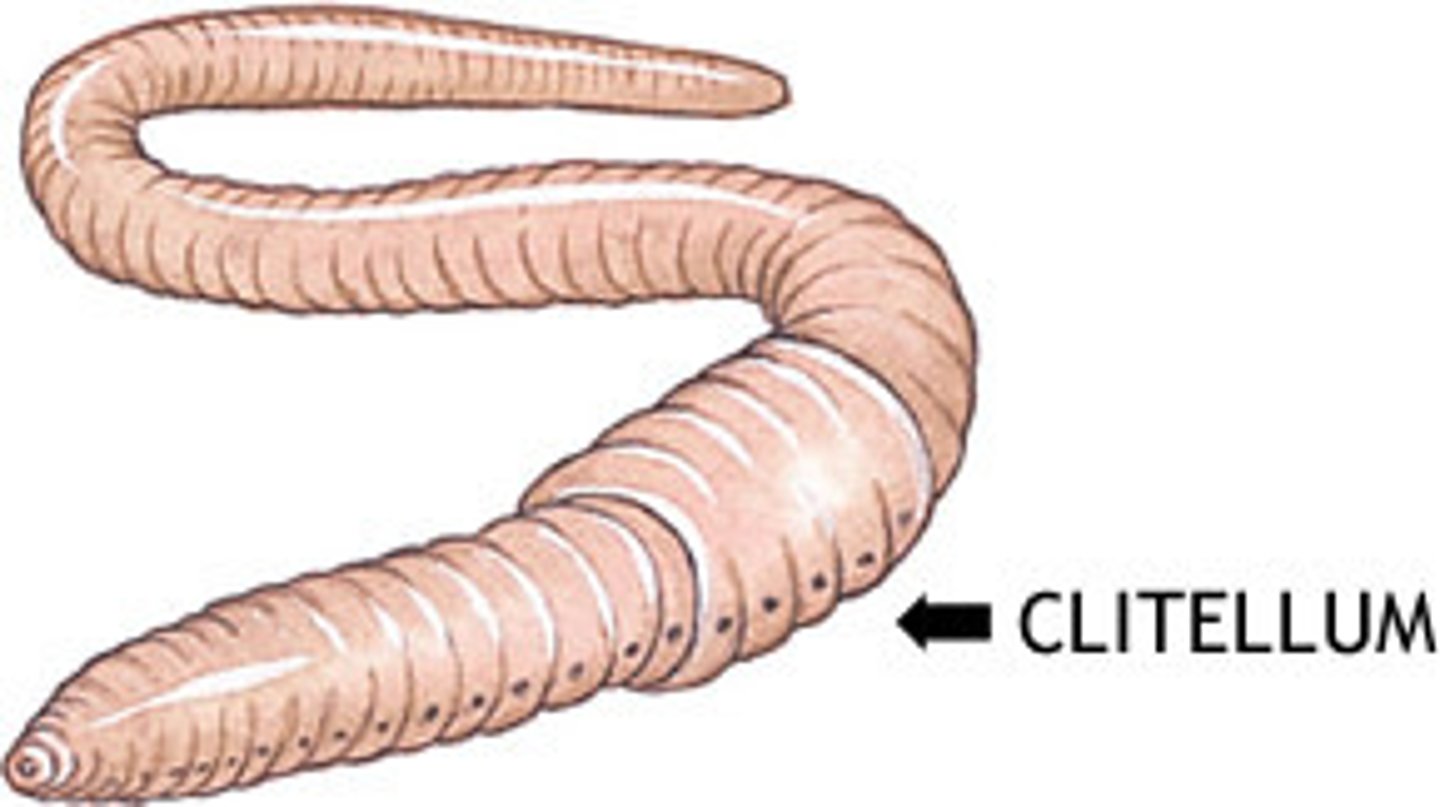
How many hearts in an earthworm
5
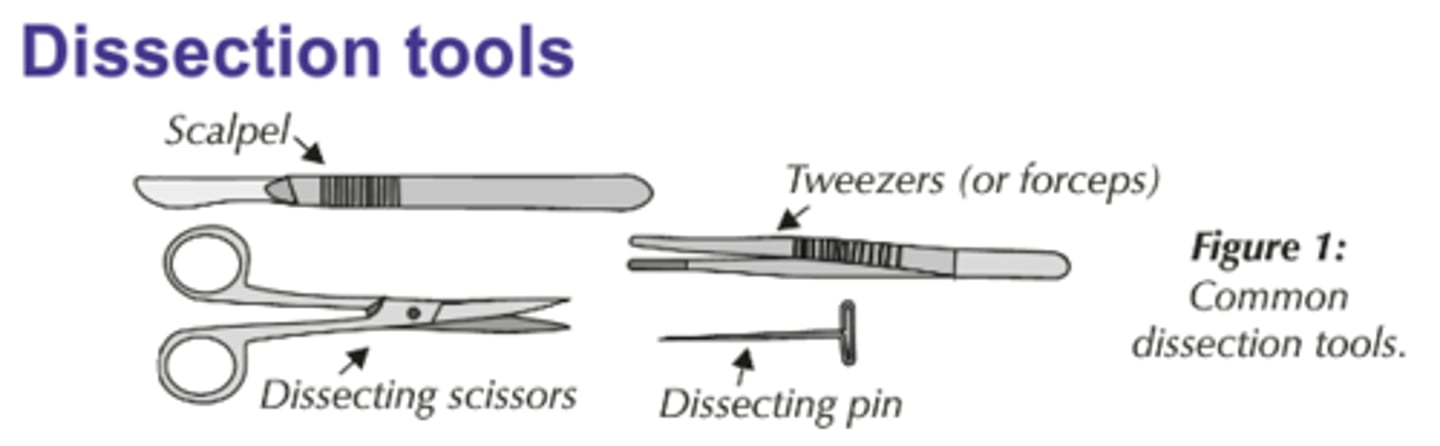
Dissection tools
Blunt probe, dissecting pins, dissecting scissors, scalpel
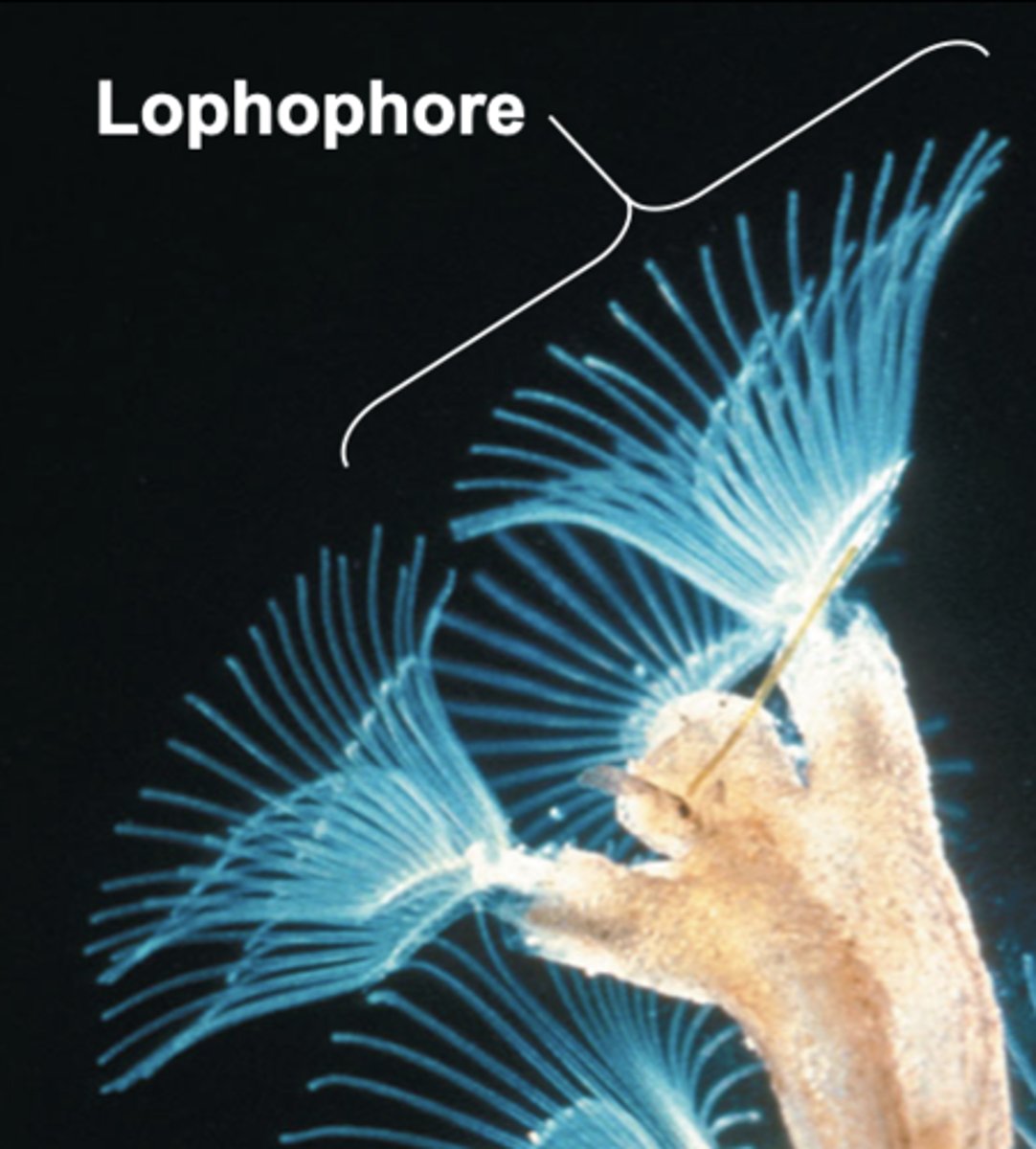
Locophore
Ciliated tentacles for feeding
trocophore larva
Distinctive larval stage observed in some lophotrochozoan animals, including some annelids and molluscs.
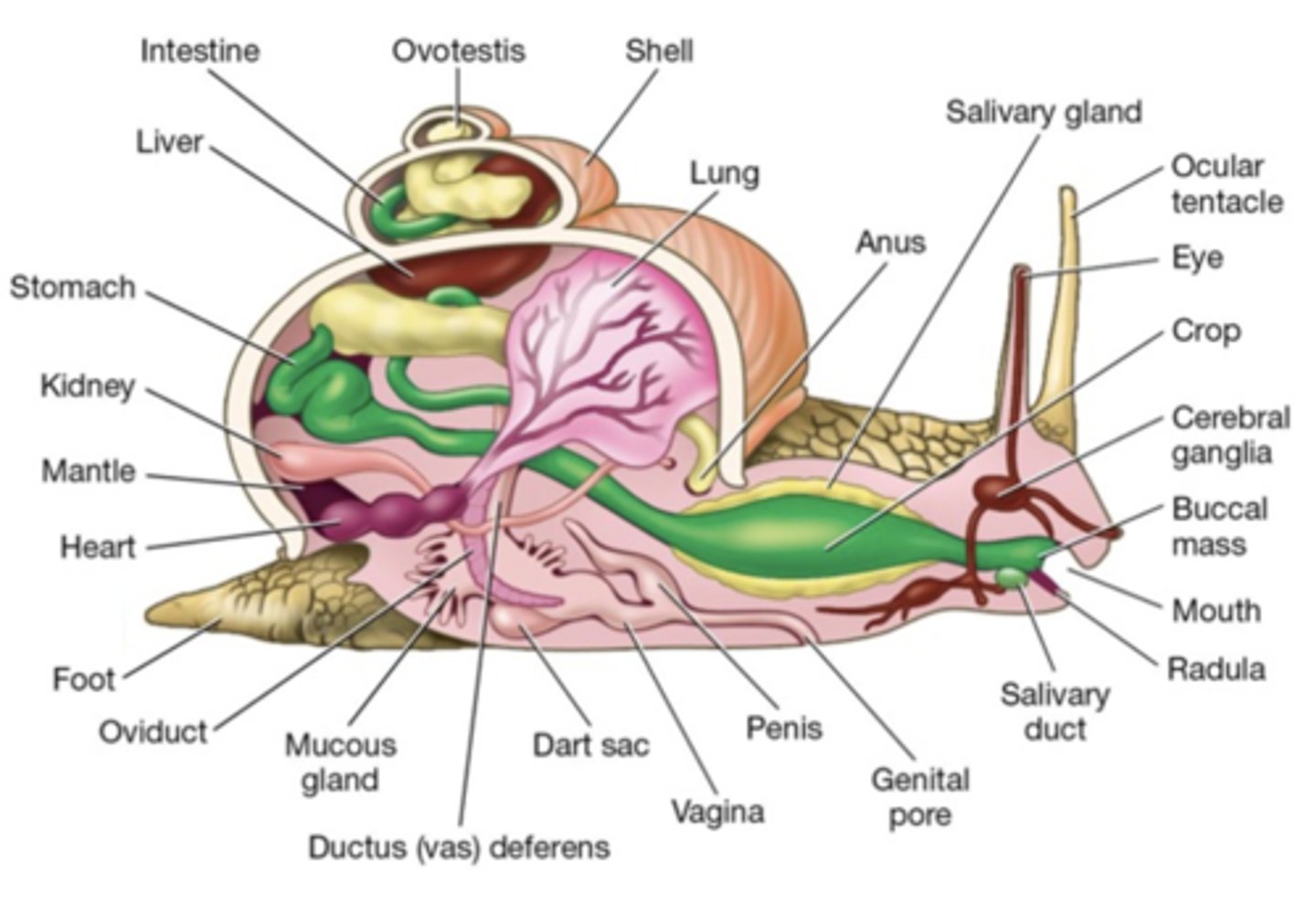
Ocular tentacle in snails and slugs
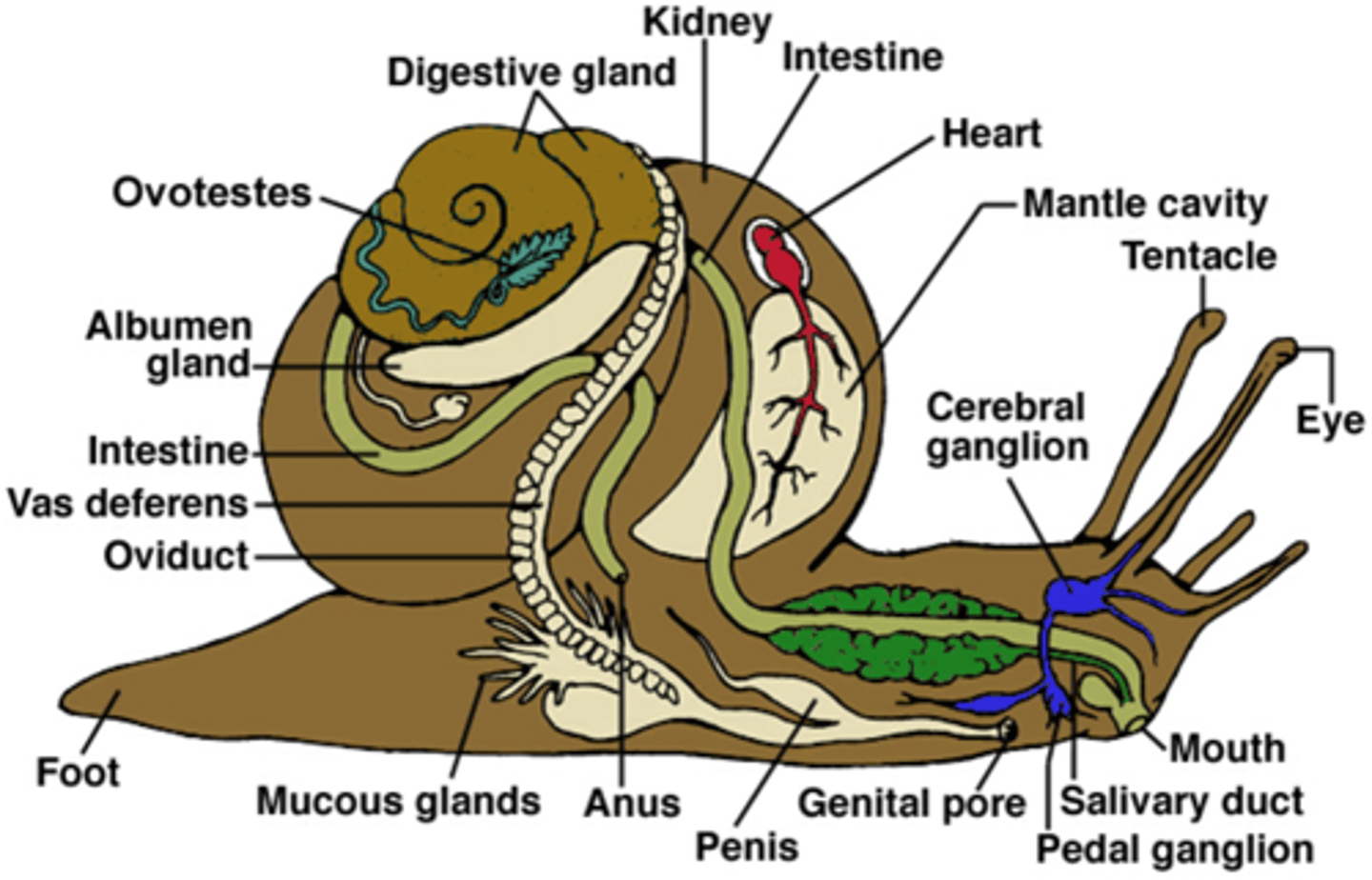
Snail anatomy
carapace
hard outer covering or case of certain organisms such as arthropods and turtles
Squid anatomy