All Art Sources
 Call Kai
 Learn
Learn Practice Test
 Spaced Repetition
 Match
Match Flashcards
 Knowt Play
1/24

There's no tags or description
Looks like no tags are added yet.
Name | Mastery | Learn | Test | Matching | Spaced | Call with Kai |
|---|
No analytics yet
Send a link to your students to track their progress
25 Terms
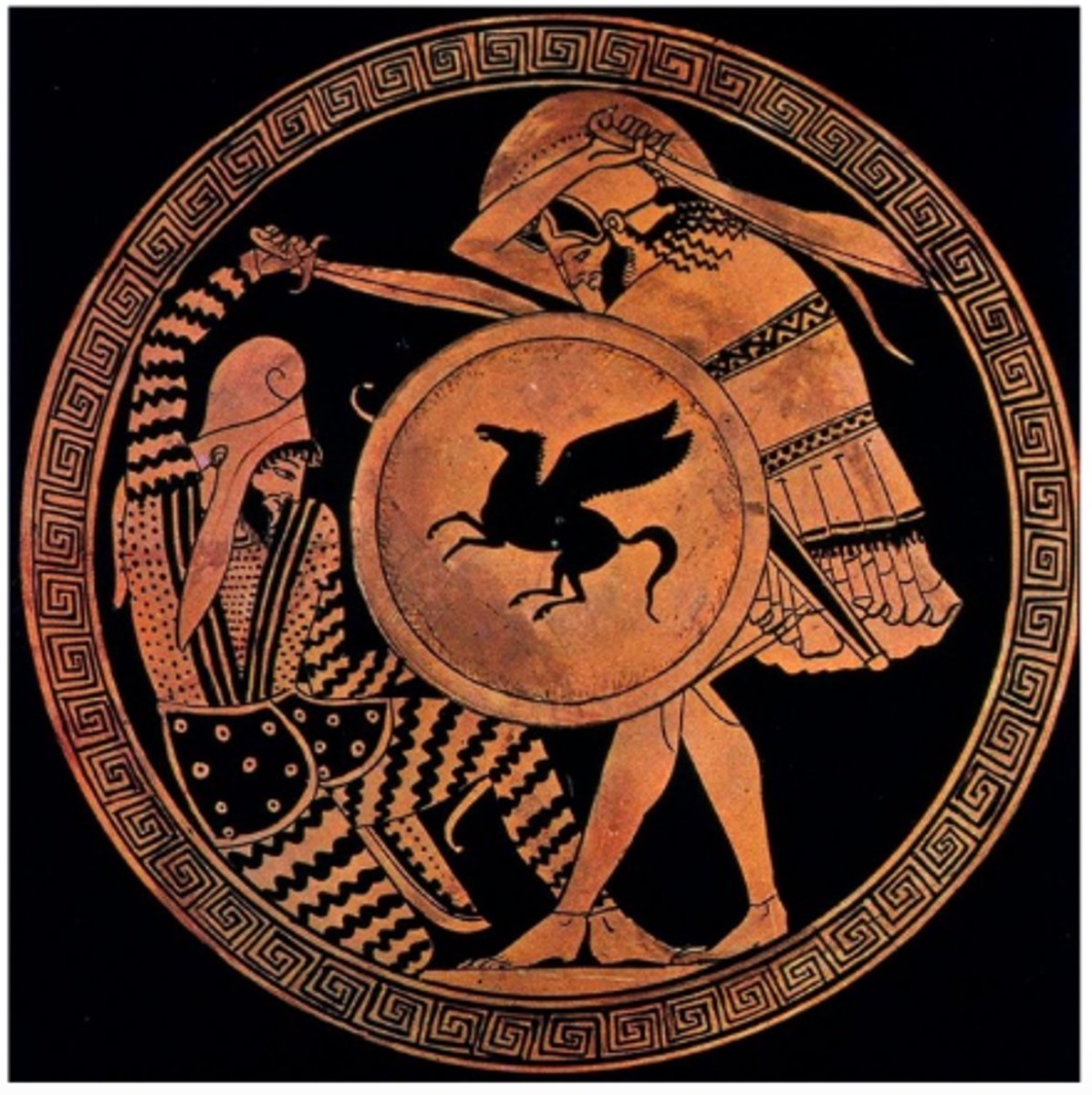
Red-figure kylix showing a Persian and a Greek fighting
Persian:
Bow and arrows -- less heroic equipment compared to the Greeks sword and shield.
Wearing a patterned, exptic dress and headdress - 'other'. Orientalist, exaggeration of his weak and effeminate status.
Cowering in fear to the side of the kylix.
Greek:
Central of the kylix.
A shield with a Pegasus on it (symbol of Poseidon - emphasis the Greek identity of the soldier a mythology and religion were key signifiers of Greek civilisation. The framing of the shield in the middle of the kylix extenuates this), and a sword.
Greek armour - Greek helmet, Greek cuirass.
Towering over.
South frieze of the Temple of Athena Nike from the Acropolis, Athens, depicting the Greeks fighting the Persians
The Greeks are generally nude - heroic - wearing only cloaks and wielding swords. The Persians in contrast are heavily draped.
Two Persians in submissive positions on the left corner.
Bodies of dead Persians also shown slumped at the bottom.
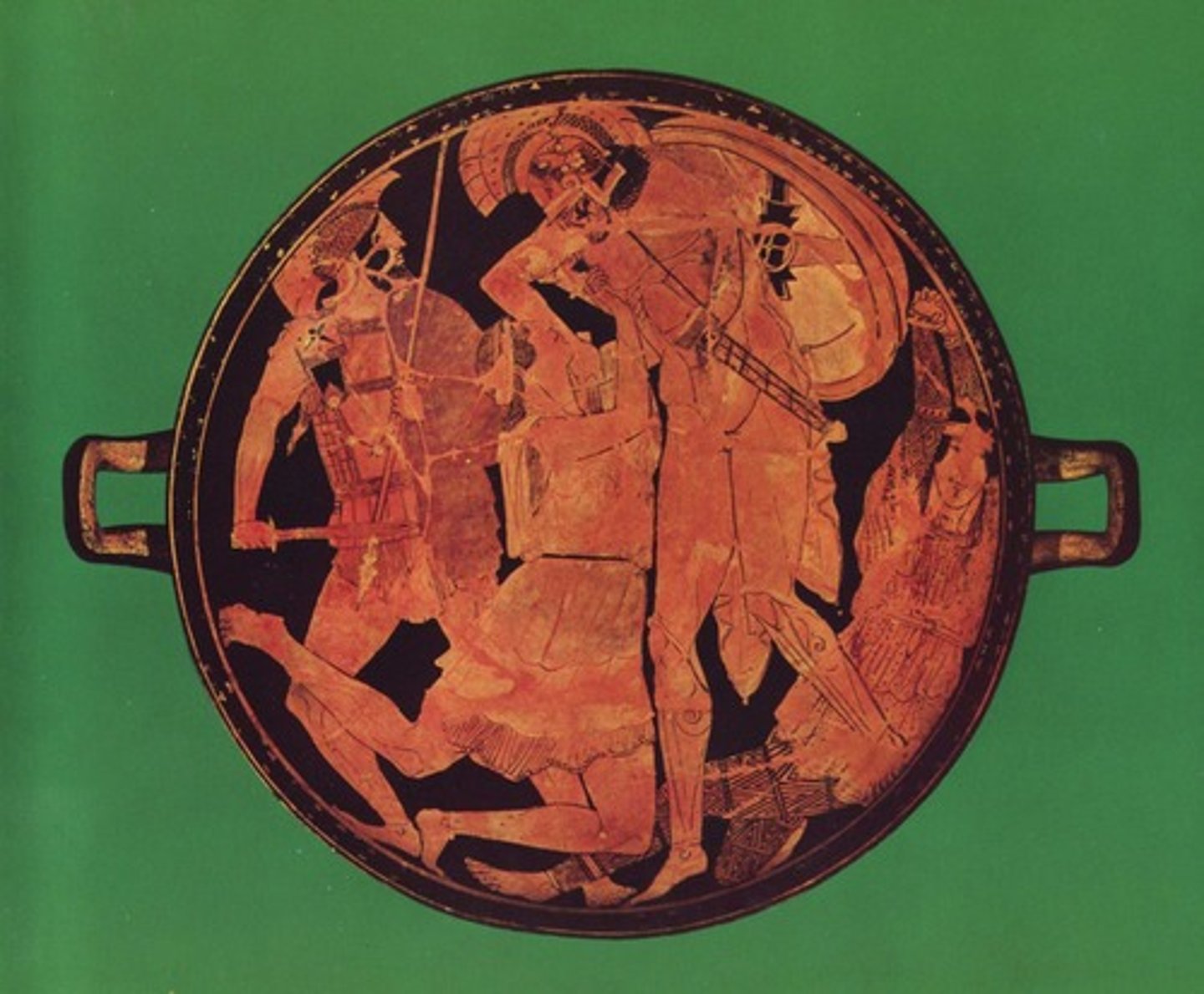
Red-figure kylix depiting Achilles and Penthesilea.
Achilles:
Towering over her and looking down - dominant - correct social order re-established by Achilles.
Wearing a Greek helmet and shield, about to draw his sword. Heroic nudity.
Penthesilea:
Supplicating - submissive to the man.
Her dress - female Greek citizen Greek dress, not militaristic at all - emphasizing femininity.
Binary between men and women is displayed - dominance vs submissive.
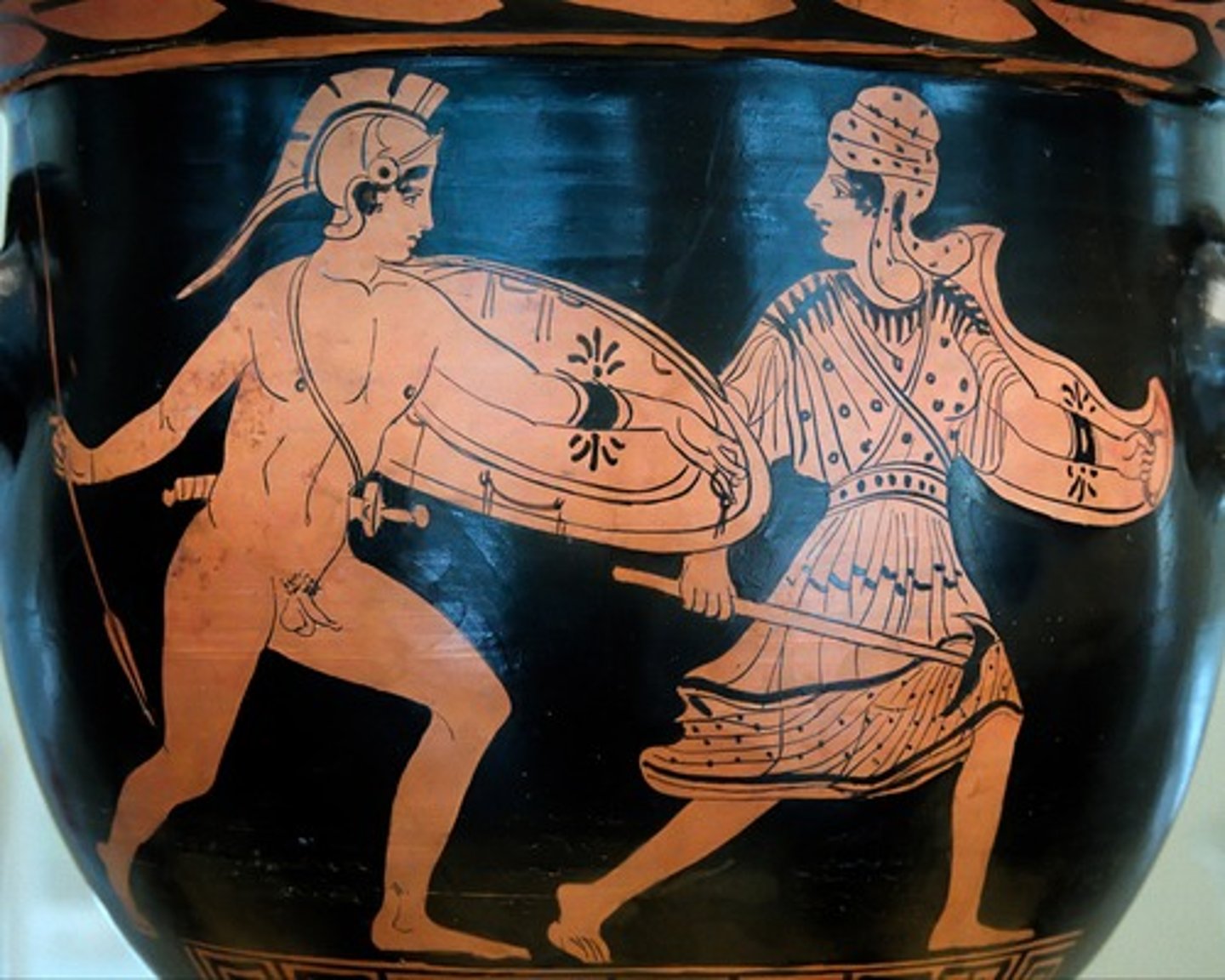
Red-figure bell krater depicting the battle of Achilles and Penthesilea
Achilles:
Stance better suited for battle - ready to attack/chasing.
He is largely nude - heroic, with helmet, sword, spear, shield.
Looks more efficient with his equipment, Penthesilea's shield isn't even over herself.
Focused expression
Penthesilea:
Patterned exotic dress and headdress like how Persians are depicted - Greeks depicting anyone not Greek as 'other'.
Running away and looking back, dress swishing - erotic undertone
Scared expression.
Axe - 'barbaric'. Greeks did not use axes. Though Scythians also used axes.
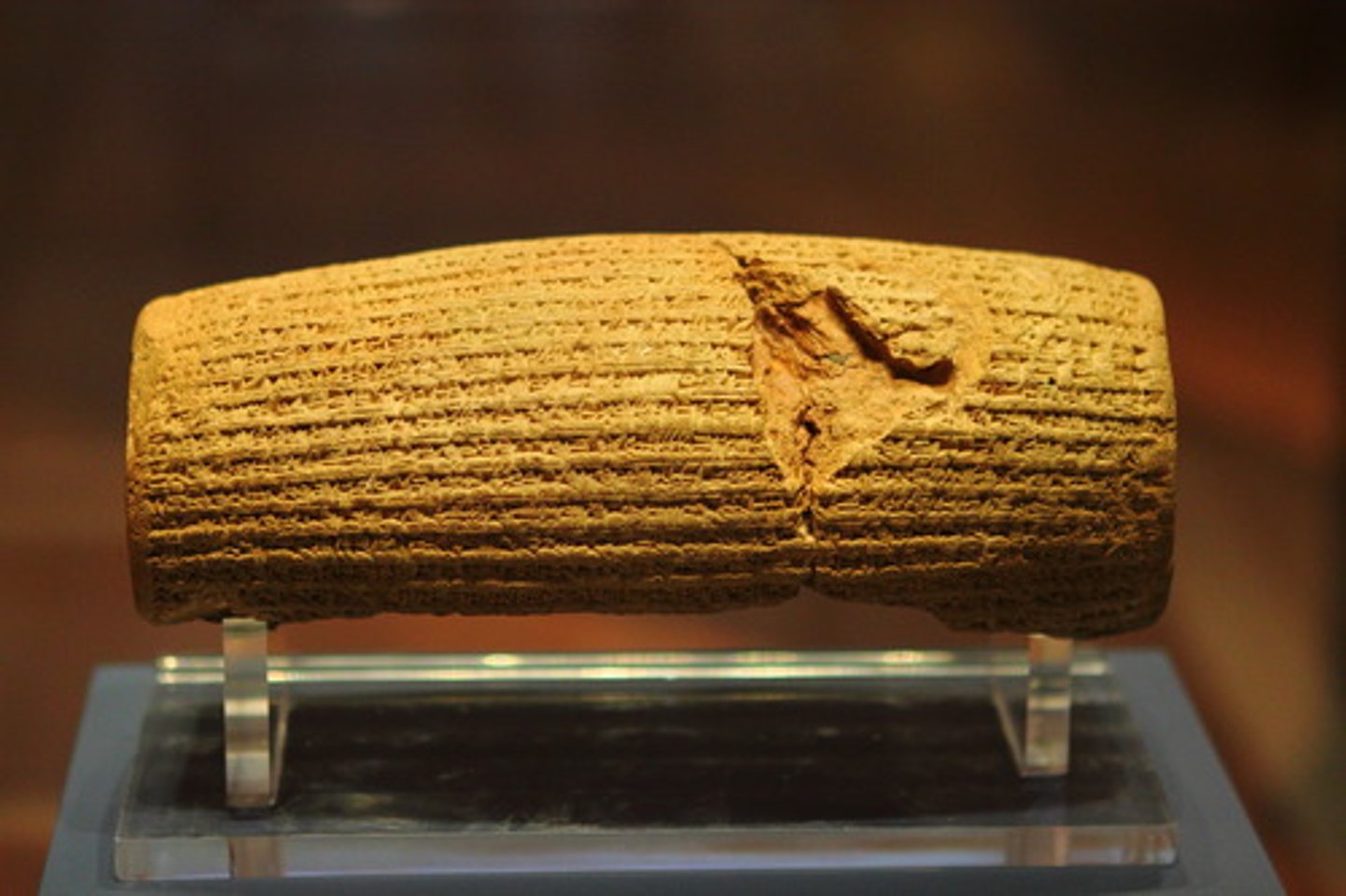
Red-figure bell krater depicting Heracles and the Amazons
Heracles:
Most visually obvious figure. Telamon on the left.
Wearing Nemean Lion headdress (impenetrable), nude, wielding a club.
Physically above an Amazon.
Amazons:
More threatening than the other sources.
Wielding shields, spears, helmets - though, they are in a Greek style to make them admirable. Some still orientalised - patterned dresses.
An Amazon is practically being trampled by him - physically on the floor cowering in fear.
Only glorified to make Heracles more impressive.
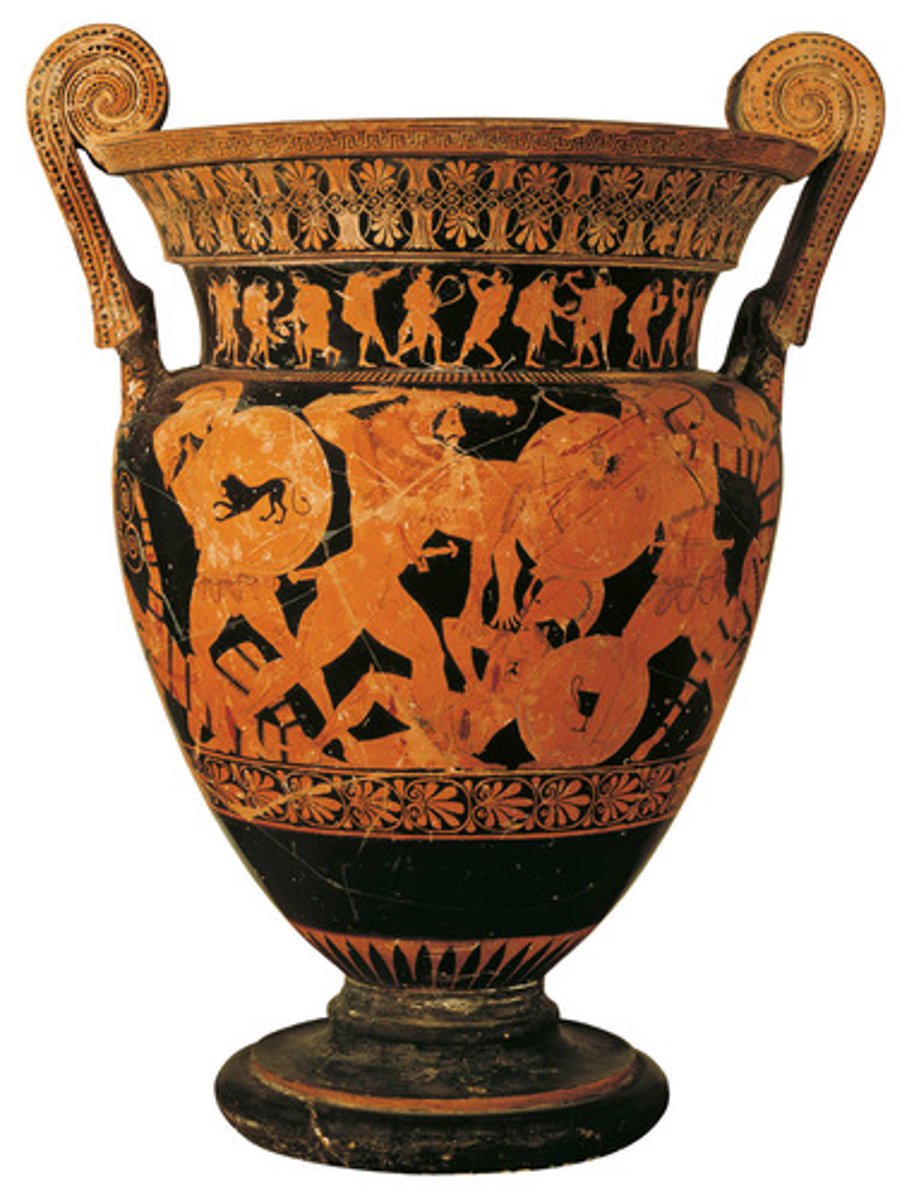
Bassae Frieze in the Temple of Apollo
TWO:
The Trojan Amazonomachy - depicts Achilles defeating Penthesilea
The Herculean Amazonomachy - depicts Heracles taking the belt from Hippolyta.
(Easier to remember the two sculptures from the Athene Nike frieze depicting the Greeks fighting the Persians. If it is not those sculptures in the exam, it will be one of these scenes depicting either of the Amazonomachy.)
The Trojan Amazonomachy
Achilles/Greeks:
Achilles depicted as towering nude over an Amazon, she is supplicating.
Pulling an amazons hair, using her femininity against her. Social order restoration.
Catharsis (release of tension). The tension is their fear of the Amazons and the relief is that a heroic man defeats him. A Greek on the right is defeated by an Amazon.
Orientalist view that women have too much power.
Amazons:
Hair being pulled, as mentioned above.
Penthesilea (and others) dress is flowy and thin to accentuate body - a tool used to erotise - restoration of social order on women was supposed to be exciting.
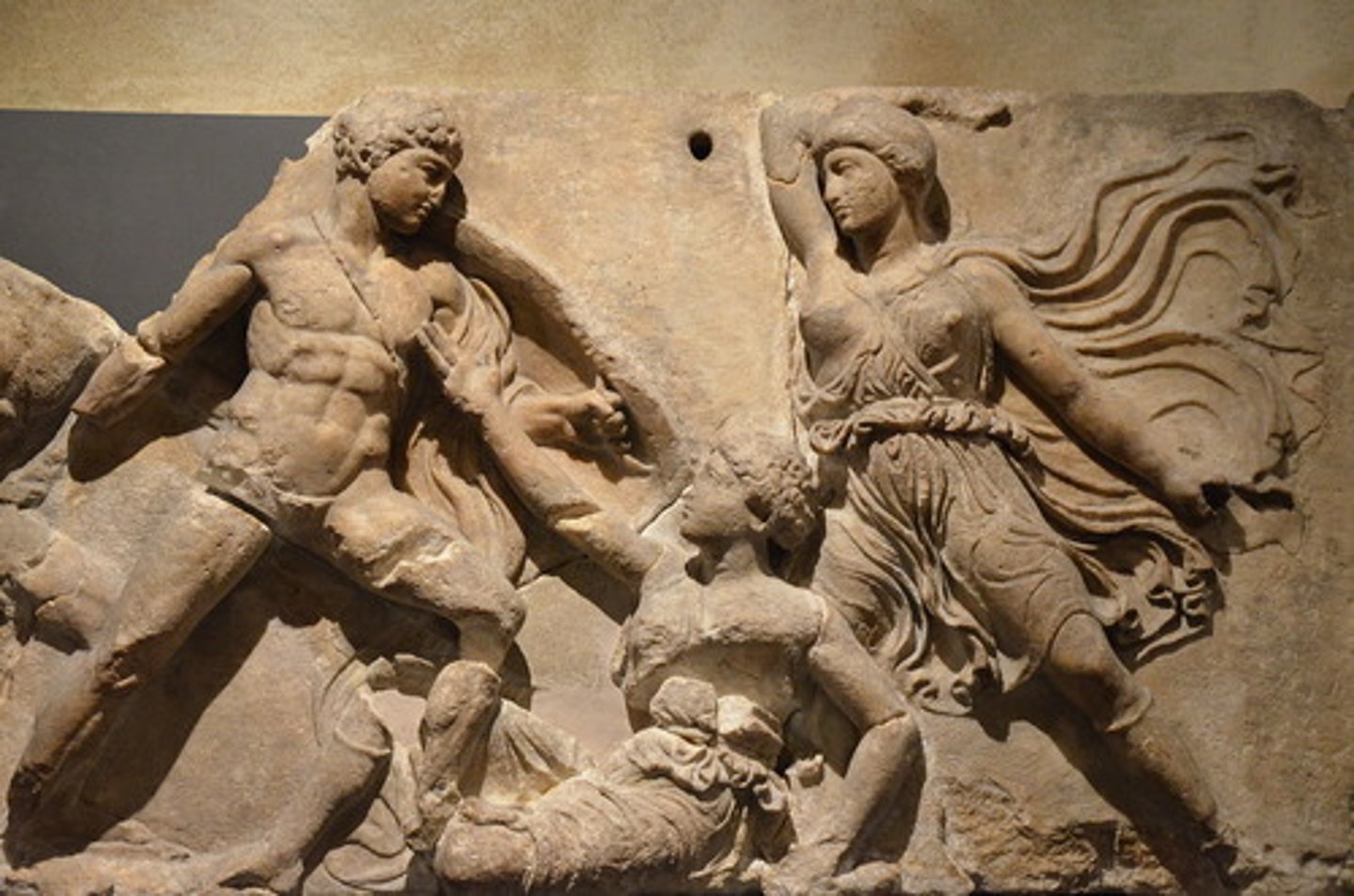
The Herculean Amazonomachy
Heracles/Greeks:
Nude - heroic.
Greeks had Greek armour, shields etc.
Appears fighting efficiently.
Amazons:
Flowing dresses aren't efficient for fighting - it is more of a male fetishization of the Amazons.
Picturing animals (the horse) and woman on the same kind of level as they both appear defeated.
The horse looks as though its bowing down to the Greek - superiority even over animals.
Left Amazon holding a Greeks hand, pleading for mercy, not strong enough to do anything else.
Amazons defeated on the left, one being pulled of a horse.
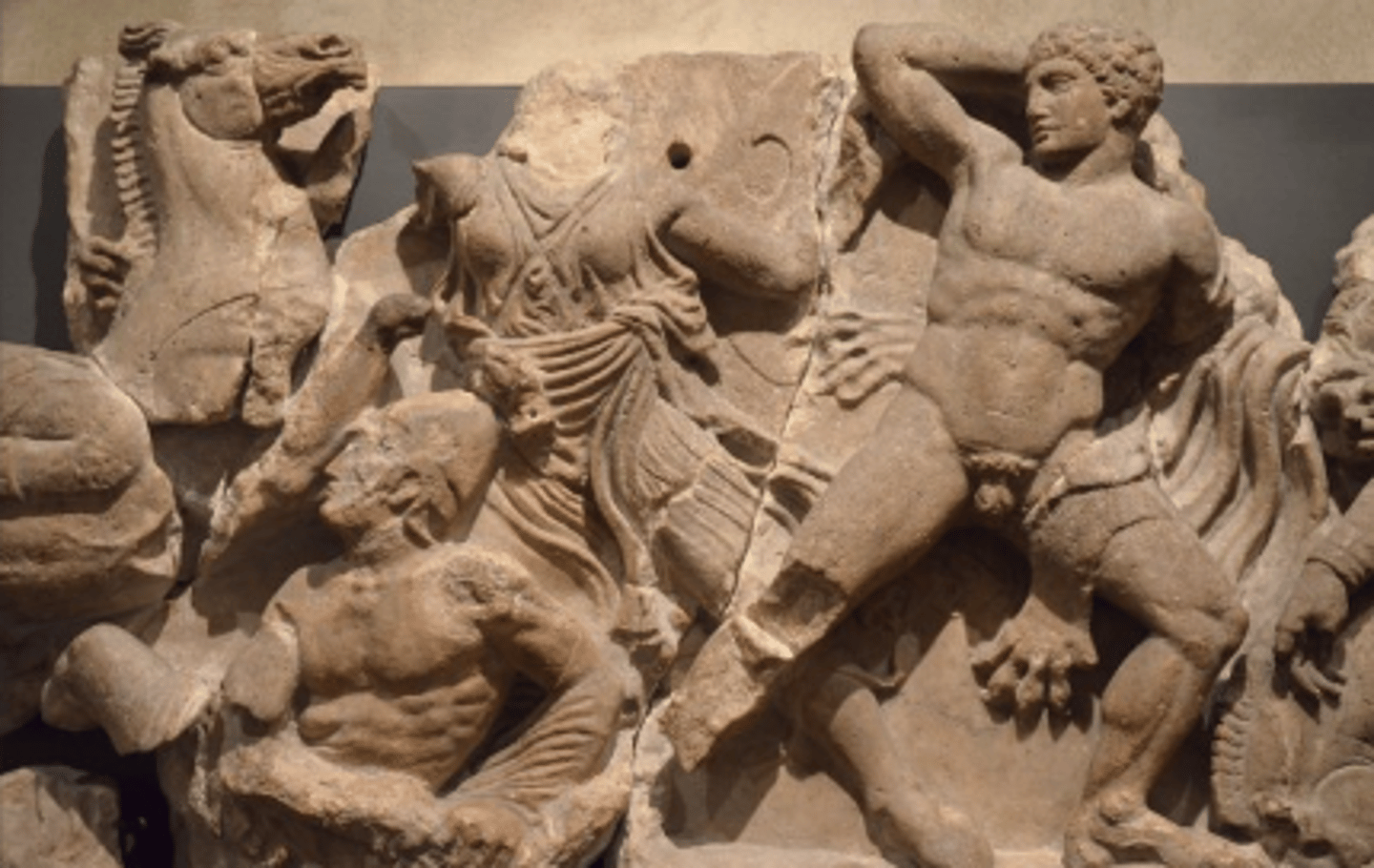
Cyrus Cylinder
A Babylonian account of the conquest of Babylon by Cyrus in 539 BC, of his restoration to various temples of statues removed by Nabonidus (the previous king of Babylon from 555 - 539 BC) and of his own work at Babylon.
Buried in the foundations of the city wall of Babylon.
Presents him as a worshipper of Marduk who strove for peace in Babylon and abolished the labour-service of its population.
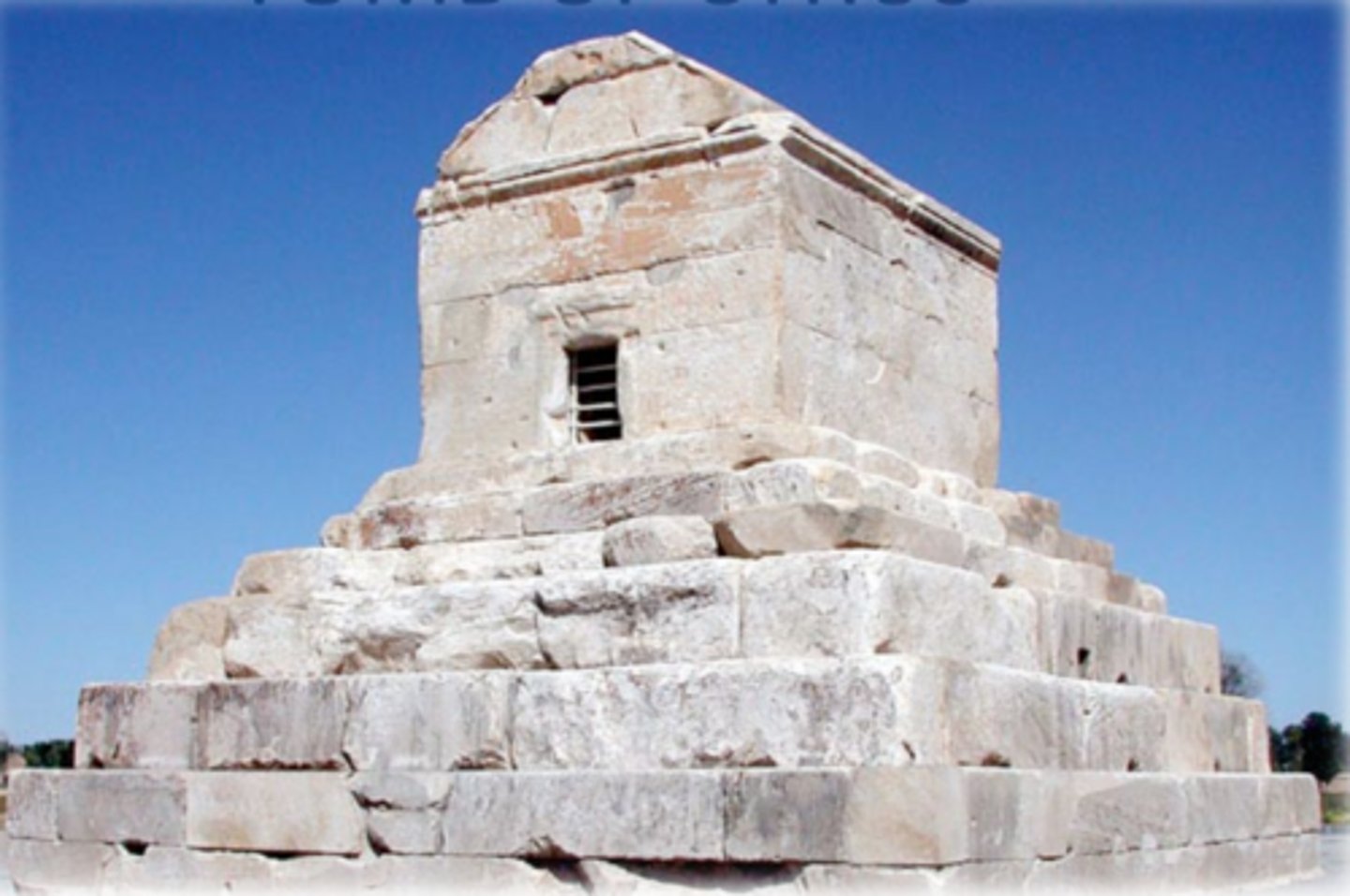
Tomb of Cyrus
The design of Cyrus' tomb is credited to Mesopotamian or Elamite ziggurats, but the cella (inner chamber) is usually attributed to Urartu tombs of an earlier period.
It once contained a gold sarcophagus, Cyrus' arms, his jewellry, and a cloak. This garment played an important role in the Persian inauguration rituals. That the robe of a former king conveyed legitimacy, is also known from Hellenistic Babylonia.
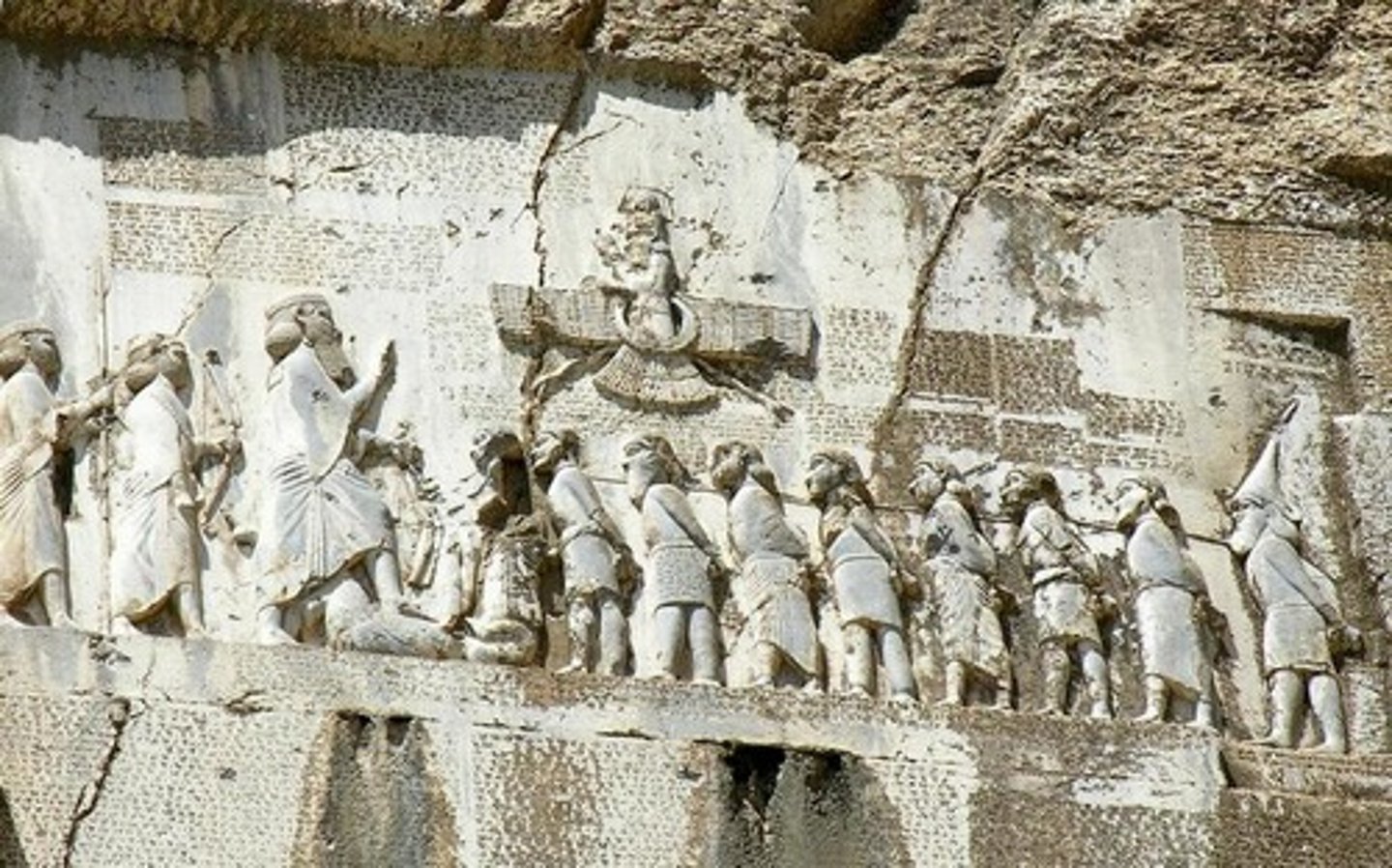
Bisitun Relief
On a holy mountain in Bisitun.
Tall figure is Darius, a bow in one hand and a whip in the other - raising his hand in admiration to Ahuramazda.
Behind him represents the Persian army and their might.
In front of him are chained rebels brought to order - restoration of social order.
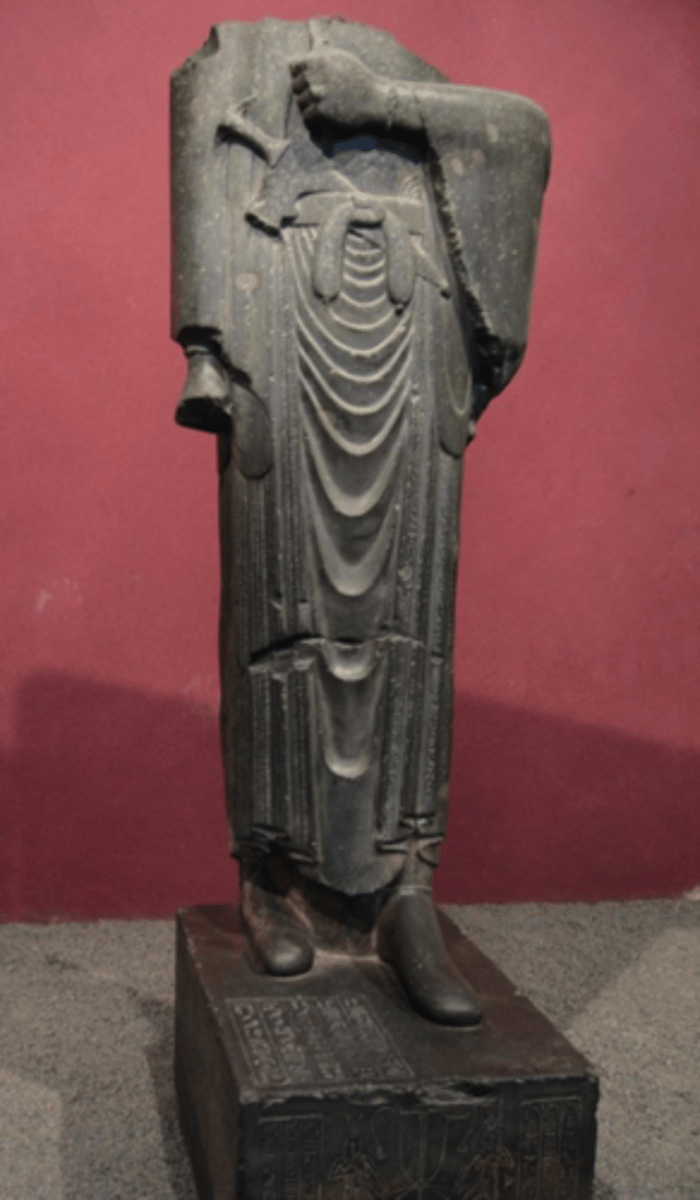
Statue of Darius
Placed in Egypt. Wearing a dress, and a sword decorated with jewels on his belt.
Only freestanding statue in ancient Persia.
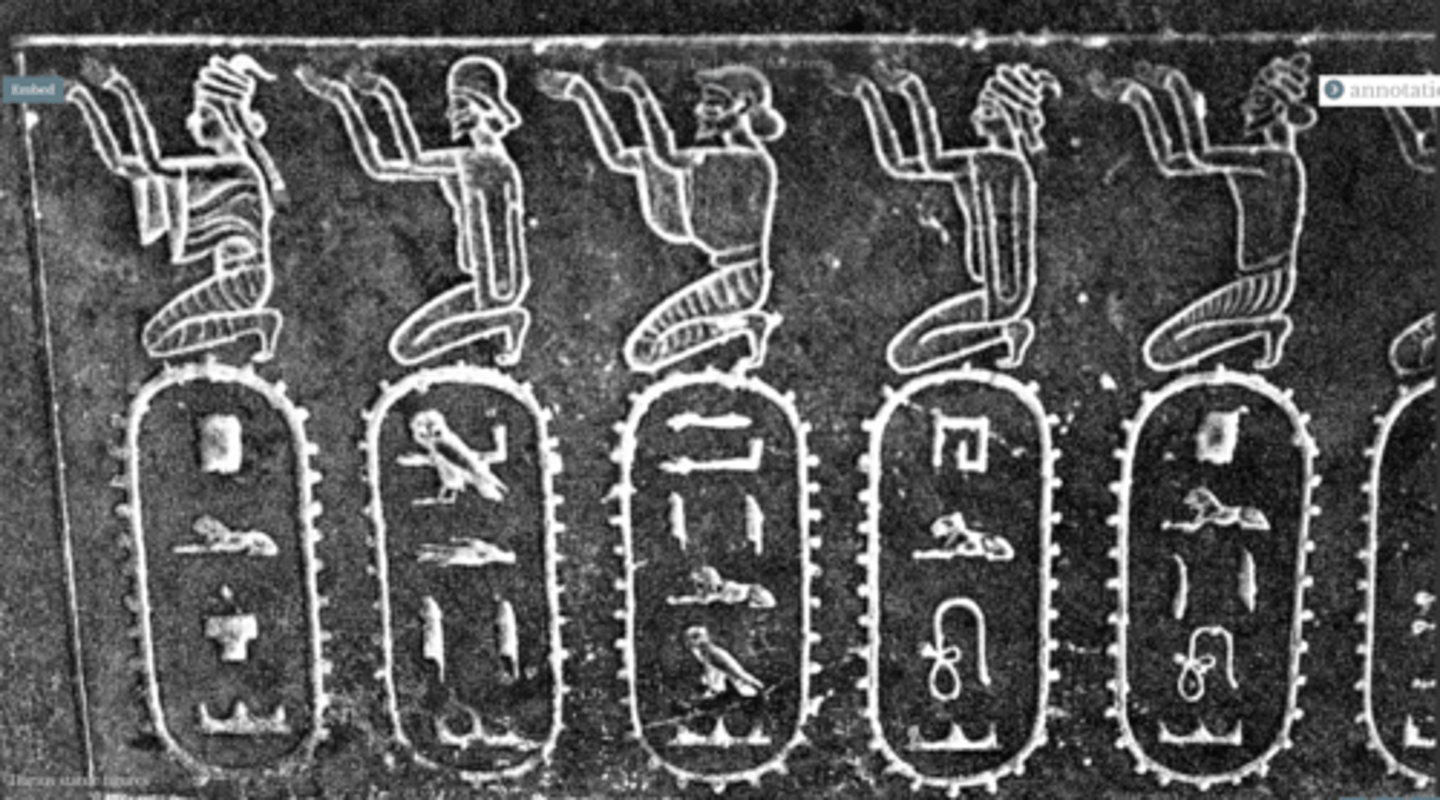
On the sash of the belt of the statue of king Darius the Great are signs in hieroglyphic script that spell his pharaonic name - cultural tolerance.
Although the statue is in a clear Egyptian nature, Darius also carries a lotus flower and a staff in his hands, common Persian symbols of authority - sinister undertone.
A pharaoh would've carried other attributes - his robe is also Iranian.
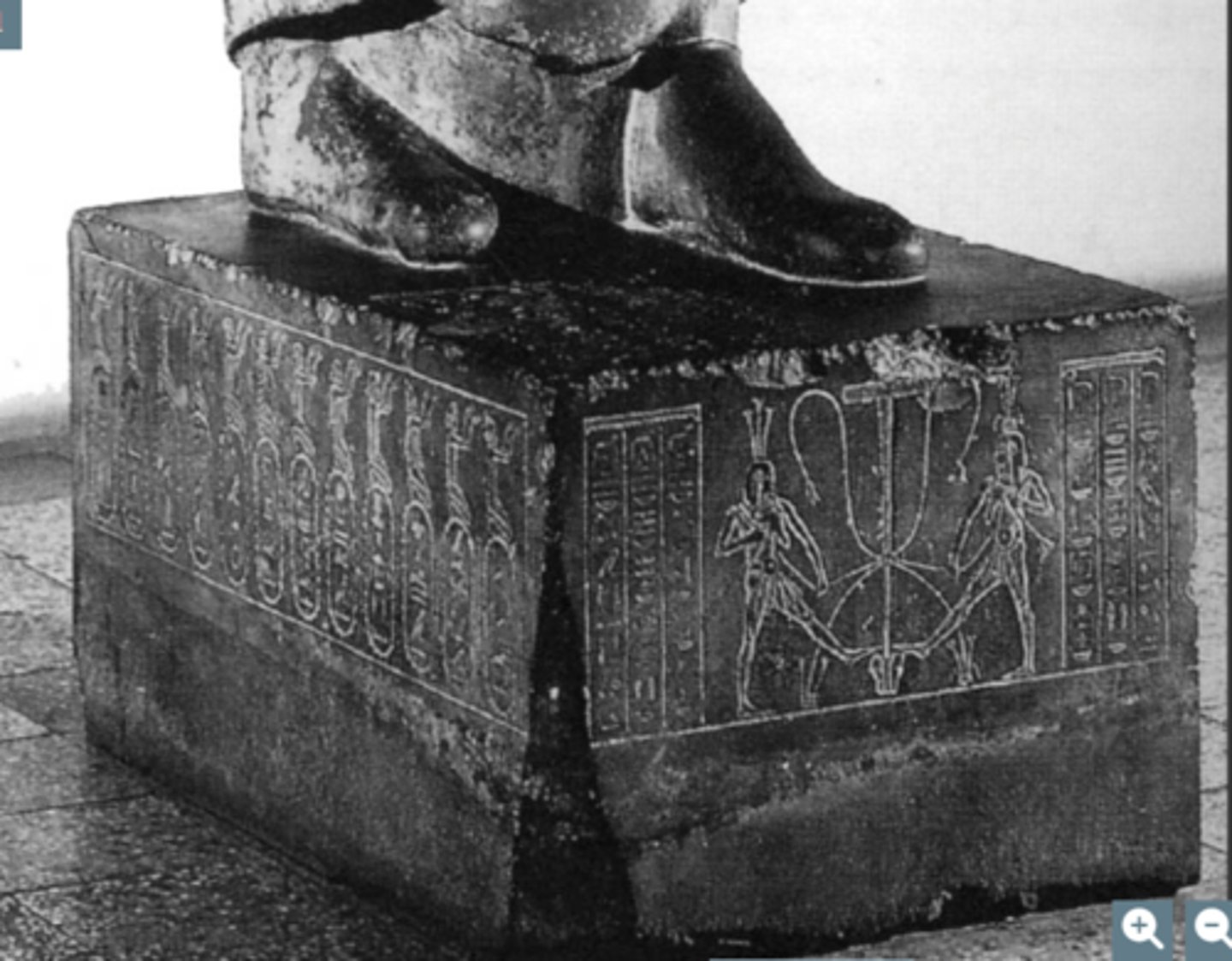
Base of the Statue of Darius: Central scene
Two versions of the god Hapi in lower and upper Egyptian mode, binding together Egypt using the iconographic plants that represent the two lands - a lotus and a papyrus.
Depicted with breasts to represent fertility.
Hapi was the god of the Nile and the Nile flooding, which was very culturally important - the calendar was based around it.
The statue also has a list of nations on the base of the statues written in Egyptian hieroglyphics.
Some examples included: Babylon, Lydia, Thrace, Arabia, Egypt, Scythians
Similar to when Cyrus wrote the Cyrus cylinder in Babylonian and represented himself as liberating the people of Babylon and following their religion.
Inscription: "All lands of the plains and of the mountains are reunited under your sandals."
Base of the Statue of Darius: Side view
Satraps giving gifts/tributes of Darius - they were local rulers who paid tribute to Achaemenid King.
They're literally beneath Darius' feet - even the satrapies are beneath him
Could also be interpreted as the satrapies holding him up/supporting him.
It almost paints him in the same light as a deity, the satrapies are on their knees as if worshipping too.
Could also be interpreted as how much they support him and the fact they're also being honoured on the statue as well as Darius - respected.
Cultural inclusion can also be a weapon - it's not always for a good reason - propagandistic.
Persepolis
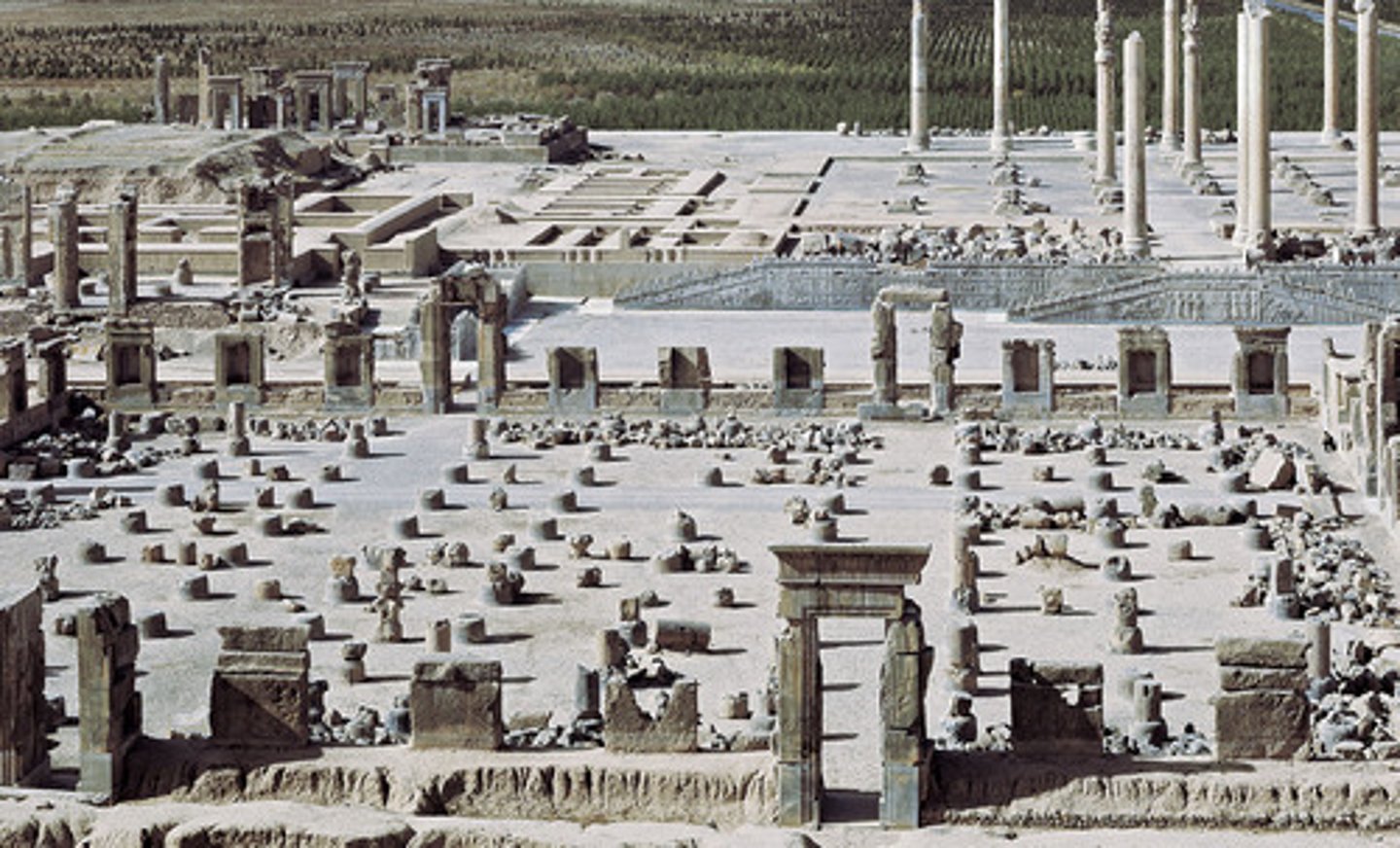
City located in modern day Iran and was a Persian city.
Began construction under Darius and became the capital city under Darius.
Had been used by Cyrus and Cambyses as a government centre, but it was Darius who really established Persepolis as a magnificent city which became the capital of the Achaemenid Empire and remained so for the rest of the Achaemenid Empire.
Enter through the Gate of all Nations.
Apadana was the king's reception hall and where government decisions were made.
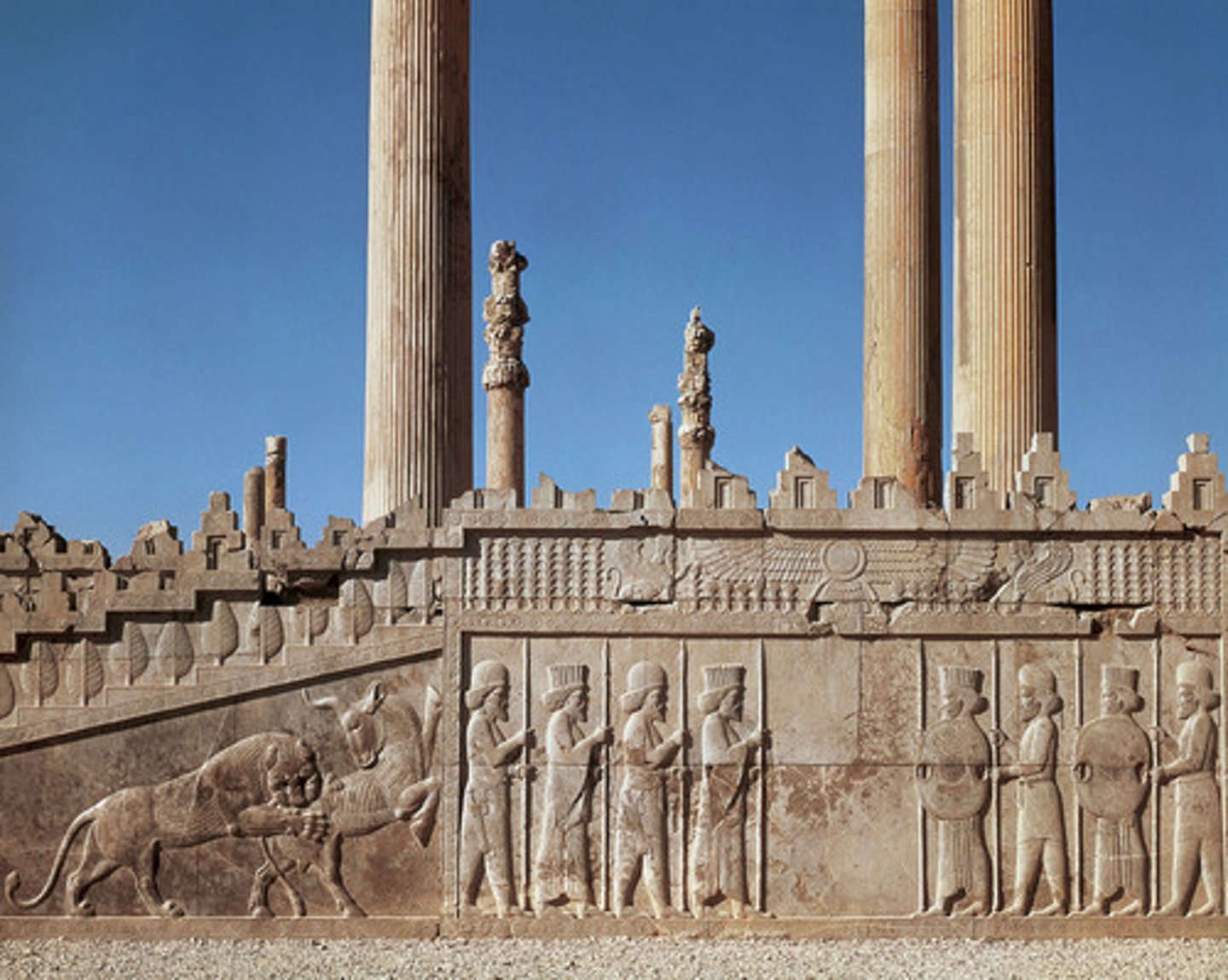
The stairways were decorated with heads of Royal guards.
Darius lived in the palace.
The stairs of the palace of Darius were decorated with satraps with gifts.
The Treasury in Persepolis
Significant building in Persepolis.
In Persian ideology, It was very significant to give gifts to one another. This aspect of Persian ideology was captured in the form of satrap tributes.
Satraps would come to the treasury and give gifts to the Persian king. The building was also used to store goods and booty from war.
People were employed to keep the metals and golds shining - Greek stereotype against Persians is that they were obsessed with gold.
Apadana - main hall of the treasury.
Apadana
Main hall of the Treasury.
Could accommodate hundreds of people, very big, showcase of the wealth of the Achaemenid Empire, to show great power (intimidation tactics) of the Achaemenid kings.
On top of the 40 columns were capitals - consisting of strong animals like bulls and lions.
Etched onto the Apandana was: "...what Ahuramazda, the greatest of gods, bestowed upon me. May Ahuramazda protect me and my royal house!" - Darius.
Show of strength and power. Above other kings ("king of kings"). Clear religious message - he is chosen.
Xerxes then placed a similar inscription: "By the grace of Ahuramazda, much that had been ordered by king Darius, my father, was well. It was also by the grace of Ahuramazda that I completed these works and made it excellent.
Apadana Relief
Once the centre part of the northern stairs shows king Darius on his throne, crown prince Xerxes behind him, two incense burners and an important official, Pharnaces. He salutes the king, and announces the arrival of the tribute carriers.
Decorations of the satraps show diversity in the kingdom.
The gift exchange mechanism was one of the central elements in the Persian royal ideology, therefore the Apadana was one of the most important symbols of the kings power.
Alexander the Great selected it to be destroyed along with the palace of Xerxes.
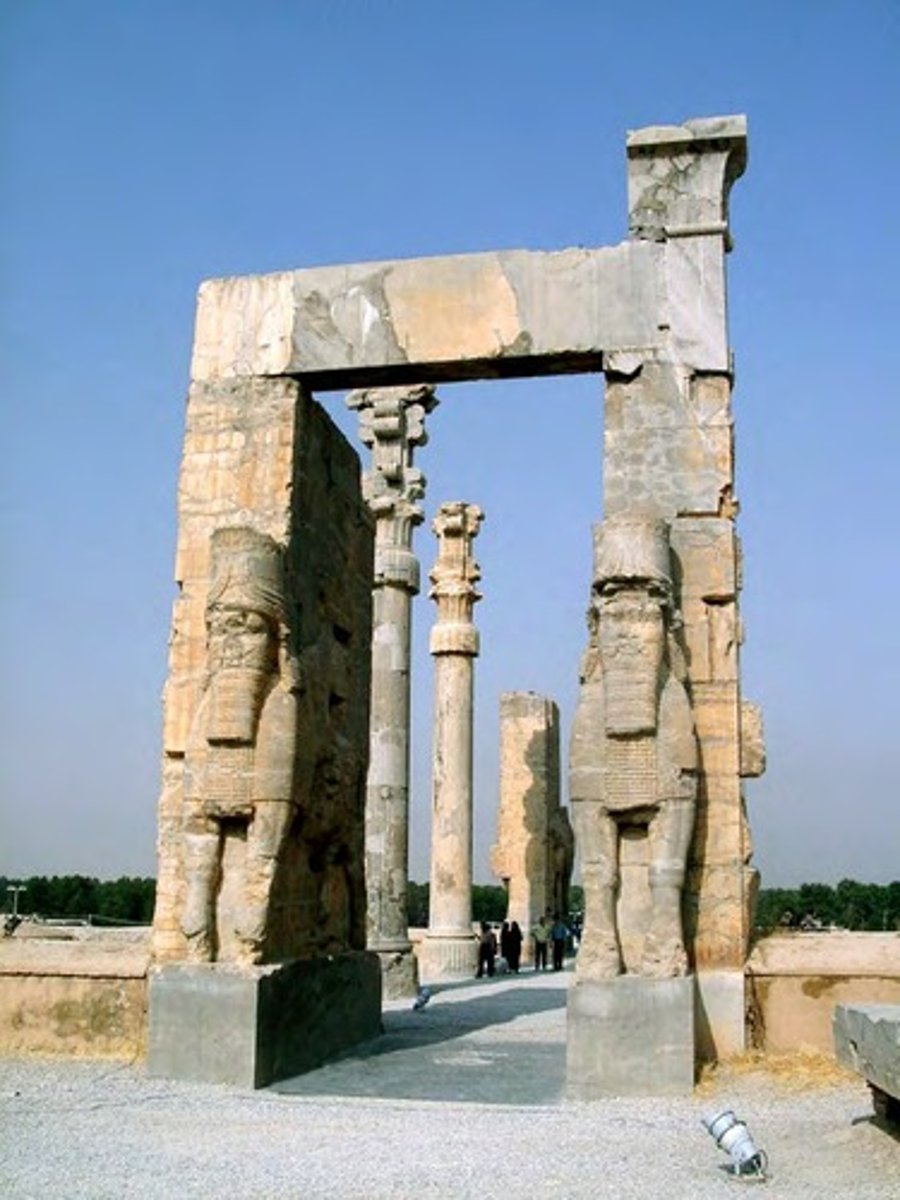
Gate of All Nations Entrance
The entrance of the Gate of All Nations was protected by bulls (front) and mythological creatures, called lamasssus, bulls with the head of a bearded man.
These bull-men originated in Babylonia and Assyria, but the Persians had adopted them.
The general idea behind these fantasy animals is that they warded off evil, which explains why they were standing at a gate.
The Gate
Xerxes added a stairway leading to the gate.
The function of the gate was not only to allow the entry of the visitors, but was also to separate the people according to their social importance.
The columns are ionian stylized, erected on inversed bell shapes, their top consisted in stylized palm trees.
The walls were decorated with 2 giant bulls on the west, and 2 giant lamassus (androcephalic winged bulls) on the east protecting the path.
Inscription on the gate
Trilingual: Old Persian, Babylonian, Elamite.
"A great god is Ahuramazda, who created this earth, who created heaven, who created man, who created happiness for man, who made Xerxes king, one king of many kings, commander of many commanders."
"may Ahuramazda preserve me, my kingdom, what has been built by me, and what has been built by my father." - Xerxes
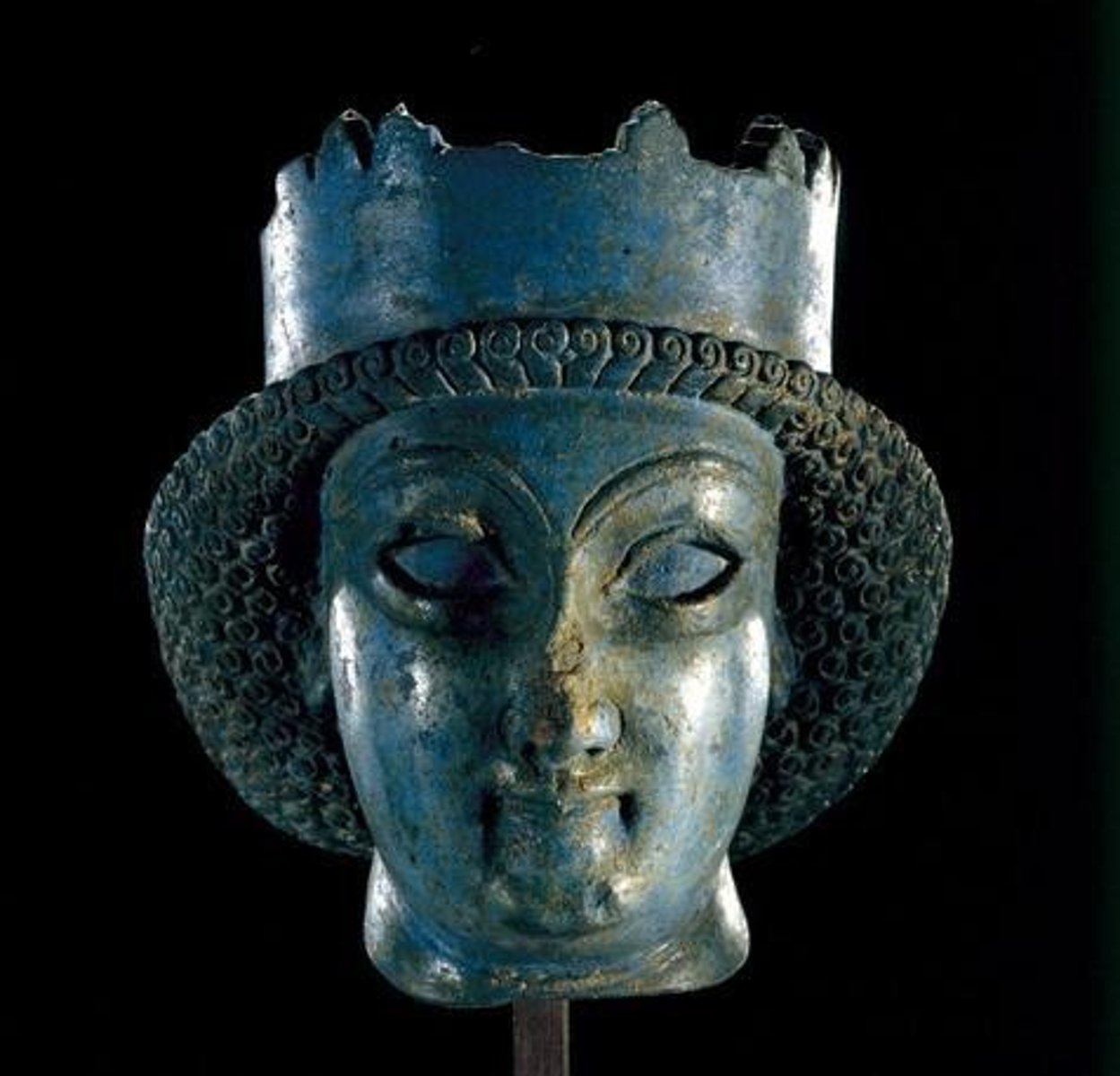
Head of a young Persian prince in lapis lazuli
From the Apadana, general Persian art.
The Persian Empire spread to such an extent that they were taking influence from the Greeks. Northern Greece, Anatolia (modern day Türkiye).
They weren't constantly at war, they had trade and exchange with Greece.
So, the stylised eyebrows and almond shaped eyes on the Persian princes face are influence by similar facial structures of Greek sculptures and Egyptian art.
Tight curls in hair - influenced by Greeks.
The use of the deep blue semi-precious stone, lapis lazuli, showcases the wealth of the Achaemenid Empire as it was a rare luxury most societies did not have.
The Oxus Treasure
A large collection of Persian art was found by the Oxus River in central Asia in the Persian satrapy of Bactria.
Coins, metalwork, gold and silver objects (tableware, votive offerings, and jewellery) found.
Date back to 500-100BC (in the range of the kings.)
It is debated why such a large collection of expensive objects were put here. It is commonly believed that they were a votive offering. That is, they were given in worship.
Persian luxuries gained through trade were then, after the war, used as symbol of wealth in Athens.
There are Persian influences evident in Athenian pottery of the fifth century
The shallow drinking bowl called a phiale has a shape that is copied from old and silver Persian bowls.
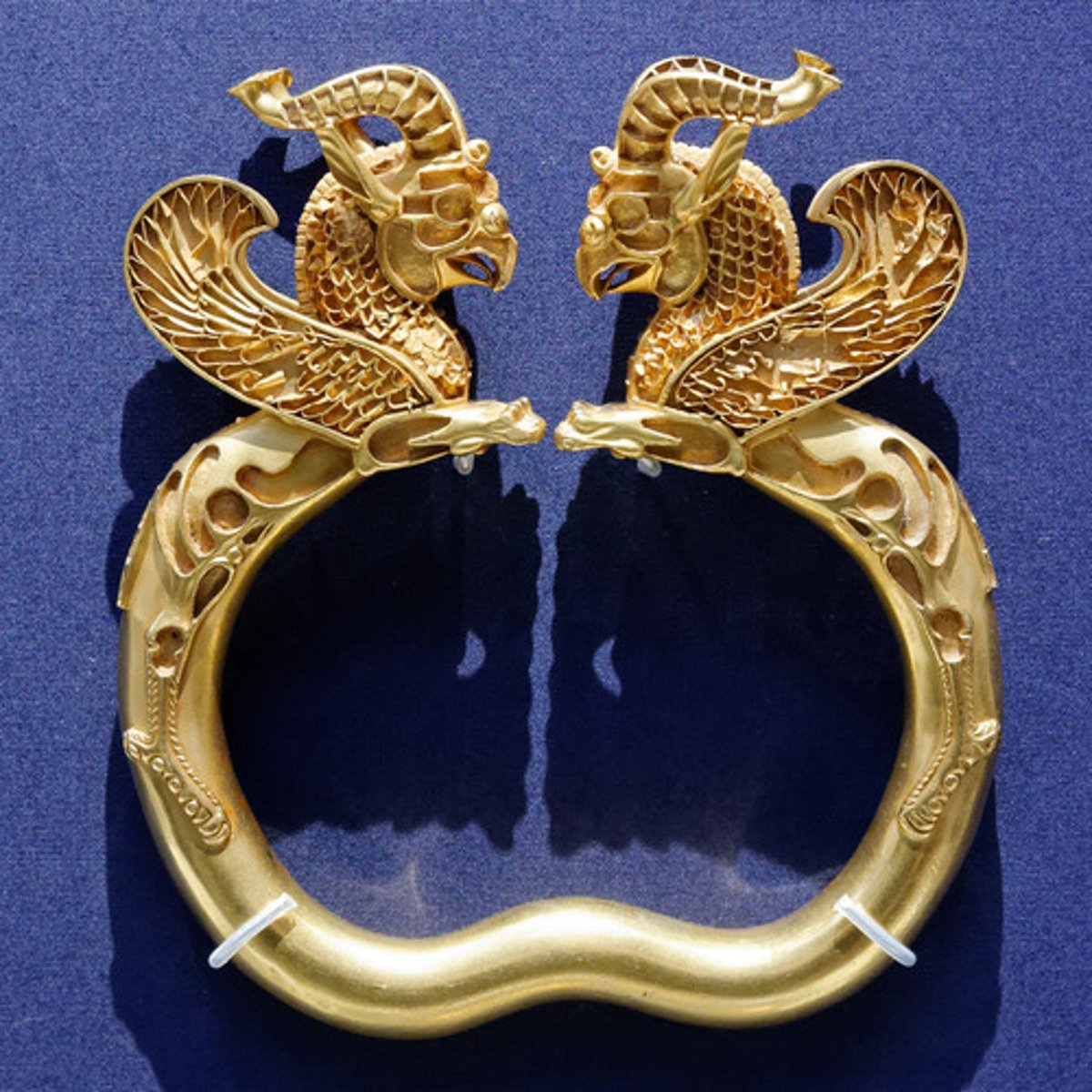
Silver rhyton ending in a griffin and gold armlets with griffins.
The animal headed drinking goblet called a rhyton commonly features amongst Greek pottery shapes.
The standard of the carving in the Silver rhyton ending in a griffin is very high. Gold detailing has been added to the faces and wings of the griffin and the floral decorations around the rim.
The Greeks were obsessed with saying how much the Persians were addicted to gold.
The gold armlets would've also been worn by men, which to the Greeks, was odd.
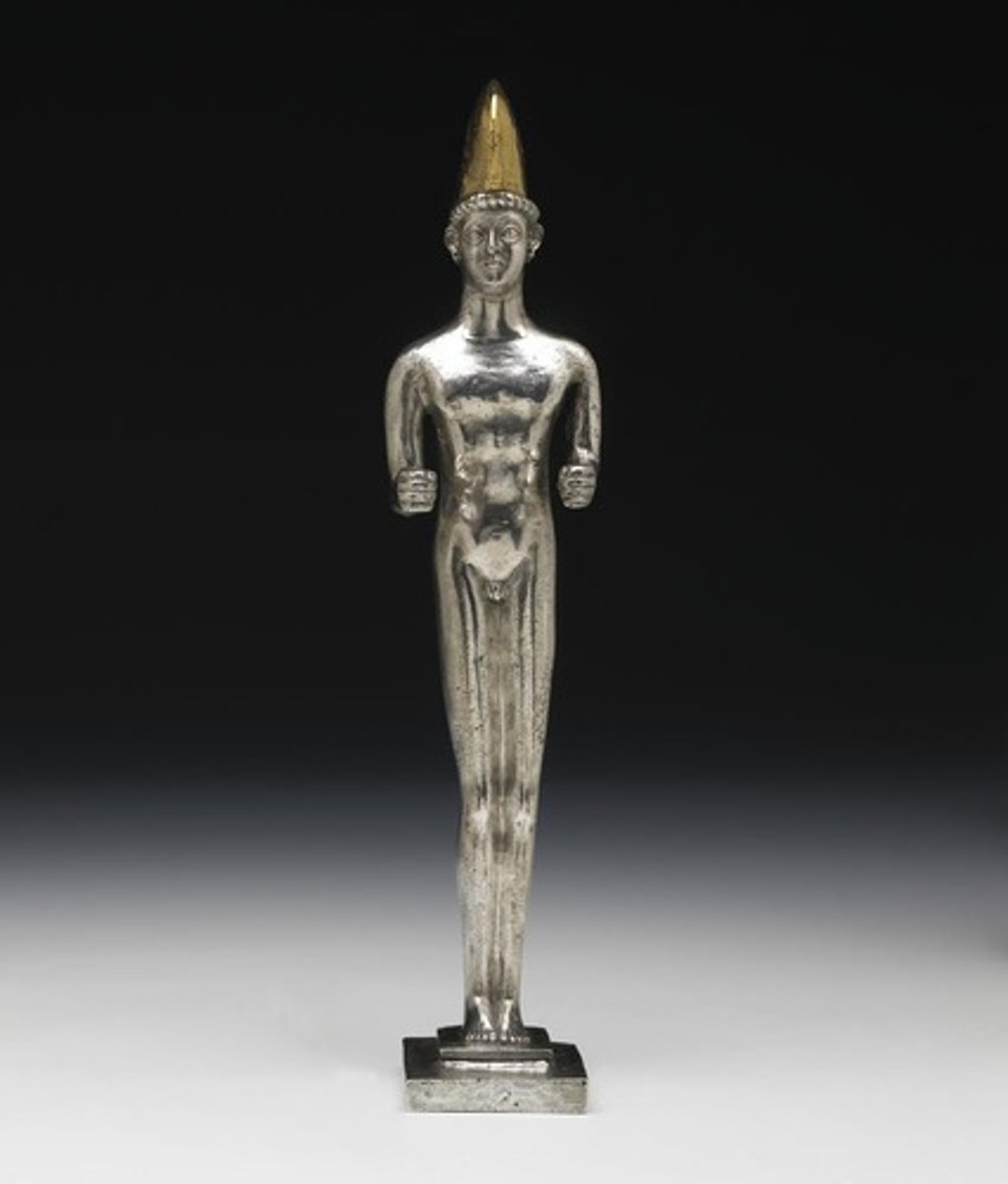
Statuette of a naked youth
The nudity, facial features, and pose of the small, silver statuette of a youth from the Oxus Treasure suggests the influence of Greek sculpture, yet he is wearing a Persian headdress.
When we compare the statuette to a Greek bronze statue of Apollo, although the scale is very different (the Greek statue is life size), the similarities between the two poses are clear - such as the postures.