Topic 17: Vertebrate systems development-4 Excretory System
 Call Kai
 Learn
Learn Practice Test
 Spaced Repetition
 Match
Match Flashcards
 Knowt Play
1/48

There's no tags or description
Looks like no tags are added yet.
Name | Mastery | Learn | Test | Matching | Spaced | Call with Kai |
|---|
No analytics yet
Send a link to your students to track their progress
49 Terms
Both the excretory and reproductive systems are derived from ( )
intermediate mesoderm
Because the excretory and reproductive system are derived from ( ) therefore they are ( )
intermediate mesoderm
primitively segmental
The reproductive system and excretory system are primitively segmental because they are derived from intermediate mesoderm, why is this?
Intermediate mesoderm itself is organized into segmental (repeating) patterns early on and therefore anything derived from it initially inherits that segmental organization
T or F: Most preconceived notions about the kidneys, their shape, and origin are colored by the amphibian condition
false
mammalian
Primitively/ initially, there is an intermediate mesoderm segment, and thus kidney segment for every ( ). Few vertebrates still retain such a ( )
body segment
(long) kidney
Those vertebrates that retain the entire kidney derived from every body segment are said to have a ( ), or ( ) kidney
holonephros
“holonephric” kidney
Holonephros is the ( )
whole body kidney
The ( ) is the permanent kidney in mammals, whereas the ( ) serves as the temporary kidney during embryonic development
metanephros
mesonephros
The ( ) is the functional adult kidney found in lampreys, most fishes and amphibians
opistonephros
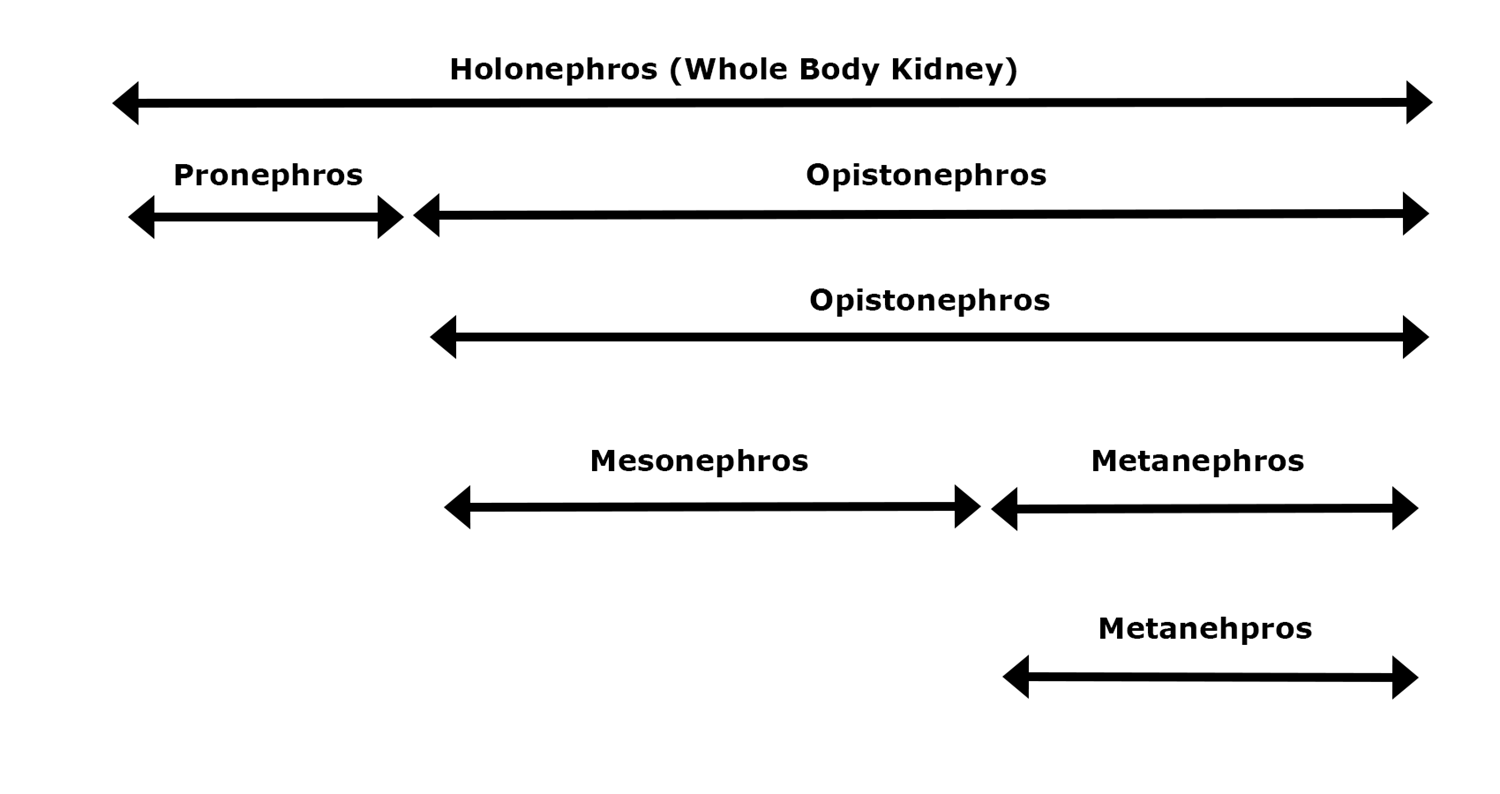
kidney types by region/name
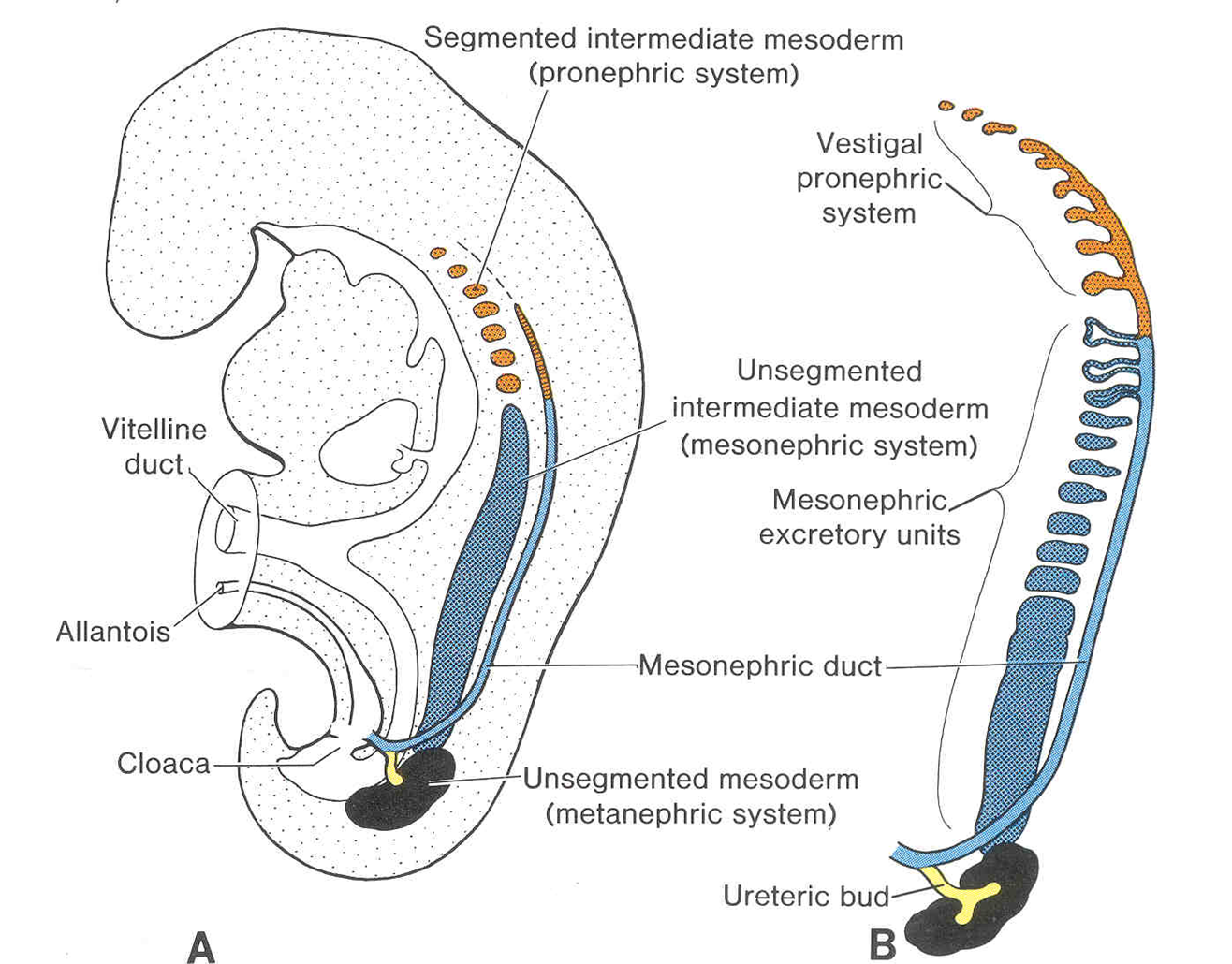
yuhh
The intermediate mesoderm is not ( ). It is plastered against the body wall, with peritoneum on only one side, and with ( ) bounding the external/lateral surfaces.
intraperitoneal
body wall
What does intraperitoneal mean?
An organ that is nearly completely surrounded by peritoneum, but not inside the peritoneal cavity
In a closeup of the regions that development takes place, the ( ) and the ( ) are very close together, because of this there will be a battle for possession of their ( ).
genital ridge
nephric ridge
ducts
in mammalian males, the ( ) wins out the battle for the ducts
reproductive system
What is the genital ridge?
where gonads will develop
what is the nephric ridge?
where kidneys will develop
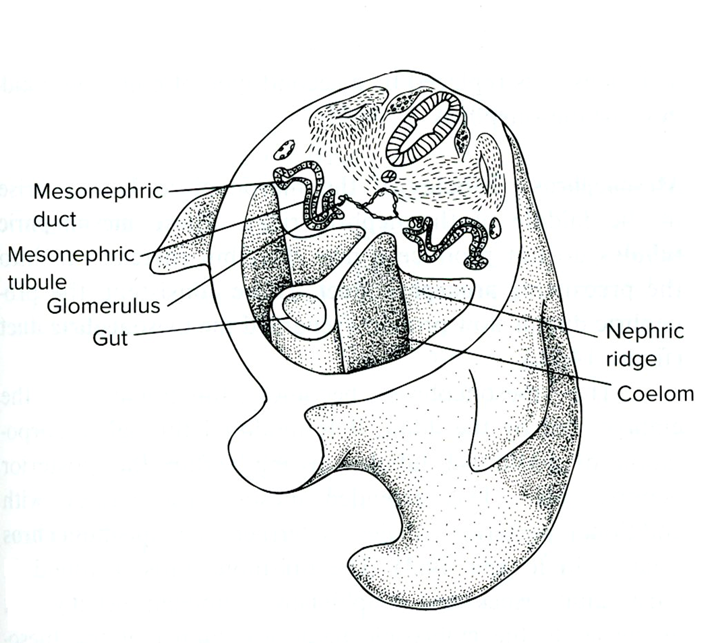
okie
The excretory/reproductive systems are in a ( ) position
retroperitoneal
What does retroperitoneal mean?
situated or occurring behind the peritoneum
Only the most primitive remaining vertebrates have a ( )
holonephros
The cranial-most part of the kidney, the ( ) develops first but is subsequently ( ). However, it is critically important, because it induces ( ).
pronephros
lost
the development of the more caudal segments of the kidney
The remaining portion of the kidney, not including pronephros, is the ( ). This is found in many ( ) and some ( )
opistonephros
fishes
amphibians
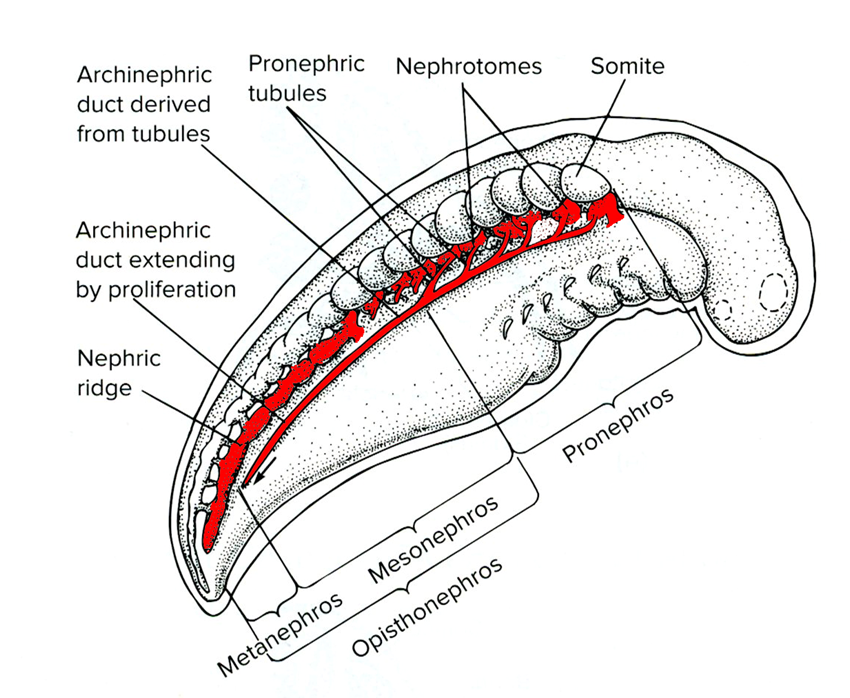
qoah
Very soon after conception, ( ) segments do appear, but only in a ( ) manner.
cervical (spine)
transitionary
T or F: The amniote pronephros has excretory function
false, it has no excretory function
Tor F: The amniote pronephros has no inductive/developmental function
false, it does have an inductive/developmental function
The ( ), stimulates the development of the middle kidney or ( ). The duct then becomes the ( )
archinephric duct
mesonephros
mesonephric duct
The function of the mesonephros is debated. Some feel it is the ( ), others think it only ( )
functional kidney of the embryo
remains to induce the development of the hind kidney, or metanephros
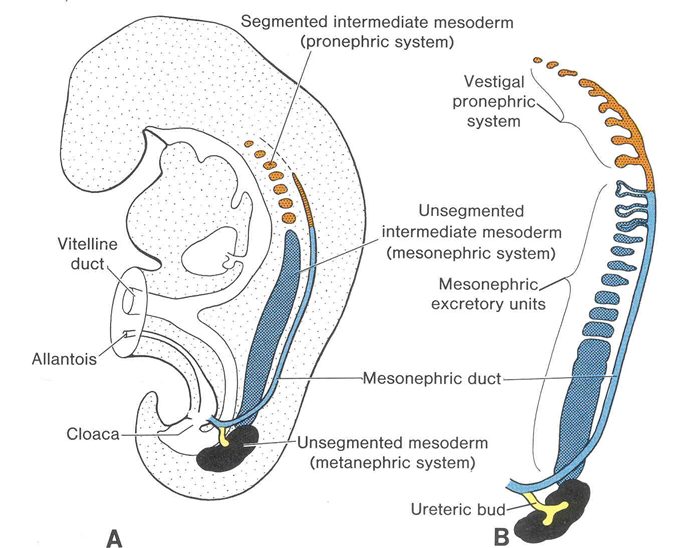
woah
The mesonephric duct isnt important
false, it is clearly important
(in reference to the development to the metanephros)
The mesonephric duct eventually reaches all the way to the end of the gut tube- to the ( )- and initially drains it
cloaca
What induces the development of a new tube/duct that grows towards the hind kidney?
the mesonephric duct reaching all the way to the end of the gut tube, the cloaca
what is the hind kidney called?
the metanephros
In reference to the new duct that grows towards the metanephros, it grows from the ( ) of the mesonephric duct toward the ( ) of the ( )
caudal
intermediate mesoderm
developing metanephros
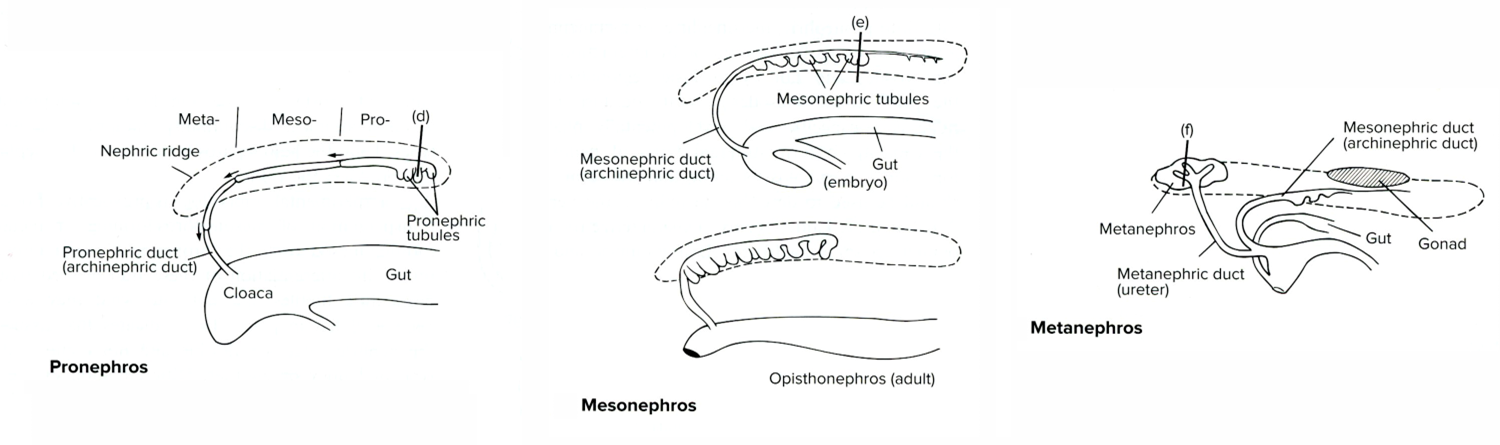
lets go
Mesonephric duct reaches all the way to the end of the ( )
gut tube (cloaca)
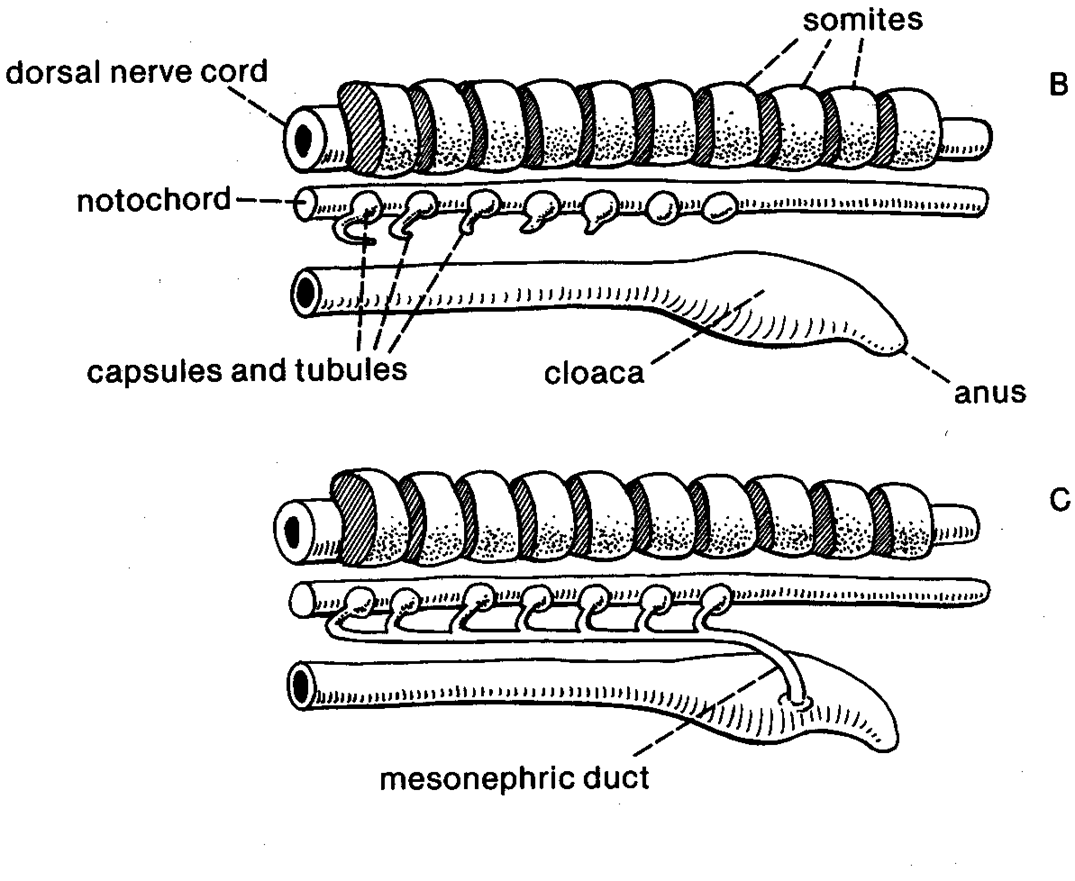
doodle it
bruh
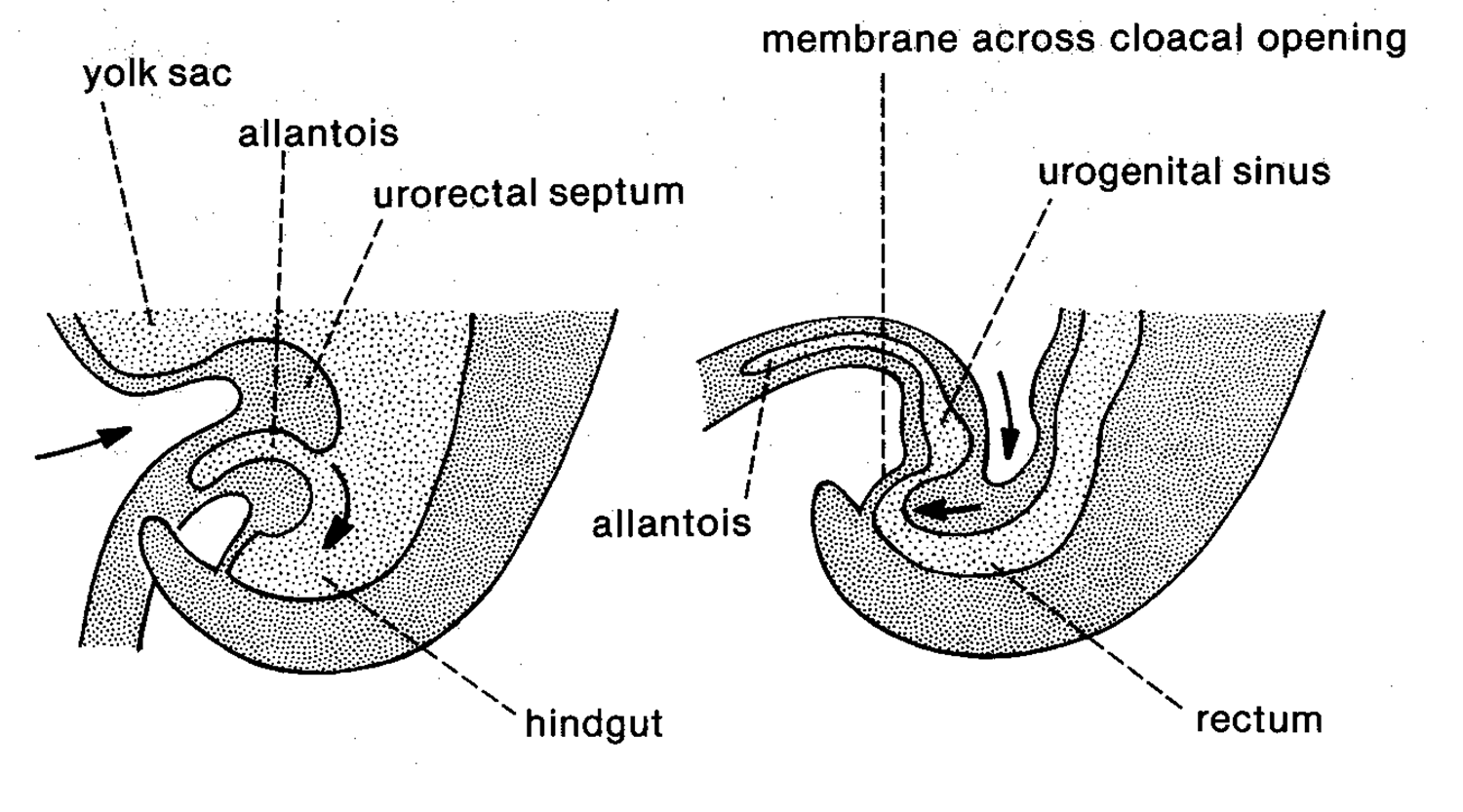
The ureter grows towards the ( ), the cloaca is partitioned into a ( ) and a ( ) by the ( )
metanephros
dorsal rectum
ventral bladder
urorectal septum
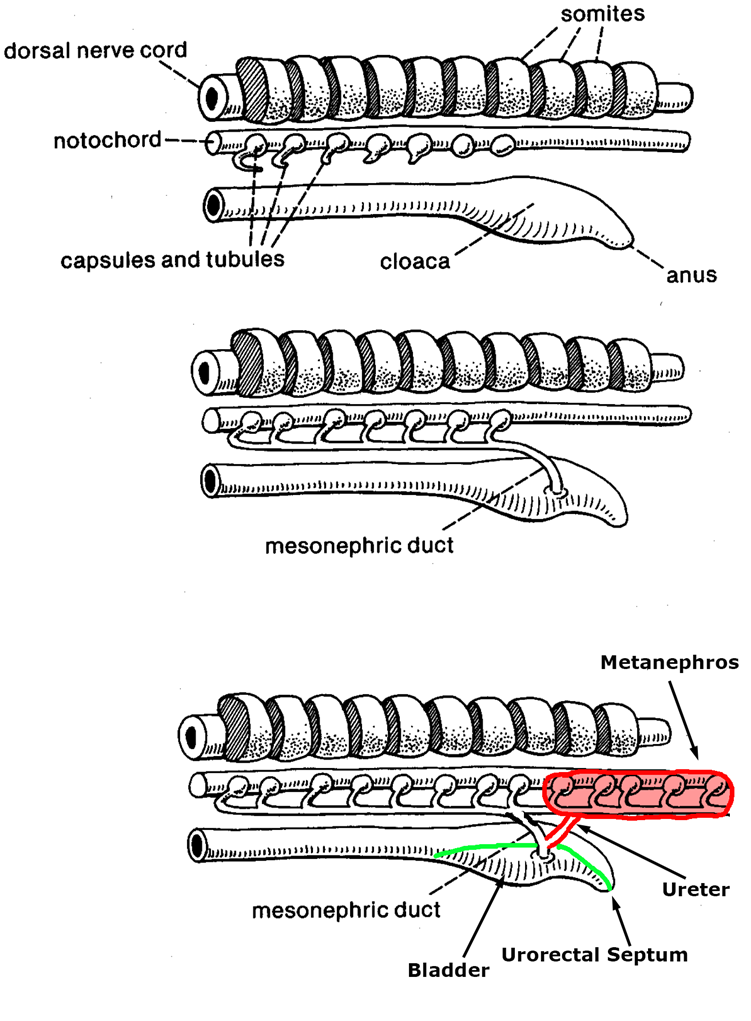
wee
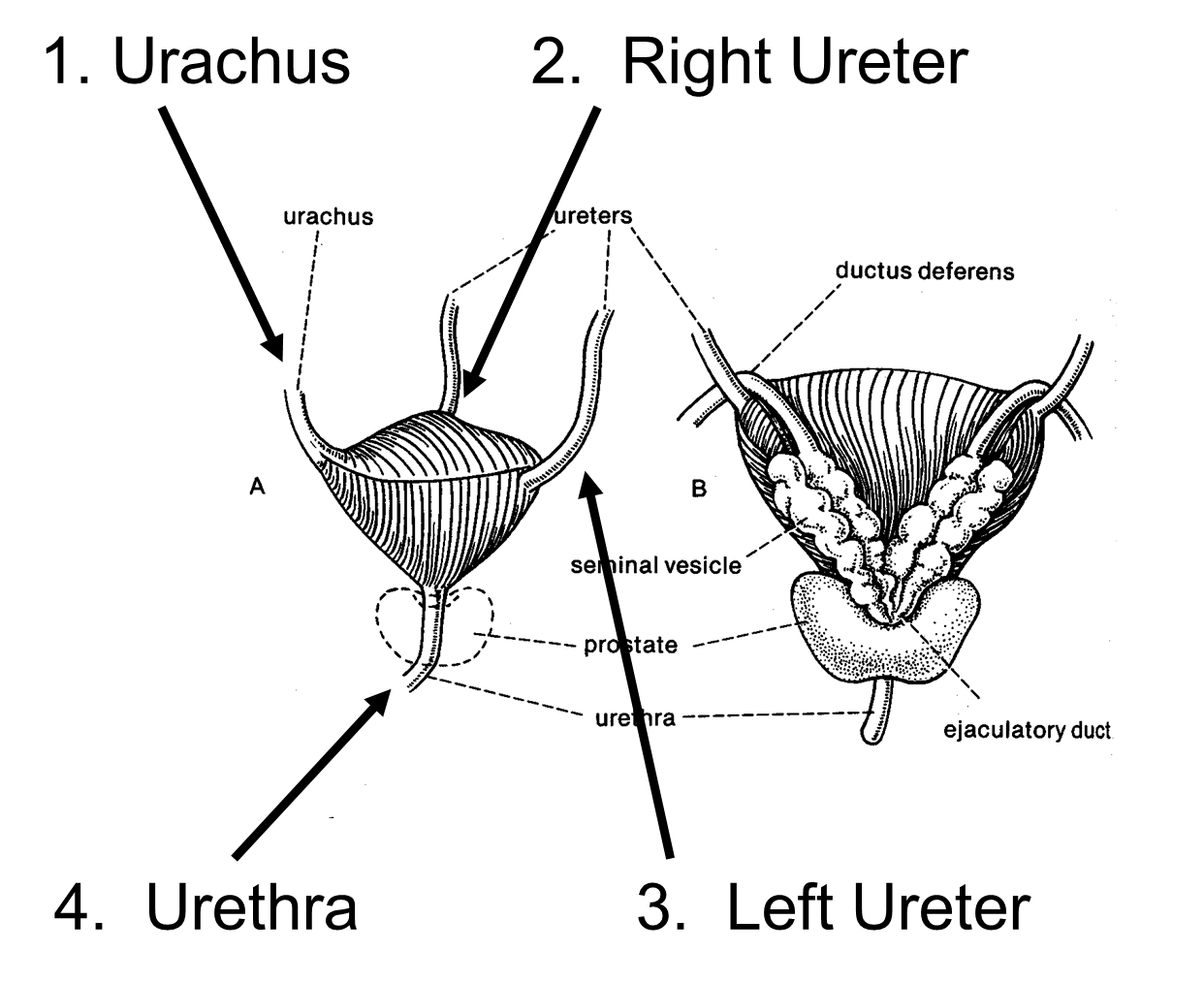
The bladder is a sort of ( ) in shape
tetrahedron
The bladder as ( ) attatchmets, one at ( )
4
each corner
One corner of the bladder lies at the top edge of ( ), here vestigial ( ) holds it down, the old ( )
pubic symphysis
urachus
allantoic connection
Right and left ( ) of the bladder dump in cranio-dorsally
ureters
( ) exists caudally or ( )
urethra
inferiorly
woah
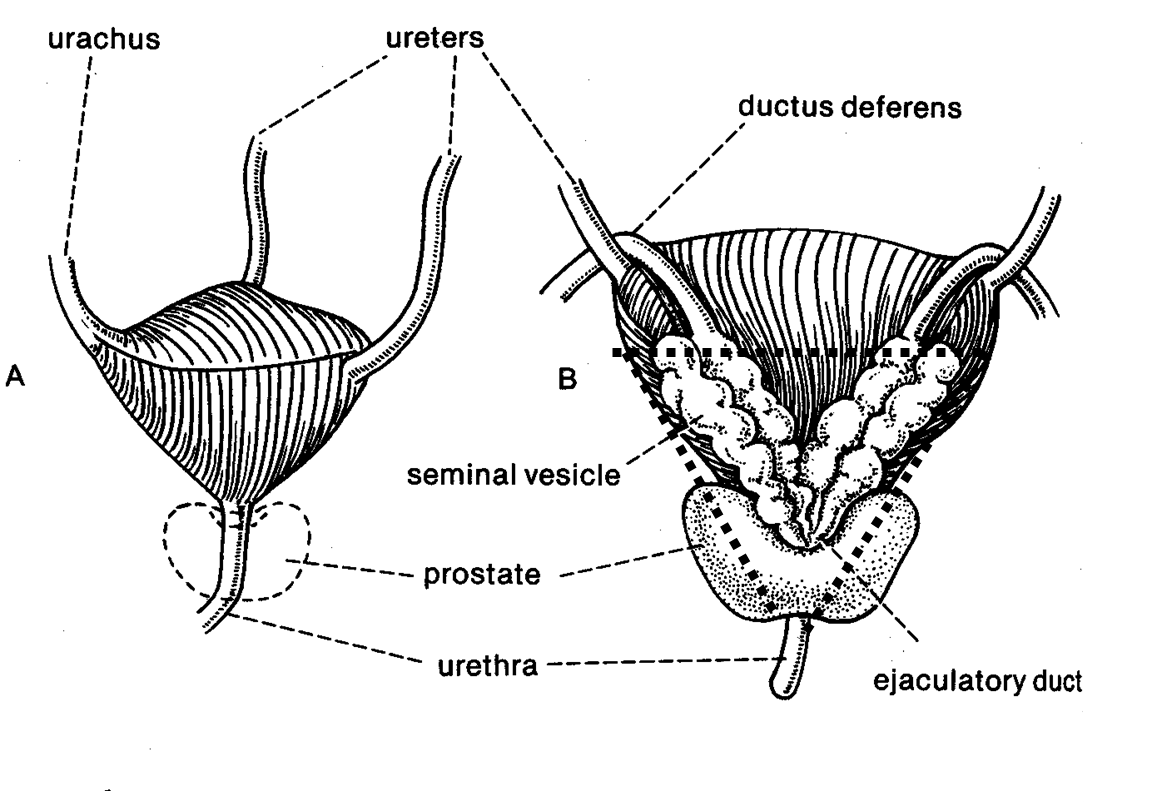
What is defined by the triangle? Is it elastic?
the triangle defined by the connection of the two ureters and the exit of the urethra is not elastic. It is known as the trigone of the bladder
What is the trigone fo the bladder?
a smooth triangular region at the base of the urinary bladder that directs urine flow and signals bladder fullness