Chinese Landscapes Wks 1-4
 Call Kai
 Learn
Learn Practice Test
 Spaced Repetition
 Match
Match Flashcards
 Knowt Play
1/63

There's no tags or description
Looks like no tags are added yet.
Name | Mastery | Learn | Test | Matching | Spaced | Call with Kai |
|---|
No analytics yet
Send a link to your students to track their progress
64 Terms

River Blue, dir. and written by David McIlvride . 2017.
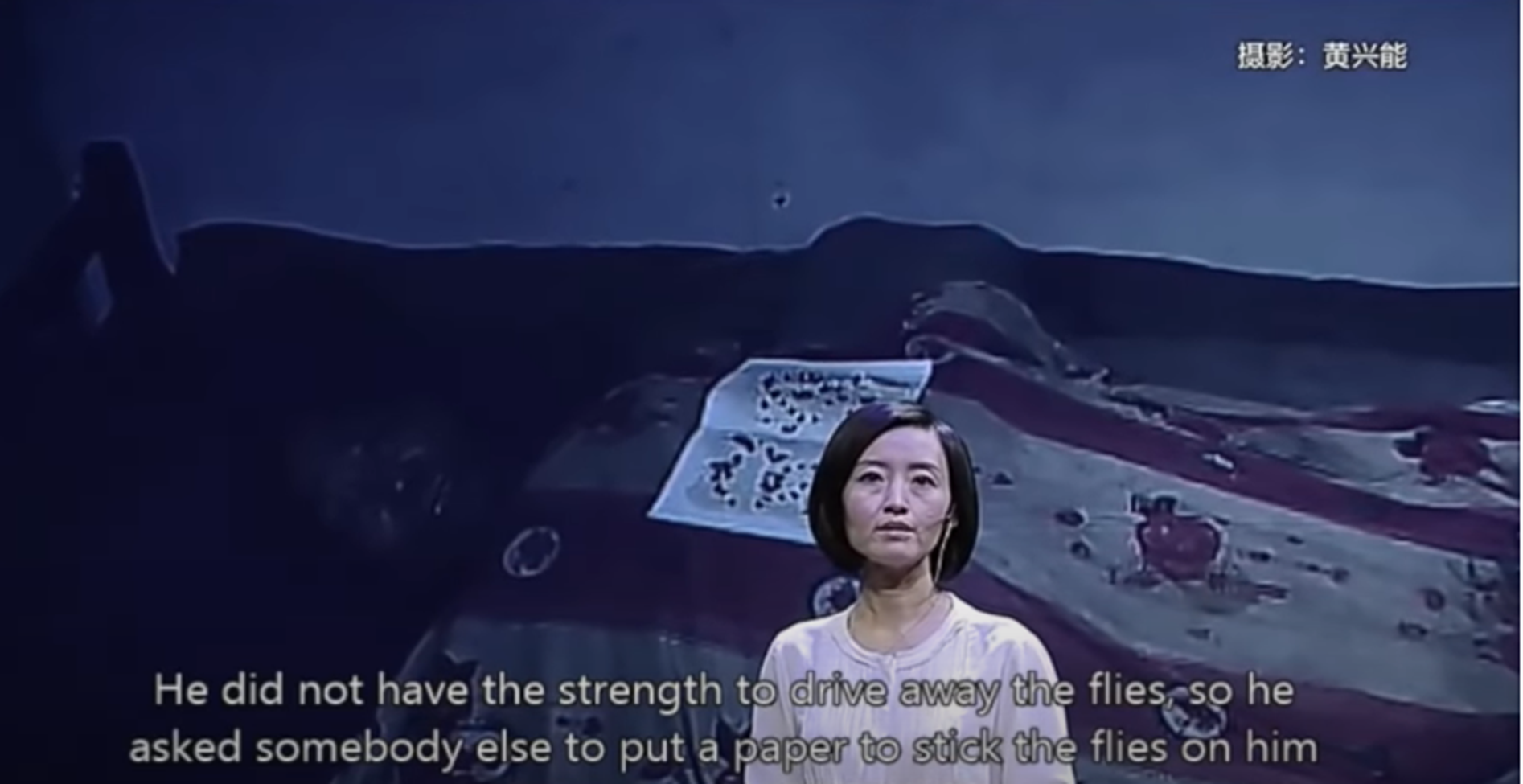
1.3 “In London, Jing was told that one of the keys to turning the corner is for the government to not subsidize those old, crumbling industries that are on their way out, but to instead invest in innovation in new opportunities and a competitive playing field that will create the next wave of jobs and industries.
Jing also wondered why China wasn't more aggressively pursuing natural gas as an energy source. In her research, she found that there's high potential for natural gas, but it's not being drilled for.
Curious, she asked an expert why that is. He explained that the largest natural gas producing country, the United States, has 6,300 natural gas and petroleum companies. China has only three, and 70% of production comes from one company. The U.S. has 160 natural gas pipeline companies. China, again, only has three, and 70% of natural gas production lives in, you guessed it, a single company: Sinapec.
If China opens those markets, it could create competition and flip the script” [1:26:14]Wan Yunfeng, “Jellyfish,” from “Protecting the Ocean” series. 21st century.
Section on man dying from cancer caused by pollution, Under the Dome. Dir by Ming Fan; narrated by Cai Jing. 2015.
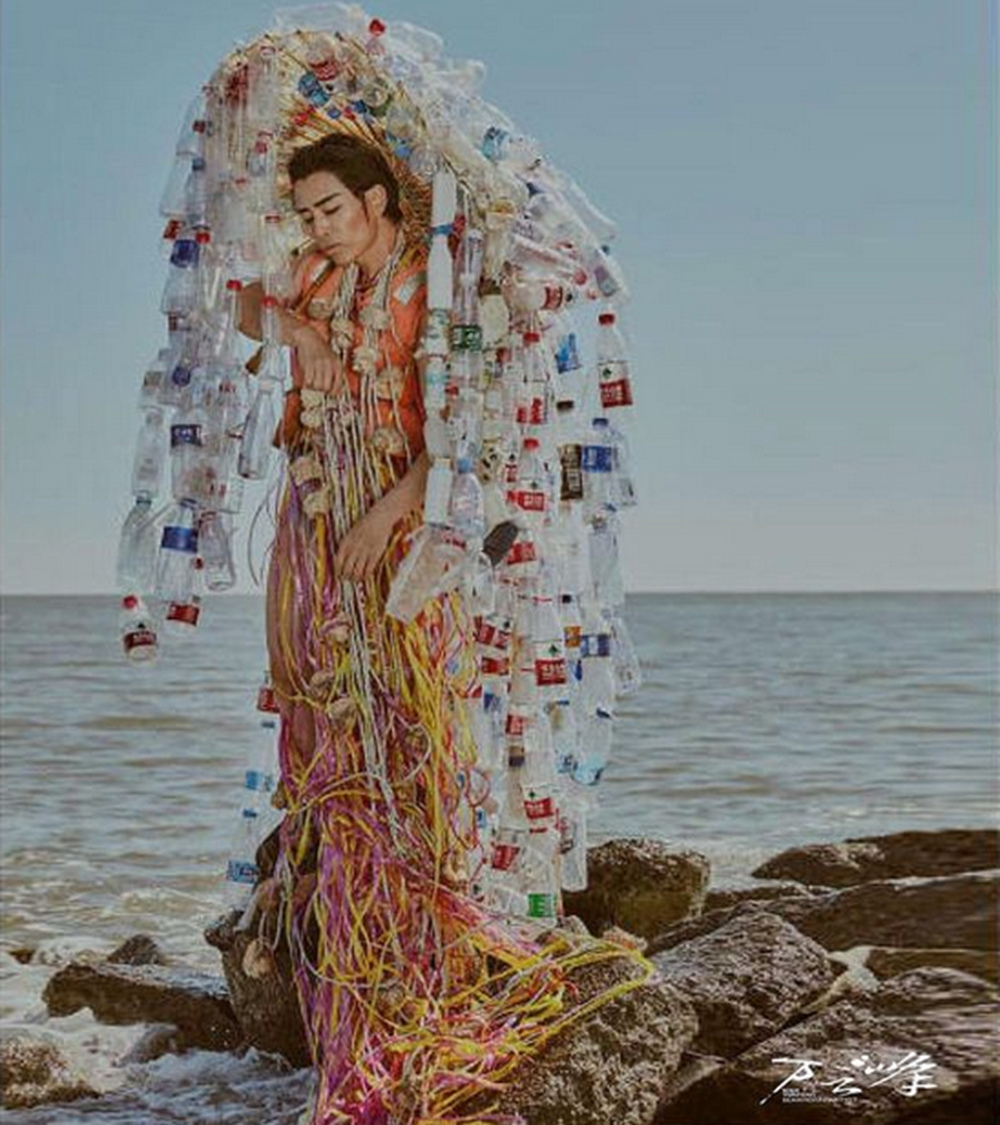
Wan Yunfeng, “Jellyfish,” from “Protecting the Ocean” series. 21st century.
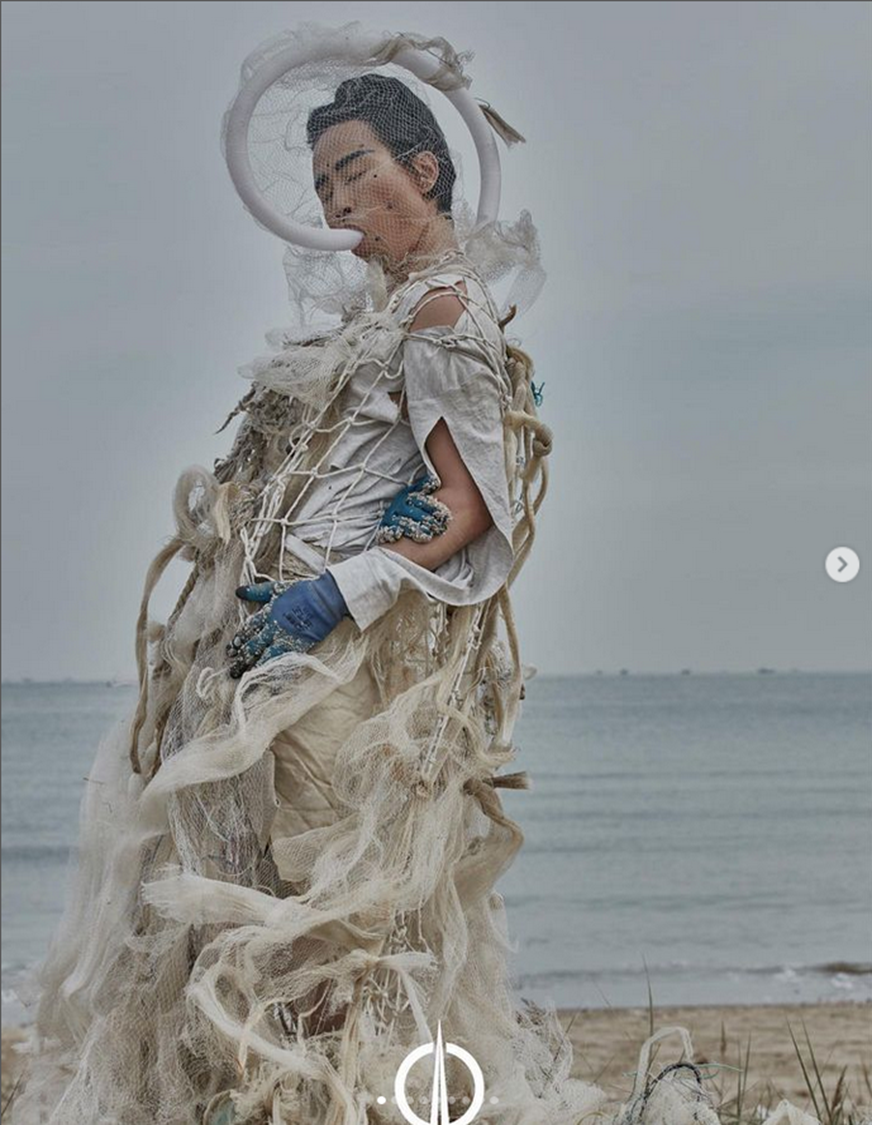
Wan Yunfeng, “White Network,” from “Protect the Ocean Series. 21st c.
“I want to reconstruct the scenes of those animals struggling before their deaths, caused by ocean pollution.” -- Wan Yunfeng
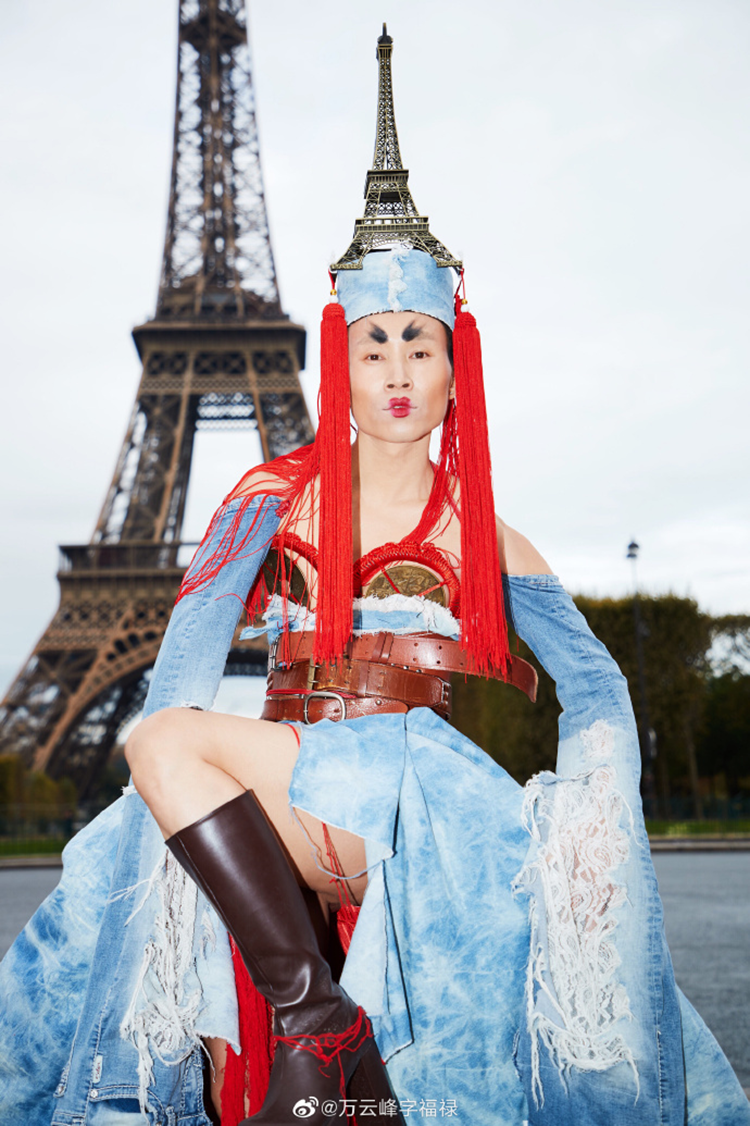
Wan Yunfeng, “Paris Cowboy.” 21st century.
“I loved the costumes more than the opera. Male costumes aren’t powerful – their color and style is very simple. But female clothing can be dramatic.”
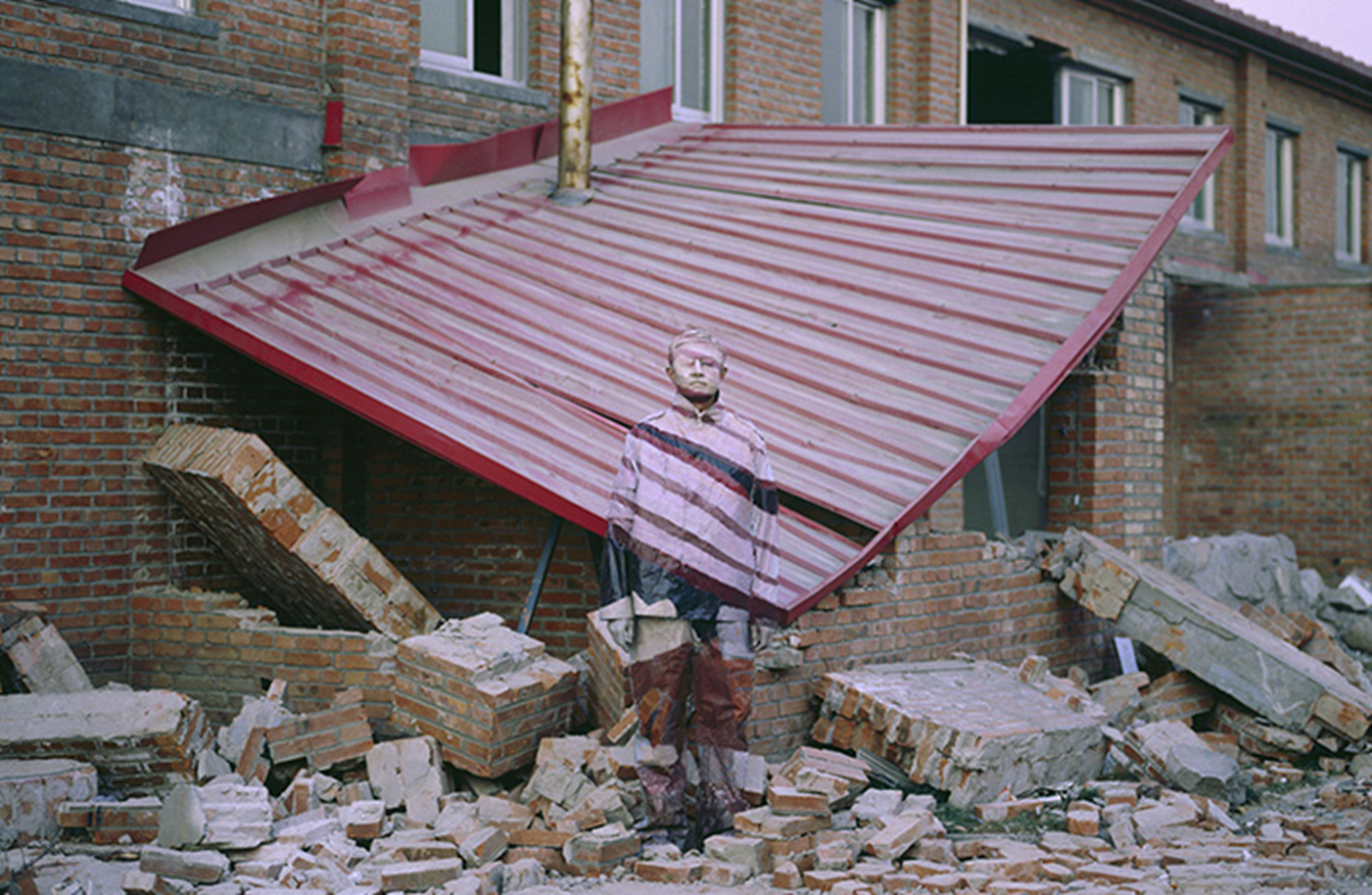
Liu Bolin, Hiding in the Studio. 2005.
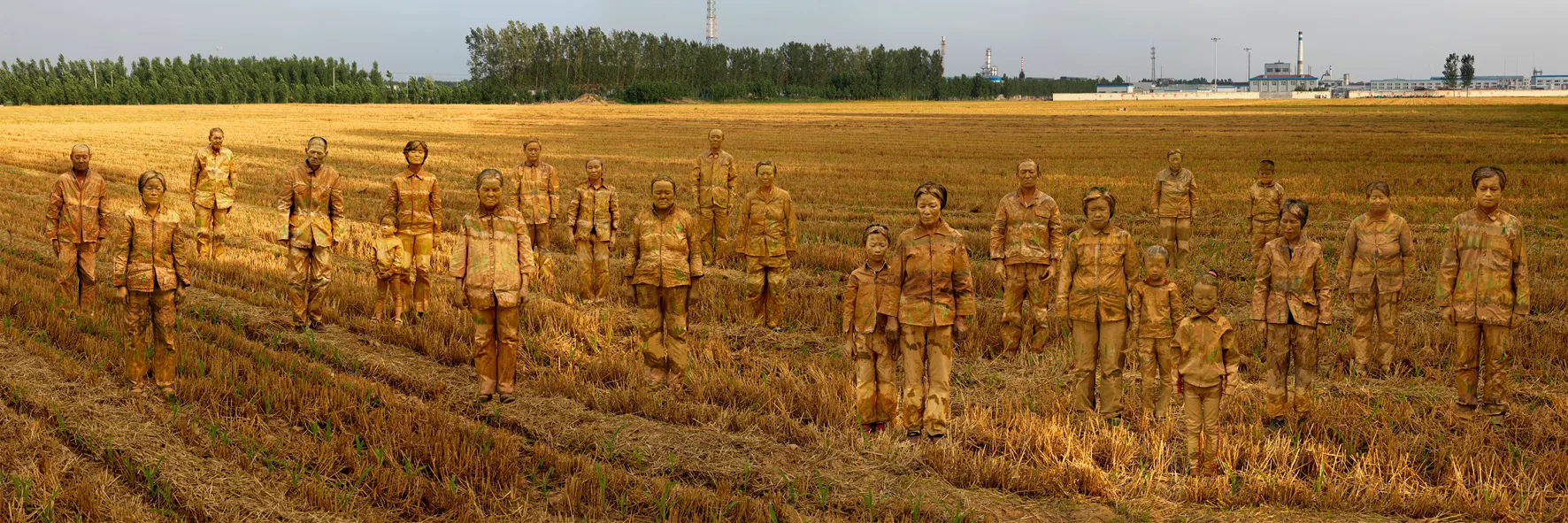
Liu Bolin, Target 1, Cancer Village, 2014 (detail) C print
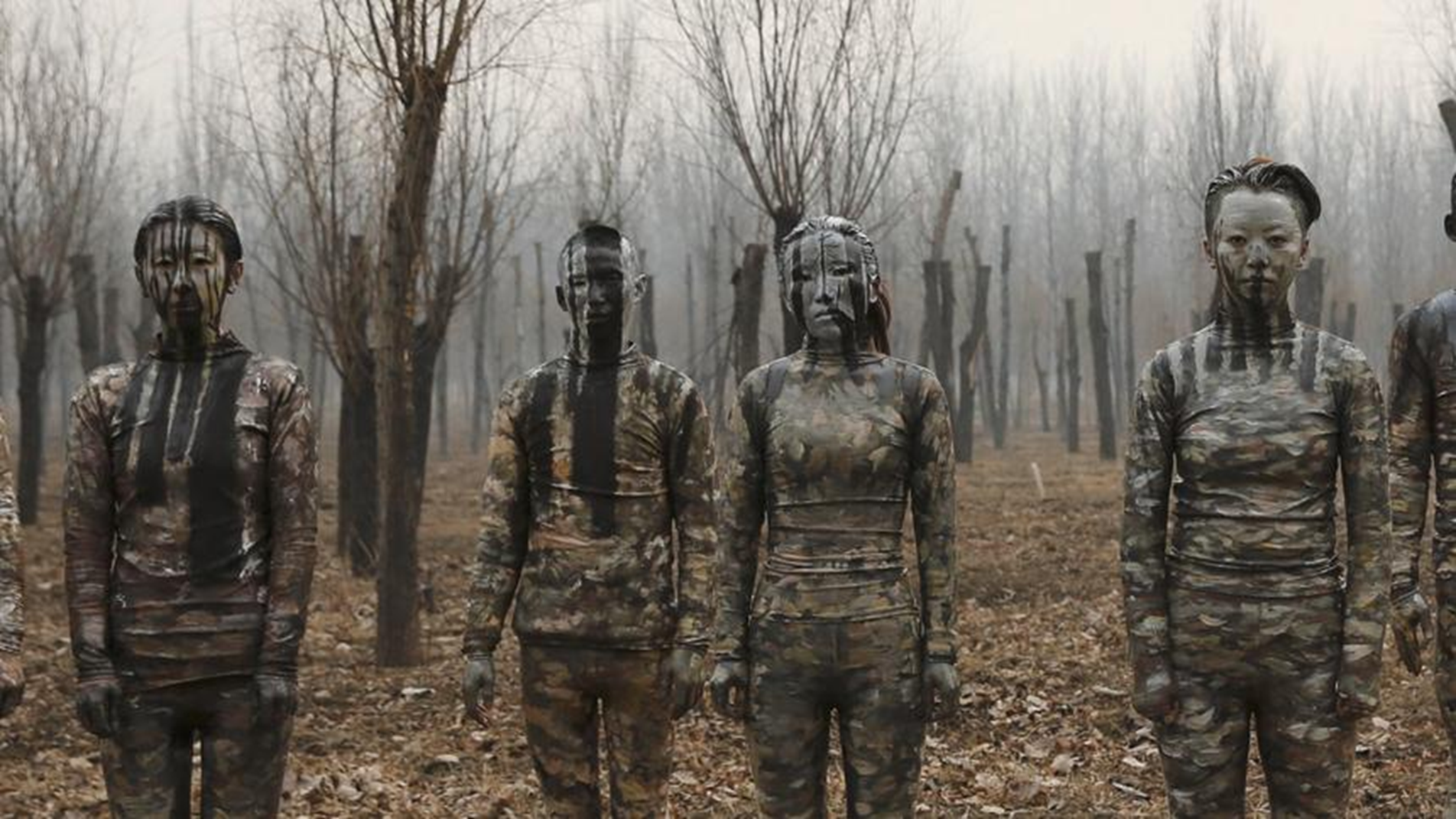
Liu Bolin, Dongji (Winter Solstice), 2015. Photograph still of video performance. Detail of face and clothing.
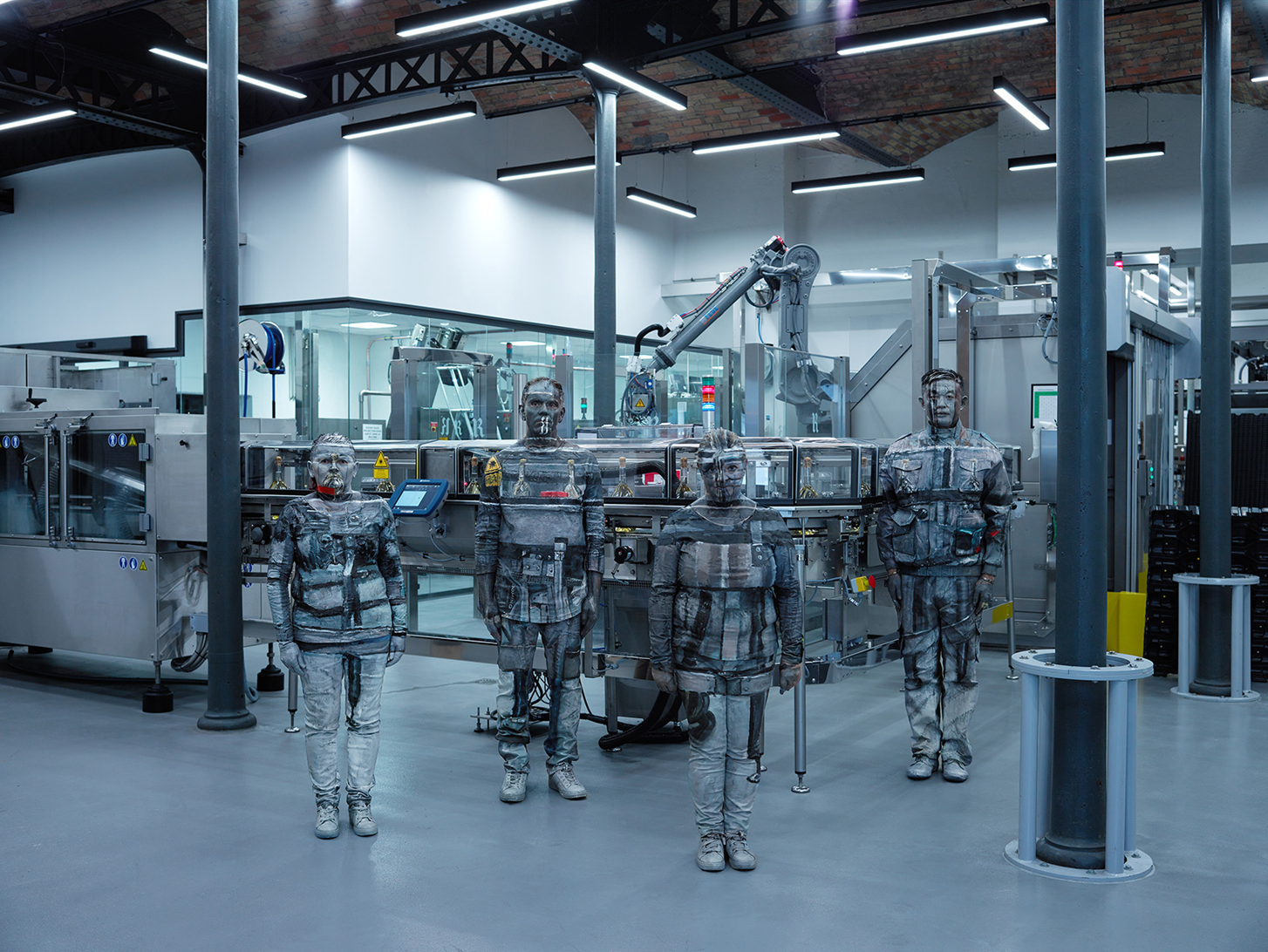
Liu Bolin. Disgorgement Production Line With Workers. Medium: Photographs. Year: 2017
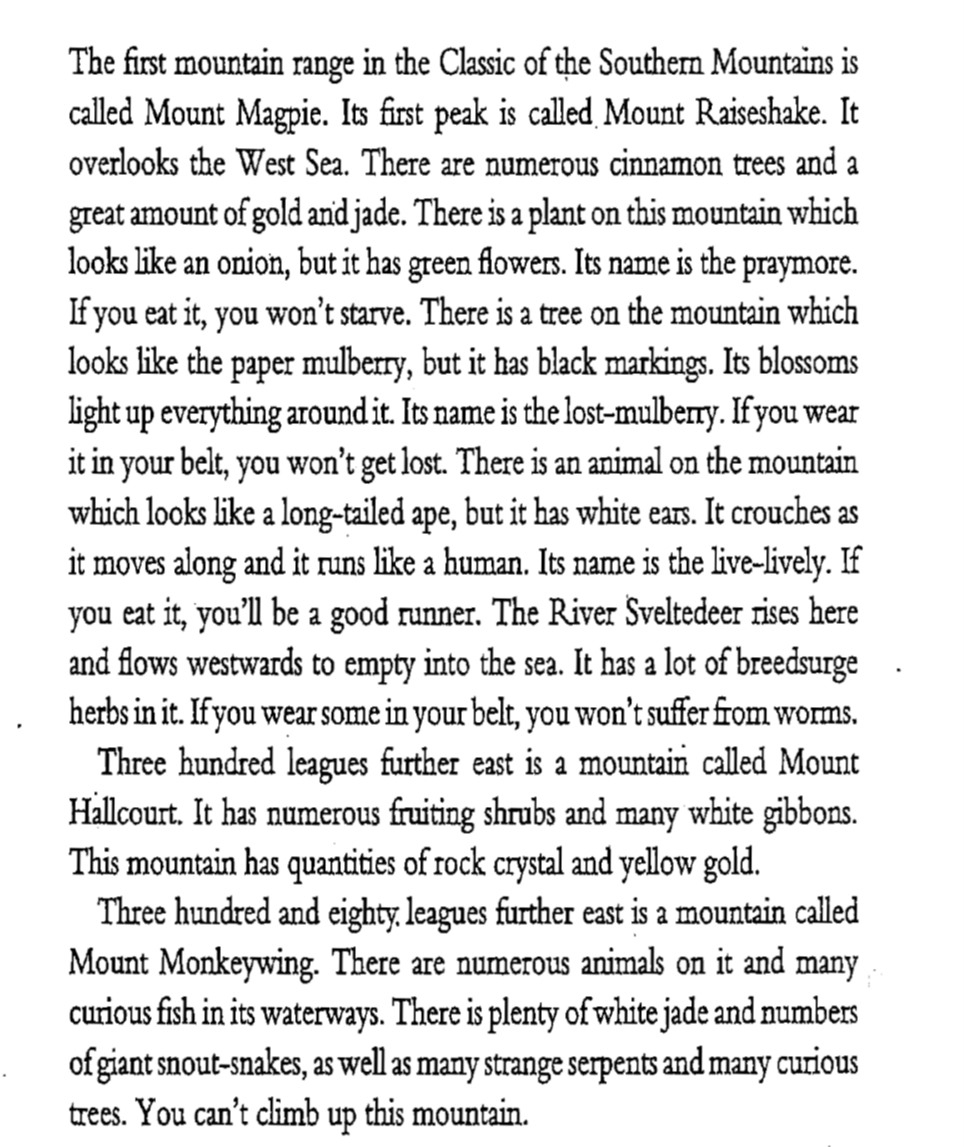
Anonymous. “Classic of the Southern Mountains,” Book 1 of Classics of Mountains and Seas. Materials from as early as 4th c. BCE, compiled in the Han Dynasty (202 BC-220 AD).
The deity of Mount Bell is named Torch Shade. When this deity's eyes look out there is daylight, and when he shuts his eyes there is night. When he blows it is winter, and when he calls out it is summer. He neither drinks, nor eats, nor breathes. If this god does breathe, there are gales. His body is a thousand leagues long. Torch Shade is east of the country of Nolegcalf. He has a human face and a snake's body, and he is scarlet in colour. The god lives on the lower slopes of Mount Bell.
Anonymous. “The Classic of Regions beyond the Seas: North,” in Classic of Mountains and Seas Book 8, 121. Materials from as early as 4th c. BCE, compiled in the Han Dynasty (202 BC-220 AD).
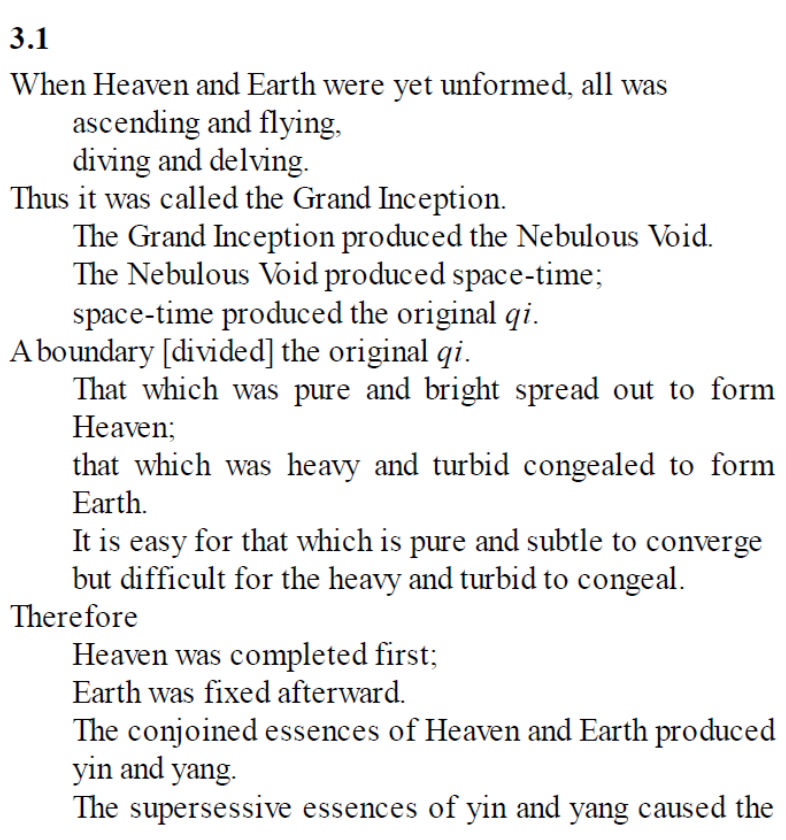
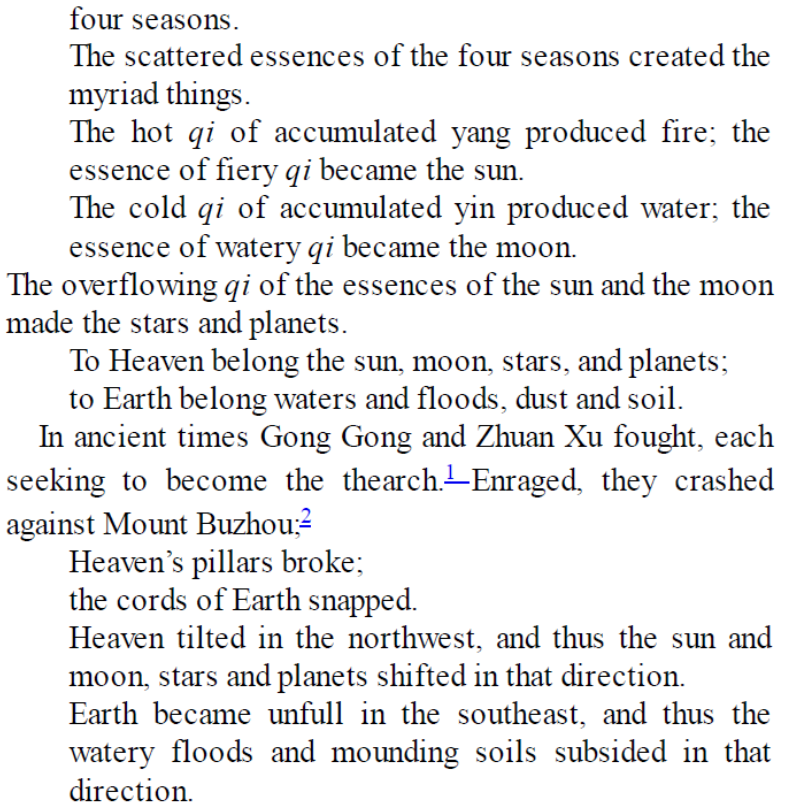
Creation of the world, from The Masters of Huainan, compiled in the court of Prince of Huainan (Liu An). Han Dynasty (2nd c. BC)
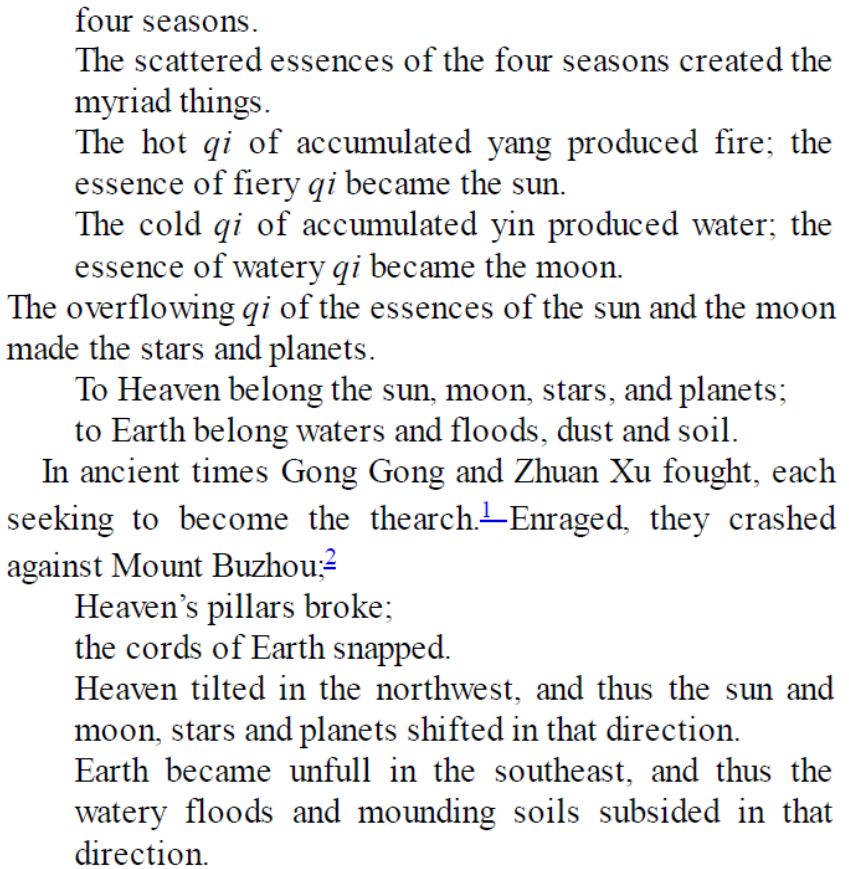
Break down of earth from the fighting of Gong Gong and Zhuan Xu, from chapter 2.3, The Masters of Huainan, compiled in the court of Prince of Huainan (Liu An). Han Dynasty (2nd c. BC)
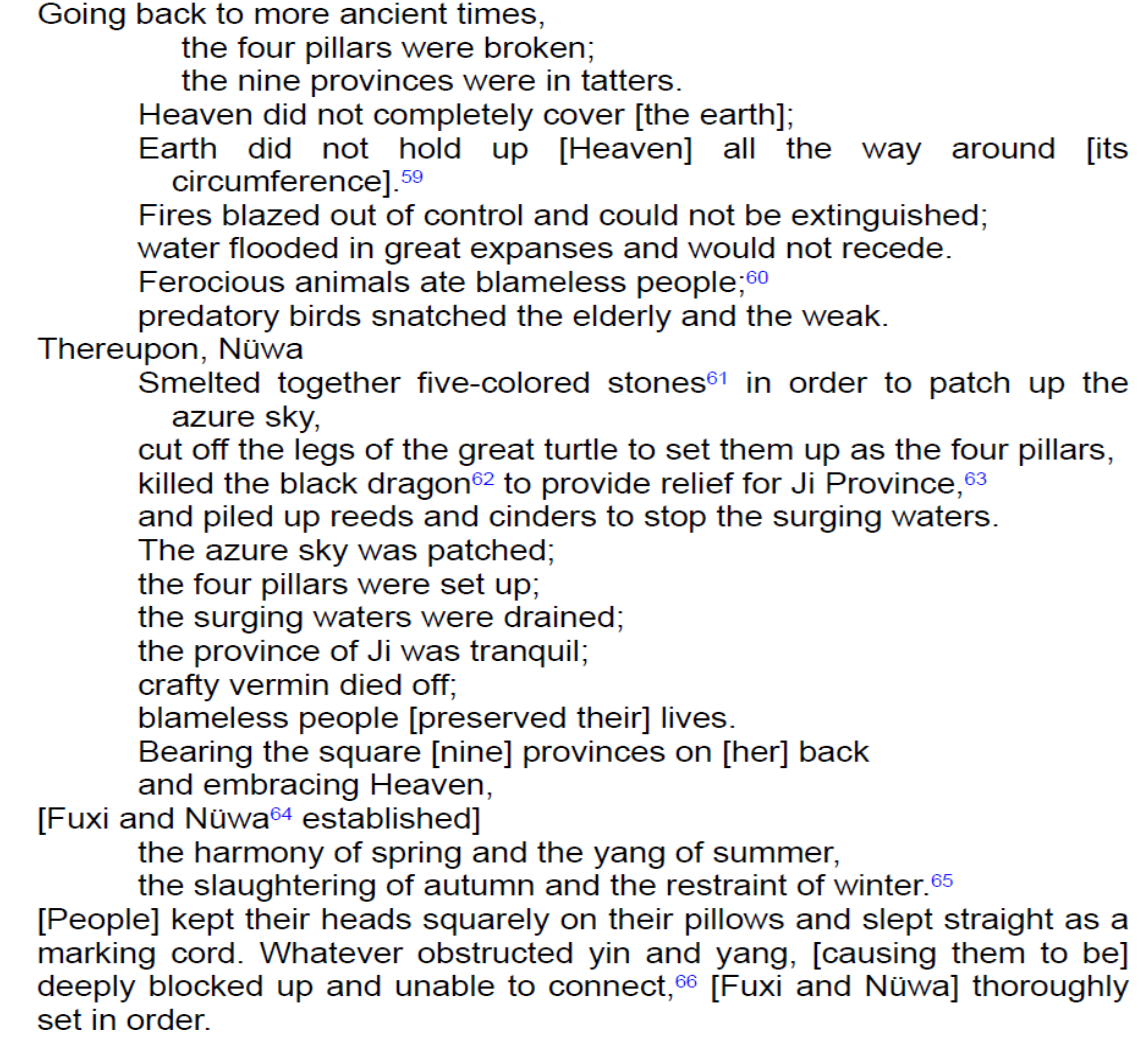
Myth of Nuwa patching up Heaven, smelting five-colored stones. The Masters of Huainan, compiled in the court of Prince of Huainan (Liu An). Han Dynasty (2nd c. BC)
“Heaven and earth were in chaos like a chicken's egg, and Pangu was born in the middle of it. In eighteen thousand years Heaven and the earth opened and unfolded. The limpid that was Yang became the heavens, the turbid that was Yin became the earth. Pangu lived within them, and in one day he went through nine transformations, becoming more divine than Heaven and wiser than earth. Each day the heavens rose ten feet higher, each day the earth grew ten feet thicker, and each day Pangu grew ten feet taller. And so it was that in eighteen thousand years the heavens reached their fullest height, earth reached its lowest depth, and Pangu became fully grown. Afterwards, there was the Three Sovereign Divinities. Numbers began with one, were established with three, perfected by five, multiplied with seven, and fixed with nine. That is why Heaven is ninety thousand leagues from earth.”
Story of Pangu, from "Historical Records of the Three Sovereign Divinities and the Five Gods,“ a text from Three Kingdoms (3rd century, 222 - 280A. D. ) cited in later Tang dynasty (7th-8th c) encyclopedia.
“When the firstborn, Pangu, was approaching death, his body was transformed. His breath became the wind and clouds; his voice became peals of thunder. His left eye became the sun; his right eye became the moon. His four limbs and five extremities became the four cardinal points and the five peaks. His blood and semen became water and rivers. His muscles and veins became the earth's arteries; his flesh became fields and land. His hair and beard became the stars; his bodily hair became plants and trees. His teeth and bones became metal and rock; his vital marrow became pearls and jade. His sweat and bodily fluids became streaming rain. All the mites on his body were touched by the wind and evolved into the black-haired people.” Tr. by Anne Birrell (1993): 33.
Death of Pangu and the creation of our world, and the people. From A Chronicle of the Five Cycles of Time (Wuyun Linian Ji 五遠歷年紀), 3rd c. AD. (Much later creation myth).
“[ [Ziqi] said, ‘The Great Clod belches out breath and its name is wind. So long as it doesn't come forth, nothing happens. But when it does, then ten thousand hollows begin crying wildly. Can't you hear them, long drawn out? In the mountain forests that lash and sway, there are huge trees a hundred spans around with hollows and openings like noses, like mouths, like ears, like jugs, like cups, like mortars, like rifts, like ruts. They roar like waves, whistle like arrows, screech, gasp, cry, wail, moan, and howl, those in the lead calling out yeee!, those behind calling out yuuu! In a gentle breeze they answer faintly, but in a full gale the chorus is gigantic. And when the fierce wind has passed on, then all the hollows are empty again. Have you never seen the tossing and trembling that goes on?’
“Pipings of the Earth,” from “Discussions on Making All Things Equal” (Chapter 2) in Zhuangzi. Warring States Period (late 4th c. BC)
Joy, anger, grief, delight, worry, regret, fickleness, inflexibility, modesty, willfulness, candor, insolence - music from empty holes, mushrooms springing up in dampness, day and night replacing each other before us, and no one knows where they sprout from. Let it be! Let it be! [It is enough that] morning and evening we have them, and they are the means by which we live. Without them we would not exist; without us they would have nothing to take hold of. This comes close to the matter. But I do not know what makes them the way they are. It would seem as though they have some True Master, and yet I find no trace of him. He can act - that is certain. Yet I cannot see his form. He has identity but no form.
Transient emotions that pass through us, from “Discussions on Making All Things Equal” (Chapter 2) in Zhuangzi. Warring States Period (late 4th c. BC)
Words are not just wind. Words have something to say. But if what they have to say is not fixed, then do they really say something? Or do they say nothing? People suppose that words are different from the peeps of baby birds, but is there any difference, or isn't there? What does the Way rely upon, that we have true and false? What do words rely upon, that we have right and wrong? How can the Way go away and not exist? How can words exist and not be acceptable? When the Way relies on little accomplishments and words rely on vain show, then we have the rights and wrongs of the Confucians and the Mo-ists. What one calls right the other calls wrong; what one calls wrong the other calls right. But if we want to right their wrongs and wrong their rights, then the best thing to use is clarity.
Discussion on the words of people, from “Discussions on Making All Things Equal” (Chapter 2) in Zhuangzi. Warring States Period (late 4th c. BC)
Everything has its "that," everything has its "this." From the point of view of "that" you cannot see it, but through understanding you can know it. So I say, "that" comes out of "this" and "this" depends on "that" - which is to say that "this" and "that" give birth to each other. But where there is birth there must be death; where there is death there must be birth. Where there is acceptability there must be unacceptability; where there is unacceptability there must be acceptability. Where there is recognition of right there must be recognition of wrong; where there is recognition of wrong there must be recognition of right. Therefore the sage does not proceed in such a way, but illuminates all in the light of Heaven. He too recognizes a "this," but a "this" which is also "that," a "that" which is also "this." His "that" has both a right and a wrong in it; his "this" too has both a right and a wrong in it. So, in fact, does he still have a "this" and "that"? Or does he in fact no longer have a "this" and "that"? A state in which "this" and "that" no longer find their opposites is called the hinge of the Way. When the hinge is fitted into the socket, it can respond endlessly. Its right then is a single endlessness and its wrong too is a single endlessness. So, I say, the best thing to use is clarity.
On distinctions, from “Discussions on Making All Things Equal” (Chapter 2) in Zhuangzi. Warring States Period (late 4th c. BC)
“But to wear out your brain trying to make things into one without realizing that they are all the same - this is called "three in the morning." What do I mean by "three in the morning"? When the monkey trainer was handing out acorns, he said, "You get three in the morning and four at night." This made all the monkeys furious. "Well, then," he said, "you get four in the morning and three at night." The monkeys were all delighted. There was no change in the reality behind the words, and yet the monkeys responded with joy and anger. Let them, if they want to. So the sage harmonizes with both right and wrong and rests in Heaven the Equalizer. This is called walking two roads.”
“Discussions on Making All Things Equal” (Chapter 2) in Zhuangzi. Warring States Period (late 4th c. BC)
“Once Chuang Chou dreamt he was a butterfly, a butterfly flitting and fluttering around, happy with himself and doing as he pleased. He didn't know he was Chuang Chou. Suddenly he woke up and there he was, solid and unmistakable Chuang Chou. But he didn't know if he was Chuang Chou who had dreamt he was a butterfly, or a butterfly dreaming he was Chuang Chou. Between Chuang Chou and a butterfly there must be some distinction! This is called the Transformation of Things.”
“Discussions on Making All Things Equal” (Chapter 2) in Zhuangzi. Warring States Period (late 4th c. BC)
"Horses and oxen have four feet - this is what I mean by the Heavenly. Putting a halter on the horse's head, piercing the ox's nose - this is what I mean by the human. So I say: do not let what is human wipe out what is Heavenly; do not let what is purposeful wipe out what is fated; do not let [the desire for] gain lead you after fame. Be cautious, guard it, and do not lose it - this is what I mean by returning to the True."
“Autumn Floods,” Zhuangzi. Warring States Period (late 4th c. BC)
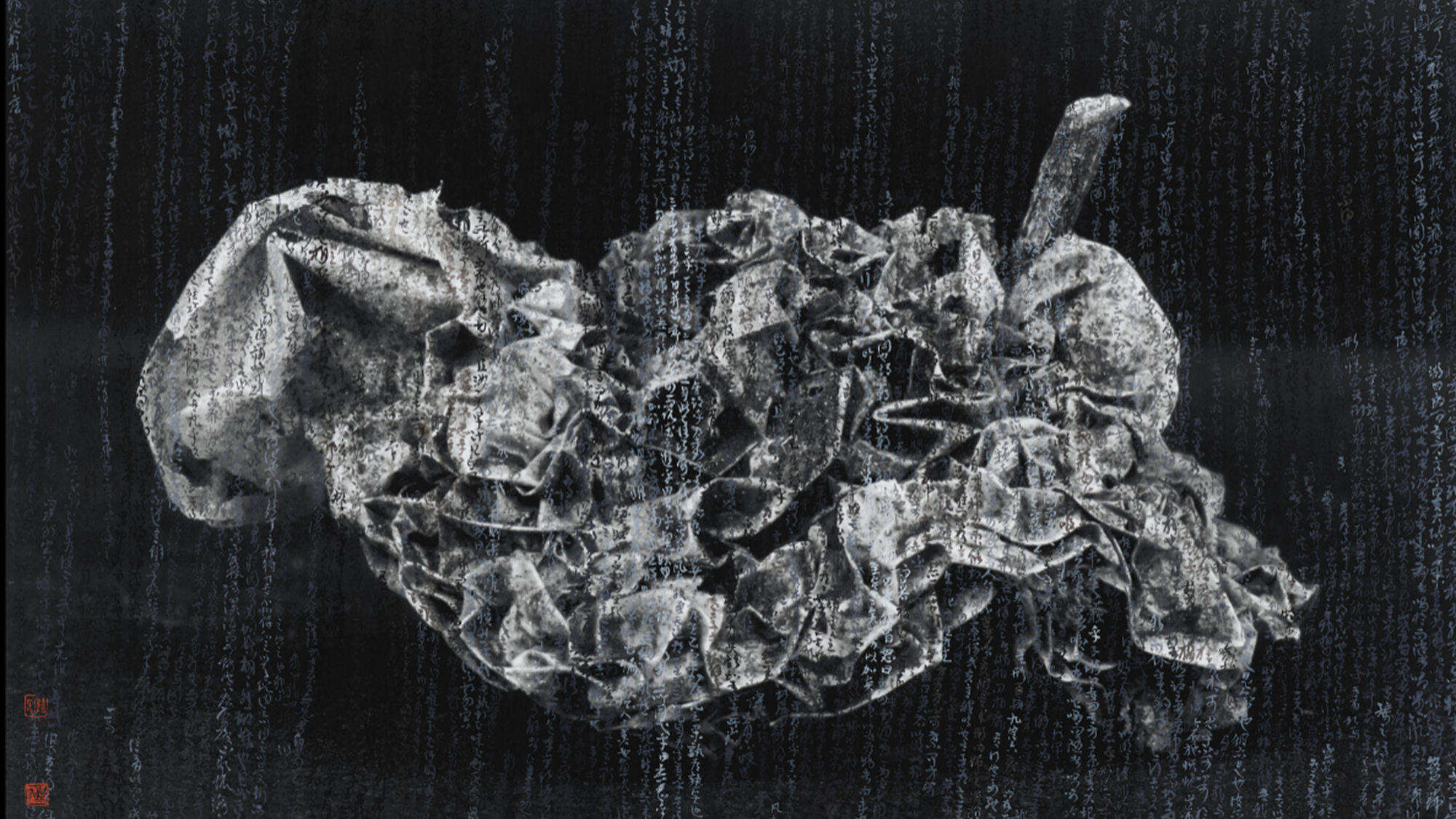
Chu Chu 儲楚. Zhuangzi-The Sameness of Things Series-Persimmon (庄子-齐物-柿), 21st century (2010-2019) Photography, Chinese ink and calligraphy on paper.
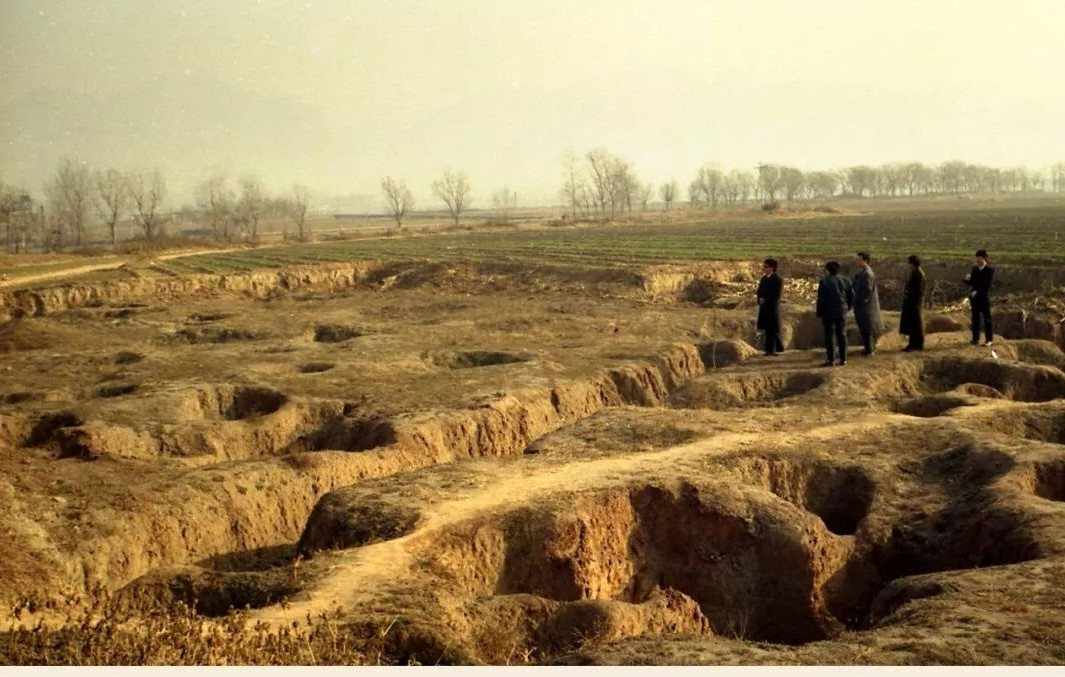
SubterraneanGrain Storage Pits, Cishan Culture 磁山文化. Neolithic
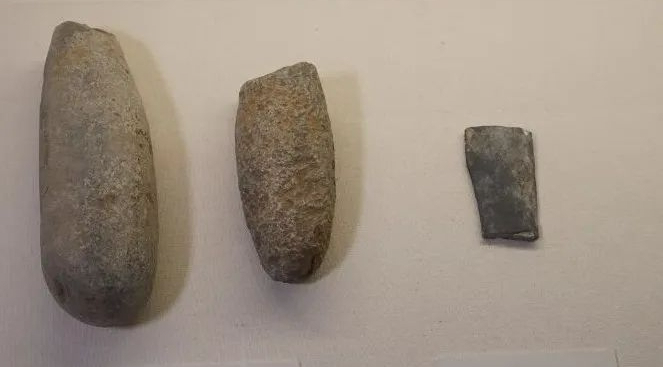
Stone hammer (left two) and stone sickle (right) from Cishan Culture 磁山文化. Neolithic
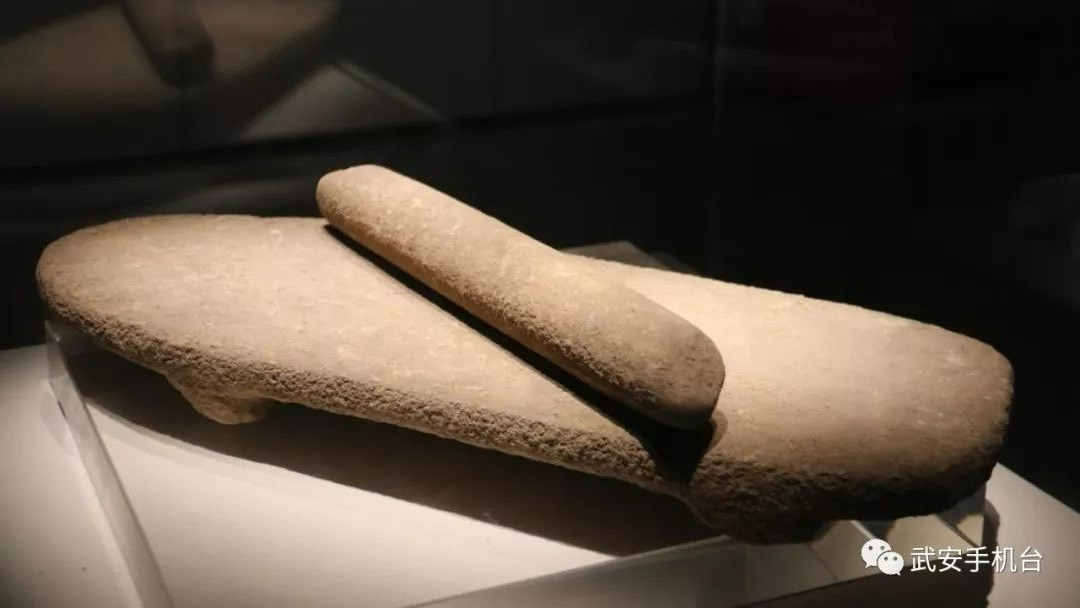
Grinding stone and roller. Cishan Culture (磁山文化). Neolithic Culture,
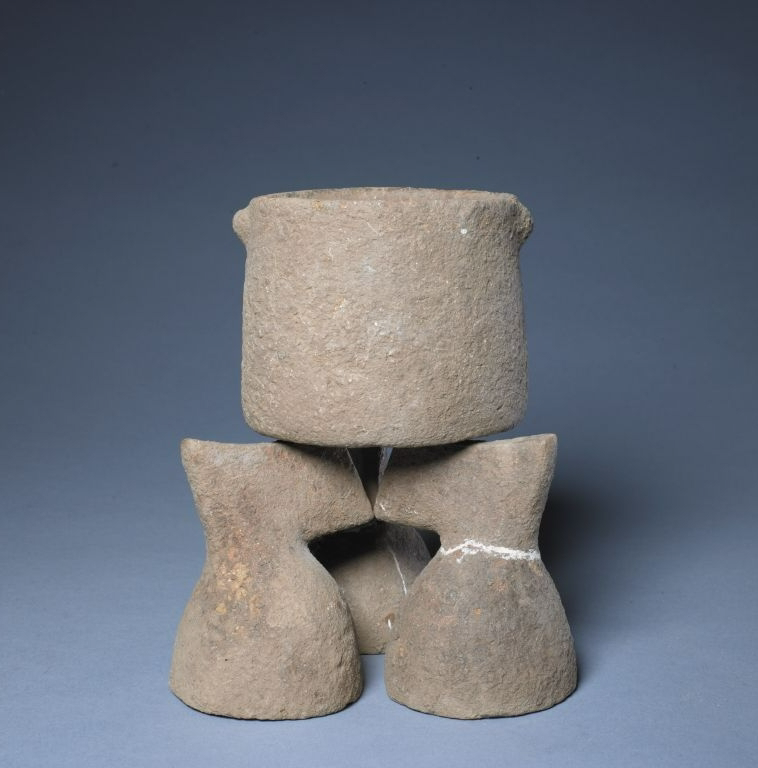
Red Clay pot and stands. Cishan culture.
Neolithic
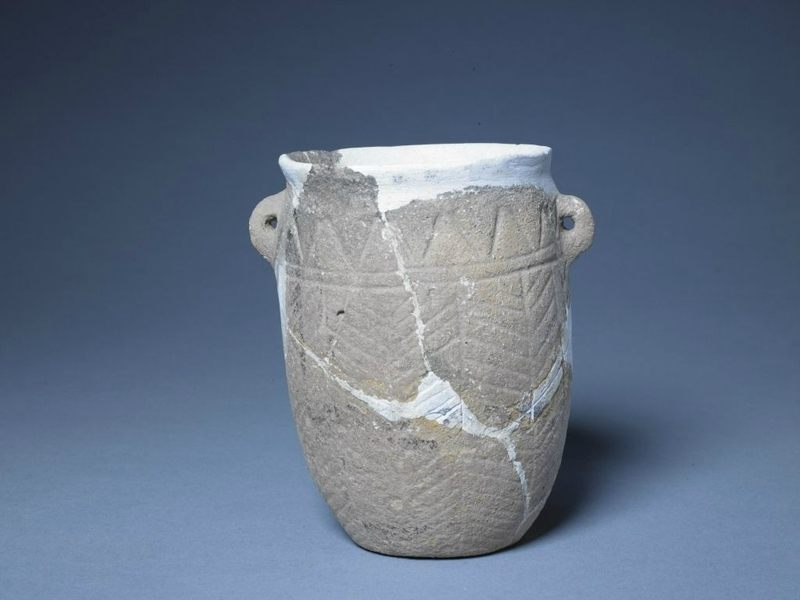
Deep belly ear jar, Neolithic, Cishan culture (6500–5500 BC),
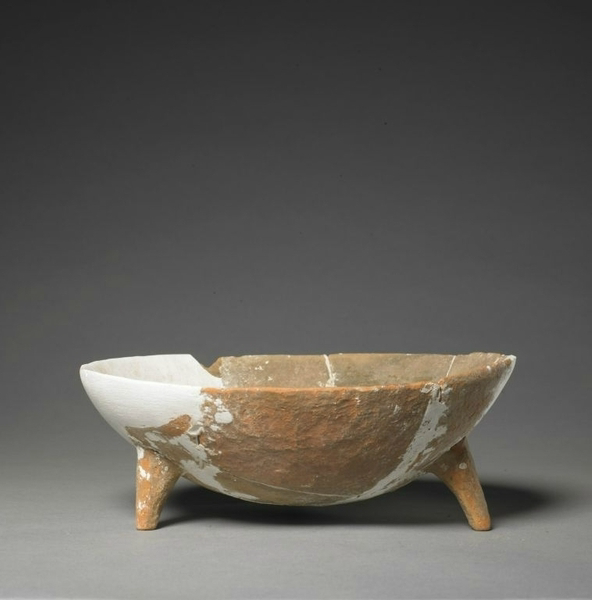
Three foot bowl, Neolithic, Cishan culture (6500–5500 BC
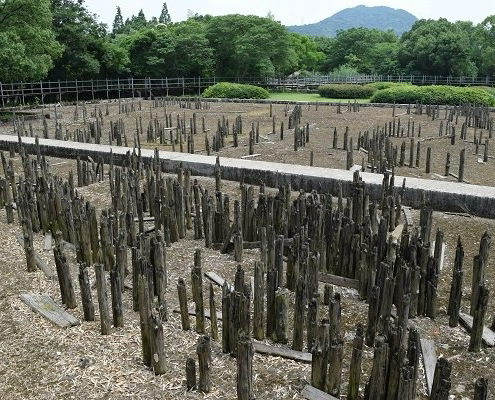
Remains of wooden stakes at the Hemudu site. Hemudu Culture, Zhejiang. Neolithic
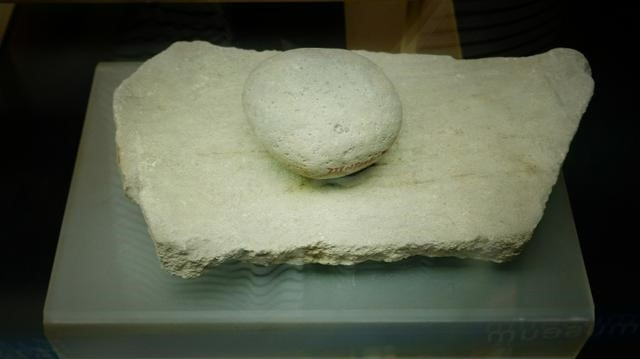
Grinding stone and stone slab from Hemudu Culture. Neolithic (ca 5500-3300BCE)
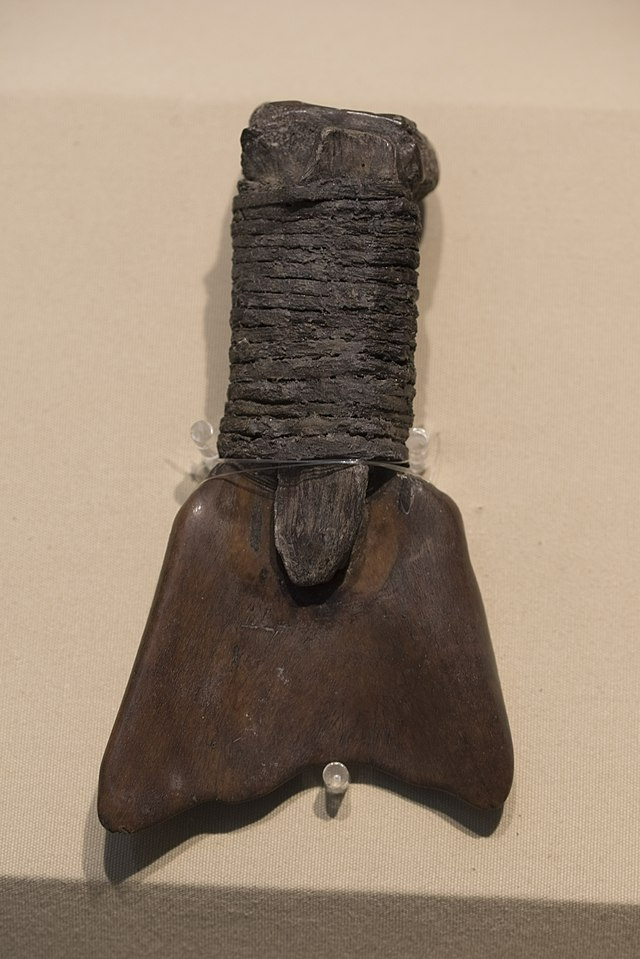
Shovel or Spade with wooden handle (si). Made from shoulder blade/scapulae of cattle. Hemudu Culture. Neolithic(5500-3300 BCE). Zhejiang province.
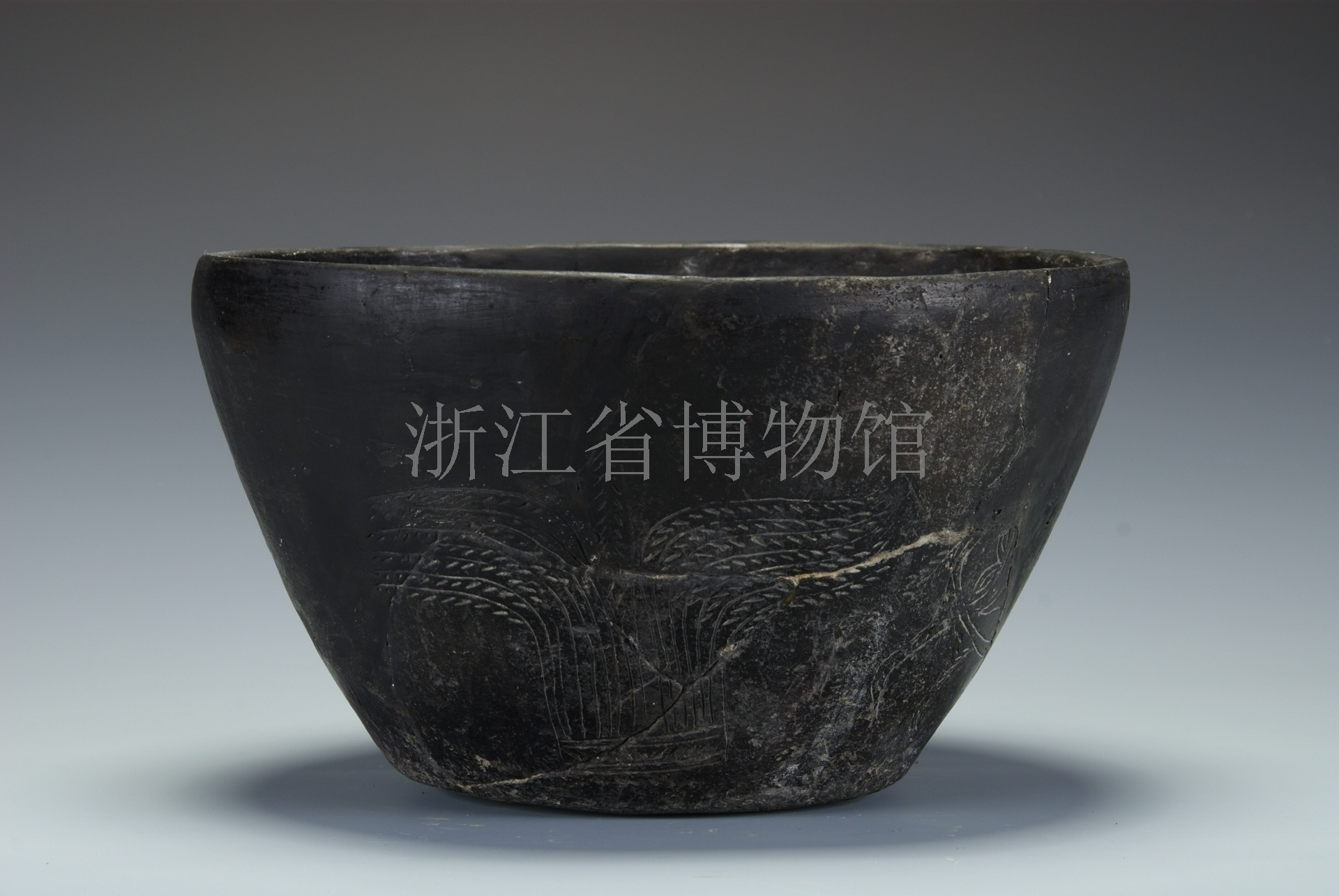
Black pottery with Incised rice grain. Hemudu culture.
Zhejiang. Neolithic (ca 5500-3300 BCE)
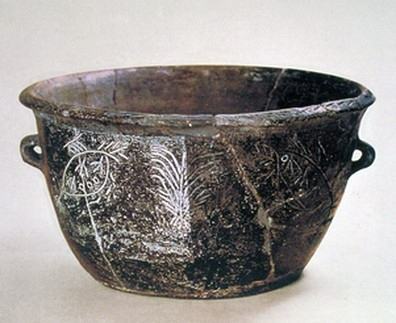
Black pottery incised with fish and rice grains. Hemudu Culture. (in modern day Zhejiang).
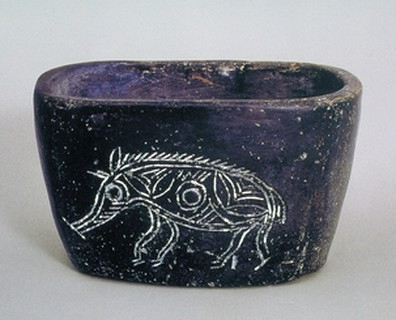
Black pottery basin with carved pig motif. Hemudu Culture. Neolithic (ca 5500-3300 BCE).
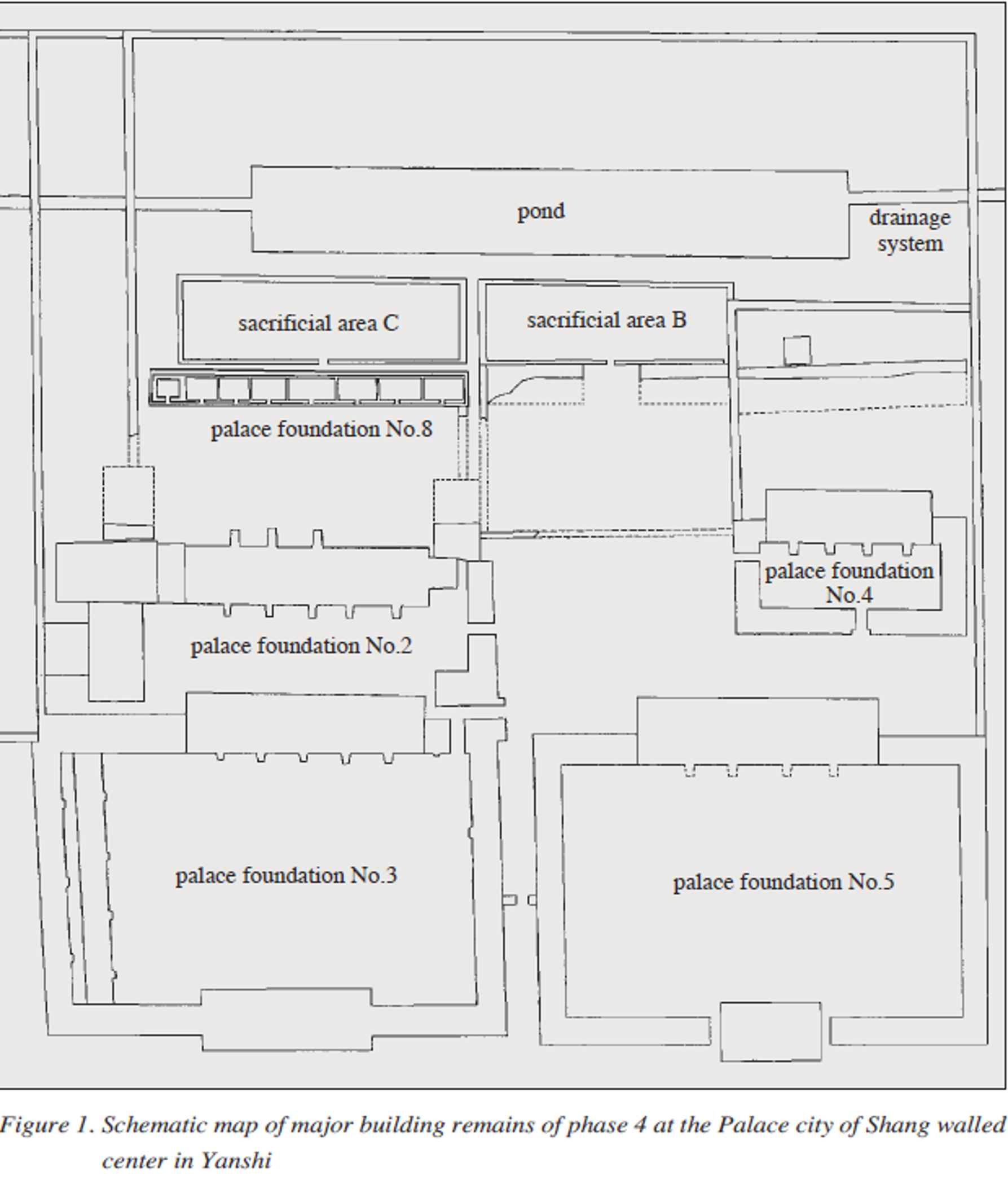
Major schematic map of major building remains of phase 4 of the Palace/Temple Compound in Yanshi. Yanshi, Henan. Circa 1600 BCE. Note pond structure in the northern section of the compound.
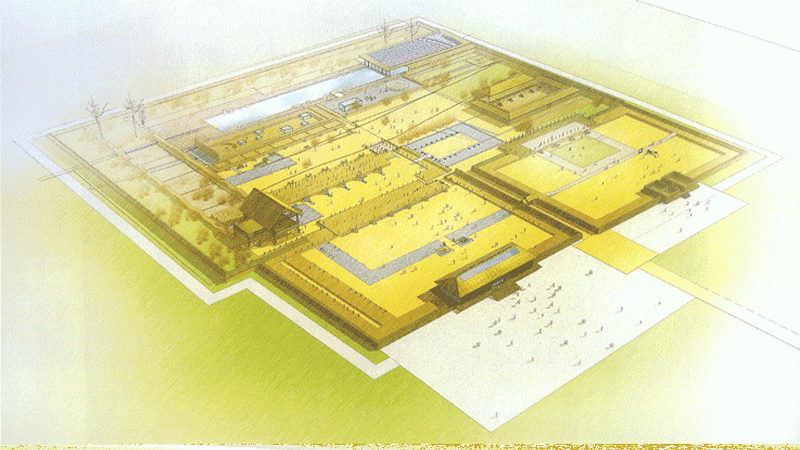
Digital reconstruction of phase 4 of the Palace/Temple Compound in Yanshi. Yanshi, Henan. Circa 1600 BCE
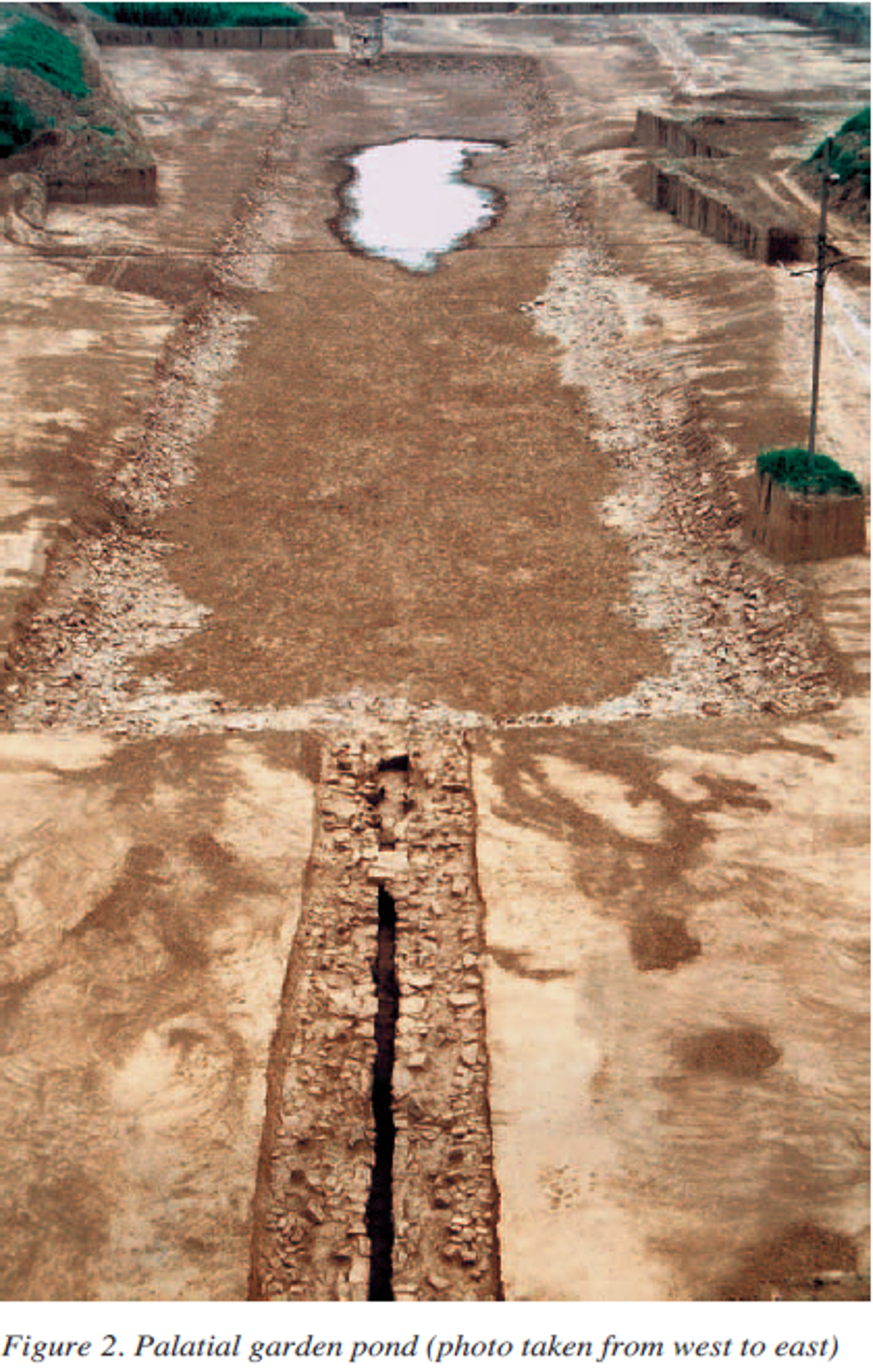
“Pond,” from Yanshi palace/temple compound, showing the Pond, and the water canals . (Photo taken from west to east) Yanshi, Henan Province. Erlitou Culture. C. 1600 BCE.
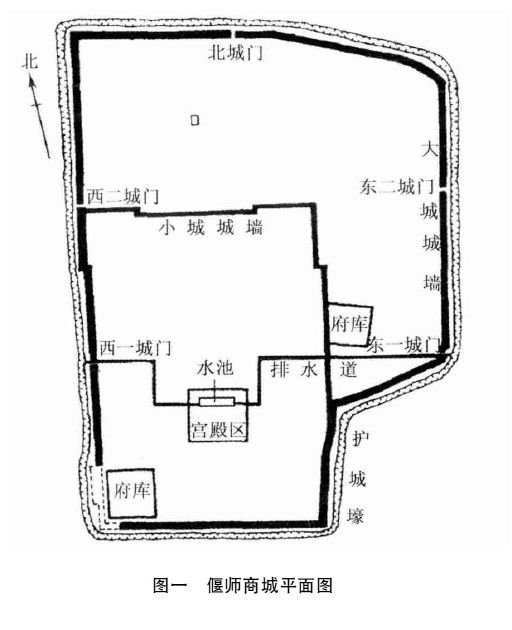
Plan of Yanshi City, with the Pond and the Palace Areas in the central, enclosed City Walls, and the Eastern and Western canals flowing into and from the moat that encircles the city wall. Height of city walls: 8 meters (26 ft; as tall as giraffe)
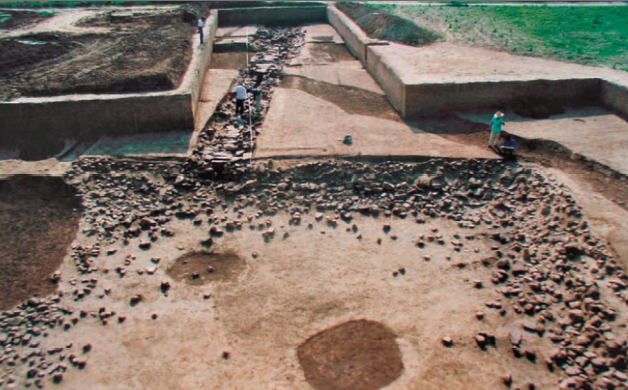
Part of palatial pond and an eastern waterway (photo taken west to east). Palace/Temple Compound at Yanshi, Henan. Circa 1600 BCE.
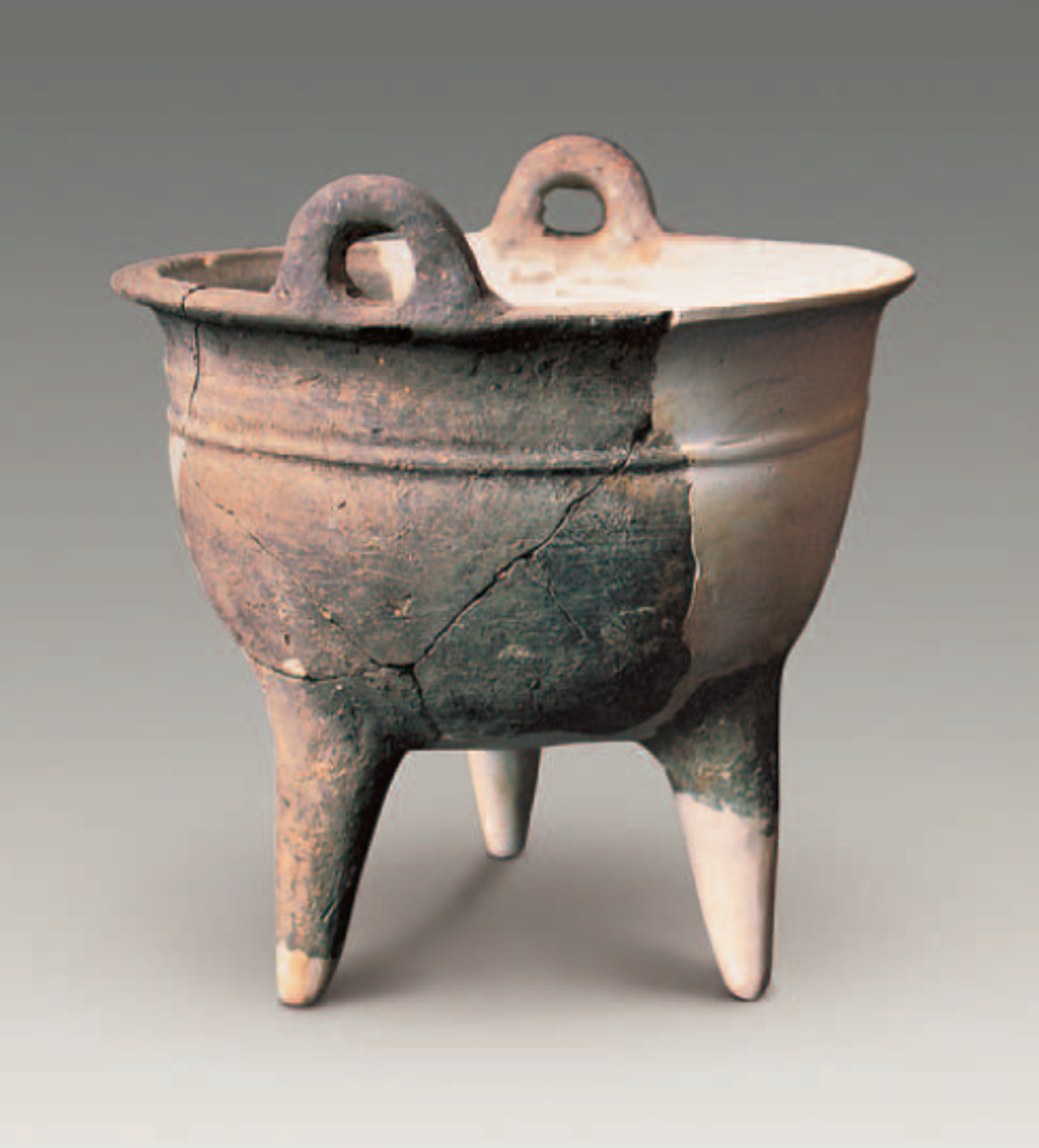
Ceramic tripod vessel excavated from pond site in Yanshi Temple/Palace Compound. Yanshi, Henan. Circa 1600 BCE.
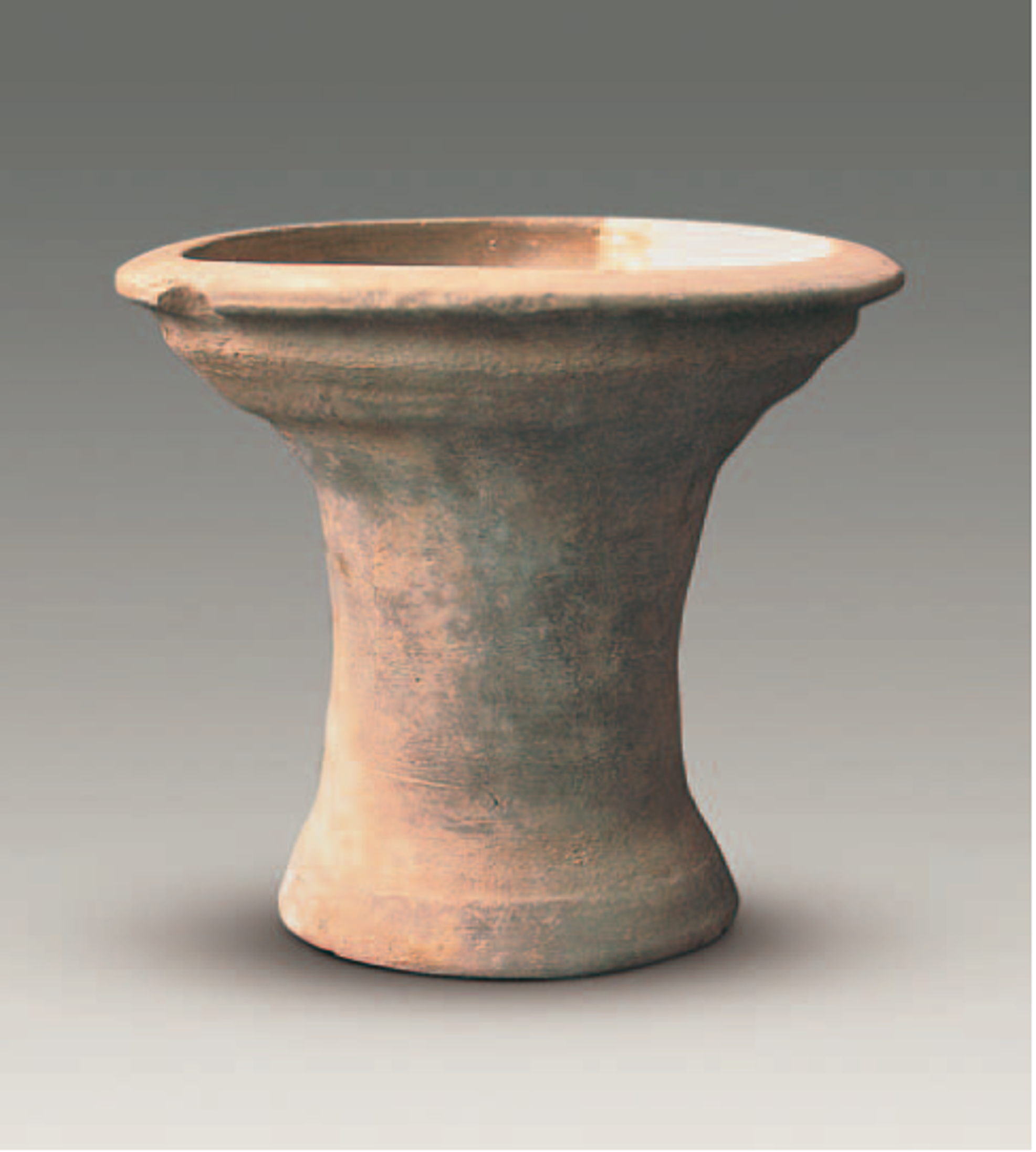
Ceramic stemmed plate excavated from pond site in Yanshi Temple/Palace Compound. Yanshi, Henan. Circa 1600 BCE.
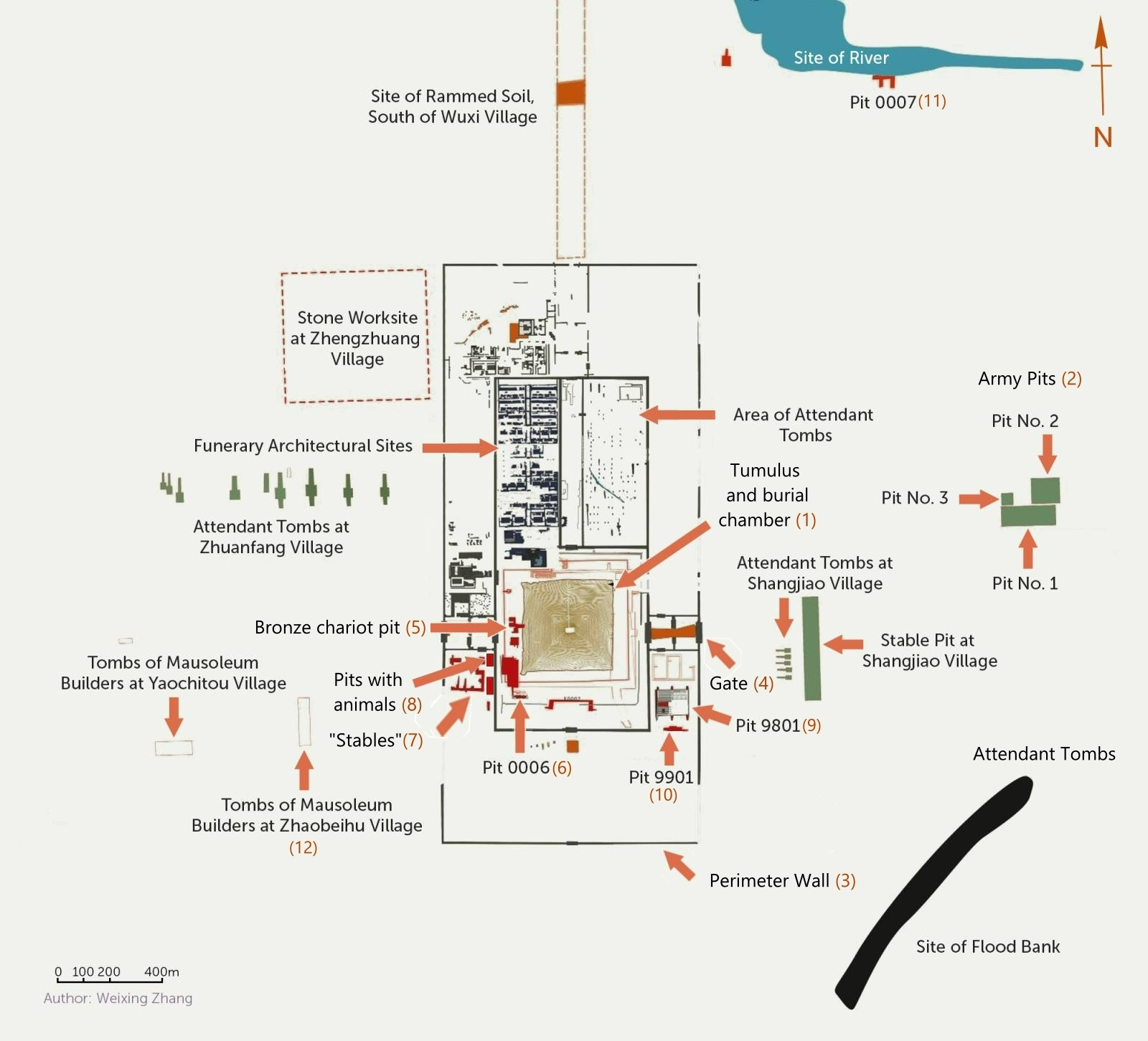
1. Tomb Mound (h: 57-87m; base:
350m x345 m)
(East)
2. Army Pits- Three pits of Terracotta Warriors
(West)
5. Pit of Bronze Chariot and Horses
8. Pits with Animals
7. Pit of the Stables
(South)
6. Pit of the Civil Officials (0006)
9. Pit of Stone Armors (9801)
10 Pit of Acrobats (9901)
(Northeast)
11. Pit of Bronze Birds (0007)
(Southwest)
12. Graves of Mausoleum Builders
Site plan of the First Emperor’s Necropolis, with excavated sites. Qin Dynasty (221-206 BCE). Note organization and logic of the site plans.
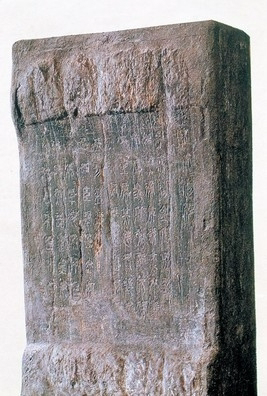
Stele [on Mt Zhifu] set up by the First Emperor of Qin, from “Biography of the First Emperor of Qin,” in Record of the Grand Historian. Han Dynasty (c. 91 BC). The stele proclaims the establishment of a new dynasty guided by laws and the standardization of weights, measures, writing, and road widths. From perspective of the First Emperor.
![<p>Stele [on Mt Zhifu] set up by the First Emperor of Qin, from “Biography of the First Emperor of Qin,” in Record of the Grand Historian. Han Dynasty (c. 91 BC). The stele proclaims the establishment of a new dynasty guided by laws and the standardization of weights, measures, writing, and road widths. From perspective of the First Emperor.</p><p></p>](https://assets.knowt.com/user-attachments/0e9671c1-50ee-4978-bcba-874b88806a38.png)
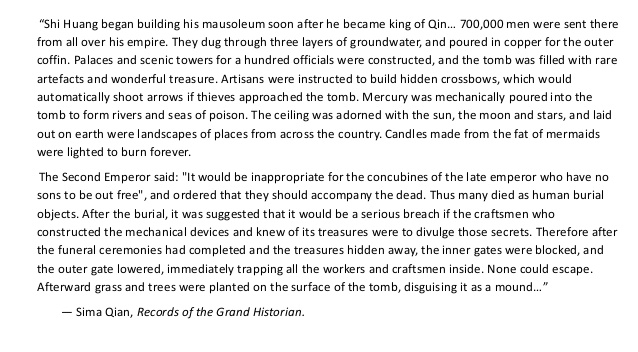
Description of the construction of First Emperor’s mausoleum, from “Biography of the First Emperor of Qin,” in Record of the Grand Historian. Han Dynasty (c. 91 BC).
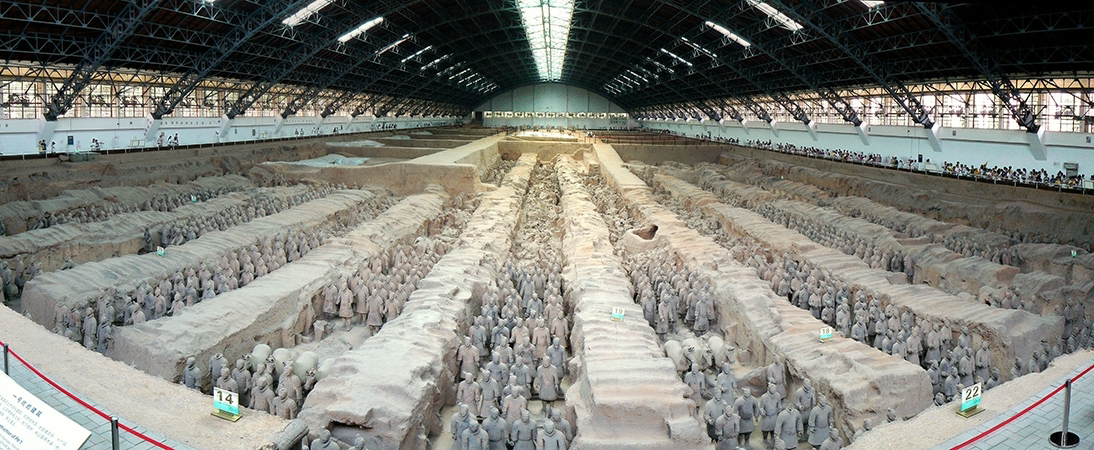
Terracotta Warriors in battle formation. Infantry. From Pit no.1, First Emperor’s Mausoleum. Earthenware. Qin dynasty (221-206 BCE). Shaanxi, China.
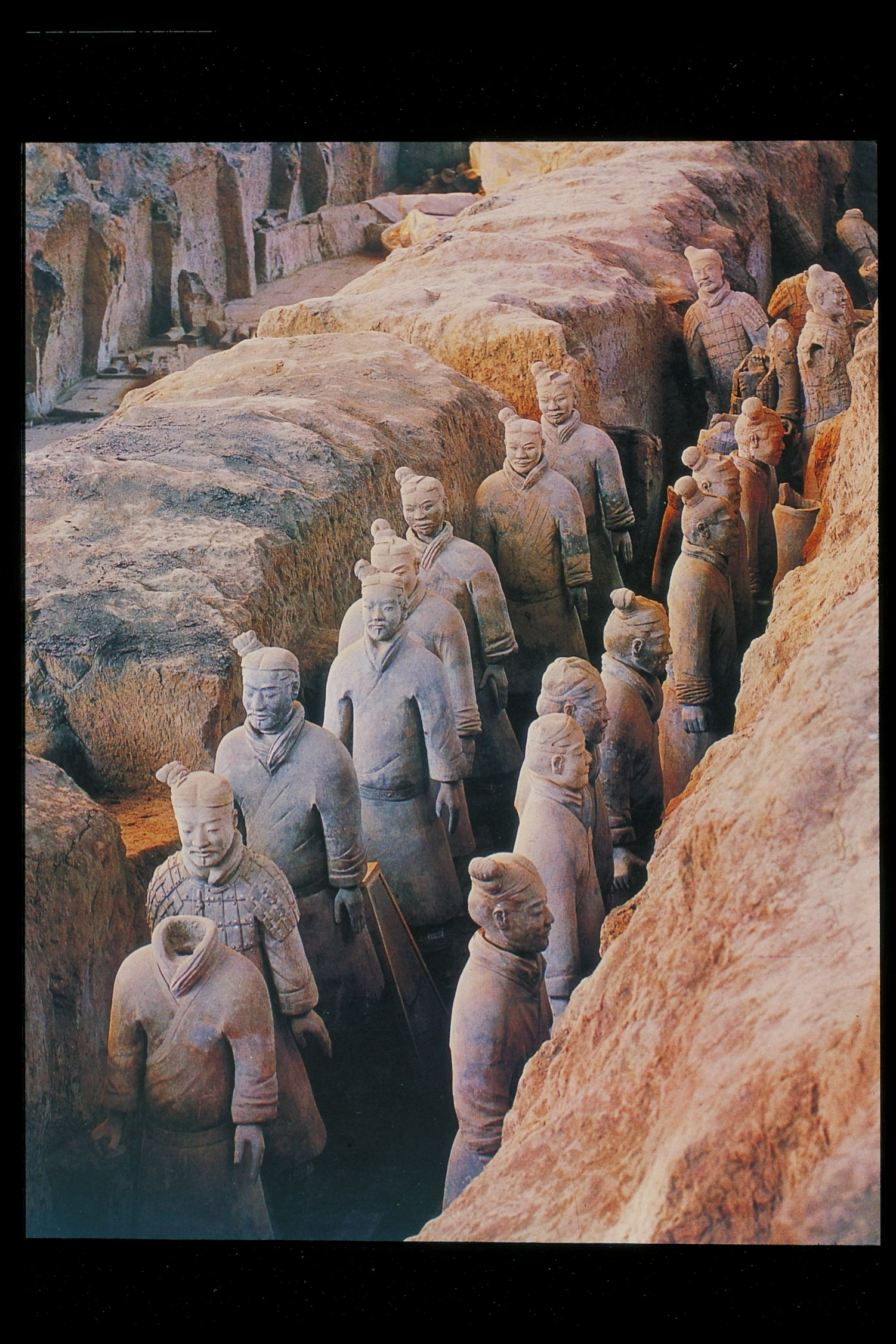
Terracotta Warriors in Pit 1 of the First Emperor’s Mausoleum. Outermost infantry are facing Outward (can see enemies), in battle formation. Qin Dynasty (221-206 BCE).
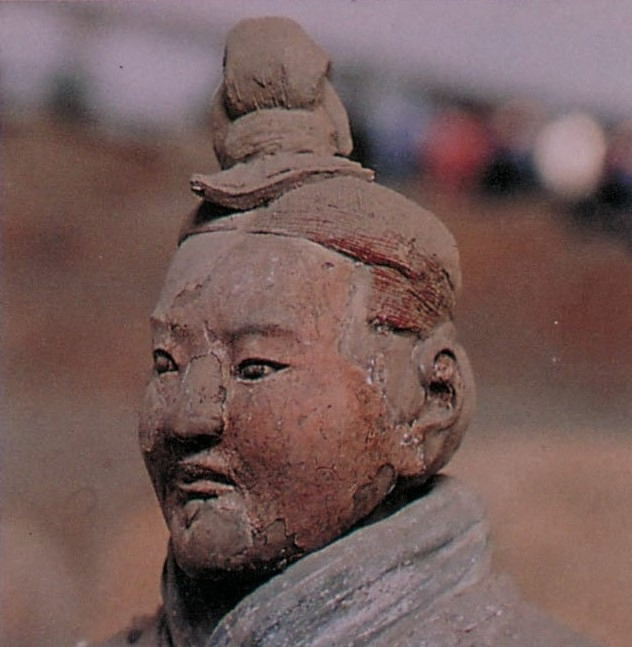
Detail: face of a terracotta warrior excavated from Pit no.1. First Emperor’s Necropolis. Qin Dynasty (221-206 BCE). Shaanxi, China. Earthenware. Face representing what is typically a southern Chinese person. Note differences in representing individuals and also differences in workshop styles.
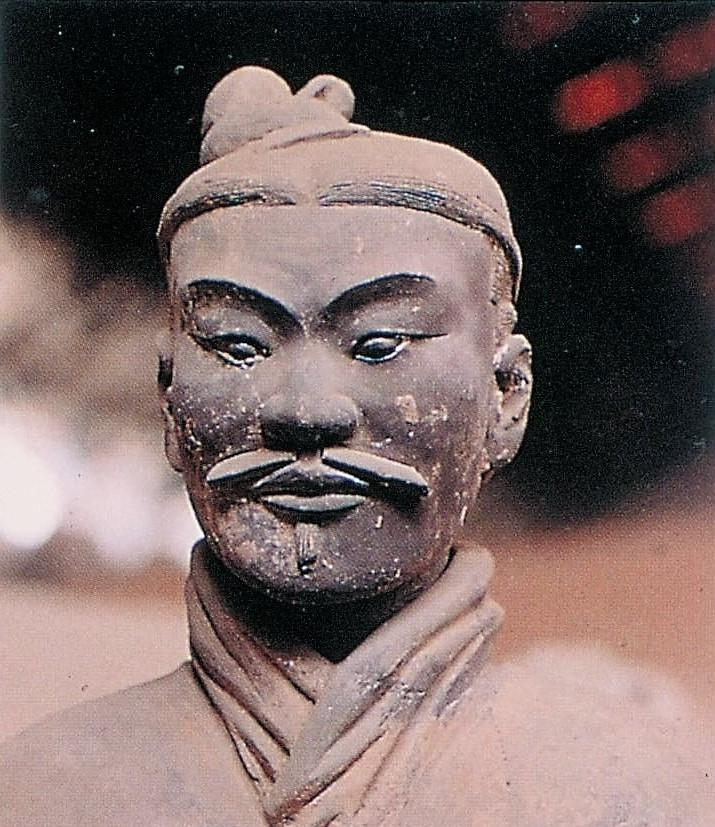
Detail: face of a terracotta warrior excavated from Pit no.1. First Emperor’s Necropolis. Qin Dynasty (221-206 BCE). Shaanxi, China. Earthenware. Face representing what is typically a northern Chinese person. Note differences in representing individuals and also differences in workshop styles.
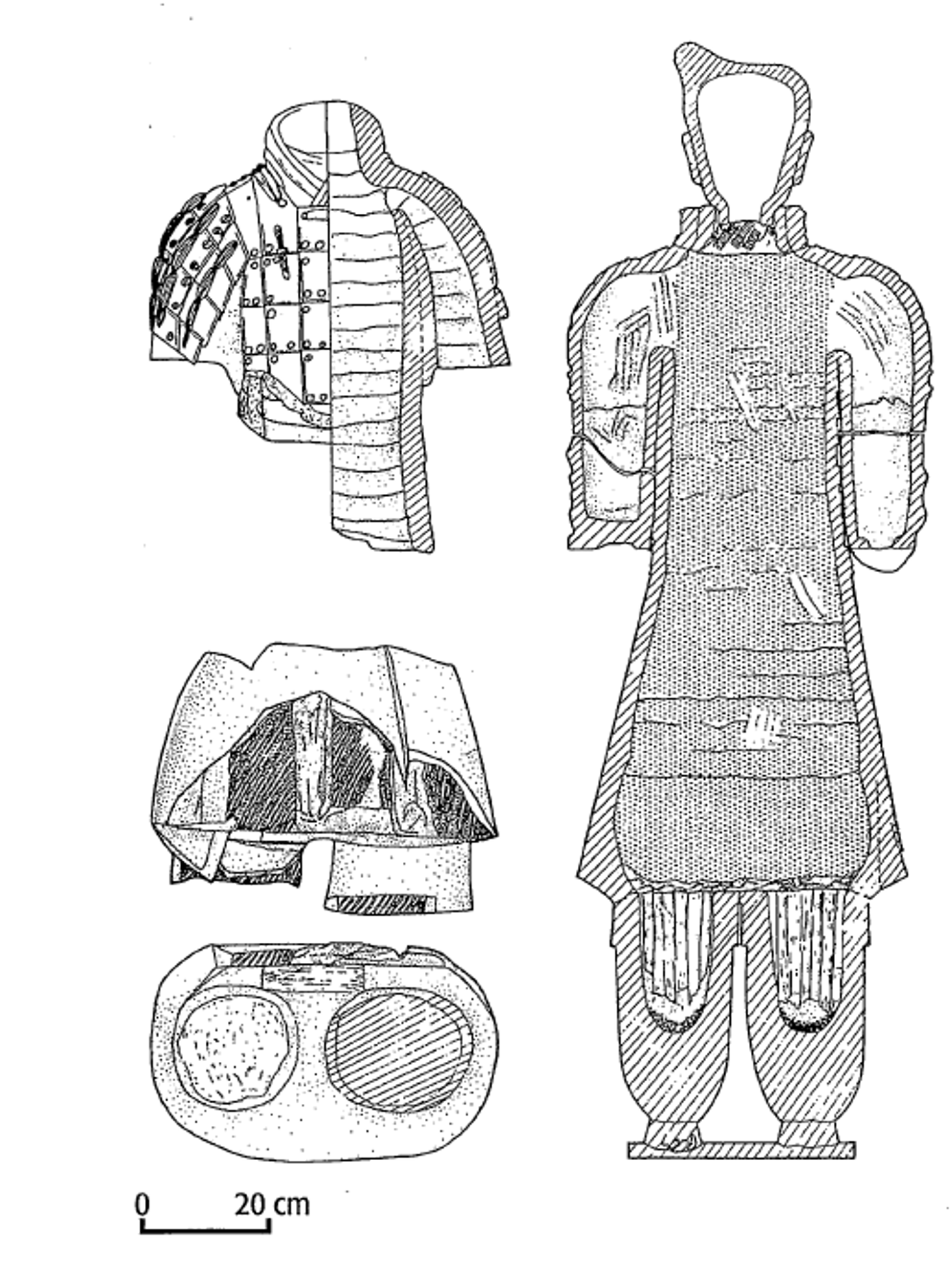
(Left diagram only) Modules for assembling terracotta warriors. First Emperor’s Necropolis. Qin Dynasty (221-206 BCE).
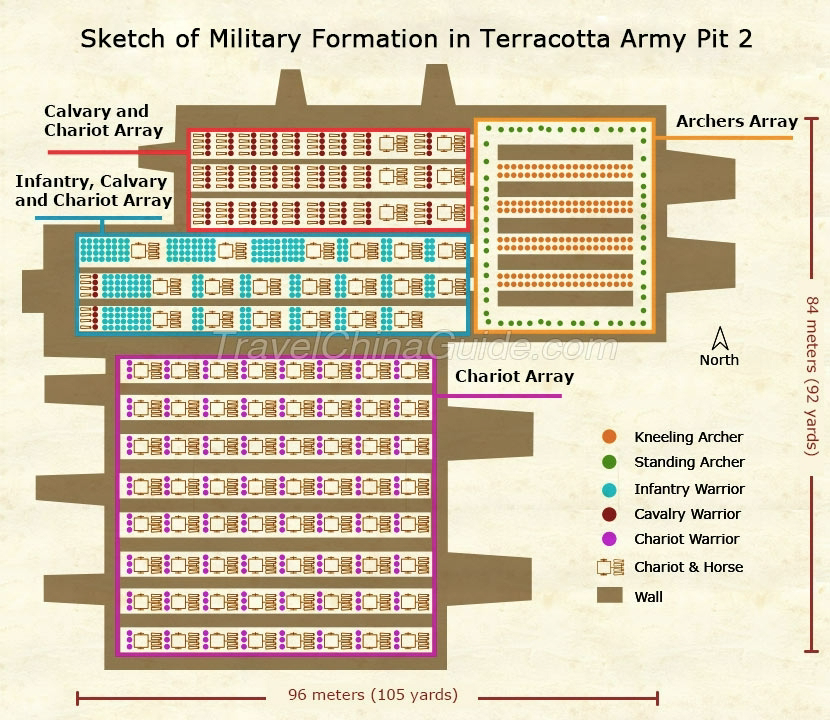
Sketch of Military Formation inTerracotta Army Pit 2. First Emperor’s Mausoleum. Qin dynasty (221-206 BCE). Shaanxi, China. Made up of archers, chariots, infantry, and cavalry. Yet the way it’s organized does not make as much sense while attacking enemy: the most common opinion about pit 2 is that it is a large camp instead of an actual army. It is believed to be more of a staging or drilling area.
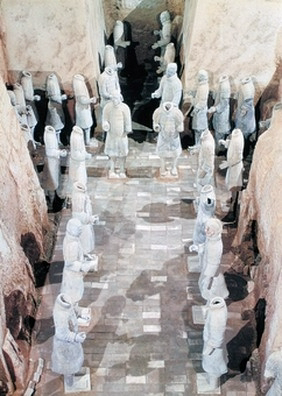
Pit 3, warrior formation 3. First Emperor of Qin’s Mausoleum. Qin Dynasty (221-206 BCE). Shaanxi, China. Pit 3 seems to be the command center of the army, with a chariot, a number of guards, and high ranking military officials. The general (or emperor?), however, still is missing.
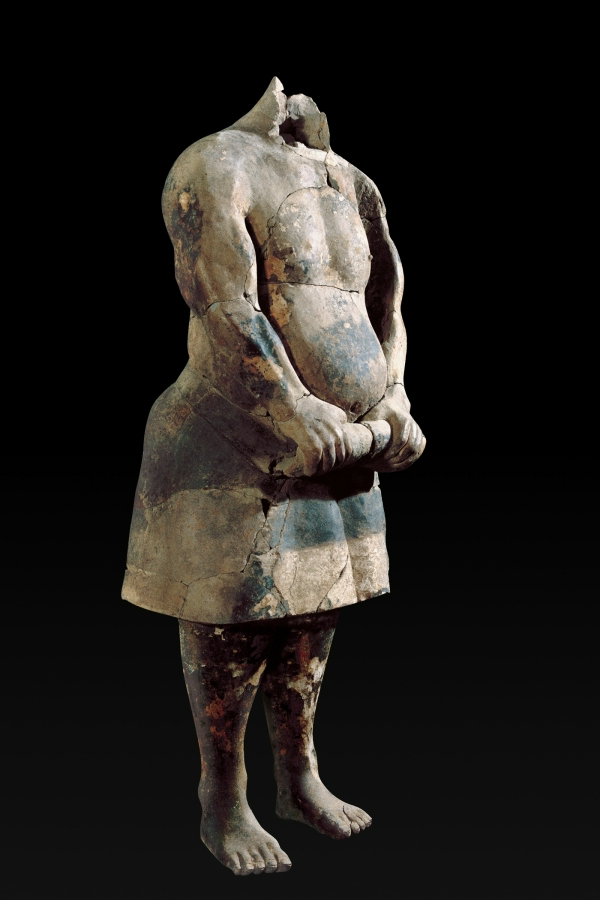
Strong Man. Qin Dynasty (221-206 BC). Terracotta. Excavated from “Pit of the Acrobats” (Pit K9901) in the First Emperor’s Necropolis. Shaanxi, China. Note the extreme realism with which this body and muscles are modelled; bare torso and clothing are non-Chinese.
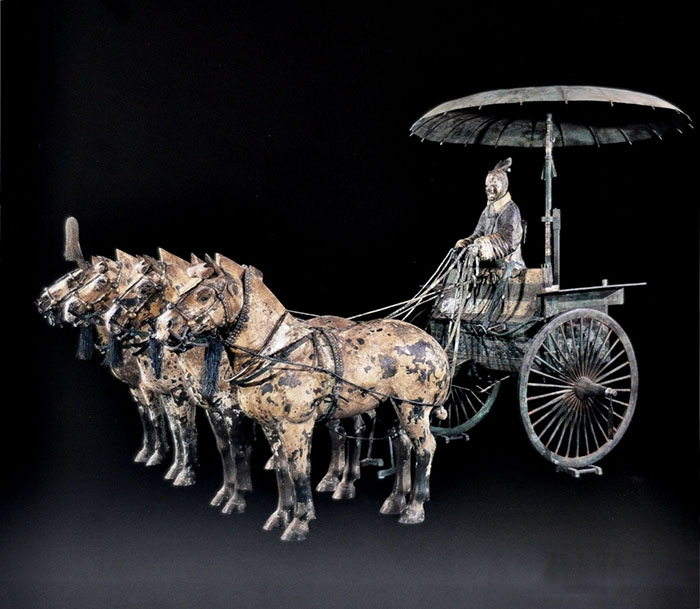
Bronze Chariot with driver to guide the emperor’s carriage. Bronze. Qin Dynasty (221-206 BCE). In Burial pit west of tomb mound with the bronze carriage. Half life size. Shaanxi, China.
Note: there is a crossbow next to the driver. From Museum of Terracotta Soldiers and Horses:
•Qin artisans employed a variety of exceptional techniques during the manufacturing process, including casting, soldering, and riveting. The bronze chariots and horses consist of over 5,000 individual components, each fully independent.
•Innovatively, craftsmen broke down complex parts into simpler pieces, manufacturing these separately before assembling them into a cohesive whole. For instance, the horse’s headstall is constructed from 82 and 78 tiny gold and silver tubes, each flat and measuring just 0.8 centimeters (0.3 inches) long.
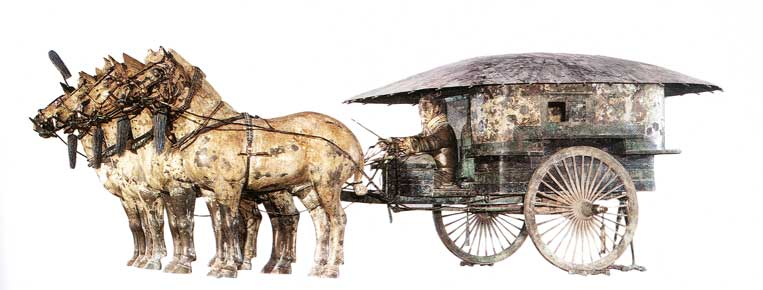
Bronze Carriage with horses in burial pit west of the First Emperor’s Tomb Mound. Qin Dynasty (221-206 BCE). Shaanxi, China. Bronze, half life size. The carriage has a circular roof with a square base – symbolizing Heaven (round) over Earth (square). The carriage body itself is decorated with cloud like patterns, symbolizing vehicle to take one (here, the Emperor) to the afterlife. From Museum of Terracotta Warriors and Horses:
•The two excavated chariots feature stunning colored designs that highlight their beauty and grandeur. These chromatic decorations cleverly mask
any signs of repairs and also help to slow down the oxidation of the bronze.
•The primary color is white, with blue and green being frequently used on the bronze carriages. The eight white horses attached to the chariots
have pink mouths and nostrils, while the drivers are depicted with blue-black hair, pink faces, and long sky-blue robes.
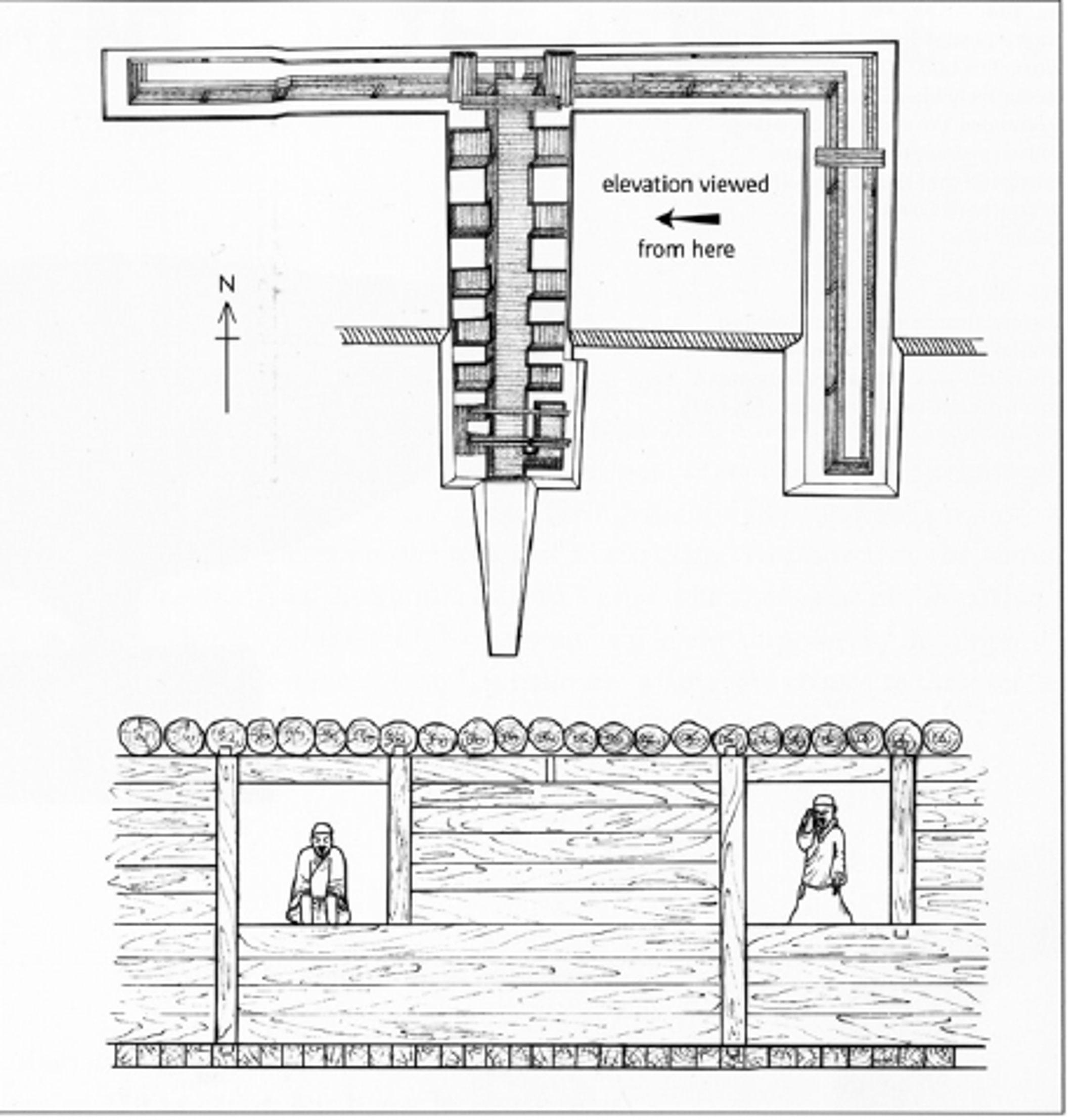
Layout of the Bronze Birds Pit (Pit K0007), northeast of the First Emperor’s Tomb. Qin Dynasty (221- 206 BC) Shaanxi, China. The Pit is consisted of three areas, of which 46 bronze waterfowls were found in Area I (simulating a riverbank).
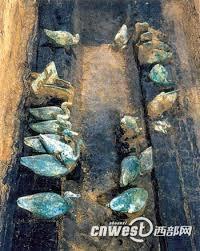
Area I of Pit K0007 (simulating a riverbank, gentlewave pattern) northwest of tomb mound. Qin Dynasty(221-206 BCE). First Emperor’s Necropolis
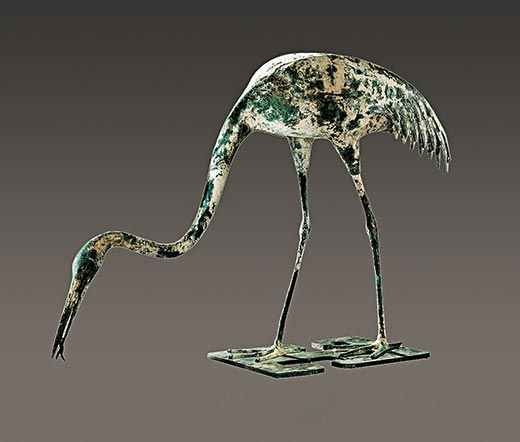
Bronze Crane. Bronze. Excavated from Area I in the Bronze Birds Pit (Pit K0007), northwest of tomb mound. First Emperor’s Necropolis. Shaanxi, China. Qin Dynasty (221-206 BCE). Some remaining white paint on the object. Made with lostwax method more popular in the Mediterranean; new bronze casting technique never before seen in China. Notice the live worm or small fish that it just caught, as the sculpture seems to capture a moment in time.
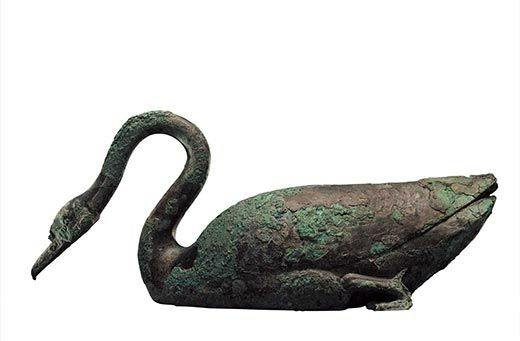
Bronze Swan, from Area I, Bronze Bird Pit (Pit. K0007), northwest of First Emperor’s Mausoleum. Qin Dynasty (221-206 BCE).
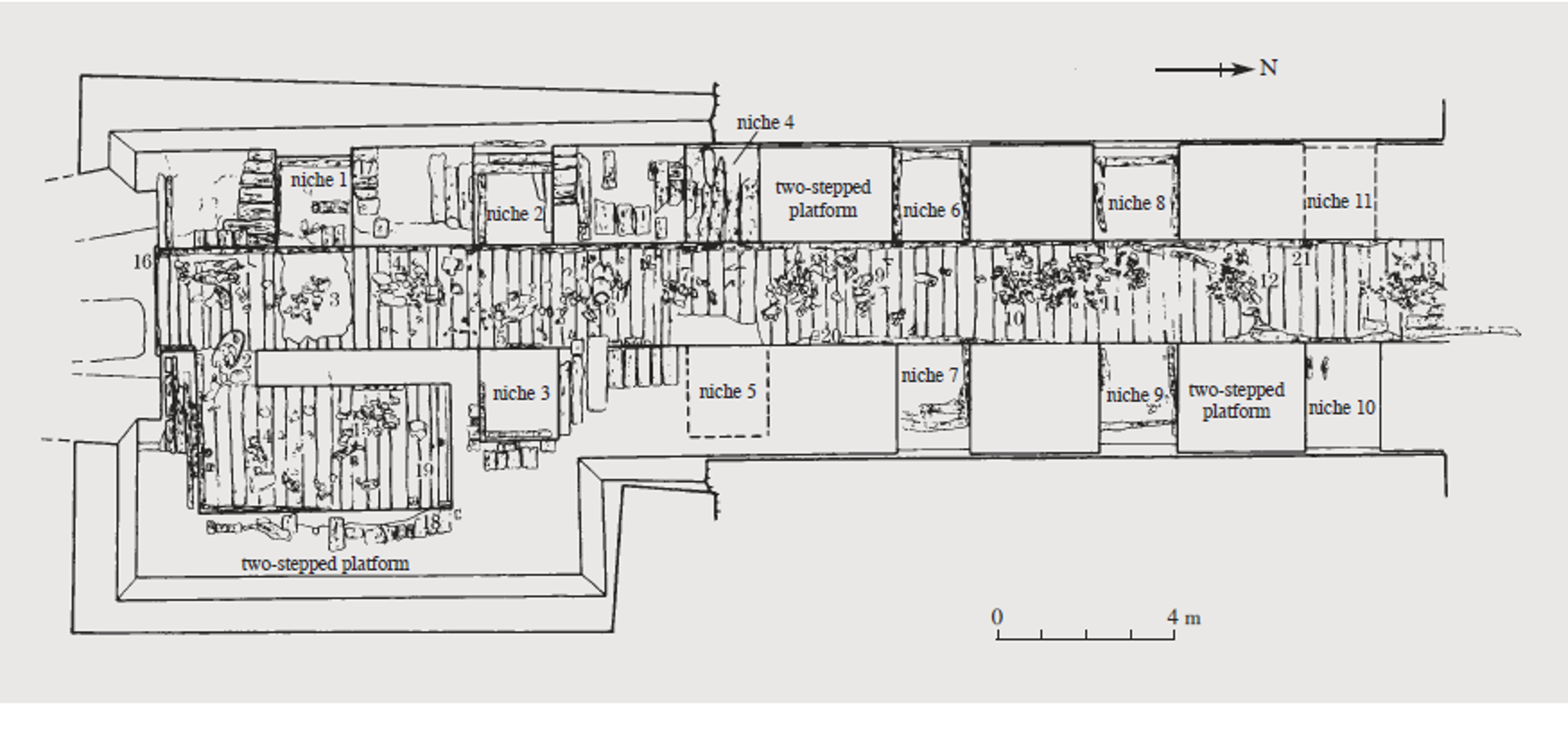
Area II, from Pit K0007 with side room and eleven symmetrically arranged niches (1.52 m from floor). Qin Dynasty (221-206 BCE). First Emperor’s Necropolis. 15 terracotta figures found in this area, along with 260 pieces of small artefacts: [silver piece shaped like a fingernail; over 200 bronze slender linear shaped pieces; 9 pieces of bone objects]
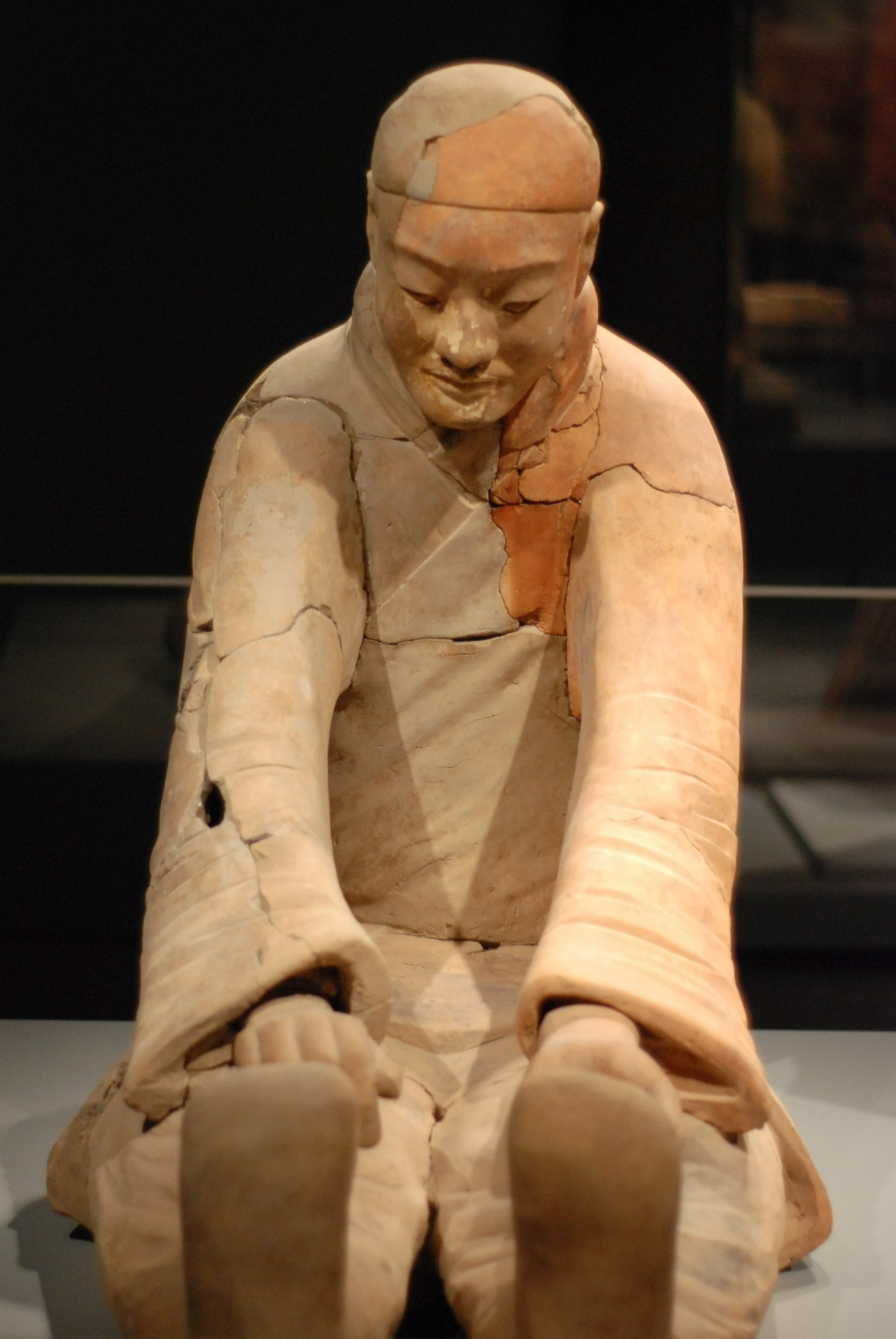
Terracotta figure in seated in a relaxed position, found in Area II, Pit of the Bronze Birds (K0007). Earthenware. Qin Dynasty (221-206 BCE). First Emperor’s Necropolis. Shaanxi, China.
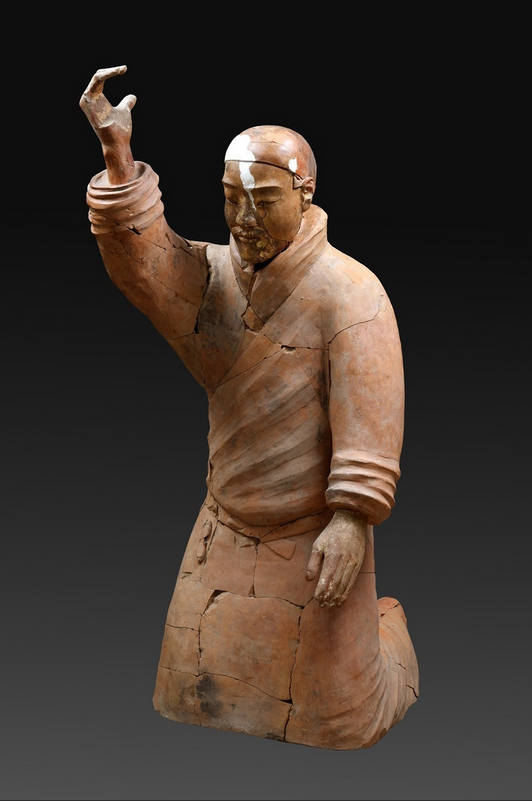
Terracotta figure in a kneeling position with right arm lifting up; found in Area II, Pit of the Bronze Birds (K0007). Earthenware. Qin Dynasty (221-206 BCE). First Emperor’s Necropolis.