Dairy Health Management: Hypocalcemia, Metritis, and Abomasal Displacement
 Call Kai
 Learn
Learn Practice Test
 Spaced Repetition
 Match
Match Flashcards
 Knowt Play
1/22

There's no tags or description
Looks like no tags are added yet.
Name | Mastery | Learn | Test | Matching | Spaced | Call with Kai | Chat |
|---|
No analytics yet
Send a link to your students to track their progress
23 Terms
What is hypocalcemia?
A condition characterized by low blood calcium levels.
What is calcium homeostasis?
The maintenance of a constant concentration of calcium in the body.
What are the important functions of calcium in the body?
Muscle contractions, nerve conduction, bone formation, and blood clotting.
Where is 99% of calcium stored in the body?
In the bones.
Which hormones regulate blood calcium levels?
Parathyroid hormone (PTH), calcitriol (bioactive Vitamin D), and calcitonin.
What effect does calcitonin have on blood calcium levels?
It decreases blood calcium levels.
What is the role of parathyroid hormone (PTH) in calcium regulation?
It mobilizes calcium stored in bones.
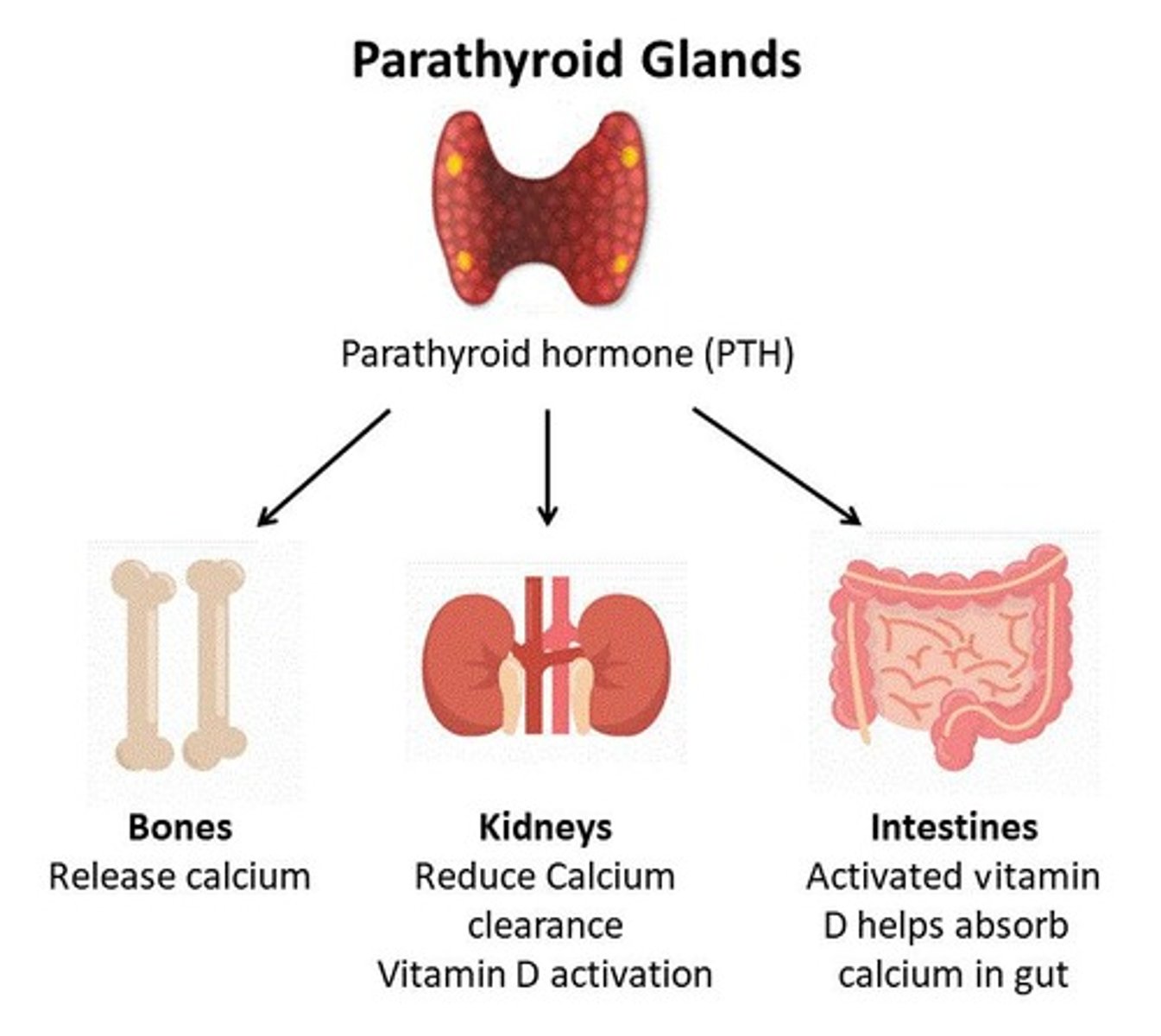
How does bioactive Vitamin D affect calcium levels?
It increases calcium absorption in the gastrointestinal tract.
What is the normal blood calcium level for a lactating cow?
8.4 to 10.2 mg/dl.
What blood calcium level indicates hypocalcemia Stage I?
6.5 to 7.5 mg/dl.
What are the signs of hypocalcemia in cows?
Visible symptoms include the cow standing, being in a sternal position, or being down and losing consciousness.
What is the treatment for hypocalcemia?
Oral treatments or IV treatment to raise blood calcium levels.
What is a downer cow?
A cow that is unable or unwilling to stand for more than 12 hours.
What is a DCAD diet?
A diet that balances dietary cations and anions to prevent milk fever in dairy cattle.
What is metritis?
A uterine infection usually occurring 10-14 days post-calving.
What are common signs of metritis?
Foul-smelling discharge and inconsistent fever.
What is displaced abomasum?
A condition where the abomasum shifts position, often occurring within the first 2 months after calving.
What causes abomasal displacement?
Space changes post-calving and reduced abomasal motility.
What are the potential consequences of hypocalcemia?
Impaired muscle function, retained placenta, dystocia, and increased risk of metritis and mastitis.
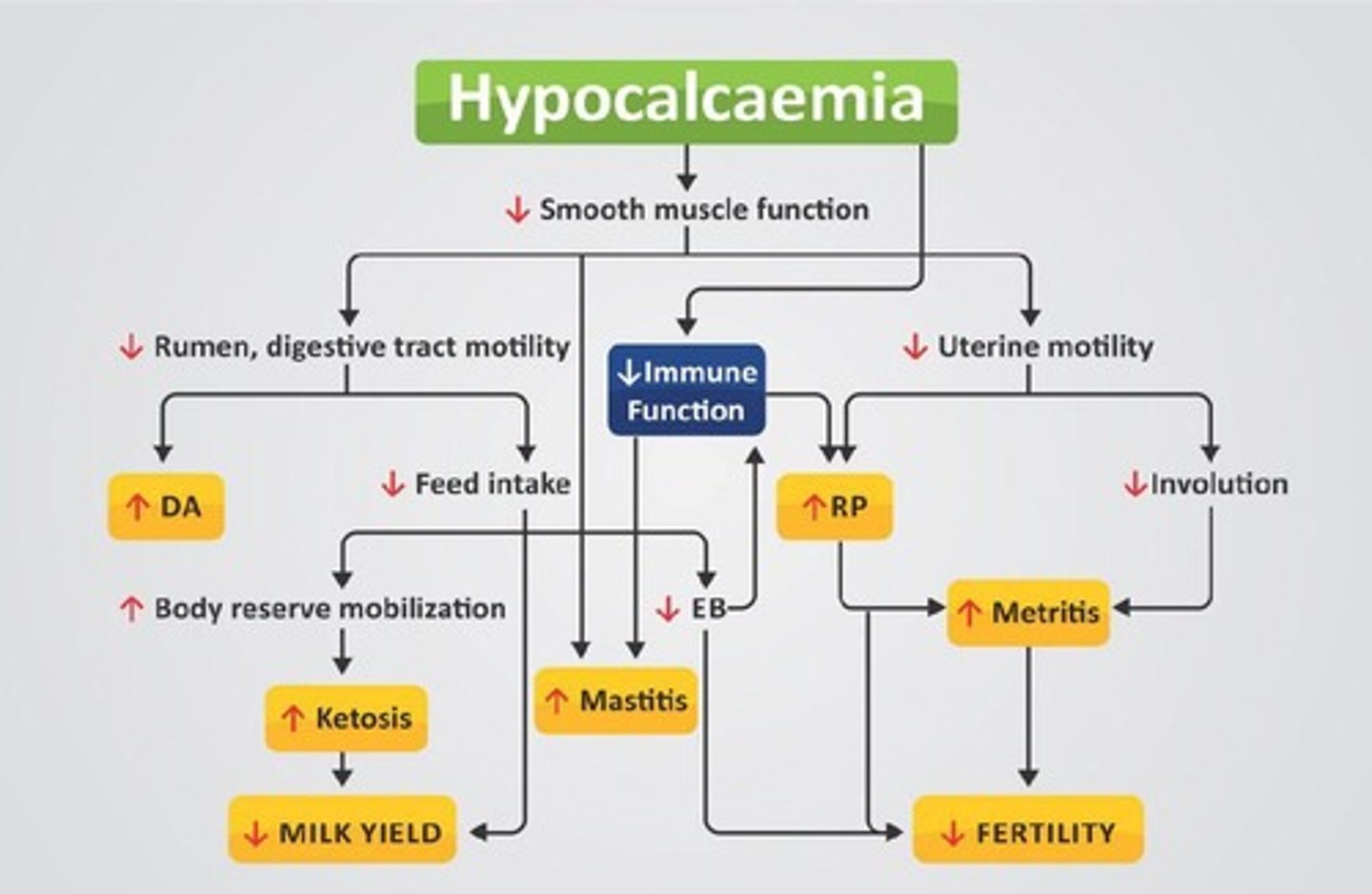
What is the estimated cost of milk yield reduction due to hypocalcemia?
4.1 kg per day, costing approximately $315 per case.
What are the stages of hypocalcemia based on blood serum calcium levels?
Stage I: 6.5-7.5 mg/dl, Stage II: 3.5-6.5 mg/dl, Stage III: < 3.5 mg/dl.
What is the common early contaminant in metritis cases?
E. coli, particularly uterus-adapted strains.
What is the reported field cure rate for acute metritis with antibiotic treatment?
Approximately 74%.