Lecture 7 - skill, habit and expertise
 Call Kai
 Learn
Learn Practice Test
 Spaced Repetition
 Match
Match Flashcards
 Knowt Play
1/42

There's no tags or description
Looks like no tags are added yet.
Name | Mastery | Learn | Test | Matching | Spaced | Call with Kai |
|---|
No analytics yet
Send a link to your students to track their progress
43 Terms
automaticity
-specific properties of performance rather than skill - is an important component of skill
-tasks that can be performed quickly, effortlessly, relatively autonomously are thought to be automatic
conflict tasks (measuring automatic processing)
stroop
flanker → respond to the central arrow → slower RT and higher error on incongruent trials
simon → push the named button
go/nogo task → tests capacity not to respond
stroop task
-name colour
-have to overcome automatic processing of reading word in order to name the colour
-when there is conflict between colour and word speed and accuracy drops
stroop effect
-interference is the difference between the RTs to congruent and incongruent conditions
-slower RTs to incongruent information than congruent information when naming the ink colour suggests automaticity of word reading interferes with the processing of the ink colour
translation account of stroop interference
-stroop task verbally respond to visual written word
-durgin argues that the match between the verbal stimuli of written word and verbal based response when asked to read the word requires less processing than when asked to name the ink colour
→ mismatched stimulus response
-when naming the ink colour the target information of ink colour must be translated into the appropriate verbal classification modality whereas the non-target information of the actual word is already in the verbal modality
mismatch condition (translation account)
-target stimuli sensory visual
-response is verbal
-mismatch between S_R
-translation from S_R format is needed and this elicits longer RT
match condition (translation account)
-target stimuli verbal
-response is verbal
-similarity in S_R and no translation is needed
response manipulations
-changed format of the response - respond to stimuli using a computer mouse to point to coloured patches
-represents a perceptual motor task rather than a categorical task requiring translation from verbal information into categorical or visual information
-supports response-compatibility model of stroop interference
durgin - method (response manipulations)
-point to ink patch that matches meaning of word - word reading
-point to ink patch that matches colour of the ink the word was written in
-neutral task → colour word was in grey ink and furniture words presented in coloured ink
-only incongruent and neutral conditions
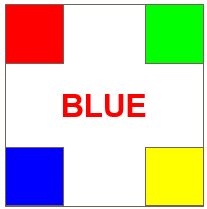
durgin - conditions (response manipulations)
point to the colour patch that matches the word meaning
-target stimuli stimuli verbal and response sensory-visual → mismatch between S_R and translation from S_R format is needed
task is to point to the colour patch that matches the colour of the ink
-target stimuli sensory-visual and response is sensory-visual → match between S_R and no translation needed
durgin - results (response manipulations)
-colour interfered with word-naming/reading when asked to point to the colour patch consistent with the word meaning than the neutral condition
-was not observed on the point to the colour patch that matched the ink → reverse stroop effect
durgin - conclusion (response manipulations)
-against automaticity theory as pointing to the ink is not automatic
-assuming automaticity is based on the fact of word reading as being the fundamental aspect of automatic process
-S_R compatibility is key to automaticity → not just a sensory process but about the associations between stimulus and response
-when S_R formats are similar then this supports automaticity
attentional manipulation
-traditional stroop task the argument that automaticity of word reading that can explain the stroop effect has been based on participants paying attention to whole worlds
-words thought to activate semantic and lexical processing
-so attention is paid across whole world
besner (attentional manipulation)
-attention directed to a single letter in the word - only part of the word in a coloured ink
-stroop effect manipulated when only one letter was coloured
-suggested that paying attention to part of the word did not lead to automatic processing of the word at a semantic level
besner study 2 (attentional manipulation)
-attention was directed to a single letter in the word using an arrow
-stroop effect was reduced or eliminated by cueing one letter of a coloured word
besner conclusion (attentional manipulation)
-automaticity of word reading is not independent of all other cognitive processes
-where you pay attention and how you pay attention seems to affect whether word reading appears to be automatic
stimulus onset asynchrony
-suggests rather than automaticity it is that words are processed more quickly than ink colour
-word is presented at the same time as the ink and the word is written in the same colour of the ink
stimulus onset asynchrony manipulation
-presented colour and word components of stroop stimuli at different times
-stroop effect regardless of when the word stimuli until:
300ms and 400ms the irrelevant stimulus (word) is presented too late to interfere with the process of ink naming
-no amount of head start for colour information produced interference on word reading
stimulus onset asynchrony manipulation - conclusion
-speed of word processing being faster than ink processing cannot explain these findings
-more to automaticity than just speed of processing
macleod - method (training on stroop task)
-trained participants for 2, 5 or 50 hours to name novel shapes with colour words
-four phases:
baseline naming of the four familiar colours
training in the naming of four novel shapes by using the names of the same four colours
naming the colours when they appeared as shapes
name the shapes when they appeared in colour
macleod - results (training on stroop task)
2 hours → colours interfere with naming shapes → naming the colour is the more dominant, automatic process
5 hours → colours interfere with naming shapes and vice versa
50 hours → shapes interfere with naming colours → naming the shape is now the more dominant automatic process
macleod - conclusion (training on stroop task)
-process is not either completely automatic or controlled but can make something automatic with practice
-suggesting automaticity is dimensional
-most things may have potential to become automatic with enough practice
skills or habits
-debate as to whether:
skills are habits
habits are skills
whether the two are different
habits
-over learnt stimulus-response pairs
-triggered by the environment
-rapid
-stereotyped - low attention demands
-inflexible
-ballistic
skills
-interplay between automatic and cognitive control processes
-sequenced
-flexible
-intended
bebko (skills and habits)
-jugglers and novices
-juggling under different conditions
-jugglers still superior than non-jugglers
-skill is maintained and has flexibility → habits do not
typing as a skill
-learnt process and involves both automatic and controlled processing
-measured via error through mismatch between intended output and actual output
-depends on translation of words into motor commands for keystrokes and relatively automatic timing and execution of keystrokes → errors observed through kinesthetic feedback from keystrokes
logan - method (typing as a skill)
-participants copy-typed individual words and received feedback on their action
correct condition → typed word correctly and feedback they were correct
error condition → typed word incorrectly and feedback they were incorrect
inserted error condition → feedback they made an error when they typed correctly
corrected error condition → made typing errors and feedback corrected this
logan - assessing performance (typing as a skill)
self report → subjective perception of performance - are they aware of actual performance or influenced by feedback?
inter-key interval → typing speed as a measure of motor response - hitting keys is automatic so motor response is unlikely to be conscious, is speed of typing influenced by errors?
logan - results (typing as a skill)
correct condition → correctly state they made a correct entry
error condition → most aware that they had made an error
inserted error → didn’t notice the error was inserted, believed they had typed incorrectly when the feedback falsely stated they had made an error → illusion of authorship
corrected error → most didn’t notice the error correction spontaneously, participants believed they had not made errors when they had
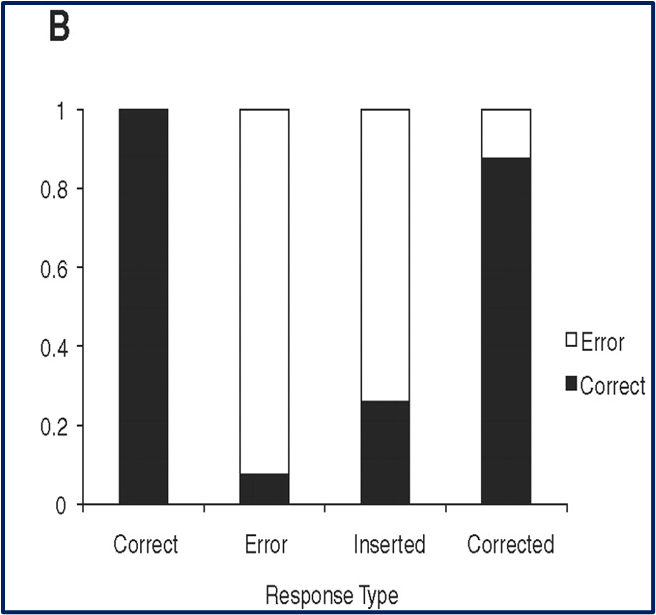
logan - inter key interval results (typing as a skill)
-participants slowed when they made a real error
-participants didn’t slow when they were incorrectly told that they had made an error
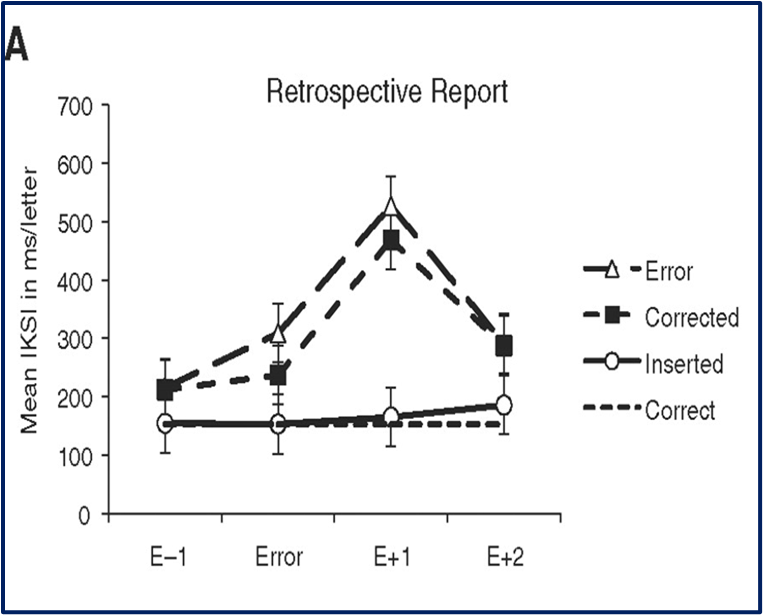
logan - conclusion (typing as a skill)
-typing skills are controlled by hierarchical loops, which are sensitive to different forms of feedback
outer loop → language comprehension and generation decides on the words to type
inner loop → translates words into finger movements
-frees attention to regulate the hard parts
-complex behaviours are neither entirely automatic or controlled
barriers to skill
arousal
choking
levels of attention
yerkes-dodson law
-need some arousal to perform optimally
-but too much arousal leads to decline in performance
-with practice can perform with more arousal before performance declines
choking (barriers to skill)
-pressure to perform at high level prompts attention to step-by-step elements of a well learned skill can lead to errors and slowing of performance of skill
football dribbling (choking)
-experts perform bets under dual-task conditions but only with their dominant foot → but the attentional focus on dribbling hinders performance, distraction improves performance
-novices always best under ‘skill focussed’ conditions and distraction hinders performance
hierarchical control (barriers to skill)
-misallocation of attention can disrupt performance
-typists told not to type letters typed by one hand-meant focus was on inner loop - performance declines
ironic processing (barriers to skill)
-accounting for disruption in processing
-thinking hard interferes with the process of doing it
-when mental capacity is reduced can lead to opposite to intended goal
-harder you try the more errors you make
deliberate practice
-effortful extensive practice
-breaks skill into components
-focus on reducing errors
-use of targets which evolve as skill increases
-individually tailored training
elite violinist practice
-4-5 hours practice a day
-naps
-feedback/coaching
-trained the difficult stuff
errors in figure skating
-skaters who won gold made more training errors than those who win silver or bronze
-practiced beyond their current limit
ericcson
-stated 10000 hours practice needed to master
-never claimed practice was enough but that deliberate practice is the main influence on the development of expertise
-some evidence that 10000 is too many e.g., chess grandmasters at 12
macnamara
-practice alone does not make an expert
-those in higher percentile started off with higher scores and quick improvement
-practice alone more important than coaching