Marketing Research 4
 Call Kai
 Learn
Learn Practice Test
 Spaced Repetition
 Match
Match Flashcards
 Knowt Play
1/36

There's no tags or description
Looks like no tags are added yet.
Name | Mastery | Learn | Test | Matching | Spaced | Call with Kai |
|---|
No analytics yet
Send a link to your students to track their progress
37 Terms
What is the main focus of qualitative research?
To gain an understanding of attitudes and opinions by focusing on depth rather than breadth of information.
what does qualitative research aim to do?
Not measure “amount” of emotion, but give an indication of dominant feelings
How do quantitative and qualitative research differ in terms of variables?
Quantitative research looks at how independent variables (X) influence dependent variables (Y), while qualitative research focuses on the central phenomenon (Y) itself.
What are "stimuli" in qualitative research?
Materials used to elicit responses,
ranging from simple typed showcards to sophisticated TV advertisements.
What kind of sampling is typically used in qualitative research?
Small convenience or quota samples rather than rigorous, statistically meaningful samples.
What does the information sought in qualitative research relate to?
Respondent’s motivations, beliefs feelings and attitudes
What is the primary "instrument" for data collection in qualitative research?
The researcher.
approach to data collection
subjective and intuitive
data collection format
open-ended, allowing respondents to elaborate
types of info that can be collected
observations
interviews
documents
audio-visual materials
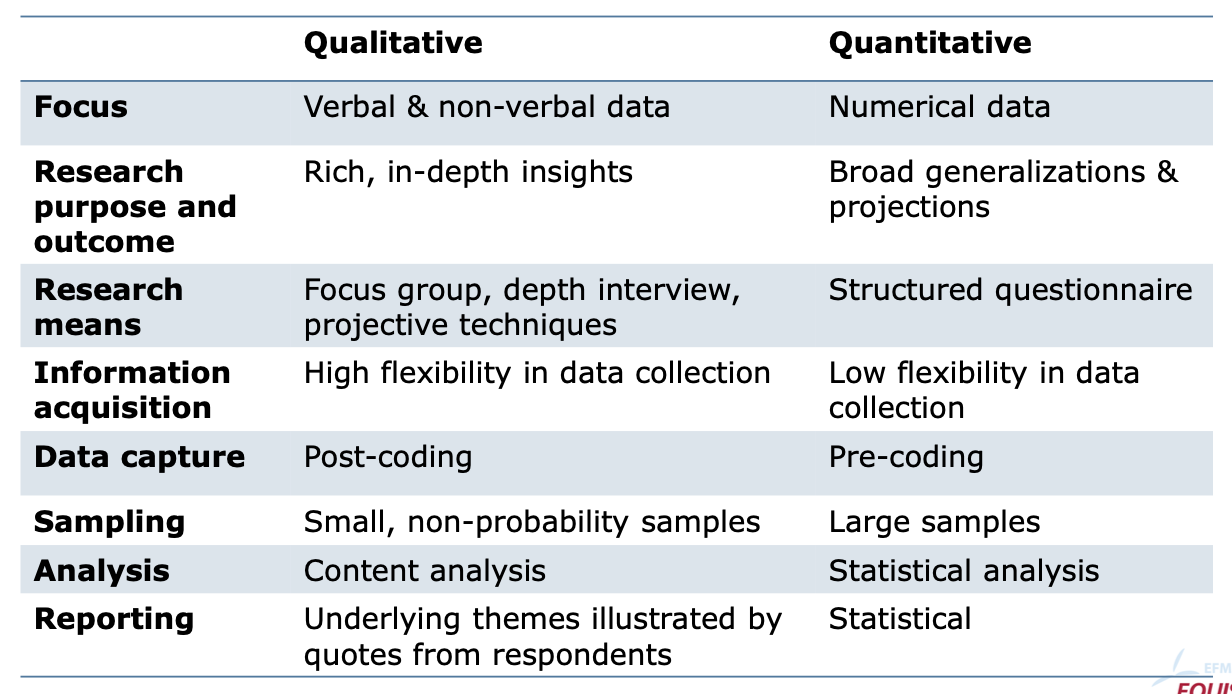
Qualitative vs Quantitative Research (Focus, research purpose, means, information acquisition, data capture, sampling, analysis, reporting)
Main goals of qualitative research
seeing through the eyes of ppl
develop complex picture of phenomenon
follow “scientific method” (problem, questions, method results)
flexibility and limited structure
let the design emerge
description & emphasis on context
concepts and theory grounded in data (inductive reasoning)
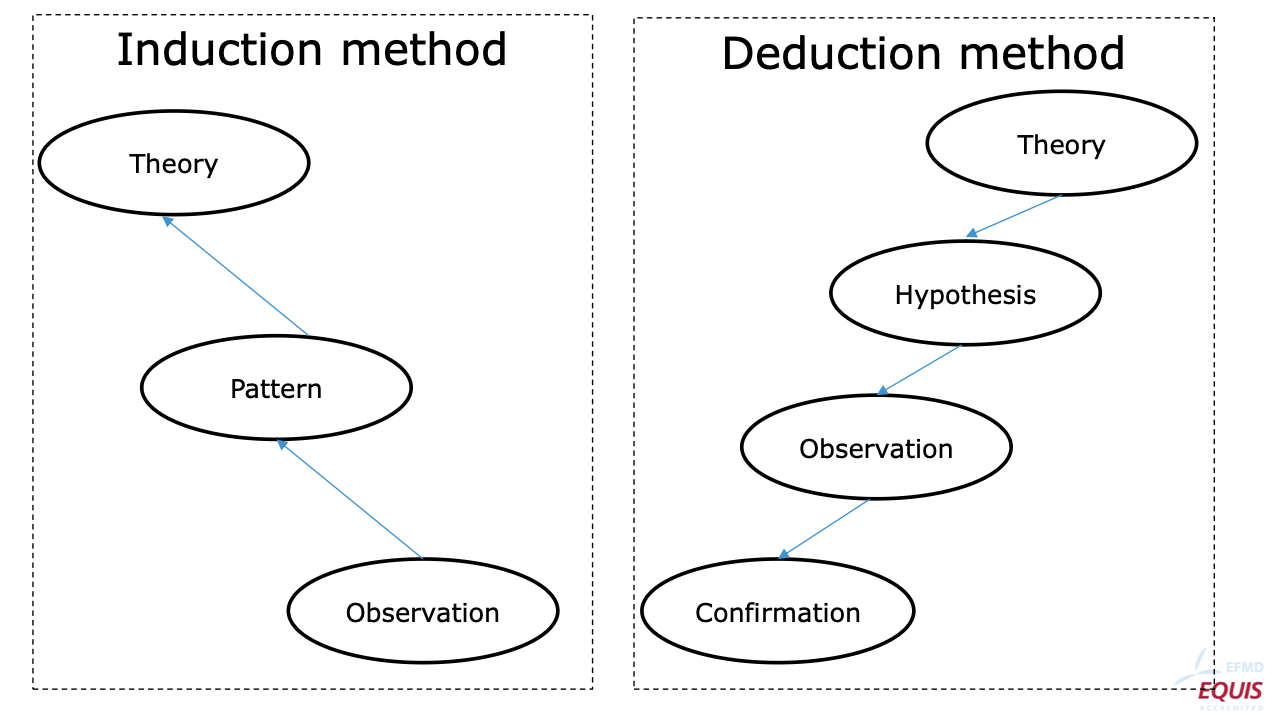
"Induction" vs "Deduction"?
Induction starts with observation to find patterns and build theory, while deduction starts with a theory to develop a hypothesis for observation and confirmation.
What is "theoretical/data saturation"?
The point in qualitative sampling where new cases are no longer selected because they bring no new information.
qualitative vs quantitative sampling
qualitative
always uses non-probability methods of sampling
subjectivity is involved
samples are NOT representative
sample size is more subjective (+ are not fixed at the beginning - theoretical/data saturation)
quantitative
should be REPRESENTATIVE
methodological compromise is made
Qualitative methods
focus groups
in-depth interviews
observation
projective techniques
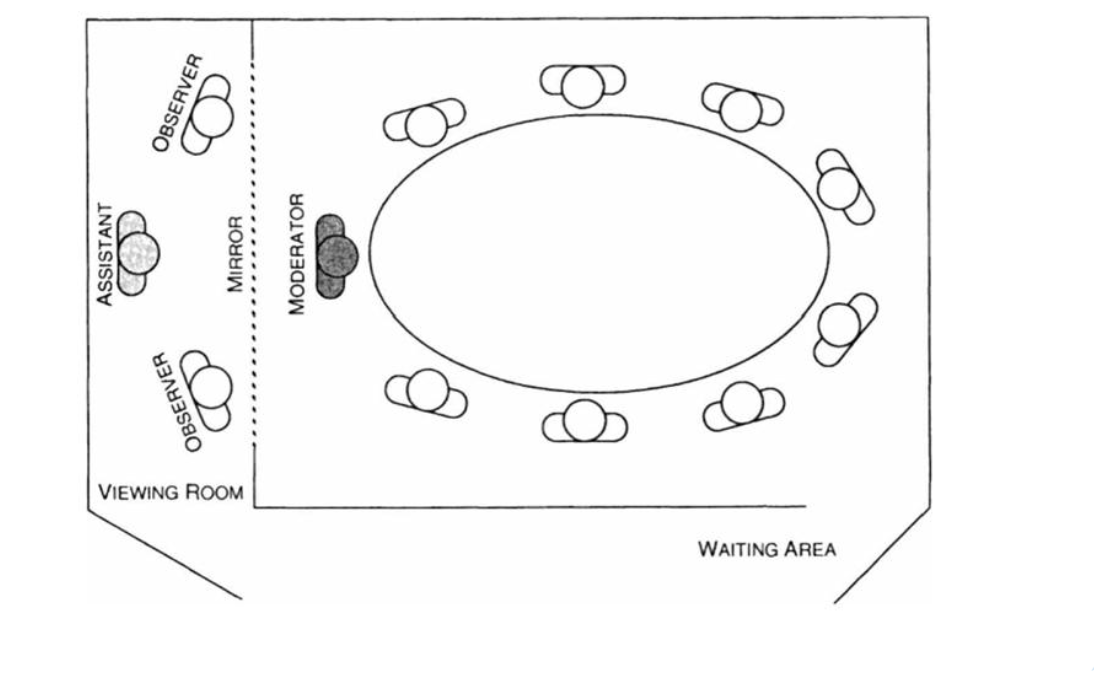
Characteristics of a standard focus group
Small groups of 8-12 people,
usually homogeneous,
multiple groups: 4-12
interactive group setting
when are focus groups useful
gathering new ideas and insights
the role of the moderator
understand problem & the info that is meant to be obtained from the research
translate study objectives into a discussion guide
during session:
build trust
cover main topics
follow energy of discussion + redirect if needed
encourage all to participate
be neutral, objective
What is the most frequently used qualitative technique?
Focus groups.
role of moderator after the session
supervise transcript prep
use transcript to develop report
What is a major disadvantage of focus groups?
Results lack representativeness of the general population (low generalizability).
lack anonymity
hard to code & analyze
subjectivity
need highly skilled moderators
high cost
Advantages of focus groups
immediate & rich (comments coming from real consumers)
responses are unbiased & spontaneous
ideas are unique & creative
How do online focus groups differ from traditional ones?
They are conducted in chat rooms with typically 4-6 respondents and are faster and lower-cost, though they lack body language and tone of voice data.
Participants receive instructions on how to express emotions when typing
advantages of online focus groups
ppl from all over the world can participate
convenience
hard-to-reach segments can be studied
fast
low cost
disadvantages of online focus groups
only ppl who know how to use a computer can be surveyed
body language cannot be transferred
lack of gral control of conditions
only audio and visual stimuli possible
Define "In-depth interviews."
Loosely structured, one-on-one conversations ideal for uncovering personal, sensitive, or confidential information.
the interviewer’s attitude
avoid appearing superior
be detached and objective
ask questions in an informative way
not accept brief answers
probe respondent
advantages of in-depth interviews
can uncover deeper insights
attribute responses directly to sb
ask questions on a variety of topics
enable highly detailed data
disadvantages of in-depth interviews
highly skilled interviewers required
easy to bias
time-consuming
difficult to interpret
What are Projective Techniques? When are they used?
Methods used when respondents are unable or unwilling to answer directly.
Use of an ambiguous stimuli that the respondent is asked to describe, expand on or build a story around.
advantages of projective techniques
can elicit responses that participants would be unable to give
are helpful when underlying motivations are subconscious
disadvantages of projective techniques
high costs - interpretation is difficult
risk of interpretation bias
How is a "Collage" used as a research method?
Respondents create a visual representation of photos that remind them of a brand, and the researcher then asks about the meaning of the selections.
advantages of collages
maximize freedom
unbiased
verbal and visual data
deep insights into consumer’s perceptions
disadvantages of collages
low generalizabillity
requires detailed monitoring
complex analysis
researcher bias
observations, def. pros, cons
experts observe actual behaviors
can be in field or lab
(+) more factural, can allow researchers to see behaviors they are not aware of
(-) ethical?