Musculoskeletal system
 Call Kai
 Learn
Learn Practice Test
 Spaced Repetition
 Match
Match Flashcards
 Knowt Play
1/106

There's no tags or description
Looks like no tags are added yet.
Name | Mastery | Learn | Test | Matching | Spaced | Call with Kai | Chat |
|---|
No analytics yet
Send a link to your students to track their progress
107 Terms
What is cartilage, where is it found and what is it for?
strong, flexible and semi-rigid connective tissue. It can withstand compressive forces but can bend.
Found in the ear, trachea, ribs and nose
support, articulations surfaces for bones, act as a template for growth and development of bone, and is a lubricating surface to reduce friction
How is cartiledge made/ what is their structure
chondroblasts are cells in the outer layer of cartilage and secrete extracellular matrix, then become trapped in it and mature into cells called chondrocytes.
Most cartilege is then covered by a layer of dense, irregular, connective tissue called perichondrium
characteristics of cartilage
nourished by diffusion from capillaries in the perichondrium so it must be thin
slow healing
no blood vessels or nerves
Hyaline cartilage
most common cartilage and a precursor to bones.
Bluish white colour found in ribs, nose, larynx, trachea and ends of bones
translucent with a high proportion of collagen
second most flexible
White Fibrous catilage
glistening white colour in invertabral discs and join capsuole ligaments
the collagen is organised in dense fibres which makes it strongest but also the lest flexible
the fibres are oriented in multiple directions of functional stresses
no perichondrium
Yellow elastic cartilage
yellow colour found in external ear, epiglottus, laryut
numerous chondrocytes in a threadlike network of elastic fibres made of the elastin proteins
most flexible and most chonrocytes
What is bone
a stong, flexible and semi rigid support tissue resistant to bending, compression and stretch
what are the functions of bone
-support- the structural framework for the body, providing attachment sites for muscles
-Protection- protecting internal organs
-assisting movement
-mineral homeostasis for calcium and phosphorus
-blood cell production in bone marrow
What is the extracellular matrix of bone made of
-30% organic- mainly collagen providing bone’s flexibility
-70% inorganic- main component being hydroxyapatite which contains calcium and phosphate
how are bones made/ what stages do they go through
because of the perichondrium, nutrients cannot reach the chondrocytes and they die, leaving behind spaces. Blood vessels grow in these spaces , bringing in osteoblasts which use the remaining calcified cartilage to make osteoid tissue, an extracellular matrix. When the concentrations of calcium and phosphate rise high enough they are deposited into the extracellular matrix and the bone calcifies
Features of compound bone
-surrounds most bones
-hard and gives bones the smooth white appearance
-strong and rigid
Features of spongy bone
-found at ends of bones and in vertebrae
-contains marrow where blood cells are made
osteoprogenitor cells
‘stem’ cells of bone and the source of new osteoblasts
osteoblasts
line the surface f bones, secrete collagen and the organic matrix of bone (osteoid). As they become trapped in organic matrix they become osteocytes
osteocytes
maintain bone tissue. Fine processes from these cells pass through bone and form gap junctions with other osteocytes
features of osteoclasts and how they break down bone
They are large, multinucleated, ruffles border, secretory cells with a prominent golgi body and vesicles. They secrete enzymes lik carbonic anhydrase which acidifies the matrix and causes it to decalcify. Then they break down the matrix
How are osteoclasts made
monocytes/macrophages are derived from hematopoietic cells in the bone marrow. Monocytes travel in the bloodstream and collect at sites of bone destruction where they fuse to form osteoclasts.
How does bone remodelling occur
relies on the correct balance between bone resorption and bone deposition by osteoblasts
1-mechanical stresses on the skeleton cause release of calcium, that stimulate bone-remodelling
2- Bone breakdown is stimulated by parathyroid hormone and inhibited by calcitonin
structure of haversian systems/ osteons
-1 alignation
-2 osteocytes
-3 lacunae
they are aligned in the same direction along lines of stress which change with the stresses. Osteocytes sit in the calcified matrix in small space called lacunae
Long processes from the osteocytes lie in small channels called canaliculi which transport nutrients and waste
lacunae are arranged in concentric sings of bone amtrix called lamellae around a central haversian canal and their processes run in interconnecting canaliculi
the Haversian canal and horizontal canals contain blood vessels and nerves from the periosteum
Where is cartilage found
found in limb, vertebrae and ribs. Form as hyaline cartilage in embryos
Ossification
cartilage cells flatten and calcium salts are deposited around them. Osteoblasts secrete layers of matrix and osteoclasts break catilage down. In limbs ossification begins at caps at the ends and in the middle
features of Periosteum
is a dense fibrous membrane that surrounds bone. it consists of an outer fibrous layer and an inner cellular layer (cambium)
The outer layer is mostly collagen with nerve fibres that cause pain when the tissue is damaged. it contains blood vessels with branches that penetrate the bone to supply theo osteocytes
develops from perichondrium
Axial bones
-skull, sternum, ribcage, vertebral column, pelvic girdle
Appendicular bones
scapula and clavicle, pectoral girdle, hind and forelimbs
How to identify the atlas and axis
***
How to identify the cervical bones in spine
-smallest
-triangular foramen with foramen in processes
-no articular facets
-smallest body and small transverse processes
Movement in cervical bones
-flexion and extension and rotation. Region with greatest movement
How to identify thoracic bones in spine
-circular foramen
-articular facets
-larger body
-thinner intervertebral discs
-large transverse processes
Movement in thoracic bones in spine
rotation and lateral flexion. prevents extension
how to identify lumbar bones in spine
Largest with the largest body (must carry the most weight)
-no articular facets and thickest intervertebral discs
-triangular foramen
-largest and bluntest transverse processes (wing shaped kinda)
Movement allowed by the lumbar bones
lest flexion and tension. rotation prevented
How to identify sacrum
bones all fused together
How to identify coccyx
***
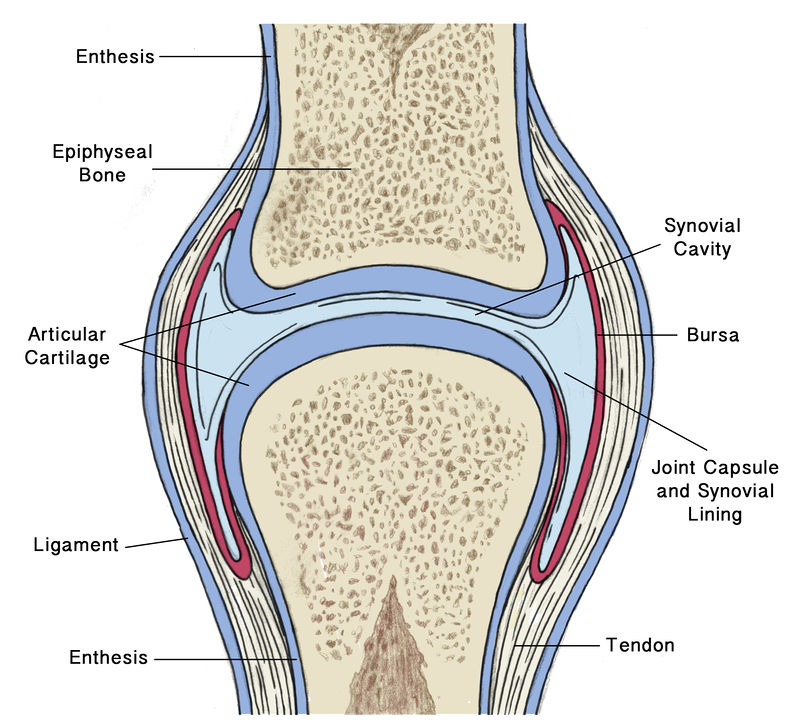
Tendon
-inelastic so it remains the same length when muscles contract
-attach muscle to bone
-fibres continuous with muscle
-energy of contraction efficiently transmitted to movement of the joint
-mostly collagen
high tensile strength
Ligaments
-holds bone is position
-collagen
-allow for some elasticity and provide strength
Types of synovial joints
-hinge joins> movement in one plane
-ball and socket joints> motion in multiple planes
-gliding joint> movement in two planes
hinge joints
one articulating surface convex and the other is concave. Strong collateral ligaments restrict movements to one plane
ball and socket joints
bone surfaces reciprocally convex and concave. rotation in all three planes
gliding joints
articulating bone surfaces nearly flat and bones glide across eachother in single plane
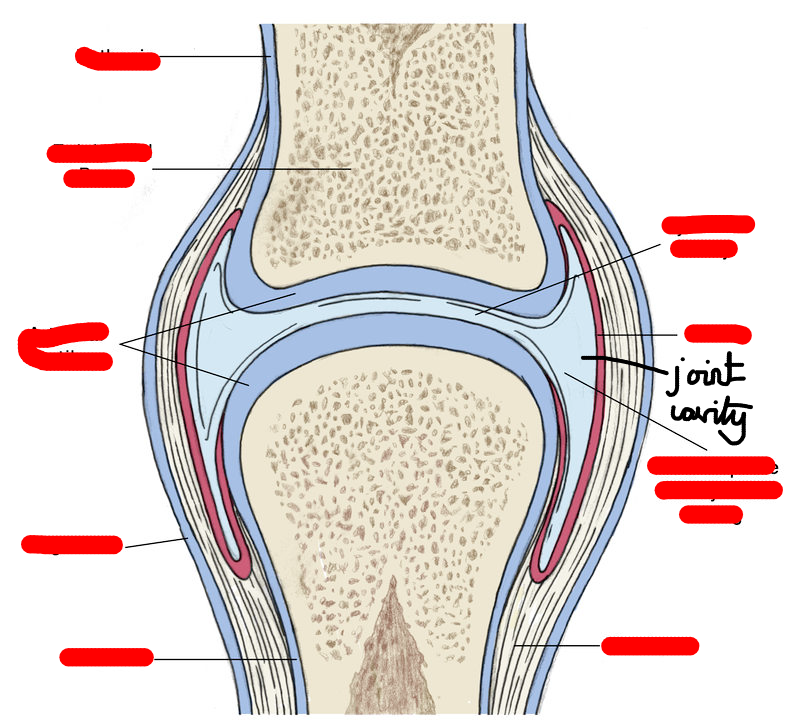
label
first class levers
-the fulcrum (axis) is between the load and the effort
-eg. joint between the head and first vertebrae
second class levers
-the load is between the axis and the effort
-eg standing on toes
why do second class levers have high mechanical advantages
-when a levers effort arms is longer than its load arm. High mechanical advantage means it can move large loads with a relatively small amount of force
third class levers
-most common
-effort is between the load and axis
How to calculate the force
F1 x d1 = F2 x d2
What are antagonistic muscles
muscle pairs that work in opposition to each other to provide movement around a joint
What are flexors?
contract and pull on the bone creating a bending movement
extensors
muscles that contract to extend and straighten the joints
the origin
the end of the muscle which is attached to fixed bone and usually has a greater mass and does not move during the contraction
the insertion
the end of the muscle that is attached to the bone which moves the bone.
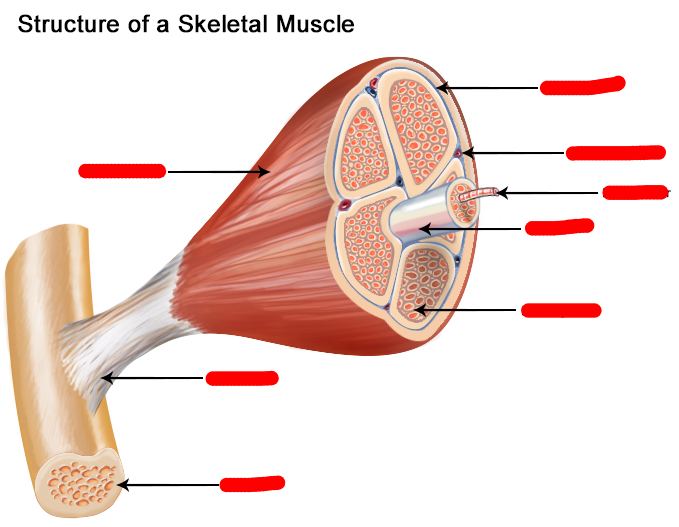
label this

What is Myofibrils
organelle made of protein, repeating sarcomeres containing actin and myosin
What are muscle fibres
bundle of myofibrils surrounded by sarcoplasmic reticulum
What are fesicles
bundle of muscle fibres
What is the epimysium
connective tissue that surrounds the muscle
what is the perimysium
connective tissue that surrounds the fasicle
What is the endomysium
connective tissue surrounding the muscle fibre
What is a sarcomere
the region of the microfibril between the Z discs/lines/bands. They are striated due to myofilaments
The A band
In the miuddle of the sarcomere. composed of thick filaments with myosin. These are anchored aty the middle (m-line) by myomesin
The I band
Has actin filaments (thinner) anchored to the Z line by protean called alpha actinin. Extend and overlap with A band, making that region thicker
The H zone
ligher in colour because it only contain thick filaments with no overlap with the filaments
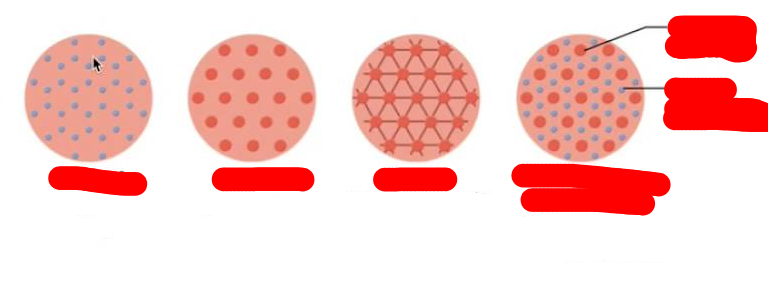

What happens during contractions in the sarcomeres
myofilaments slide across eachother so the distance between the Z-discs shortens, resulting in the sercomeres shortening. The length of the A band doesnt change but the H zone and I band shorten. These regions represent areas where filaments do not overlap and as filament averlap increases during contractions the region of no ovelap increases
Actin
thin filaments made of two strands of a globular actin twisted into an actor helix
myosin
each thick filament has approx 200 molcules of myosin. Each myosin molecule is a long fibrous protein with a tail and head which projects outward.
process of muscle movement
following the arrival of a nerve impulse at a neuromusclar junction a wave of depolarisation spreads through the sarcolemma and inwards via the transverse tubials
the inward spread of impulse depolaerisation to sarcoplasmic reticulum triggers a release is Ca2+. The concentration of ca2+ increases near the thin actin filaments so the Ca2+ binds to troponin which changes the shape and causes the tropomyopsin to move, revealing the actin binding site. Myosin head is attatched to ADP and Pi from previous contractions. The myosin head forms a cross-brudeg witha ctin. The bending pulls the actin past the myosin “power stroke” the stored energy from hydrolysed ATP fuels this movement.
During the power stroke the myosin head bends and ADP and phosphate are released
A new molecule of ATP attaches to the myosin head causing the corss-bridge to detach
ATP hydrolyzes to ADP and phosphate which returns the myosin to the “cocked position”
When nervous stimulation of the sarcolemna stops calcium ions are pumped back into sarcoplasmuc reticulum actively. Ca2+ con falls below conc threshhold
Slow twitch fibres- movement
sustained slow contractions that use less energy slowly. Contraction velocity is long/slow/sustained and they are very resistant to fatigue. ATP generation is a high capacity aerobic process.
Slow twitch fibres-function
slow, oxidative fibres. Many myoglobin and mitochondria and blood vessels . Myofibrils are low density and the fibre is a dark red. Small store of glycogen and calcium and low resistance to lactic acid
Fast twitch fibres- movement
fast contractions with more energy and short bursts. more ATP is used ands it splits at a faster rate with fast contractions meaning it is not resistant to fatigue. ATP is mostly generated anaerobically
Fast twitch musles- features
fast glycolytic, white fibres. With few myoglobin, mitochondria and blood capillaries. LArge density of myofibrils. Not resistant to lactic acid and has a large glycogen stores. There is a large store of calcium in the sarcoplasmic reticulum.
How are rickets and Osteomalacia caused?
A lack of vitamin D in diet/ the body not producing enough vitamin D. This prevents the bones from absorbing sufficient calcium and phosphorus which are needed to strengthen bones. Rickets is only in children
What are the symptoms of rickets and Osteomalacia?
Softened and weakened bones. Bowed legs, weakened muscles, growth delay, seizures.
How can rickets and osteomalacia be treated?
vitamin d and calcium supplements, balanced diet and more sun
What are the causes of Osteoporosis?
The main cause of osteoporosis is aging, as bones stop building up as efficiently and become less dense. Risk of Osteoporosis can be increased in people who sit often, are underweight or lost a lot of weight, people who smoke or drink and can be caused by some health issues like diabetes, digestive disorders or arthritis.- more common in women
What are the symptoms of Osteoporosis?
Weakened bones- making them more likely to break
How can Osteoporosis be treated?
Treatment can depend on age, sex, risk and previous history. Ensure the person is getting enough calcium and vitamin D. Some medicine options are biophosphinates, SERMS which maintain bone density, parathyroid hormone which stimulates cells to produce more bones and menopausal women can use hormone replacement therapy.
What are the causes of Brittle Bone disease?
Most commonly it is caused from having a gene that carries the wrong instructions for making collagen, which is needed for making bones strong, meaning it is made wrong or in not enough quantities. This gene can be passed on for parents or can stop working before the baby is born.
What are the symptoms of Brittle Bone disease?
Weak brittle bones, malformation in longer bones, weak muscles, deformed hip joint where femur is bent downwards, trouble breathing
How can brittle bone disease be treated?
Physical therapy can be used to help strengthen bones, assistive devices can be used to help with movement. Bisphosphonates can be given to strengthen bones by slowing down the process that removes/ resorbs them. Metal rods can be surgically inserted to support curved bones.
What causes osteoarthritis?
When the cartilage in a joint breaks down faster then it is replaced due to changes in the collagen and glycoprotein. Can be linked to aging, being overweight, past injury or overuse or joints
symptoms of osteoarthritis
pain and stiffness in joints, making them hard to move
Treatment for osteoarthritis
Lifestyle changes like losing weight and regular exercise, non-steroidal anti-inflammatory drugs, steroid injections, assistive devices for mobility and joint replacement surgery, most commonly in knee and hip.
Advantages and disadvantages to hip/knee replacement surgery?
PROS: pain relief without reliance on drugs/medication, improved mobility- which promotes healing, better sleep
CONS: long rehabilitation and recovery, replacements don’t last forever, surgical risks of bloodclots and infections
What is the cause of Rheumatoid arthritis?
It is an autoimmune disease that causes swelling and irritation in the joints as the immune system attacks its own tissue by mistake. The lining of the joints is affected and the bone underneath is eaten away.
What are the symptoms of Rheumatoid arthritis?
Painful, warm, swollen joints. Joint stiffness that is worse after resting. Tiredness, fever and not wanting to eat.
Treatment for rheumatoid arthritis
anti-inflammitory non-steroidal drugs
What is the cause of scoliosis?
The sideways curving of the spine can be caused by a gene mutation, hormones, changes in cell structure or, in children, previous injury.
What are the symptoms of scoliosis?
-sideways curving of spine, uneven shoulders, a more prominent shoulder blade, one hip appears higher than the other, side of the ribcage is higher.
How can scoliosis be treated?
Strengthening and stretching exercises to improve posture, bracing, decompressive surgery to remove a bone or disc if its pressing down on a nerve, spinal fusing surgery to improve position of spine with metal rods
Possible problems with scoliosis surgery?
Failure to reduce pain, implants becoming displaced, broken or loose, infection, blood clots, possibly (rarely) damage to nerves in spine,
What causes flat foot
No obvious cause, could run in families or rarely be caused by the bones not growing properly in the women or stretching of tissues in foot from injury or being overweight or conditions affecting muscles like cerebral palsy.
What is the treatment for flat foot?
Specialist shoes, shoe insoles, foot stretches and exercises.

What type of fracture is this
displaced
How are displaced fractures caused? How is it treated
They are typically caused by a fall or other strong trauma on the body. Weakened bones like from osteoporosis can increase the chance of the displaced fracture.- reduction, forcing it back into place

What type of fracture is this
non-displaced
What causes a non-displaced fracture? How is it treated
A trauma like a fall or injury, repetitive stress or overuse like from dancing, running or jumping. Osteoporosis can also increase the chance- immobilization

What fracture is this
comminuted fracture
What causes a comminuted fracture? how is it treated
Any impact but most commonly car accidents and falling from great heights. Slips and falls usually aren’t strong enough.- surgery with metal rods, pins or screws
What is a simple fracture?
Broken in only two pieces.
What is a compound fracture?
A break in the bone that pierces through the skin.