Chemistry - energy changes
 Call Kai
 Learn
Learn Practice Test
 Spaced Repetition
 Match
Match Flashcards
 Knowt Play
1/44

There's no tags or description
Looks like no tags are added yet.
Name | Mastery | Learn | Test | Matching | Spaced | Call with Kai | Chat |
|---|
No analytics yet
Send a link to your students to track their progress
45 Terms
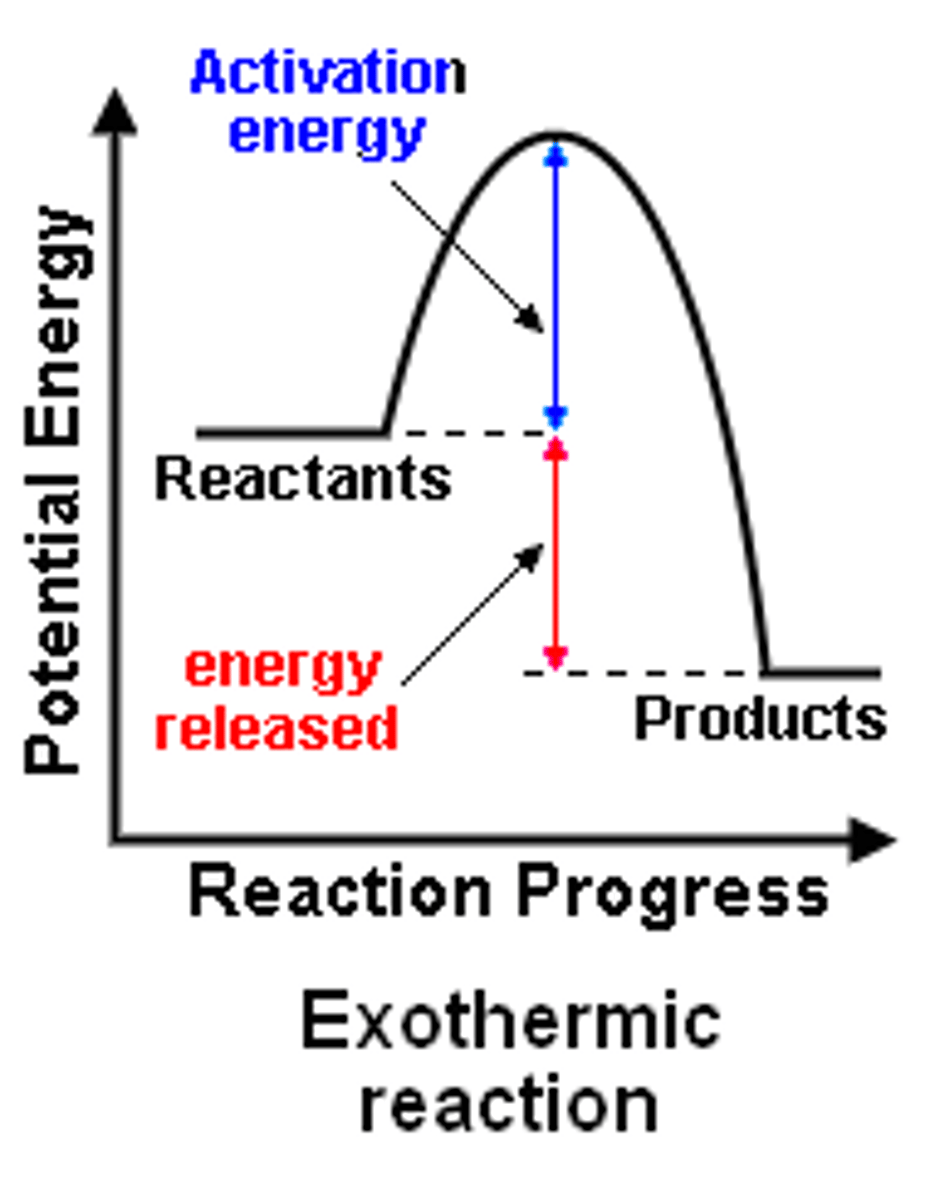
What are exothermic reactions?
Exothermic reactions are reactions that transfer energy to their surroundings (usually as heat or sometimes light)
Why do the reactants have more energy than the products in an exothermic reaction?
more energy is released forming new bonds in the products than is absorbed to break the original reactant bonds
What happens to the temperature of the surroundings in an exothermic reaction?
it increases
What happens when bonds break?
energy is absorbed (endothermic)
What happens when bonds form?
energy is released (exothermic)
Examples of exothermic reactions
- Combustion
- Neutralisation
- respiration
- forming new bonds
Uses of exothermic reactions
Self-heating cans, hand warmers, burning fuels
What is the energy profile diagram for an exothermic reaction
What is the energy transfer in exothermic reactions?
The chemical energy store decreases, and the thermal energy of the surroundings increases
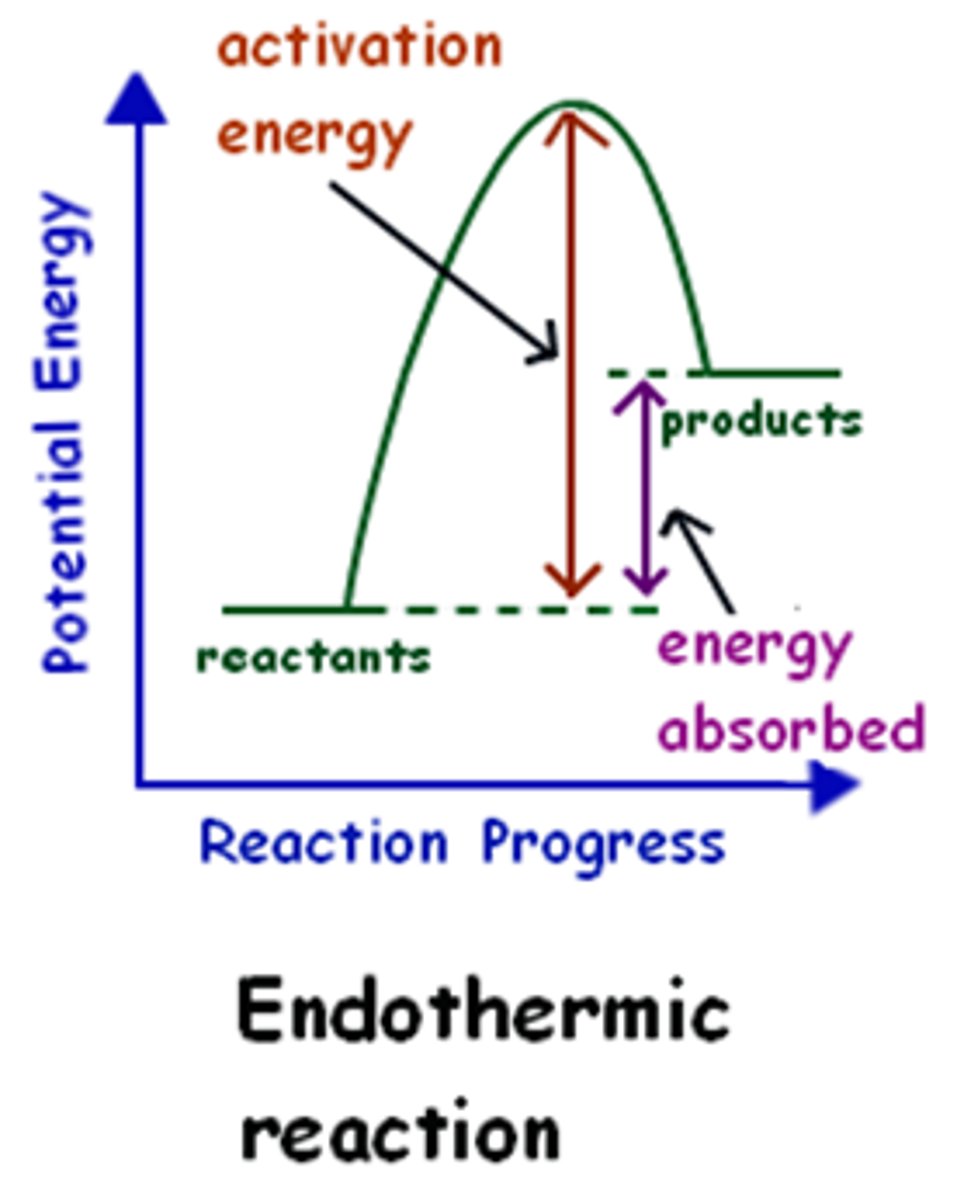
What are endothermic reactions?
Endothermic reactions are reactions that take in energy from their surroundings
What is activation energy?
energy needed to start a reaction
What happens when reactants have less energy than the activation energy?
They will just bounce off eachother
Why do the products have more energy than the reactants in an endothermic reaction?
more energy is absorbed breaking old bonds in the reactants than is released to make new bonds
Why do endothermic reactions absorb energy?
the energy required to break the bonds in the reactants is greater than the energy released when new bonds form in the products
Why do exothermic reactions release energy?
because the total chemical energy stored in the bonds of the products is less than the energy stored in the bonds of the reactants
What happens to the temperature of the surroundings in an endothermic reaction?
it decreases
Examples of endothermic reactions
- Thermal decomposition
- photosynthesis
Uses of endothermic reactions
ice packs
What is the energy profile diagram for an endothermic reaction
What is the energy transfer in endothermic reactions?
energy is transferred from the surroundings (such as heat or light) to the chemical system
What is bond energy?
energy required to break a bond
What is bond energy measured in?
kJ/mol
Formula for the energy change of a reaction
Overall energy change = energy put in - energy taken out
- if the overall energy change is negative, the reaction is exothermic
- if the overall energy change is positive, the reaction s exothermic
What are chemical cells?
a device that produces electricity from a chemical reaction
What are the components of a chemical cell?
- Two different metal electrodes
- An electrolyte
How do chemical cells work?
1. The negative anode loses electrons
2. The positive cathode gains electrons
3. Electrons flow through the external circuit from one electrode to the other
What is the anode in chemical cells?
The more reactive metal loses electrons (oxidation) and becomes the negative terminal
What is the cathode in chemical cells?
The less reactive metal receives electrons (reduction) and acts as the positive terminal.
What is the purpose of the electrolyte?
allows ions to move freely between electrodes, completing the circuit and enabling the redox reactions that produce electrical energy
What kind of reactions do chemical cells use?
convert chemical energy into electrical energy using redox reactions
What happens when there is a high difference in reactivity of the electrodes in a chemical cell?
it produces a higher voltage
How do rechargeable batteries work?
- they use reversible reactions
- A current is supplied, which forces electrons to flow in the opposite direction around the circuit and reverses the reaction.
How do chemical cells generate voltage?
The chemical reactions at the electrodes create a difference in charge between them. This charge difference generates an electric current when the electrodes are connected by a wire
How can chemical cells generate a higher voltage?
multiple cells can be connected in series, forming a battery. When connected in series, the total voltage of the battery is the sum of the voltages of the individual cells.
What are non-rechargeable batteries used for?
remote controls and toys
What are rechargeable batteries used for?
smartphones, tablets, and electric vehicles.
What is a fuel cell?
An electrical cell that is supplied with a fuel and oxygen, and uses energy from the reaction between them to produce electrical energy efficiently.
What is the product of hydrogen fuel cells?
water
What is the reaction at the cathode of a hydrogen fuel cell?
- reduction of oxygen
- O₂ + 4H⁺ + 4e⁻→2H₂O
What is the reaction at the anode of a hydrogen fuel cell?
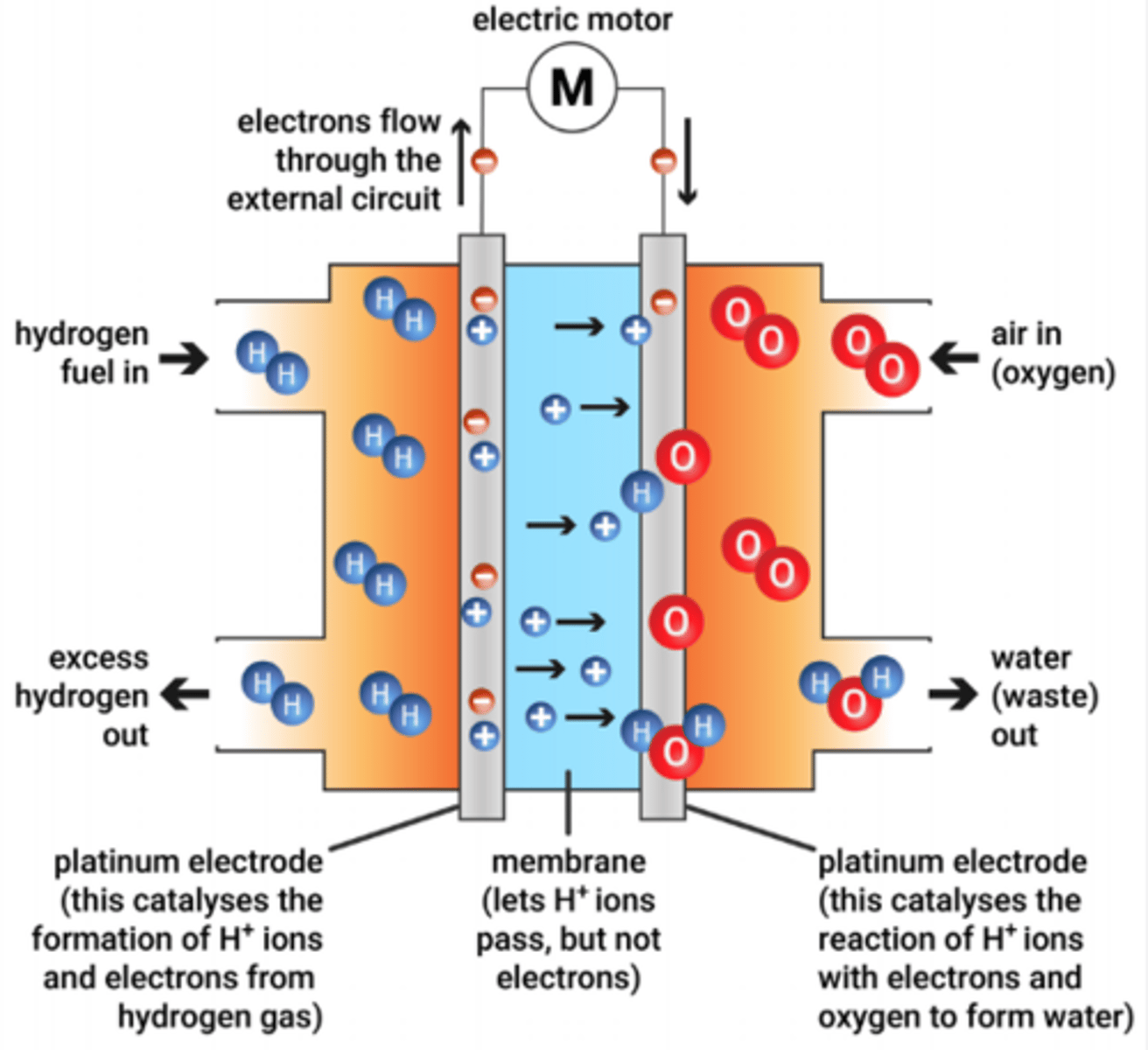
- Hydrogen gas is split into protons and electrons
- H₂ → 2H⁺ + 2e⁻
What is the anode in hydrogen fuel cells?
the negative electrode where hydrogen gas is introduced and oxidized, splitting into protons and electrons
What is the cathode in hydrogen fuel cells?
the positive electrode where oxygen is reduced, combining with protons and electrons to produce water
How do hydrogen fuel cells work?
1. Hydrogen gas (H₂) goes into the anode. It is split into H⁺ ions and electrons
2. The electrons cannot pass through the electrolyte, so they travel through an external wire. This flow of electrons creates an electric current
3. The H⁺ ions pass through the electrolyte to the other side
4. Oxygen enters the cathode. It reacts with the H⁺ ions and returning electrons to form water
What are the advantages of hydrogen fuel cells?
- Continuous supply (doesn't need recharging like a battery)
- no pollutants are produced
- lasts longer than batteries
What are the disadvantages of hydrogen fuel cells?
- Hydrogen is flammable
- Storing and transporting hydrogen is difficult
- Producing hydrogen can require lots of energy (and may use fossil fuels)