mechanisms that control respiration
0.0(0)
Studied by 0 people Call Kai
 Learn
Learn Practice Test
 Spaced Repetition
 Match
Match Flashcards
 Knowt Play
Card Sorting
1/19

There's no tags or description
Looks like no tags are added yet.
Last updated 5:29 AM on 5/3/26
Name | Mastery | Learn | Test | Matching | Spaced | Call with Kai |
|---|
No analytics yet
Send a link to your students to track their progress
20 Terms
1
New cards
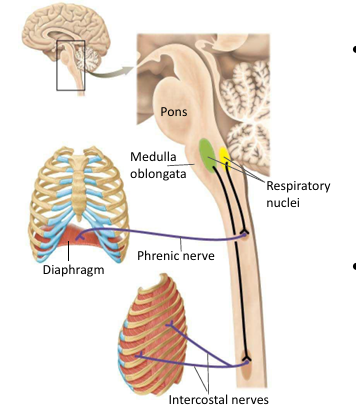
What controls the respiratory rhythm?
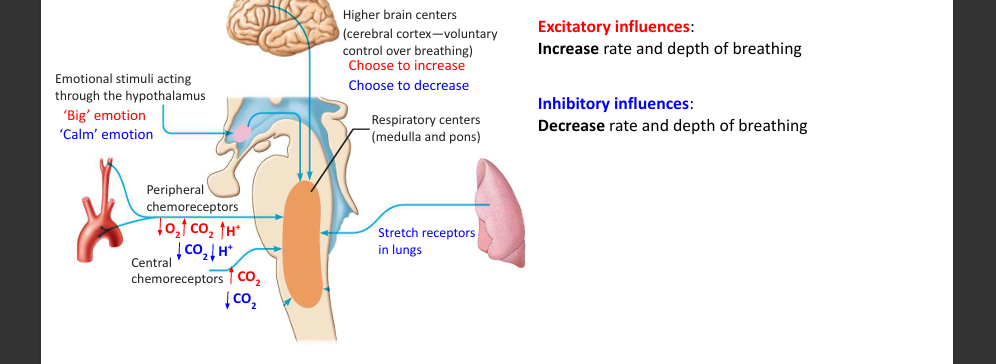
nuclei in the brainstem, integrate sensory information, determine rate and depth of breathing
2
New cards
How do respiratory neurons reach the breathing muscles?
travel from brainstem, innervate diaphragm via phrenic nerve, innervate intercostal muscles via intercostal nerves
3
New cards
What factors influence the respiratory nuclei?
lung stretch receptors, emotional input via limbic system and hypothalamus, voluntary control from primary motor cortex
4
New cards
What chemical factors influence breathing?
CO2 levels, O2 levels, H+ concentration
5
New cards
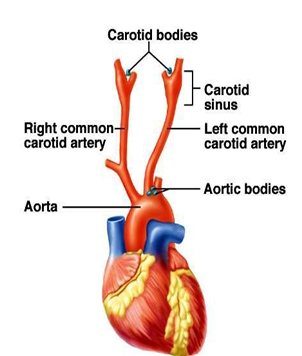
What do central chemoreceptors detect?
changes in CO2 only, located in the brainstem, drive most of the CO2 response
6
New cards
What do peripheral chemoreceptors detect?
changes in CO2 O2 and H+, located in carotid and aortic bodies
7
New cards
Why does PO2 normally not drive breathing?
PO2 is usually 95 to 104 mmHg, provides little stimulus for respiration, only becomes important when PO2 drops below 60 mmHg
8
New cards
What is the main driver of normal breathing?
PCO2, small changes cause large changes in ventilation, decreased PCO2 depresses breathing
9
New cards
How does increased PCO2 affect breathing?
increases ventilation, stimulates chemoreceptors, increases respiratory drive
10
New cards
How does decreased PCO2 affect breathing?
depresses breathing, reduces respiratory drive, increases blood pH
11
New cards
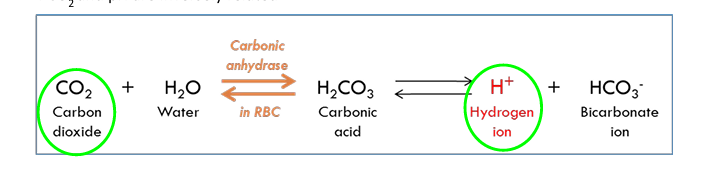
Why is PCO2 the key regulator of breathing?
CO2 and pH are inversely related, increased CO2 increases H+ and lowers pH, decreased CO2 decreases H+ and raises pH
12
New cards
How does CO2 affect blood pH?
increased CO2 forms carbonic acid, increases H+ and lowers pH, decreased CO2 reduces H+ and raises pH
13
New cards
Why does pH matter for breathing control?
small pH changes alter protein function, affects cellular function, requires rapid respiratory compensation
14
New cards
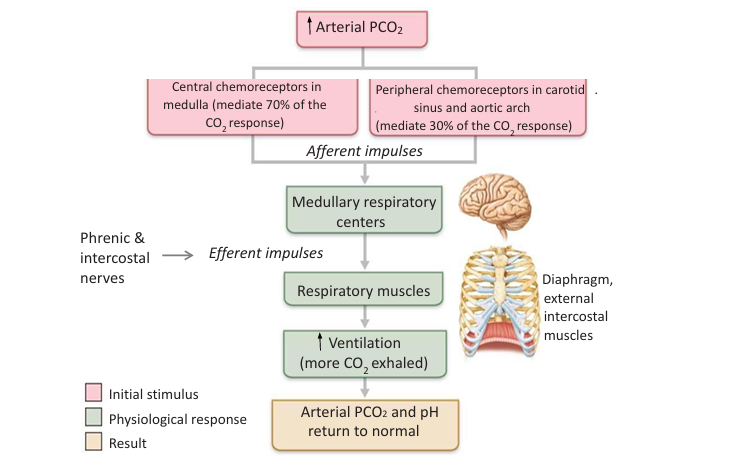
How is increased arterial PCO2 corrected?
detected by central and peripheral chemoreceptors, signals sent to medullary respiratory centers, ventilation increases to exhale more CO2
15
New cards
What percentage of the CO2 response comes from central chemoreceptors?
about 70 percent, located in the medulla, respond to CO2 mediated pH changes
16
New cards
What percentage of the CO2 response comes from peripheral chemoreceptors?
about 30 percent, located in carotid and aortic bodies, respond to CO2 O2 and H+
17
New cards
What is the result of increased ventilation during hypercapnia?
more CO2 exhaled, arterial PCO2 returns to normal, pH returns to normal
18
New cards
What factors can increase breathing rate and depth?
chemoreceptor activation, emotional stimuli, voluntary choice to increase breathing
19
New cards
What factors can decrease breathing rate and depth?
inhibitory signals from higher brain centers, decreased CO2, voluntary choice to slow breathing
20
New cards