T1 Thorogood- Plant–plant interactions
 Call Kai
 Learn
Learn Practice Test
 Spaced Repetition
 Match
Match Flashcards
 Knowt Play
1/3

There's no tags or description
Looks like no tags are added yet.
Name | Mastery | Learn | Test | Matching | Spaced | Call with Kai |
|---|
No analytics yet
Send a link to your students to track their progress
4 Terms
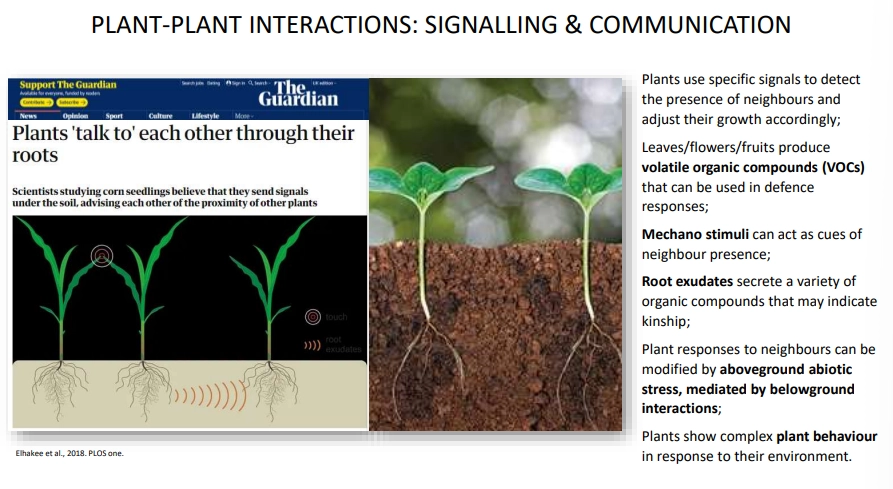
how do plants sense the presence of their neighbours?
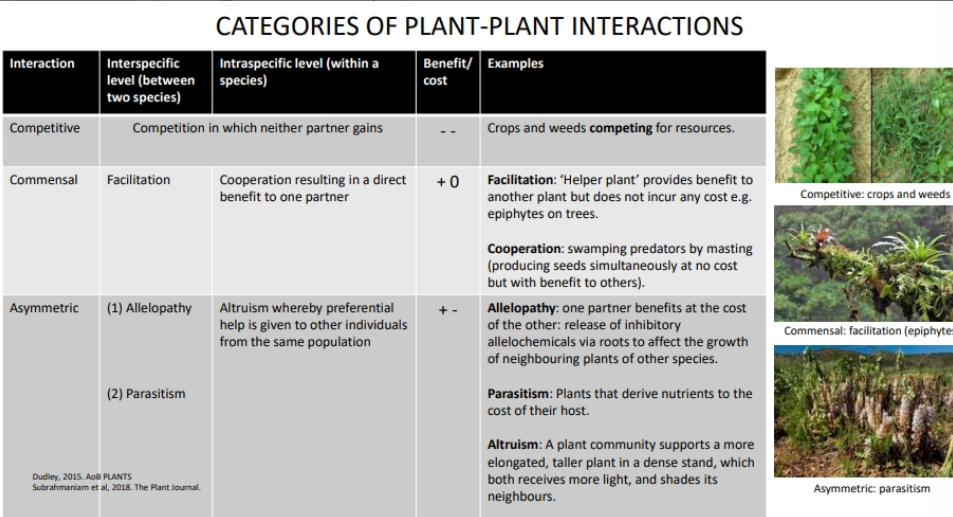
what are the three categories of plant-plant interactions?
describe parasitic plants
parasitism evolved independently at least 12 times across the angiosperms (~1% of species)
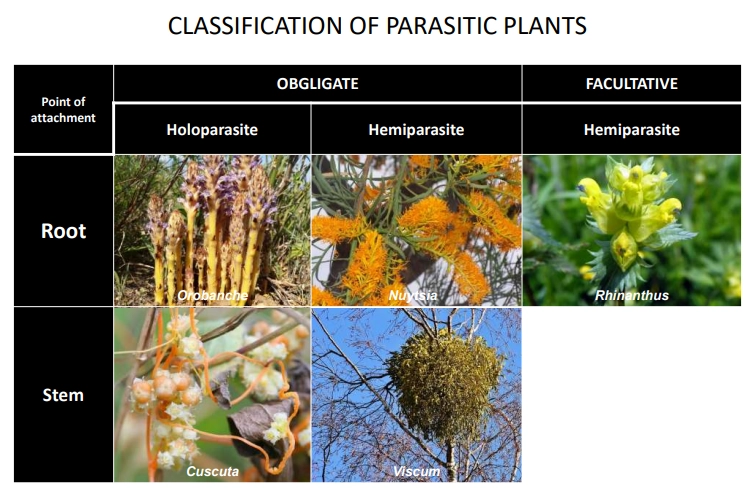
they are generally classified by whether they attach via the roots or stem of the host, whether they are obligate (holoparasite, don’t photosynthesise, or hemiparasite, photosynthetic but without roots) or facultative (hemiparasite)
parasitism becomes more derived as it evolves: autotrophic plant → facultative hemiparasite → obligate hemiparasite → obligate holoparasite
endoparasitism evolved 4 times- constant environment + predator protection + ability to massively reduce the vegetative body (can involve HGT from the host)
they have highly reduced plastid genomes (photosynthesis + chloroplast genes lost/contain junk dna due to lack of selection pressure) + convergent loss of defence/stress response genes
their life cycles are coordinated with chemical cues produced by the host plants
they produce a haustorium- vascular connection with the xylem/phloem, which also allows free transport of hormones, proteins, mRNA, viruses
mycoheterotrophs are plants which obtain carbon from other photosynthetic plants through the mycorrhizal network
they are important ecosystem engineers- by suppressing the growth of dominant species, they enable greater diversity
parasitic weeds are also responsible for massive crop losses eg. witchweed
desert Cistanche species are root parasites that can be planted in an effort to reduce desertification by stabilising soils (also a farmed carbohydrate source)
m