Chapter 6: International Parity Conditions
0.0(0)
Studied by 1 person Call Kai
 Learn
Learn Practice Test
 Spaced Repetition
 Match
Match Flashcards
 Knowt Play
Card Sorting
1/50

Earn XP
Description and Tags
Last updated 5:17 PM on 11/16/22
Name | Mastery | Learn | Test | Matching | Spaced | Call with Kai |
|---|
No analytics yet
Send a link to your students to track their progress
51 Terms
1
New cards
International Parity Conditions
The economic theories that link exchange rates, price levels, and interest rates together
2
New cards
law of one price
If an identical product or service can be sold in two different markets and no restrictions exist on the sale or transportation of the product between markets, the price should be the same in both markets.
3
New cards
Why does the law of one price hold?
If the prices after exchange-rate adjustment were not equal, arbitrage for the goods worldwide ensures that eventually they will
4
New cards
Purchasing Power Parity (PPP)
A theory that the price of internationally traded commodities should be the same in every country, and hence the exchange rate between the two currencies should be the ratio of prices in the two countries.
5
New cards
Absolute Purchasing Power Parity
The theory that the exact rate of exchange between two currencies is found by equalizing the purchasing power of the two currencies.
6
New cards
Absolute PPP
Determining the "real" exchange rate that should exist by comparing the prices of identical products denominated in different currencies if markets were efficient is the absolute version of the PPP theory
7
New cards
Relative Purchasing Power Parity
A theory that if the spot exchange rate between two countries starts in equilibrium, any change in the differential rate of inflation between them tends to be offset over the long run by an equal but opposite change in the spot exchange rate.
8
New cards
Relative PPP
The relative change in prices between two countries over a period of time determines the change in the exchange rate over that period.
9
New cards
In relative PPP theory, what causes changes in price levels?
Inflation
10
New cards
In the Relative PPP theory, what determines the exchange rate over that period?
relative changes in prices over a period of time
11
New cards
If PPP holds
- The differential inflation rates between countries are exactly offset by exchange rate changes
- Countries' competitive positions in world export market remains stable
- Changes in nominal exchange rate does not necessarily change the real exchange rateand the competitive positions of the countries
- Countries' competitive positions in world export market remains stable
- Changes in nominal exchange rate does not necessarily change the real exchange rateand the competitive positions of the countries
12
New cards
If PPP does not hold
- Changes in nominal exchange rates cause changes in real exchange rates
- Countries' competitive positions in world export market and trade balances change
- Changes in real exchange rate changes the competitive positions of the countries and leads to real exchange gains and losses
- Countries' competitive positions in world export market and trade balances change
- Changes in real exchange rate changes the competitive positions of the countries and leads to real exchange gains and losses
13
New cards
If exchange rates adjust to inflation differential...
PPP states that real exchange rates stay the same.
14
New cards
Exchange Rate Pass-Through
The degree to which the prices of imported and exported goods change as a result of exchange rate changes.
15
New cards
How much pass-through will happen in the face of an exchange rate change?
Depends on price elasticity of demand - how demand changes for any good as the prices of it change
16
New cards
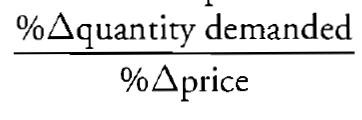
price elasticity of demand formula
% change in quantity demanded / % change in price
17
New cards
|ep| < 1.0
price inelastic; → higher degree of pass-through
18
New cards
|ep| > 1.0
price elastic; → lower degree of pass-through
19
New cards
What happens when you have a higher degree of pass through?
- FX revenue increases (as increased prices are charged to align the exchange rate)
- the domestic revenue remains the same.
- the domestic revenue remains the same.
20
New cards
What happens when you have a lower degree of pass through?
- FX revenue remains stable (as foreign prices are stable but quantities decline)
- the domestic revenue decline.
- the domestic revenue decline.
21
New cards
How is pass through effecting emergent markets?
These countries are experiencing changing exchange rates, exchange rate pass through is a growing source of inflationary pressure and price instability.
22
New cards
Fisher Effect
Nominal interest rates (i) are a function of the real interest rate(r) and a premium (ᴨ) for inflation expectations
23
New cards
Real rates of interest should be equal everywhere through arbitrage
(T or F)
(T or F)
True
24
New cards
Without government intervention, how are differences in nominal rates explained?
By the inflation differential
25
New cards
Currencies with high rates of inflation should have _________ interest rates than currencies with lower rates of inflation
Higher
26
New cards
International Fisher Effect (IFE)
the spot exchange rate should change by an amount equal to the difference in interest rates between two countries.
27
New cards
How would spot exchange rate change under the International Fisher Effect?
Spot exchange rate should change in an equal amount but in the opposite direction to the difference in interest rates between two countries - investors must be rewarded or penalized to offset the expected changes in exchange rates
28
New cards
IFE predicts: with unrestricted capital flows...
the investor should be indifferent to the denomination of investment as arbitrage would ensure that similar opportunities would provide similar returnsS¥=$1.00
29
New cards
The forward rate for any maturity is calculated by:
adjusting the current spot exchange rate by the ratio of eurocurrency interest rates of the same maturity for the two subject currencies.
30
New cards
The currency with the _________ interest rate will sell forward at a discount
Higher
31
New cards
the currency with the __________ interest rate will sell forward at a premium
Lower
32
New cards
Forward premium in foreign currency terms
($, home currency is unit; ¥ is price currency )
33
New cards
Forward premium in home currency terms
($, home currency is unit; ¥ is price currency )
34
New cards
Interest Rate Parity (IRP)
A theory that the differences in national interest rates for securities of similar risk and maturity should be equal to but opposite in sign (positive or negative) to the forward exchange rate discount or premium for the foreign currency (except for transaction costs).
35
New cards
What does IRP do?
Links foreign exchange markets with the international money markets
36
New cards
Why does disequilibrium between interest rates and exchange rates occur?
They can occur because of transaction costs and political risk
37
New cards
covered interest arbitrage
The spot and forward exchange markets are not constantly in the state of equilibrium described by IRP
- When the market is not in equilibrium, the potential for arbitrage profit exists - the arbitrager will move to take advantage of the disequilibrium by investing in which ever currency offers the higher return on a covered basis
- When the market is not in equilibrium, the potential for arbitrage profit exists - the arbitrager will move to take advantage of the disequilibrium by investing in which ever currency offers the higher return on a covered basis
38
New cards
How does Covered Interest Arbitrage Work?
The process whereby an investor earns a risk-free profit by (1) borrowing funds in one currency, (2) exchanging those funds in the spot market for a foreign currency, (3) investing the foreign currency at interest rates in a foreign country, (4) selling forward, at the time of original investment, the investment proceeds to be received at maturity, (5) using the proceeds of the forward sale to repay the original loan, and (6) sustaining a remaining profit balance.
39
New cards
Locating Arbitrage: If the difference in interest rates is greater than the forward premium (or expected change in the spot rate),
invest in the higher interest-yielding currency.
40
New cards
Locating Arbitrage: If the difference in interest rates is less than the forward premium (or expected change in the spot rate)
invest in the lower interest yielding currency.
41
New cards
Covered interest arbitrage opportunities continue until...
interest rate parity is reestablished as the arbitragers are able to earn risk-free profits by repeating the cycle as often as possible.
42
New cards
What do the Actions of Arbitragers do?
Their actions, nudge the foreign exchange and money markets back toward equilibrium
43
New cards
Uncovered Interest Arbitrage (UIA)
Investors borrow in countries and currencies exhibiting relatively low interest rates and convert the proceeds into currencies that offer much higher interest rates
The transaction is "uncovered" - the investor does not sell the higher yielding currency proceeds forward, choose to remain uncovered and accept the foreign exchange risk at the end of the period
The transaction is "uncovered" - the investor does not sell the higher yielding currency proceeds forward, choose to remain uncovered and accept the foreign exchange risk at the end of the period
44
New cards
Interest Rate Parity and Equilibrium
The disequilibrium situation,
depicted by point U is unstable,
because all investors have an
incentive to execute the same
covered interest arbitrage
Arbitragers' actions will ensure fund
flows to narrow the gap in interest
rates and/or decrease the premium
on the forward yen
depicted by point U is unstable,
because all investors have an
incentive to execute the same
covered interest arbitrage
Arbitragers' actions will ensure fund
flows to narrow the gap in interest
rates and/or decrease the premium
on the forward yen
45
New cards
unbiased forward rates (UFR) - Forward rate as an unbiased predictor of future spot rate:
Forward rate reflectsthe expected future spot rate of equal maturity
46
New cards
Unbiased prediction means
that the forward rate will, on average, overestimate and under estimate the actual future spot rate in equal frequency and degree
47
New cards
UFR assumes that the foreign exchange market is reasonably efficient. other assumptions:
- All relevant information is quickly reflected in both the spot and forward exchange markets
- Transaction costs are low
- Instruments denominated in different currencies are perfect substitutes for one another
- Transaction costs are low
- Instruments denominated in different currencies are perfect substitutes for one another
48
New cards
What is forecast error?
The difference between the future actual spot rate and the forward rate
49
New cards
"unbiased predictor of the future spot rate," means
the errors are normally distributed around the mean future spot rate (the sum of the errors equals zero).
50
New cards
In equilibrium, the spot and forward currency markets are aligned with
interest differentials and differentials in expected inflation
51
New cards
Real exchange rate: If exchange rates adjust to inflation differential, real exchange rates _________ and competitive position of firms/countries ____________
Stay the same; remain unchanged