ch. 16 - smell and taste
 Call Kai
 Learn
Learn Practice Test
 Spaced Repetition
 Match
Match Flashcards
 Knowt Play
1/12

There's no tags or description
Looks like no tags are added yet.
Name | Mastery | Learn | Test | Matching | Spaced | Call with Kai |
|---|
No analytics yet
Send a link to your students to track their progress
13 Terms
chemoreceptors
specialized sensory cells that detect specific chemical molecules and convert them into biological signals. Respond to chemicals in aqueous solution
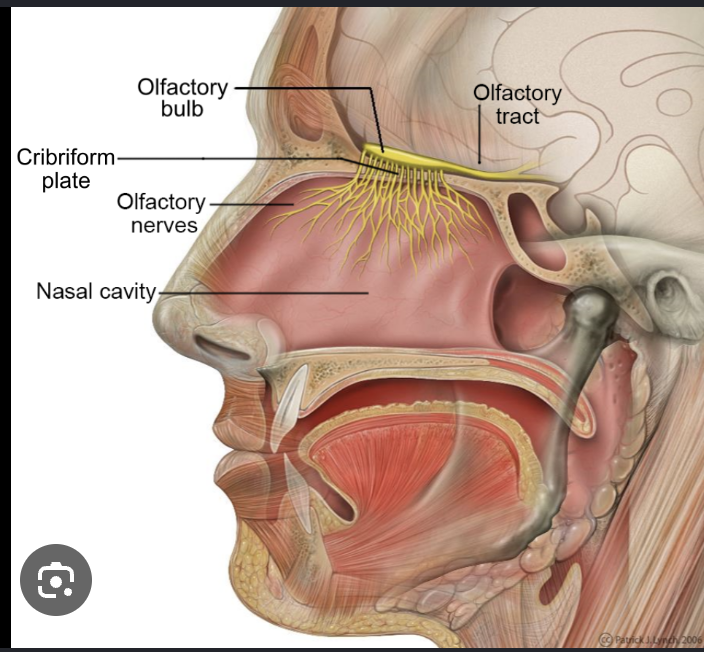
olfactory epithelium
covers the superior nasal conchae and contains olfactory sensory neurons
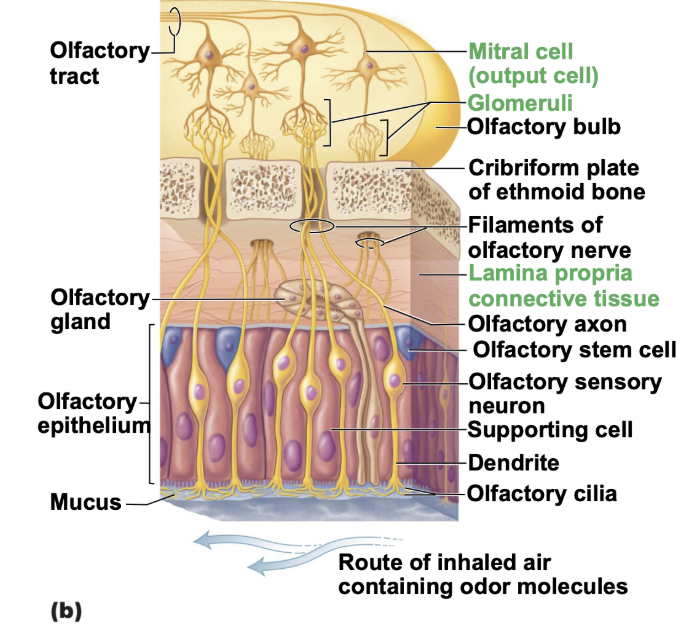
bipolar neurons
olfactory receptor neurons in the olfactory epithelium. a single dendrite that extends to the epithelial surface and an axon that travels to the olfactory bulb. contains apical cilia detecting odorants and imitation electrical signals
tongue papillae
tiny raised structures on the surface of the tongue. receptor organs
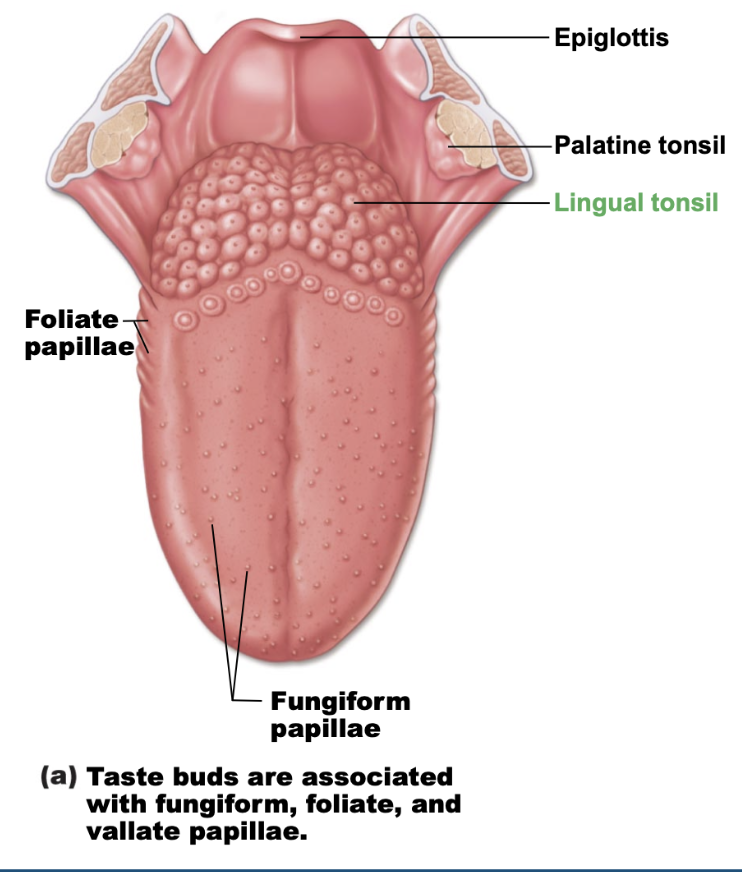
fungiform papillae
help perceive taste and flavor
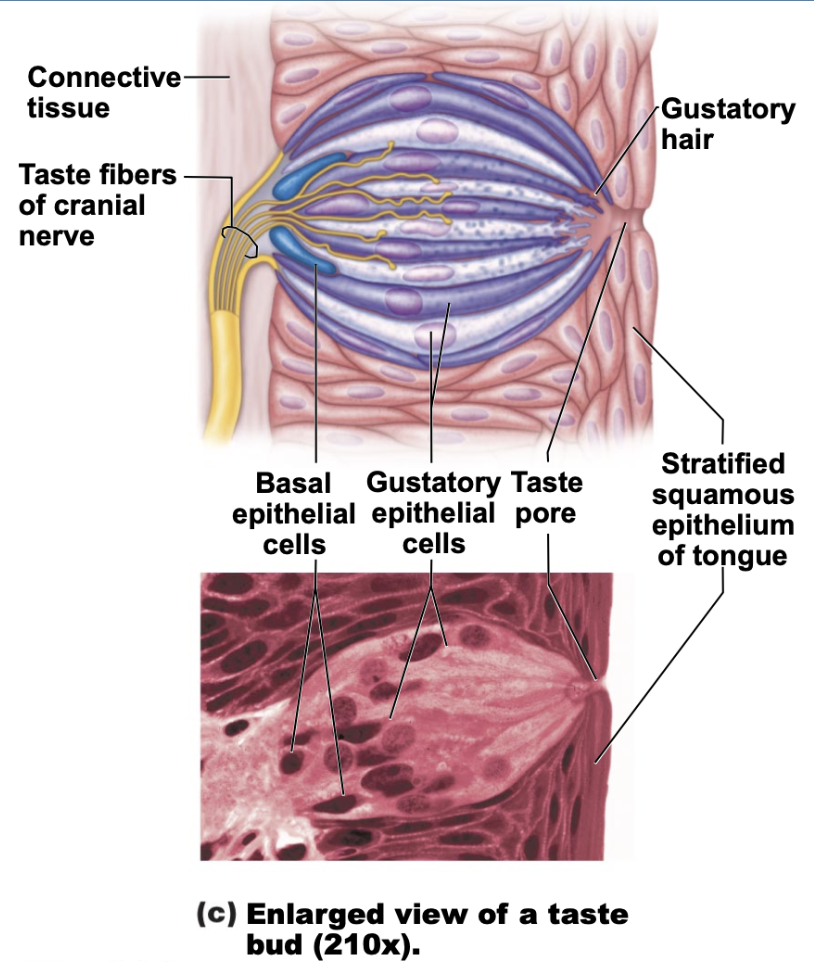
gustatory epithelial cels
taste cells containing gustatory hairs acting as receptors.
3 types:
releases serotonin
lack synaptic vesicles
one releases atp as neurotransmitters
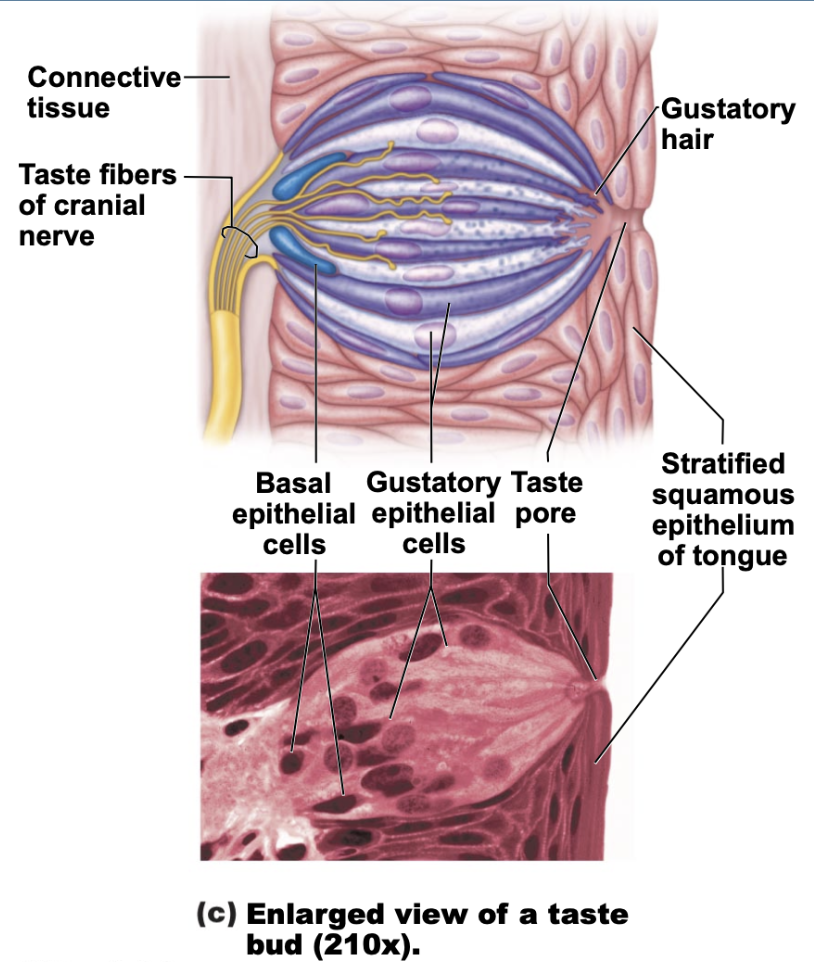
basal epithelial cells
dynamic stem cells that divide every 7-10 days
sweet taste
sugars, saccharin, alcohol, some amino acids, some lead salts
sour
H+ in solution
salty
metal ions
bitter
alkaloids such as quinine and nicotine and aspirin
umami
amino acids glutamate and aspartate