APUSH Great Depression New Deal Programs, APUSH: Period 7
 Call Kai
 Learn
Learn Practice Test
 Spaced Repetition
 Match
Match Flashcards
 Knowt Play
1/135

There's no tags or description
Looks like no tags are added yet.
Name | Mastery | Learn | Test | Matching | Spaced | Call with Kai |
|---|
No analytics yet
Send a link to your students to track their progress
136 Terms
Emergency Banking Act
helped the banks out and stabilized them with a holiday, with a fireside chat he gave the people confidence in banks again.
Federal Deposit Insurance Corporation (FDIC)
guaranteed money from the government when a bank crashes and you have a deposit in there
Agricultural Adjustment Act (AAA)
Gave farmers money to reduce crop size to reduce production and bring up the value of crops
Were new deal programs short term or long term?
short term; they were to stabilize and stop the economic plummet
Works Progress Administration (WPA)
Hires jobless people to build public buildings and parks, goal was to give many people jobs.
Public Works Administration (PWA)
similar to the WPA, instead helping construction workers get jobs doing public projects
Soil Conservation Act
Established the soil conservation service, which deals with soil erosion problems, carries out soil surveys, and does research on soil salinity.
National Industrial Recovery Act (NIRA)
made industry codes for the public works and the president could regulate the industry
Social Security Act
tax that took money out of check and gave it back in pensions in retirement
Tennessee Valley Authority
built dams to control flooding and produce cheap electric power
Civilian Conservation Corps
hired unemployed men to work on natural conservation projects, giving more jobs
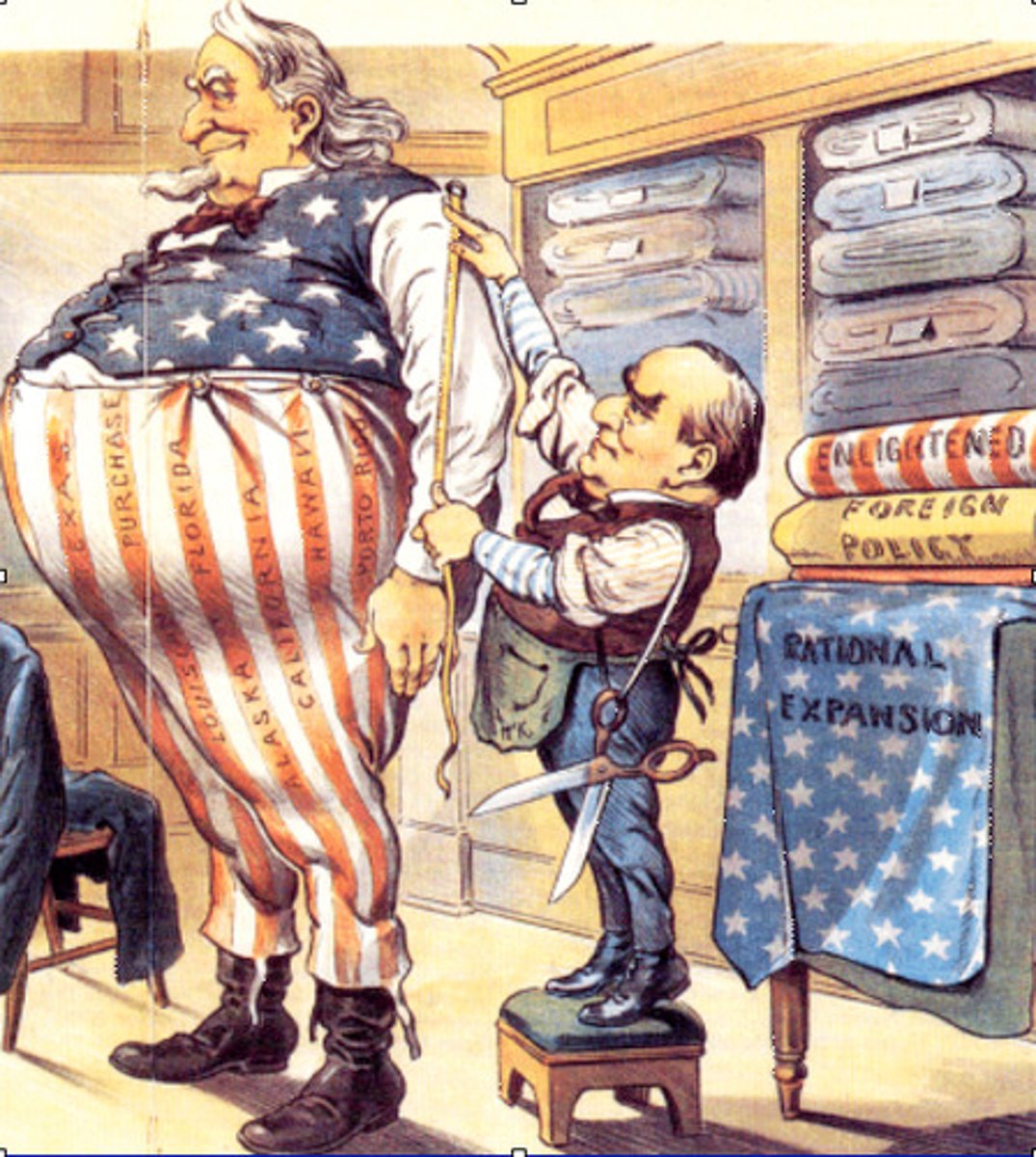
imperialism
A policy in which a strong nation seeks to dominate other countries politically, socially, and economically.
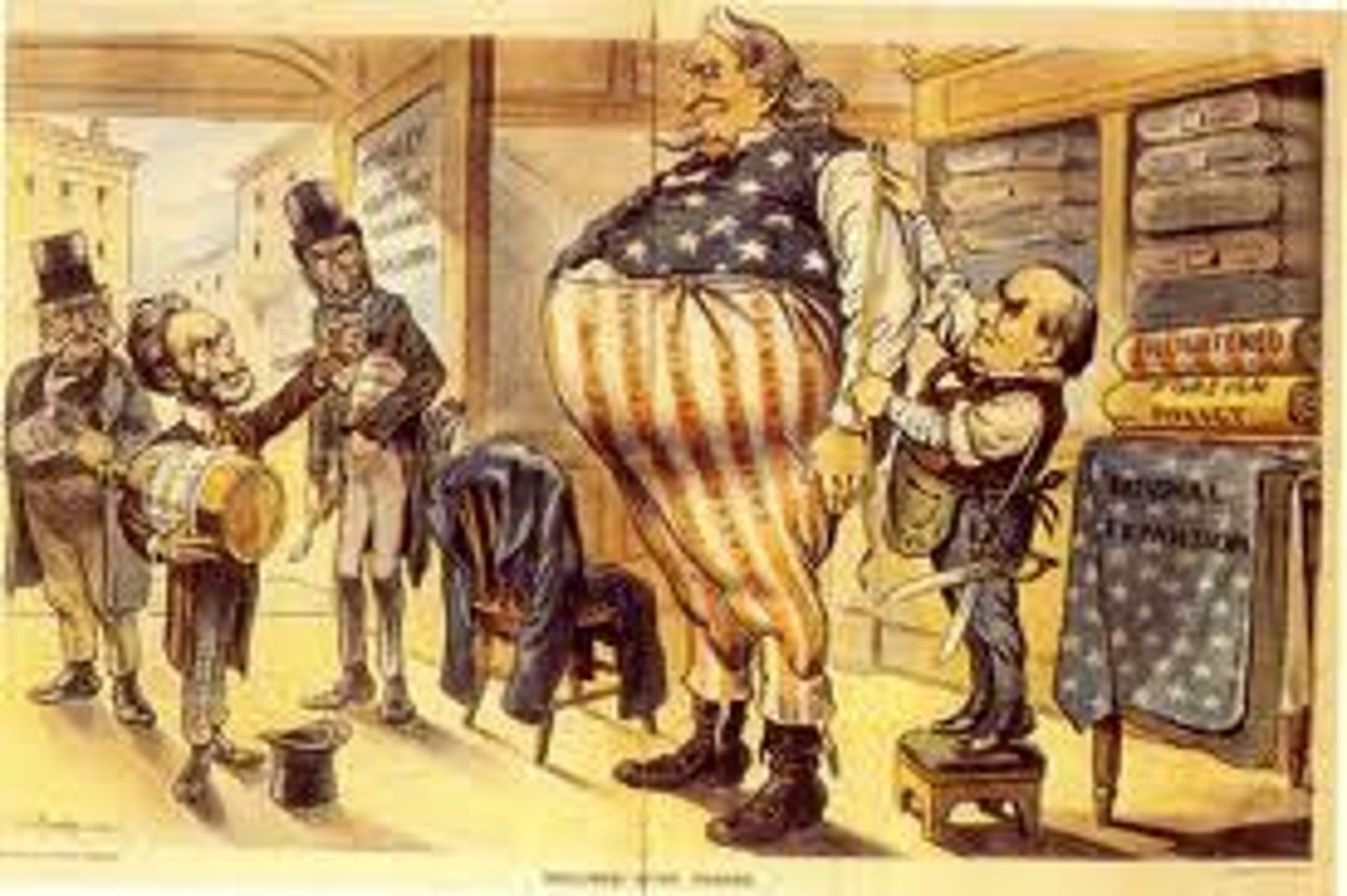
isolationism
The U.S. policy of avoiding entangling alliances with European powers.
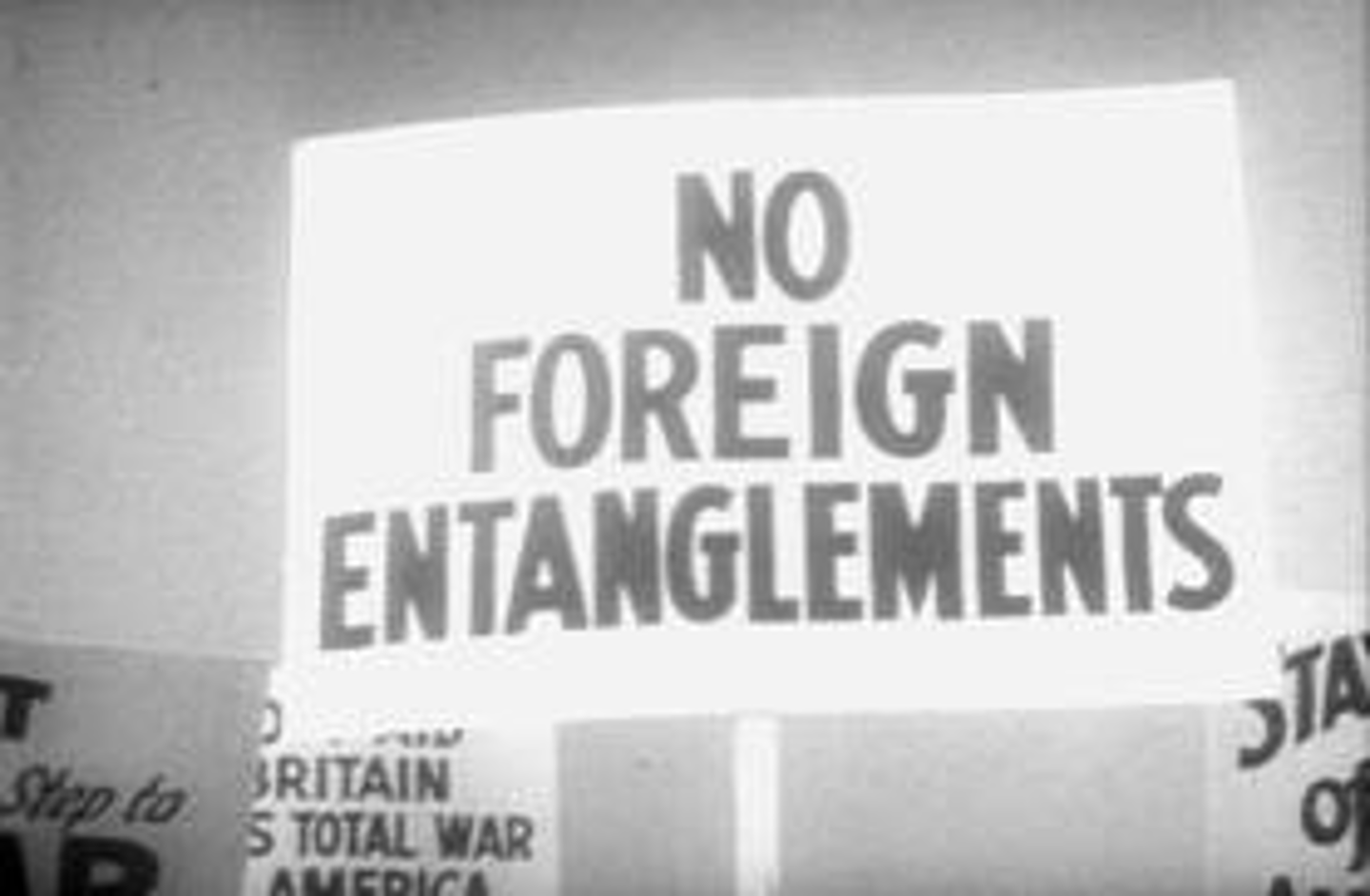
Open Door Policy
A policy proposed by the US in 1899, under which ALL nations would have equal opportunities to trade in China.
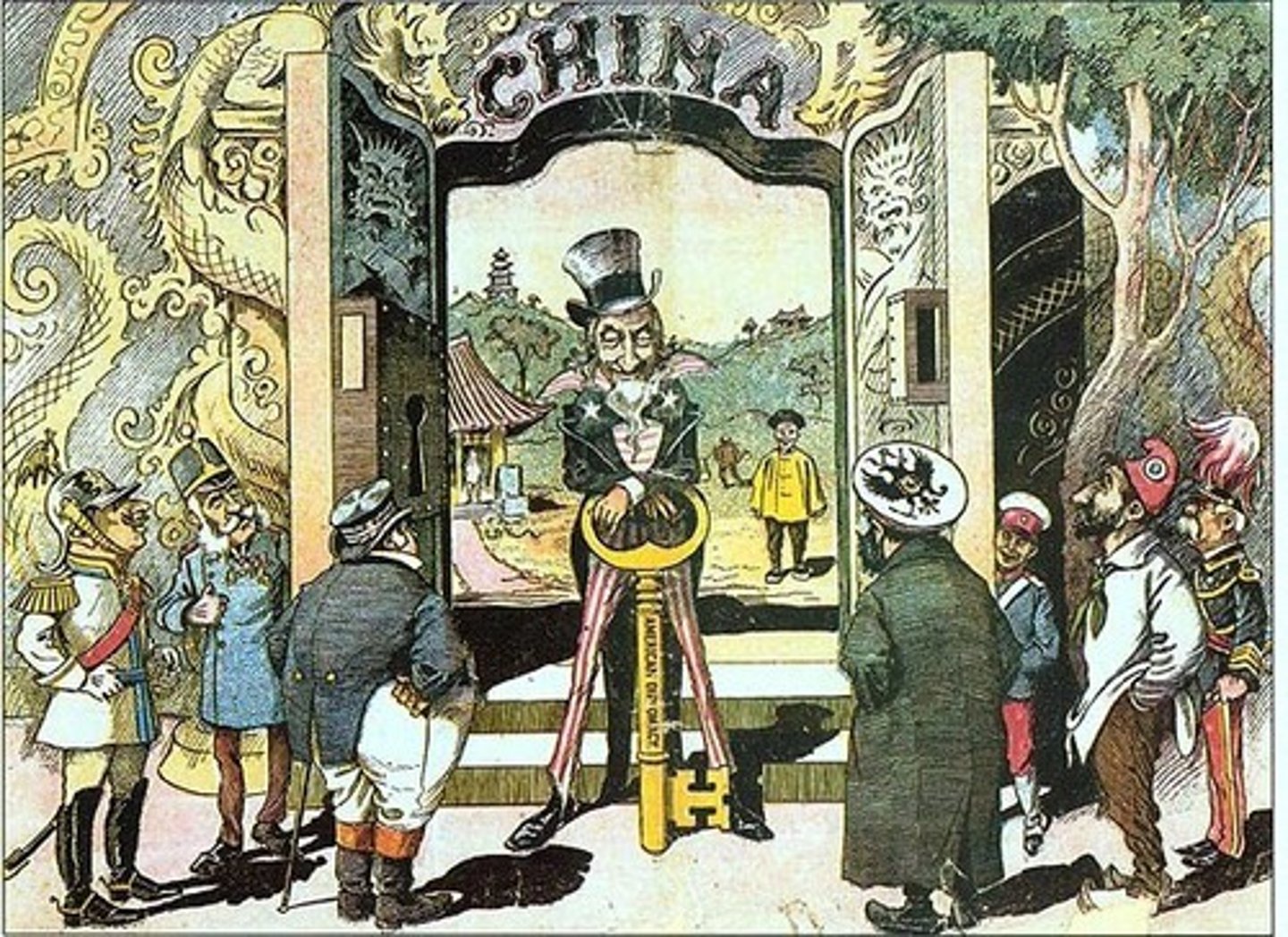
Spanish-American War
A conflict fought between Spain and the United States in 1898. The U.S. defeated Spain and gained the Philippines, Guam, and Puerto Rico.
Progressive Era
Progressives tended to be women, middle class, and live in urban areas. Sought to reform problems created by the Industrial Revolution.
initiative
In politics, the procedure whereby voters can, through petition, present proposed legislation directly to the electorate.
referendum
The submission of a law, proposed or already in effect, to a direct vote of the electorate.
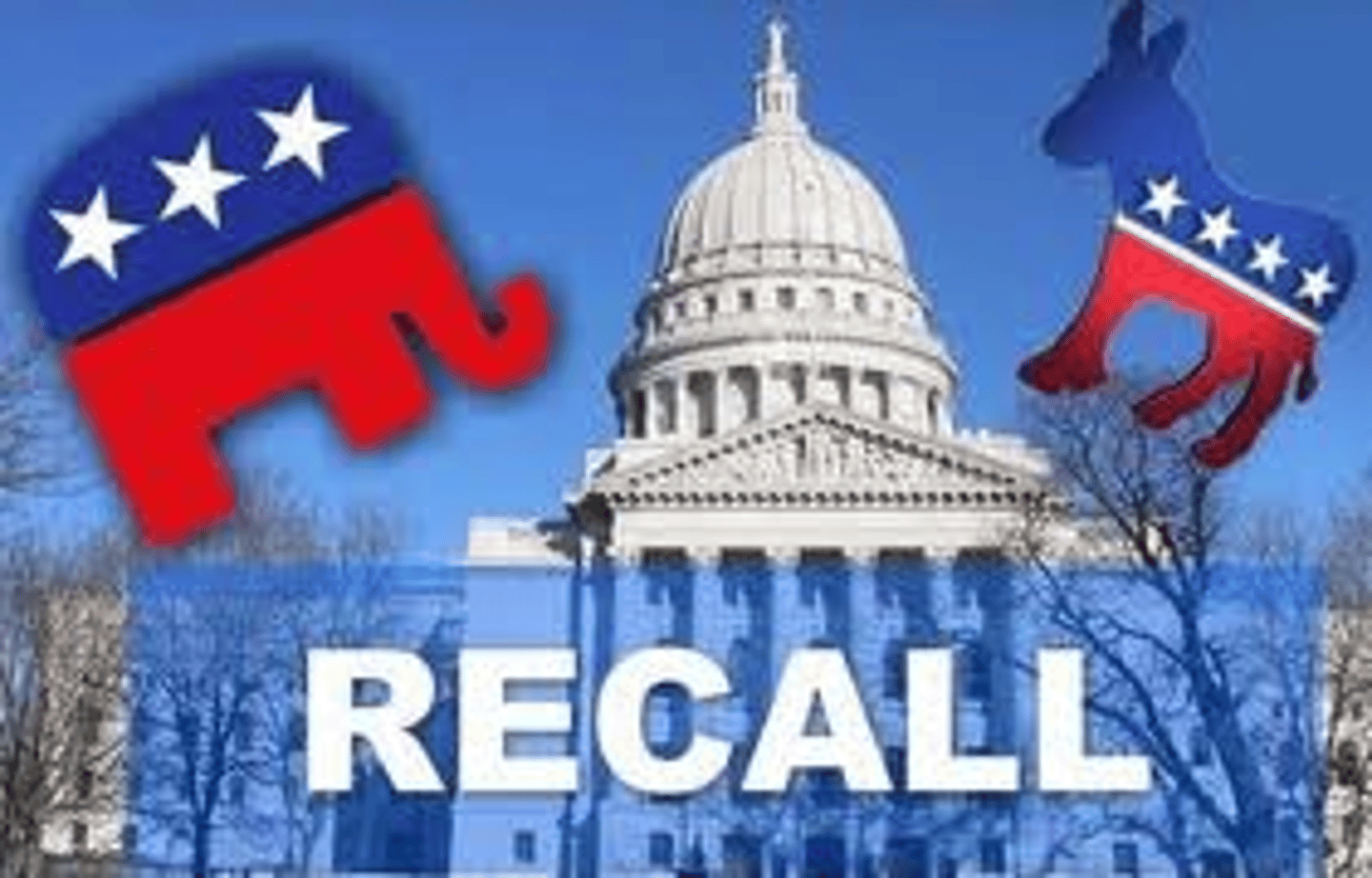
recall
In politics, a procedure for removing an official from office through popular election or other means.
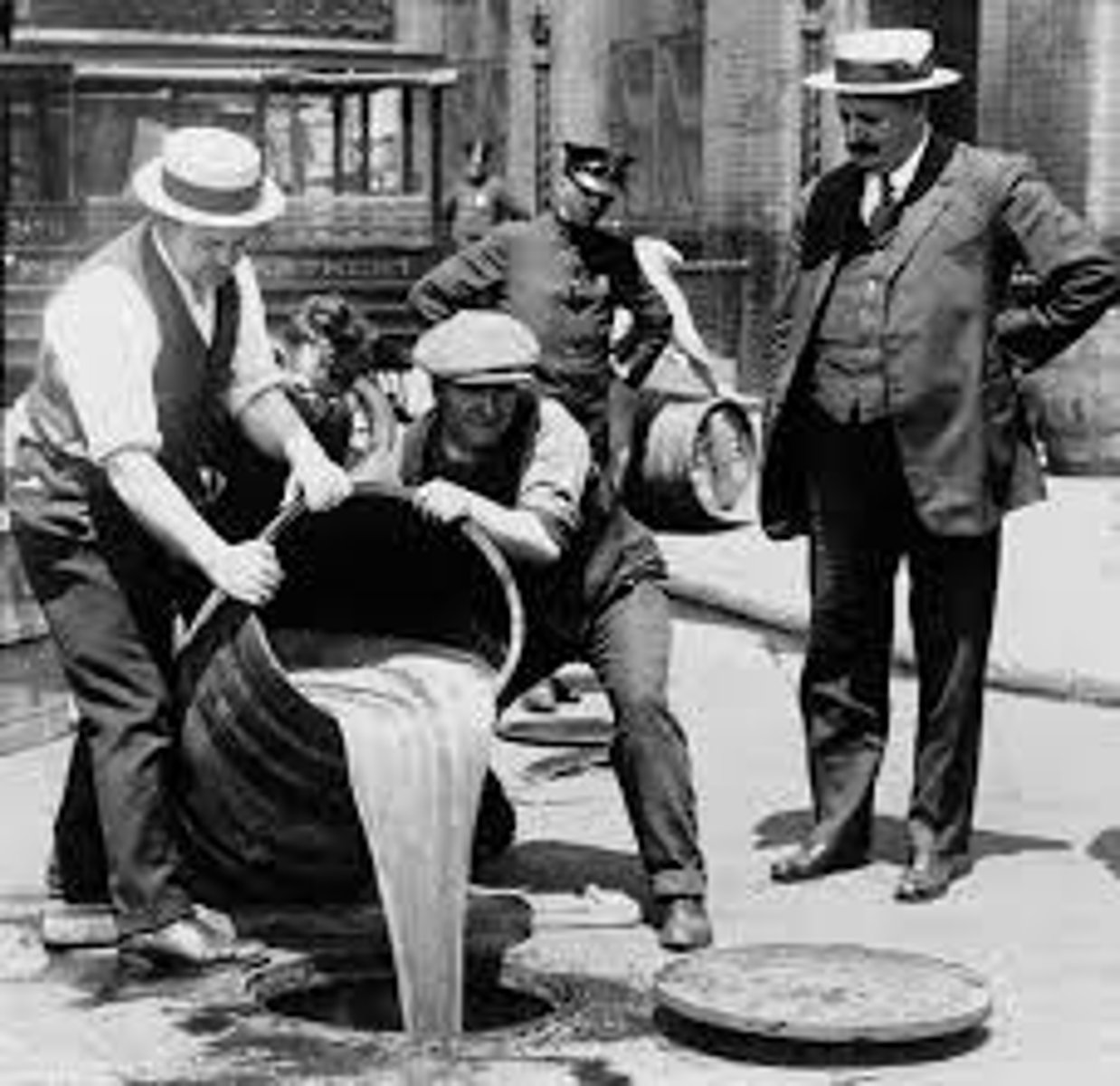
Prohibition
A nationwide constitutional ban on the production, importation, transportation and sale of alcoholic beverages that remained in place from 1920 to 1933.
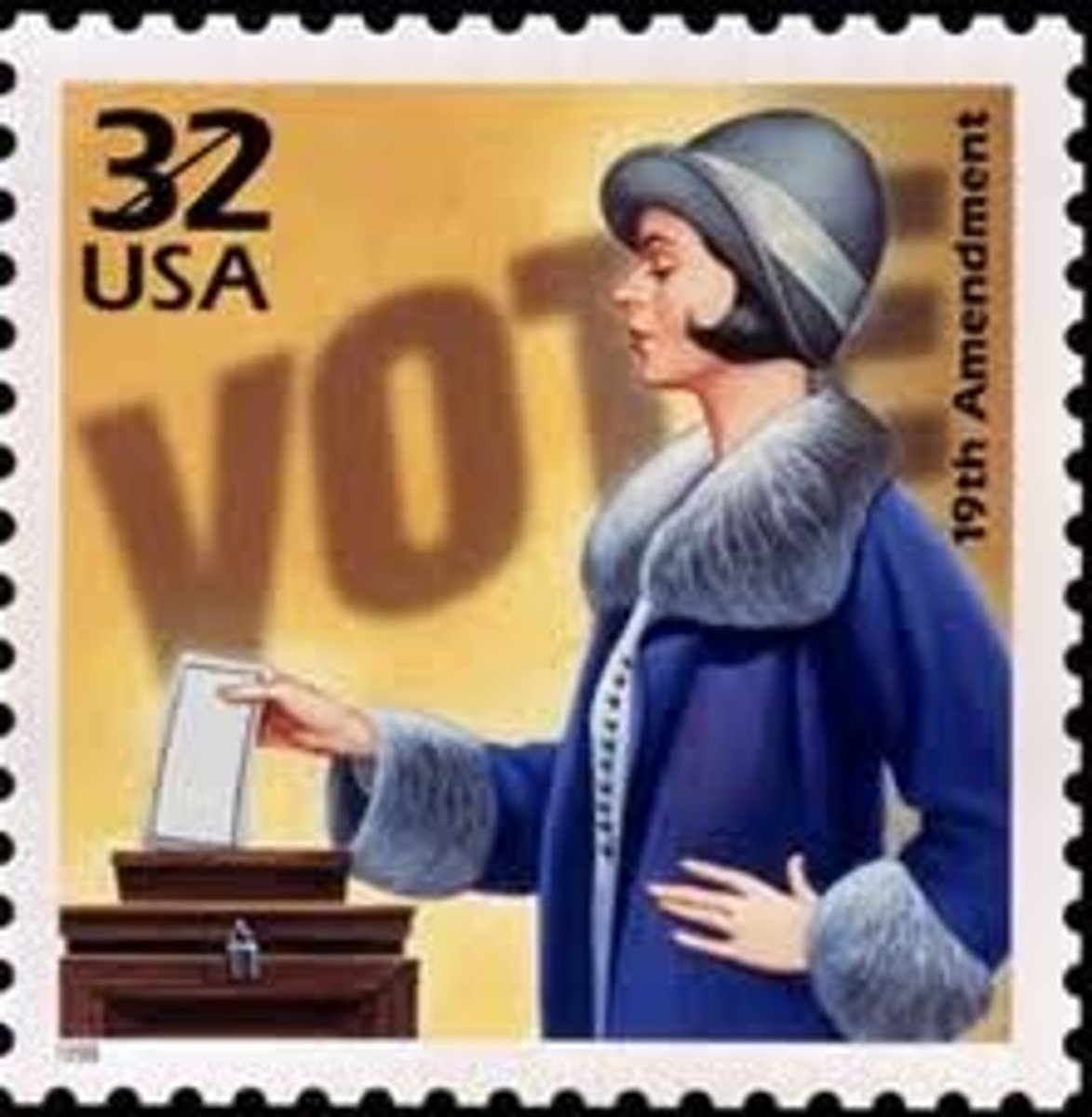
Women's suffrage
The women's right to vote, granted by the 19th amendment to the U.S. Constitution (1920).
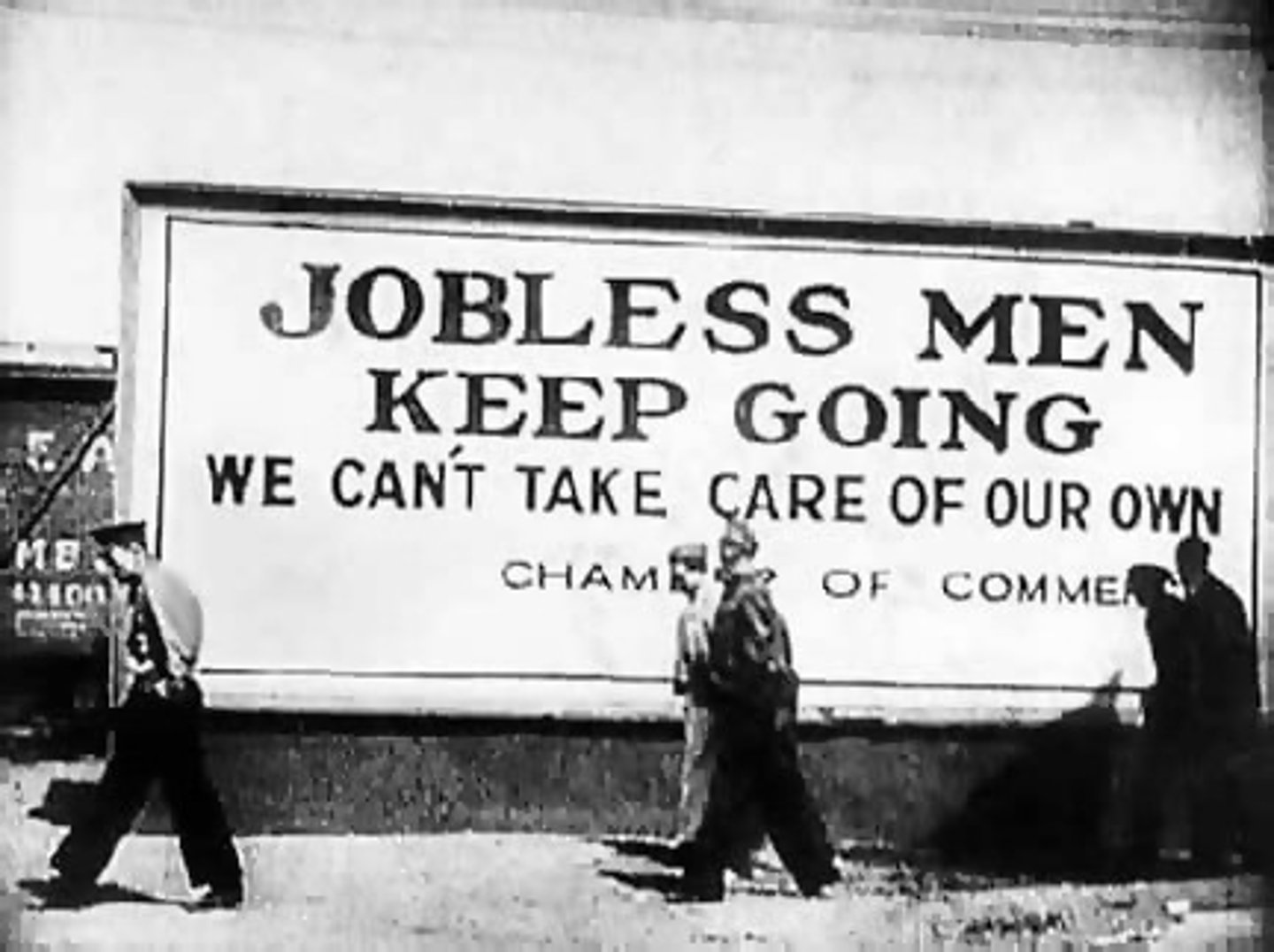
The Great Depression
The deepest and longest-lasting economic downturn in the history of the Western industrialized world. In the United States.
conservationists
Those who advocate for the sustainable use and management of natural resources including wildlife, water, air, and earth deposits, both -- renewable and non-renewable.
Welfare State
A system whereby the government undertakes to protect the health and well-being of its citizens, especially those in financial or social need, by means of grants, pensions, and other benefits.
Liberalism
A viewpoint or ideology associated with free political institutions and religious toleration, as well as support for a strong role of government in regulating capitalism and constructing the welfare state.
mass media
Diversified mediatechnologies that are intended to reach a large audience by mass communication.

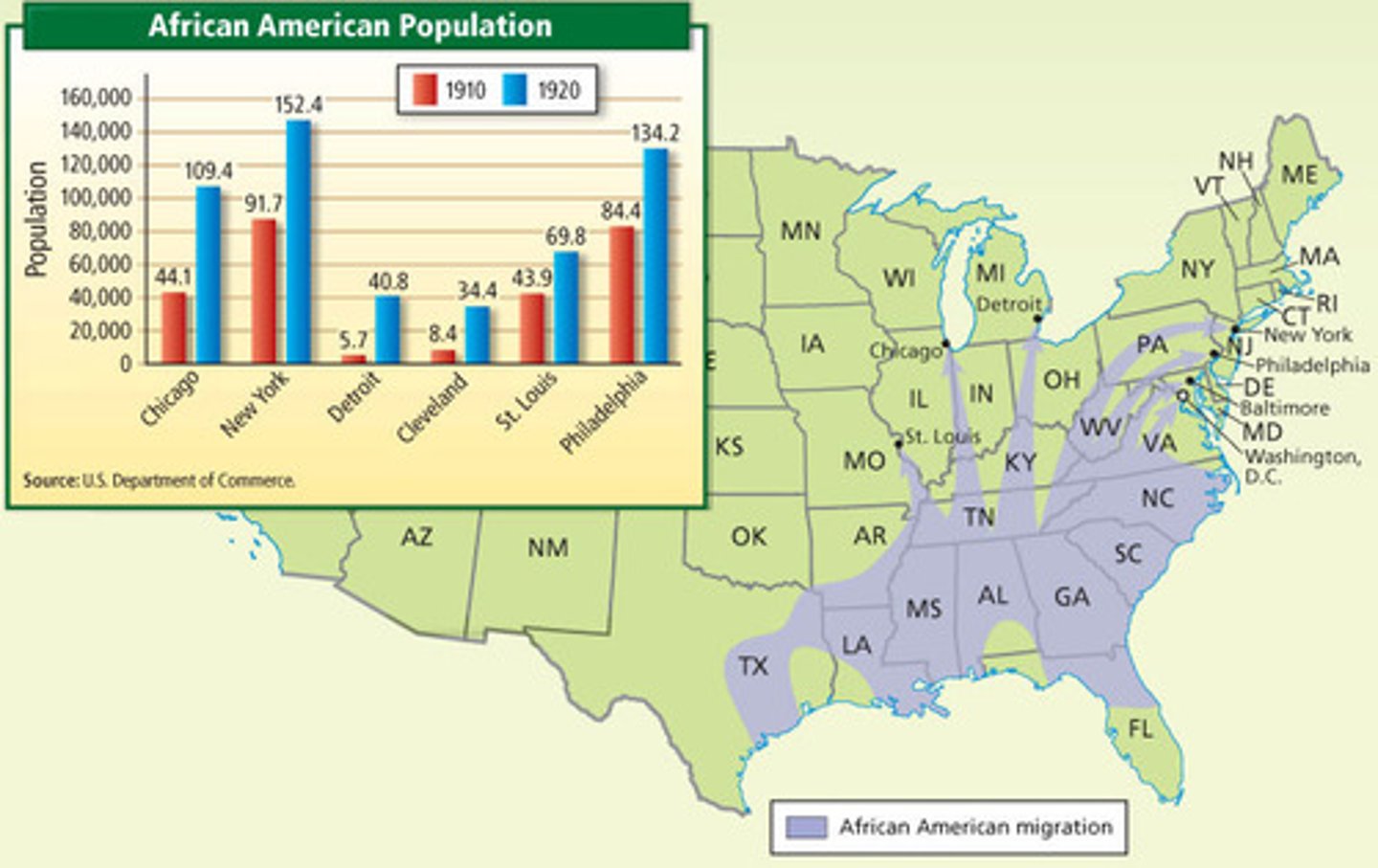
The Great Migration
The movement of 6 million African-Americans out of the rural Southern United States to the urban Northeast, Midwest, and West that occurred between 1910 and 1970.
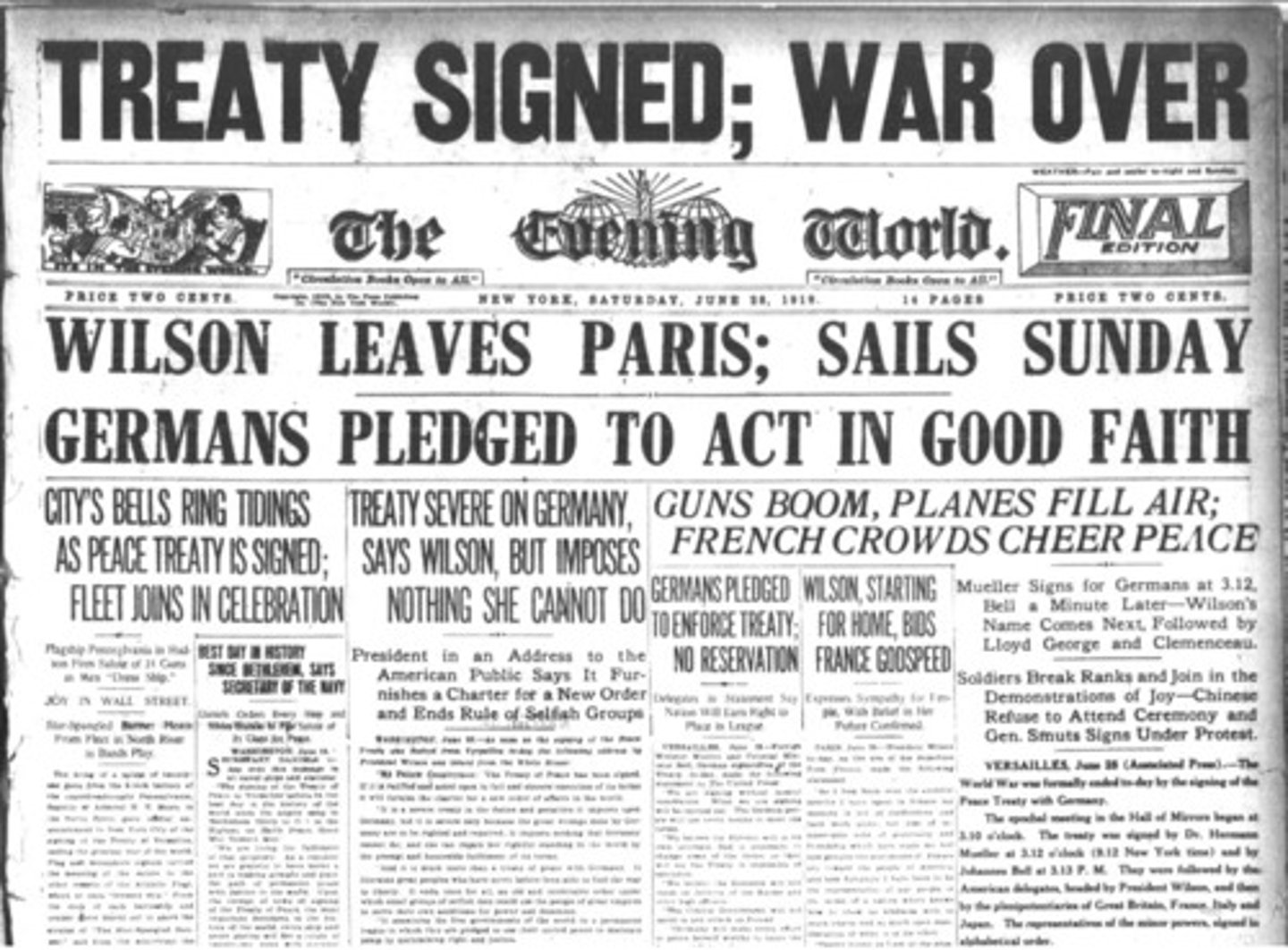
Treaty of Versailles
The peace treaty at the end of World War I. It ended the state of war between Germany and the Allied Powers.
League of Nations
An intergovernmental organization founded on 10 January 1920 as a result of the Paris Peace Conference that ended the First World War. It lacked an armed force to enforce policy and was not joined by the United States.
fascism
An authoritarian and nationalistic right-wing system of government and social organization.
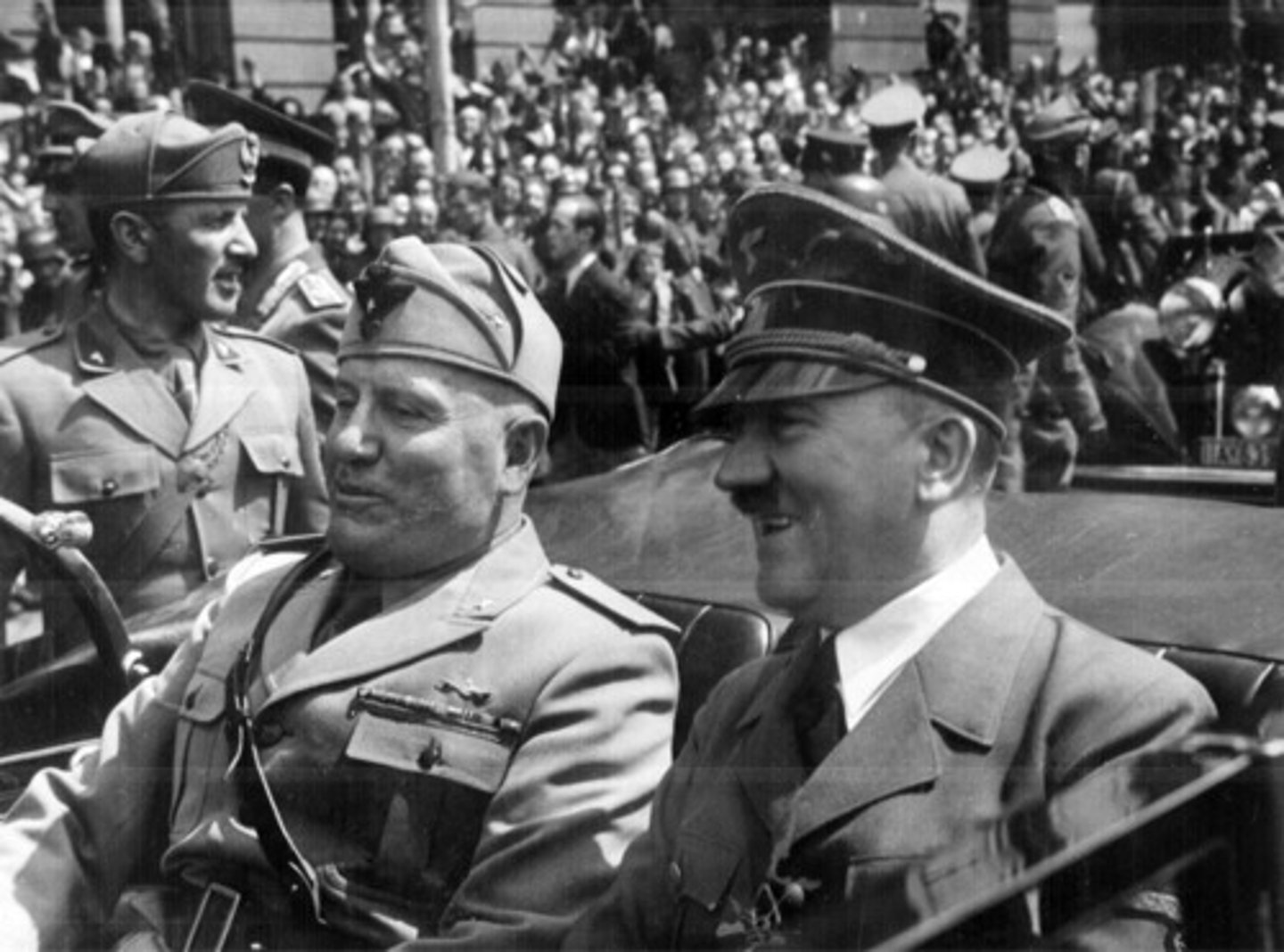
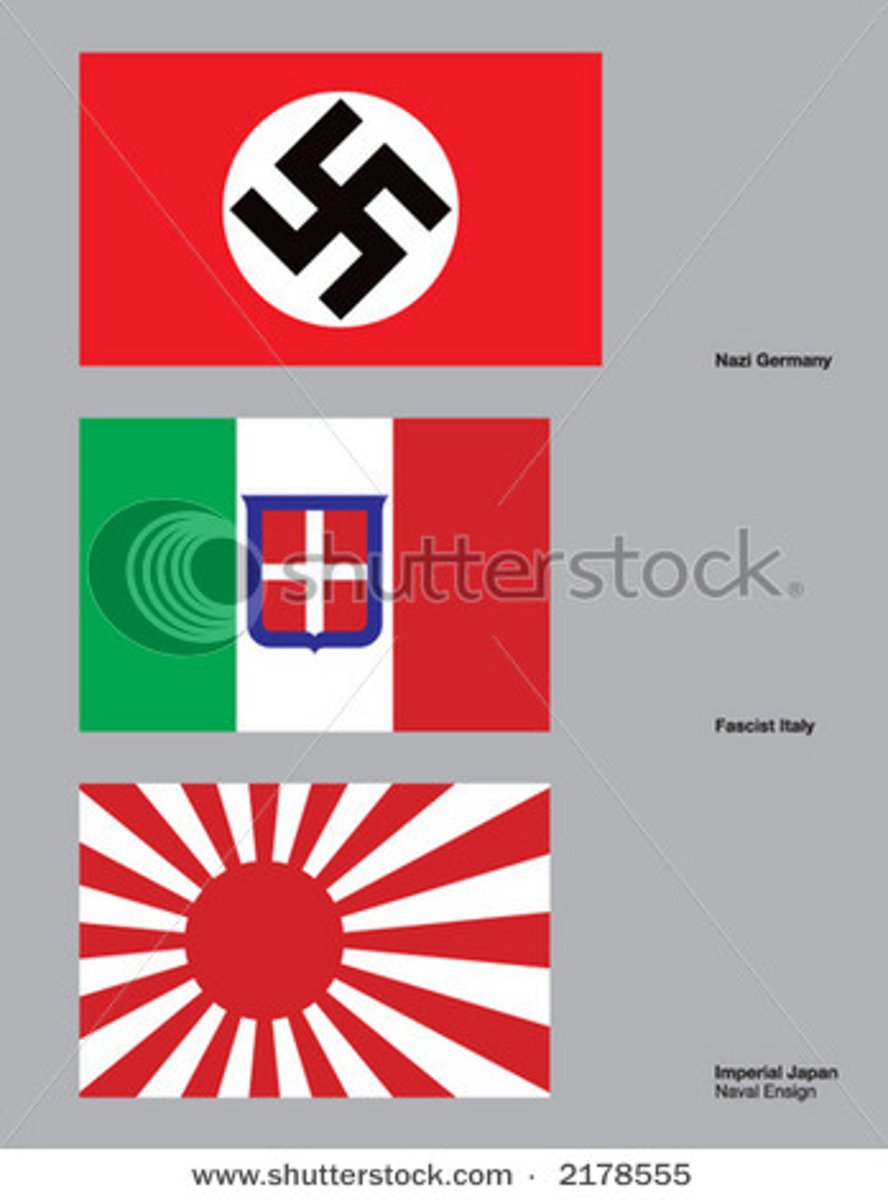
Axis Powers
Germany, Italy, and Japan, which were allied before and during World War II.
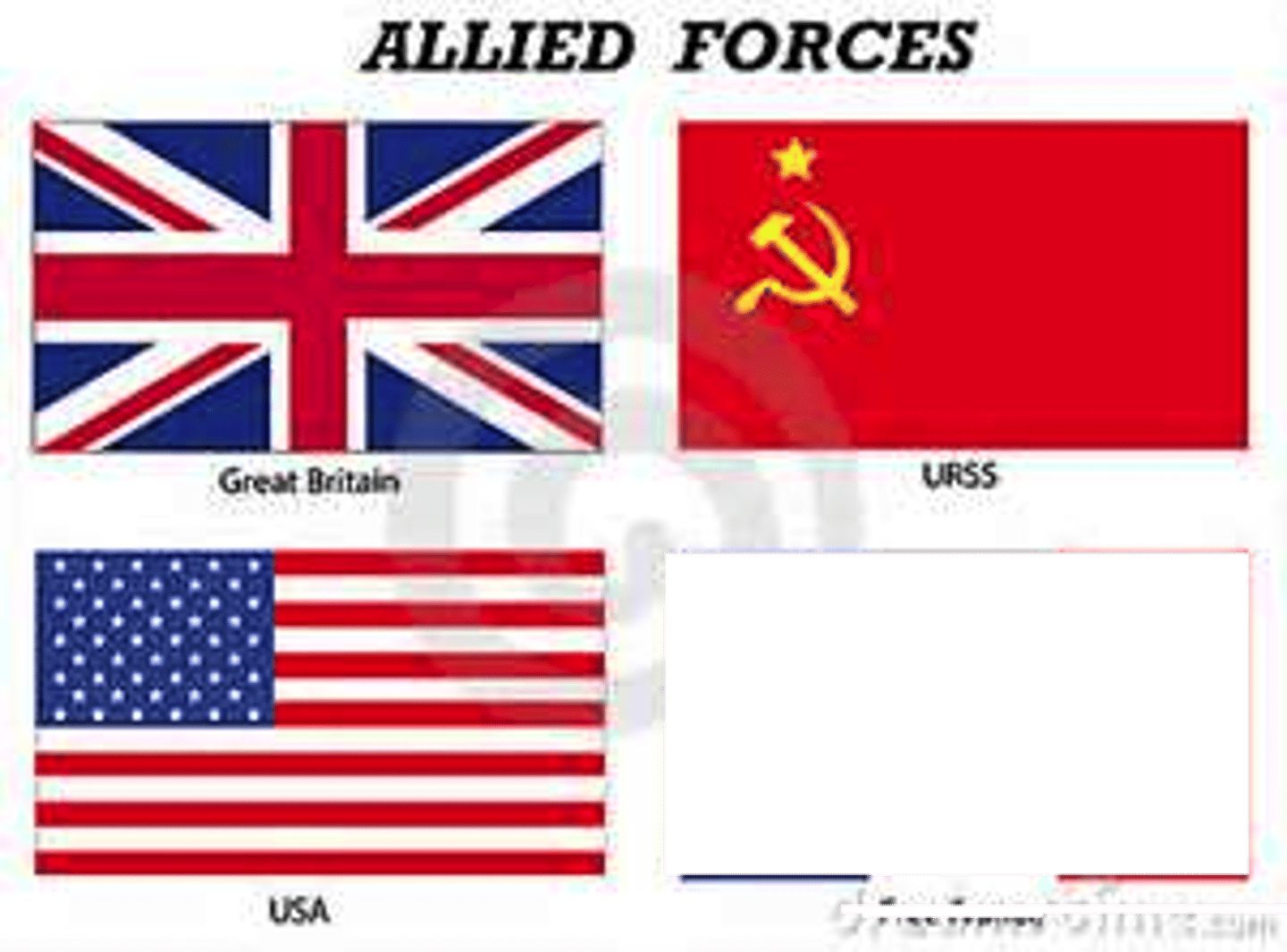
Allied Powers
U.S., Britain, France, which were allied before and during World War II.
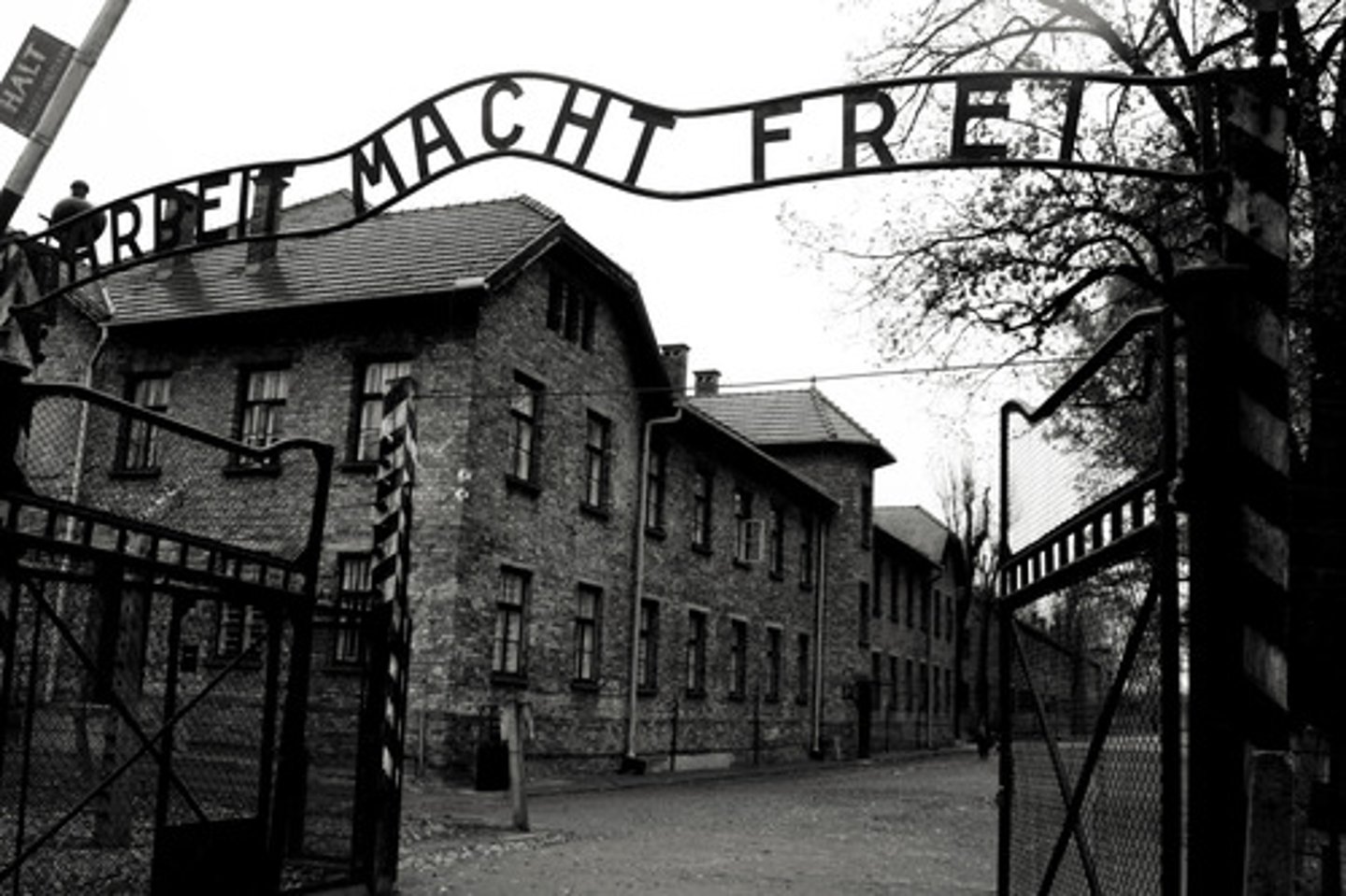
Nazi Concentration Camp
A guarded compound for the detention or imprisonment of aliens, members of ethnic minorities, political opponents. Primarily Jewish Europeans during WWII.
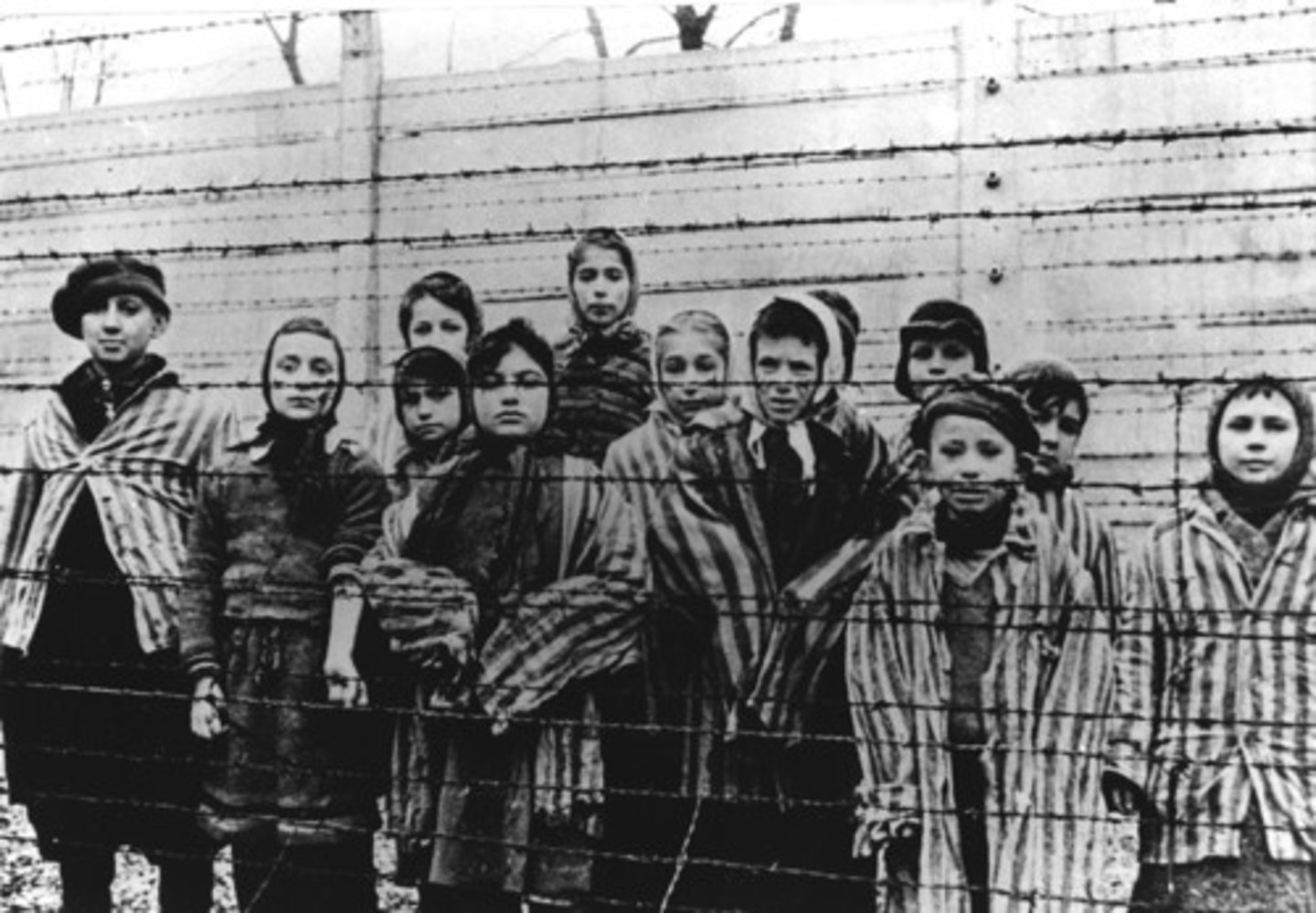
Holocaust
A genocide in which Adolf Hitler's Nazi Germany and its collaborators killed about six million Jews and members from other fringe social groups during World War II.
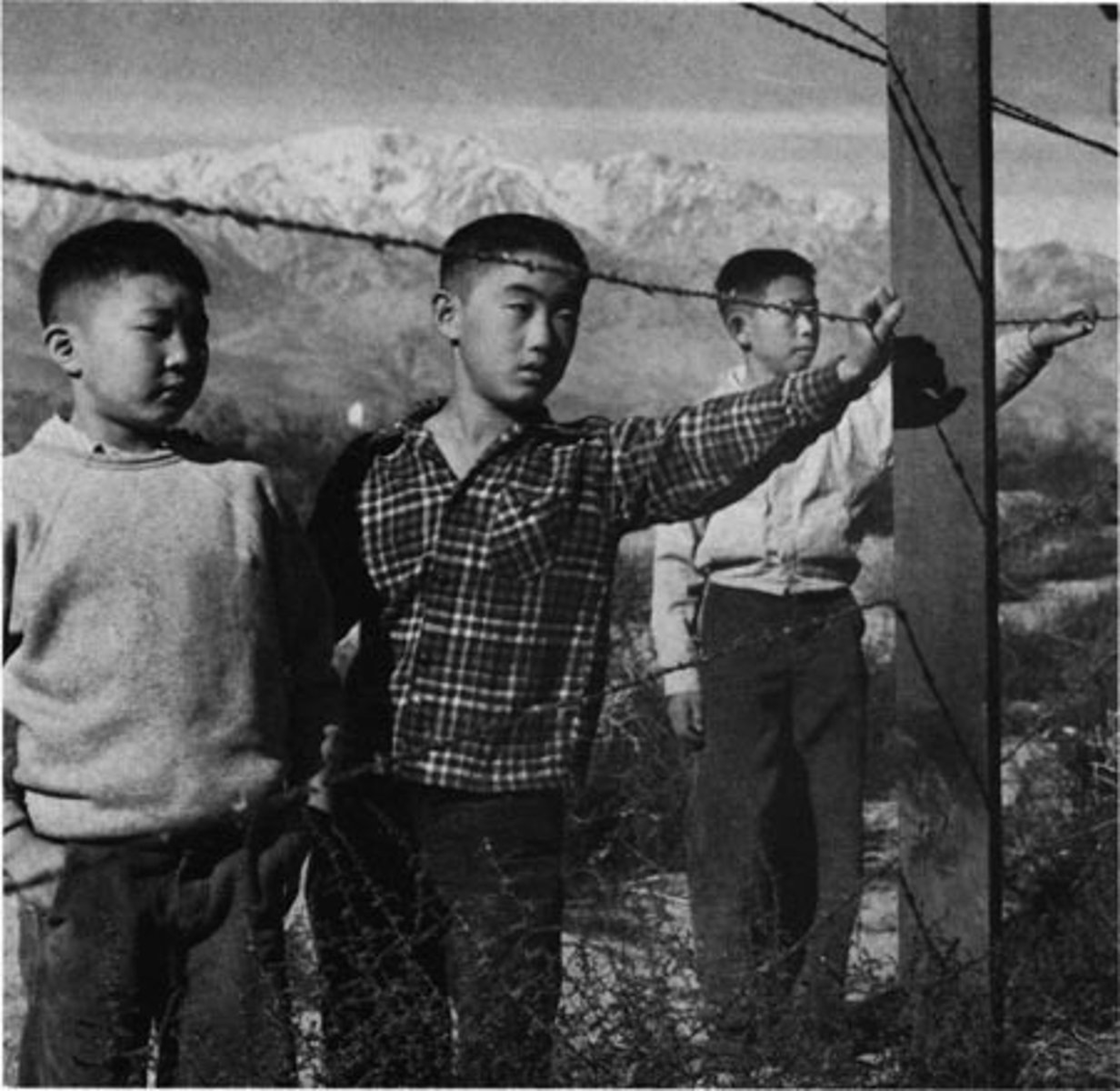
Internment of Japanese Americans
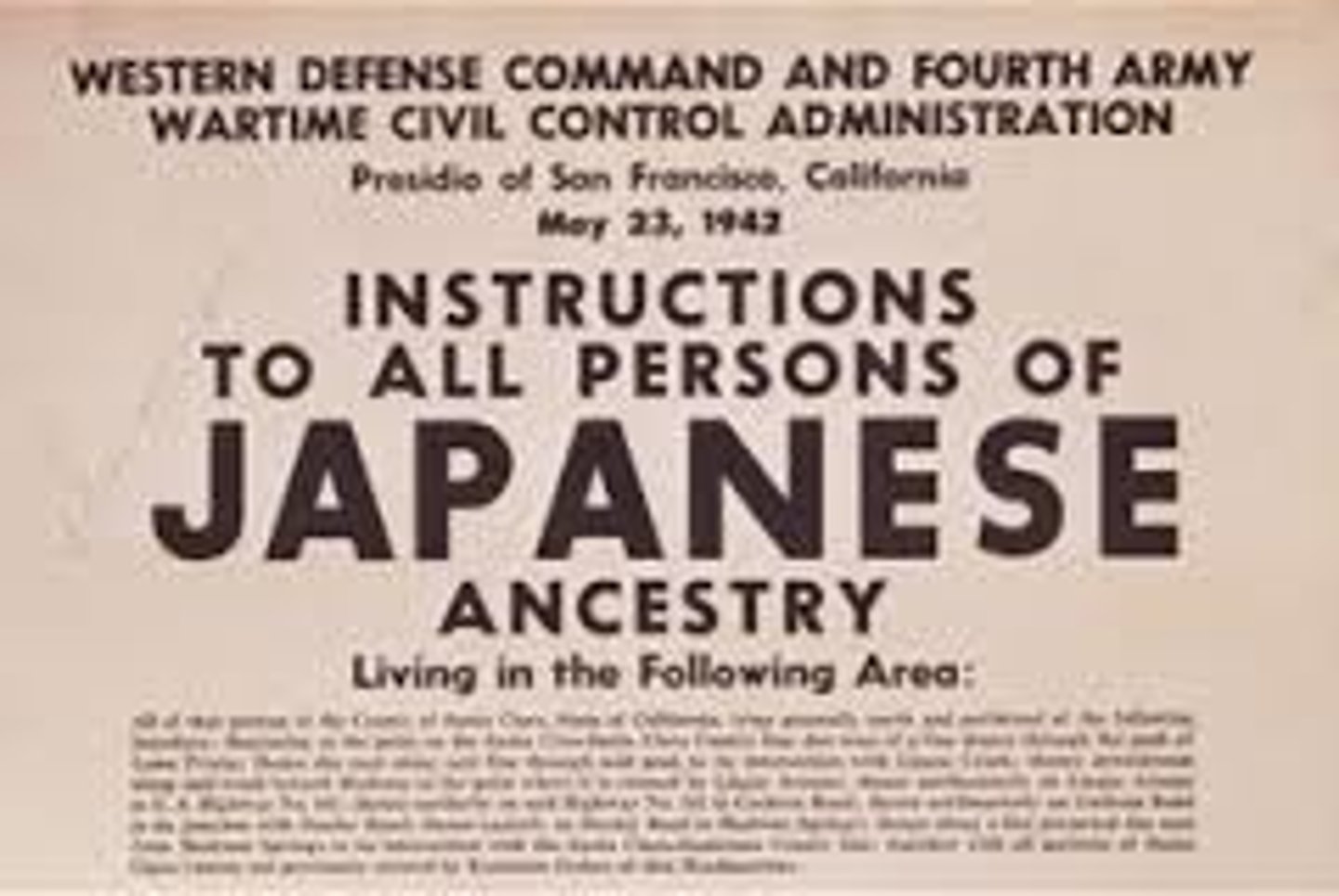
Forced relocation and incarceration in camps in the interior of the U.S. of between 110,000 and 120,000 people of Japanese ancestry who had lived on the Pacific coast.
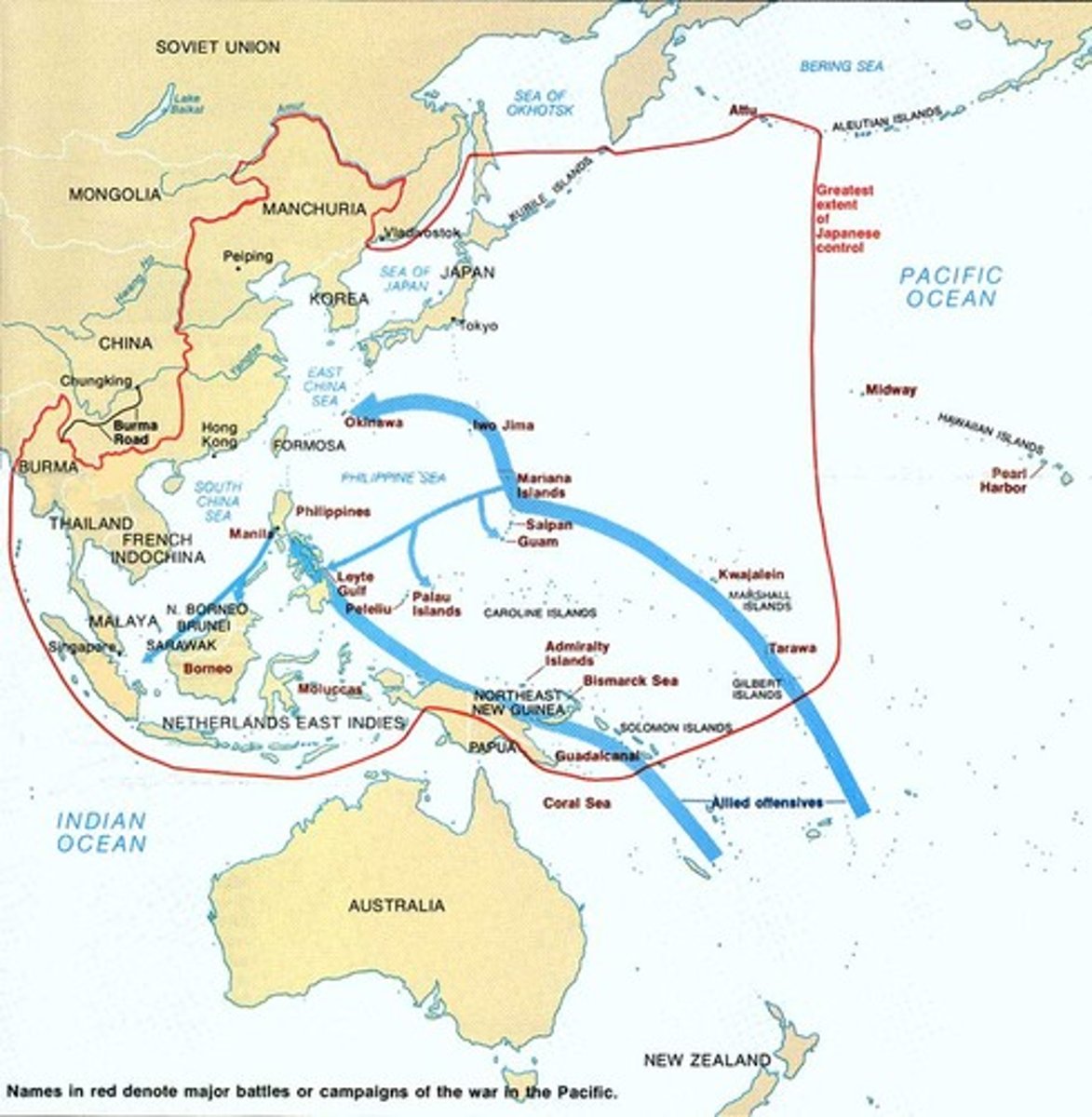
Pacific "Island Hopping"
A military strategy employed by the Allies in the Pacific War against Japan and the Axis powers during World War II. The U.S. only focused on important Japanese strongholds.
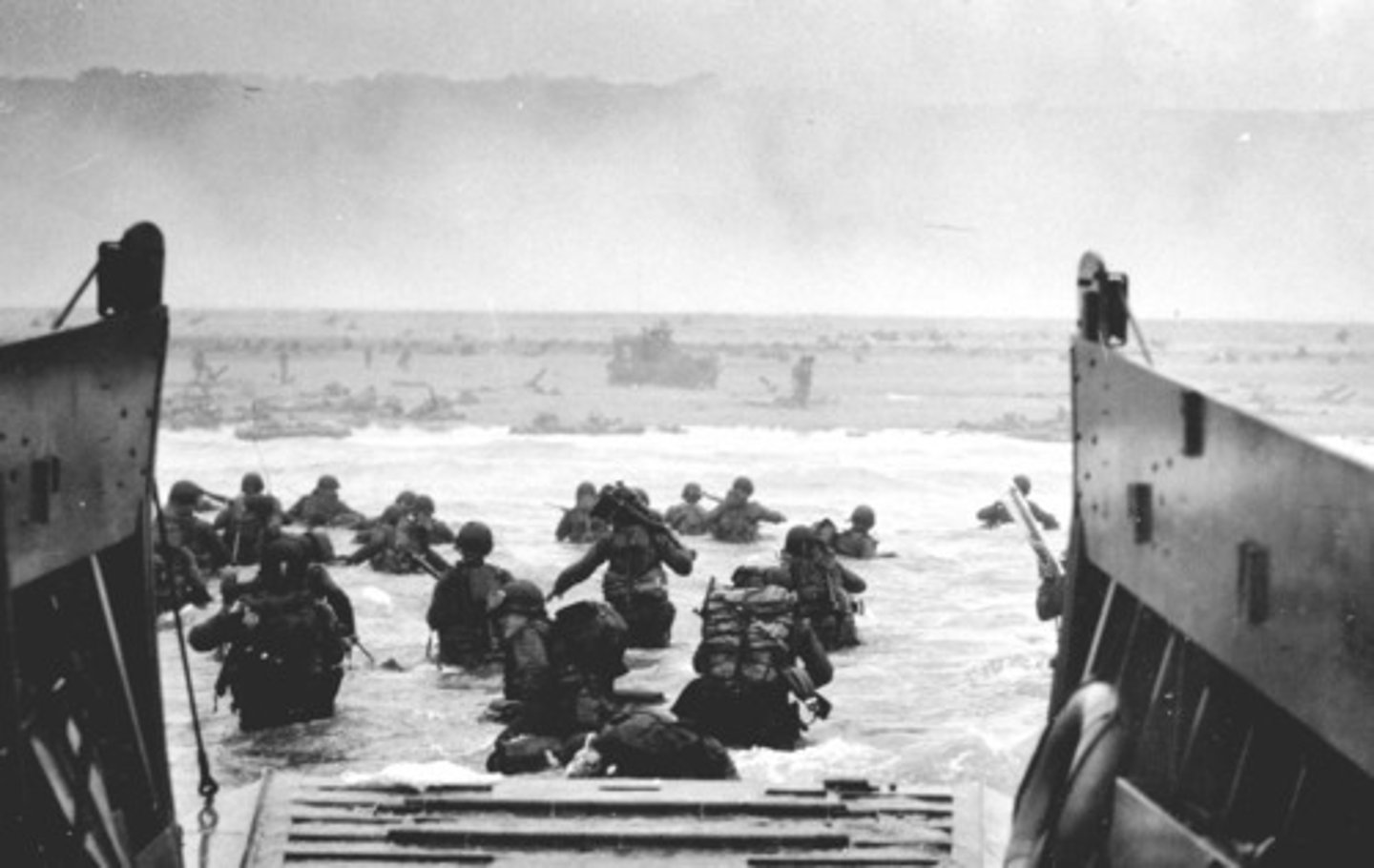
D-Day
The landing operations on Tuesday, 6 June 1944 of the Allied invasion of Normandy in Operation Overlord during World War II.
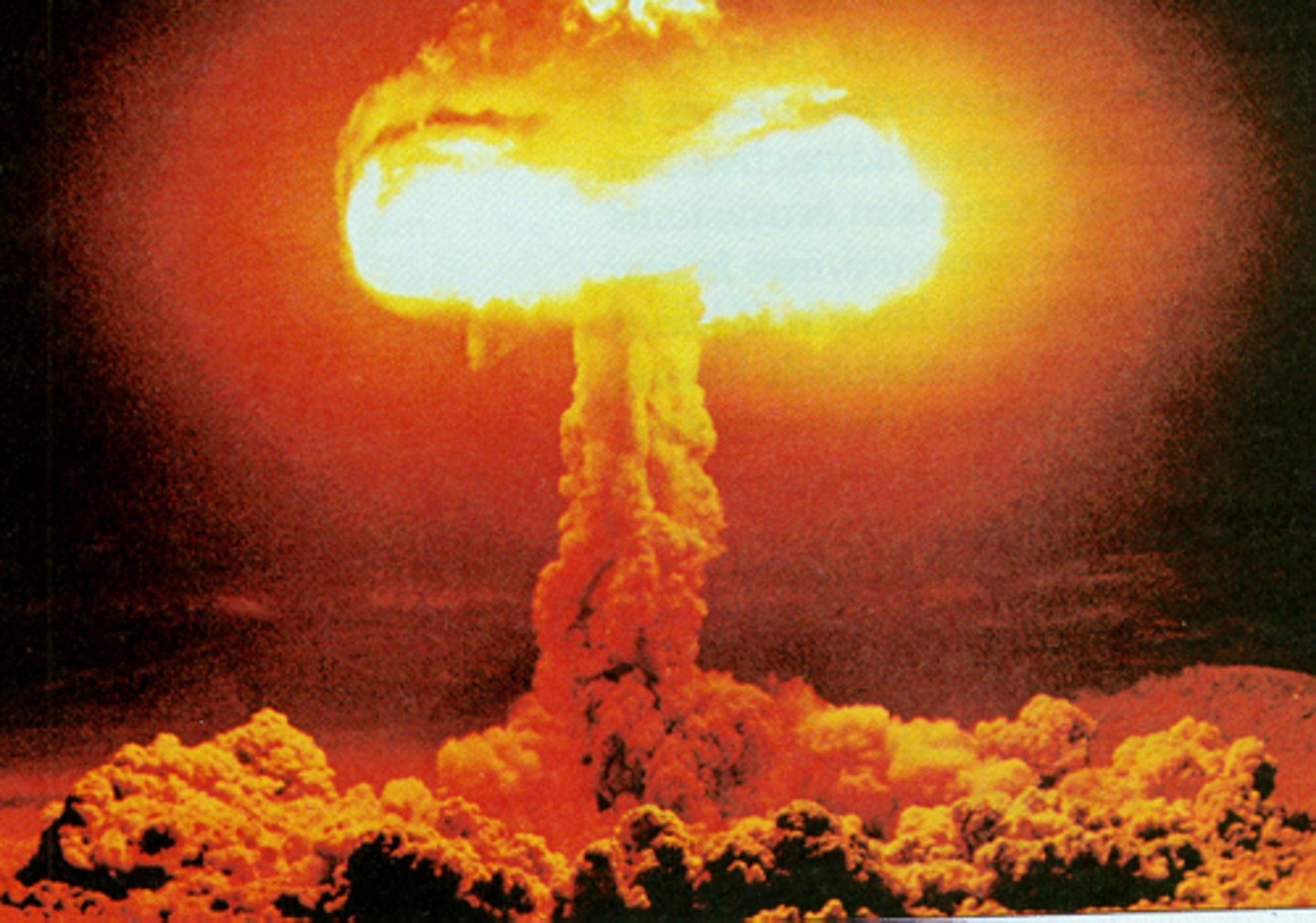
atomic bomb
A "fission" bomb dropped on Nagasaki and Hiroshima at the end of World War II.
americanization
The process of assimilating American character, manner, ideals, culture, and so on.
self-determination
In politics, the right of a people (usually based on ethnicity) to shape its own national identity and form a government, without outside coercion of influence.
graduated income tax
A tax on income in which the taxation rates are progressively higher for those whit higher income.
Muller v. Oregon (1908)
First case to use the "Brandeis brief"; recognized a 10-hour work day for women laundry workers on the grounds of health and community concerns.
Schenck v. U. S. (1919)
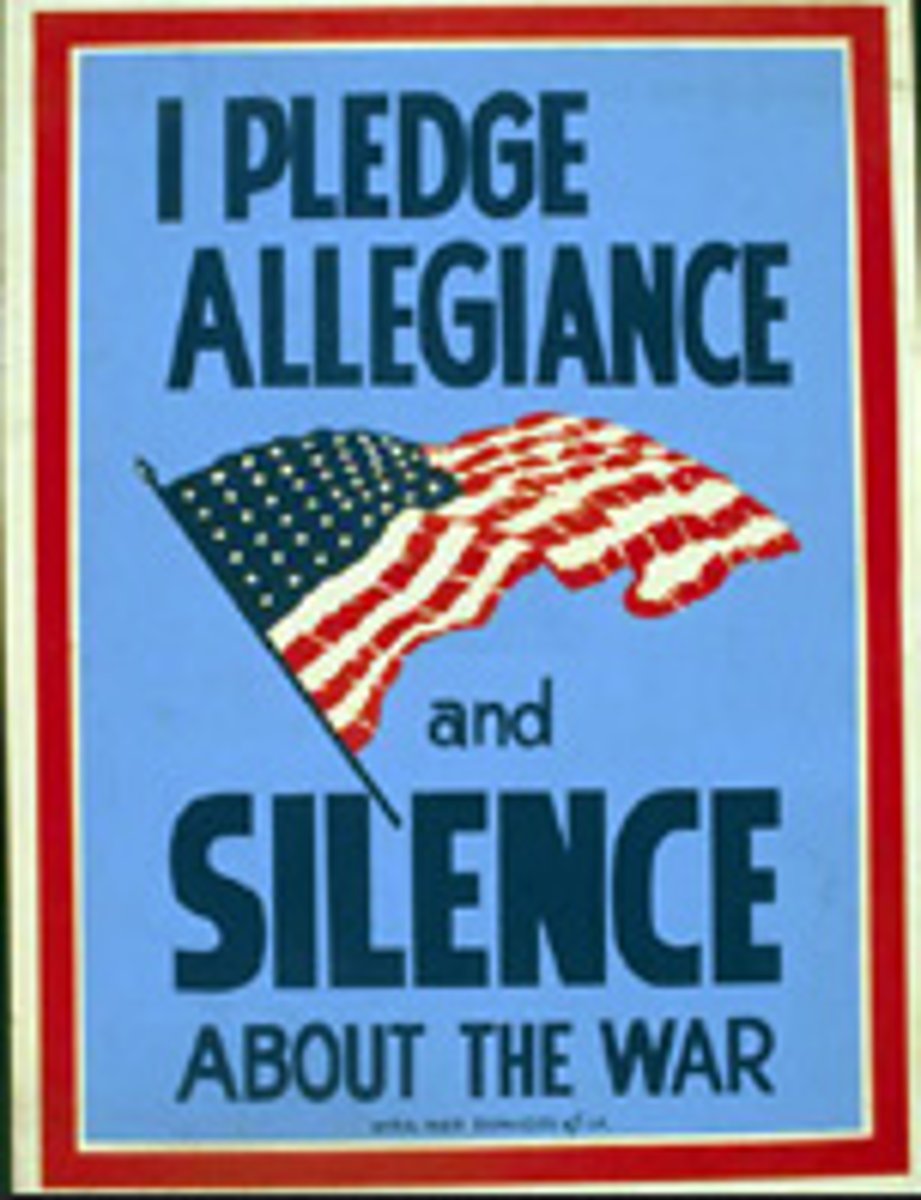
Unanimously upheld the Espionage Act of 1917 which declared that people who interfered with the war effort were subject to imprisonment; declared that the 1st Amendment right to freedom of speech was not absolute; free speech could be limited if its exercise presented a "clear and present danger."
Korematsu v. U. S. (1941)
The court upheld the constitutionality of detention camps for Japanese-Americans during World War 2.
socialism
An economic and governmental system based on public ownership of the means of production and exchange.

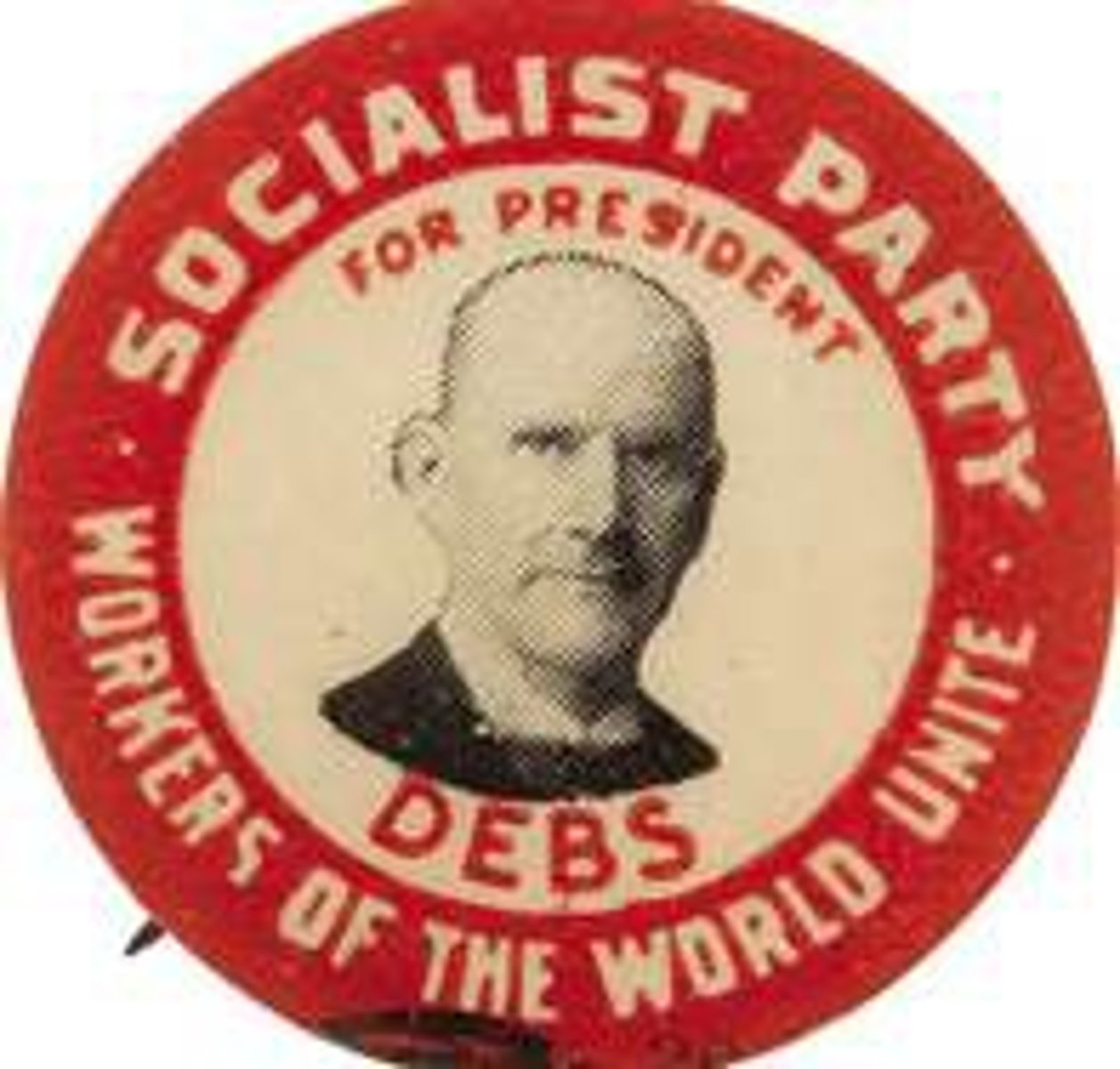
Eugene Debs
Prominent socialist leader (and five time presidential candidate) who founded the American Railroad Union and led the 1894 Pullman Strike
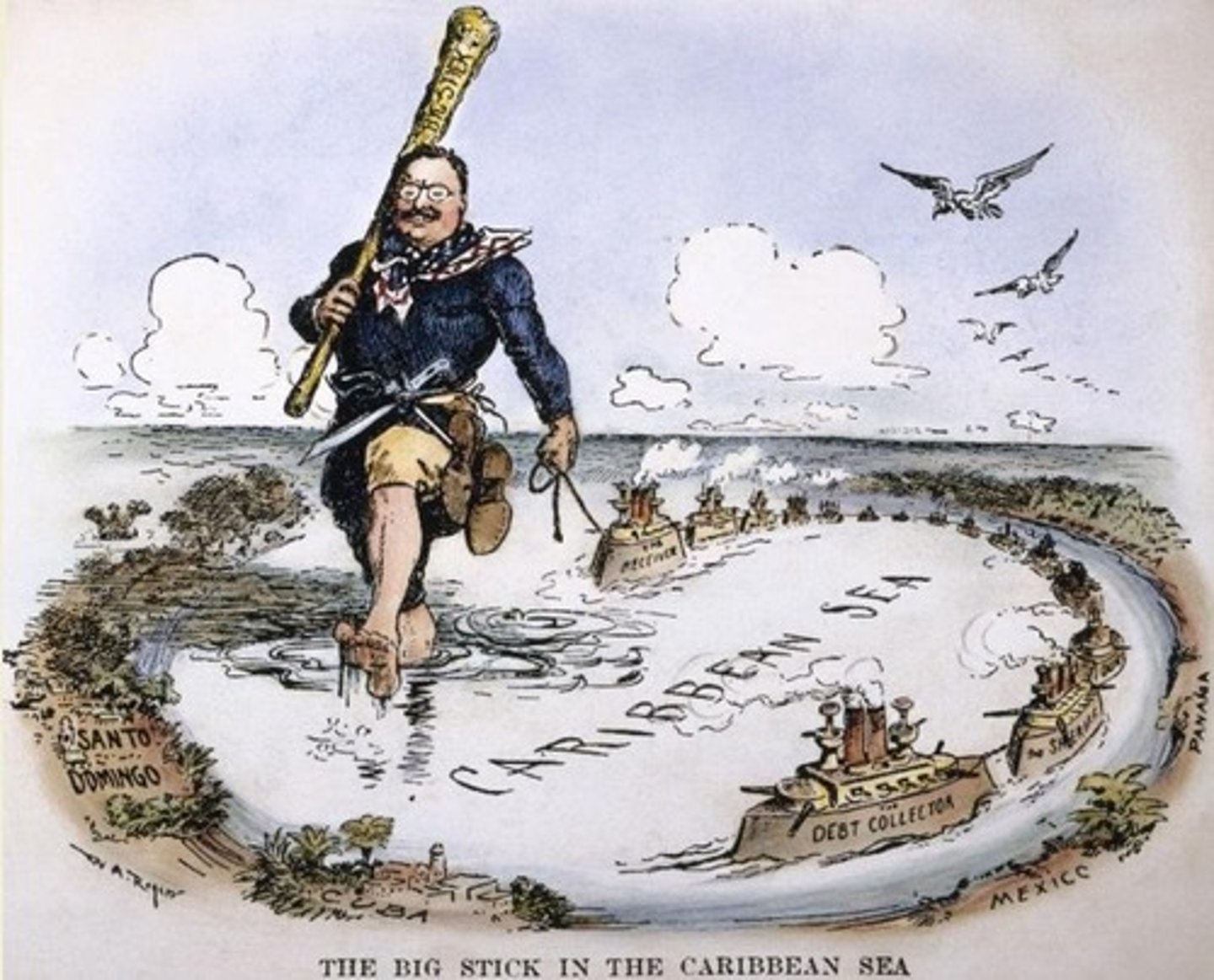
Roosevelt Corollary
Roosevelt's 1904 extension of the Monroe Doctrine, stating that the United States has the right to protect its economic interests in South And Central America by using military force.
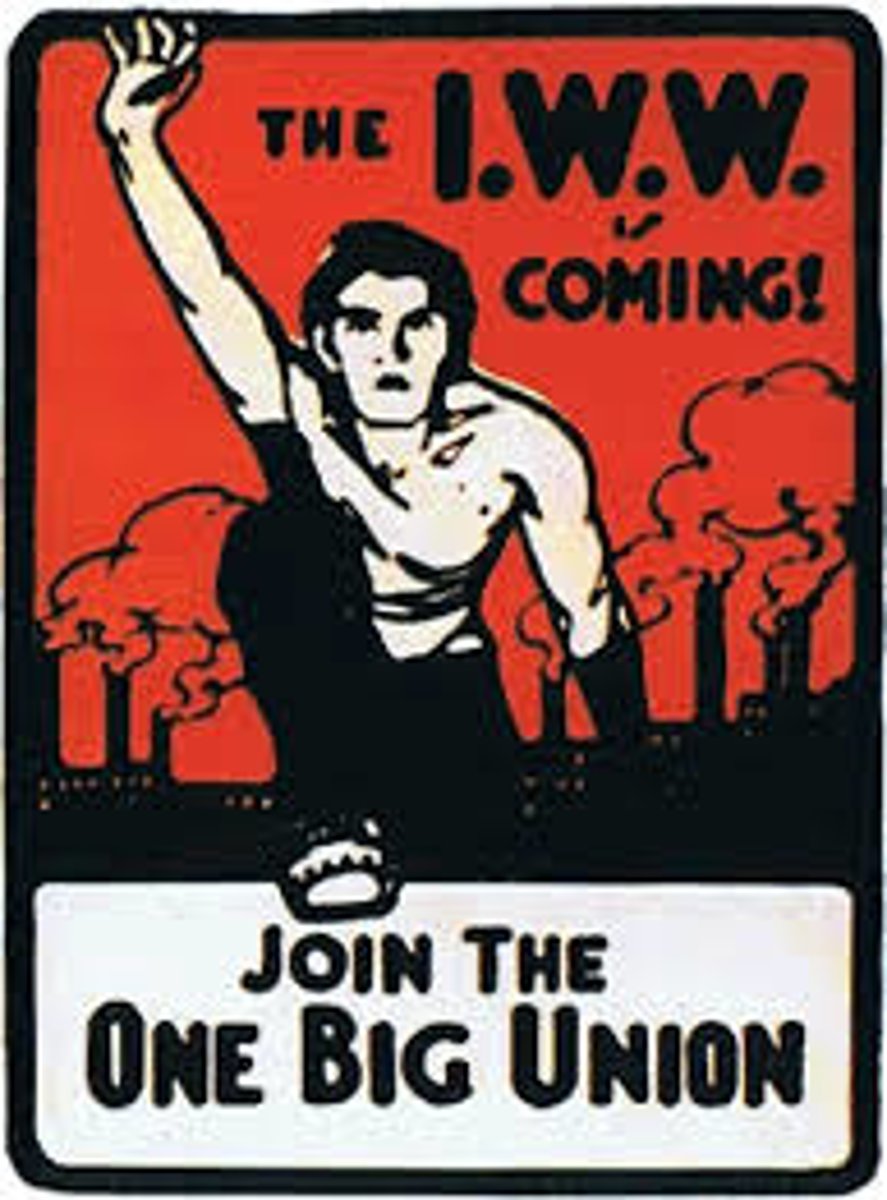
Industrial Workers of the World (IWW)
Founded in 1905, this radical union, also known as the Wobblies aimed to unite the American working class into one union to promote labor's interests. It worked to organize unskilled and foreign-born laborers, advocated social revolution, and led several major strikes. Stressed solidarity.
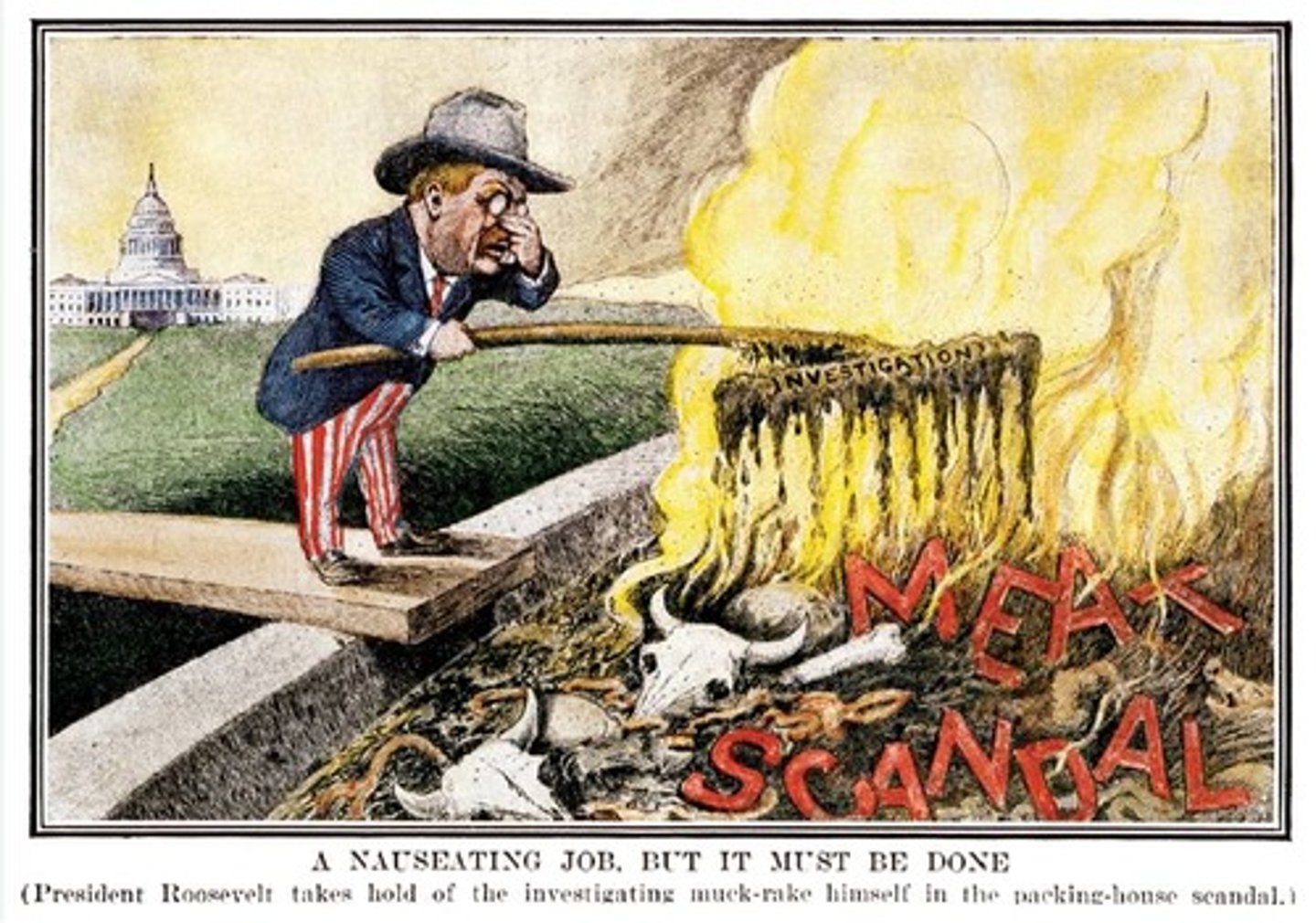
Pure Food and Drug Act
Forbade the manufacture or sale of mislabeled or adulterated food or drugs, it gave the government broad powers to ensure the safety and efficacy of drugs in order to abolish the "patent" drug trade. Still in existence as the FDA.
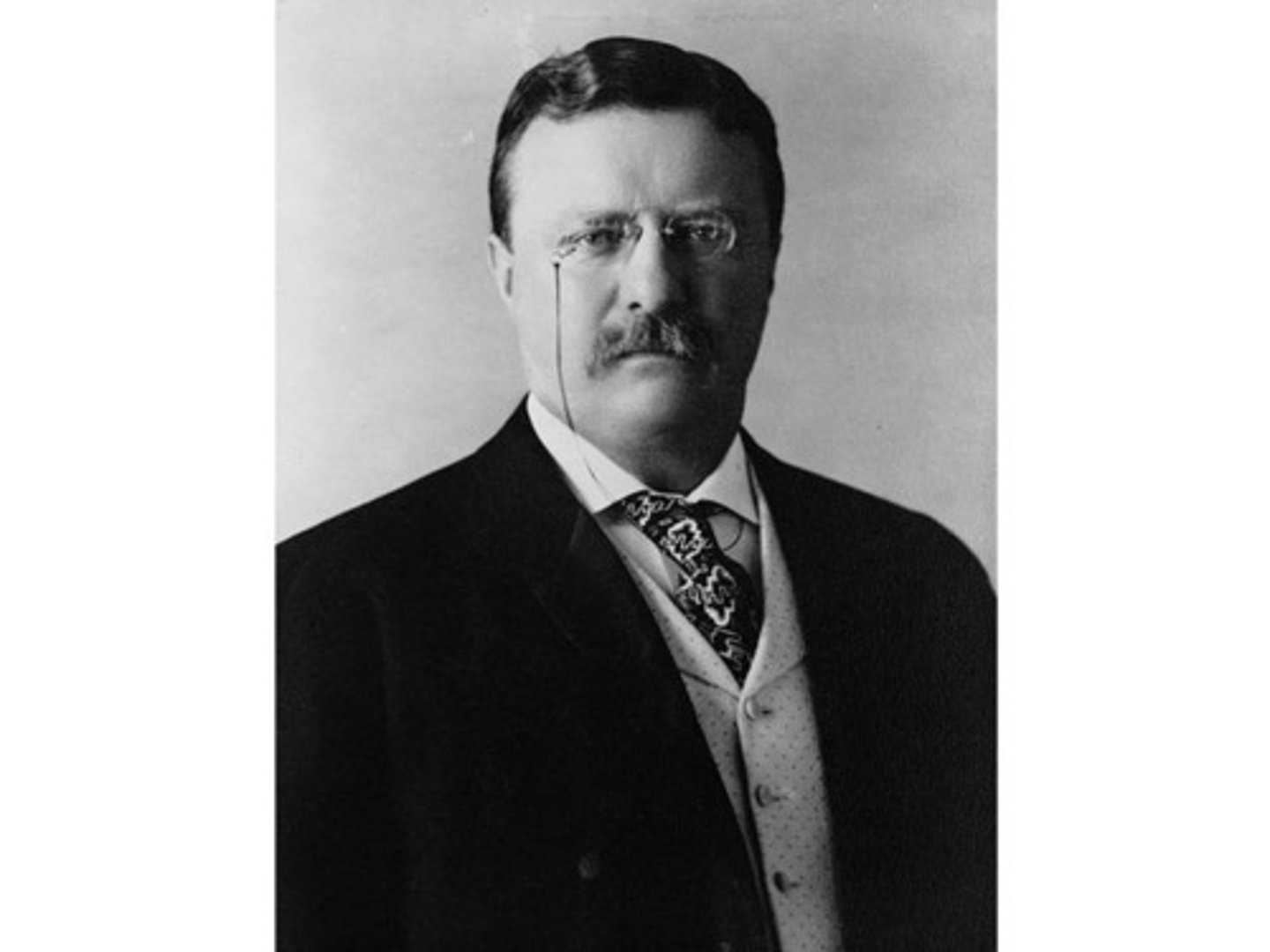
Teddy Roosevelt
Twenty-sixth president of the United States; he focused his efforts on trust busting, environment conservation, and strong foreign policy.
William Taft
27th president of the U.S.; he angered progressives by moving cautiously toward reforms and by supporting the Payne-Aldrich Tariff; he lost Roosevelt's support and was defeated for a second term.
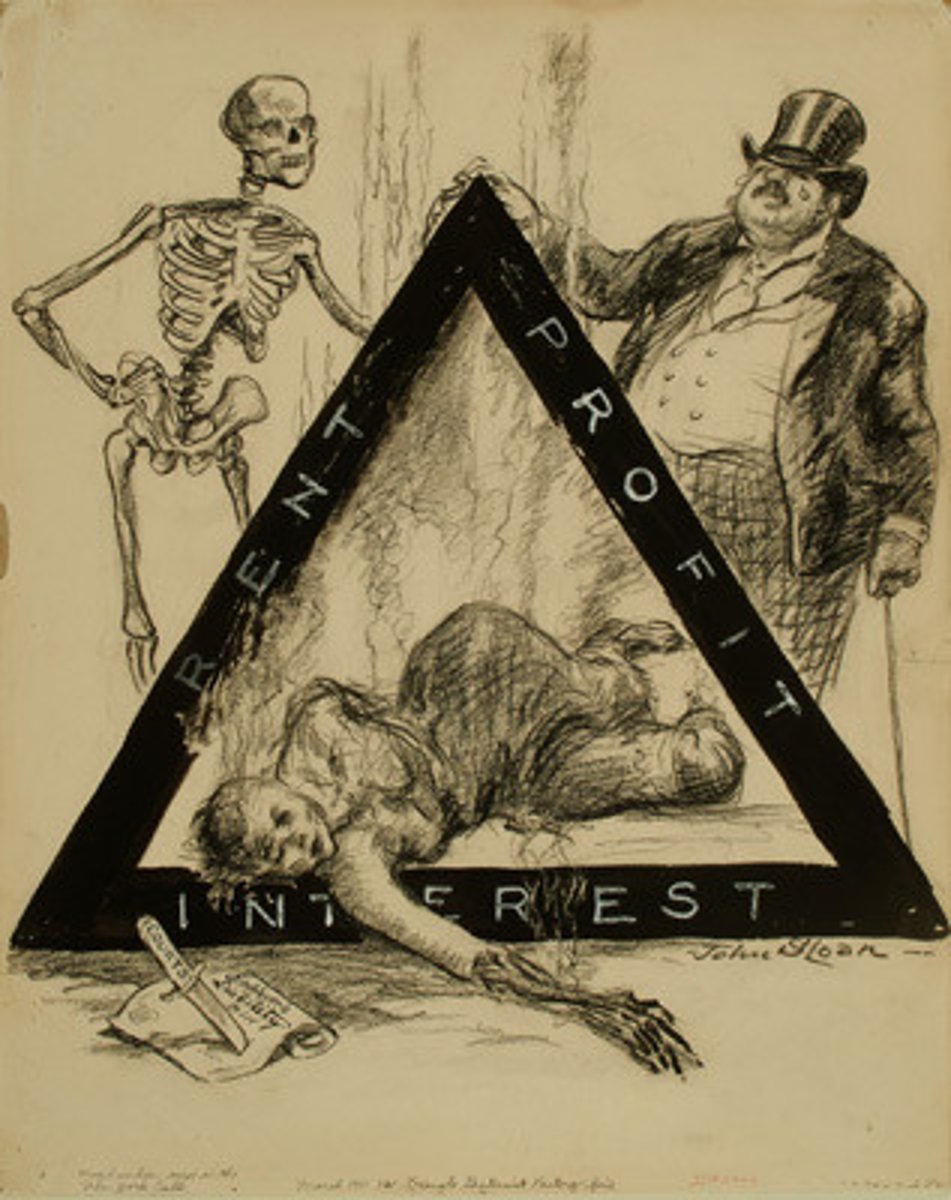
Triangle Shirtwaist Fire
March 1911 fire in New York factory that trapped young women workers inside locked exit doors; nearly 50 ended up jumping to their death; while 100 died inside the factory; led to the establishment of many factory reforms, including increasing safety precautions for workers
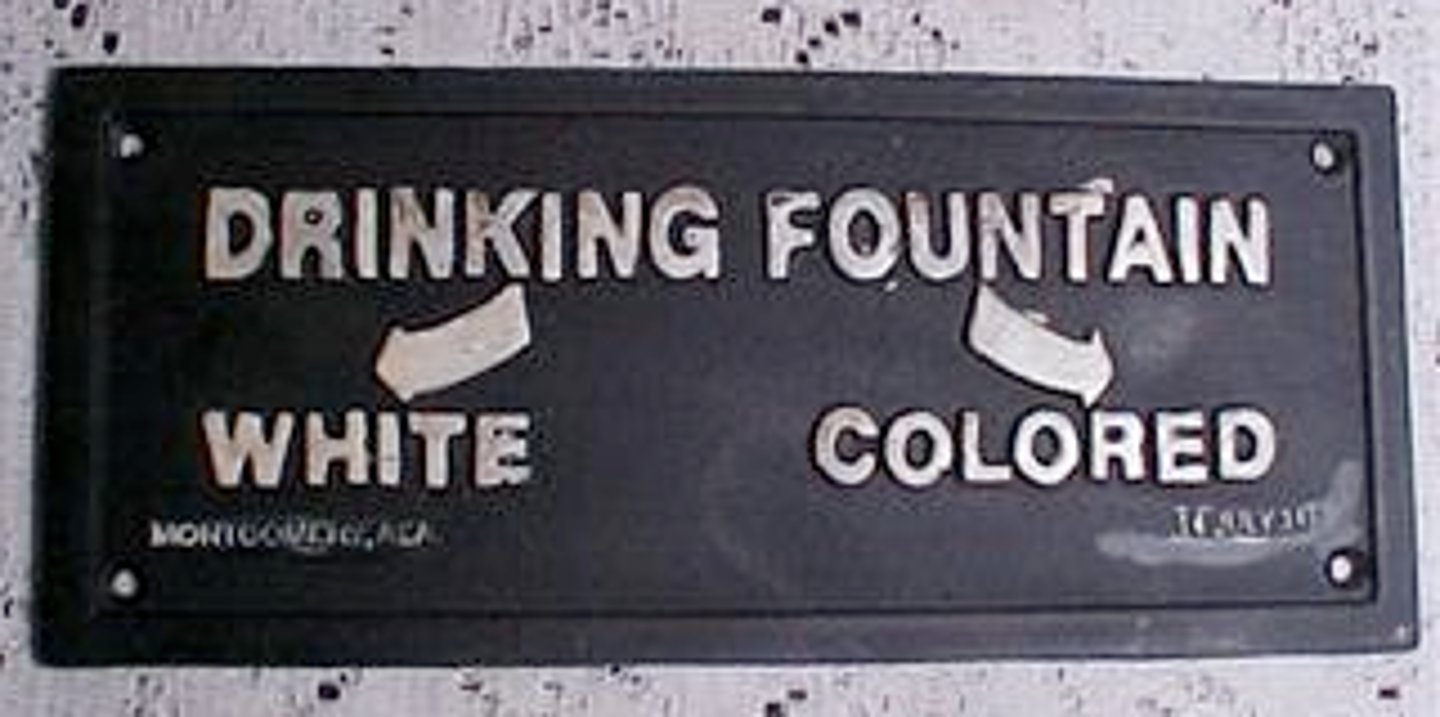
segregation
Separation of people based on racial, ethnic, or other differences. Common in the South after the Civil War through the 1960s.
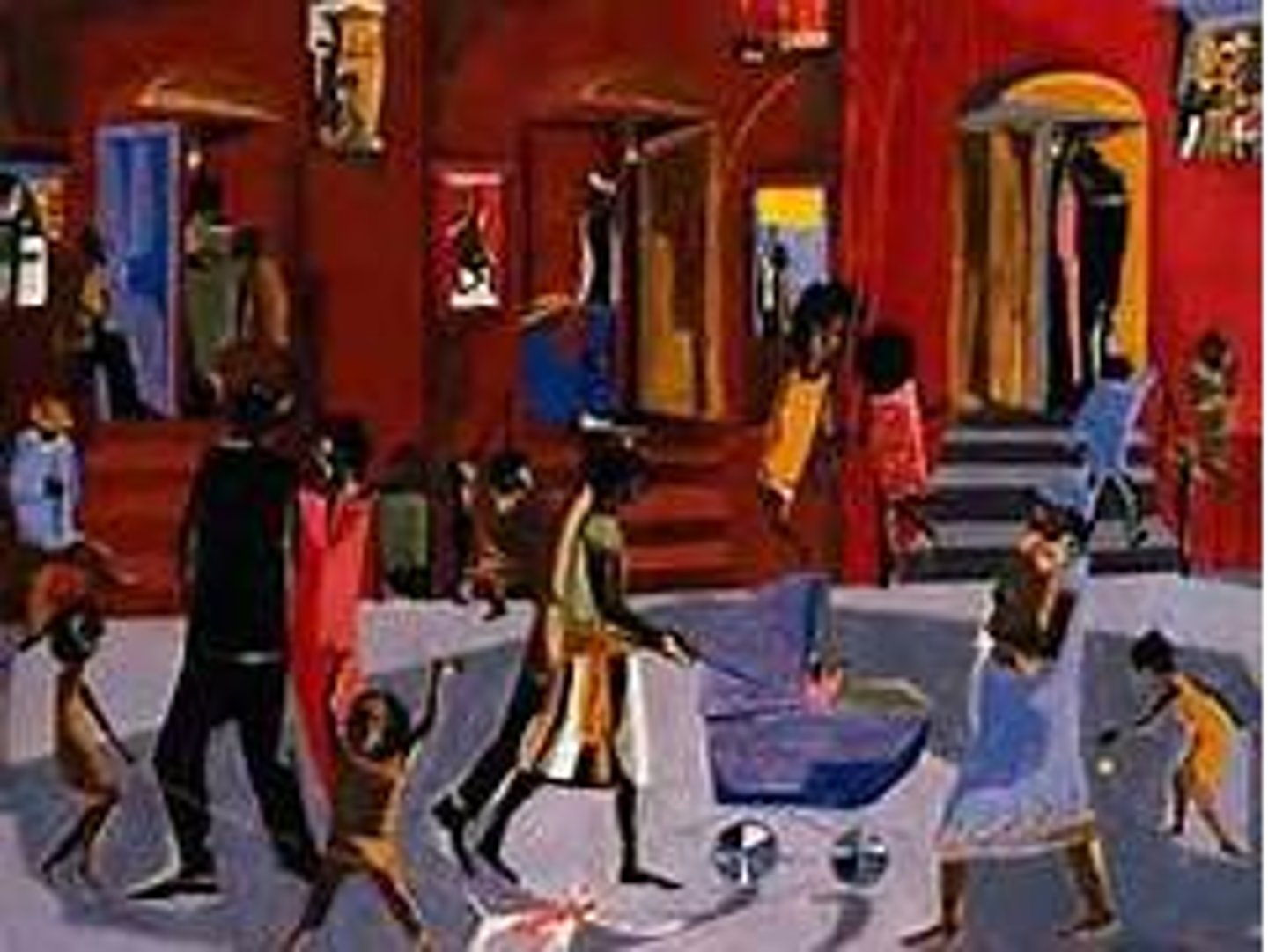
Harlem Renaissance
Black literary and artistic movement centered in Harlem that lasted from the 1920s into the early 1930s that both celebrated and lamented black life in America; Langston Hughes and Zora Neale Hurston were two famous writers of this movement.
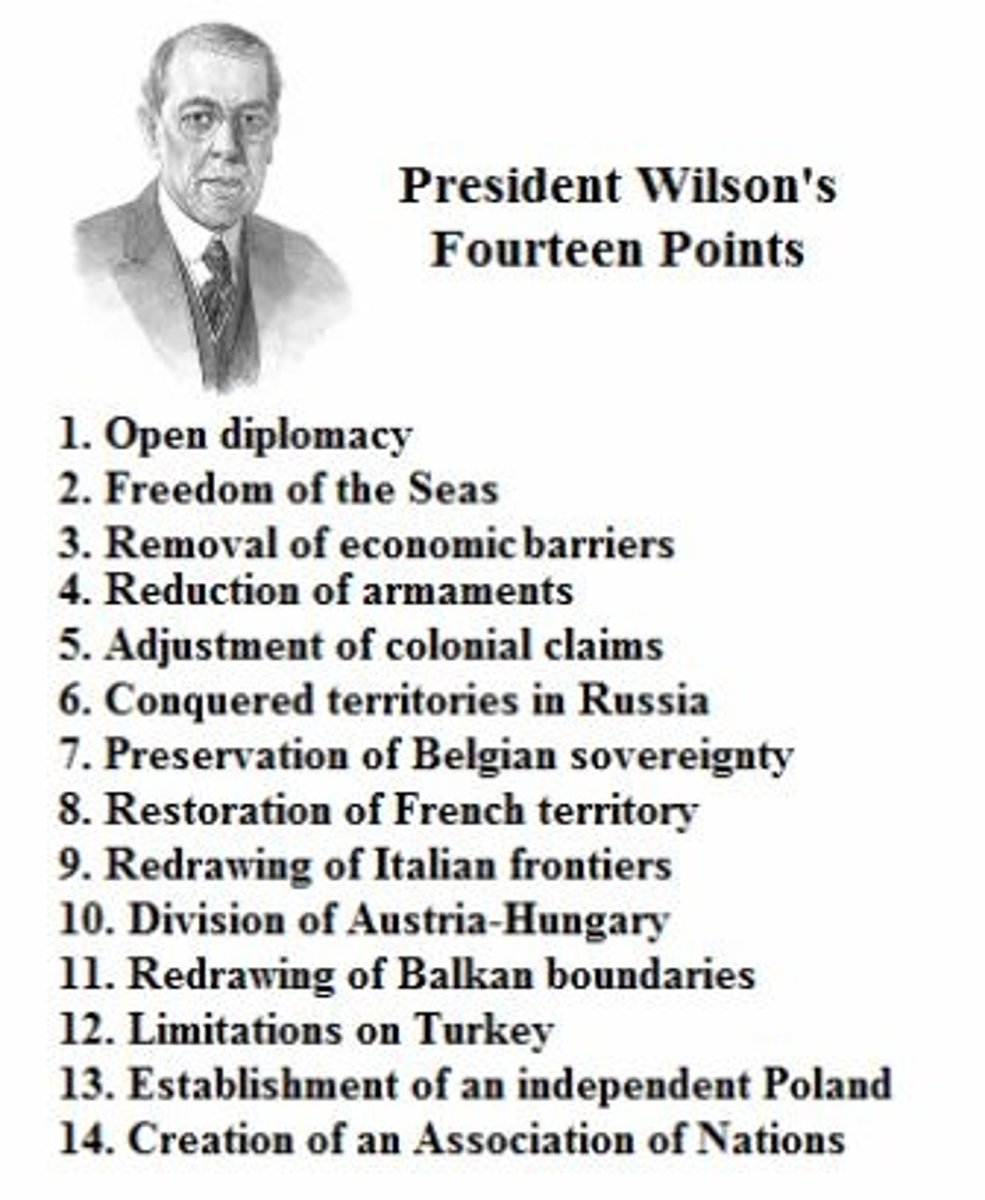
Fourteen Points
The war aims outlined by President Wilson in 1918, which he believed would promote lasting peace; called for self-determination, freedom of the seas, free trade, end to secret agreements, reduction of arms and a league of nations.
Red Scare
A social/political movement designed to prevent a socialist/communist/radical movement in this country by finding "radicals," incarcerating them, deporting them, and subverting their activities. Periods of Red Scare occurred after both World Wars in the United States.
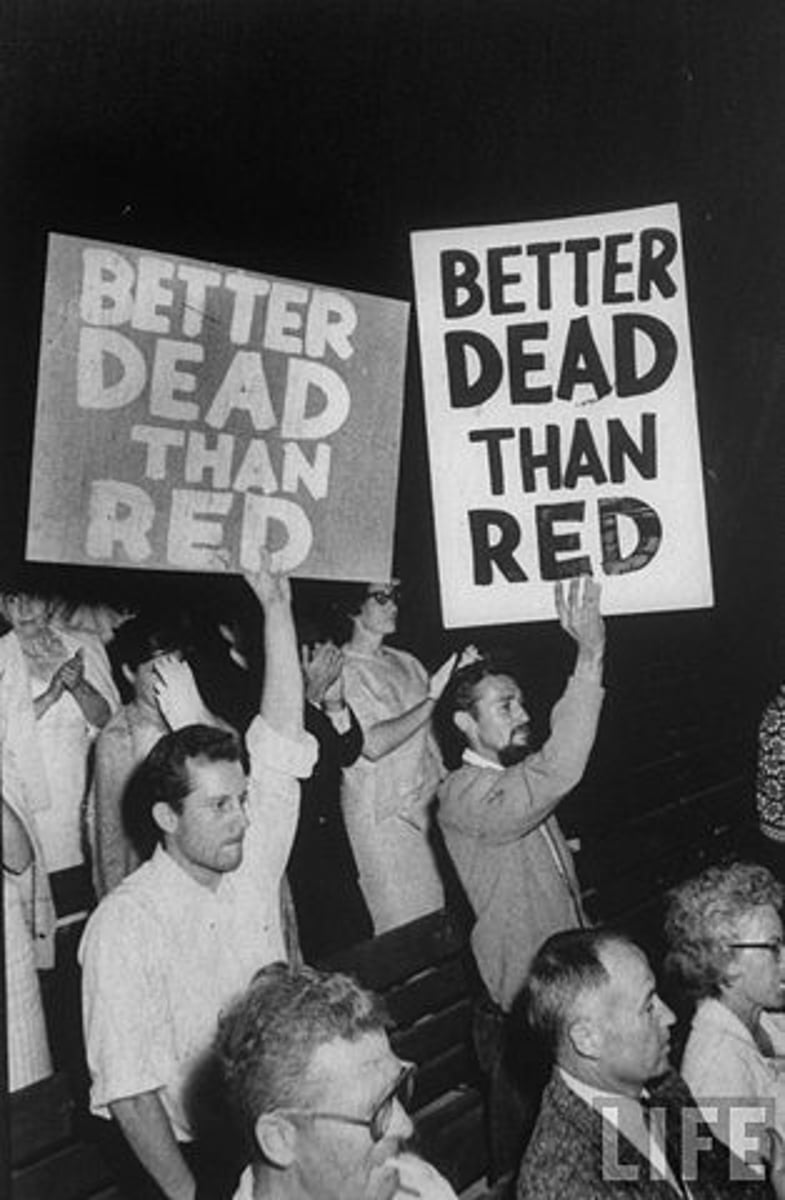
Sedition Act
A law passed by Congress in 1918 (during World War I) to make it illegal to say anything disloyal, profane, or abusive about the government or the war effort in WWI. Seen as a military necessity by some for effectively fighting in WWI.
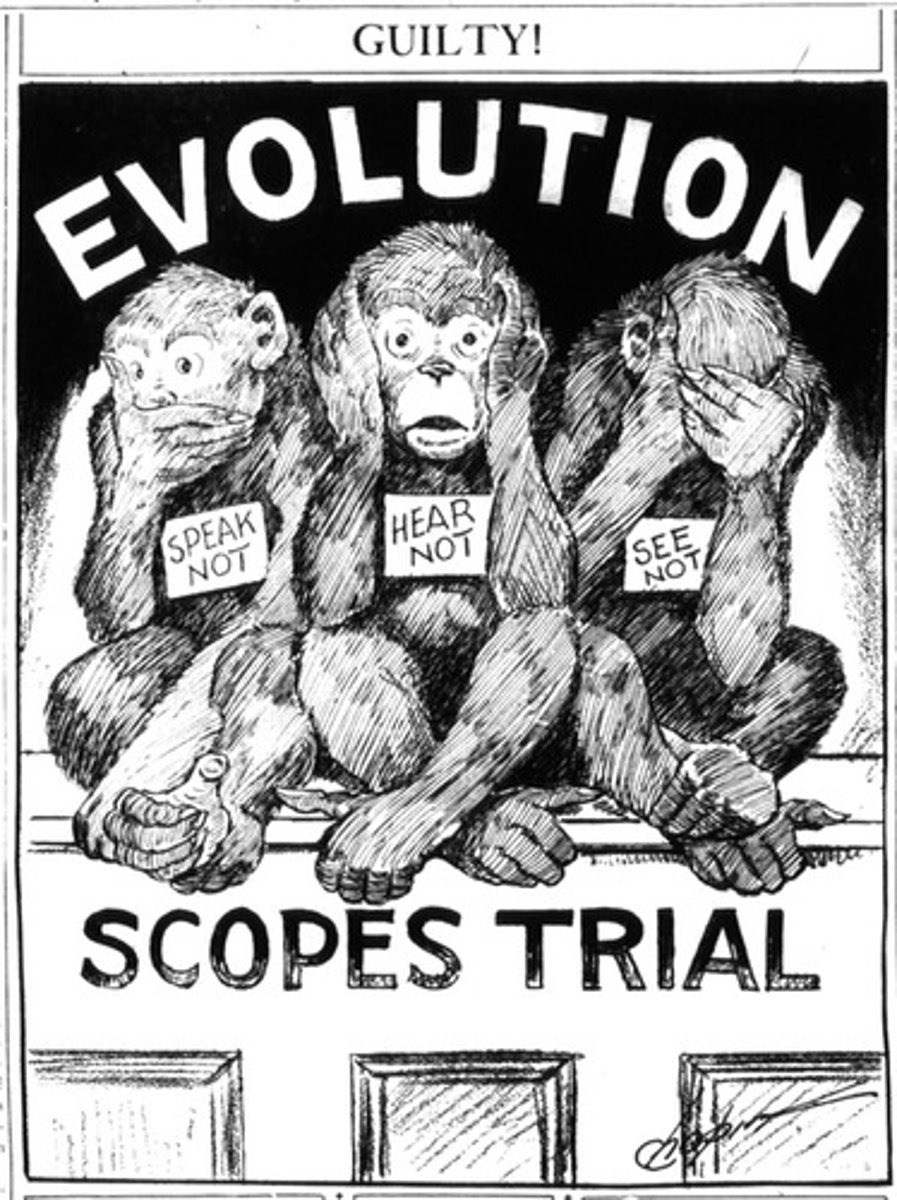
Scopes Trial
Also known as the Scopes Monkey Trial;
1925 court case argued by Clarence Darrow and William Jennings Bryan in which the issue of teaching evolution in public schools was debated. Highlighted the growing divide between rural (more conservative) and urban (more liberal) interests in the United States.
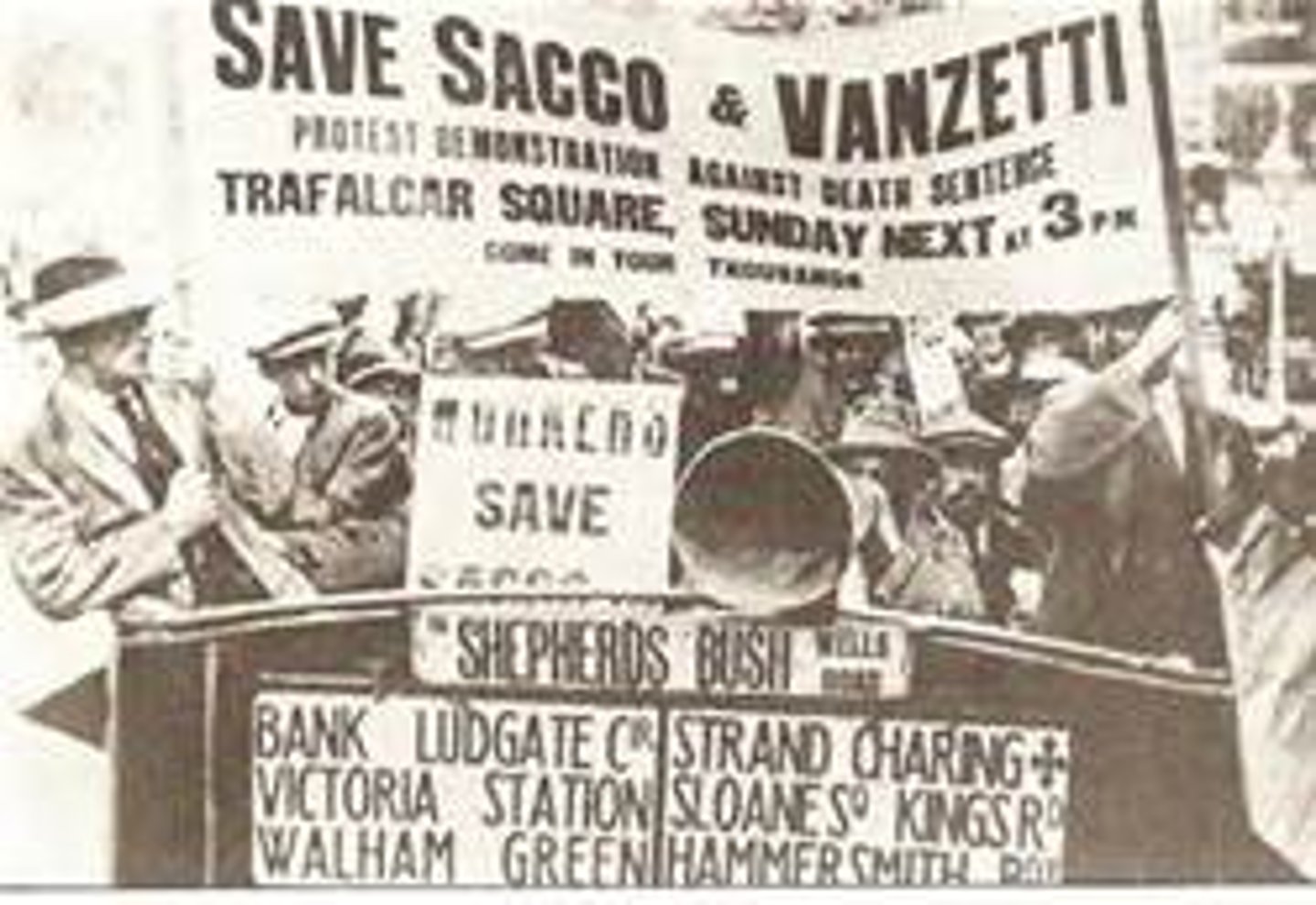
Sacco and Vanzetti Trial
Nicola Sacco and Bartolomeo Vanzetti were Italian immigrants charged with murdering a guard and robbing a shoe factory in Braintree, Massachusetts. The trial lasted from 1920-1927. Convicted on circumstantial evidence; many believed they had been framed for the crime because of their anarchist and pro-union activities.
Kellog-Briand Pact
Idealistic agreement signed in 1928 in which nations agreed not to pose the threat of war against one another.
Herbert Hoover
Republican president at the outset of the Great Depression. As a Republican, he believed that the federal government should not interfere in economic problems; the severity of the Great Depression forced his hand to provide some federal assistance to those in need, but he mostly left these efforts to the states.
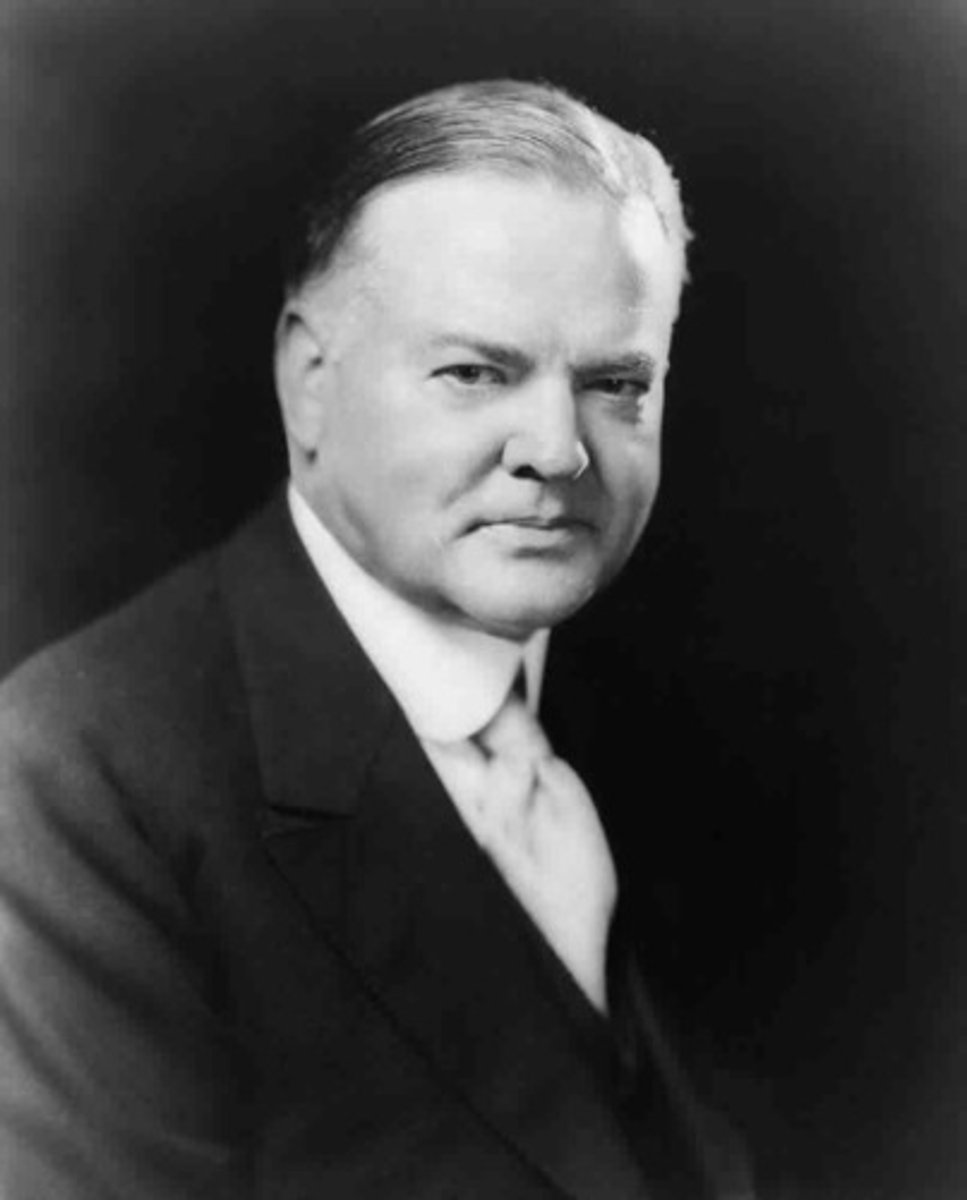
Smoot-Hawley Tariff
One of Herbert Hoover's earliest efforts to protect the nation's farmers following the onset of the Great Depression. Tariff raised rates to an all-time high.
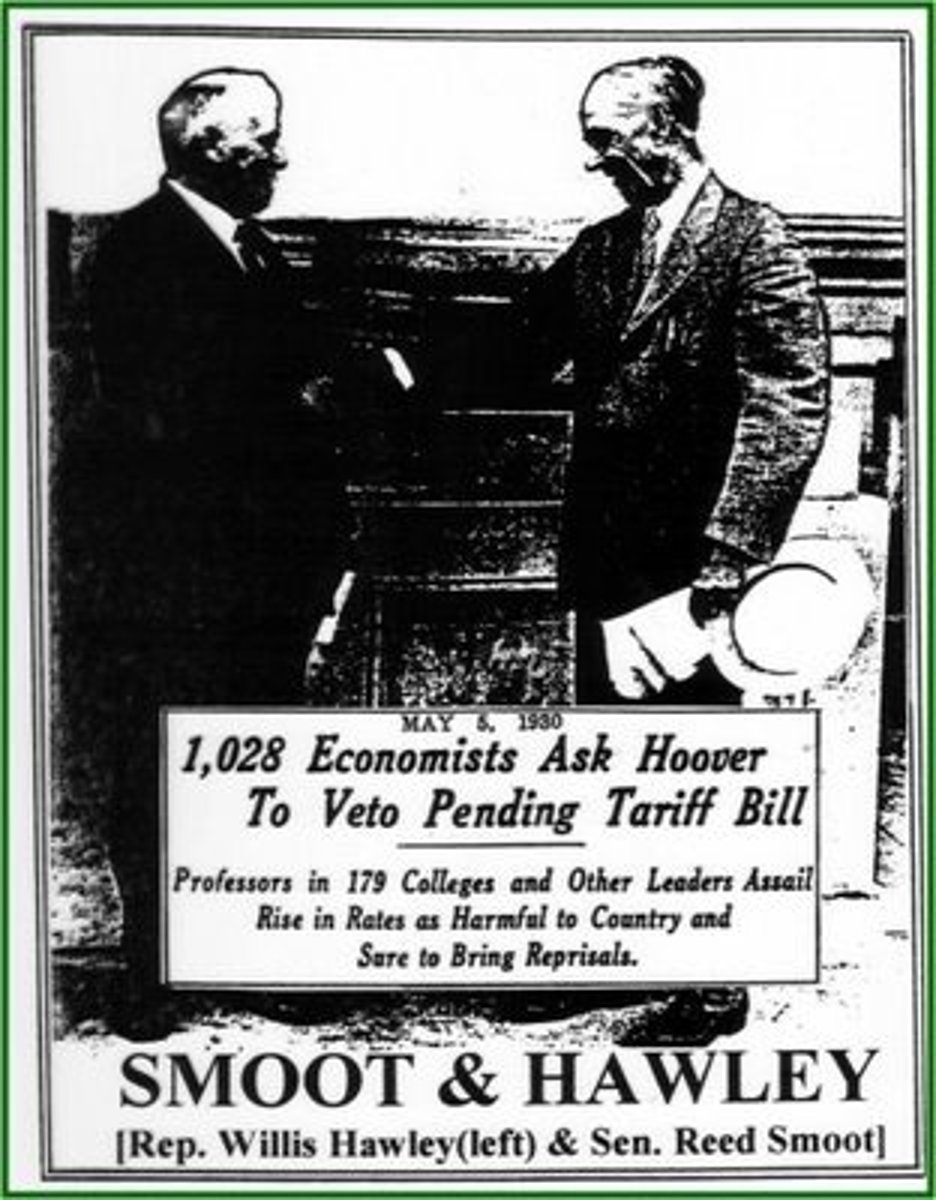
Platt Amendment
This amendment to the new Cuban constitution authorized U.S. intervention in Cuba to protect its interests. Cuba pledged not to make treates with other countries that might compromise its independence, and it granted naval bases to the United States, most notable being Guantanamo Bay.
Zoot Suit Riots
A series of riots in 1944 during World War II that broke out in Los Angeles, California, between Anglo American sailors and Marines stationed in the city, and Latino youths, who were recognizable by the zoot suits they favored.
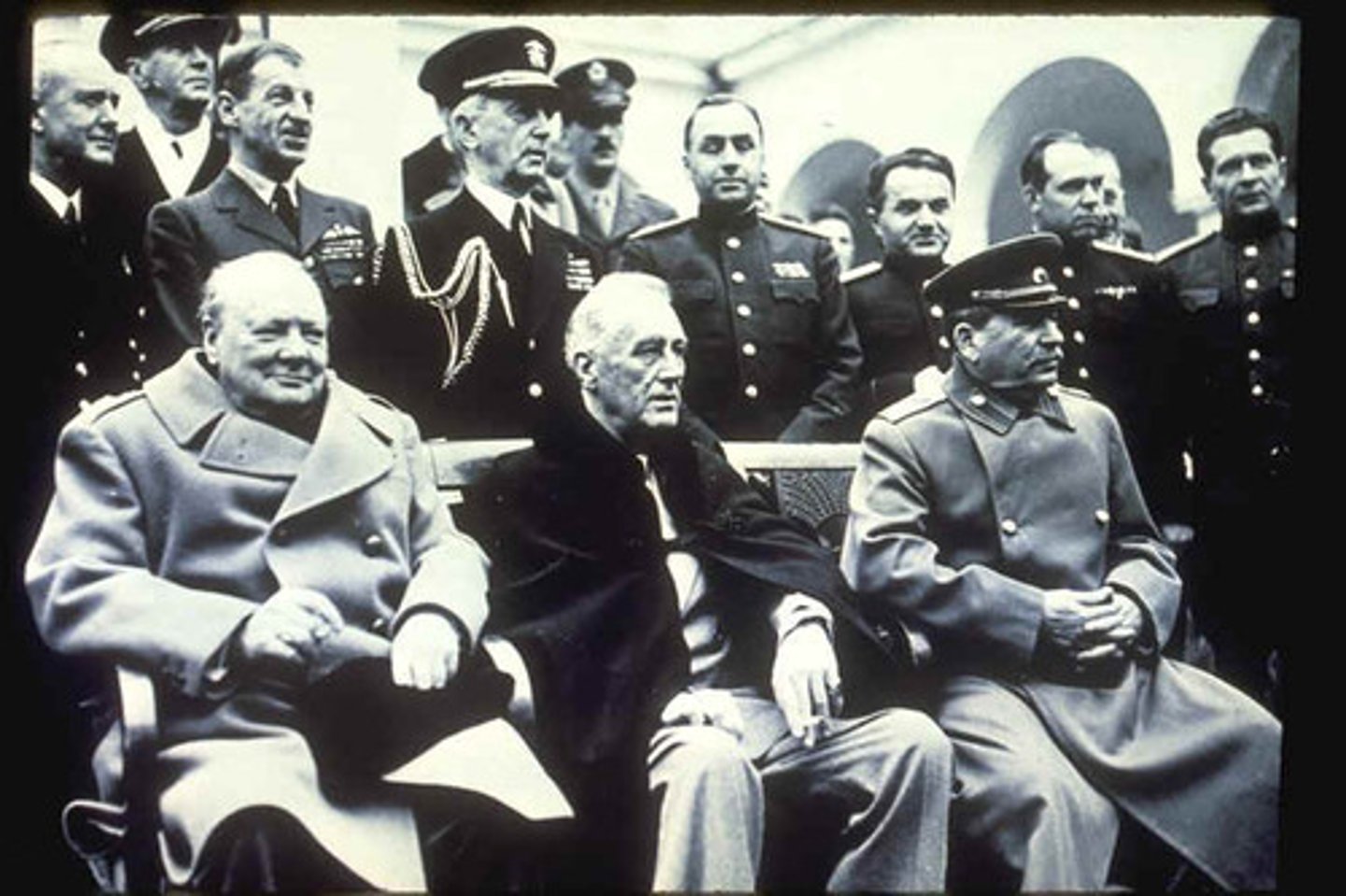
Yalta Conference
FDR, Churchill and Stalin met at Yalta. Russia agreed to declare war on Japan after the surrender of Germany and in return FDR and Churchill promised the USSR concession in Manchuria and the territories that it had lost in the Russo-Japanese War.
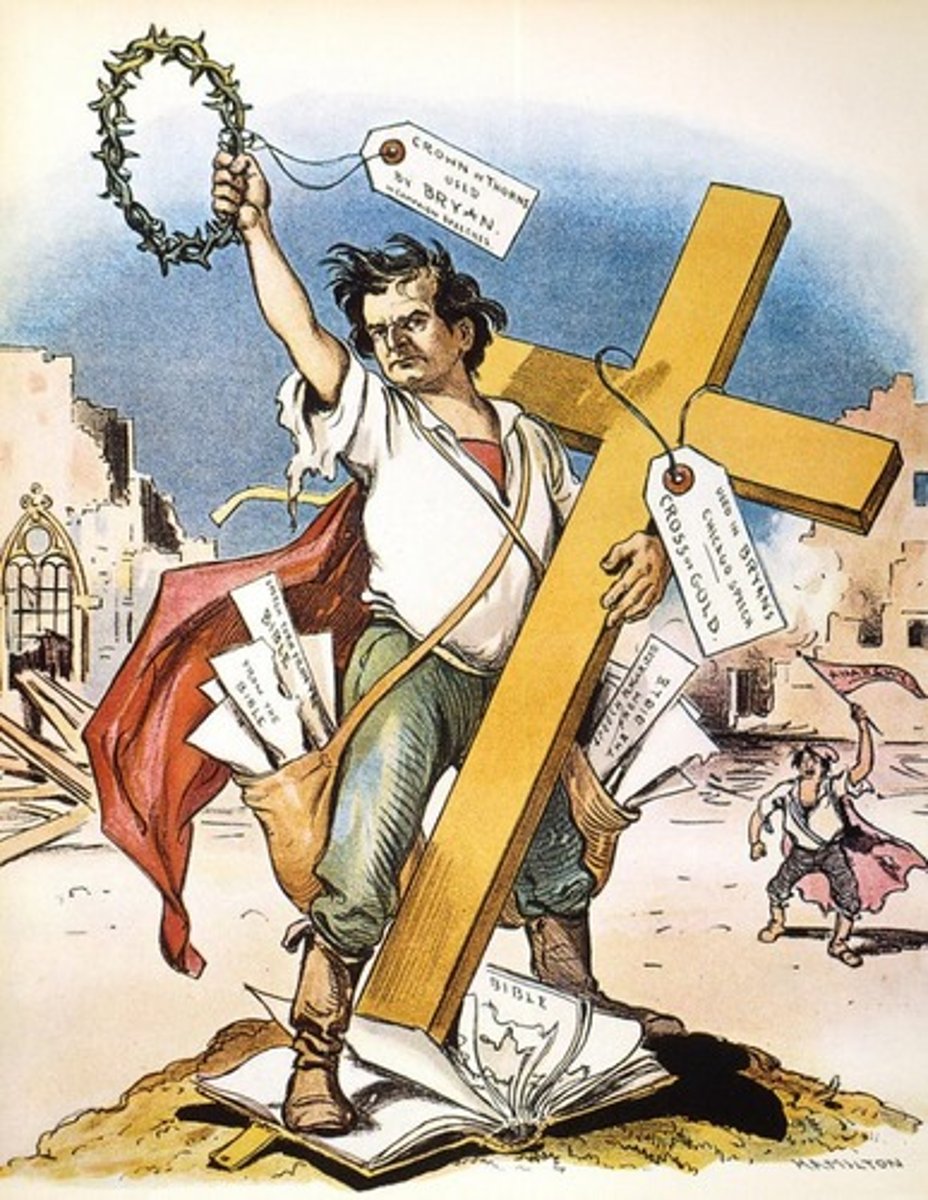
William Jennings Bryan
United States lawyer and politician who advocated free silver and prosecuted John Scopes (1925) for teaching evolution in a Tennessee high school (1860-1925).
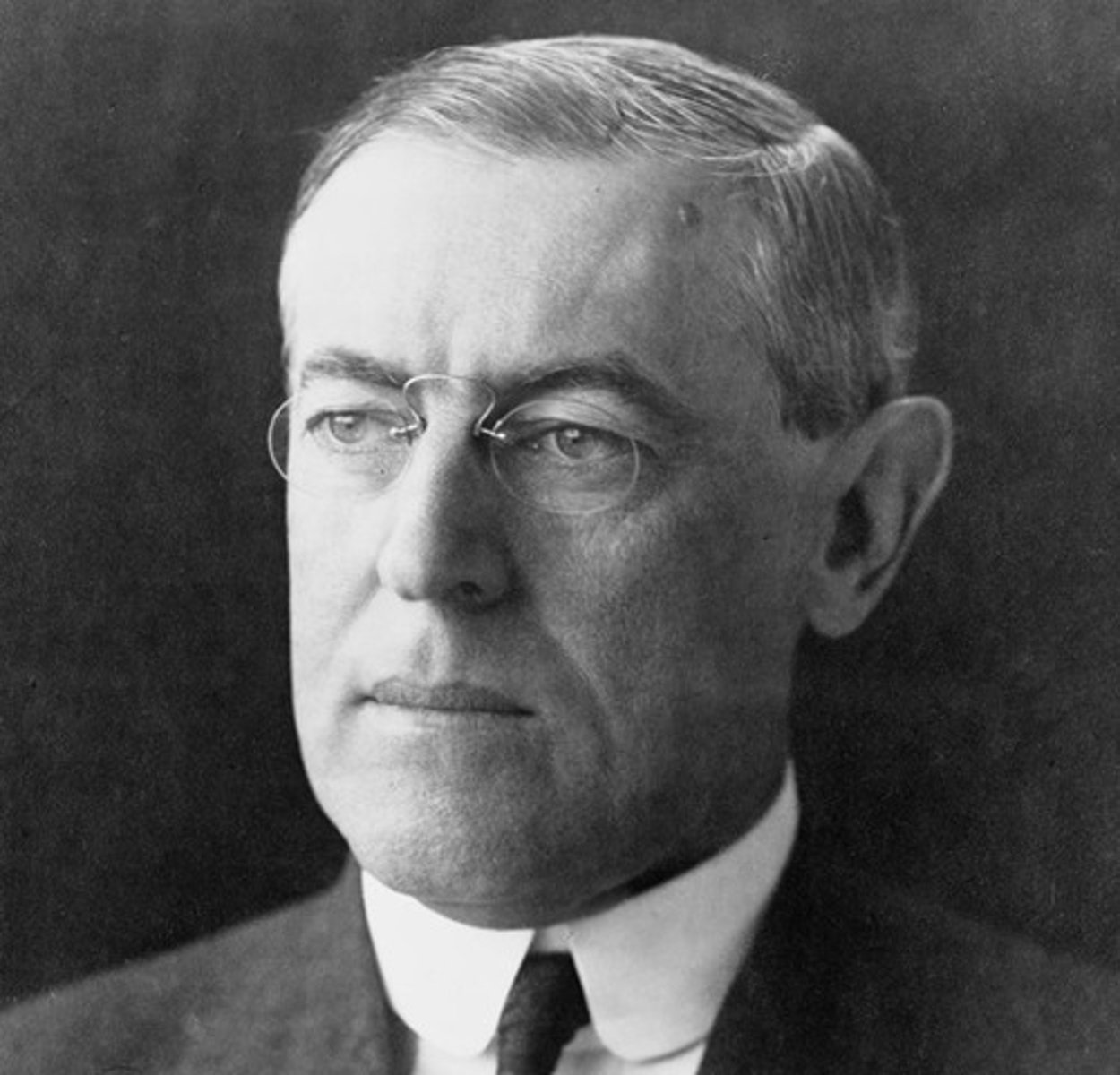
Woodrow Wilson
(1856-1924) President of the United States (1913-1921) and the leading figure at the Paris Peace Conference of 1919. He was unable to persuade the U.S. Congress to ratify the Treaty of Versailles or join the League of Nations.
United Nations
An international organization formed after WWII to promote international peace, security, and cooperation.
communism
A political theory derived from Karl Marx, advocating class war and leading to a society in which all property is publicly owned and each person works and is paid according to their abilities and needs.
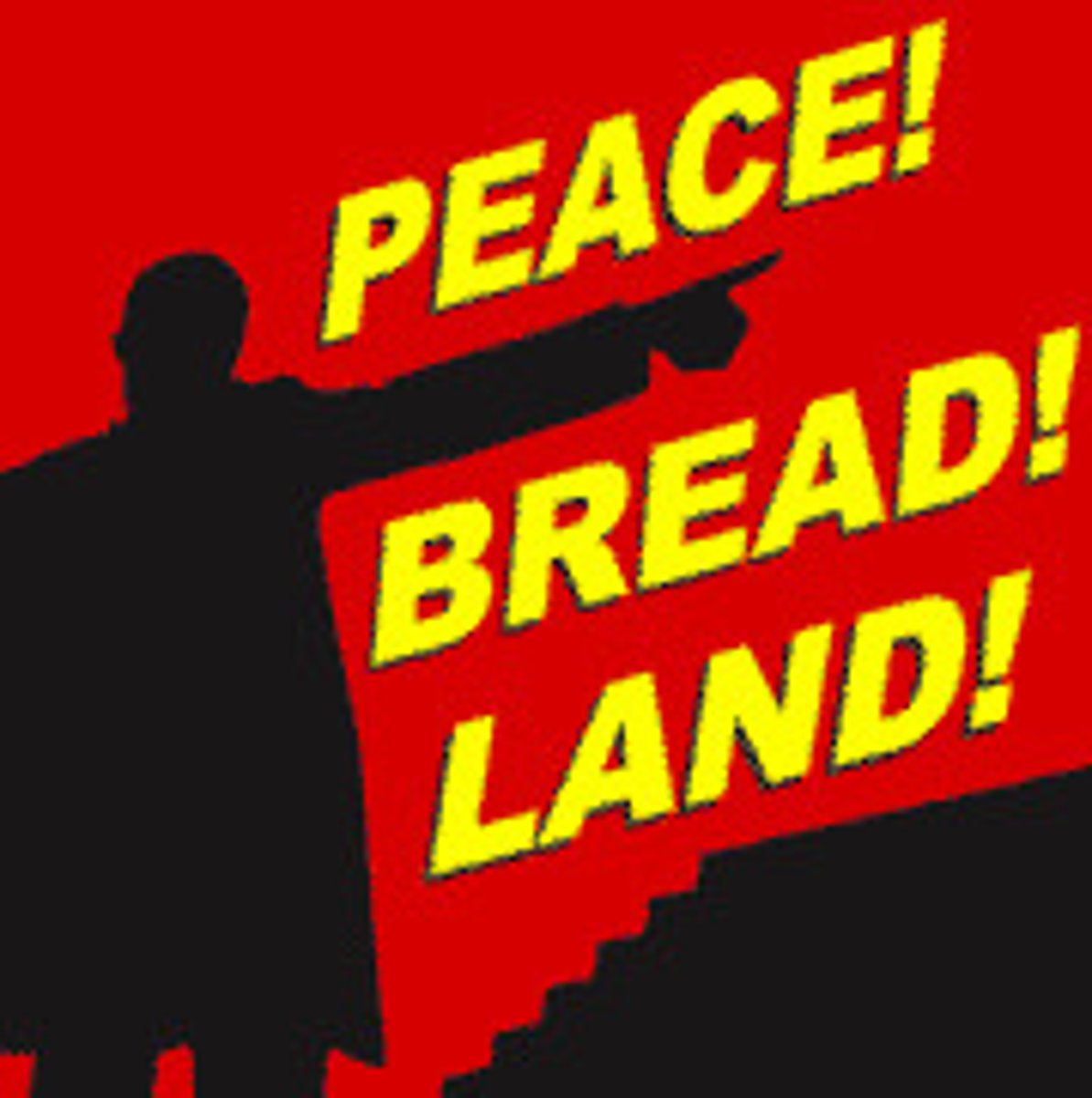
Bolshevik Revolution
The overthrow of Russia's Provisional Government in the fall of 1917 by Lenin and his Bolshevik forces, made possible by the government's continuing defeat in the war, its failure to bring political reform, and a further decline in the conditions of everyday life.
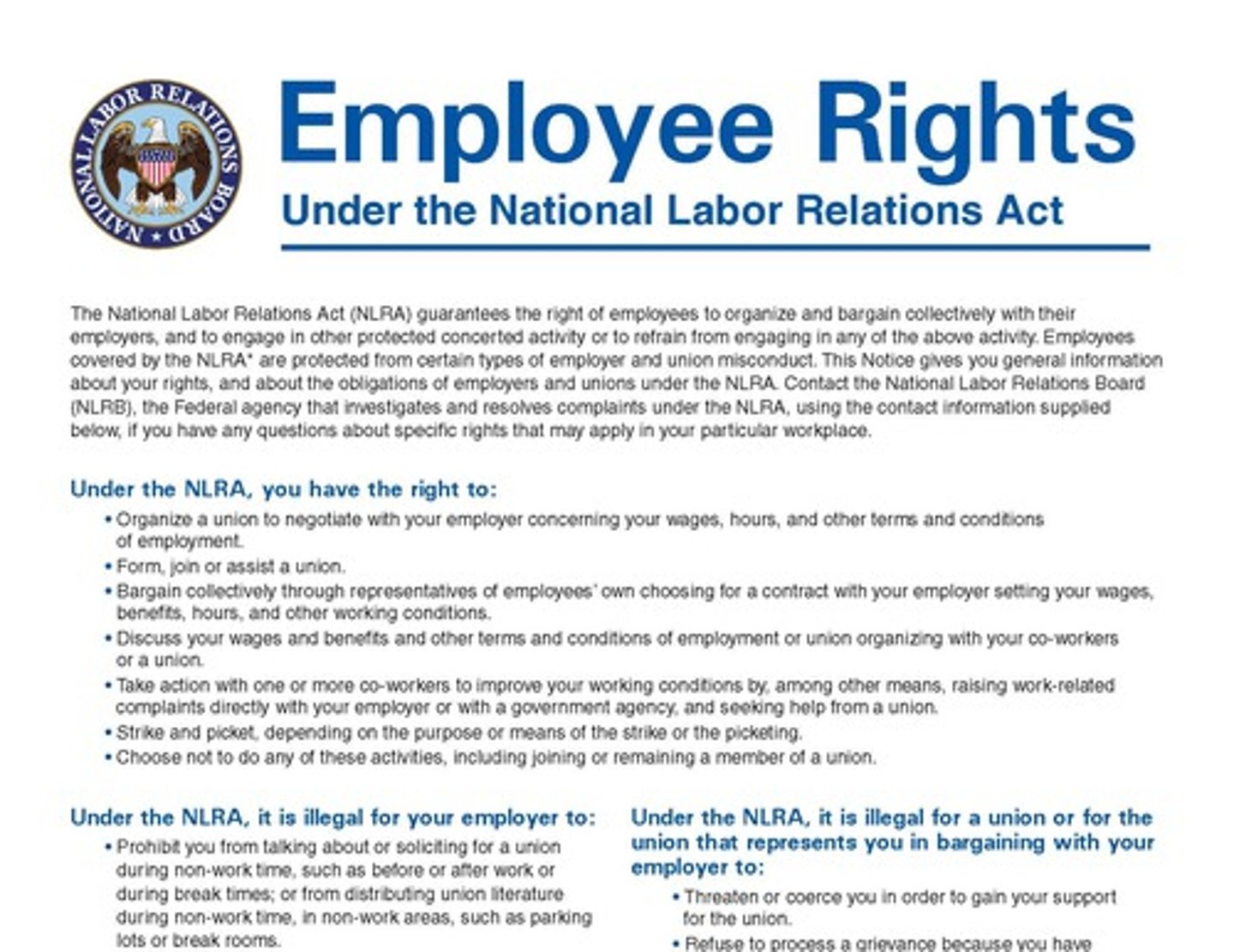
Wagner Act
Established the National Labor Relations Board; allowed employees to collectively bargain
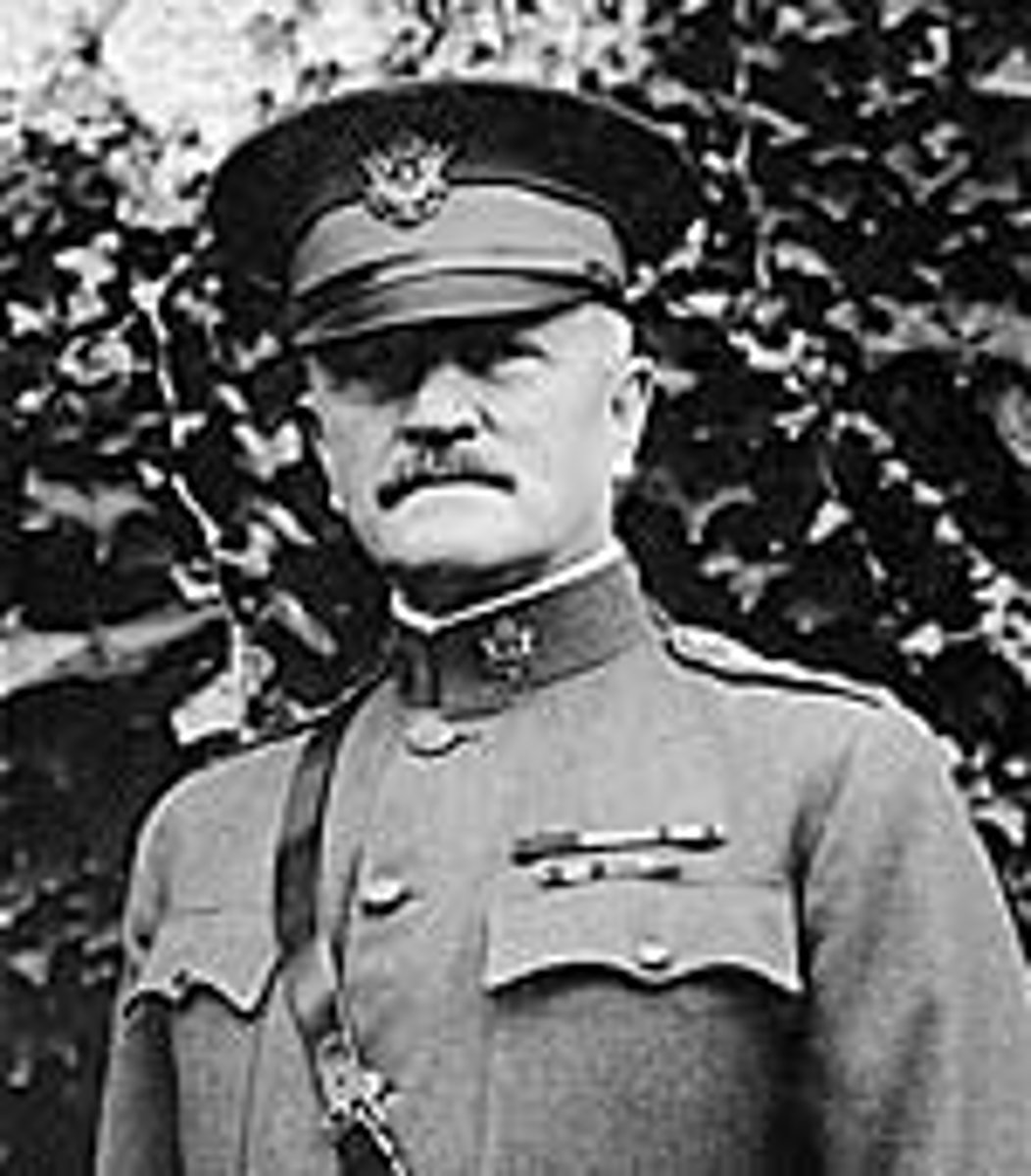
John J Pershing
US general who chased Villa over 300 miles into Mexico but didn't capture him
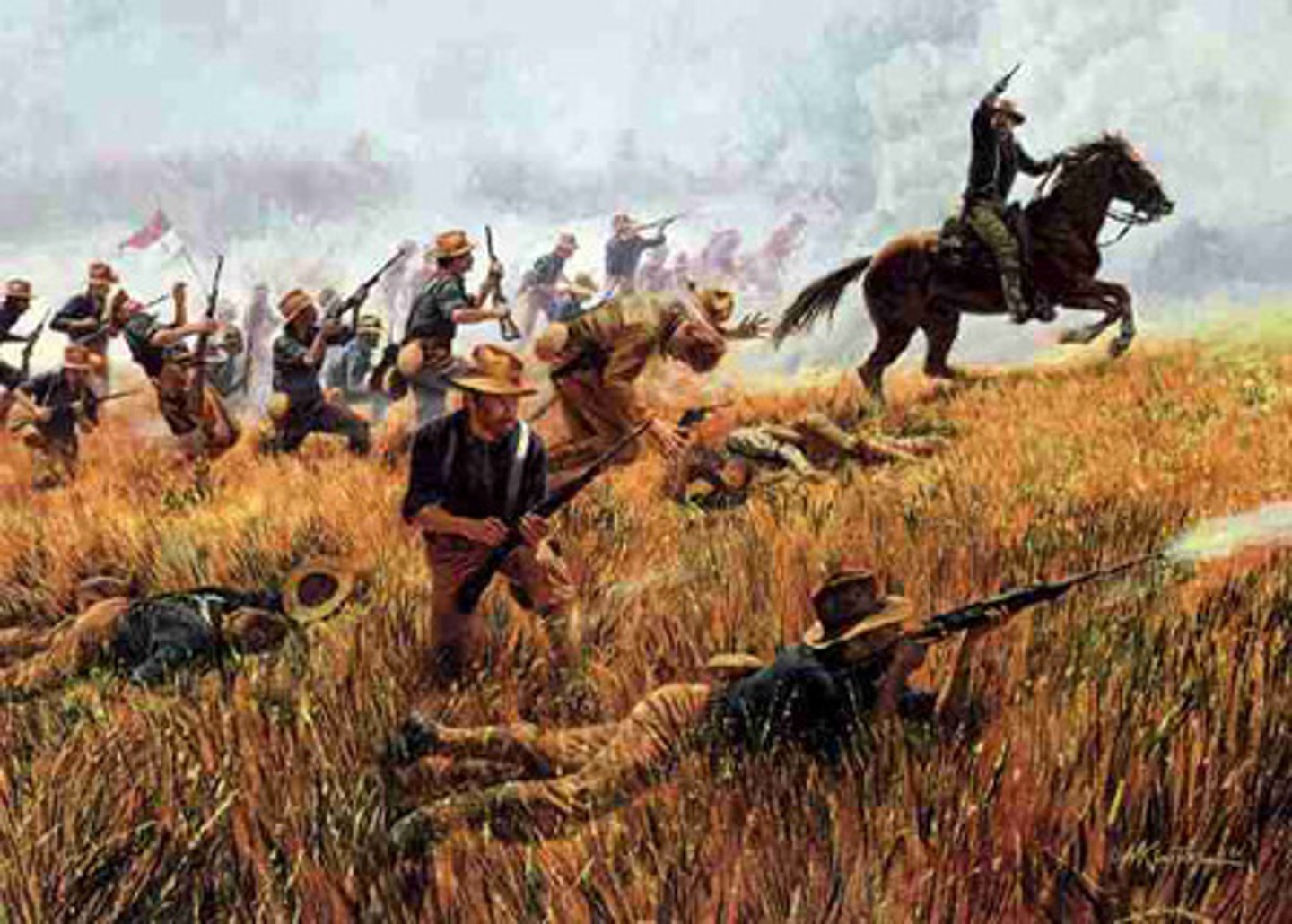
Rough Riders
Volunteer regiment of US Cavalry led by Teddy Roosevelt during the Spanish American War
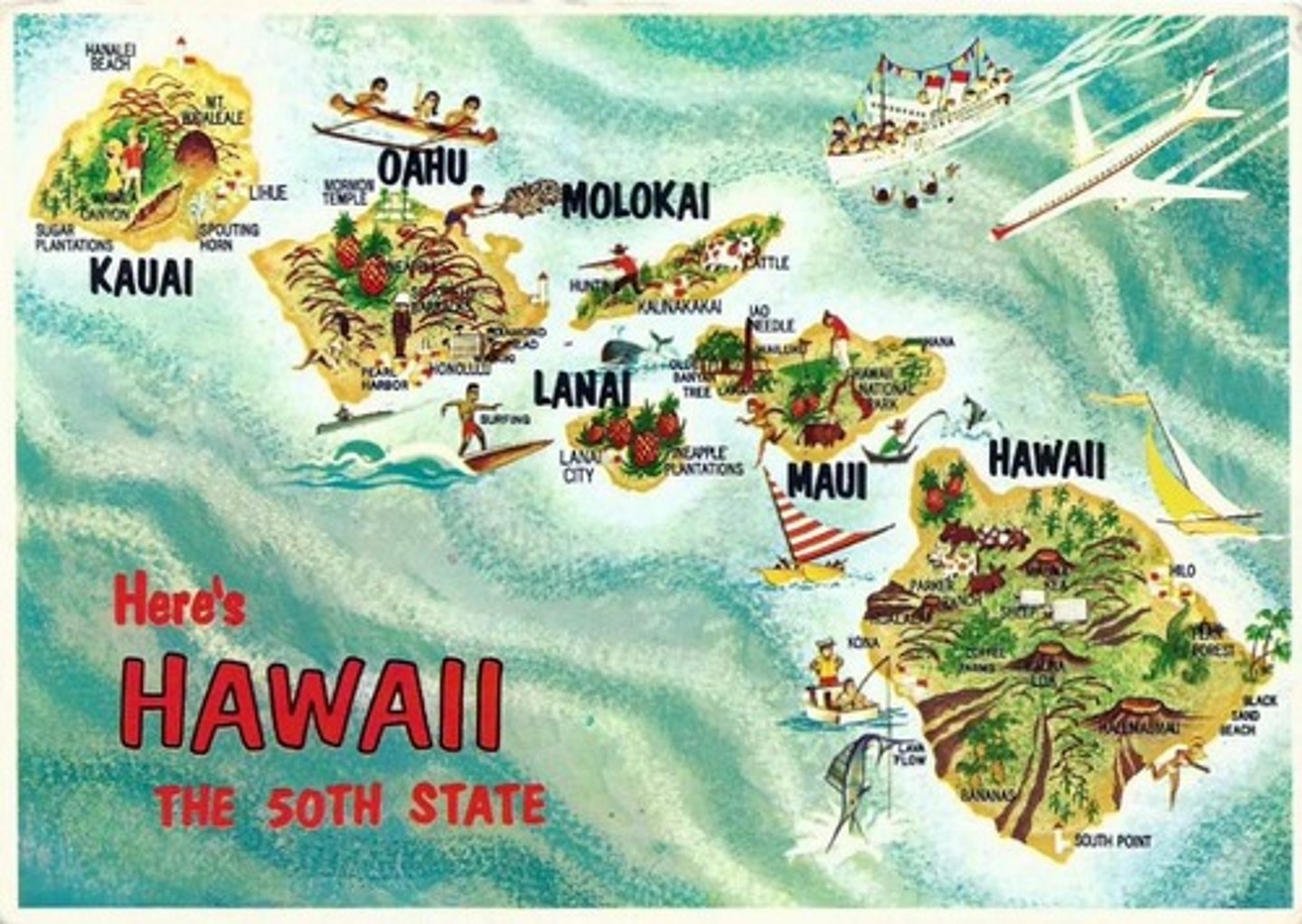
Annexation of Hawaii
U.S. wanted Hawaii for business and so Hawaiian sugar could be sold in the U.S. duty free, Queen Liliuokalani opposed so Sanford B. Dole overthrew her in 1893, William McKinley convinced Congress to annex Hawaii in 1898
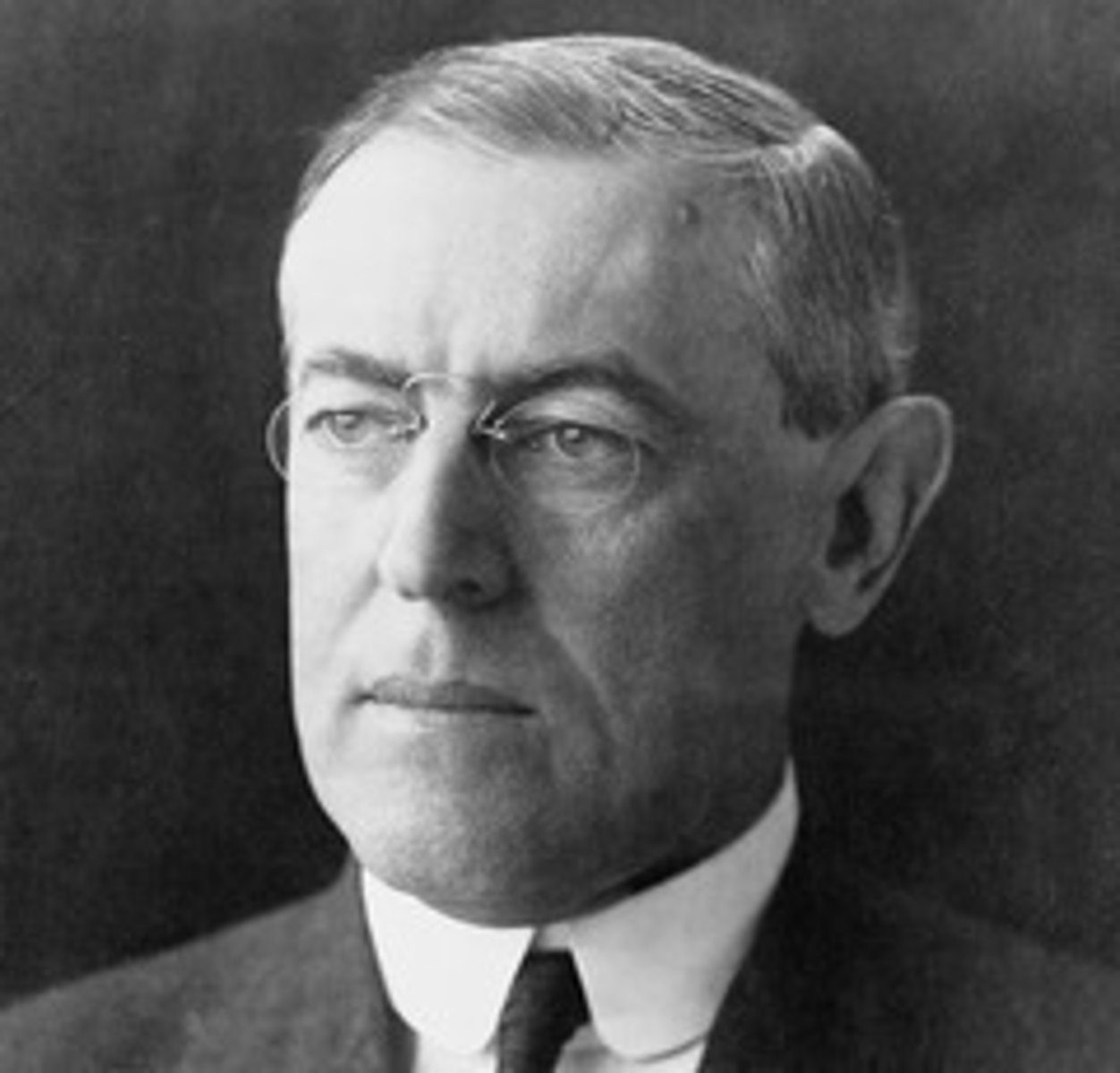
Moral Diplomacy
Foreign policy proposed by President Wilson to condemn imperialism, spread democracy, and promote peace
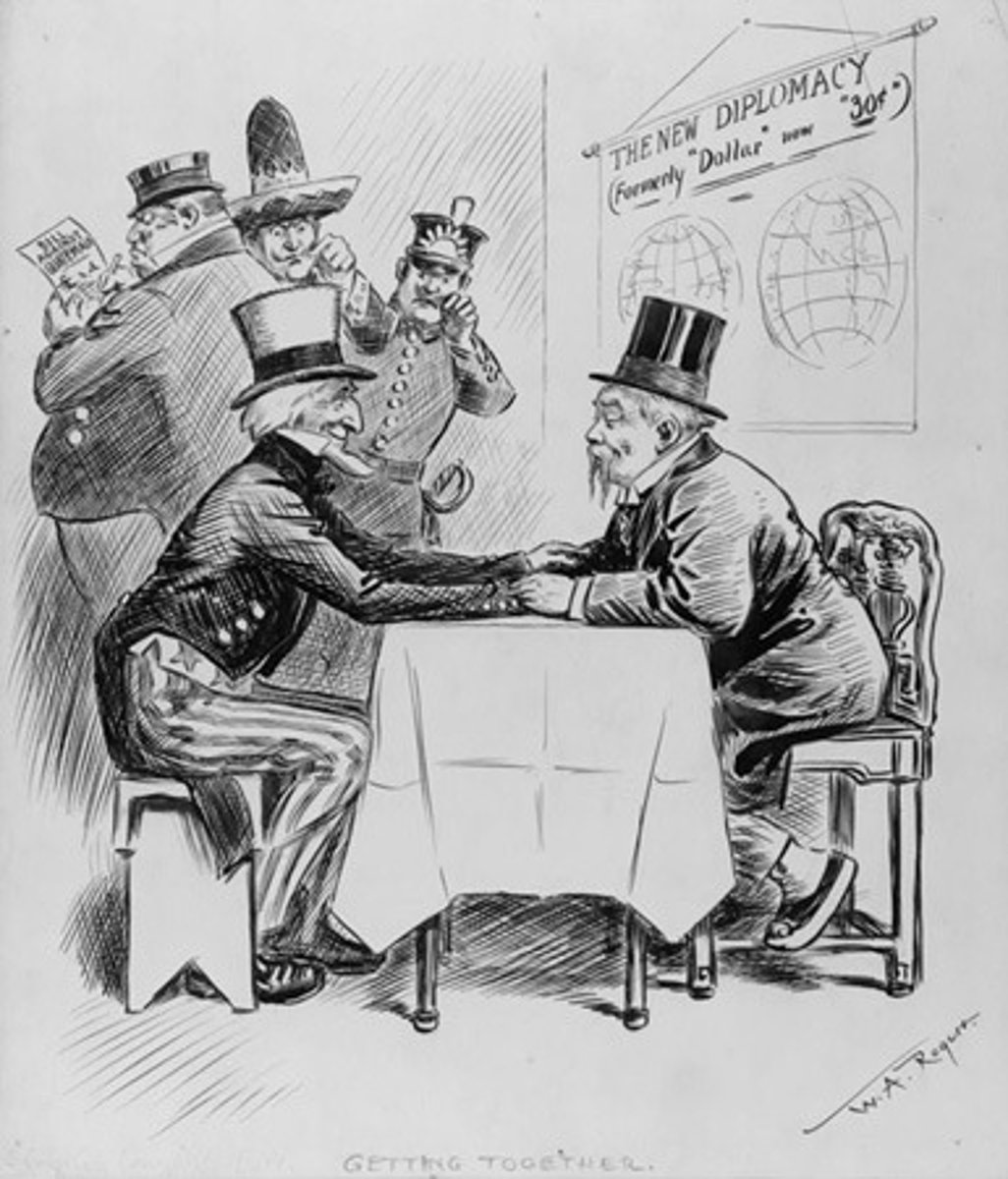
Dollar Diplomacy
Foreign policy created under President Taft that had the U.S. exchanging financial support ($) for the right to "help" countries make decisions about trade and other commercial ventures. Basically it was exchanging money for political influence in Latin America and the Caribbean.
Big Stick Diplomacy
Diplomatic policy developed by T.R where his power and readiness to use military force if necessary. It is a way of intimidating countries without actually harming them and was the basis of U.S. imperialistic foreign policy.
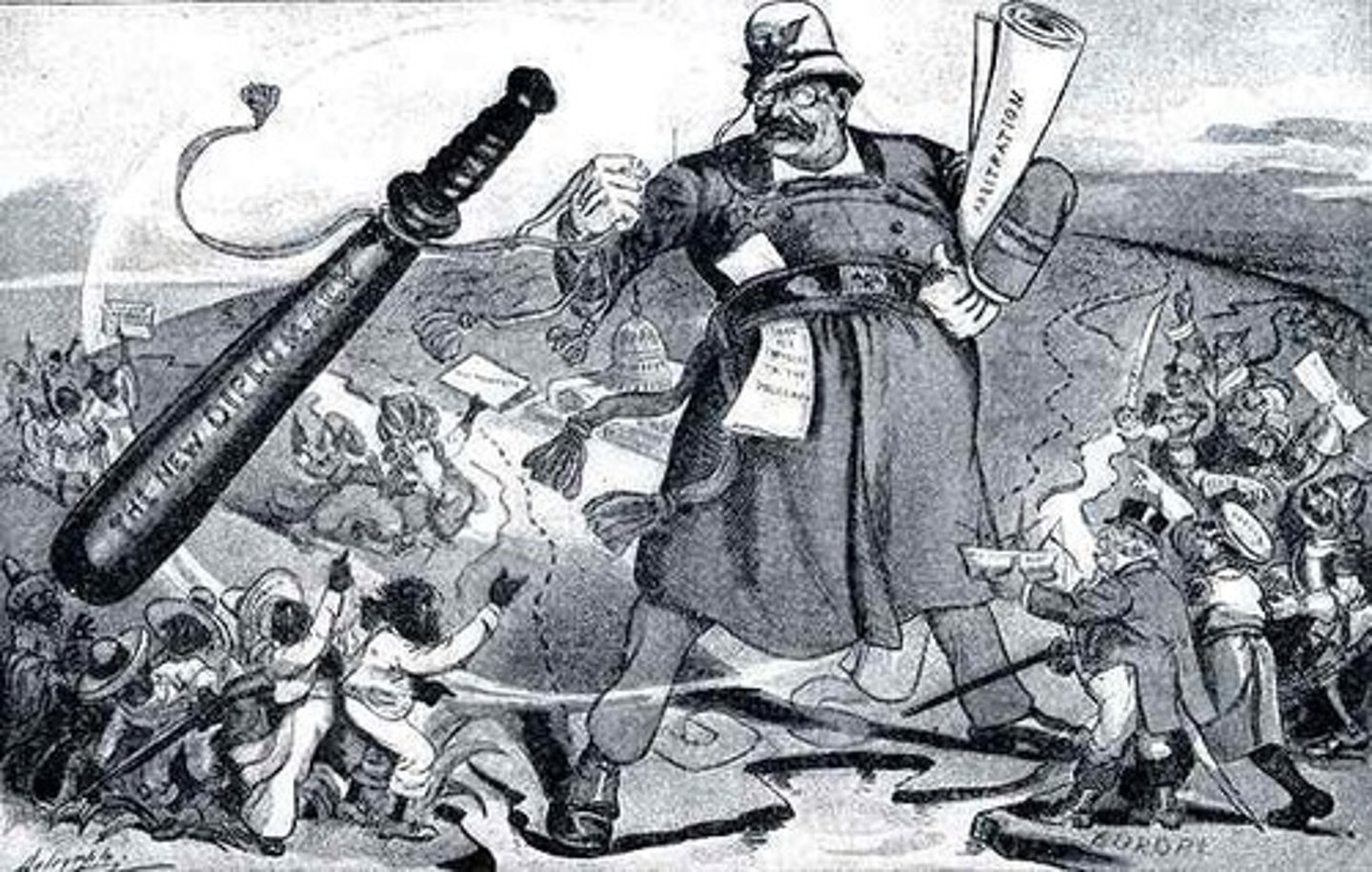
Alfred Mahan
He believed that the future of military power lay in the navy. Wrote Influence of Seapower on History
Josiah Strong
a popular American minister in the late 1800s who linked Anglo-Saxonism to Christian missionary ideas
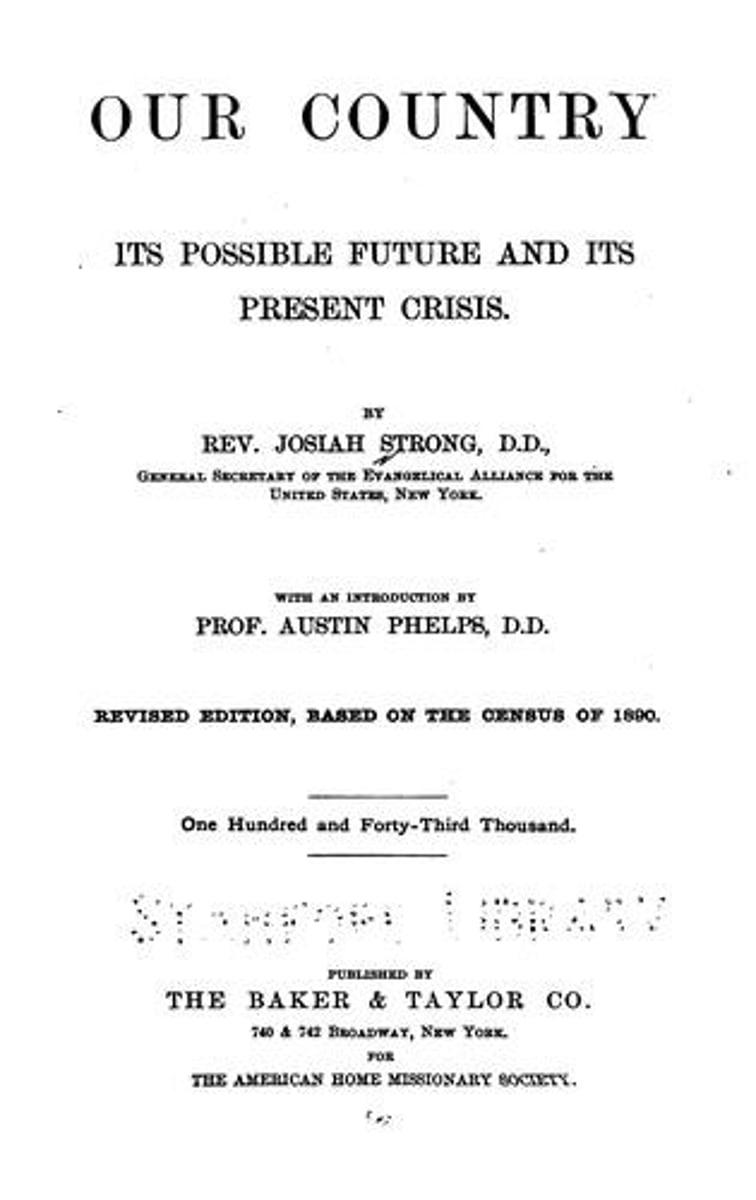
Queen Liliuokalani
the Hawaiian queen who was forced out of power by a revolution started by American business interests
William McKinley
25th president responsible for Spanish-American War, Philippine-American War, and the Annexation of Hawaii, imperialism. Is assassinated by an anarchist
Federal Reserve Act
a 1913 law that set up a system of federal banks and gave government the power to control the money supply
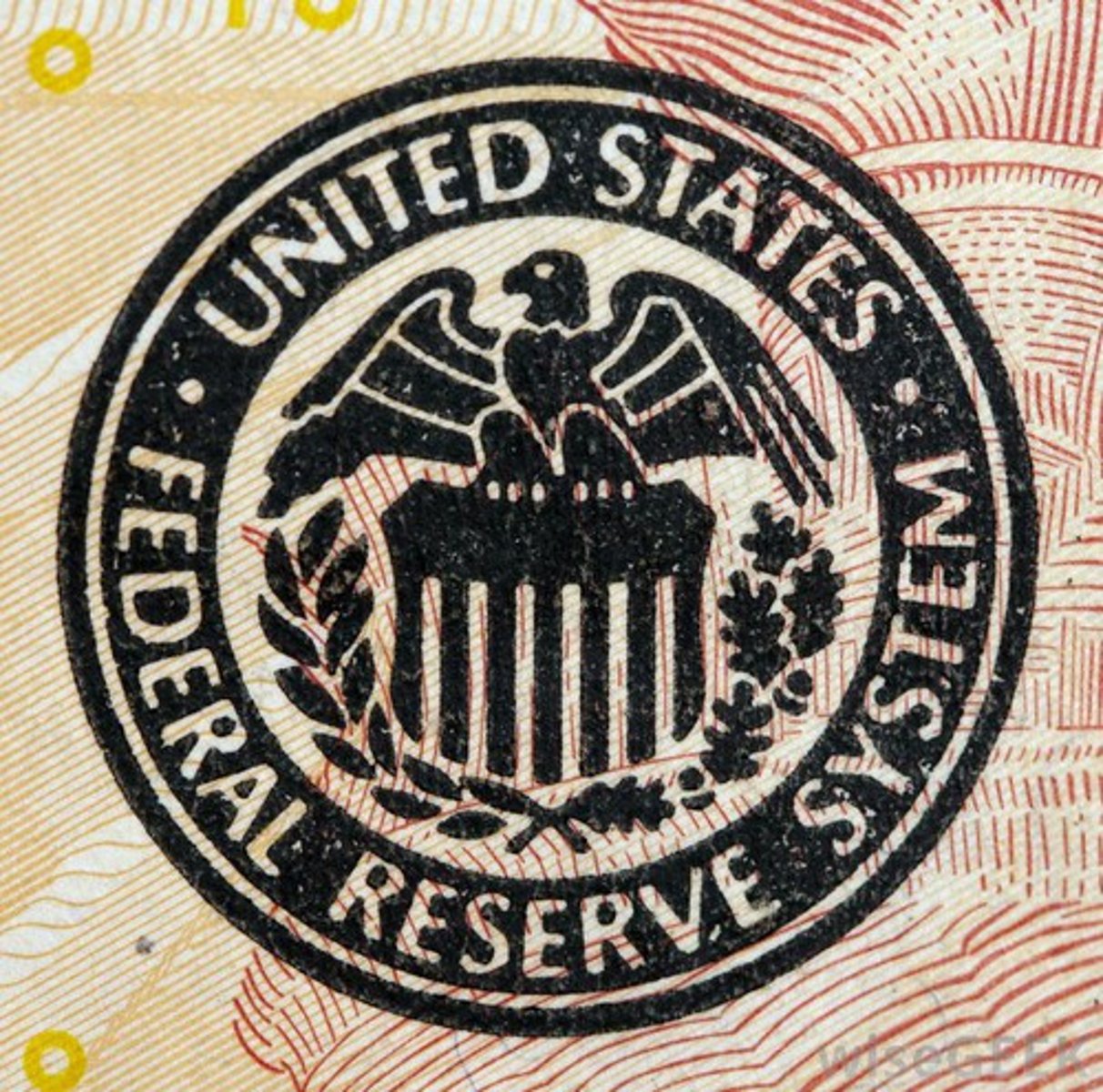
Clayton Anti-Trust
New antitrust legislation constructed to remedy deficiencies of the Sherman Antitrust Act, namely, it's effectiveness against labor unions
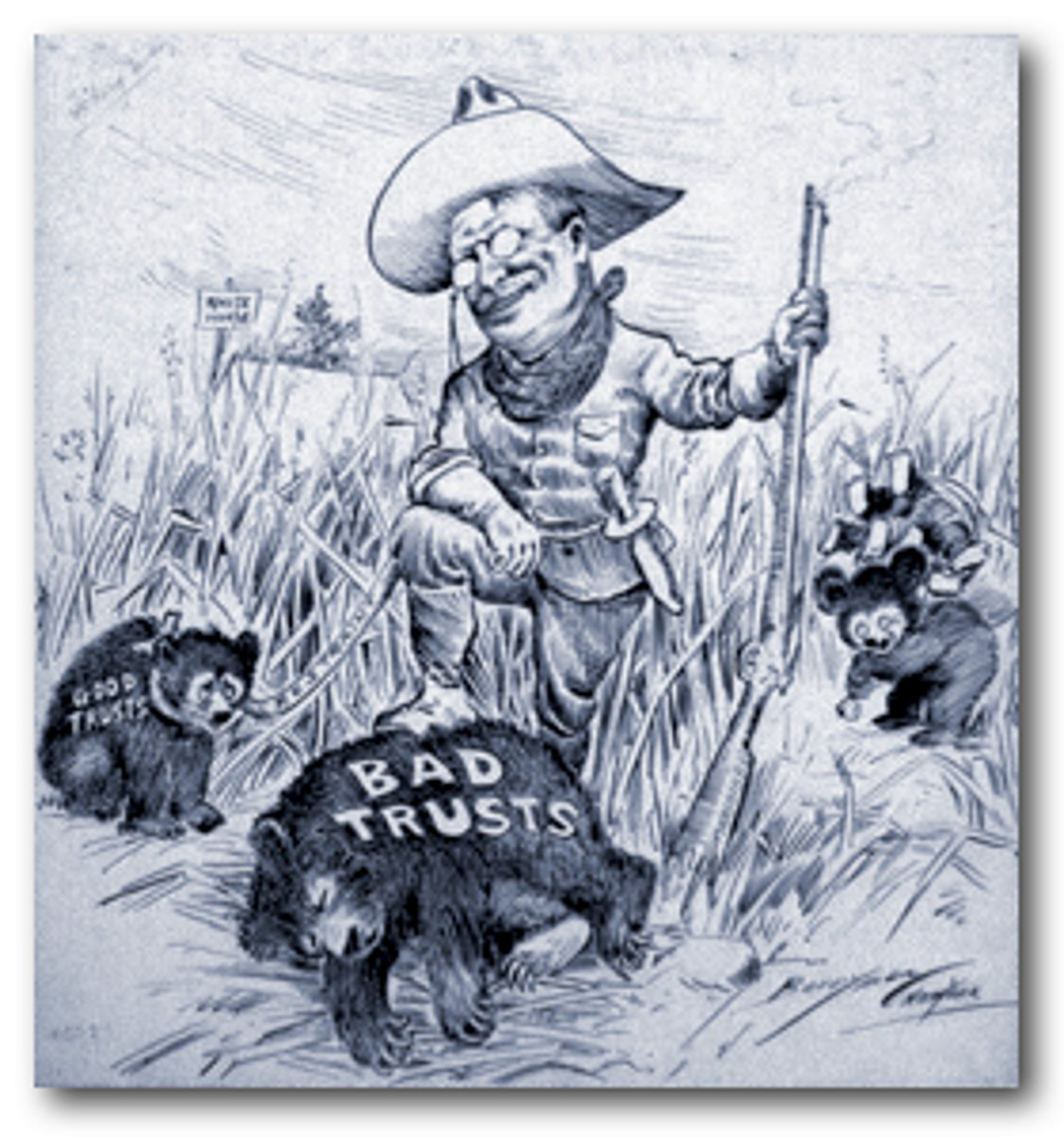
Sussex Pledge
A promise Germany made to America, after Wilson threatened to sever ties, to stop sinking their ships without warning.
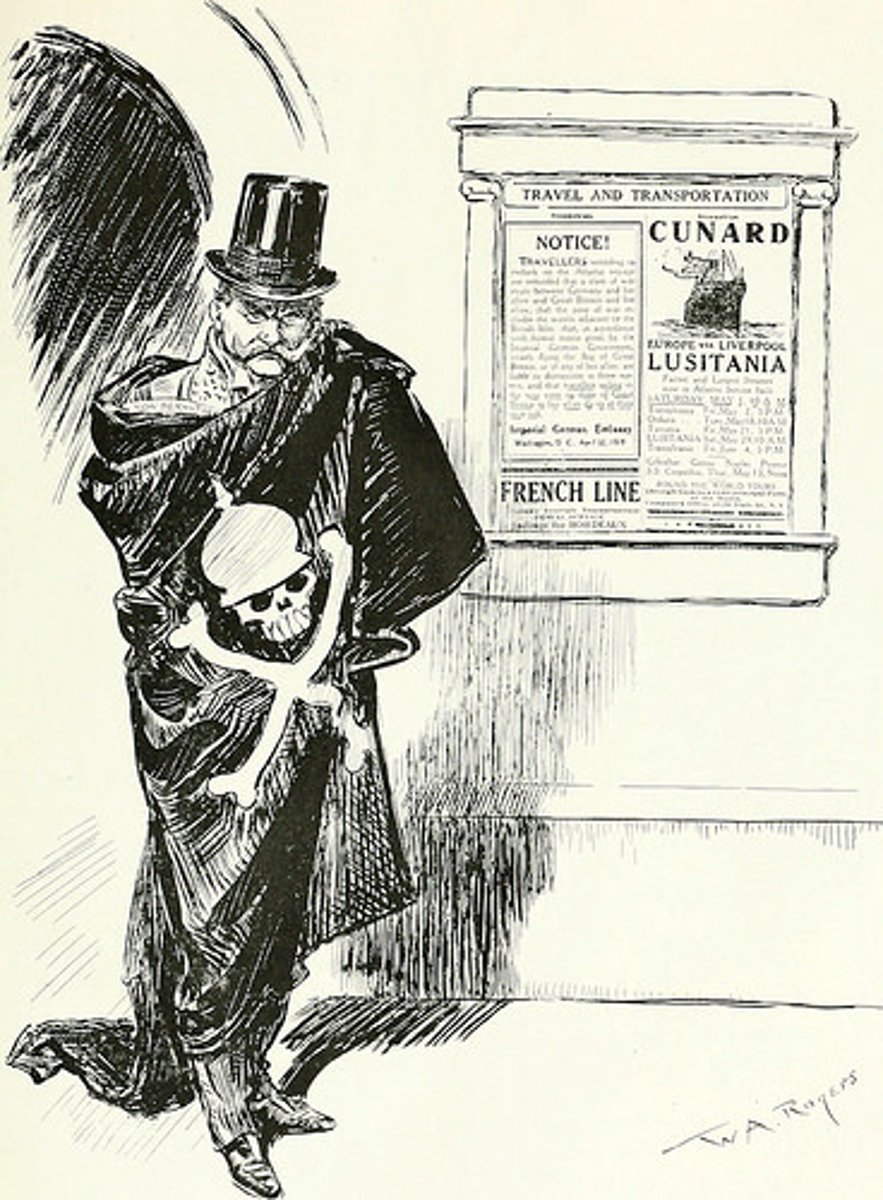
Unrestricted Submarine Warfare
A policy that the Germans announced on January 1917 which stated that their submarines would sink any ship in the British waters
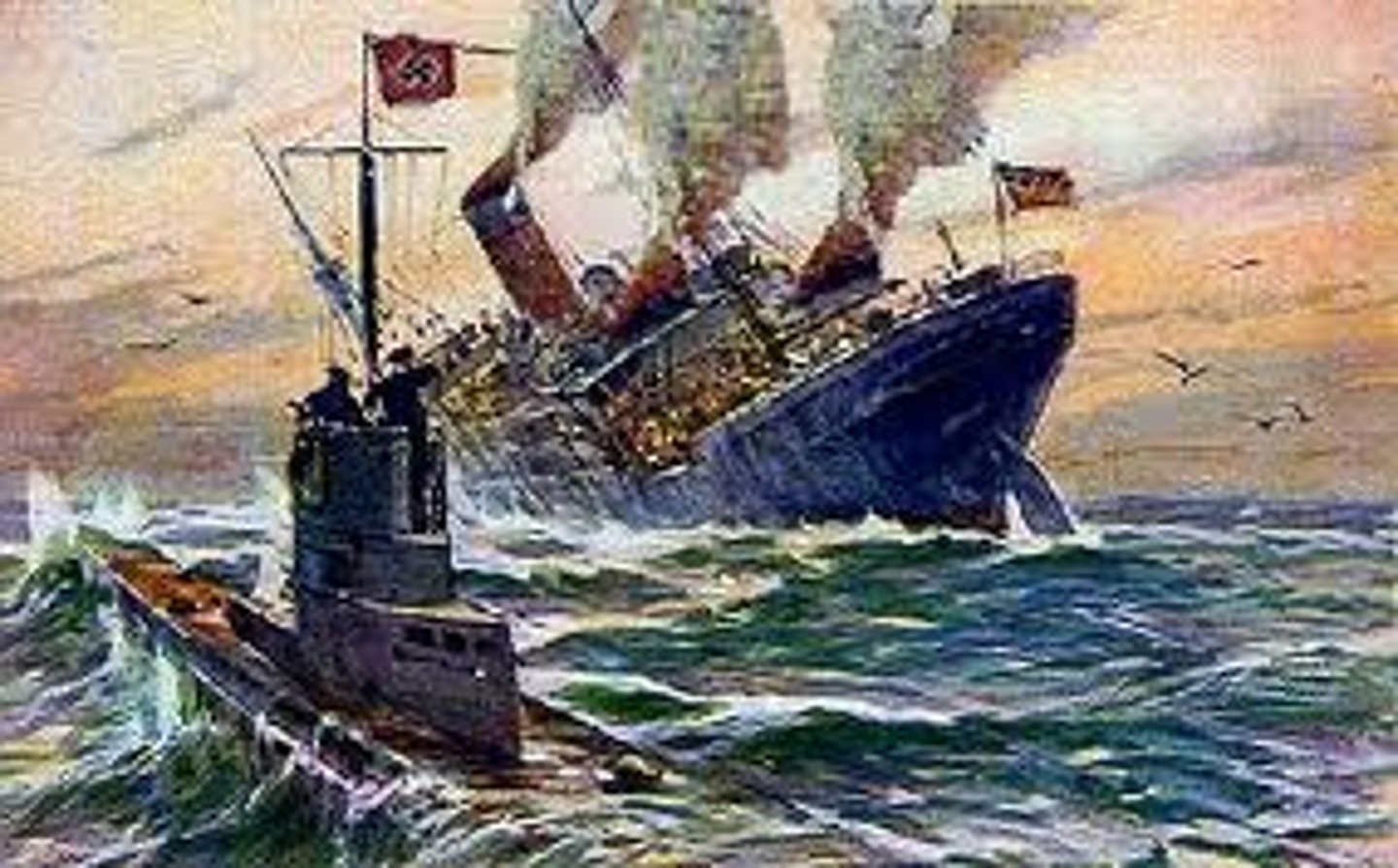
Lusitania
A British passenger ship that was sunk by a German U-Boat on May 7, 1915. 128 Americans died. The sinking greatly turned American opinion against the Germans, helping the move towards entering the war.
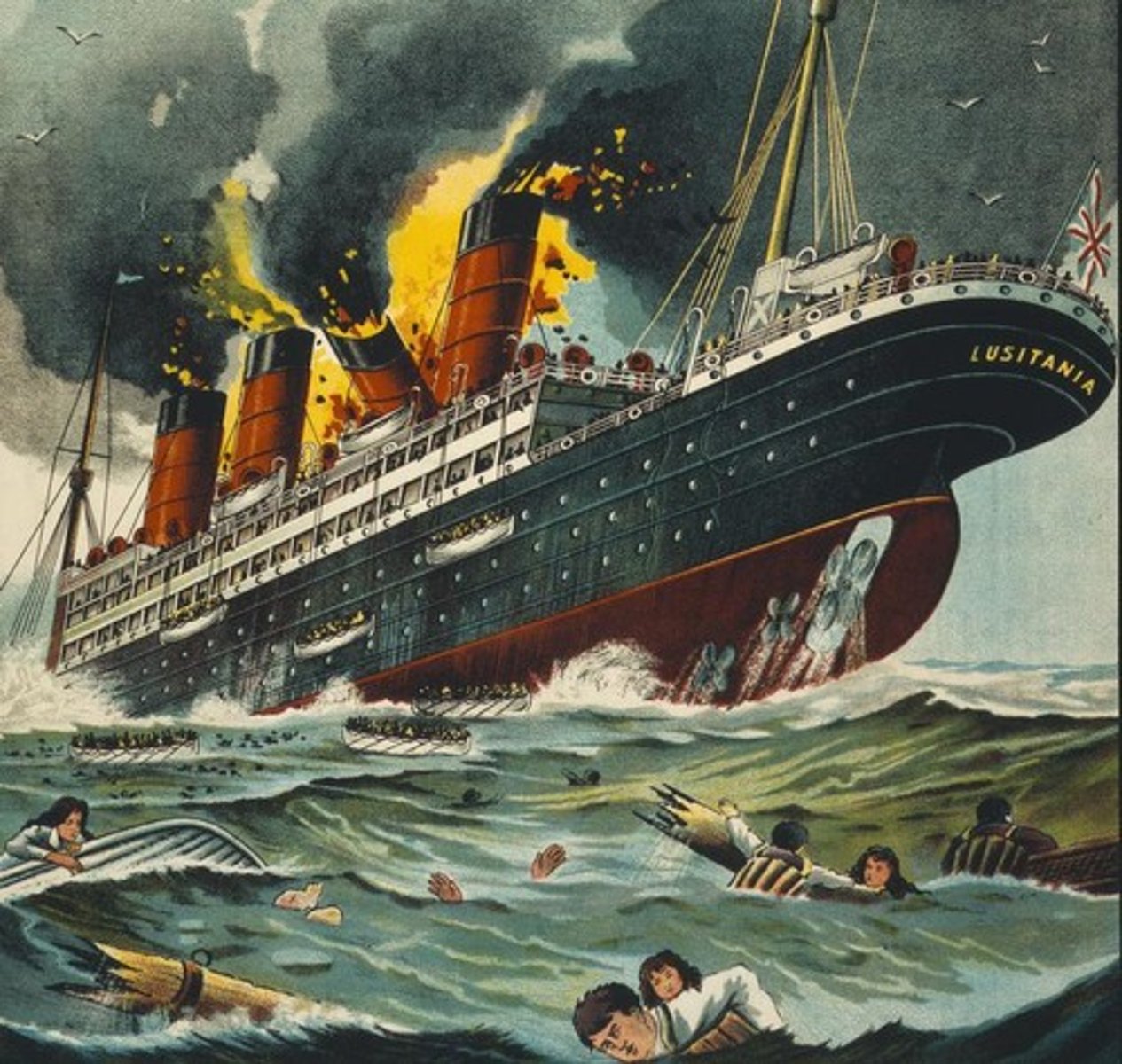
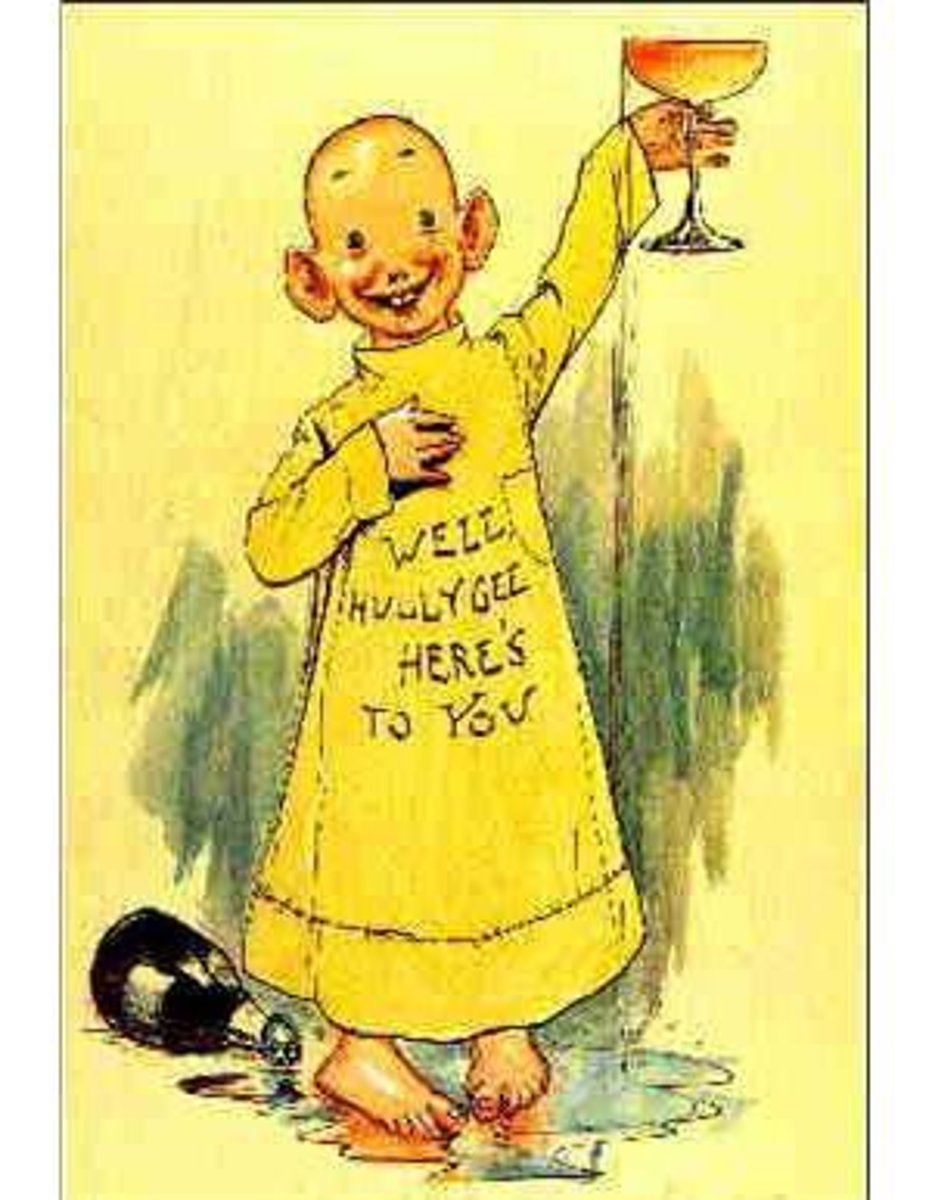
Yellow Journalism
Journalism that exploits, distorts, or exaggerates the news to create sensations and attract readers
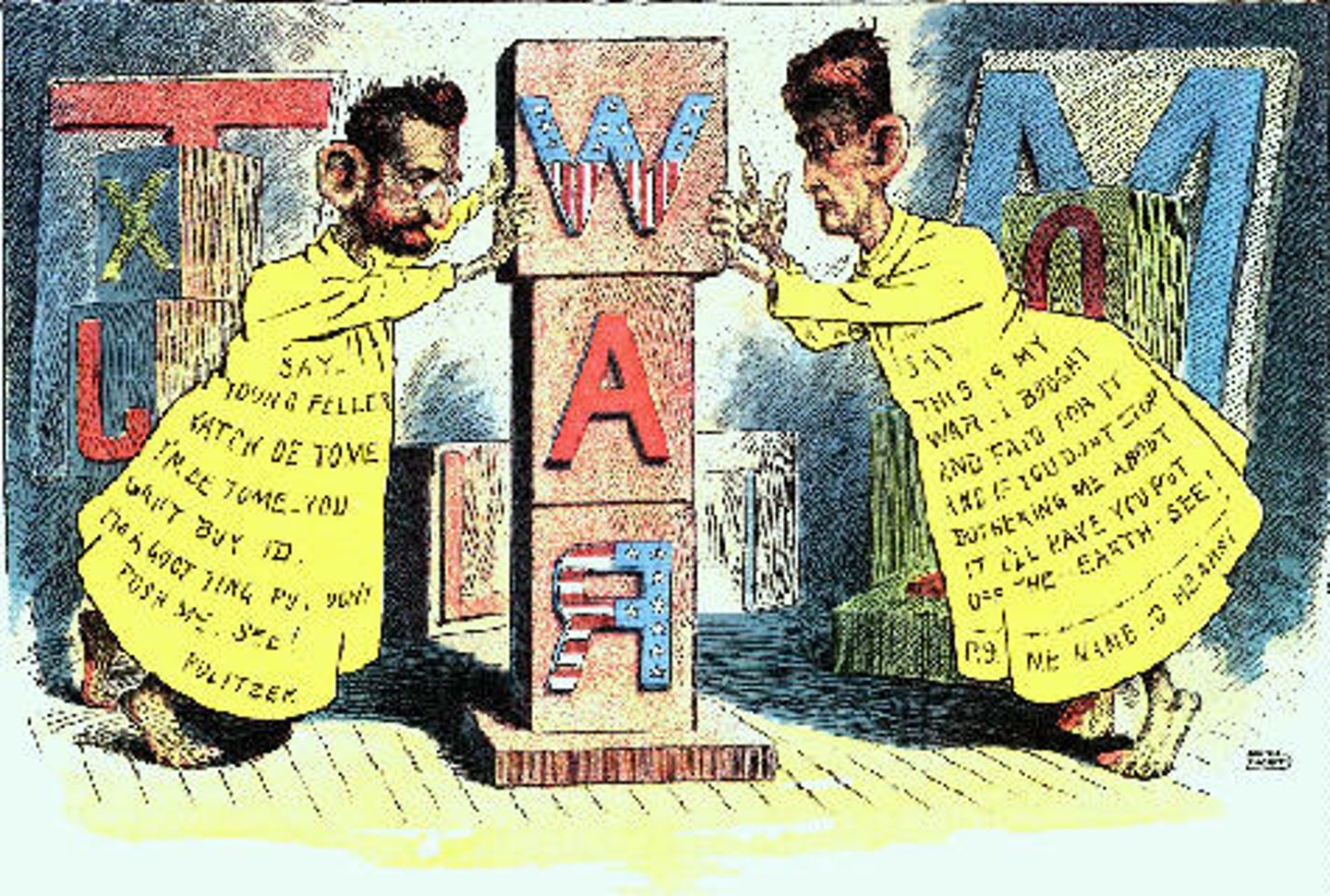
William Randolph Hearst
A leading newspaperman of his times, he ran The New York Journal and helped create and propagate "yellow (sensationalist) journalism."
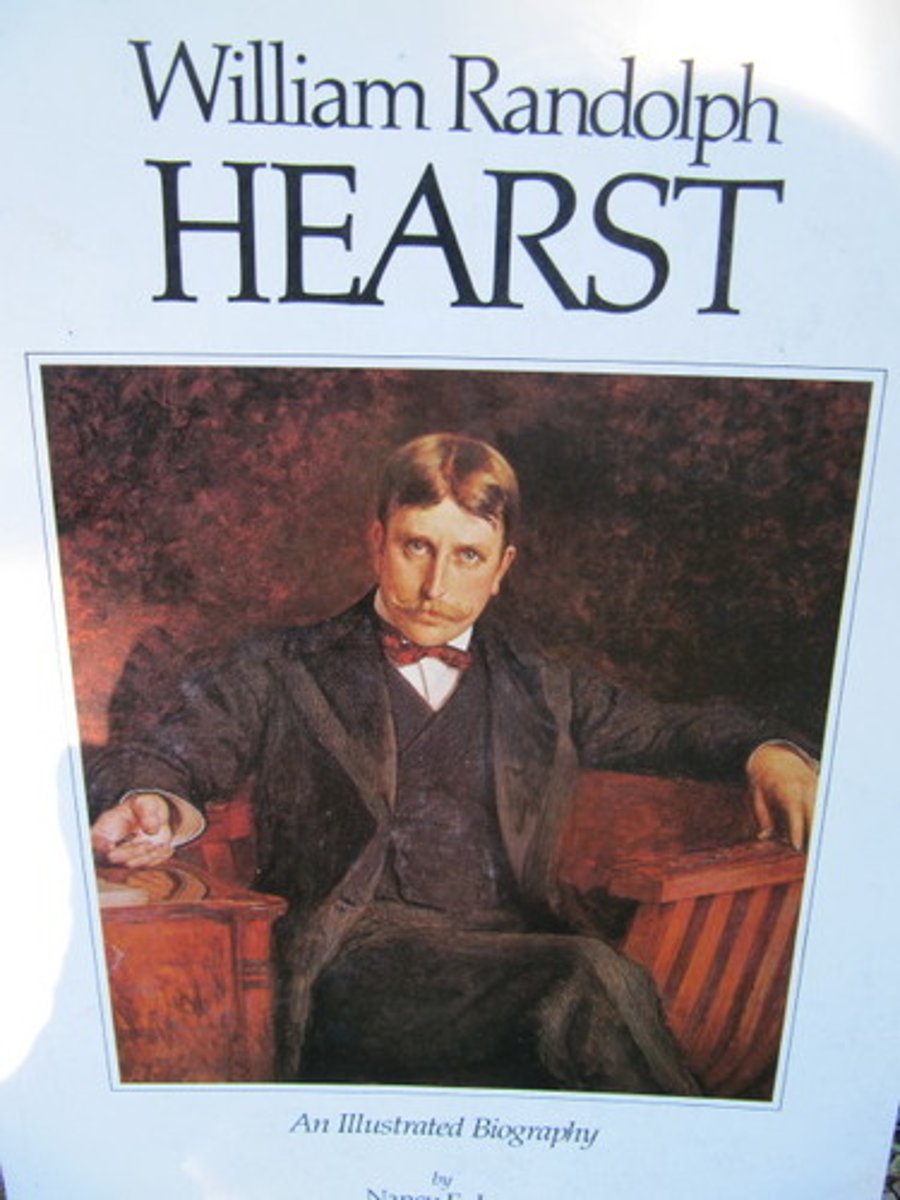
Joseph Pulitzer
United States newspaper publisher (born in Hungary) who established the Pulitzer prizes (1847-1911)
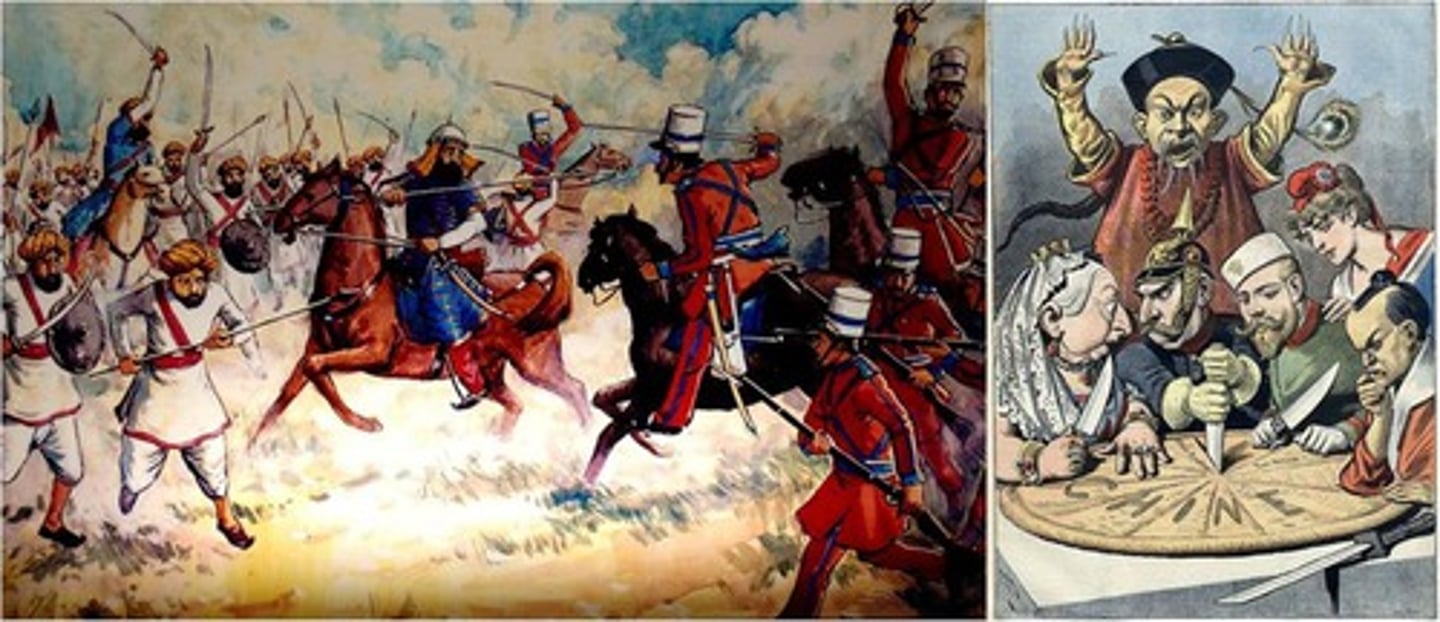
Boxer Rebellion
1899 rebellion in Beijing, China started by a secret society of Chinese who opposed the "foreign devils". The rebellion was ended by British troops.
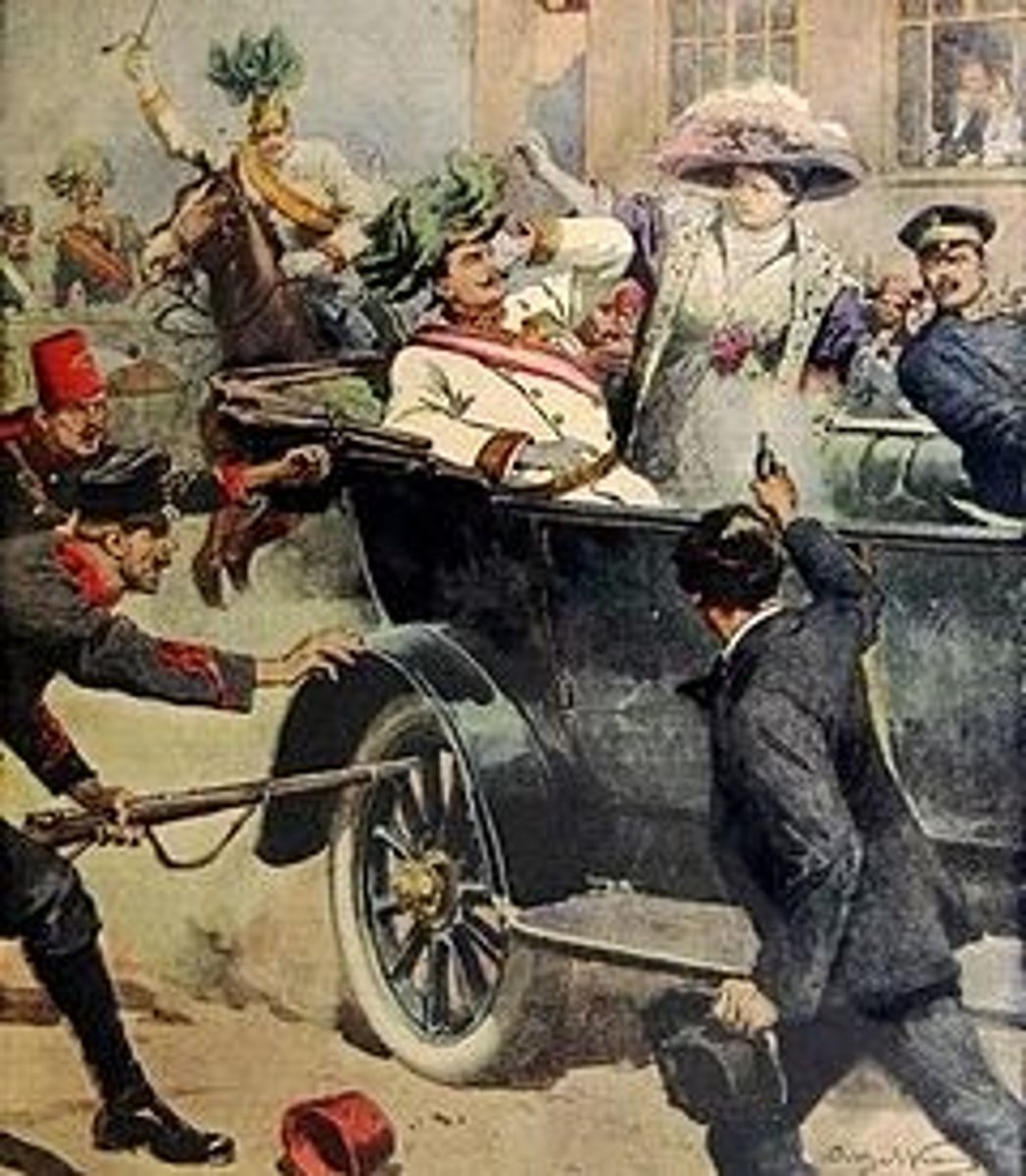
Assassination of Archduke Franz Ferdinand
This was the spark that started World War I. Archduke Ferdinand, the Austrian crown prince, was murdered on June 28, 1914, by a Serbian nationalist while visiting Sarajevo, Bosnia. Germany urged Austria-Hungary to fight and they went to war against Serbia; all of this due to Serbia wanting to expand
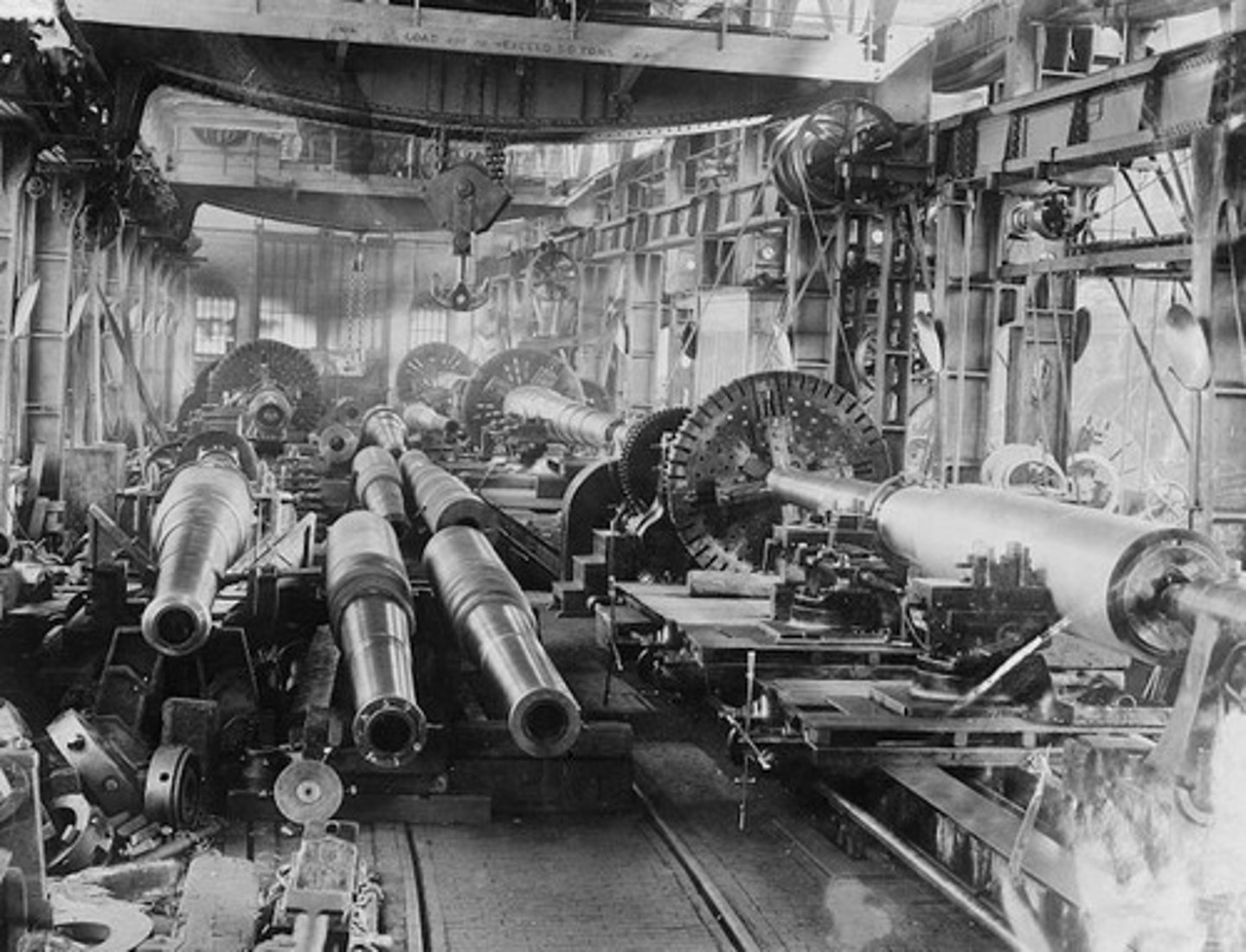
Militarism
build up your military
Nationalism
A strong feeling of pride in and devotion to one's country
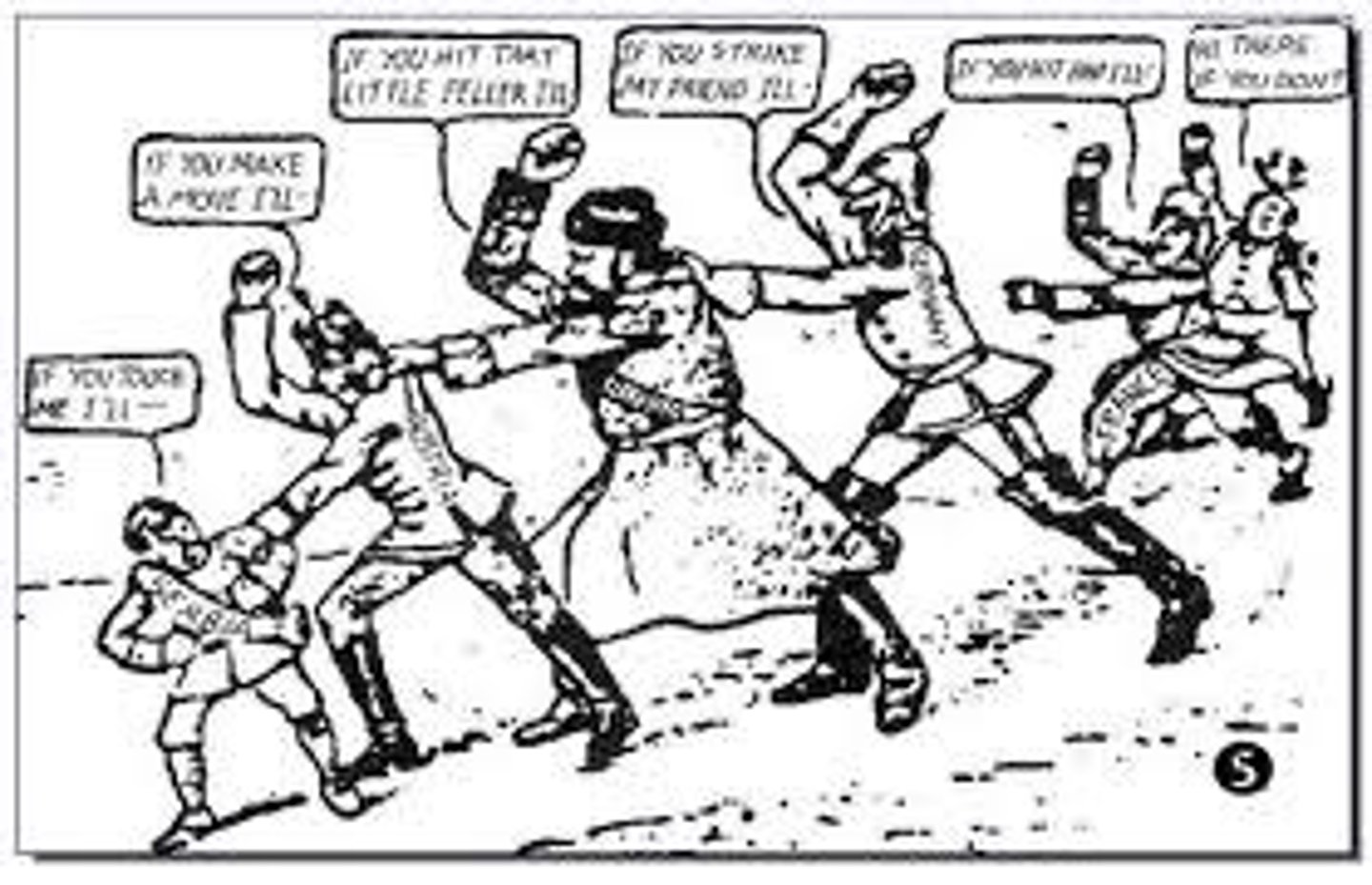
Alliance System
defense agreement among nations
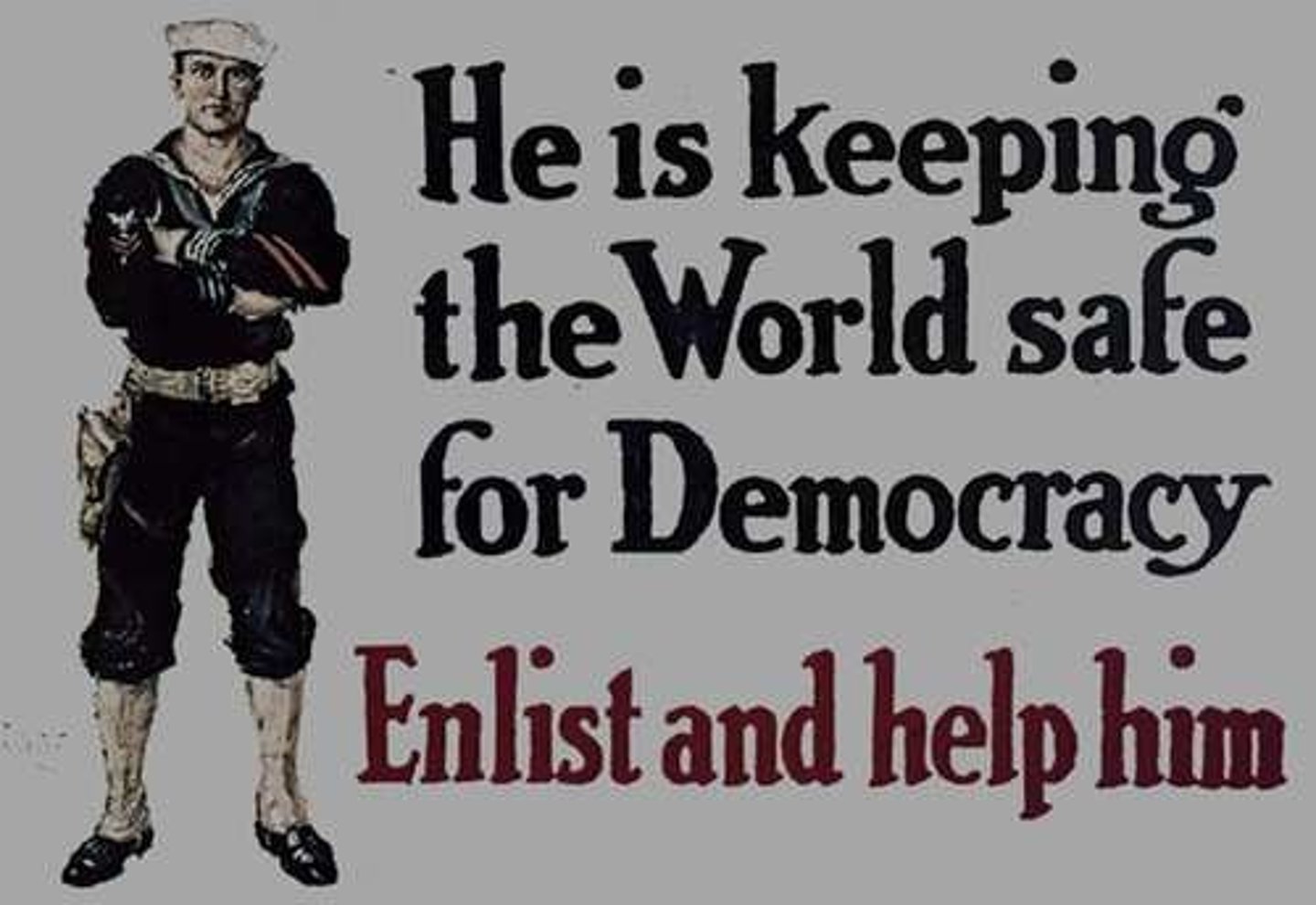
"Making the world safe for democracy"
President Wilson's justification for getting America involved in WWI
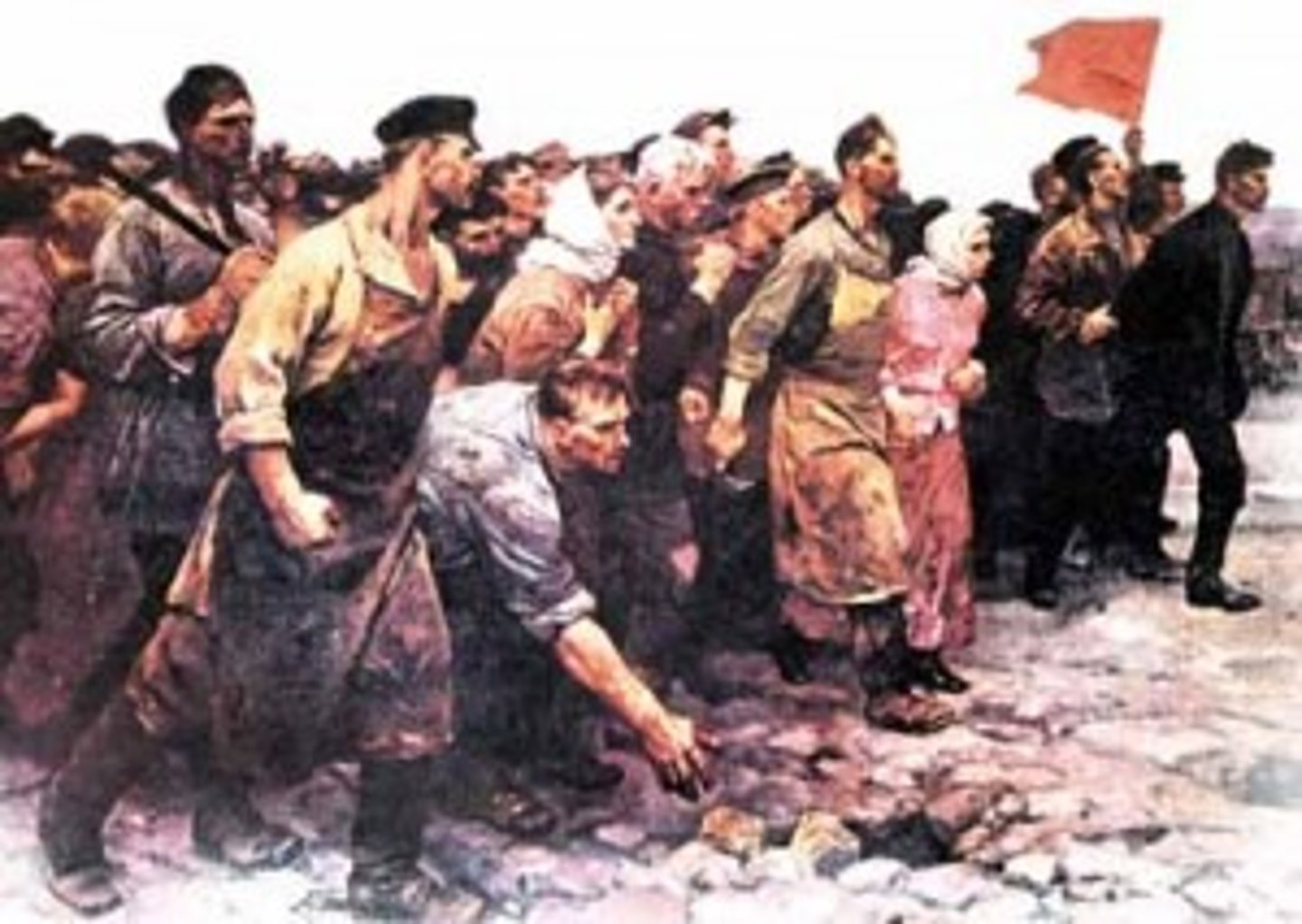
Russian Revolution
The revolution against the Tsarist government. Wilson believed the US could make WWI about democracy.
Propaganda
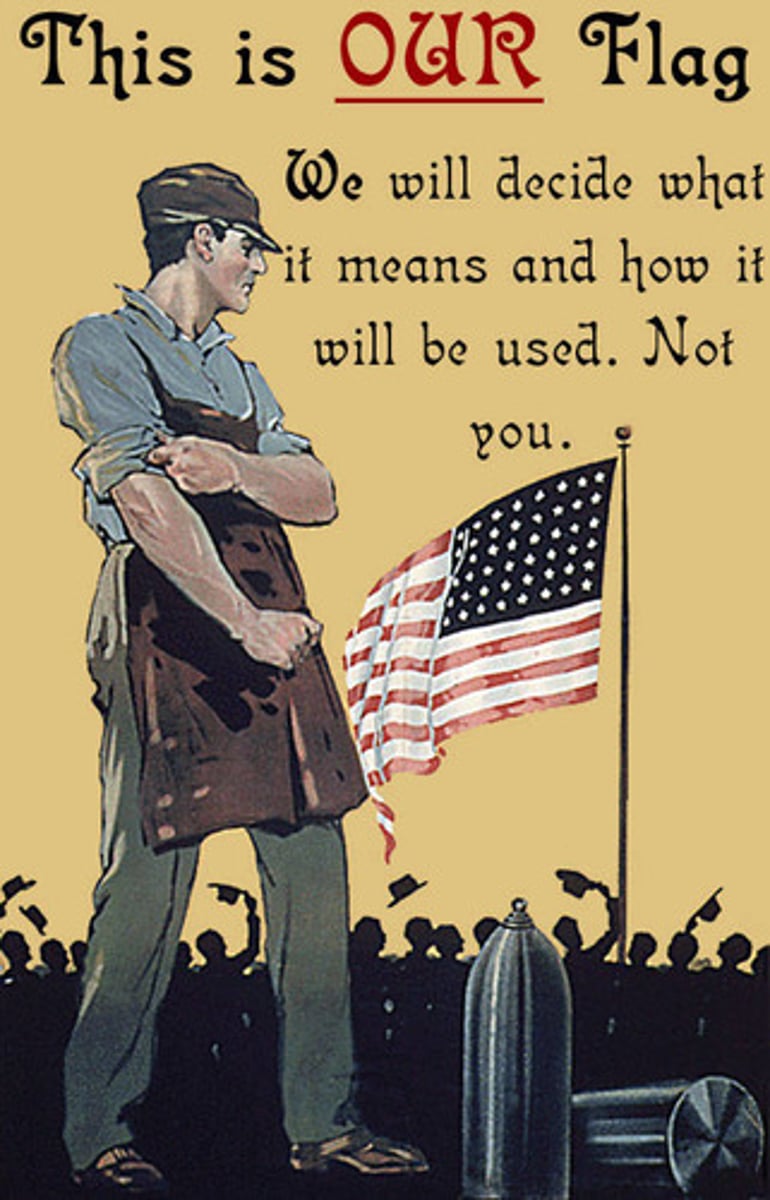
Ideas spread to influence public opinion for or against a cause.
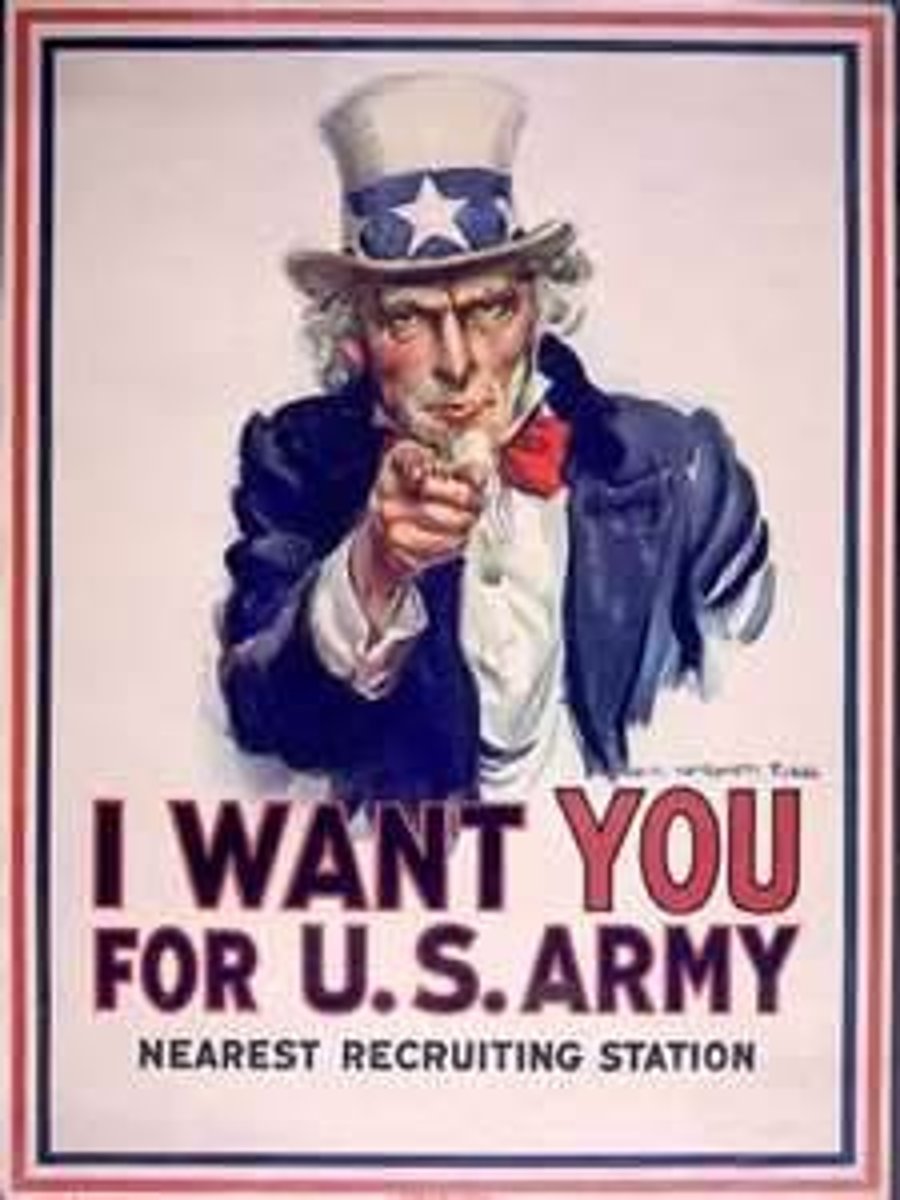
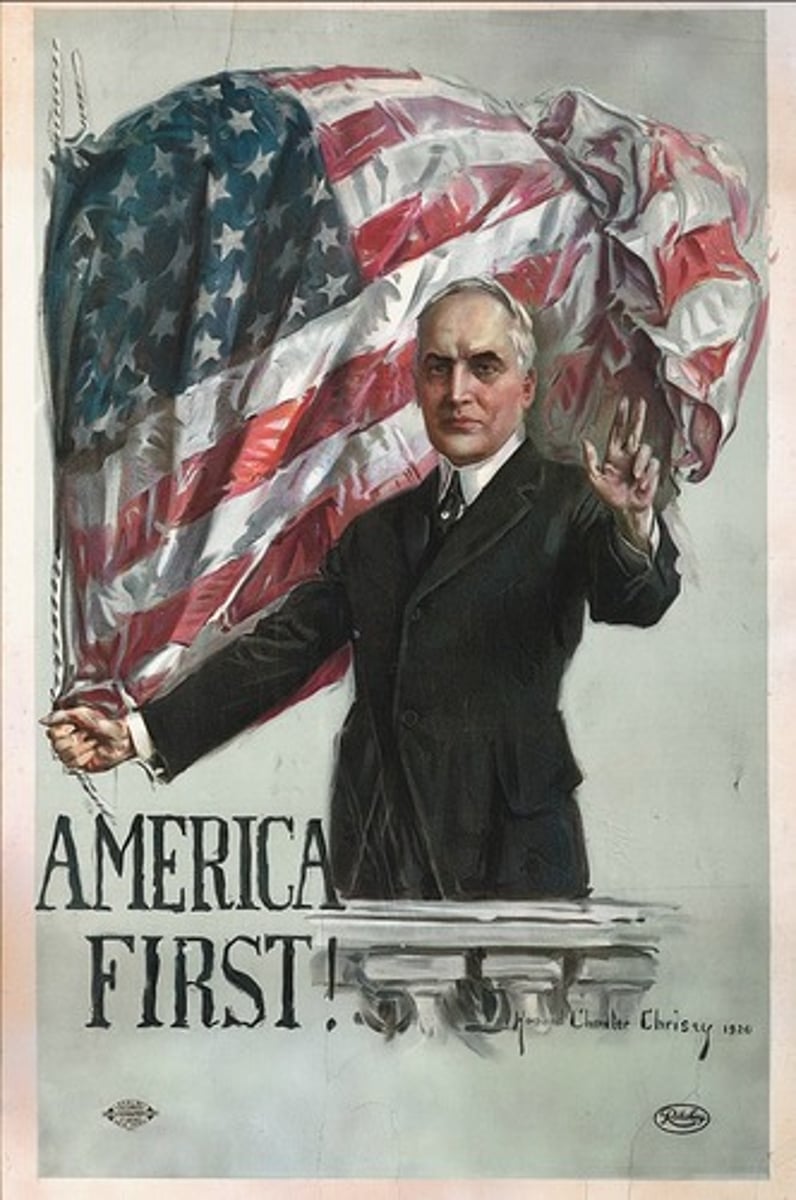
Return to Normalcy
After World War I 1919-20s, when Harding was President, the US and Britain returned to isolatoinism.
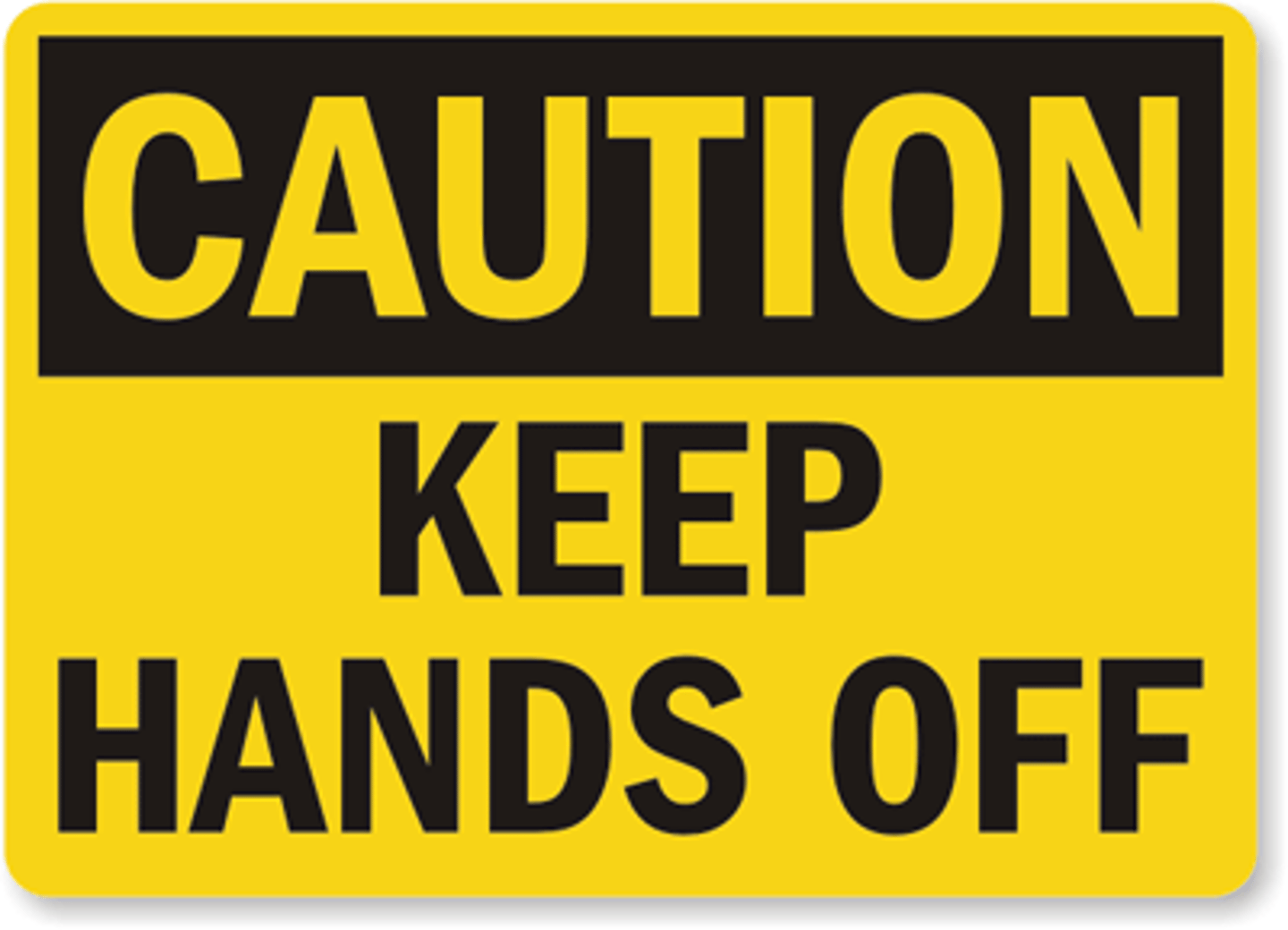
Laissez-faire
Idea that government should play as small a role as possible in economic affairs.
Anti-Imperialist League
objected to the annexation of the Philippines and the building of an American empire. Idealism, self-interest, racism, constitutionalism, and other reasons motivated them, but they failed to make their case; the Philippines were annexed in 1900