Inflation, Price Stability, and Supply-Demand Analysis in Economics
 Call Kai
 Learn
Learn Practice Test
 Spaced Repetition
 Match
Match Flashcards
 Knowt Play
1/19

There's no tags or description
Looks like no tags are added yet.
Name | Mastery | Learn | Test | Matching | Spaced | Call with Kai |
|---|
No analytics yet
Send a link to your students to track their progress
20 Terms
What is inflation?
Inflation is the rate of increase in the general level of prices for goods and services, expressed as a percentage.
What is Australia's inflation target?
Australia's inflation target is 2 - 3% on average over time.
What happens to purchasing power during high inflation?
Purchasing power decreases as the value of money declines.
What is price stability?
Price stability refers to avoiding prolonged inflation and deflation, contributing to high levels of economic activity and employment.
Why is price stability important?
It preserves the integrity and purchasing power of the nation's money, allowing people to hold money without worrying about inflation eroding its value.
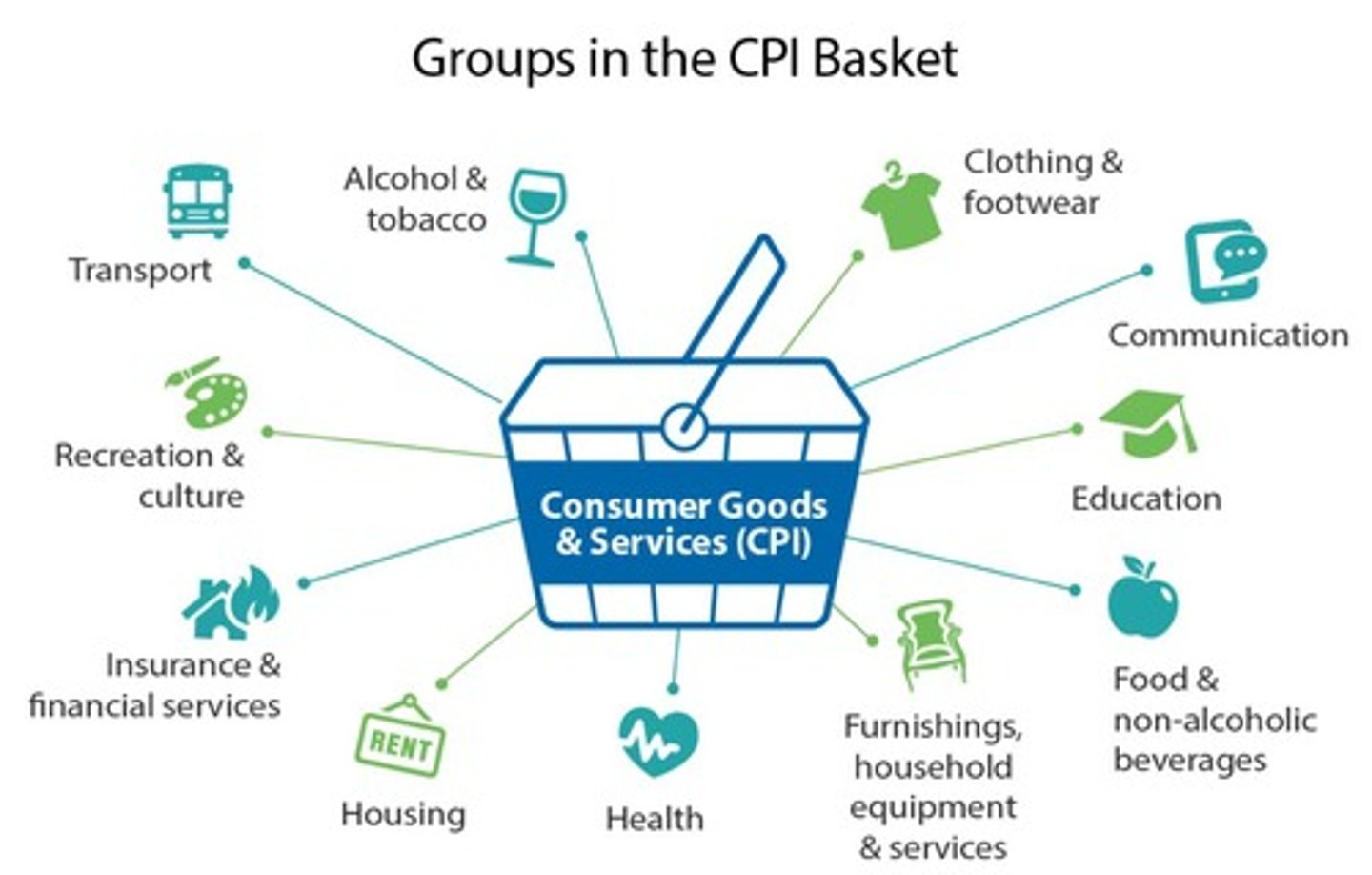
How do we measure changes in prices over time?
Changes in prices are measured using the Consumer Price Index (CPI).
What does the Consumer Price Index (CPI) measure?
CPI measures the average change in prices over time that consumers pay for a basket of goods and services.
What is demand-pull inflation?
Demand-pull inflation occurs when demand for goods and services exceeds supply, leading sellers to raise prices.
What is cost-push inflation?
Cost-push inflation happens when the cost of production increases, causing businesses to raise prices to maintain profits.
What can cause price changes?
Price changes can be caused by increased demand, decreased supply, or increased production costs.
What happens to the equilibrium price of fish if demand increases and supply stays the same?
The equilibrium price of fish will increase.
What is one consequence of rising prices for households?
Rising prices can decrease the standard of living as purchasing power diminishes.
What is one consequence of rising prices for businesses?
Businesses may face increased costs and reduced profit margins due to rising prices.
What happens to wages during high inflation?
Wages may decrease in real value as inflation rises, affecting workers' purchasing power.
What is the law of scarcity?
The law of scarcity states that if there is less of a product available, its price usually goes up.
What is the impact of increased demand on prices?
Increased demand typically leads to higher prices.
What effect does a rise in oil prices have on inflation?
A rise in oil prices increases transport and production costs, leading businesses to raise prices on goods.
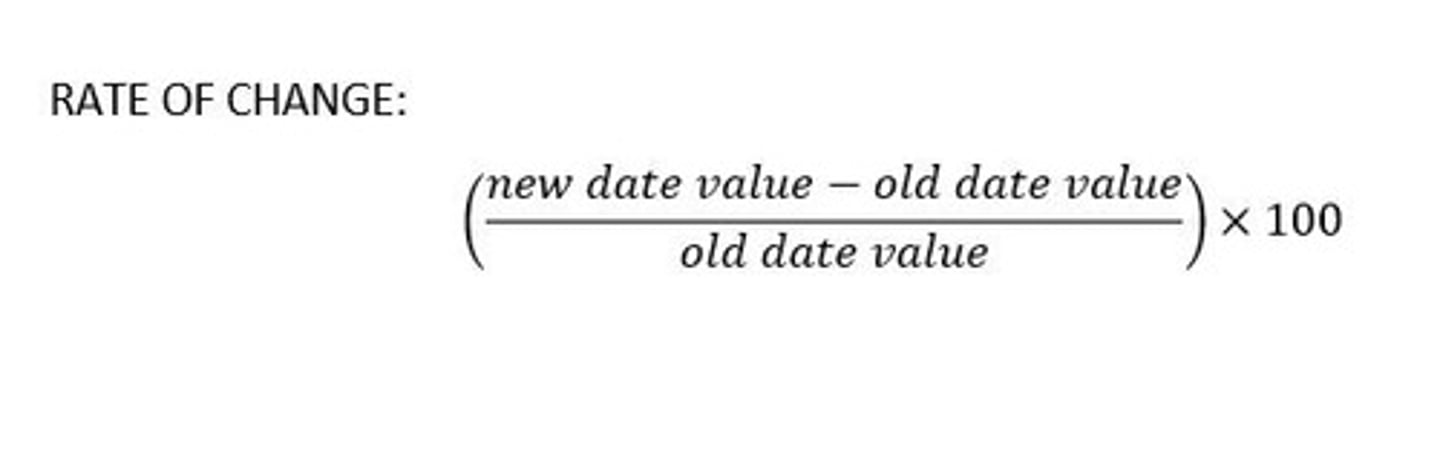
What is the Rate of Change (ROC) formula used for?
The ROC formula is used to calculate the trend in price changes over time.
What can trigger demand-pull inflation?
An increase in household income leading to a rush to buy goods can trigger demand-pull inflation.
What is one scenario that illustrates cost-push inflation?
A sharp rise in oil prices increasing transport and production costs for many firms.