nutrition in cognitive decline
 Call Kai
 Learn
Learn Practice Test
 Spaced Repetition
 Match
Match Flashcards
 Knowt Play
1/20

There's no tags or description
Looks like no tags are added yet.
Name | Mastery | Learn | Test | Matching | Spaced | Call with Kai |
|---|
No analytics yet
Send a link to your students to track their progress
21 Terms
describe the population profile for older age
13 million over 65 years
expected to increase
impact= greater burdens on healthcare/number of people with dementia
list some of the contributing factors for the development of malnutrition in older adults
clinical factors: disease, drug-nutrient interactions, immune function
social factors- income, living arrangements
co-morbidities- chronic health condition
altered psychology- bereavement, loneliness, confusion
physical, physiological factors- mobility, senses, vision, taste, smell
what did a cross sectional analysis of eating difficulties in the NDNS show?
25% reported difficulties with crusty bread edentate- no teeth
and 8% dentate with teeth
other foods with difficulties were : raw carrots, apples and steaks
those with edentate with dentures compared to dentate - had lower mean daily intakes of:
beta carotene, folate, vitamin C, magnesium, and potassium
what was the association found in a 13 year longitudinal study of Chinese older adults find?
more teeth resulted in better cognitive function and a slower pace of cognitive decline over time than those with fewer teeth
what did a study looking at the hardness of habitual diet find?
a greater dietary hardness is associated with a better measure of cognitive function
how can the biological link between tooth loss and cognitive decline be explained?
periodontitis- inflammatory gum disease may be link to brain inflammation
poor nutrition or food choices- due to tooth loss- B vitamins may be linked to cognitive decline
decreased mastication- - mastication provides sensory information to the brain - maintaining learning and memory functions
other- reduced income and greater tooth loss
describe dementia
= a syndrome that can be chronic or progressive leading to a fall in cognitive decline
describe the MMSE aims
used to assess cognitive function-
it looks at:
orientation
attention and calculation
memory
language
visuospatial construction
MMSE score - declines with cognitive age
describe alzeimers’s
a form of dementia with a decline in short term memory and cognition
impacts on daily behaviour
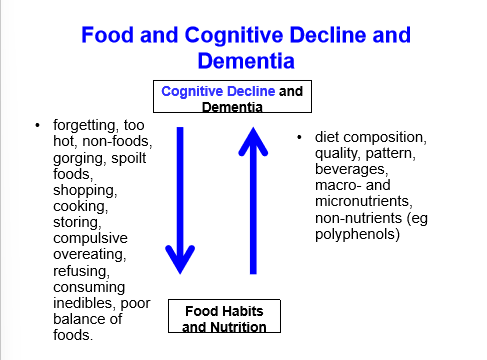
describe the relationship between age, food and nutrition:
dementia/cognitive decline →forgetting/non foods, dysfunctional eating patterns ect →impact on nutrition
what was the 2006 hypothesis for the Mediterranean diet and risk for alzeimers’s disease ?
Med diet associated with a lower risk of developing Alzeimers’s disease
Describe the method and findings briefly of the study looking into Med diet and Alzeimers’s risk
adherence to the med diet was based on a nine-item scale
e.g 1, vegetables, 2.fruit 3. legumes with 9 scoring the best adherence and 0 the least
finding: med diet associated with a significantly lower risk of developing Alzeimers disease
up to 39-40% lower risk for those in highest adherence group
what is the MIND diet and what did the study look at?
dietary pattern designed to help protect brain function and reduce cognitive decline, it combines elements of:
Mediterranean diet
DASH diet
consumption of healthier brain foods more frequently scored higher e.g green leafy vegetables vs red meats, fried fast food
found the MIND diet slows cognitive decline with ageing
based on food frequency questionnaires and cognitive tests
list some of the questionnaires and tools used in nutritional studies
quality of life measures
diet quality or healthy eating indices
diet specific questionaires e.g med diet
clock drawing test
what are some factors involved in limiting questionnaires and tools?
language 1st or 2nd
hearing loss
vision loss
motor coordination loss
educational level
being unprepared
what did the PREDIMED randomised trial findings show?
both med diet and extra virgin olive oil and med diet and nuts groups showed higher mean MMSE and CDT scores compared to control
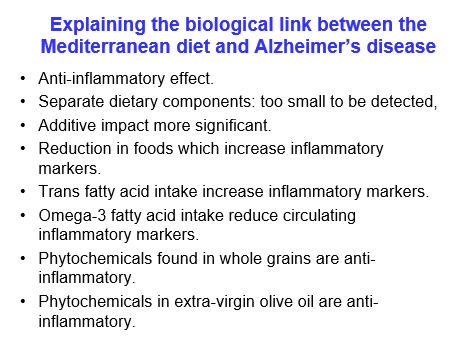
what are the possible mechanisms to explain the biological link between the Med diet and Alzeimers disease?
during Alzeimers’s the rain faces oxidative damage and is vulnerable to damage by oxidative stress
antioxidants found in complex phenols vit C,E and beta carotene - high concs in the med diet
the additive impact of the med diet is more significant
has a reduction in foods which increase inflammatory markers e.g phytochemicals in wholegrains or EVOO are anti-inflammatory
what does the SACN report sum up about food and cognitive decline:
There is no strong evidence that specific nutrients or supplements prevent dementia, but healthy dietary patterns (like the Mediterranean diet) may be associated with lower risk, although causation is not prove
describe the relationship between food habits and nutrition and cognitive decline:
it is bidirectional
risk factors for cognitive decline:
age, cardiovascular conditions, genetic predispositions lots of other risk factors - NOT just nutrition