lesson 86 herd management and parasitic diseases
 Call Kai
 Learn
Learn Practice Test
 Spaced Repetition
 Match
Match Flashcards
 Knowt Play
1/32

There's no tags or description
Looks like no tags are added yet.
Name | Mastery | Learn | Test | Matching | Spaced | Call with Kai |
|---|
No analytics yet
Send a link to your students to track their progress
33 Terms
surveillence
ongoing collection of data on parasitic infection in a specific herd. evaluates effectiveness of control measures
monitoring
pasture/ environmental condition
animal performance; weight gain , milk yeld, BCS
FEC-fecal egg count
counts how many eggs per gram
provides mostly and estimate of parasite burden not exact worm count
limitation is egg output varies by species
FECRT- fecal egg count reduction test
counts egg aftere giving treatment to see if its working
over 95% is effective
under 95% resistance suspected
under 90% resistance confirmed
-keep using that same dewormer until no longer effective
Famacha
check color of lower eyelid=PCV and severity of anemia
1 dark red= non anemic
2 red pink= acceptable
3 pink= milk anemia
4 pale pink= anemic
5 white=severly anemic
targeted antihelmith treatment
should only treat animals showing clinical signs to avoid drug usage and reisstance
refugia
when u leave parasites alone so that they can continue to pass on their susceptable genes and dilute resistance pool
Gastrointestinal nematode in cattle
ostertagia ostertagi-affects young, low productivity
cooperia spp.-calves, growth retardation
fluke of cattle
faciola hepatica (liker fluke)
protozoa of cattle
eimeria spp
gastrointestinal of horses
small and large stronglyes
ascarids (parascaris spp.)
risk factors for gastrointestinal nematodes
poor nutrition, weather, Antihelminth resistance, high stocking density. contaminated pasture
-goats more prone bc they eat everything in the pasture
risk factor for flukes
wat marshy pastures, off schedule treatment
risk factor for ectoparasites
grazing with wildlife-ticks
close confinement-lice and mites
effects of parasitism in ruminants
mostly subclinical, effect measured via production such as weight gain, milk yield and BCS
severe signs: rough hair coat, diarrhea, weight loss, low BCS,
-ecto=pruritis and alopecia
effects of parasite in horses
prevelance high but disease is rare
severe signs: rough hair coat, diarrhea
antihelminth-benzimidazoles
albendazole, fenbendazole, oxfendazole
antihelminth-macrocyclic lactones
ivermectin, doramectin, eprinomectin, moxidection
antihelminth-nicotinic agonist
levamisole, nitroxynil, closantel, clorsulon
ruminants parasite control strategy
avoid low grazing and wet area, increase nutrition
antihelminths treatment
equine parasite control strategy
remove feces regularly, rotate grazing area, avoid overstocking, target selective treatment
GIN treatment 1-2 times a year
parascaris treatment at 2, 5, and 8 months old
which famacha score would you treat small ruminants
4-5
3-depends on how individual animal factors
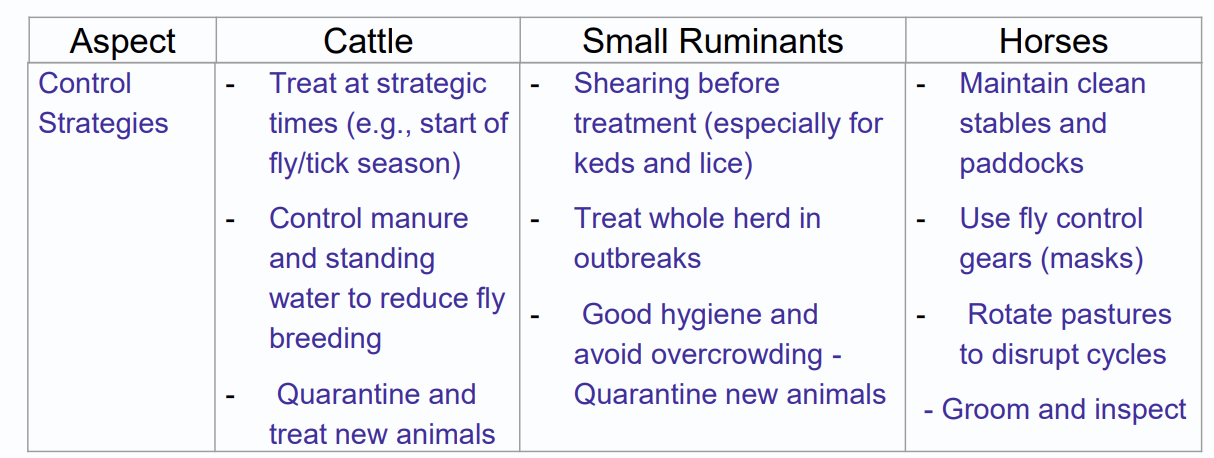
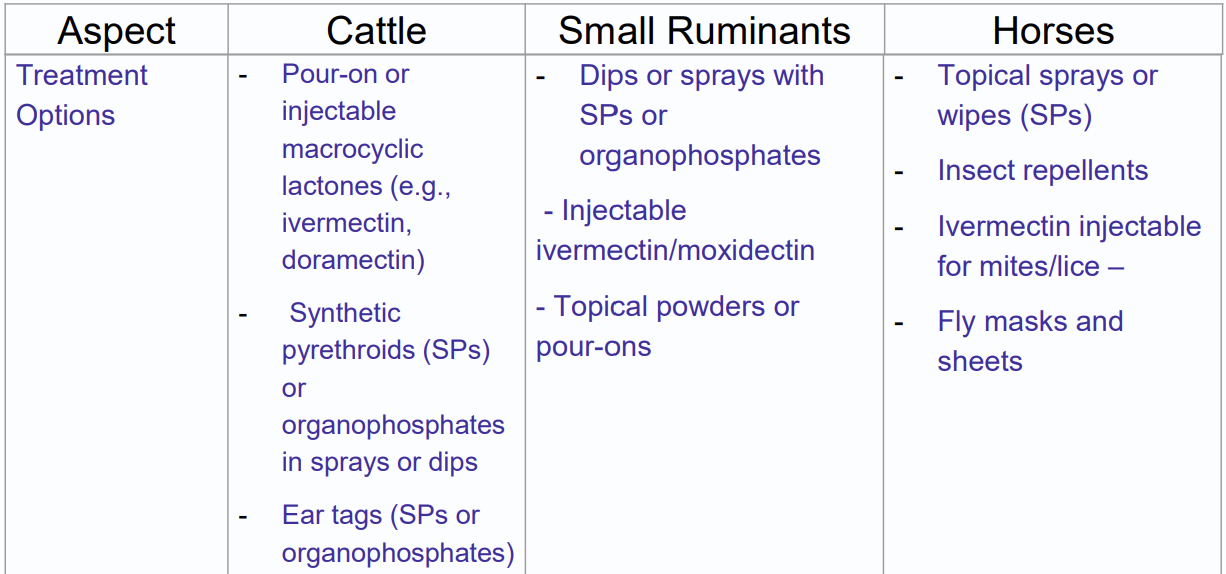
how do you treat GI parasites vs ectoparasite
GI parasite treat individual based on clinical signs
ectoparasites treat whole herd
internal parasites for pigs
ascaris suum-most important in confinement. milk spots on liver
trichuris suis-pasture
stronglyoids ransomi
ousophagostonum detatum
isospora suis-diarrhea+ death
metastrongylus spp.-pasture
external parasite of pigs
mite: sarcoptes scabeiei
lice: haematopinus suis
stategic deworming for pig
treat sows pre farrowing to reduce piglet exposure
What nemotode parasite is the most inportant in cattle
osteragia
what nematode parasite is most important in sheep and goat
haemonchus
what nematode is most important in swine
ascaris suum
drug resistance is most severe in what species
goats
caveat-”limitation”
for refugia to work drug efficacy must be highhi
high refugia
high concentration of susceptible parasites`