dpt anatomy - head & neck 2
 Call Kai
 Learn
Learn Practice Test
 Spaced Repetition
 Match
Match Flashcards
 Knowt Play
1/35

There's no tags or description
Looks like no tags are added yet.
Name | Mastery | Learn | Test | Matching | Spaced | Call with Kai |
|---|
No analytics yet
Send a link to your students to track their progress
36 Terms
torticollis
twisted neck caused by SCM tightness
platysma attachment
inferior border of mandible
skin
subcutaneous tissue of lower face
TO
fascia covering superior parts of pectoralis major and deltoid
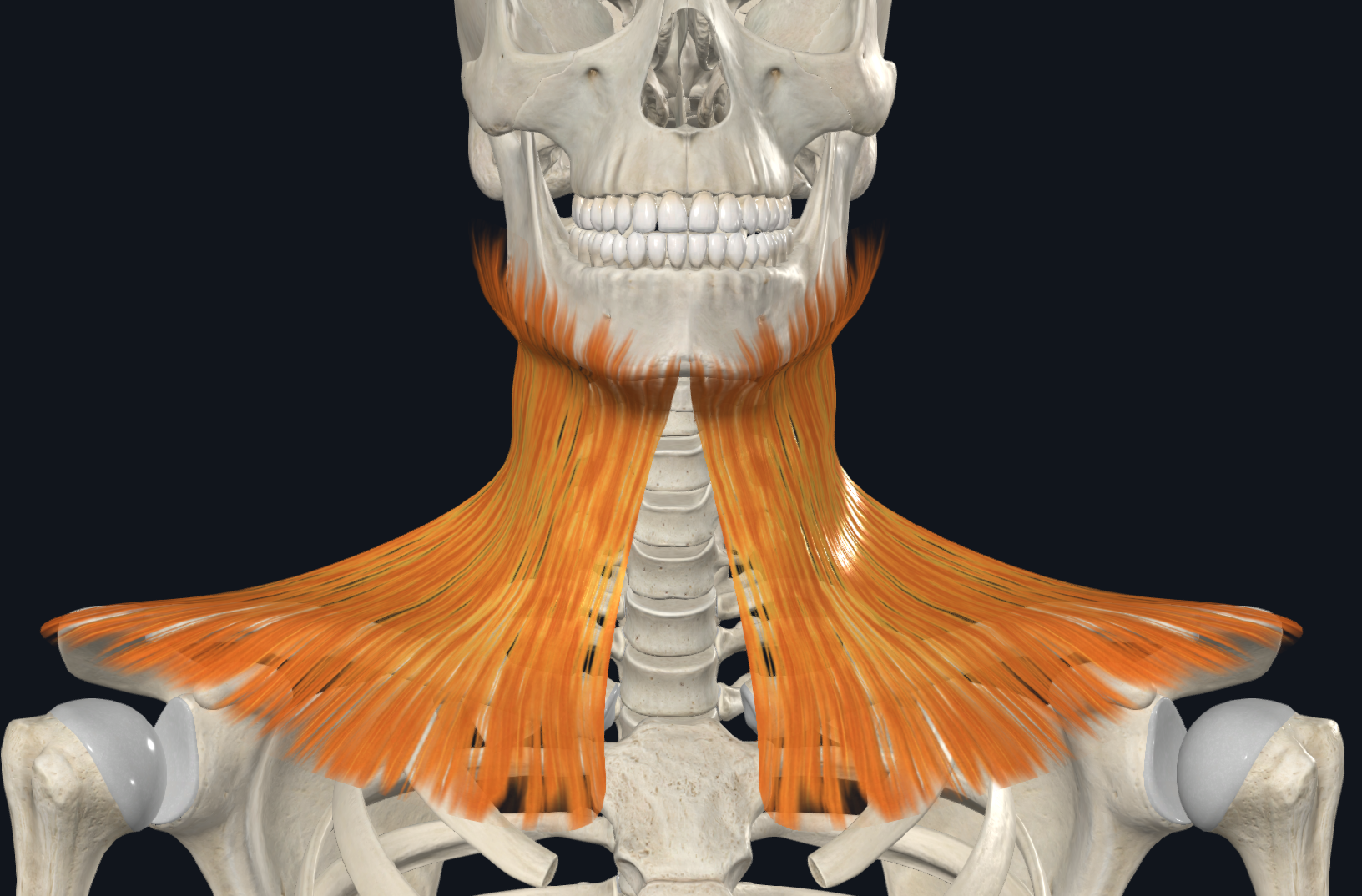
platysma innervation
cervical branch of facial nerve
platysma action
draws corner of mouth inferiorly
widens corner of mouth in expressions of sadness and fright
draws skin of neck superiorly when teeth are clenched tight
sternocleidomastoid attachment
lateral surface of mastoid process
lateral half of superior nuchal line
TO
anterior surface of manubrium of sternum (sternal head)
superior surface of medial third of clavicle (clavicular head)
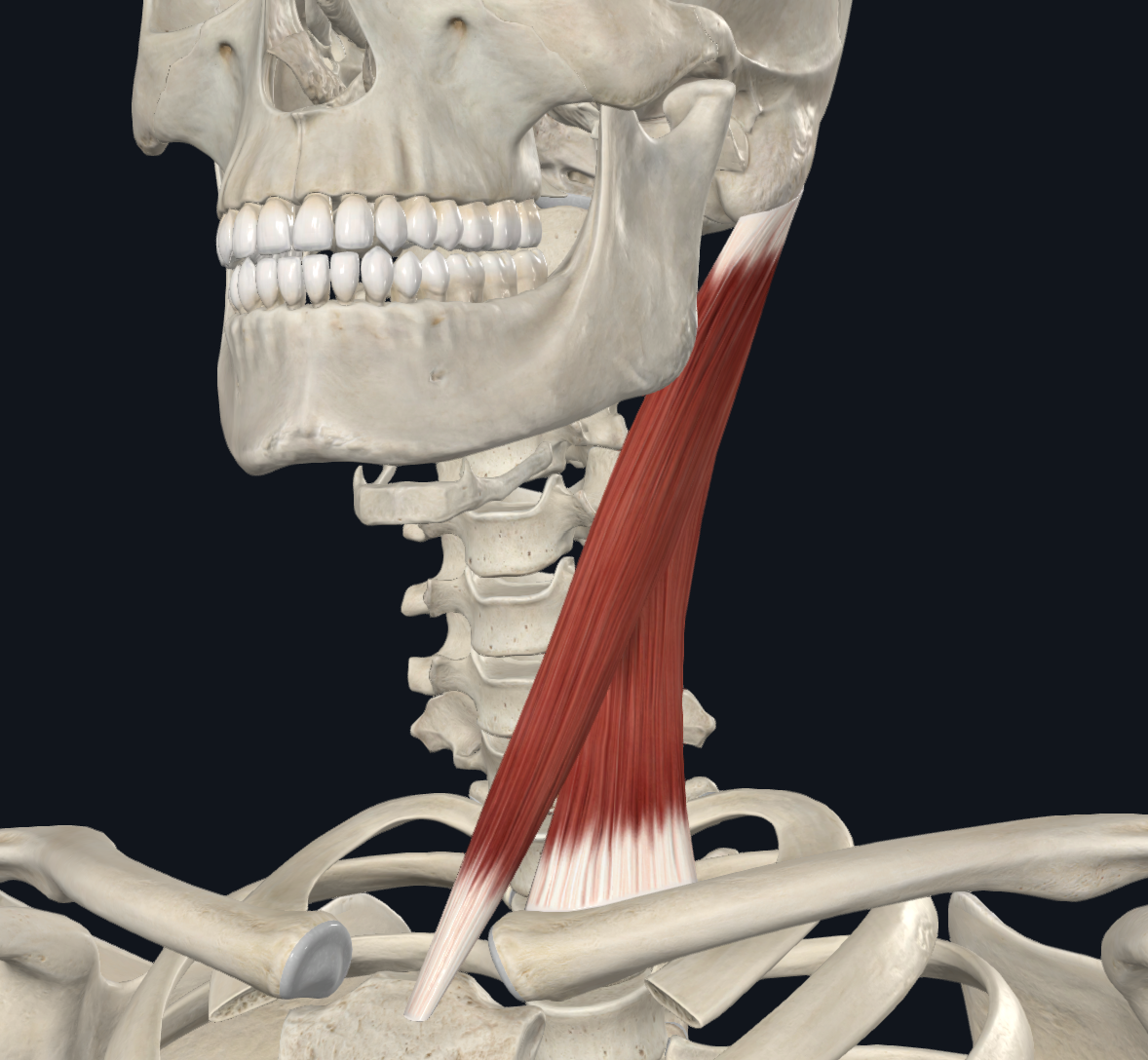
sternocleidomastoid innervation
spinal accessory nerve (motor)
C3/4 ventral rami (proprioception)
sternocleidomastoid action
unilaterally
ipsilateral side bending
contralateral rotation
bilaterally
extend neck at O/A joint
flex lower cervical vertebrae
what’s one important thing in anterior triangle of neck
carotid triangle
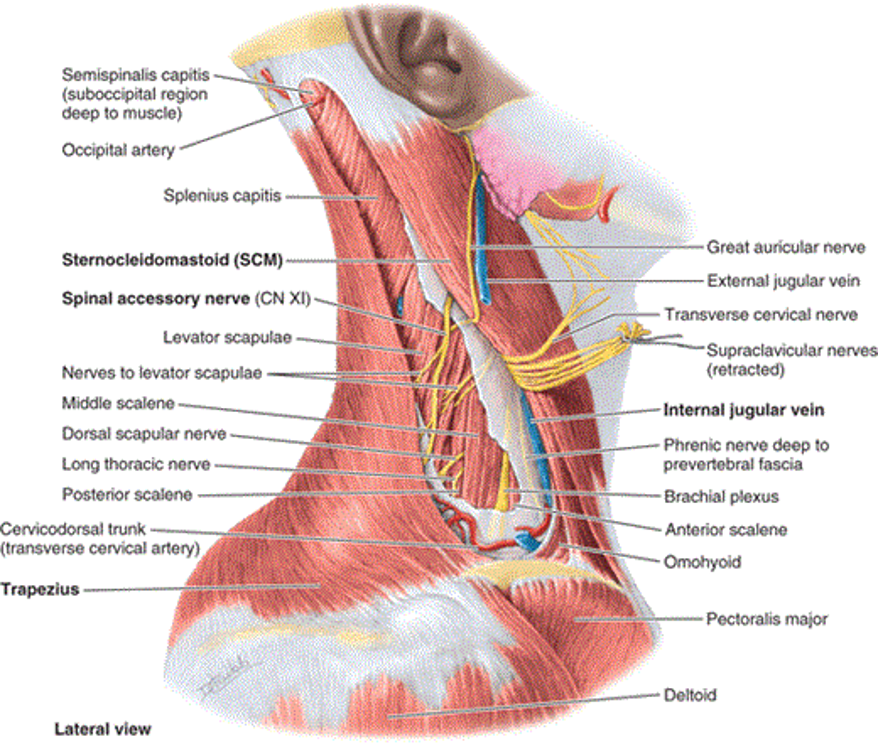
borders of posterior triangle
anterior - posterior border of SCM
posterior - anterior border of trapezius
inferior - middle 1/3 of clavicle
base - clavicle
apex - superior nuchal line between SCM and trapezius
roof (most superficial) - deep fascia, superficial fascia, platysma, superficial veins, cutaneous nerves, skin
floor (deepest): anterior, posterior, and middle scalene
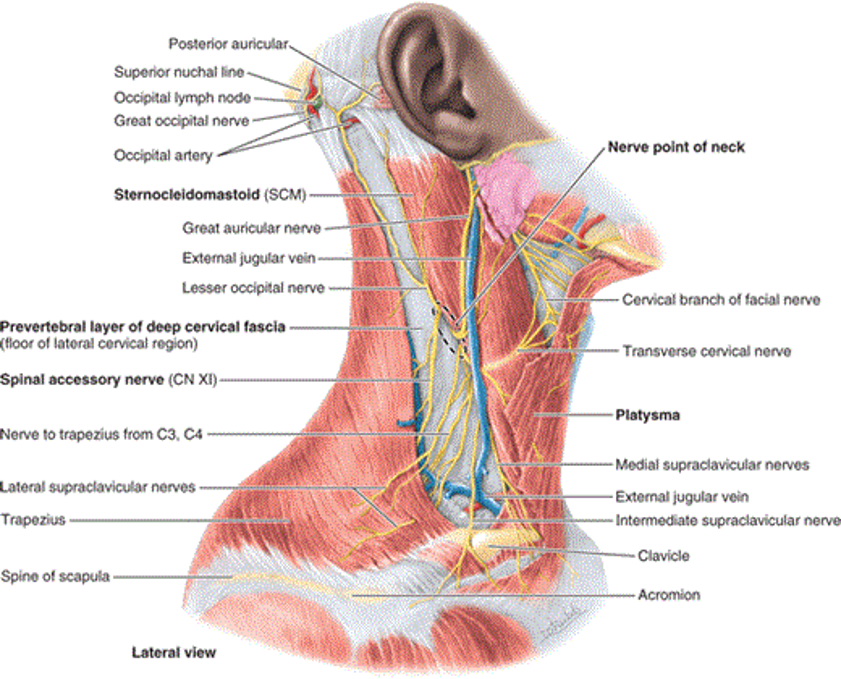
external jugular vein crosses ___
SCM
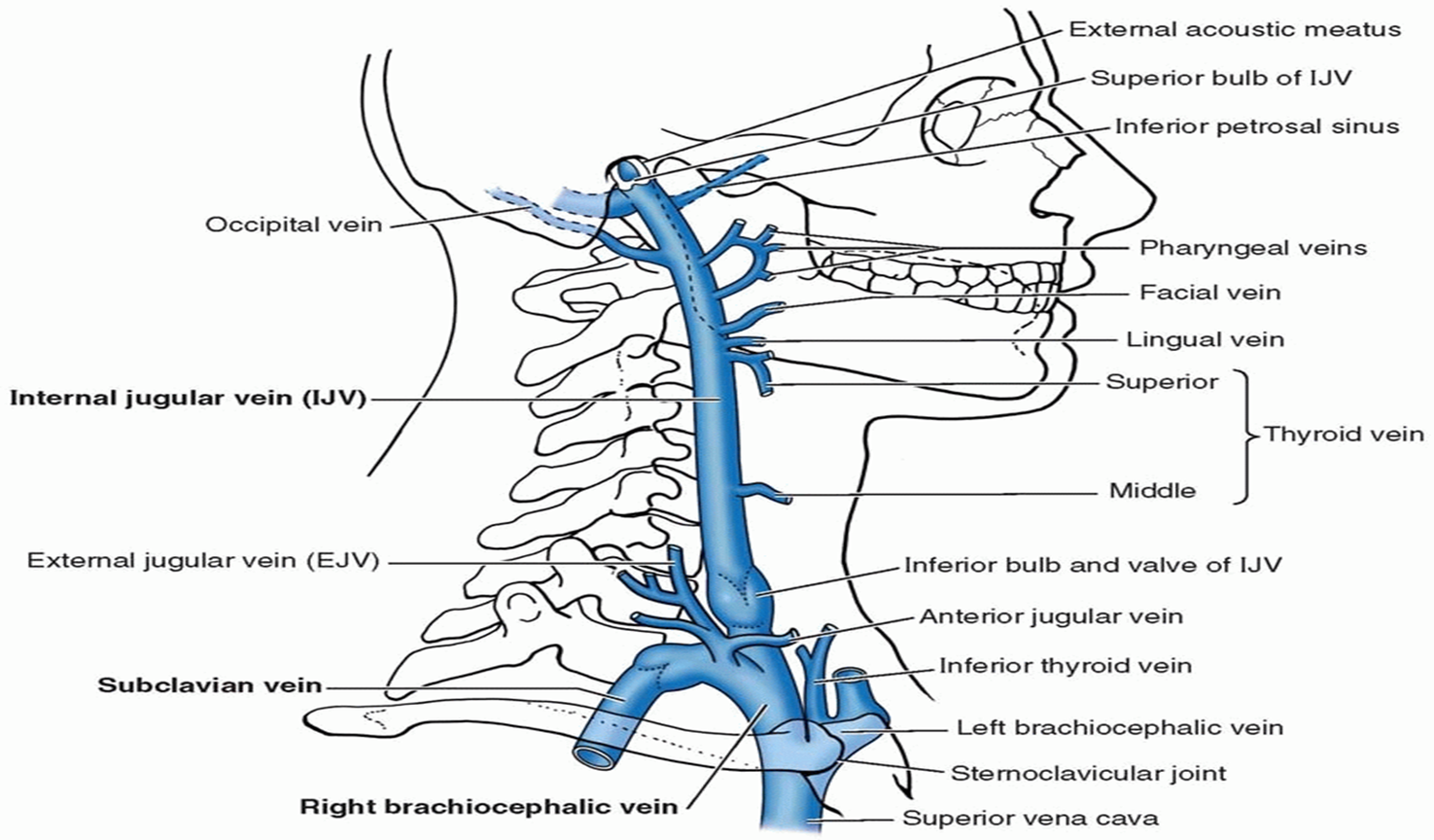
veins in posterior triangle of neck
external jugular vein
subclavian vein
arteries in posterior triangle
transverse cervical artery
suprascapular artery
occipital artery
subclavian artery (3rd part)
nerves in the posterior triangle of neck
accessory nerve (CN XI) - deep to SCM
cervical plexus (C1-4) ventral rami - deep to internal jugular vein and SCM
supraclavicular part of brachial plexus
cutaneous branches of cervical plexus emerge at
middle of posterior border of SCM at “nerve point’
cutaneous branches of cervical plexus
lesser occipital nerve (C2, C3)
greater auricular nerve (C2, C3)
transverse cervical nerve (C2, C3)
supraclavicular nerve (C3, C4)
phrenic nerve (C3, C4, C5)
what does greater auricular nerve (C2, C3) innervate
skin around ear
what does supraclavicular nerve (C3, C4) innervate
skin across clavicle and shoulder
what does phrenic nerve (C3, C4, C5) innervate
diaphragm
muscles in posterior triangle (superior to inferior)
splenius capitis
levator scapulae
scalenus medius
scalenus posterior
scalenus anterior
omohyoid
levator scapulae attachment
posterior tubercles of transverse processes C1-C4
superior part of medial border of scapula
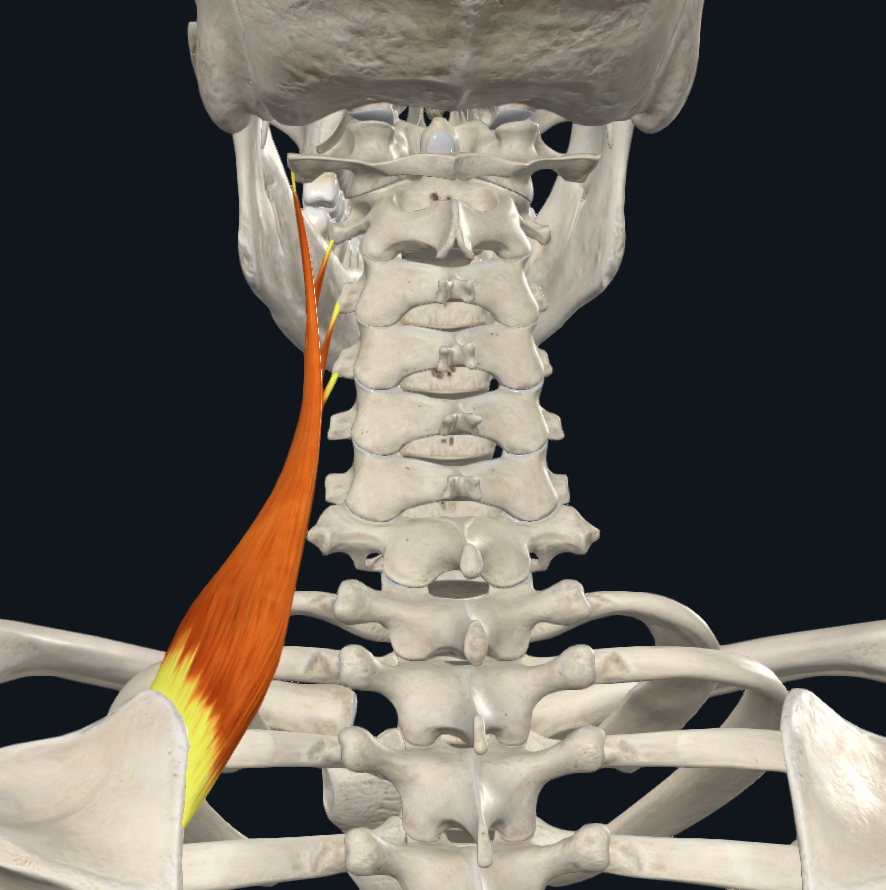
levator scapulae innervation
dorsal scapular nerve (C4/5)
levator scapulae action
elevate scapula
downward rotation of scapula and tilts glenoid cavity inferiorly
scalenus anterior attachment
C3-C6 transverse processes
TO
scalene tubercle of 1st rib
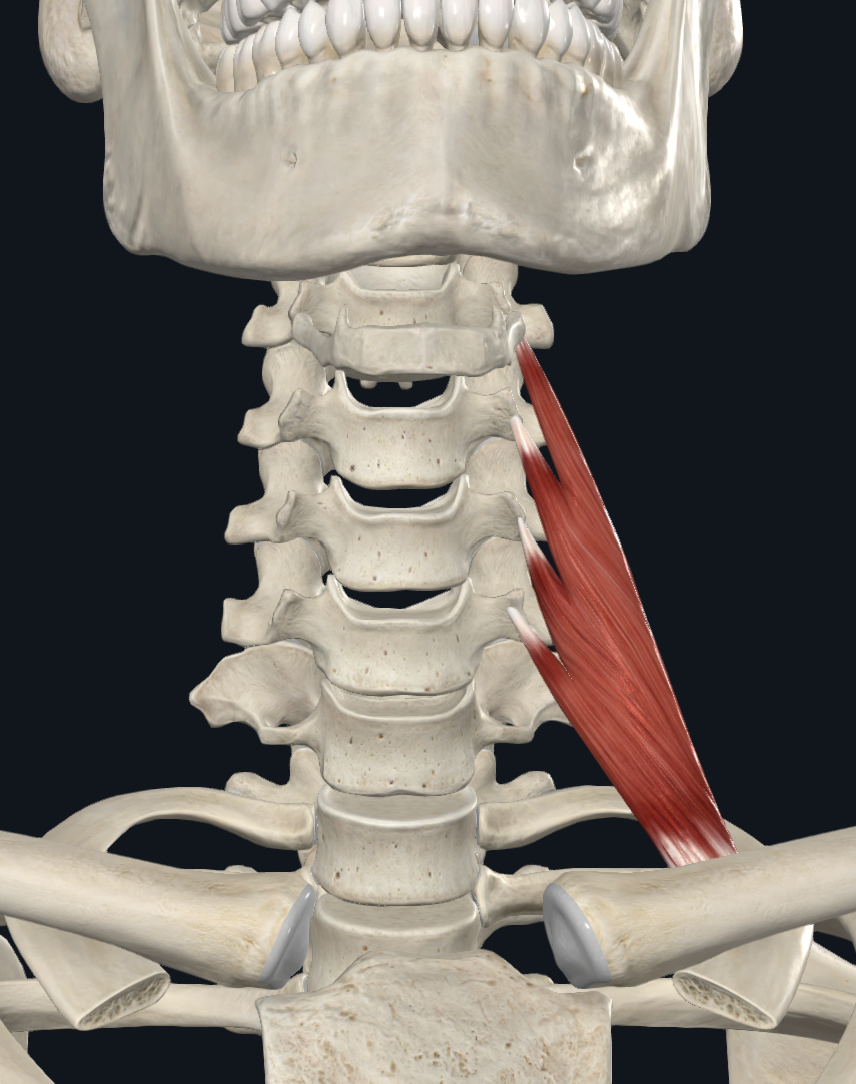
scalenus anterior innervation
ventral rami cervical spinal nerve C4-C6
scalenus anterior action
flex head
elevate 1st rib during forced inspiration
scalenus medius attachment
C2-C6 transverse processes
TO
1st rib
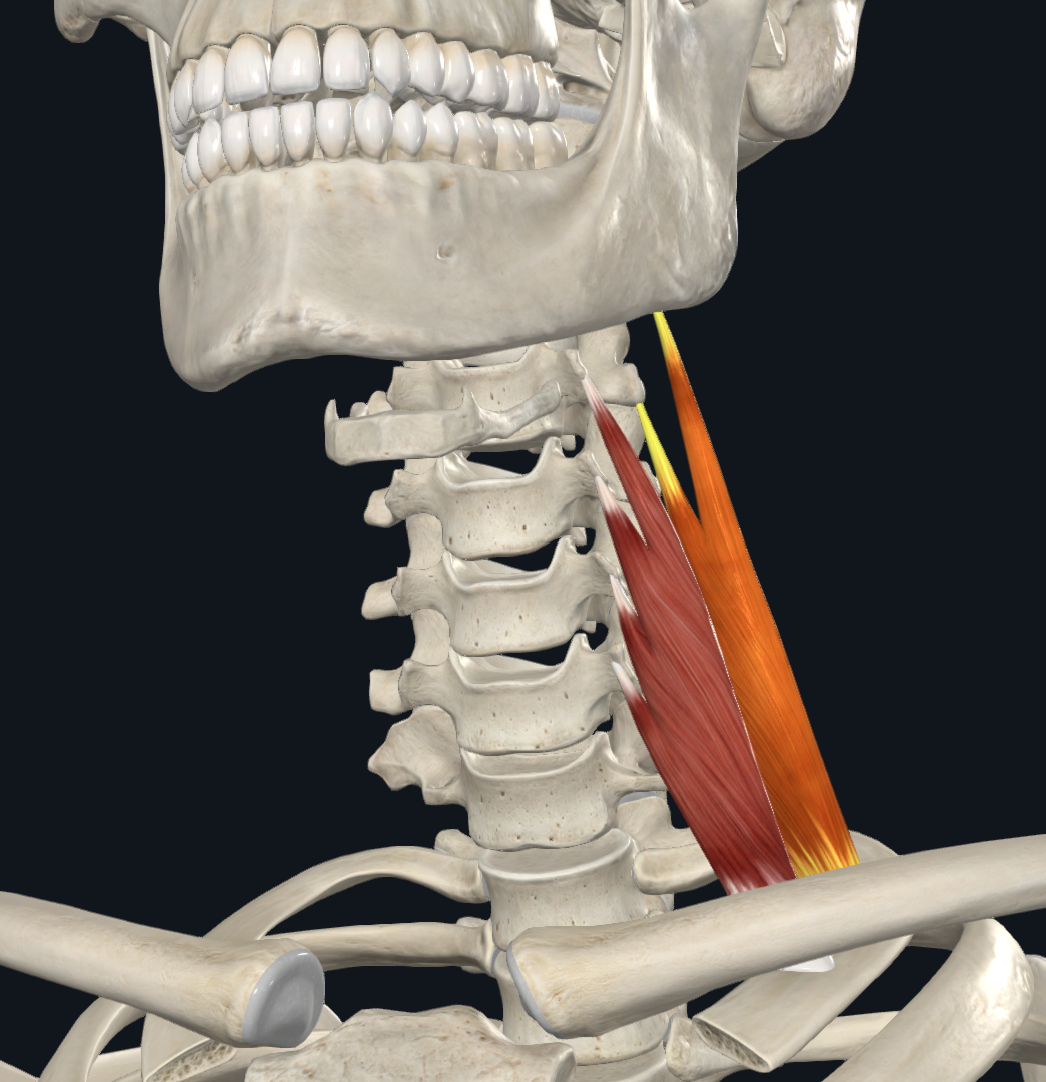
scalenus medius innervation
ventral rami cervical spinal nerves
scalenus medius action
neck side bending
elevate 1st rib during forced inspiration
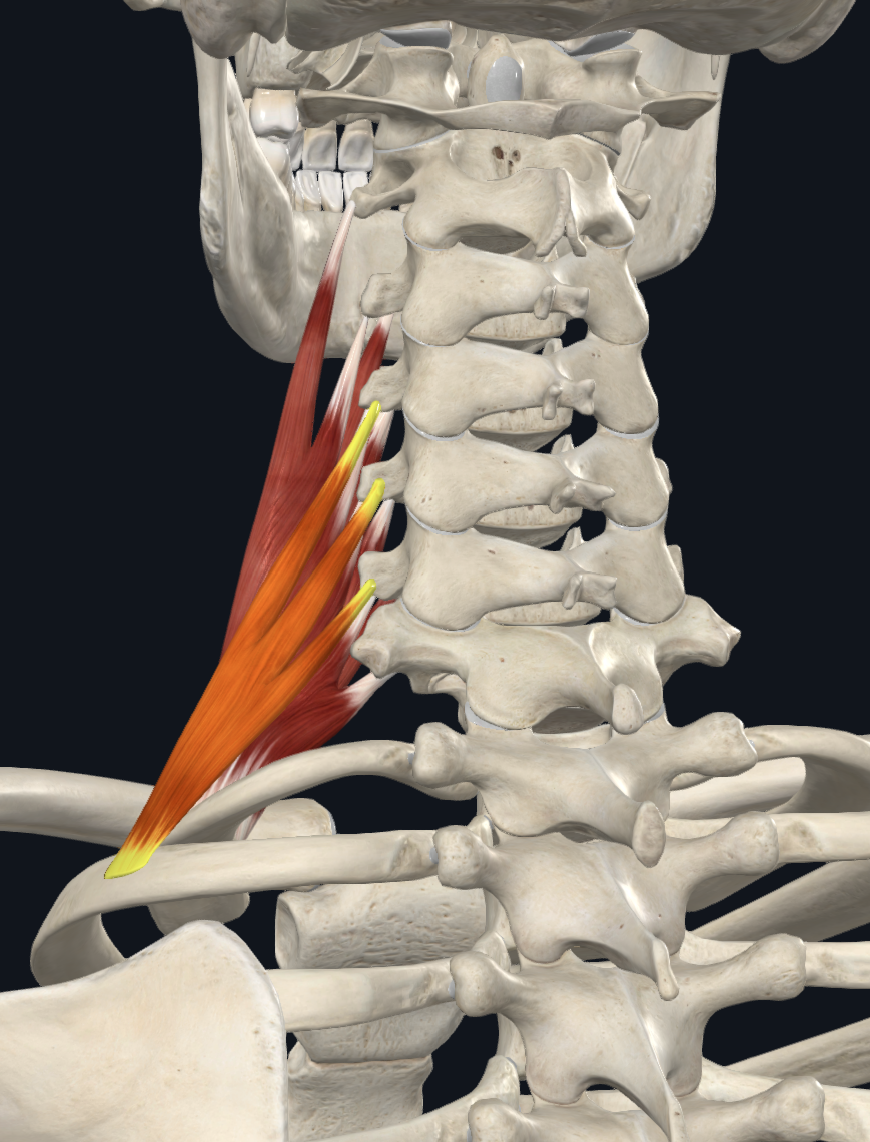
scalenus posterior attachment
C4-C6 transverse processes
TO
2nd rib
scalenus posterior innervation
ventral rami cervical spinal nerves
scalenus posterior action
neck side bending
elevates 2nd rib during forced inspiration
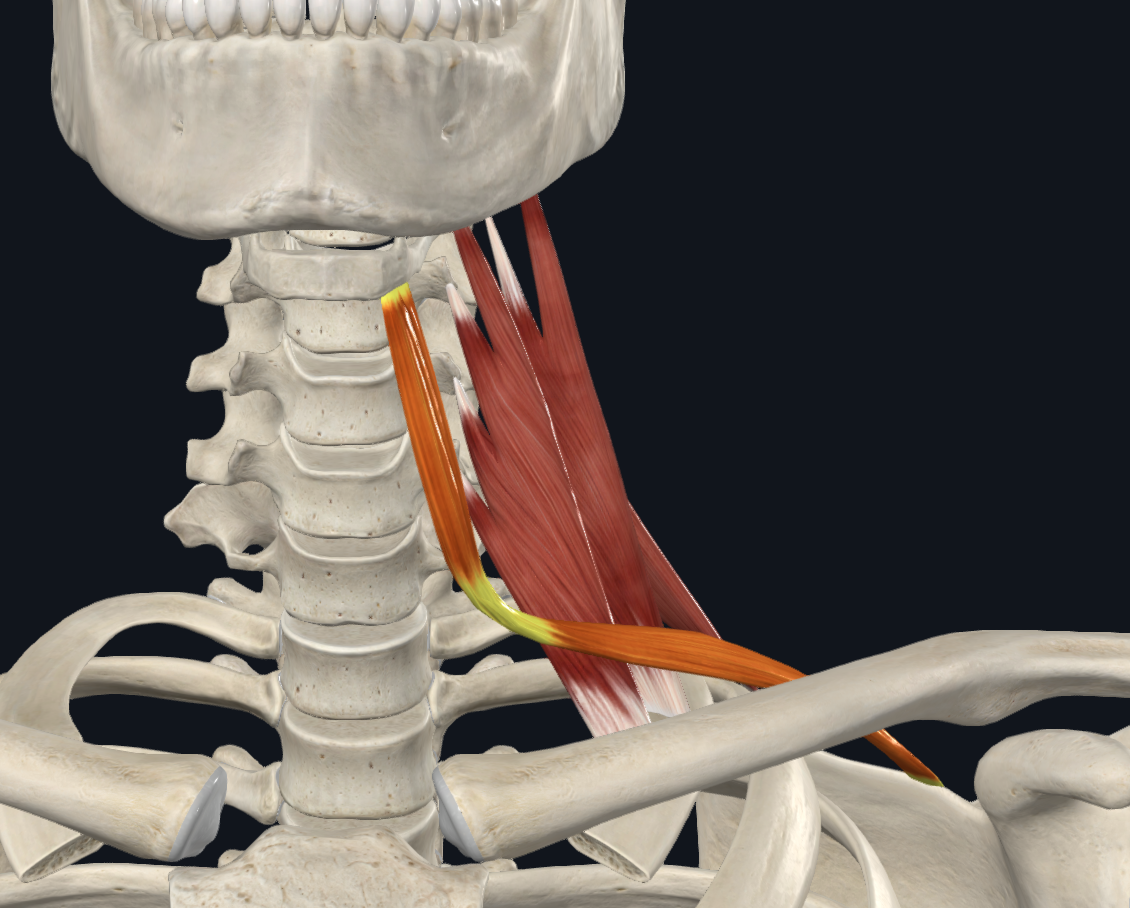
omohyoid attachment
superior border of scapula
TO
inferior border of hyoid
omohyoid innervation
ventral rami of spinal nerve C1-C3 (cervical plexus)
omohyoid action
depress, retracts, and steadies hyoid bone
borders of anterior triangle of neck
anterior border: anteromedian line of neck
superior border: inferior border of mandible
posterior border: anterior border of SCM
apex: jugular notch
base: inferior border of mandible
floor: pharynx, larynx, thyroid gland, and deeper prevertebral muscles
contents of the anterior triangle
suprahyoids
infrahyoids
thyroid/parathyroid
arteries/veins
nerves
lymph nodes
all work on hyoid bone and involved in sawllowing