356 Exam 1
 Call Kai
 Learn
Learn Practice Test
 Spaced Repetition
 Match
Match Flashcards
 Knowt Play
1/91

There's no tags or description
Looks like no tags are added yet.
Name | Mastery | Learn | Test | Matching | Spaced | Call with Kai |
|---|
No analytics yet
Send a link to your students to track their progress
92 Terms
two general approaches for Rehab
compensatory and remedial
ICF vs OTPF
OTPF is model off of the ICF
occupations vs activities
impairments vs body functions
environmental and personal factors vs contexts
ICF blends which 2 models of health
medial and social model
motor control
ability to regulate mvmt
CNS PNS, m, joints, sensory input, cognition
the nature of movement is the interaction of
task, environment, person
motor control
planning, initiating, organizing, coordinating, and learning mvmt
motor execution
muscle contraction
stroke in relation to motor control and motor execution
stroke is initially a motor control issue which then may lead to motor execution issue
motor learning
a set of processes associated with practice leading to relatively permanent change in the capability for responding
plateaus after stroke
when much is going on in the brain but little can be observed
performance vs learning
performance is short term capabilities as a result of instruction
learning is long term pontentiaion or depression
how is motor learning tested and measured
retention tests
reduction in errors
increased automaticity
3 stages of motor learning
cognitive
associative
autonomous
cognitive stage of motor learning
task is new
conscious attention is needed
feedback is very important
associateive stage of motor learning
longer stage
feedback is monitored internally
performance becomes consistent
autonomous stage of motor learning
automatic
feedback is not important
improvements are slow but can continue for years
what is the most important factor in motor relearning
the amount of practice
how can we ensure pts are practicing normal movement
movement outside of therapy time using
mirror
unaffected side
videos
movements of the pelvis
ant/post til
r/l lateral tilt
r/l rotation
movements of the spine
flexion/extension
r/l lateral flexion
r/l rotation
what happens to the ribcage when the spine is anteriorly flexed
flared posteriorly
each rib is connected to
2 vertebrae
compressed ribs
ribs together actively
collapsed ribs
ribs together passively
expanded ribs
ribs apart actively
flared ribs
ribs apart passively
shoulder girdle =
scapula and clavicle
shoulder complex =
scapula + clavicle + humerus
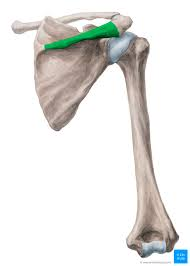
spine of scapula
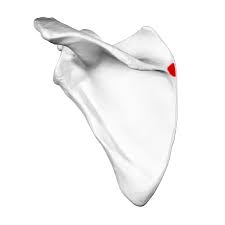
root of spine of scapula
how to palpate for root of spine of scapula
Root is around T3, so palpate C7 which is most prominent and go 3 down
normal resting position of scapula
slight upward rotation
inferior angle slightly farther from spine than root
GF angled up slightly
scapula movements
elevation/depression
pro/retraction
acromioclavicular joint
distal
more mobile
sternoclavicular joint
proximal less mobile
what is the only bony attachment of scapula to rest of thorax
sternoclavicular joitn
movements of clavicle
elevation/depression
anterior/posteiror rotation
3 sensory components of balance
vision
somatosensation (tactile and proprioceptive)
vestibular
motor system involvement for postural control
adequate strength and time of muscle contractions
sustained force
motor components of balance
strength
timing
mobility
m strength
lack of postural control can lead to
limited capacity to respond to variable conditions in environment
dysfunction of limb control
decreased dissociation of the trunk
primary motor impairments directly attributable to brain lesion
spasticity
hypertonicity
ataxia
paralysis
sensory loss
positive motor signs
(involuntary increase/extra)
spasticity
hypertonicity
negative motor signs
(insufficiency/too low)
paralysis
sensory loss
secondary motor impairments
preventable; develop over time due to inactivity and immobility
PROM
dimished flexibility betwen body segments
maladaptive movement strategies
develop as a response to move within the constraints of the primary and secondary motor impairments
neuromotor intervention often begins with
addressing postural control and balance in sitting and standing
safety
proximal stability before distal mobility
interventions to improve postural control and balance
achieve optimal alignment (stay there)
develop kinesthetic awareness (get there)
engage in functional tasks (live there)
optimal pelvic alignment for sitting
neutral to slight anterior pelvic tilt
no lateral pelvic tilt or rotation
optimal spinal alignment for sitting
neutral to slight extension
spinal extensors
spinal extension for proper sitting requires co-contraction of
spinal flexors (abs)
spinal extensors (erector spinae)
optimal shoulder alignment for sitting
symmetrical and slightly anterior to hips
scapula in neutral
optimal hip and knee alignment for sitting
flex to about 90°
no rotation or abd/add of hips
optimal foot alignment for sitting
ankles to 90°
with no inversion or eversion
flat on floor
handling
using out hands/body on the pt body during therapy
why is handling important
pt often lack intrinsic feedback to guide movement
many intervention approaches use handling or physical guidance
handling can also be PROM
facilitation
to enable, increase, encourage, promote, make possible any desired response, movement or otherwise
inhibition
to decrease, prevent any undesired response, movement or otherwise
mobilization/stretching
to increase the length of a soft tissue when it is impeding ROM and/or function
facilitation guidelines
purposeful handling
align first
encourage participation
fade assistance
mobilization guidelines
respect biomechanics
slow rhythmic movement
avoid pain
integrate into tasks
problem solving sequence #1
ask pt for the movement (directly or indirectly)
facilitate the movement (hands off or on)
take them through the movement passively
stretch or mobilize to achieve movement
proximal points of contact
on the m moving the part or on the moving part itsefl
distal point of contact
not on the m moving the part or on the moving part itself
problem solving sequence #2
isometric- no movement hold
eccentric- muscle lengthens controlled
concentric- shortening against resistance
lack of sensation can lead to
learned non use
overall slower motor recovery
parasthesia
tingling, prickling, or electrical sensation
hyperalgesia
increased pain
dyesthesia
unpleasant sensation
allodynia
pain in response to a stimulus that is not typically painful
hyperesthesia
heightened sensitivity to tactile stimuli
what a supplies the thalamus
posterior cerebral artery and posterior communicating artery
what a supplies that anterior parietal lobe
middle cerebral artery
appropriate intervention for diminished or lost protective sensation
compensation to prevent injury
appropriate intervention for hypersensitivity
desensitiziation
appropriate intervention for absent or impaired sensation but expect some sensory abilities to return
passive sensory training
appropriate intervention for some sensation and movement and potential for better sensation or better interpretation of sensory input
active sensory training/ sensory reeducation
sensory substitution
if one sensory system is impaired, use another
continuous low pressure intervention
frequent position changes, wheelchair cushions etc
concentrated high pressure interventions
knife safety, check splint straps, care with AFOs, UE posititioning in wheelchair
excessive heat or cold interventions
insulated coffee mugs, oven mitts, shower safety, appropriate cold weather gear etc.
repetitive mechanical stress interventions
avoid repetitive motions and excess friction
what is the basis of desensitization
habituation- progressive stimulation will allow progressive tolerance
desensitization techniques
exposure to stimuli in a hierarchial fashion
with whom do you use sensory training
for persons with conditions involving either PNS or CNS sensory impairments
goals of sensory training
to maintain or restore the cortical representation of the body in the somatosensory cortex and regain sensation in body
passive sensory training
requires no attention from the client
repeated stimulation to denervated body part, typically through electrical stimulation
active training/ sensory reeducation
repeated stimulation to denervated body part
client is active in process: attention, learning, repeated practice, and use of alternative senses to enhance learning
task-specific sensory training
should occur concurrently with motor learning
begin early on!
what