All Materials
 Call Kai
 Learn
Learn Practice Test
 Spaced Repetition
 Match
Match Flashcards
 Knowt Play
1/145

There's no tags or description
Looks like no tags are added yet.
Name | Mastery | Learn | Test | Matching | Spaced | Call with Kai |
|---|
No analytics yet
Send a link to your students to track their progress
146 Terms
Properties of wood
properties vary with wood type
light, flexible, good insulator
Hardwood
Usually deciduous, loses leaves, harder, takes longer to grow, more expensive, broad leaves
Hardwood example
oak, beech, mahogany, holly
Softwood
usually coniferous, keeps leaves, grow faster, softer, easier to work with, less expensive, thin leaves, less heavy
Manufactured boards
man-made boards made from processed wood glued together
MDF
medium density fibreboard
made from particles of wood compressed and glued together
MDF advantages + disadvantages
recycles materials, can be used to make larger boards
dust can be harmful to lungs, can be carcinogenic
Plywood
made from thin strips of wood called venirs stuck together with
alternating grain for strength
Plywood advantages + disadvantages
very durable, can be made into large sheets, no natural defects
expensive, potential for warping but less likely than regular wood
Chipboard
made from large particles of wood. Often covered with a venir as
the front is unattractive
Chipboard advantages and disadvantages
recycles materials, can be used to make larger boards
not aesthetically pleasing, not very durable
Disadvantages with wood:
wet rot
dry rot
wood worm
splits
shrinkage
warping
Properties of metals
dense, good conductor, malleable, ductile
How to prevent ferrous metals from rusting?
painting, galvanising (coating in zinc)
Compression moulding
plastic or metal is put between two halves of a mould and compressed into the desired shape
ejector pin pushes out the final mould

Biodegradable plastic
cornstarch + hemp, renewable
Thermosetting plastic
can only be heated and moulded once
bakelite, melamine
Thermoplastic
can be re-heated and moulded many times
acrylic, PET polyethylene terephthalate, HDPE high-density polyethylene
Nylon - Properties + Uses
tough + durable
self lubricating
mechanical parts, clothing + bags
Acrylic - Properties + Uses
stiff + hard
scratches easily
DIY projects, storage boxes
Polystyrene - Properties + Uses
light + brittle
good insulator
toys, packaging containers
High Impact Polystyrene (HIPS)
impact resistant
good insulator
housing, tarp covers
Expanded polystyrene
light
durable + shock absorbent
packaging, helmets, shoes
Polyethylene teraphthalate (PET)
light
cheap
soft
bottles, polyesters
Polyvinylchloride (PVC)
rigid
resistent to chemicals
water pipes, credit cards
Epoxy resin
good insulator
hard + brittle
electrical casing, adhesive
Melamine
stiff
stain resistant
work surfaces, electrical insulator
Injection moulding
plastic pellets are fed into the screw
through the hopper, they are then heated, pushed forward by the crew and injected into a cast of the item to be made.the mould casing is removed and the plastic mould is trimmed
can be used on metals and glass also.
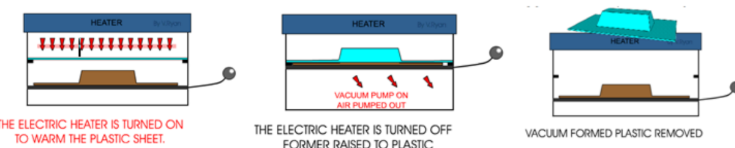
Vacuum forming
plastic (polystyrene) is melted heated and lower onto the mould
the plastic is sucked on to a mould using a vacuum.
Holes are put in the mould to allow plastic to form easily overthe mould.
once cooled the plastic is removed and trimmed
Blow moulding
In blow moulding plastic is formed by
blowing plastic into a solid mould. (Similar
to blowing up a balloon)
Strip heating
In strip heating a thermoplastic is heated
along a line and bent using a piece of
wood to form an angle.
Polymer
large number of repeating small molecules bonded together in a chain
What is the difference between ferrous and non-ferrous metals + Examples?
Ferrous metals
contains iron
attracted to magnets
rusts
steel
Non-ferrous metals
does not contain iron
is not attracted to magnets
do not corrode as quickly, and do not rust
gold
Ceramics
inorganic, non-metallic materials that can be shaped and then heated and cooled to make hard, heat resistant objects
Characteristics of ceramics
hard
brittle
high melting point
chemically resistant
poor conductors
Composites
Materials made of a mixture two or more different materials, in order to combine the uses of the properties of both materials,
the materials are not chemically combined but mixed such as concrete (sand, stones + cement)
Semi-permanent joining example
screws, bolds, nails
Permanent joining example
gluing, welding, soldering
Example of wood joints
butt joint - simple, no interlocking parts
lap joint - overlapping wood
dowel joint - circular peg reinforces
biscuit joint - biscuit shaped wood instead of dowel
finger/comb joint - series of interlocking rectangular cuts
dovetail joint - interlocking piece shaped like a dove tail not rectangular
halving joint - two square half grooves cut into wood, piece lay flush with eachother
Smart materials
respond to changes in their environment in controlled ways
Thermochromic material
changes colour with temperature
Photochromic
changes colour with light
Self-healing
can fill scratched or cracks that come from wear and tear
Hardness
resistance to scratching
Toughness
resistance to breaking
Ductility
can be stretched out into wires
Malleability
can be moulded into various shapes
Sonorous
has a bell sound when struck
Lustrous
shiny
What is corrosion?
the deterioration of a materials as a result of a chemical reaction with its environment
eg: iron in water reacts with oxygen to form iron oxide/rust
What is the difference between an alloy and a composite?
An alloy is a combination of two different metals bonded together to form a new product with different properties
A composite is a mixture of different substances which utilises both their useful properties
What is Brass, Solder, Steel + Bronze made up of?
Copper + Zinc = Brass
Lead + Tin = Solder
Iron + Carbon = Steel
Copper + Tin = Bronze
How can wood be preserved?
Coating with oil, perservative or paint
Examples of softwoods
pine, fir, spruce
Advantages of manufactured boards
flat
large sheets
cheap (except plywood is expensive)
no knots
let likely to warp or rot
Disadvantages of manufactured boards
not as aesthetically pleasing
contains many chemicals
must be cut with facemasks worn
higher embodied energy
What can be used to make sports equipment or stairs flooring + why?
Ash
pliable and elastic
What can be used to make kitchen tables or skirting boards?
oak
aesthetically pleasing, hard, strong
What can be used to make worktops + kitchen presses?
chipboard
cheap, but requires a veneer
What can be used to make furniture?
pine
cheap, easily available
What is glulam made up of?
AKA glued laminate
a number of layers of timber bonded with durable, moisture resistant, structural adhesive
What is plastic made up of?
synthetic polymers/plastics are made from chemicals derived from oil
What is a polymer?
a long chain molecule made by joining together many small molecules
Polypropylene
can withstand impact
easily moulded
cheap
chairs, lab equipment
Polycarbonate
light
strong and hard
coated with aluminium to give reflective appearance
CDs, DVDs
ABS
high impact, strong, tough, hard
easy to mould
shiny surface
mouse, lego bricks, bike helmet
Bakelite
high shiny
high resistance to heat and electricity
saucepan handle
Melamine
Resistant to heat and fire
bonds to wood
laminated kitchen top, plastic dishes
Kevlar
stronger and lighter than steel
high resistance to impact
bullet proof vests, trampolines, tennis racket
Silicone
flexible
heat resistant
non-toxic
sealant, adhesive, medical implant
Give an example of a natural polymer:
Latex
highly elastic
can be toughened
rubber gloves, balloons, chewing gum
What is glass made from?
fired sand and other materials
Clay ceramic
cheap
good insulator
aesthetically pleasing
hard wearing
mouldable
tiles, mugs, plates, bricks
Porcelain
stronger than clay
can be made into thinner, finer pieces
resistant to corrosion
fine tableware, false teeth
Glass
can transmit, reflect and refract light
smooth surface
can be moulded
resistant to water and chemical corrosion
brittle
window panes, lenses, tableware
What is an advanced ceramic?
made by chemically combining different elements to produce materials with ceramic properties, come can also be classified as a composite
What are the properties of advanced ceramics?
higher resistance to heat and friction
extremely hard, some harder than diamond
Tungsten Carbide
Advanced ceramic
extremely hard
resistant to heat
cutting tools
Alumina/Aluminium oxide
Advanced ceramic
good electrical insulator
high mechanical strength
high resistance to heat and friction
electronics eg integrated circuits, eingine parts
Silicon carbide
advanced ceramic
extremely hard
conducts heat
military armour, bricks
How can composites be made?
bonding sheets of different materials together
mixing fibres of one or more materials with another material which acts as the glue to bind it all together
Paper/Cardboard
cheap
can be recycled
light
easy to work with
writing/printing material, packaging
Concrete
cheap
strong
good compressive properties
buildings, foundations
Plaster
doesn’t shatter
sets at room temperature
plastering walls, making casts
Laminated wood
cheaper than solid wood
scratch resistant
water proof
floors, kitchen tops
Laminated glass
layers of glass and plastic bonded together
high impact resistance
plastic holds glass together if it shatters
windscreens, large windows
Fibreglass/Glass reinforced plastic (GRP)
lightweight
mouldable
harder and stronger
flexible
good heat insulator
boat hulls, attic insulation, fishing rods
Carbon-fibre reinforced plastics
very strong
light
resilient
fishing rod, bike frame
Plastacine
mouldable at room temperature
cheap
non-toxic
modeling materials
Titanium metal matrix composite
high strength
lightweight
low maintenance costs
aerodynamic
aeroplane bodies, engines
Fabric
made by weaving thin strands of material called fibres together
What are the 2 types of fibres?
staple fibres - shorter fibres that need to be spun into yarns and tend to have a hairy appearance
filament fibres - longer fibres that give fabric a shiny appearance
Cotton
relatively cheap
soft to touch
breathable
good absorbancy
shirts, t-shirts, underwear, sheets
Wool
warm
breathable
rough to touch
jumpers, suits
Silk
very smooth
light
fine
expensive
ties, scarves, shirts