Reaction Mechanisms
 Call Kai
 Learn
Learn Practice Test
 Spaced Repetition
 Match
Match Flashcards
 Knowt Play
1/7

There's no tags or description
Looks like no tags are added yet.
Name | Mastery | Learn | Test | Matching | Spaced | Call with Kai |
|---|
No analytics yet
Send a link to your students to track their progress
8 Terms
Reaction Mechanisms
reactions progress in a series of elementary steps that involve intermediate molecules that only exist briefly.
1 reactant = a unimolecular reaction.
Two reactants = bimolecular
Three reactants = trimolecular
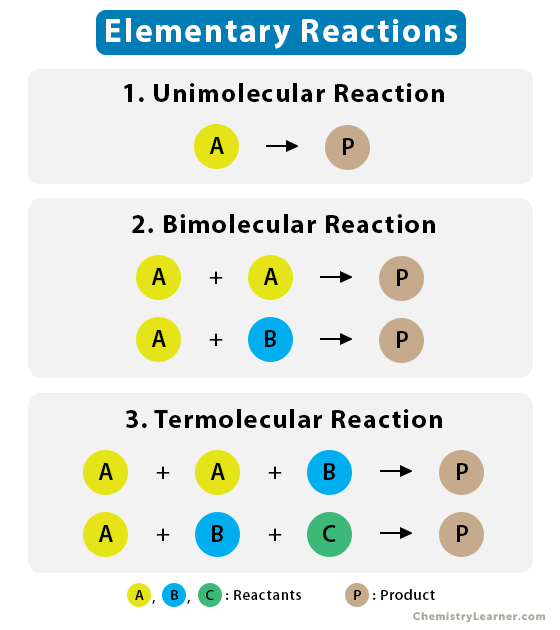
Reaction mechanisms — More molecules = ??
More molecules = slower rate of reaction
elementary reaction; definition & properties(?)
single-step reaction
orders of reaction ARE equal to the stoichiometric coefficients of the reactants
order of reaction for a reactant is equal to the coefficient of the reactant of the rate limiting elementary step
Why do elementary steps make sense?
If all reactions were one step, it would be insanely rare to get so many particles to collide at the right speed, energy, orientation, etc… as opposed to several smaller steps
slowest step in this reaction is called…
rate limiting step
cuz they can only go as fast as the slowest reaction
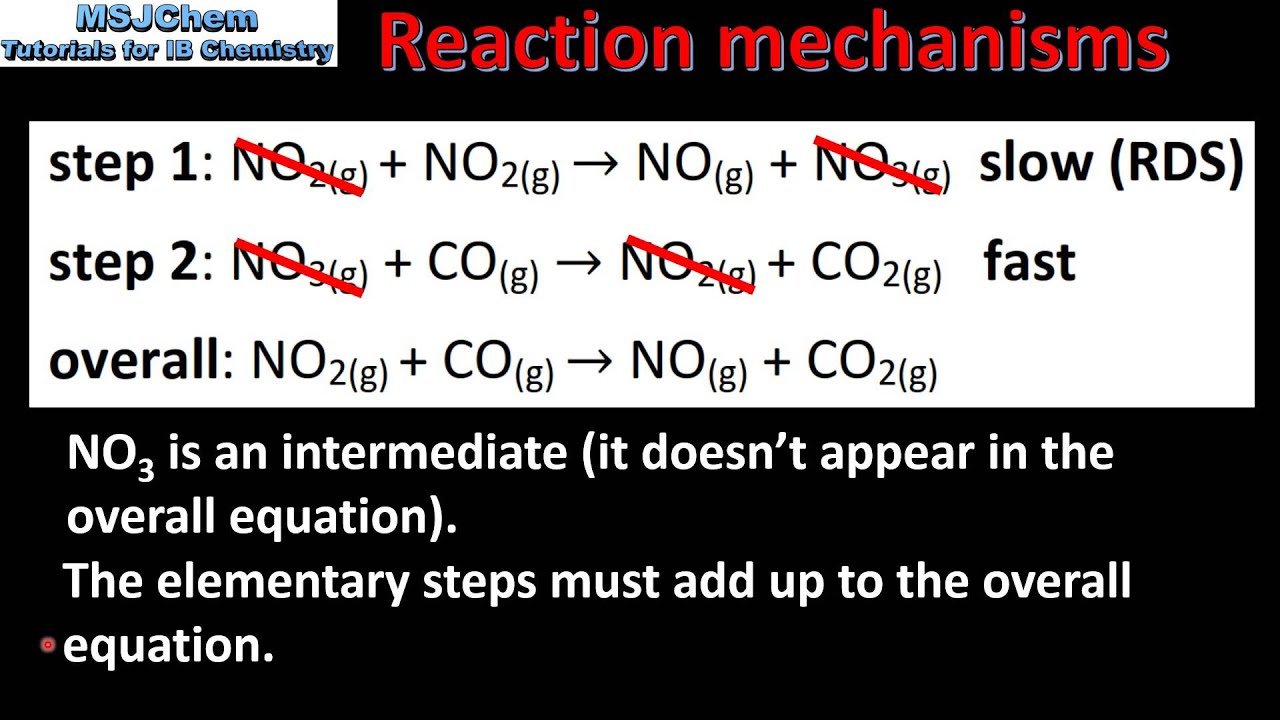
in the image which is the intermediate
NO2 and NO3
elementary steps MUST ADD UP to the final reaction
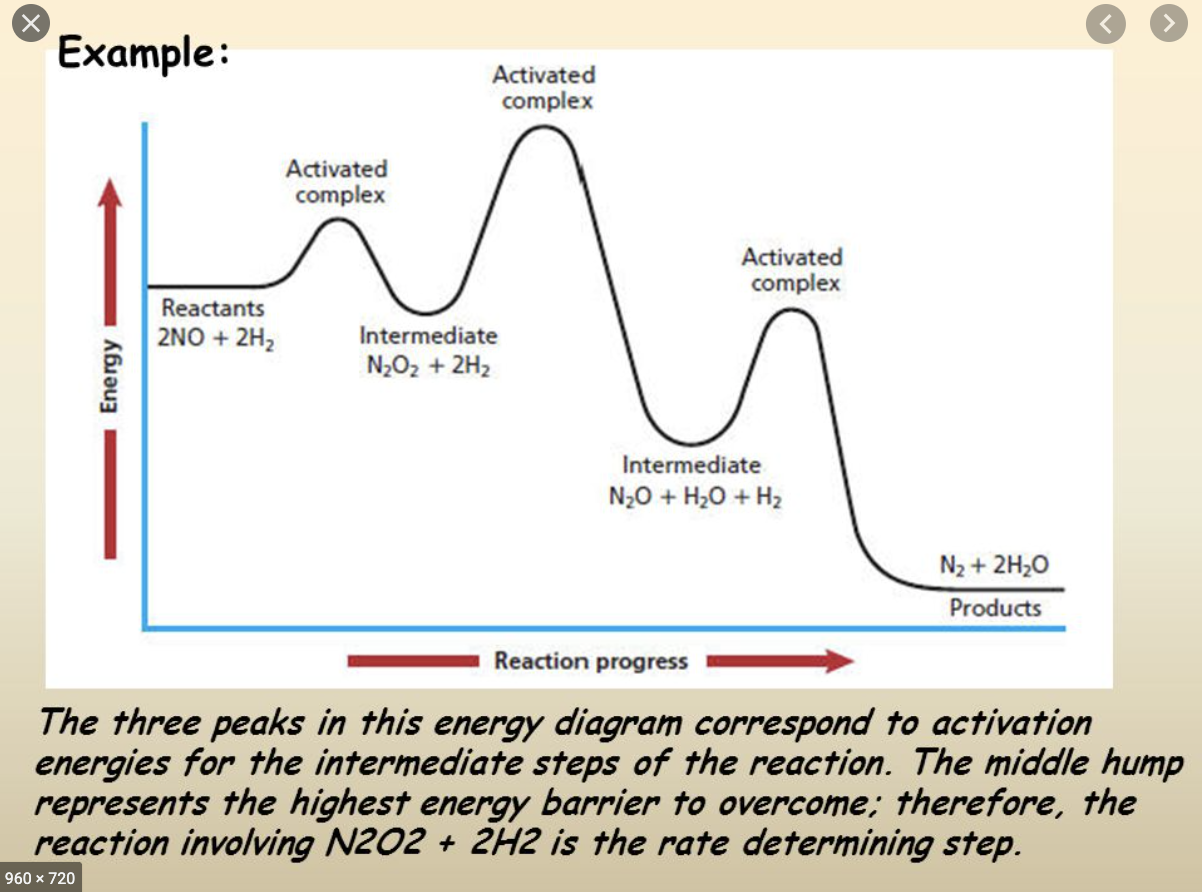
in a reaction mech graph where r intermediates and elementary steps
Intermediates exist in the ‘valleys’
step with the highest peak is the rate limiting step
elementary steps are between intermediates
A valid mechanism must meet three criteria:
The elementary steps must add up to the overall balanced equation.
The elementary steps must be reasonable. They should generally involve one reactant particle (unimolecular) or two (bimolecular), no more.
The mechanism must correlate with the rate law, not the other way around.