Thermoplastics - properties & applications
 Call Kai
 Learn
Learn Practice Test
 Spaced Repetition
 Match
Match Flashcards
 Knowt Play
1/16

There's no tags or description
Looks like no tags are added yet.
Name | Mastery | Learn | Test | Matching | Spaced | Call with Kai |
|---|
No analytics yet
Send a link to your students to track their progress
17 Terms
What are the properties of thermoplastics?
structure : linear/branched polymer chains, no crosslinking at all, no atomic bonds between the different chains
Can be melted and reshaped multiple times
Can be recycled by melting and reforming
Analogy : chocolate
What’s aging?
Gradual degradation of a material’s properties over time due to environmental factors (light, heat, oxygen, chemicals)
List all the thermoplastics you know
(14)
ABS Acrylonitrile-butadiene-styrene
PA Polyamide
PBT Polybutylene terephthalate
PC Polycarbonate
PE polyethylene
PET Polyethylene terephthalate
PIB Polyisobutylene
PMMA Polymethyl methacrylate
POM Polyoxymethylene / Polyacetal
PP Polypropylene
PS Polystyrene
PTFE Polytetrafluoroethylene
PVAC Polyvinyl acetate
PVC Polyvinyl chloride
Properties & applications of polyethylene PE
2 types:
PE-LD (low density) → produced at high pressure
PE-HD (high density) → produced at low pressure
properties can be changed by changing the the chain length or the degree of crystallinity
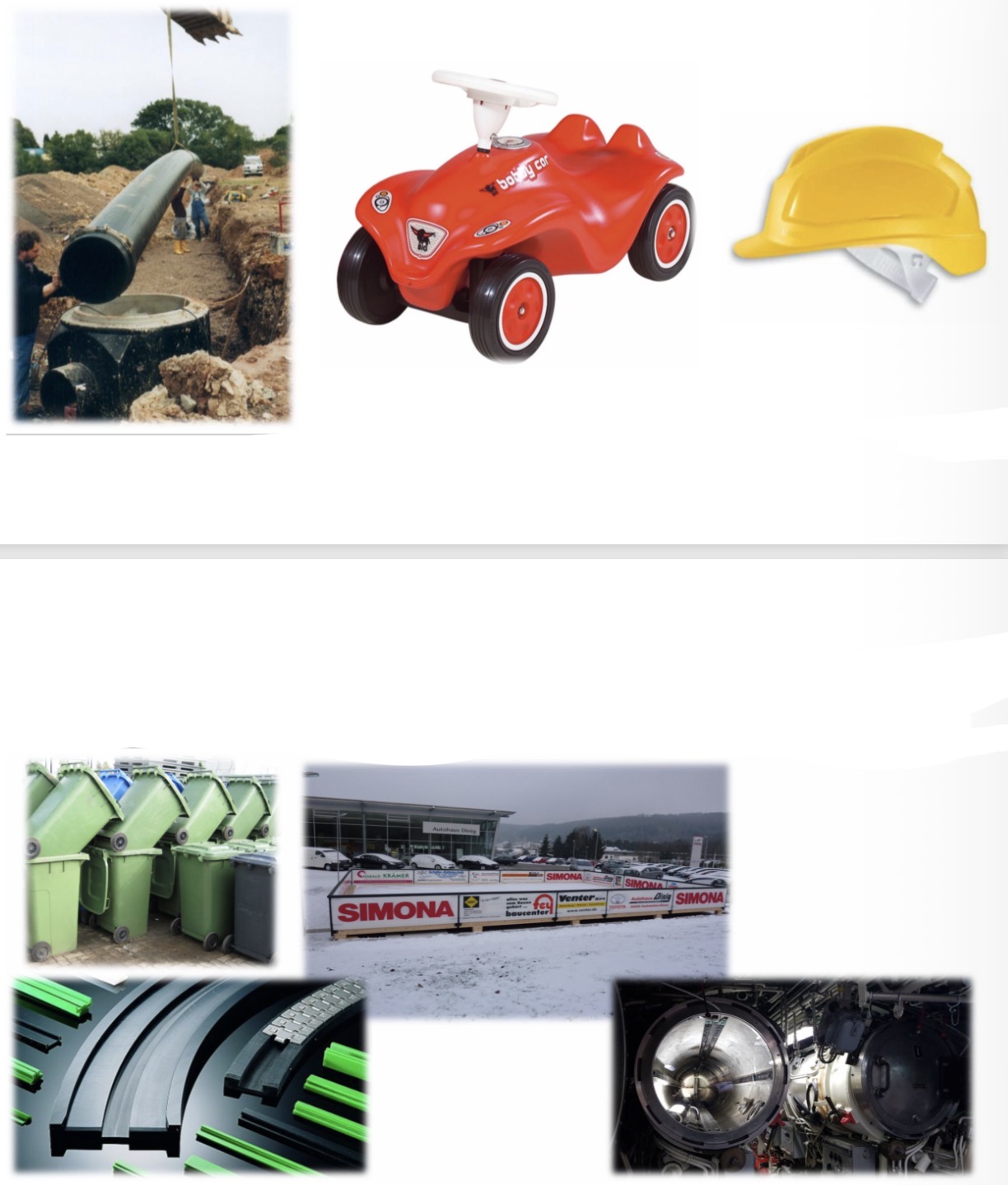
Good abrasion resistant
films
Packaging
Containers
Tubes
Ice skating sheets
Properties & applications of polypropylene PP
better temperature resistance than polyethylene
Very brittle at cold temperatures
Copolymerisation with ethylene is possible
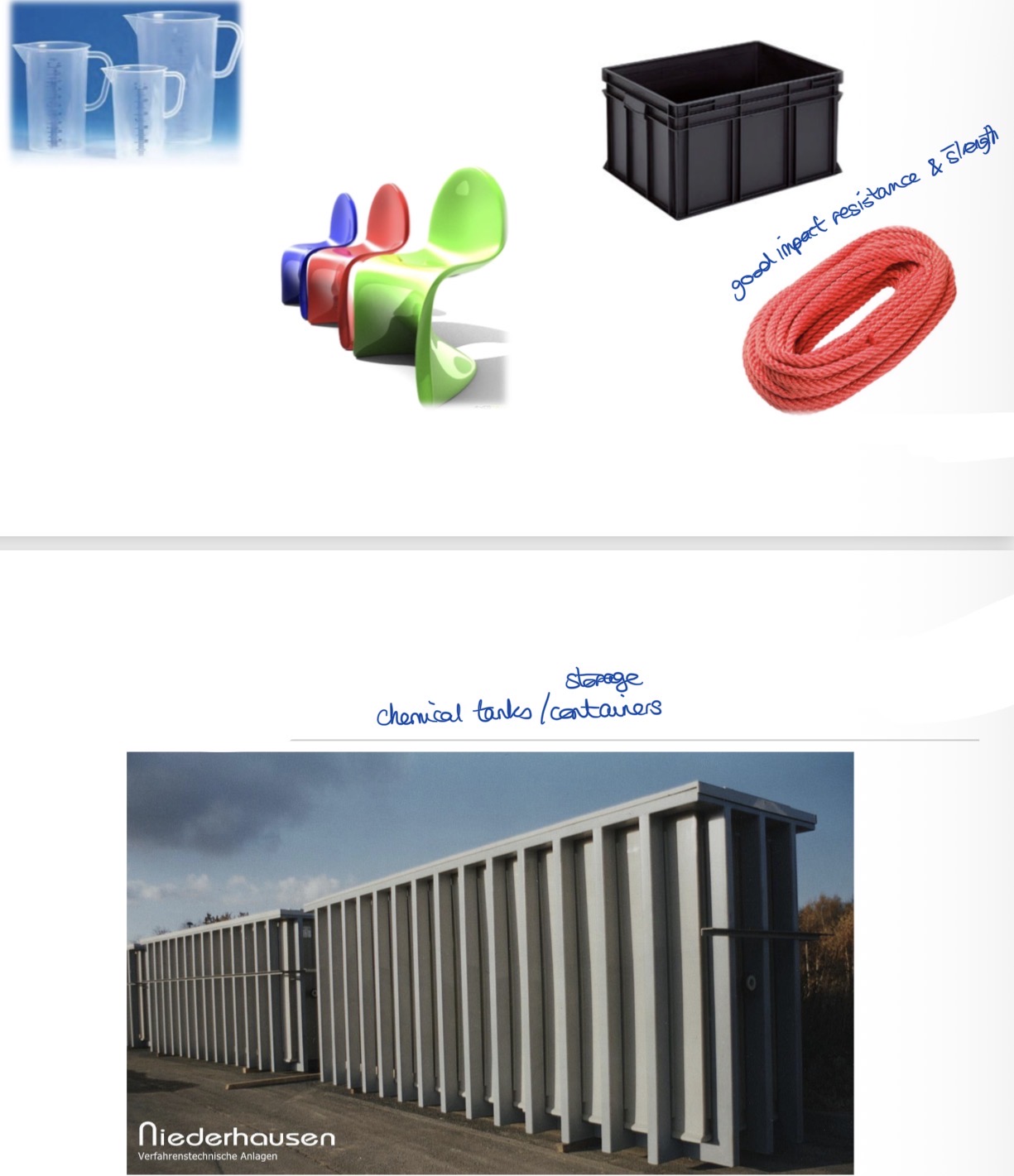
packaging
Pipes
Films
Chemical tanks/ storage containers
Textiles
Chairs
Ropes (good impact resistance & strength)
Plastic boxes with hinged lids (couvercles pliables)
Properties & applications of polyisobutylene PIB
linear polymer (1D chains, no branches)
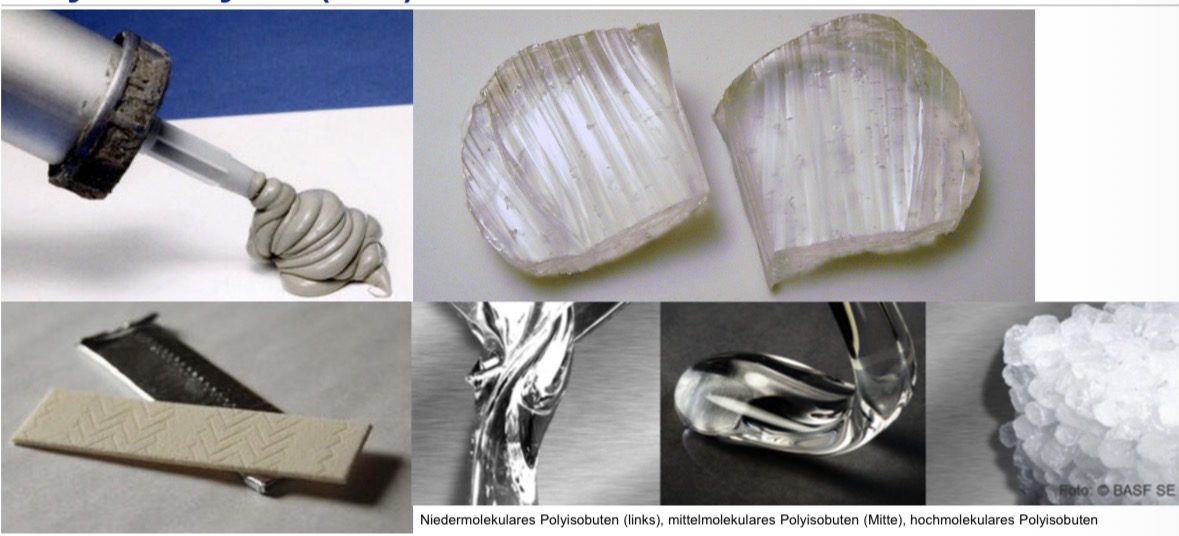
Polymerisation degree ranges from oily to rubber-like
oily → low deg, short chains, liquid
Rubber-like → high deg, long chains, elastic, flexible
Free of plasticisers
~ const. properties between -50 & 100°C
low molecular weight → adhesives, sealants (mastic, joints)
High molecular weight → films, chewing-gum, sealing membranes
Properties & applications of polyisobutylene PIB
linear polymer (1D chains, no branches)
Polymerisation degree ranges from oily to rubber-like
oily → low deg, short chains, liquid
Rubber-like → high deg, long chains, elastic, flexible
Free of plasticisers
~ const. properties between -50 & 100°C
low molecular weight → adhesives, sealants (mastic, joints)
High molecular weight → films, chewing-gum, sealing membranes
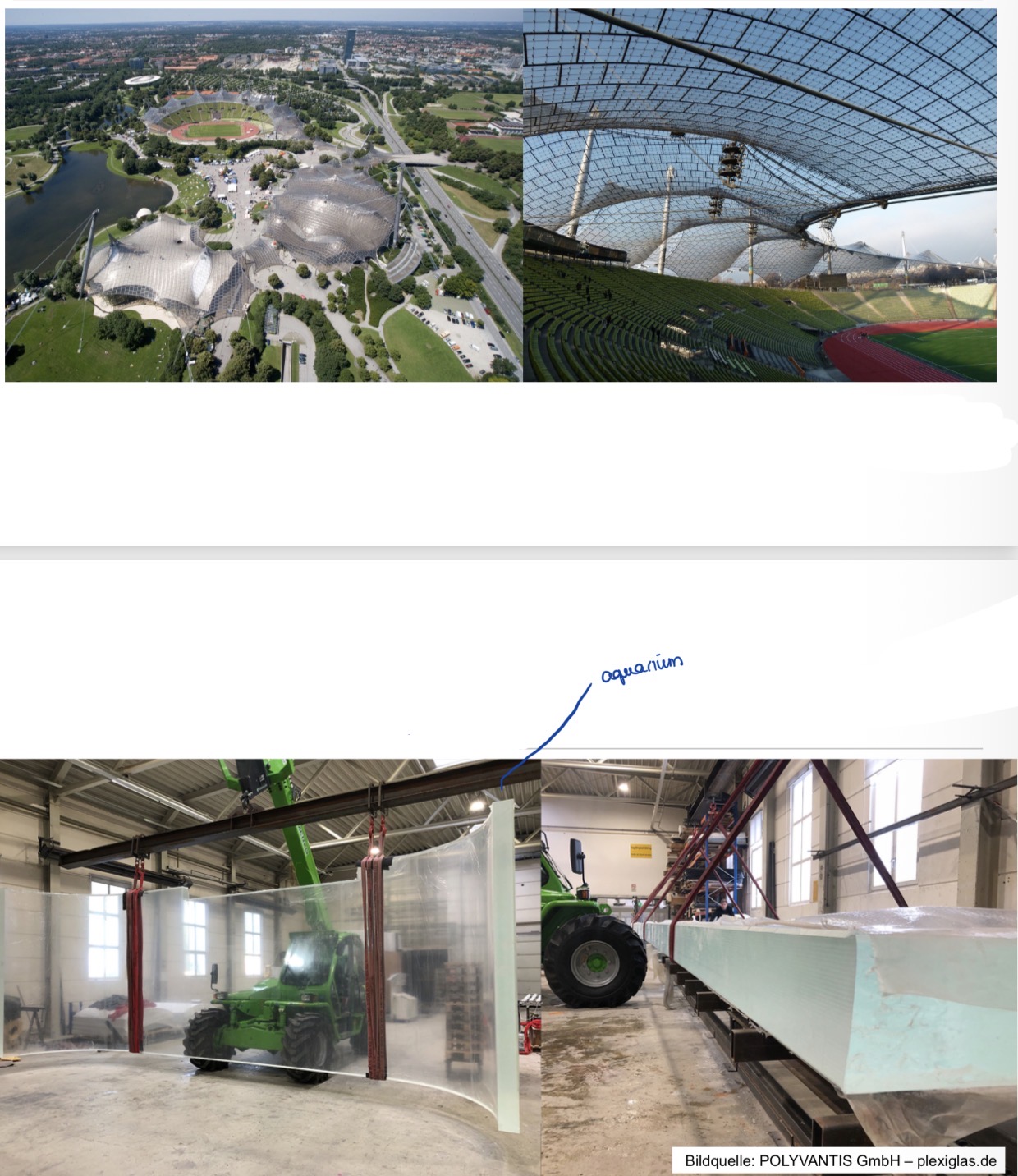
Properties & applications of polymethyl methacrylate PMMA
clear acrylic glass (Plexiglas)
Density ~1/2 traditional silicate glass
Significantly lighter than real glass
Easily scratched
Quite resistant in cold conditions
Resistant to aging
luminaires
sheets (transparent roofs, aquariums glass)
profiles
moulded parts
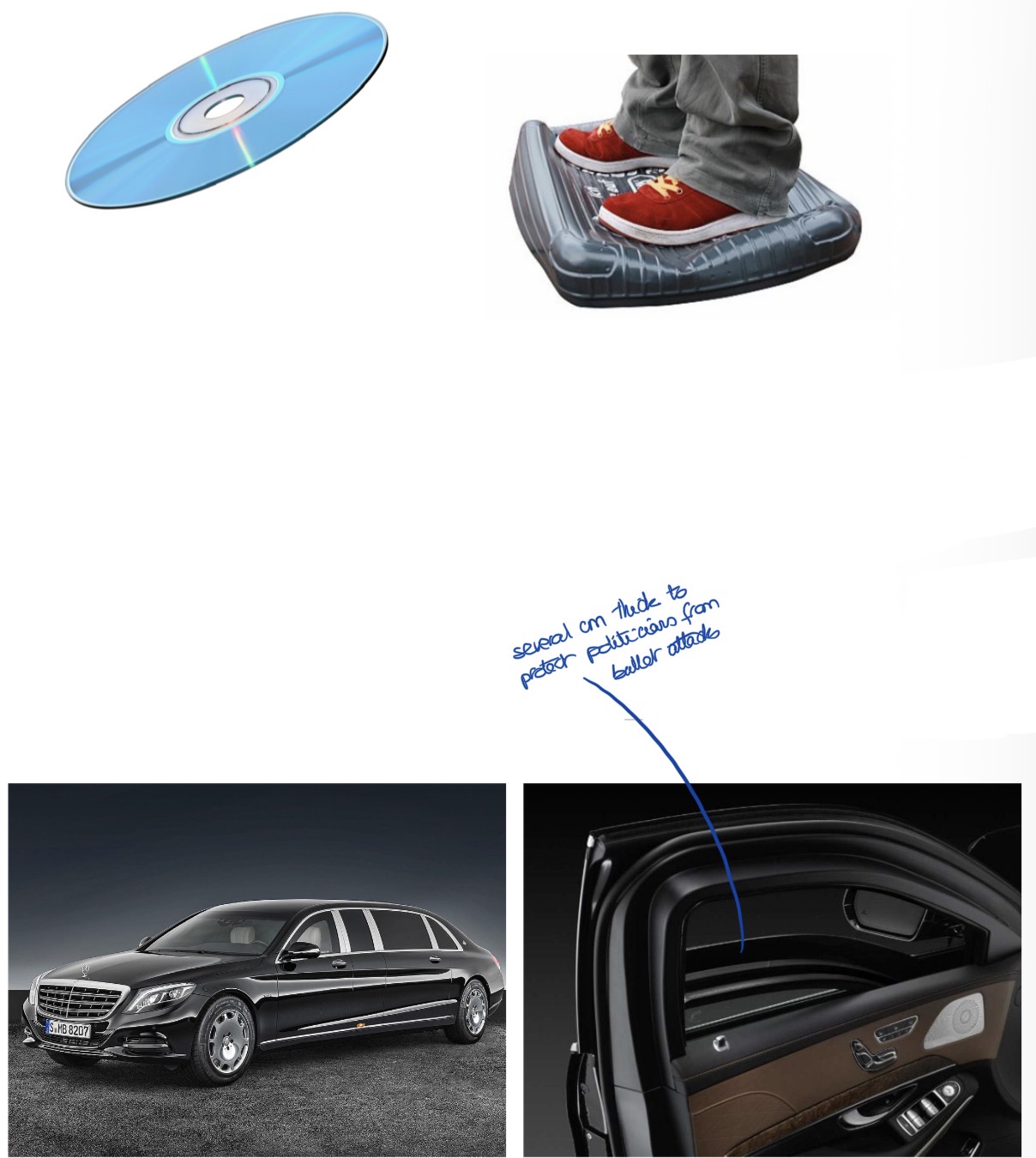
Properties & applications of polycarbonate PC
clear
Hard-elastic (rigid but can bend/stretch)
Impact resistant between -100 and 100°C
light domes
transparent housings
suitcases
CD, DVD
automotive
electronic housings
bulletproof vests/car windows
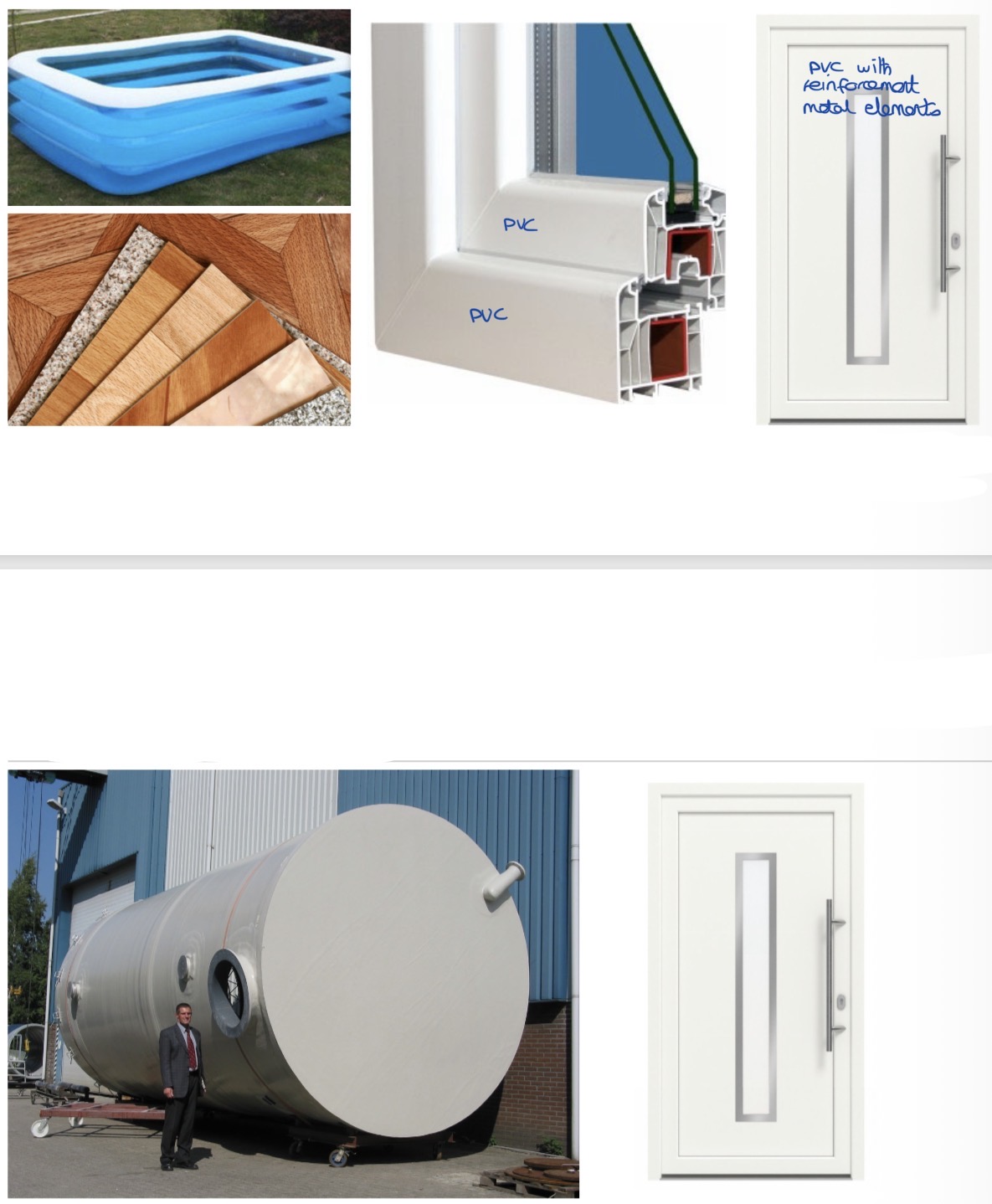
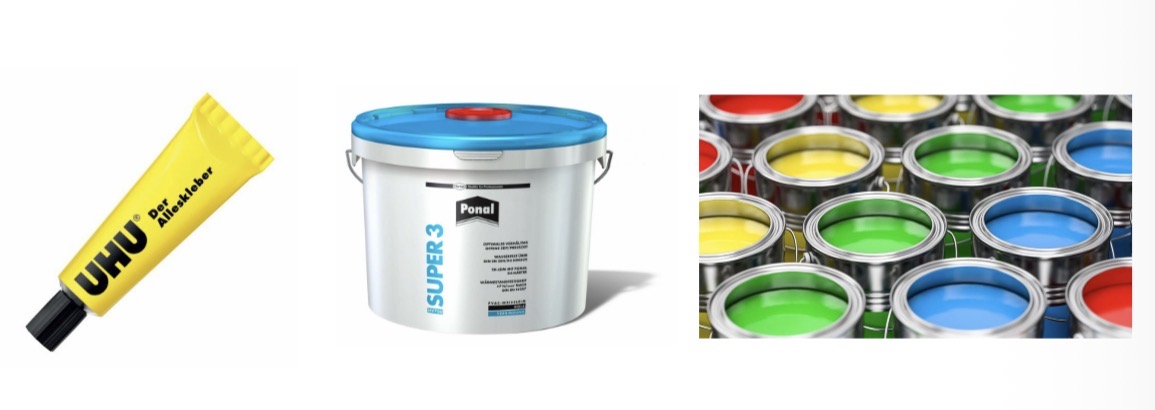
Properties & applications of polyvinyl acetate PVAC
high adhesive capacity
Softens from 30°C
binding agents (liants) for paints/coating (revêtements), glue
Varnishes (vernis)
Adhesives
Sealing compounds (étanchéité)
Chewing-gum
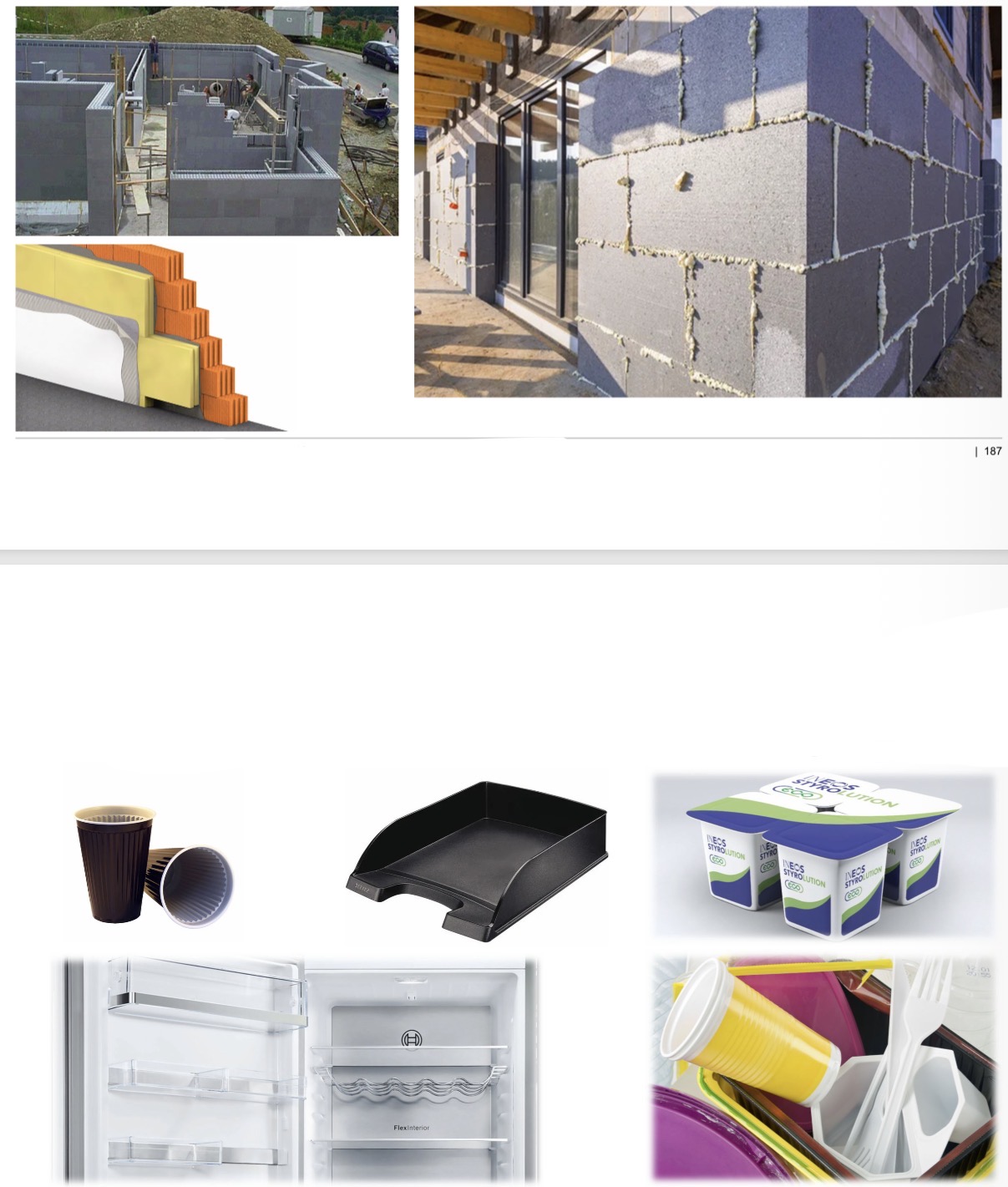
Properties & applications of polystyrene PS
high adhesive capacity
rigid & brittle in pure form (w/ additives/fillers)
Can be clear & transparent
binding agents for paints/coatings
Varnishes
Adhesives
Sealing compounds
Packaging
Disposable cutlery & cups
Chewing-gum
Thermal insulators in houses
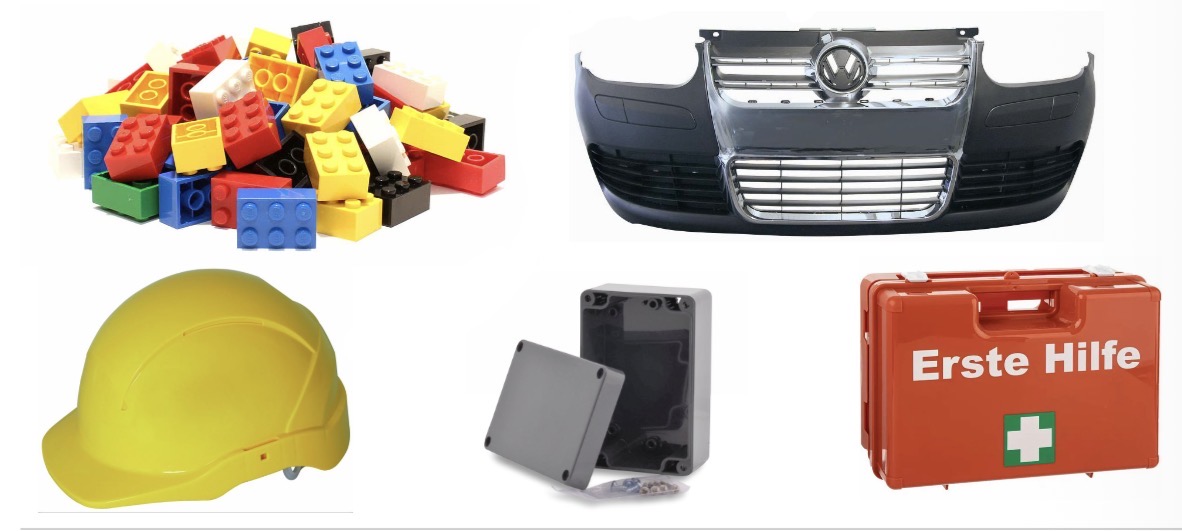
Properties & applications of acrylonitrile butadiene styrene ABS
high toughness
Dimensional stability up to 100°C (keeps its shape/size)
Good surface finish, smooth
Low water absorption
impact resistant
High mechanical damping (absorbs & dissipates mechanical vibrations & shocks effectively)
safety equipment (helmet)
Car bumpers (pare-chocs)
Toy’s building blocks
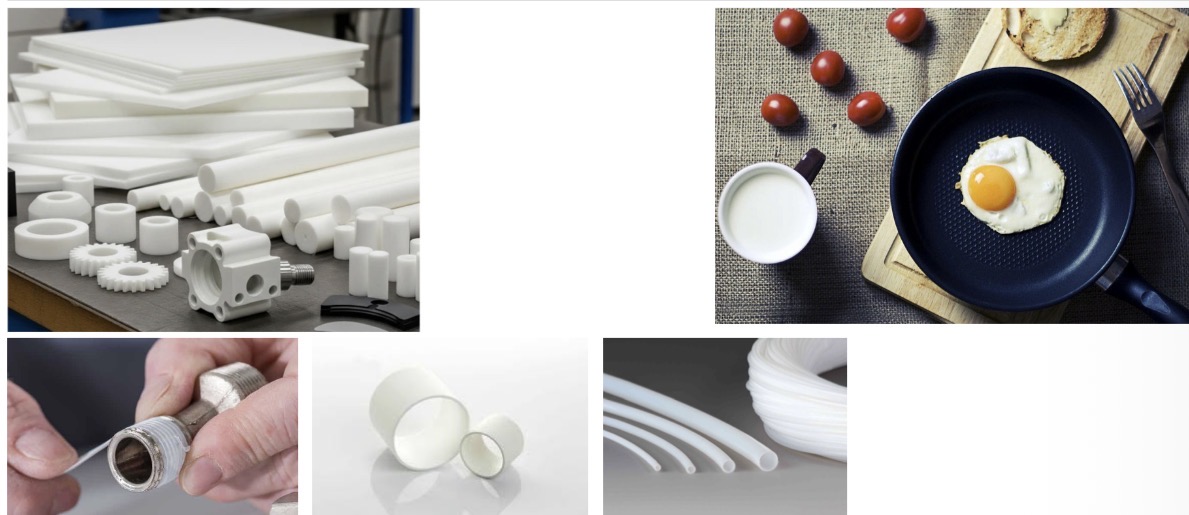
Properties & applications of polytetrafluoroethylene PTFE
outstanding (exceptional) thermal & chemical resistance
Temperature resistance up to 327°C
Mechanical & chemical properties ~ const. between -90 and 250°C
Extremely low coefficient of friction
Releases agressive acid when it burns
sliding bearings (roulements)
Separating agents
Anti-adhesive coatings (pans)
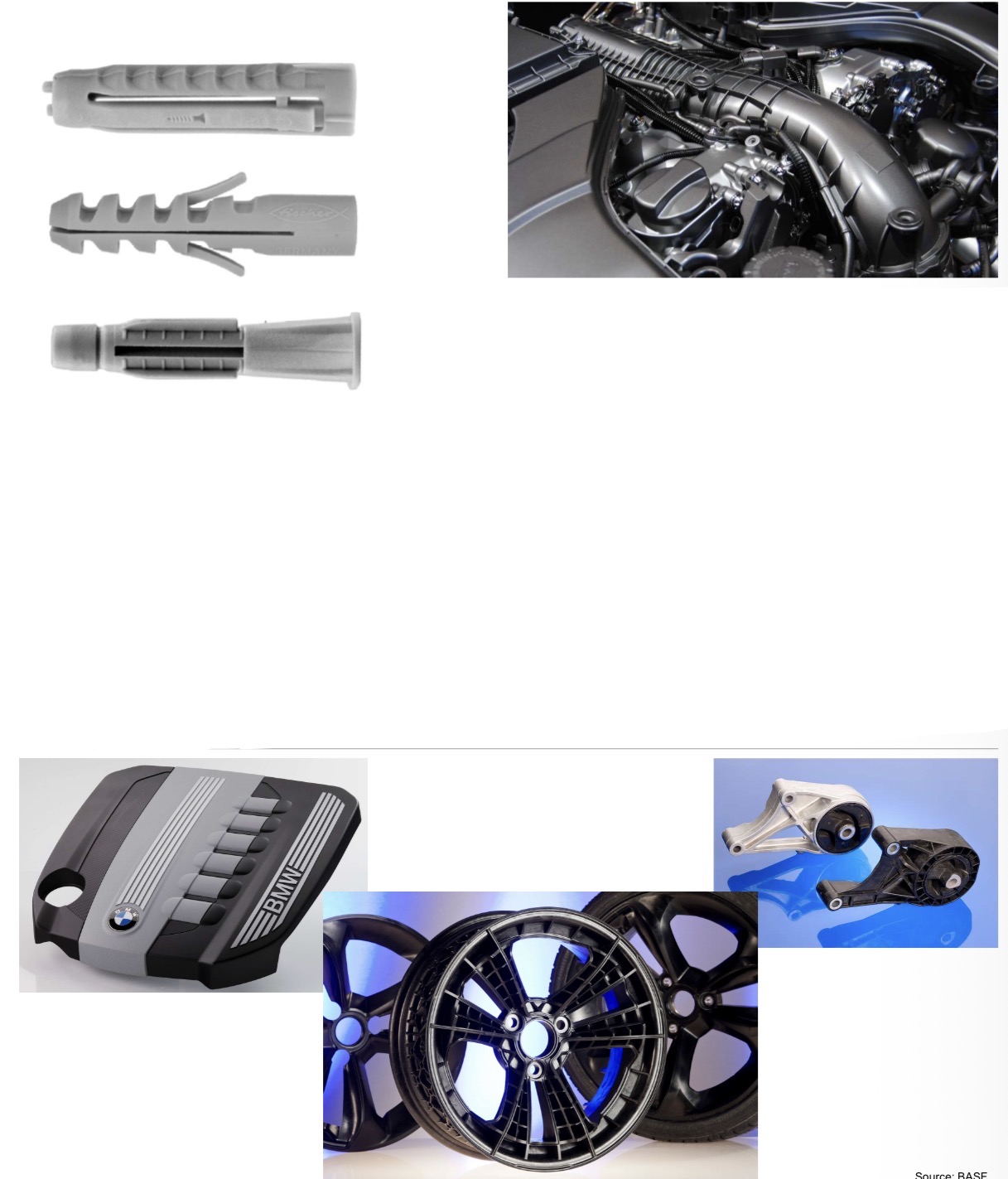
Properties & applications of polyamide PA
Wide adjustment options
High water absorption → mechanical properties can be decreased by 50% when it’s wet compared to dry state
Strength can be increased by 5 when stretching
automotive
Power tools
Fibres (ropes, geotextiles)
Dowels (chevilles, tiges)
Properties & applications of polyethylene terephthalate PET
high strength, hardness & stiffness
Temperature resistance up to 100°C
Crystal clear in the amorphous state
Good electrical properties
Physiologically harmless
films
Bottles
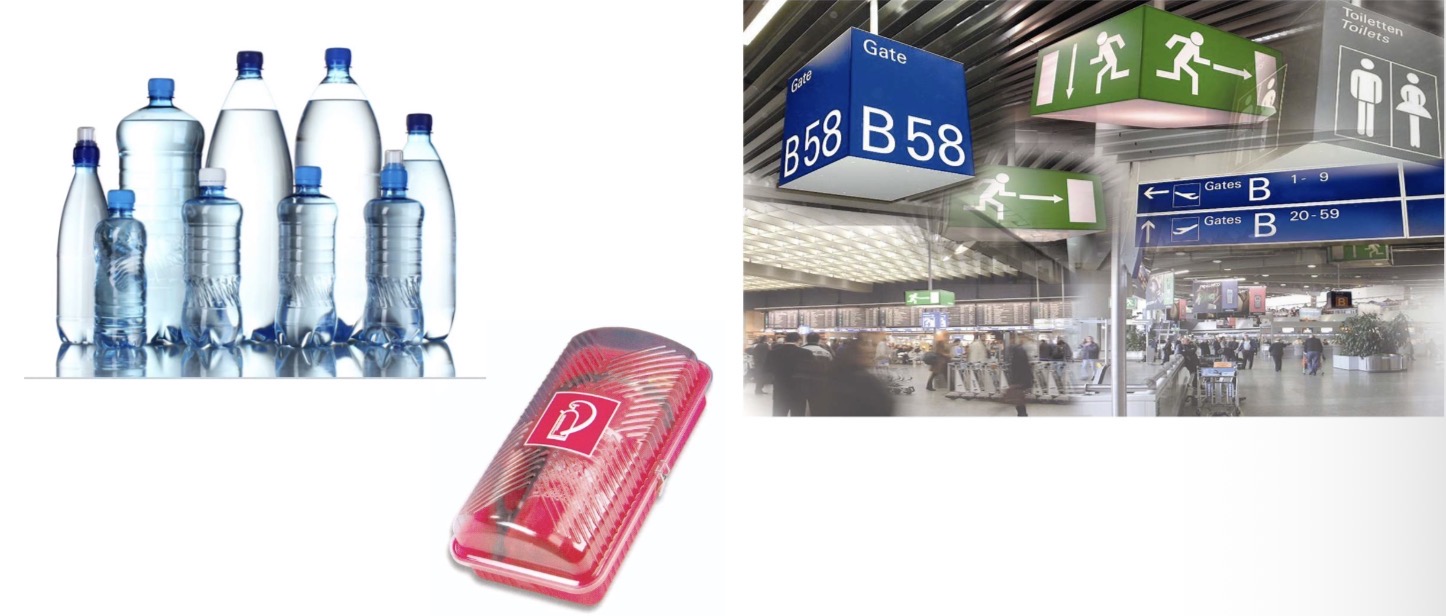
Properties & applications of polybutylene terephthalate PBT
similar structure to PET
good electrical insulator (properties slightly differ with water absorption, temperature & frequency)
electronics housings (boîtiers/habillages)
Plain bearings (roulements lisses)
Roller bearings (roulements à rouleaux)
Valve parts
Screws (vis)
Power strips (multiprises)
Pump housing & wheels
Parts for household appliances (appareils électroménagers)
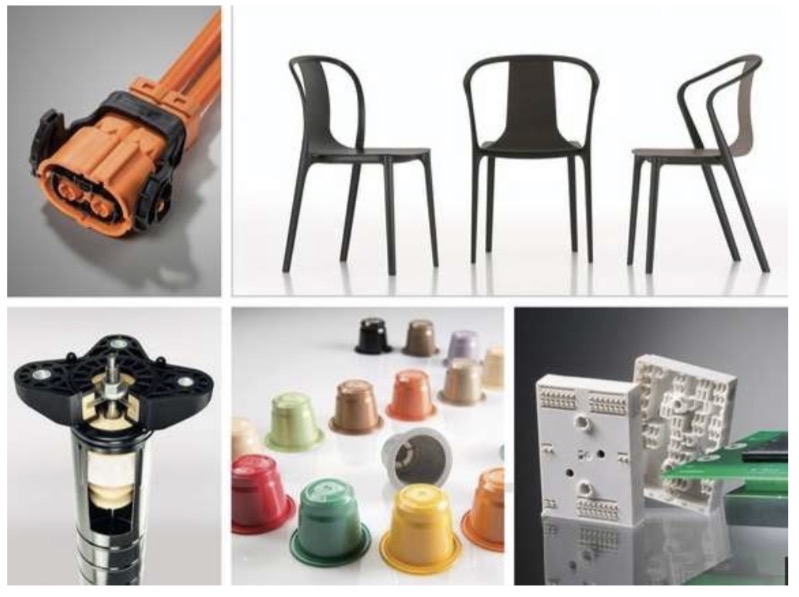
Properties & applications of polyoxymethylene / polyacetal POM
high abrasion resistance
Low coefficient of friction
high chemical resistance
Low water absorption
Good electrical properties
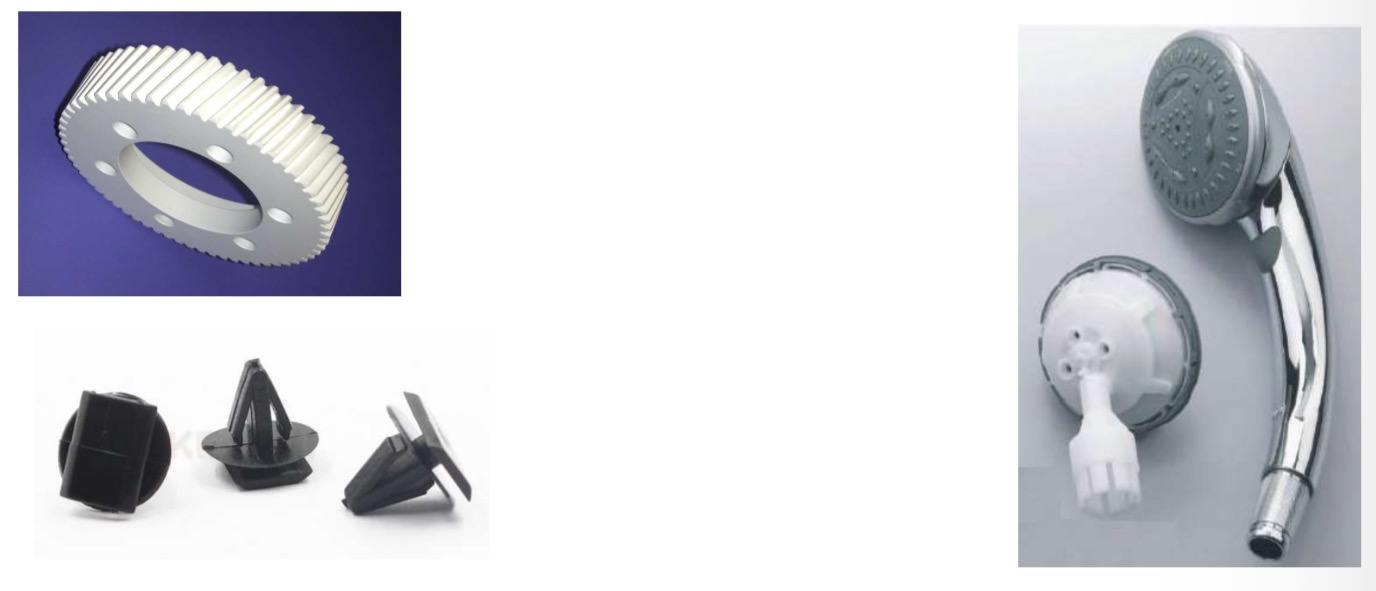
gears (engrenages)
Pumps
springs (ressorts)
Clips (attaches)